
You are here
Feed aggregator
Dans l'ouest de la Guyane, les élèves continuent d'aller à l'école en pirogue
Alors que certains étudiants peuvent désormais prendre le bus pour aller à l'école à Apatou, commune enclavée de l'ouest de la Guyane, à la frontière avec le Surinam, d'autres doivent toujours y vont toujours en pirogue. Ils effectuent chaque jour un long périple sur le fleuve Maroni, faute de transport routier.
Categories: Diplomacy & Crisis News, France
Bangladesh’s Air Power: Intentions Meet a Widening Capability Gap
The Bangladesh Air Force risks becoming a paper tiger, if it isn’t already.
Categories: Diplomacy & Crisis News, European Union
Exercice militaire d'Orion-26 : démonstration de force en présence d'Emmanuel Macron
Emmanuel Macron a pris la parole ce jeudi à Suippes pour saluer les militaires qui ont participé à l'exercice de combat de haute intensité "Orion-26" qui s'achève ce jeudi. L'exercice a été lancé en février pour entraîner l’armée française et l’OTAN aux nouvelles guerres de haute intensité. Un succès, selon le chef de l'État, qui en a profité pour avertir ses adversaires. Récit de Natalia Odisharia.
Categories: France
Guerre au Moyen-Orient : quel impact sur les travailleurs ?
Comment les travailleurs sont-ils affectés par les bouleversements actuels ? Situation géopolitique, pression climatique, progrès vertigineux de l’intelligence artificielle… Rémi Bourgeot, économiste et chercheur associé à l’IRIS fait le point sur les pressions sur les travailleurs à travers le monde.
Categories: Diplomacy & Crisis News, France
»Donald Trump hat diesen Krieg verloren«
Es ist völlig unklar, wann der Irankrieg endet und wie er ausgeht. Welche Folgen hat das für den Nahen Osten – und welche für den amerikanischen Präsidenten?
Recueillir le merveilleux
Si les contes ont bénéficié d'un intérêt particulier à l'époque des nationalismes naissants, parce que l'on y voyait un héritage culturel immémorial, ces récits que l'on racontait pour veiller ou s'endormir tirent en vérité leur charme d'un franchissement permanent des frontières. Alexandre (…)
/ Ukraine, Frontières, Littérature, Russie
Categories: Défense, Diplomacy & Crisis News
The Price of Peace With Iran
Washington must be willing to make uncomfortable concessions.
Categories: Diplomacy & Crisis News
The China-US Clash Over Critical Minerals Is an Opportunity for Kazakhstan
Amid China-U.S. competition over critical minerals, Kazakhstan is positioned to become a key partner for Washington.
Categories: Diplomacy & Crisis News, European Union
Why China Treats ‘Lying Flat’ as a National Security Threat
It's not about the economy at all: In a system that defines not struggling as a crime, opting out is a public offense.
Categories: Diplomacy & Crisis News, European Union
La Chine supprime les droits de douane pour tous les pays africains, à l'exception d'un seul
Selon les analystes, le régime de droits de douane nuls renforce le soft power de la Chine, mais pourrait entraîner des retombées inégales.
Categories: Afrique
Are the Ryukyu Islands an Overlooked Flashpoint in the Indo-Pacific?
Considerable attention has been paid to the threat of a Chinese invasion of Taiwan, but analysts have arguably overlooked a more immediate danger facing the Ryukyu Island chain.
Categories: Diplomacy & Crisis News, European Union
The Real Role of a Trump-Xi Meeting
The summit is unlikely to deliver decisive breakthroughs. Instead, its importance lies in how it helps manage competition under pressure.
Categories: Diplomacy & Crisis News, European Union
Kazakhstan’s Nuclear Bet to Reach Carbon Neutrality
Despite plans to go from zero to four nuclear power plants by 2050, Kazakhstan’s strategy comes with significant challenges.
Categories: Diplomacy & Crisis News, European Union
Why Research Needs a Supportive Environment as Much as Funding Priorities
Ask any academic about how they have come to their present station in their careers and they will talk at some point about the role of chance. The conversation in a queue at a coffee break at a conference, the sitting in on a departmental seminar series, the email on a disciplinary mailing list: the joining of ideas, the crossing of peoples’ paths.
Out of these moments has much research emerged. To take one example, the 2004 volcanic ash cloud that closed transatlantic air transport for over a week, trapping hundreds of European international relations scholars in Canada as their conference was ending, reputedly produced dozens of articles, funding bids and collaborative networks as people found they had time to sit, talk, brainstorm and advance ideas that might otherwise have been lost to the constant pressures of managing a regular workload.
All of which is to say that the advancement of knowledge through research doesn’t follow a straight or foreseeable path. And the growing focus of funding bodies on strategic priorities risks undermining the valuable possibilities that come from a rich and supportive research environment.
The move towards funding priority topics is partly understandable by the desire of funders to demonstrate their direct contribution to areas of political and public interest: research for gain instead of research for its own sake, if you will. In an age of tightening budgets, performance metrics and stakeholder accountability the incentives are clear.
But we now find ourselves at risk of moving too far in this direction.
Firstly, the world moves fast and uncertainly. If priorities are updated too slowly, then we risk missing important new agendas, but if they move too quickly, there is a danger that funding never lasts long enough to allow for the production of sufficiently deep analysis and findings. Supporting researchers to follow many paths – that may for time to time becoming more salient – actually improves the ability to speak to changing needs.
Secondly, priority relies on the existence of a pool of experienced researchers who can bid into designated pots of funding. But if there isn’t the support to allow such people to learn and develop in the absence of targeted monies, then the upsides of prioritisation are severely eroded.
And finally, research has never been just about material benefits. The pursuit of knowledge – in all its forms – is a human endeavour, with intrinsic value. Just as higher education can’t be simply a vehicle for getting a better-paid job, so too must research retain its wider purpose of supporting our understanding of the world and of ourselves.
That means we need to protect funding streams both within individual institutions and from external funders to allow researchers the opportunity to pursue their own agendas and ideas, and to be able to share, discuss and develop them with their communities of practice.
Having been a chair of UACES, which brings together European Studies researchers from across the world and from multiple disciplines, I have been repeatedly delighted and educated by what the rich tapestry of a vibrant and mutually supportive research environment can bring to my own work and to the full range of stakeholders, from politicians to the general public, activists to journalists.
If we can continue to preserve the value of supporting research in the broadest sense then we can not only make targeted funding work more effectively and sustainably, but also ensure that the broadest values of research are protected and shared with everyone.
Simon Usherwood is Professor of Politics and International Studies at the Open University and former Chair of UACES.
The post Why Research Needs a Supportive Environment as Much as Funding Priorities appeared first on Ideas on Europe.
Categories: Diplomacy & Defense Think Tank News, European Union
"Défendre le 1er-mai et nos salaires demeure une urgence absolue", l’Ugict-CGT
Les dirigeantes de la CFDT et de la CGT réclament vendredi des augmentations de salaires face au retour de l'inflation, tout en défendant le caractère chômé et férié du 1er-Mai. France 24 a reçoit Agathe Le Berder, secrétaire générale adjointe de l’Ugict-CGT, qui explique ce pour quoi elle est engagée et cette journée du travail.
Categories: France
Malaysia’s Tech Talent Shortage
Industry leaders describe a war for talent.
Categories: Diplomacy & Crisis News, European Union
Procès libyen en appel : la défense affaiblie pour Nicolas Sarkozy ?
Condamné en première instance, l'ancien président de la République Nicolas Sarkozy comparait devant la Cour d'Appel de Paris, pour son procès en appel dans l'affaire du financement libyen de sa campagne de 2007. Ce mercredi, l'ex-chef de l'état a contredit son ancien bras droit Claude Guéant. Virginie Le Guay, éditorialiste politique, était l'invitée de Questions Directes pour en parler.
Categories: France
Qui peut travailler le 1er-mai ? La législation assouplie
Le Conseil d'État a estimé jeudi qu'il n'y avait "plus lieu" de "statuer" sur les trois recours déposés par des syndicats et des députés qui contestait un communiqué du Premier ministre mi-avril censé faciliter, selon eux, le travail salarié le 1er-Mai dans les boulangeries et chez les fleuristes. Récit de David Gilberg.
Categories: Diplomacy & Crisis News, France
Comment les pénuries médicales poussent des Afghans désespérés à se tourner vers des guérisseurs traditionnels
Les Afghans sont confrontés à des infrastructures médicales rares et à des frontières fermées, alors même que les taux de cancer atteignent des niveaux alarmants.
Categories: Afrique
Pages


© 2012-2018 Europa Varietas Foundation © 2015-2018 Europa Varietas Association
www.europavarietas.org | info(@)europavarietas(dot)org | Switzerland
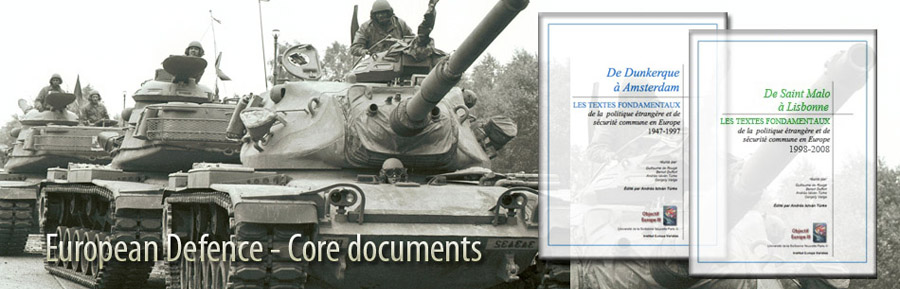
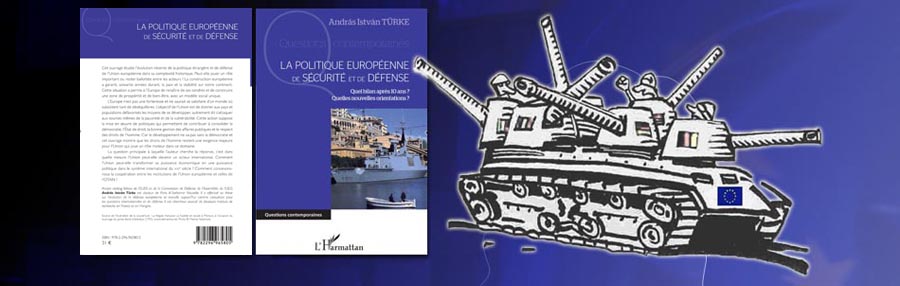
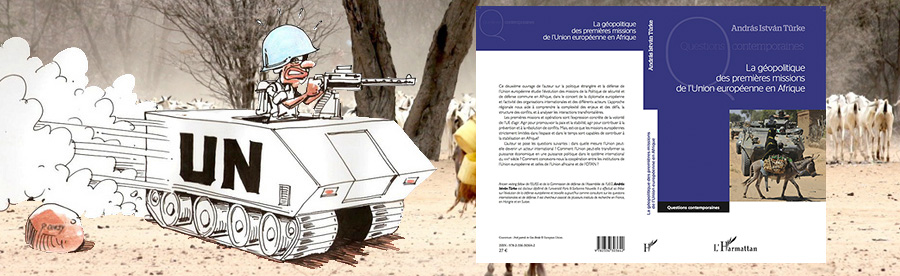
We are looking for sponsors for the English translation of these books, please contact turkeandras(at)gmail(dot)com