
Vous êtes ici
Agrégateur de flux
Principles for ethical boundary spanning between science, policy and practice: a guide for knowledge brokers
Knowledge brokers have emerged as a key mechanism for facilitating knowledge exchange across institutional and epistemic divides to enable more inclusive, informed, and context-sensitive decision-making. However, despite growing recognition about their value and importance, critical gaps remain related to how knowledge brokers operate that hinders their effectiveness and efficiency in practice. One such gap relates to the ethical dimensions of their work, which remain underexplored and lack formal conceptualization. This perspective addresses this gap by examining the overarching ethical challenges knowledge brokers face, and proposing a set of twelve experientially-derived principles to guide more ethically grounded knowledge brokering. For each principle we also outline a suite of practical behaviours, attitudes and actions to support their realisation in practice. In doing so, our goal is to help recognize and engage with the depth of ethical complexity that knowledge brokers must navigate, support those working in these often-invisible roles, and contribute to a broader conversation about how to strengthen the interface of sustainability science, policy and practice. We conclude by calling for greater institutional support, leadership, and a shift toward ‘ethics by design’ approaches that embed ethical reflection and practices in knowledge brokering efforts from the outset.
Catégories: Diplomacy & Defense Think Tank News, European Union
Principles for ethical boundary spanning between science, policy and practice: a guide for knowledge brokers
Knowledge brokers have emerged as a key mechanism for facilitating knowledge exchange across institutional and epistemic divides to enable more inclusive, informed, and context-sensitive decision-making. However, despite growing recognition about their value and importance, critical gaps remain related to how knowledge brokers operate that hinders their effectiveness and efficiency in practice. One such gap relates to the ethical dimensions of their work, which remain underexplored and lack formal conceptualization. This perspective addresses this gap by examining the overarching ethical challenges knowledge brokers face, and proposing a set of twelve experientially-derived principles to guide more ethically grounded knowledge brokering. For each principle we also outline a suite of practical behaviours, attitudes and actions to support their realisation in practice. In doing so, our goal is to help recognize and engage with the depth of ethical complexity that knowledge brokers must navigate, support those working in these often-invisible roles, and contribute to a broader conversation about how to strengthen the interface of sustainability science, policy and practice. We conclude by calling for greater institutional support, leadership, and a shift toward ‘ethics by design’ approaches that embed ethical reflection and practices in knowledge brokering efforts from the outset.
Catégories: Diplomacy & Defense Think Tank News, European Union
Principles for ethical boundary spanning between science, policy and practice: a guide for knowledge brokers
Knowledge brokers have emerged as a key mechanism for facilitating knowledge exchange across institutional and epistemic divides to enable more inclusive, informed, and context-sensitive decision-making. However, despite growing recognition about their value and importance, critical gaps remain related to how knowledge brokers operate that hinders their effectiveness and efficiency in practice. One such gap relates to the ethical dimensions of their work, which remain underexplored and lack formal conceptualization. This perspective addresses this gap by examining the overarching ethical challenges knowledge brokers face, and proposing a set of twelve experientially-derived principles to guide more ethically grounded knowledge brokering. For each principle we also outline a suite of practical behaviours, attitudes and actions to support their realisation in practice. In doing so, our goal is to help recognize and engage with the depth of ethical complexity that knowledge brokers must navigate, support those working in these often-invisible roles, and contribute to a broader conversation about how to strengthen the interface of sustainability science, policy and practice. We conclude by calling for greater institutional support, leadership, and a shift toward ‘ethics by design’ approaches that embed ethical reflection and practices in knowledge brokering efforts from the outset.
Catégories: Diplomacy & Defense Think Tank News, European Union
Missions - AFET Mission to Montenegro and Albania - 16-18 February 2026 - 16-02-2026 - Committee on Foreign Affairs
A delegation of the Committee on Foreign Affairs (AFET), led by Committee Chair David McAllister (EPP, Germany), visited Podgorica and Tirana from 16 to 18 February.
The visit enabled AFET MEPs to evaluate the state of play of accession negotiations and outstanding reform priorities in each country and reaffirm Parliament's commitment to supporting both countries on their European paths.
Press release
Mission report
Source : © European Union, 2026 - EP
The visit enabled AFET MEPs to evaluate the state of play of accession negotiations and outstanding reform priorities in each country and reaffirm Parliament's commitment to supporting both countries on their European paths.
Press release
Mission report
Source : © European Union, 2026 - EP
Catégories: Diplomacy & Crisis News, Europäische Union
Missions - AFET Mission to Montenegro and Albania - 16-18 February 2026 - 16-02-2026 - Committee on Foreign Affairs
A delegation of the Committee on Foreign Affairs (AFET), led by Committee Chair David McAllister (EPP, Germany), visited Podgorica and Tirana from 16 to 18 February.
The visit enabled AFET MEPs to evaluate the state of play of accession negotiations and outstanding reform priorities in each country and reaffirm Parliament's commitment to supporting both countries on their European paths.
Press release
Mission report
Source : © European Union, 2026 - EP
The visit enabled AFET MEPs to evaluate the state of play of accession negotiations and outstanding reform priorities in each country and reaffirm Parliament's commitment to supporting both countries on their European paths.
Press release
Mission report
Source : © European Union, 2026 - EP
Catégories: Afrique, European Union
Highlights - AFET Mission to South Korea and Japan - 31 March-2 April 2026 - Committee on Foreign Affairs
A delegation of the Committee on Foreign Affairs (AFET) will visit Seoul and Tokyo from 31 March to 2 April, led by Committee Chair David McAllister (EPP, Germany).
During the visit, MEPs will discuss how to further strengthen the EU's strategic cooperation with South Korea and Japan, two of its key like-minded partners in the Indo-Pacific region. Discussions will focus on issues of mutual interest against the backdrop of a rapidly shifting global landscape and challenges to the rules-based international order, shaped by evolving dynamics across the Indo-Pacific region, Russia's war of aggression against Ukraine, and conflict in the Middle East.
AFET Missions
Source : © European Union, 2026 - EP
During the visit, MEPs will discuss how to further strengthen the EU's strategic cooperation with South Korea and Japan, two of its key like-minded partners in the Indo-Pacific region. Discussions will focus on issues of mutual interest against the backdrop of a rapidly shifting global landscape and challenges to the rules-based international order, shaped by evolving dynamics across the Indo-Pacific region, Russia's war of aggression against Ukraine, and conflict in the Middle East.
AFET Missions
Source : © European Union, 2026 - EP
Catégories: Diplomacy & Crisis News, Europäische Union
Highlights - AFET Mission to South Korea and Japan - 31 March-2 April 2026 - Committee on Foreign Affairs
A delegation of the Committee on Foreign Affairs (AFET) will visit Seoul and Tokyo from 31 March to 2 April, led by Committee Chair David McAllister (EPP, Germany).
During the visit, MEPs will discuss how to further strengthen the EU's strategic cooperation with South Korea and Japan, two of its key like-minded partners in the Indo-Pacific region. Discussions will focus on issues of mutual interest against the backdrop of a rapidly shifting global landscape and challenges to the rules-based international order, shaped by evolving dynamics across the Indo-Pacific region, Russia's war of aggression against Ukraine, and conflict in the Middle East.
AFET Missions
Source : © European Union, 2026 - EP
During the visit, MEPs will discuss how to further strengthen the EU's strategic cooperation with South Korea and Japan, two of its key like-minded partners in the Indo-Pacific region. Discussions will focus on issues of mutual interest against the backdrop of a rapidly shifting global landscape and challenges to the rules-based international order, shaped by evolving dynamics across the Indo-Pacific region, Russia's war of aggression against Ukraine, and conflict in the Middle East.
AFET Missions
Source : © European Union, 2026 - EP
Catégories: Afrique, European Union
Europe’s Options for Avoiding Dangerous Dependence on the US
Catégories: Diplomacy & Defense Think Tank News
EU Energy Policy Between Security of Supply, Decarbonisation and Strategic Autonomy – With, Without or Against the US
Catégories: Diplomacy & Defense Think Tank News
European Climate Policy Against US Headwinds: In Search of Strong Climate Partnerships
Catégories: Diplomacy & Defense Think Tank News
Minutes - Wednesday, 25 February 2026 - Thursday, 26 February 2026 - PE785.217v01-00 - Committee on Foreign Affairs
Source : © European Union, 2026 - EP
Catégories: Diplomacy & Crisis News, Europäische Union
Minutes - Wednesday, 25 February 2026 - Thursday, 26 February 2026 - PE785.217v01-00 - Committee on Foreign Affairs
Source : © European Union, 2026 - EP
Catégories: Afrique, European Union
Libye : 15 ans après Kadhafi, Benghazi renaît de ses cendres
La Libye marque cette année les 15 ans depuis sa révolution qui a déposé Mouammar Kadhafi. Malgré une relative stabilité sécuritaire, le pays reste divisé en deux. L'ouest est dirigé par un gouvernement reconnu par la communauté internationale. L'est et une grande partie du sud sont, eux, dirigés par le régime militaire du maréchal Khalifa Haftar. Reportage à Benghazi, dans l'est du pays.
Catégories: Afrique, Diplomacy & Defense Think Tank News
A Sustainable Commitment to Peace in an Age of Transient “Deals”
Catégories: Diplomacy & Defense Think Tank News
Ces personnalités décédées en détention ces cinq dernières années
Après le décès de Toumba Diakité, retour sur une série de morts en détention en Guinée qui soulèvent des questions sur la justice, la transparence et les conditions carcérales sous la transition militaire.
Catégories: Afrique, European Union
European Middle East Policy: With, Without or Against the US?
Catégories: Diplomacy & Defense Think Tank News
What If Washington Weaponises Europe’s Dependence on US Technology? How Should Berlin and Brussels Prepare?
Catégories: Diplomacy & Defense Think Tank News
Pages


© 2012-2018 Europa Varietas Foundation © 2015-2018 Europa Varietas Association
www.europavarietas.org | info(@)europavarietas(dot)org | Switzerland
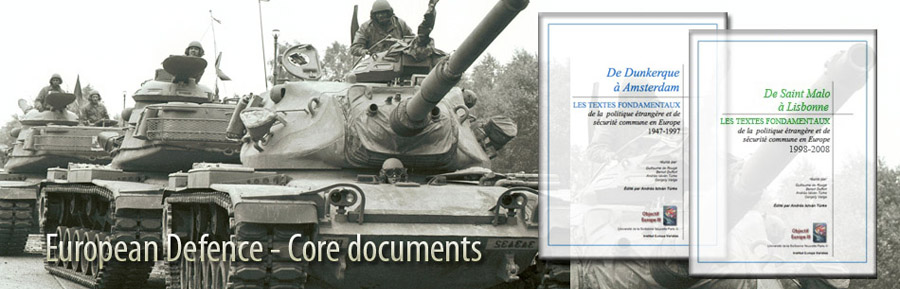
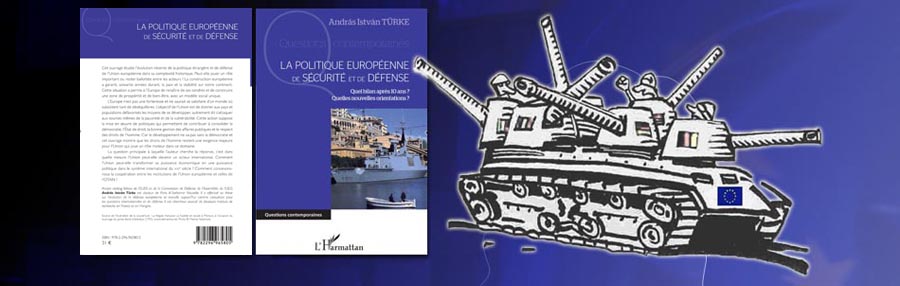
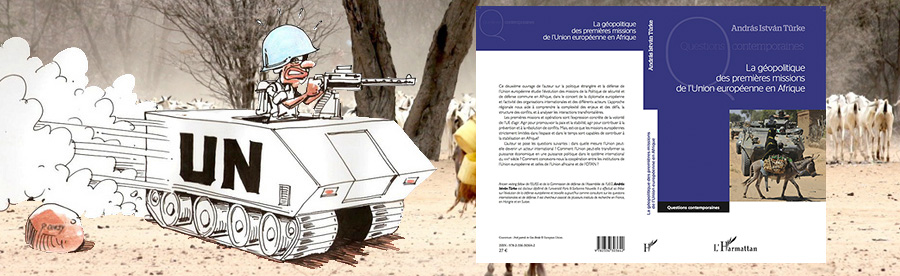
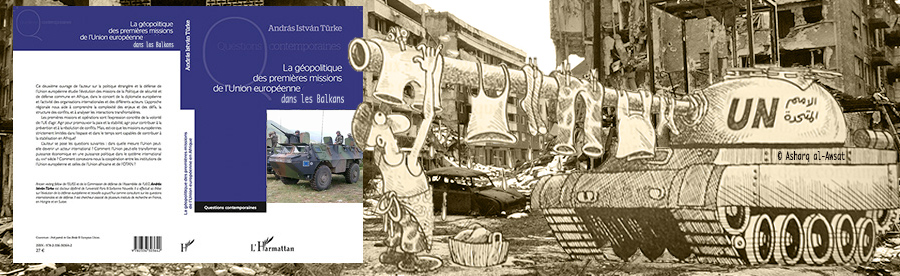
We are looking for sponsors for the English translation of these books, please contact turkeandras(at)gmail(dot)com