
Vous êtes ici
Agrégateur de flux
How Biofertilisers Help African Farmers Adapt to Climate Change
When unpredictable rainfall, rising temperatures and declining soil fertility threatened agricultural production across Nigeria four years ago, Baliqees Salaudeen-Ibrahim turned to biofertilisers to keep soil healthy, sustain her horticultural production and build resilience against the growing effects of climate change. She injects wastewater from the fish pond into her farm’s irrigation system, delivering a rich […]
Catégories: Africa
Paraguay : scandale politico-financier Ueno Bank
Dans la nuit du 2 au 3 novembre 2026, la Banque centrale du Paraguay (BCP) a placé sous tutelle la banque numérique Ueno Bank pour insolvabilité, gelant les dépôts financiers de près de trois millions de clients, soit près de la moitié de la population. Très populaire grâce à des offres promotionnelles alléchantes, la banque avait réussi à capter 850 millions de dollars de fonds publics grâce à ses liens étroits avec le pouvoir exécutif. Cette affaire entraîna dans sa chute le président Santiago Peña, qui détenait des actions dans la société mère. Face aux importantes mobilisations de la population à Asunción, Santiago Peña présente sa démission le 5 novembre. Le Parlement l’a toutefois rejetée, préférant engager directement une procédure de destitution à son encontre. Ce scandale politico-financier interroge alors sur comment naissent et se reproduisent des sociétés oligarchiques qui mettent en péril, sont capables de mettre en péril l’ensemble d’une société sur le plan économique pour servir leurs propres intérêts.
Quelle est l’origine de ce scandale ? Au-delà des frontières du Paraguay, quelles sont les ramifications internationales de l’affaire Ueno Bank ? Enfin, que révèle cette crise sur les relations entre le pouvoir politique et les milieux financiers ?
Nouvelle chronique de l’Amérique latine avec Christophe Ventura, directeur de recherche à l’IRIS et responsable du Programme Amérique latine/Caraïbe.
L’article Paraguay : scandale politico-financier Ueno Bank est apparu en premier sur IRIS.
Catégories: Diplomacy & Defense Think Tank News
Kissé csökkentek az üzemanyagárak – mi várható?
A peco-online.ro portál adatai szerint a benzin literenkénti átlagára 6,1 százalékkal csökkent az előző hónaphoz képest. Ez azt jelenti, hogy egy teljes, 50 literes tankolás ma 31 lejjel kevesebbe kerül, mint 30 nappal ezelőtt. A gázolaj literenkénti átlagára 1,7 százalékkal mérséklődött, így egy teljes, 50 literes tankolás ma 9,5 lejjel olcsóbb, mint 30 nappal ezelőtt. […]
Articolul Kissé csökkentek az üzemanyagárak – mi várható? apare prima dată în Kolozsvári Rádió Románia.
Catégories: Határon túli magyar portálok összesített hírei
Video einer Ausschusssitzung - Mittwoch, 18. November 2026 - 09:09 - Ausschuss für Sicherheit und Verteidigung
Dauer des Videos : 20'
Haftungsausschluss : Die Verdolmetschung der Debatten soll die Kommunikation erleichtern, sie stellt jedoch keine authentische Aufzeichnung der Debatten dar. Authentisch sind nur die Originalfassungen der Reden bzw. ihre überprüften schriftlichen Übersetzungen.
Quelle : © Europäische Union, 2026 - EP
Catégories: Europäische Union
Video of a committee meeting - Wednesday, 18 November 2026 - 09:09 - Committee on Security and Defence
Length of video : 20'
Disclaimer : The interpretation of debates serves to facilitate communication and does not constitute an authentic record of proceedings. Only the original speech or the revised written translation is authentic.
Source : © European Union, 2026 - EP
Catégories: Defence`s Feeds, European Union
COP31: Leaders Put Resilient Cities on the Table. Will the Money Follow?
Fruit and vegetable vendors at an everyday market in Rohini, New Delhi, operate makeshift street-vending carts with large umbrellas to shield themselves, their produce, and customers from the summer heat. When temperatures reach 50°C, they leave during peak afternoon hours and return later in the day. Credit: Aishwarya Bajpai/IPS
By Aishwarya Bajpai
ANTALYA, Türkiye & SONIPAT, India, Nov 18 2026 (IPS)
“Climate action has to deliver where people live,” COP31 President Murat Kurum said on Resilient Cities and Built Environment Day, part of the Leaders Summit. Cities, he said, are “where that implementation becomes real – in the homes people live in, the infrastructure they depend on and the energy they use every day.”
Kurum, who is also Türkiye’s environment and urbanisation minister, cited his country’s post-earthquake reconstruction as an example of resilient urban development.
The Presidency announced two initiatives: the Antalya Compact for Energy Efficient Buildings, which sets a voluntary target of reducing building energy intensity by 25% by 2035, and the Sustainable Urban Resilience Financing Facility (SURFF), intended to help cities turn climate plans into investment-ready projects. However, no budget or timeline was announced for the facility.
The question remains: will these commitments translate into funding for cities or remain declarations of intent?
A demonstrator at COP31 asks about the money. Credit: UN Climate Change/Kubilay Ciftci
A Long Climb Up the Agenda
Cities have gradually gained prominence in climate negotiations, largely through voluntary coalitions and initiatives rather than binding commitments.
COP26 Glasgow (2021) emphasised multilevel climate action and launched the Race to Resilience.
COP27 (2022) followed with the first-ever urban ministerial and launched the SURGe initiative.
COP28 (2023) introduced CHAMP, through which 64 countries agreed to involve cities in developing national climate plans. It also launched the Buildings Breakthrough, a 27-country initiative for near-zero-emission and resilient buildings by 2030.
COP29 (2024) in Baku established the Baku Continuity Coalition on Urban Climate Action and the MAP Declaration for resilient and healthy cities.
COP30 (2025) in Belém held the fourth Urbanisation Ministerial and introduced a heat-resilience initiative linked to the Global Cooling Pledge.
This attention is reflected in national climate plans. UN-Habitat found that 80% (2025-2026) of new climate plans have well-developed urban components, compared with 49% (2020-2021) earlier.
Yet only 47 of 128 plans identify a specific urban financing mechanism. Cities are increasingly part of climate commitments, but financial support has not kept pace.
What It Means for India
India illustrates the scale of this challenge. The World Bank estimates India’s cities will need around US$2.4 trillion by 2050, while private finance accounts for only about 5% of urban infrastructure investment.
WRI India estimates annual urban adaptation needs at US$67 billion. India’s 2031–35 climate plan supports resilient urban planning and efficient buildings but sets no specific targets for cities.
Aravind Unni, an urban practitioner and policy researcher, welcomes the attention but cautions against treating declarations as outcomes.
“Declarations are meant to signal the direction in which we may move,” he says. He considers the 25% building energy-intensity target something “that India would have anyways endorsed” and believes the country should “learn and use that in our domestic case”.
Unni is less convinced that the Presidency’s Climate Implementation Bridge, which aims to turn national plans into investment-ready projects, will address the needs of Indian cities.
Much of the work required, he argues, is “not really bankable”. “Adaptation and betterment of people’s lives cannot be dependent on private finance. It can be a part of the programme, but the huge section has to be reinvestment in cities through public finance.”
Private investment, in his assessment, will remain limited. The larger responsibility therefore rests with public finance, raising another question: who controls the money and decides how cities use it?
Civil society members demonstrate at COP31 in support of a liveable planet. Credit: UN Climate Change/Kubilay Ciftci
Money Needs Powers
For Unni, financing alone will not make cities resilient unless local governments have the authority to plan and implement climate action.
“Decentralisation is the key. Actual transfer of powers to the cities,” he says. He argues that the 74th Constitutional Amendment, implemented in 1993, which established the framework for urban local governments, needs to be “revisited and made better”.
Climate action is not explicitly listed among the 18 functions assigned to municipalities. However, urban planning, water supply, public health and urban forestry directly affect how cities prepare for heatwaves and floods.
Without adequate decision-making powers, cities remain dependent on higher levels of government, even when they bear the brunt of climate impacts. Unni argues that decentralisation is essential to ensure funding translates into local action.
Use What Is Already Being Built
India does not necessarily need to wait for new financing mechanisms to begin building climate resilience, Unni argues. Existing public investments in housing and infrastructure could incorporate climate adaptation.
“We are anyway constructing a lot of housing through public investments,” he says. The priority is to identify “what we can do within those schemes and projects.”
He points to Pradhan Mantri Awas Yojana (PMAY), the government’s flagship housing scheme, as an opportunity. Homes could incorporate designs that lower indoor temperatures by three or four degrees at night, allowing residents to recover from daytime heat.
For Unni, the issue is “more of a justice and a comfort issue rather than an efficiency issue”. Housing must protect people from the climate conditions they increasingly face.
“We can’t build our way out of this,” he adds. Existing housing schemes and urban master plans must incorporate climate considerations from the outset.
The housing ministry’s climate adaptation cell is an encouraging development, he says. However, the housing and climate ministries need to work more closely to integrate adaptation into public investment and urban planning.
Heat Shows What Money Can Do
Heat is one area where Unni sees the possibility of translating climate commitments into action. According to the government, heat action plans have been prepared by 23 states, 195 districts and 64 cities.
Another development is the inclusion of heatwaves in India’s list of notified natural disasters. The National Disaster Management Authority (NDMA) says mitigation funds can now support heat action plans.
“Heat action now has money attached to it,” Unni says. The challenge is to ensure this funding leads to sustained action on the ground.
Ahmedabad offers an example. Following the 2010 heatwave, associated with 1,344 excess deaths, the city introduced India’s first heat action plan.
A study supported by the NRDC found that the plan contributed to approximately 1,000 fewer deaths annually on hot days in the years following its full implementation in 2013.
However, Unni argues that heat planning must move beyond preventing deaths to addressing the longer-term effects of rising temperatures on people’s lives and livelihoods.
“Heat is not only a threat to life; it also affects how comfortable people are at home, how well they can work, and how much they earn,” he says.
He proposes a dedicated government scheme and legislation focused on thermal comfort and access to shade. The housing ministry could lead efforts to improve indoor comfort, while the labour ministry addresses outdoor workers’ exposure to extreme heat.
Communities as the Cheaper Route
Unni believes that involving communities in climate planning could also reduce the cost of building urban resilience.
“We already have communities which work on this,” he says. People working across India, from NGOs to local groups, to make cities and spaces more climate resilient. Governments should invest in these existing networks and make climate planning more participatory.
Recognising local knowledge and strengthening community-led responses could bring down the often-quoted costs of urban climate action “by a huge number”. Financial constraints, he argues, should not become an excuse for inaction.
What Comes Next
COP31 has given cities greater visibility through the Antalya Compact, the proposed financing facility and renewed political attention to resilient urban development. But these remain largely voluntary commitments, with no clear indication of how much funding cities will receive or when.
Whether cities get money or simply more recognition will become clearer in the negotiated outcomes on adaptation and finance expected at the conference’s close on 20 November.
For India, the test will be whether governments use existing housing investments, disaster mitigation funds and urban planning mechanisms to make cities safer and more liveable as climate risks intensify.
IPS UN Bureau Report
Related Articles
Catégories: Africa
Les ultra-riches russes imaginent déjà un avenir après Poutine
Certains magnats russes aspirent à un retour au système oligarchique des années 1990, époque à laquelle les hommes d'affaires jouissaient d'un grand pouvoir
Catégories: Afrique
Einkommen der Privathaushalte steigen wieder – immer mehr Menschen sparen
Reale Haushaltsnettoeinkommen steigen nach hoher Inflation wieder, frühere Verluste aber nicht ausgeglichen – Langfristig sind Einkommen seit 1995 durchschnittlich um fast ein Drittel gewachsen, Ungleichheit ist deutlich gestiegen – Allgemeine Einkommenszufriedenheit hat deutlich zugenommen, immer ...
Catégories: Diplomacy & Defense Think Tank News
DIGITAL 08H : les numéros gagnants
DIGITAL 08H : Avez-vous tenté votre chance ?
Le tirage DIGITAL 08H N°370 a livré son verdict !
Mercredi 18 Novembre 2026
Avez-vous joué ?
Avez-vous misé sur vos numéros porte-bonheur ?
RÉSULTAT : 85 • 30 • 22 • 63 • 37
Félicitations aux heureux gagnants !
Pas encore gagné ? Gardez le sourire !
Rendez-vous au prochain tirage de 11H pour une nouvelle chance.
Jouez dans les centres de jeux ou en ligne : Tapez 590# ou lnbloto.bj
Jouez avec modération et responsabilité. Le jeu doit rester un plaisir.
A TOI DE JOUER #Akaxòa
#LNBSA #XòGbɔnAlɔkpaVo #JeuResponsable #LaChanceAvecModération
LA CROIX DU JOUR

Catégories: Afrique
Le premier procès d'ampleur du masculinisme s'ouvre à Paris, sept hommes jugés
Sept hommes faisant partie de la mouvance masculiniste comparaissent mercredi et jeudi devant le tribunal judiciaire de Paris pour des publications en ligne relayant des propos misogynes, racistes, antisémites ainsi que des références nazies. Ce premier procès d'ampleur du masculinisme doit être suivi de plusieurs autres audiences jusqu'en janvier pour juger au total 34 membres d'un canal Telegram.
Catégories: France
Jeunes en action pour la paix : un appel à l’engagement de la jeunesse congolaise
La jeunesse congolaise est appelée à jouer un rôle plus actif dans la promotion de la paix et de la sécurité en République démocratique du Congo. Cet appel a été lancé lundi 16 novembre à Kinshasa lors d’une conférence d’échange et de réflexion organisée par Change Your World, le Parlement des jeunes de Kinshasa et la MONUSCO, autour du thème : « Jeunes en action pour la paix ».
Catégories: Afrique
Nigeria approves law allowing states to run their own police
The push for state police comes amid persistent security crises across the country.
Catégories: Africa
Izgalmas intellektuális kirakós
Másodévesek, szakmai lelkesedésük továbbra is töretlen, gyakorlat és teória egyaránt részese profiljuk alakulásának. Az interdiszciplinaritás meg az új kutatási módszerek és technikák egyaránt érdeklik: Boné Ilán és Hankó-Nagy Sámuel jöttek el a Tetőteraszra, hogy a mélyrétegekről, vagyis az archeológiáról beszéljenek. Tervekről, trendekről, kihívásokról is szó esett. Házigazda: Rostás-Péter István
Articolul Izgalmas intellektuális kirakós apare prima dată în Kolozsvári Rádió Románia.
Catégories: Határon túli magyar portálok összesített hírei
India Looks to Stronger ASEAN Partnership Amid Increasing Global Turbulence
To speed up the momentum of cooperation, Prime Minister Modi suggested that India and ASEAN should focus on the maritime domain.
Catégories: Diplomacy & Crisis News
Novembre bleu : les médecins appellent les hommes à se faire dépister contre le cancer de la prostate
À l’occasion de la campagne mondiale « Novembre bleu », consacrée à la santé masculine, les professionnels de santé multiplient les actions de sensibilisation sur le cancer de la prostate.
Catégories: Afrique
Des constructions anarchiques démolies sur des sites agricoles de Kinshasa
Le gouvernement provincial de Kinshasa a lancé mardi 17 novembre une opération de démolition des constructions érigées illégalement sur des espaces réservés à l’agriculture urbaine. Conduite par le ministre provincial de l’Agriculture, cette initiative vise à préserver les terres agricoles menacées par l’urbanisation anarchique et s’inscrit dans le cadre du programme « Kinshasa Ezobonga ».
Catégories: Afrique
Wie Wissenschaft mehr Vertrauen schafft
Neue Methoden stärken die Forschung. Doch dafür müssen Wissenschaftler mutig miteinander kooperieren. , Dass Forschende überall auf der Welt politische Angriffe erleben, dass Klima- und Geschlechterforschung infrage gestellt werden – das ist inzwischen schon Alltag an den Universitäten. Und treibt sie in eine Glaubwürdigkeitskrise: Ist wirklich wahr und relevant, was ihr da forscht? Nun wird diese ...
Catégories: Diplomacy & Defense Think Tank News
Iran Is Heading for a Swiss-Cheese Solution
The Iran war is most likely to end not with a bang, but with a whimper.
Catégories: Diplomacy & Crisis News
Le Bénin qualifié avant les matchs des 5e et 6e journées
Les Guépards du Bénin ont validé leur ticket pour la phase finale de la CAN 2027 au terme des matchs de la 4e journée des éliminatoires. Cette qualification avant les matchs des 5e et 6e journées, a été possible grâce à leur victoire sur la Centrafrique 1-0, lundi 16 novembre, et la victoire du Burkina Faso sur la Mauritanie 3-1 dans la soirée de ce mardi 17 novembre.
Bonne nouvelle pour le football béninois. Pour la première fois de l'histoire, l'équipe nationale valide son ticket pour la phase finale d'une CAN avant même la fin de la campagne pour les éliminatoires.
Après les matchs de la 4e journée, le Bénin et le Burkina Faso ont totalisé chacun 10 points, loin devant leurs adversaires du groupe F, la Mauritanie et la République centrafricaine, qui au terme de la 4e journée, totalisent respectivement 3 points et 0 point.
Un tel résultat à deux journées de la fin de la campagne pour les éliminatoires, permet aux Guépards et aux Etalons, de conserver un avantage important qui ne permettra plus aux autres équipes du groupe F de les égaler, quels que soient les résultats des matchs des deux prochaines journées.
Dans le groupe F, le Bénin maintient sa position de leader avec 10 points +5, devant le Burkina Faso, 10 points +4. La Mauritanie et la République centrafricaine ont respectivement 3 points et 0 point.
F. A. A.
Catégories: Afrique
Le PNMLS plaide pour la création d’un Fonds provincial Sida au Kasaï-Central
Le Programme national multisectoriel de lutte contre le sida (PNMLS) appelle à la création urgente d’un Fonds provincial Sida au Kasaï-Central. Cet appel a été lancé samedi 14 novembre à Kananga par son coordonnateur provincial, Jean Carré Manshimba, à l’issue de la deuxième réunion préparatoire de la Journée mondiale de lutte contre le sida, prévue le 1er décembre prochain.
Catégories: Afrique
Pages


© 2012-2018 Europa Varietas Foundation © 2015-2018 Europa Varietas Association
www.europavarietas.org | info(@)europavarietas(dot)org | Switzerland


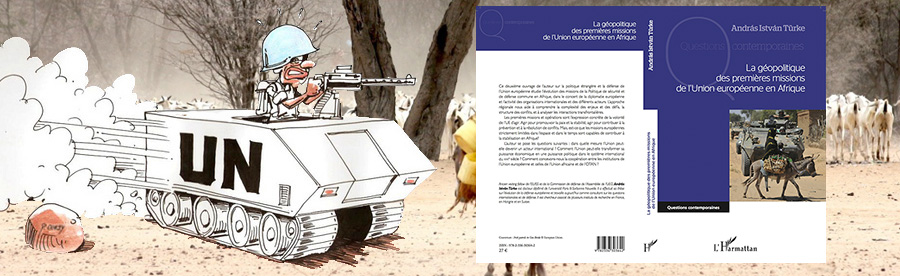
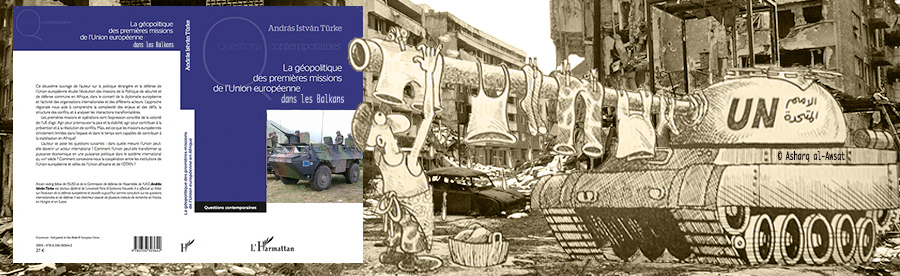
We are looking for sponsors for the English translation of these books, please contact turkeandras(at)gmail(dot)com