
You are here
Feed aggregator
Syria : London and Paris ramp up counter-terrorism cooperation with Damascus
Cooperation on counter-terrorism between Syria's General Intelligence Service (GIS), the French domestic and foreign intelligence services (DGSI and DGSE) and their British counterparts, MI5 and MI6 (or the Secret Intelligence Service, SIS), has increased significantly in recent months. Intelligence Online [...]
Categories: Defence`s Feeds
France : Asman Technology presses ahead with MALE drone testing
French intelligence systems integrator Asman Technology has launched ground roll-out tests of its medium-altitude, long-endurance (MALE) drone, the DSLR Sentinelle [...]
Categories: Defence`s Feeds
Singapore/Vietnam : A Singapore surveillance solutions retailer and its intriguing ties to Vietnam
A contract dating from late 2025 shows that the Vietnamese maritime police, which are part of the Vietnam Coast Guard [...]
Categories: Defence`s Feeds
China/Island : Behind the warming of relations between China and Iceland
The deputy director of the international department of the Central Committee of the Chinese Communist Party (CCP) since 2024 and [...]
Categories: Defence`s Feeds
The Chokepoint Trap
Niall Ferguson, the leading historian of empire, former Google CEO Eric Schmidt, and AI scholar Lisa Klassen offer a novel reframing of the US-China AI race in the history of world empires. The authors argue that AI is inherently imperial in it ambitions and structure, and that, like previous technological empires, China and US have amassed extraordinary global but that it's happening at a much faster pace. Rise and fall cycle will be faster. It will either lead to catastrophe or slow decline.
Categories: Diplomacy & Crisis News
The Limits of American Power
William McRaven, a retired four-star admiral and a major figure in American military affairs, uses history and his personal experiences to make an authoritative case that American leaders frequently overestimate the potential of military force to achieve political ends—and that new technologies like AI will exacerbate this problem.
Categories: Diplomacy & Crisis News
The Fog of Tech
Mara Karlin, a defense policy expert who served as senior national-security official in multiple American administrations, makes an authoritative case that war planners tend to be overconfident about their ability to predict how new tools will shape the battlefield—blinding them to the unchanging realities of war. Using examples from Gaza, Ukraine, and Iran, Karlin shows how this "technology trap" leads to false assumptions about the future of war.
Categories: Diplomacy & Crisis News
Empires of AI
In this essay, Niall Ferguson, one of the world’s foremost experts on imperial history, teams up the former CEO of Google, Eric Schmidt, and the researcher Lisa Klaassen to make the provocative argument that AI is an inherently “imperial technology”—and to reveal what the fate of past empires might say about the future of U.S.-Chinese competition in a world shaped by AI.
Categories: Diplomacy & Crisis News
AI Is a Choice
Alex Imas, Mohamed El-Erian, and James Manyika, leading voices at the intersection of business and technology, argue that realizing AI’s potential requires giving workers, communities, AI labs, infrastructure developers, and big companies a share of the gains. Using insights from game theory, they argue that increased cooperation can make AI work for all.
Categories: Diplomacy & Crisis News
The China Price
In 1971, as the international monetary system was on the brink of collapse, U.S. Treasury Secretary John Connally told a group of worried European finance ministers that the dollar was “our currency, but your problem.” The dollar had become that system’s official reserve currency in 1944, under the Bretton Woods agreement, making signatories subject to the whims of U.S. monetary policy. Even after Bretton Woods collapsed and many currencies floated freely, the dollar continued to dominate. In the last half century, U.S. currency power has only expanded, as more countries have integrated into the global economy and therefore grown to depend on the dollar. China, reliant on export-driven growth, is foremost among them.
Categories: Diplomacy & Crisis News
“Earth Satellites and Foreign Policy”
The advent of a new technology invariably comes with strategic implications, raising the question of who will benefit and whether risks can be managed. In 1957, following the Soviet Sputnik launch, U.S. policymakers and analysts recognized that the satellite, as the American physicist and engineer Lloyd Berkner observed in these pages, would bring transformative effects. The United States could not risk losing out, Berkner argued, but nor should governments allow geopolitical tensions to prevent the technology’s broad benefits from emerging.
Categories: Diplomacy & Crisis News
En Algérie, les commentaires non autorisés sur l’économie exposent à des sanctions
La condamnation à quatre ans de prison d’un universitaire pour ses propos sur l’industrie extractive fait suite à la rétrogradation d’un ministre en vue en raison de ses propos dénonçant l’envolée des prix de la tomate.
Categories: Afrique, Diplomacy & Crisis News
Philippine Senator Files Resolution Seeking Chinese Ambassador’s Expulsion
Jing Quan prompted controversy last week when he told reporters that China could "easily win" a war against the Philippines.
Categories: Diplomacy & Crisis News
France’s new drug pricing policy ‘not a response’ to US pressure
The deal could inspire other countries, said the president of France’s health products pricing agency
Categories: European Union
Animal transport row steps up with conflict-of-interest accusation
The MEP rejects the allegations, saying they relate to professional activities that ceased when he took office
Categories: European Union
When homes stop making business sense
When insuring a home no longer makes business sense, the cost does not disappear
Categories: European Union
Midterms: The power behind Weber’s EPP throne
Almost unknown in public, Ouarda Bensouag is one of the most powerful figures in Brussels
Categories: European Union
Au Mali, plus de 40 civils tués par des hommes armés dans la région de Ménaka, selon des sources locales
Ces attaques sanglantes ont visé des campements appartenant majoritairement à la communauté des Daoussahak, dont est issu le groupe armé Mouvement pour le salut de l’Azawad, proche de la junte au pouvoir à Bamako, d’après des sources interrogées par l’Agence France-Presse.
Categories: Afrique, Diplomacy & Crisis News
Les résultats du DIGITAL 00 H
DIGITAL 00H : Avez-vous tenté votre chance ?
Le tirage DIGITAL 00H N°282 a livré son verdict !
Mardi 20 Octobre 2026
Avez-vous joué ?
Avez-vous misé sur vos numéros porte-bonheur ?
RÉSULTAT : 19 • 87 • 26 • 07 • 53
Félicitations aux heureux gagnants !
Pas encore cette fois ? Gardez le sourire.
Rendez-vous à 08H pour le prochain tirage.
Jouez dans les points de vente ou : Tapez *590# ou rendez-vous sur lnbloto.bj
Jouez avec modération et responsabilité. Le jeu doit rester un plaisir.
A TOI DE JOUER #XòGbɔnAlɔkpaVo
#LNBSA #JeuResponsable #LaChanceAvecModération
Categories: Afrique
Die neuen Sicherheitspartnerschaften der EU
Seit 2024 hat die EU in rascher Folge mit zwölf Staaten Sicherheits- und Verteidigungspartnerschaften (SDPs) geschlossen, vom Vereinigten Königreich über Kanada bis Indien und Australien. Diese Studie analysiert das neue Instrument in acht Fallstudien sowie mit Blick auf die Türkei und die Ukraine, zwei enge Sicherheitspartner der EU ohne formale SDP. Gemeinsamer Antrieb aller Partnerschaften ist die Diversifizierung von Sicherheitsbeziehungen. Angesichts des russischen Angriffskriegs, der chinesischen Großmachtpolitik und unsicherer US-Sicherheitsgarantien suchen die EU und ihre Partner zusätzliche Standbeine für ihre strategische Absicherung, keinen Ersatz für die USA oder die Nato. Trotz des Anspruchs, jede Partnerschaft »maßgeschneidert« konfiguriert zu haben, enthalten die zwölf Abkommen teils wortgleiche Passagen. Diese werden aber je nach Partner unterschiedlich ausgefüllt. Allianzen mit Beistandspflichten entstehen dabei bewusst nicht. Der Nutzen variiert erheblich: Am größten ist er bei Staaten, die der EU absehbar nicht beitreten, aber für Europas Sicherheit wichtig sind. Die Ukraine übertrifft ohne SDP alle Partner in der Tiefe der Kooperation, während eine SDP mit der strategisch bedeutsamen Türkei politisch blockiert bleibt. Trotz des Fokus auf Sicherheit und Verteidigung bleibt die größte Anziehungskraft der EU wirtschaftlicher Natur; am attraktivsten ist der Zugang zur Rüstungsfinanzierung über SAFE. Langfristig werden die Sicherheitspartnerschaften nur tragen, wenn die EU ihre eigenen sicherheitspolitischen Instrumente konsequent ausbaut und intern kohärenter auftritt. Die EU und ihre Mitgliedstaaten sollten die Rahmenwerke nun mit konkreten Projekten füllen und Prioritäten setzen. Die Studie empfiehlt zudem eine gezielte Erweiterung des Partnerkreises, die Nutzung der SDPs als Brücke zwischen EU und Nato und die Zusammenführung von SDP-Partnern in neuen Konfigurationen jenseits bilateraler Formate.
Categories: Diplomacy & Defense Think Tank News
Pages


© 2012-2018 Europa Varietas Foundation © 2015-2018 Europa Varietas Association
www.europavarietas.org | info(@)europavarietas(dot)org | Switzerland
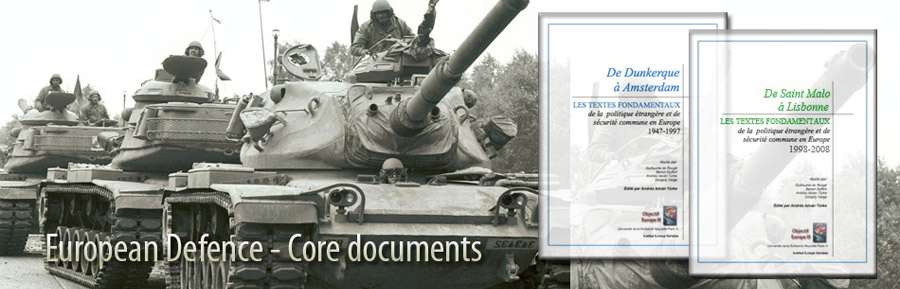
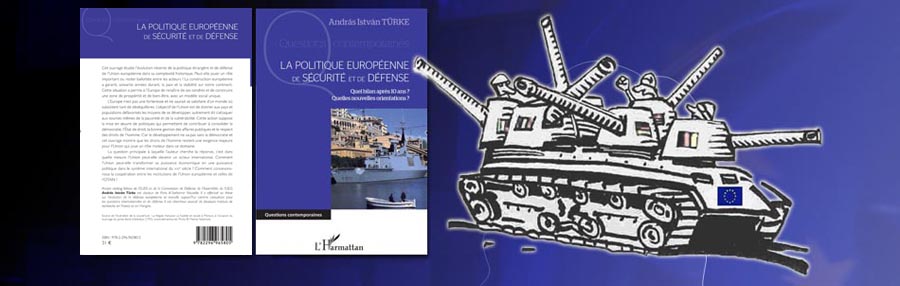
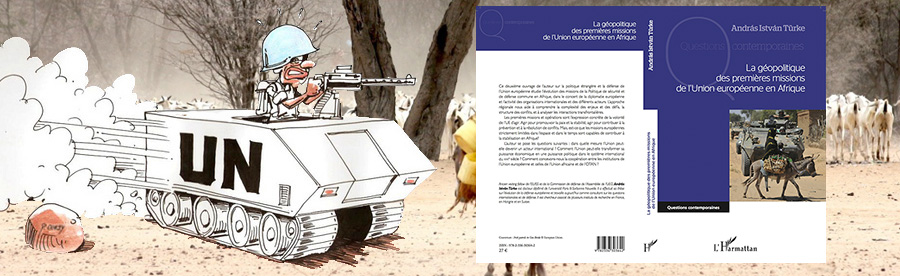
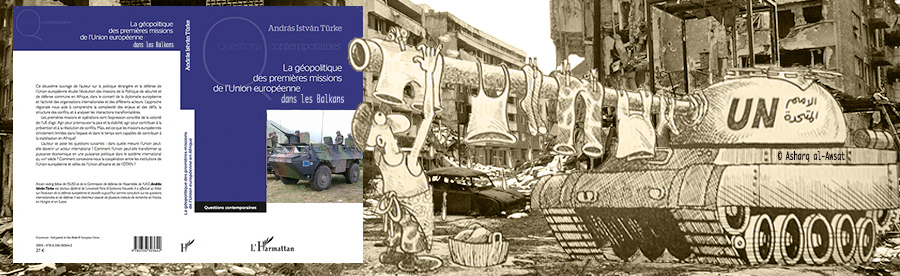
We are looking for sponsors for the English translation of these books, please contact turkeandras(at)gmail(dot)com