
You are here
Feed aggregator
Press release - EU-wide survey: An insecure world raises high expectations on the EU
While economic concerns grow, Europeans value the peaceful, protective and cooperative nature of the EU, and recognise the quality of life it enables.
Source : © European Union, 2026 - EP
Source : © European Union, 2026 - EP
Categories: European Union
Press release - EU-wide survey: An insecure world raises high expectations on the EU
While economic concerns grow, Europeans value the peaceful, protective and cooperative nature of the EU, and recognise the quality of life it enables.
Source : © European Union, 2026 - EP
Source : © European Union, 2026 - EP
Categories: European Union
Agency Cannot Be Decreed
By Vani S. Kulkarni
PHILADELPHIA, Jul 1 2026 (IPS)
India’s new education policy asks a great deal of its teachers. The National Education Policy of 2020 and its NISHTHA (National Initiative for School Heads’ and Teachers’ Holistic Advancement) training scheme, want teachers to be more than deliverers of syllabus. They are to be empowered professionals, agents of change who shape the future of children and, the policy says, of the nation itself. It is a generous and welcome ambition.
Vani S. Kulkarni
But there is a difficulty no policy can resolve simply by stating it. You can decree that teachers be empowered. You cannot, by decree, make them so.For two decades, the dominant approach to teacher quality in India, as in much of the world, has run in the opposite direction. It judges teachers by individual performance and accountability, by what they deliver and how their classrooms score. Under that logic, a teacher’s agency quietly shrinks until it means doing well what someone else has already decided. The teacher becomes an executor of other people’s choices. This is the very habit NISHTHA hopes to break, and it will not break easily, because a system built to measure compliance tends to produce it.
The real question, then, is not whether we wish teachers to have agency because we do. It is where agency actually comes from.
I spent a year, between 2023 and 2025, looking for an answer in an unlikely place: a small, non-governmental teacher-preparation programme in Gurugram, north India called I Am A Teacher (IAAT), which has spent a decade training teachers in a humanistic tradition that cuts against the accountability grain. What I found there was a claim that sounds almost too soft to matter, until you watch what it does. Agency, in this programme’s account, does not begin with autonomy handed down from above. It begins with self-knowledge. A teacher who has examined her own assumptions, her own fears and habits of judgment, is a teacher who can finally exercise judgment of her own.
That self-knowledge expressed itself, in the teachers I met, in three widening circles.
The first was the classroom. Teachers spoke of designing their own curricula and lesson plans, and of sharing in decisions about assessment, as the very substance of their professional dignity. To be handed instructions to execute, one teacher said, is to have your voice taken away. And teacher autonomy, several insisted, is not for the teacher’s sake alone. When a teacher can read her own classroom and meet children where they are, the children begin to experience an agency of their own, becoming creative and imaginative rather than merely obedient.
The second circle was the inner life of the student. These teachers refused to see their work as the transmission of knowledge and content alone. A child’s social and emotional wellbeing, one told me, matters as much as the subject on the board. They understood it as part of their agency to steady a struggling child, inside the classroom and beyond it, on the conviction that learning and wellbeing cannot be pulled apart.
The third and widest circle was the world the school is embedded in. The most striking thing about these teachers was that their sense of agency did not stop at the classroom door. They spoke about how political and economic forces shape what gets taught and what gets funded, and about the inequality that public education is meant to counter and too often deepens. Education can never be equal, one teacher said plainly, naming the way wealth sorts children into schools and teachers into salaries. Some met that knowledge not with resignation but with initiative, volunteering in underserved areas or starting small independent learning centres of their own. That is agency in its fullest sense, a teacher who sees the system she is part of and acts to make it fairer.
A training module alone can produce none of this, and that is exactly the point. The NEP is right that teachers should be agents of change. But agency is not a permission a policy grants. It is a capacity, and capacities have to be formed, through self-reflection, mentoring, time, and the experience of being trusted to decide. These are precisely the things an accountability-driven system finds hardest to fund, because they do not show up on a dashboard, and their results appear years later, in a classroom run by someone who knows her own mind.
A teacher who has been told only what to do can comply. A teacher who has come to know herself can decide. India’s classrooms, and the children in them, need far more of the second kind. No policy can issue that teacher by order. But a country that understood where her/his agency begins could choose, at last, to help make her/his.
If NISHTHA is to be more than a circular, its success will be measured on the ground, in whether teachers actually come to exercise the agency the policy promises them. And one concrete step is within reach now. The country need not invent this formation from nothing. Small programmes such as IAAT, quietly and against the current, already practise it and have done so for years. Recognising them, learning from them, and resourcing them would cost little and teach a great deal.
Vani S. Kulkarni is a sociologist affiliated with the University of Pennsylvania, and has held research and teaching appointments at Harvard and Yale universities. Her research navigates the intricate crossroads of Global Health, Education, Race and Caste, Gender, Sociology of Trust, Development, and Democracy.
IPS UN Bureau
Follow @IPSNewsUNBureau
!function(d,s,id){var js,fjs=d.getElementsByTagName(s)[0],p=/^http:/.test(d.location)?'http':'https';if(!d.getElementById(id)){js=d.createElement(s);js.id=id;js.src=p+'://platform.twitter.com/widgets.js';fjs.parentNode.insertBefore(js,fjs);}}(document, 'script', 'twitter-wjs');
Categories: Africa
À Mambasa, les leaders d’opinion s’unissent contre la désinformation, frein à la lutte contre Ebola
Au territoire de Mambasa (Ituri), la lutte contre les fausses informations est désormais une priorité pour les forces vives locales.
Categories: Afrique
REPORT on a European Parliament recommendation to the Council, the Commission and the Vice-President of the Commission / High Representative of the Union for Foreign Affairs and Security Policy on the changing geopolitical situation in East Asia and...
REPORT on a European Parliament recommendation to the Council, the Commission and the Vice-President of the Commission / High Representative of the Union for Foreign Affairs and Security Policy on the changing geopolitical situation in East Asia and the need for closer cooperation with like-minded partners in the region
Committee on Foreign Affairs
Adam Bielan
Source : © European Union, 2026 - EP
Committee on Foreign Affairs
Adam Bielan
Source : © European Union, 2026 - EP
Categories: Europäische Union
REPORT on a European Parliament recommendation to the Council, the Commission and the Vice-President of the Commission / High Representative of the Union for Foreign Affairs and Security Policy on the changing geopolitical situation in East Asia and...
REPORT on a European Parliament recommendation to the Council, the Commission and the Vice-President of the Commission / High Representative of the Union for Foreign Affairs and Security Policy on the changing geopolitical situation in East Asia and the need for closer cooperation with like-minded partners in the region
Committee on Foreign Affairs
Adam Bielan
Source : © European Union, 2026 - EP
Committee on Foreign Affairs
Adam Bielan
Source : © European Union, 2026 - EP
Categories: European Union
Documents algériens pour l’étranger : l’Apostille remplacera la légalisation consulaire dès le 9 juillet
Le calvaire administratif des légalisations consulaires touche à sa fin. Le ministère des Affaires étrangères a annoncé mardi que la Convention Apostille de La Haye, […]
L’article Documents algériens pour l’étranger : l’Apostille remplacera la légalisation consulaire dès le 9 juillet est apparu en premier sur .
Categories: Afrique
OPINION on the proposal for a regulation of the European Parliament and of the Council on the Union Civil Protection Mechanism and Union support for health emergency preparedness and response, and repealing Decision No 1313/2013/EU (Union Civil...
OPINION on the proposal for a regulation of the European Parliament and of the Council on the Union Civil Protection Mechanism and Union support for health emergency preparedness and response, and repealing Decision No 1313/2013/EU (Union Civil Protection Mechanism)
Committee on Security and Defence
Reinis Pozņaks
Source : © European Union, 2026 - EP
Committee on Security and Defence
Reinis Pozņaks
Source : © European Union, 2026 - EP
Categories: Defence`s Feeds, European Union
DRAFT REPORT on shaping the EU's external action to address the human rights challenges posed by artificial intelligence - PE790.047v01-00
DRAFT REPORT on shaping the EU's external action to address the human rights challenges posed by artificial intelligence
Committee on Foreign Affairs
Nacho Sánchez Amor
Source : © European Union, 2026 - EP
Committee on Foreign Affairs
Nacho Sánchez Amor
Source : © European Union, 2026 - EP
Categories: Europäische Union
DRAFT REPORT on shaping the EU's external action to address the human rights challenges posed by artificial intelligence - PE790.047v01-00
DRAFT REPORT on shaping the EU's external action to address the human rights challenges posed by artificial intelligence
Committee on Foreign Affairs
Nacho Sánchez Amor
Source : © European Union, 2026 - EP
Committee on Foreign Affairs
Nacho Sánchez Amor
Source : © European Union, 2026 - EP
Categories: European Union
India Should Stop Panicking About Trump
The emotionalism in Indian politics obscures the strategic logic of U.S.-India ties.
Categories: Diplomacy & Crisis News
Agriculture: quinze propositions de la filière bio pour répondre aux défis français
Alors que l’État français s’est engagé sur un objectif de 18% de la surface agricole utile dédiée au bio d’ici à 2027, date de l'élection présidentielle française, la Maison de la Bio, fédération qui va des agriculteurs aux distributeurs de la filière, publie mercredi 1er juillet 2026 quinze propositions pour les politiques, en affirmant que l'agriculture biologique est « une réponse crédible » aux défis sur la santé, l'eau, l'environnement et la souveraineté alimentaire.
Categories: Union européenne
Minutes - Monday, 22 June 2026 - Tuesday, 23 June 2026 - PE790.195v01-00 - Subcommittee on Human Rights
Source : © European Union, 2026 - EP
Categories: Union européenne
Draft agenda - Tuesday, 14 July 2026 - PE790.138v01-00 - Committee on Foreign Affairs , Committee on Budgets
Source : © European Union, 2026 - EP
Categories: Europäische Union
Draft agenda - Tuesday, 14 July 2026 - PE790.138v01-00 - Committee on Foreign Affairs , Committee on Budgets
Source : © European Union, 2026 - EP
Categories: European Union
Draft agenda - Tuesday, 14 July 2026 - PE790.208v01-00 - Committee on Foreign Affairs
Source : © European Union, 2026 - EP
Categories: European Union
« Les étrangers dehors ! » : en Afrique du Sud, les mouvements xénophobes réussissent leur démonstration de force
Mardi 30 juin, des manifestations contre les étrangers en situation irrégulière à l’appel du mouvement March and March se sont tenues dans les grandes villes. Des violences étaient redoutées, mais la journée s’est globalement déroulée dans le calme.
Categories: Afrique
Warum Cybersicherheit Regeln braucht - und diese auch durchgesetzt werden müssen
Warum Cybersicherheitsregeln nichts bringen, wenn man sie nicht durchsetzt. Das Cybernation-Trio hat diese Folge live auf der Konferenz Cybernation (wie passend), organisiert vom Wirtschaftsrat der CDU, aufgenommen. Vor den führenden Köpfen der Cybersicherheitspolitik diskutieren wir dieses Mal die Frage, wie die Politik Hersteller für unsichere Software in die Pflicht nehmen kann. Außerdem reden wir darüber, warum Cybersicherheitsregeln nichts bringen, wenn man sie nicht durchsetzt.
Categories: Diplomacy & Defense Think Tank News
Trump’s Trans-Atlantic Tech Schism
The U.S. president’s policies are driving Europe’s push for technological sovereignty.
Categories: Diplomacy & Crisis News
Réforme constitutionnelle : le député Daniel Furaha écrit à Félix Tshisekedi et exige la paix à l’Est comme préalable
Peut-on engager une réforme constitutionnelle alors que l'Est de la République démocratique du Congo continue de vivre au rythme de la guerre et des déplacements massifs de populations ? C'est l'interpellation majeure du député national Daniel Furaha Uma au chef de l’Etat.
Categories: Afrique
Pages


© 2012-2018 Europa Varietas Foundation © 2015-2018 Europa Varietas Association
www.europavarietas.org | info(@)europavarietas(dot)org | Switzerland

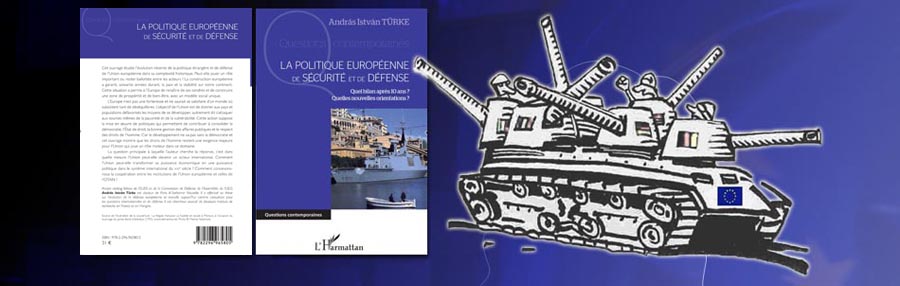
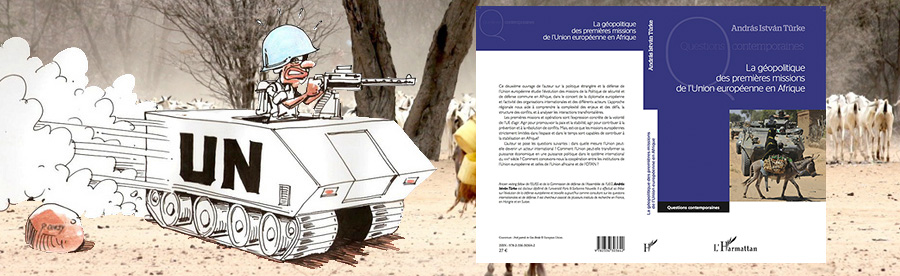
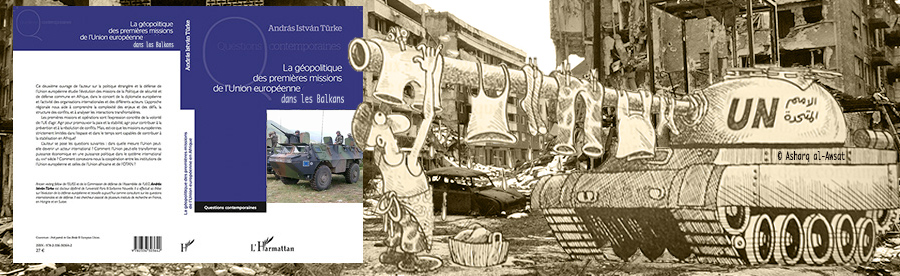
We are looking for sponsors for the English translation of these books, please contact turkeandras(at)gmail(dot)com