
Vous êtes ici
Agrégateur de flux
Europe’s China Strategy Is Ready for a Refresh
EU leaders have an opportunity to stop treating repression as a side issue and instead make human rights more central to their engagement with China.
Catégories: Diplomacy & Crisis News
Regular Press Conference of the Ministry of National Defense on July 30, 2026
No description
Catégories: Defence`s Feeds
Cuba's Permanent Representative addresses the Assembly of the International Seabed Authority
The Permanent Representative of Cuba to the International Seabed Authority (ISA), Ambassador Tania López Larroque, addressed the 31st Session of the Assembly of this international body on the morning of 28 July.
Catégories: Defence`s Feeds
Resilience at the Heart of Australia-Singapore Ties
At the 15th Singapore-Australia Joint Ministerial Committee this week, the two sides emphasized resilience across sectors, from defense to trade.
Catégories: Diplomacy & Crisis News
Dual Crises in Eastern DRC as Ebola Surges and Hunger Deepens
By Shuli Wong
UNITED NATIONS, Jul 30 2026 (IPS)
The Democratic Republic of Congo (DRC) is battling the fastest-growing Ebola outbreak on record, with United Nations officials warning that hunger is actively undermining efforts to contain the spread.
“Ebola feeds on delay, fear and hunger,” said Carl Skau, acting director of the World Food Programme (WFP) on Wednesday, July 29.
The current outbreak, declared on May 15th and caused by the Bundibugyo species of Ebola, is the third largest outbreak ever recorded, said Dr. Chikwe Ihekweazu, Executive Director of the World Health Organization’s (WHO) Health Emergencies Programme. The outbreak in the DRC is reaching unprecedented levels, Dr. Ihekweazu noted. “Over the last few days, we’ve seen some of the highest numbers of new infections in a single day.”
As of July 29th, the DRC outbreak has reached over 3,200 cases, with the virus spreading to 48 health zones across five provinces in eastern DRC. Unfortunately, WHO’s modeling has indicated that the true scale of the outbreak could be two to four times higher than the reported cases. Furthermore, 80 percent of new cases are coming from unknown chains of transmission, and many newly reported deaths are from people who never reached a health care facility or received care.
Julien Harneis, the UN’s Senior Ebola Coordinator, discussed how a critical driver for Ebola transmission is the fact that people are dying in their communities rather than in the care of a hospital or treatment center.
“Roughly 60 percent of deaths are occurring in the community, at the point when viral load — and risk to caregivers — is highest,” said Mr. Harneis.
WHO officials have mirrored this concern, calling deaths that occur outside of health facilities “the most alarming finding.” While there is no approved treatment for the Bundibugyo species of Ebola, the chances of survival are significantly higher with early supportive care.
On top of the outbreak is a severe hunger crisis that is exacerbating the impact and spread of Ebola. Across eastern DRC, nearly 10 million people are facing crisis- or emergency-level hunger. Ituri, the epicenter of the outbreak, is also the DRC’s most severe hunger hotspot, with 1.9 million people at crisis levels of food insecurity or worse. Mr. Skau emphasized how “food assistance is frontline Ebola containment. It helps families stay home, supports safe isolation, builds trust with communities and keeps health teams moving.”
The WFP has already delivered more than 160,000 hot meals to patients and frontline workers across 17 treatment and isolation centers. Dry food rations have been provided to 23,000 people, including 14,000 under quarantine, and an additional 36,000 people in Ebola-affected zones have been provided general food assistance. While discussing WFP’s work, Mr. Skau stressed how food logistics support is central to containing the outbreak. “You cannot force people to choose between hunger and health,” he said.
However, funding to tackle the interconnected hunger and Ebola crisis remains critically underfunded. WFP needs USD 293.6 million over the next six months to sustain all operations in DRC, including $76 million for the regional Ebola responses and $50 million for food and nutrition assistance.
“$76 million is the ask and that’s frankly just peanuts, if you look at the bigger scheme of things,” said Mr. Skau. Furthermore, while WFP’s logistics have been somewhat funded, the food element has received no funding. Mr. Skau emphasized, “if you want to be effective, you need to have an all rounded response. It’s not only the health response that is needed to be able to contain that.” Mr. Harneis added that in addition to the food assistance needed, the broader $1 billion Humanitarian Needs and Response Plan is only 45 percent funded.
WHO and WFP officials are urging the international community not to lose focus, as Dr. Ihekweazu warned: “now is not the time to drop the ball.” Mr. Harneis and Mr. Skau called for further action and to “scale up the Ebola response, three, four, five times of what we are doing now.”
Mr. Skau linked the urgent funding need to a broader appeal for political attention, describing the DRC as “exhausted from years of conflict, from repeated displacement, from crisis after crisis after crisis.” He argued that ending the outbreak will require more than just medical and food assistance: “We need peace, we need security…for all of this, we need funding…the funding that is coming here is far from enough and we need political attention.” In the weeks ahead, a rapid increase in funding and political will is needed to change the outbreak’s trajectory.
IPS UN Bureau Report
Follow @IPSNewsUNBureau
!function(d,s,id){var js,fjs=d.getElementsByTagName(s)[0],p=/^http:/.test(d.location)?'http':'https';if(!d.getElementById(id)){js=d.createElement(s);js.id=id;js.src=p+'://platform.twitter.com/widgets.js';fjs.parentNode.insertBefore(js,fjs);}}(document, 'script', 'twitter-wjs');
Catégories: Africa
Iran and the United States are once again at the center of global security. Is this just another crisis, or is it the beginning of a new geopolitical era in the Middle East? – ELIAMEP experts’ views
ELIAMEP’s analysts assess the latest developments and examine possible scenarios for the future of Iran–US relations, as well as their implications for the Middle East and international security.
Read it here (in Greek).
Catégories: Diplomacy & Defense Think Tank News, Nyugat-Balkán
Mégafeu en Gironde : les stigmates de l'incendie
Le mégafeu qui frappe la Gironde depuis huit jours a laissé sur sur son chemin destruction et impuissance. Quelques gouttes de pluie et des températures plus clémentes ont redonné espoirs aux pompiers : ils considèrent le feu "toujours stabilisé" mais restent prudents.
Notre envoyée spéciale, Éléonore Gogé, s'est rendue à Lège-Cap Ferret, où des dizaines de maisons sont calcinées.
Catégories: France
Protokoll - Donnerstag, 25. Juni 2026 - PE790.755v01-00 - Ausschuss für Umweltfragen, öffentliche Gesundheit und Lebensmittelsicherheit , Ausschuss für Industrie, Forschung und Energie , Ausschuss für Sicherheit und Verteidigung
Quelle : © Europäische Union, 2026 - EP
Catégories: Europäische Union
Guerre(s) pour l’hégémonie régionale au Moyen-Orient
Après un court arrêt des opérations militaires suivant la signature à distance, le 17 juin 2026, du protocole d’accord entre l’Iran et les États-Unis, celles-ci ont brutalement repris, le 7 juillet, dans le Golfe persique et les espoirs fondés durant cet intermède de cessez-le-feu ont volé en éclat. Faut-il en être surpris ? Quelles sont les causes profondes qui permettent de comprendre la reprise des hostilités ?
Quantité de commentaires et d’analyses ont été produits au cours de ces derniers mois qui constituent autant de réactions à chaud, parfois utiles, à l’enchaînement quasi ininterrompu des évènements, mais qui prennent plus rarement le recul nécessaire pour décrypter les enjeux fondamentaux aux multiples séquences de ces guerres contre l’Iran.
La République islamique d’Iran au centre des enjeux régionauxCe qui apparaît in fine structurant, c’est un combat frontal pour l’acquisition de l’hégémonie régionale au sein duquel ce sont les États-Unis qui fixent le cadre général dans lequel Israël est un partenaire stratégique, alors qu’en Palestine ou au Liban c’est Tel-Aviv qui décide de l’essentiel avec le soutien, incontestablement déterminant, de Washington, mais sans intervention directe de ce dernier. Pour autant, alors que depuis le 28 février 2026, les objectifs énoncés par Donald Trump se sont beaucoup modifiés, et souvent contredits au fil des jours, ceux revendiqués par les dirigeants israéliens sont limpides. Il s’agit pour eux de neutraliser l’Iran, à ce jour seule puissance capable de contester un ordre régional dominé par l’axe israélo-états-unien. L’objectif pour Tel-Aviv est donc d’affaiblir Téhéran au maximum et par tous les moyens, voire parvenir à son effondrement. Il s’agit de disloquer un État millénaire, potentiellement susceptible de contrebalancer la prétention de Tel-Aviv de redessiner unilatéralement l’ordre régional sans contrepartie ni limite et de réaliser l’utopie du Grand Israël. Dans ce cadre, les États-Unis se sont dans un premier temps révélés suivistes après s’être visiblement fait berner par Benyamin Netanyahou et à aucun moment, le locataire de la Maison-Blanche ne semble avoir anticipé les conséquences internationales déstabilisatrices de sa décision d’entrer en guerre.
La violente rivalité entre Israël et la République islamique renvoie aux profondes modifications géostratégiques qui traversent la région depuis l’implosion de l’Union soviétique et la fin du monde bipolaire. On se souvient par exemple qu’au cours des années 1980 la relation entre les deux États était d’une nature bien différente, la première vendant même des armes à la seconde dans la guerre qui l’opposa à Saddam Hussein de 1980 à 1988. Depuis, l’équation stratégique fondamentale réside pour Israël dans son obsession d’empêcher qu’une autre puissance régionale lui conteste la sienne propre. Or, depuis le début des années 1990, la République islamique n’a pour sa part eu de cesse de mettre en œuvre une politique lui permettant de se doter d’une capacité d’influence régionale efficiente et donc de se doter d’une profondeur stratégique. Pour ce faire, travailler à la maîtrise du cycle de l’enrichissement de l’uranium et constituer un réseau de partenaires qualifié d’axe de la résistance.
À la rivalité militaire qui oppose les deux États se superpose la rivalité économique qui, en l’occurrence, se concrétise par l’objectif du contrôle des routes et des nœuds énergétiques et commerciaux : détroit d’Ormuz pour l’Iran, Méditerranée orientale pour Israël. Ces paramètres renvoient au développement des flux économiques reliant l’Asie, le Moyen-Orient et l’Europe et aux multiples projets les concrétisant : Nouvelles routes de la soie, India-Middle East-Europe Corridor, Route du développement entre le sud de l’Irak et la Turquie, projet de chemin de fer trans-Golfe, réactivation de la voie ferrée du Hedjaz. Dans cette perspective, il s’agit donc de la délimitation de la place que chaque puissance veut et peut acquérir au sein des circuits de production et d’échange. En d’autres termes la place de chacune au sein du mode de production économique dominant.
Des recompositions régionales linéamentairesC’est pourquoi, contrairement à ce qui est fréquemment avancé par nombre d’observateurs, l’Iran ne cherche pas avant tout à subvertir l’ordre régional ou international mais, au contraire, à s’y ménager la place la plus assurée. De ce point de vue, les dirigeants iraniens partagent la même logique politique que celle des dirigeants des BRICS+, dont ils font désormais partie. Ils ne cherchent pas à constituer une alternative à l’ordre économique dominant mais cherchent à s’y intégrer. Il faut ainsi comprendre le dossier nucléaire iranien non seulement comme la quête d’une assurance sécurité pour les responsables de Téhéran mais aussi comme un moyen de se ménager au sein du système international une place qui lui est refusée par les États-Unis et la majorité des pays occidentaux.
Nous sommes actuellement dans un moment d’apolarité régionale au sein duquel des logiques concurrentielles exacerbées se cristallisent, ayant toutes pour finalité la conquête d’une forme d’hégémonie régionale. République islamique versus Israël en premier lieu, mais d’autres prétendants sont aussi en lice. C’est pourquoi de nouveaux partenariats se dessinent. On pense notamment à la Turquie, à l’Arabie saoudite, à l’Égypte mais aussi au Pakistan qui considèrent, pour des raisons au demeurant différentes, que le facteur régional le plus déstabilisateur qu’il convient de limiter actuellement est l’État hébreu. Il est néanmoins intéressant de souligner que ces États restent les uns et les autres de proches partenaires des États-Unis ce qui montre la complexité des processus en cours. Les effets manifestes de ces rivalités/recompositions dépassent le seul cadre régional et renvoient à un ordre international en plein bouleversement.
Divergences tactiques entre les États-Unis et IsraëlSi pour Israël, l’Iran représente un concurrent régional direct et immédiat, la question se pose différemment pour les États-Unis. C’est en effet, de leur point de vue, avant tout la crainte qu’un État puisse s’imposer dans l’ordre régional et mondial sans leur faire allégeance. Contrairement à Israël qui cherche la neutralisation de l’Iran afin de s’assurer qu’il ne constituera plus un danger pour de nombreuses années, l’enjeu pour les États-Unis est de tenter de contenir l’Iran pour l’empêcher de refonder un ordre régional selon des termes qui lui seraient par trop favorables. Pour ce faire, il faut de la méthode et une vision de moyen terme, qualité dont les décisions politiques souvent erratiques de Donald Trump sont dénuées. Si les politiques de sanctions à l’encontre de l’Iran se transmettent d’administration en administration états-unienne, c’est bien dans le but de réduire la marge de manœuvre iranienne et pour l’empêcher de mener sa politique d’affirmation régionale prétendant se dispenser de la bénédiction de l’impérialisme états-unien. En un mot, il s’agit pour les États-Unis de contraindre l’Iran à faire allégeance. En ce sens, les objectifs de Washington et de Tel-Aviv ne coïncident pas toujours. Pour ses intérêts bien compris, Donald Trump a besoin d’un Moyen-Orient stabilisé et, tant que faire se peut, structuré par un système de partenariats qui lui soit favorable. On voit ainsi comment il soutient les nouvelles autorités politiques en Syrie, dirigées par Ahmed Al-Charaa, en les faisant « parrainer » par la Turquie et l’Arabie saoudite. La logique israélienne est radicalement différente puisque, a contrario, elle met en œuvre une politique de déstabilisation et de fragmentation régionales dans une logique d’affaiblissement des États.
Les lobbies pro-israéliens exercent une incontestable influence sur les orientations de Washington, mais ce ne sont ni eux ni Israël qui imposent leurs choix aux États-Unis. L’influence de Netanyahou sur Trump est réelle, mais les intérêts fondamentaux de l’impérialisme états-unien restent le facteur explicatif principal. Ainsi, la logique des Accords d’Abraham – amorcée par Donald Trump I, poursuivie par Joe Biden – vise avant tout à renforcer l’influence états-unienne dans la région en consolidant la normalisation politique et économique d’Israël avec les États arabes du Moyen-Orient. C’est pourquoi certaines des initiatives du gouvernement suprémaciste israélien peuvent apparaitre comme problématiques pour les intérêts états-uniens.
D’autant que, facteur supplémentaire de complexité, c’est l’enjeu de la rivalité avec la Chine qui se profile au-delà de la stricte question iranienne. Nous savons l’importance, certes relative, des exportations iraniennes d’hydrocarbures vers Pékin et surtout la place centrale de l’Iran dans l’acheminement de ces ressources énergétiques. L’éminent rôle du détroit d’Ormuz est désormais connu de tous. Aux yeux des dirigeants chinois, il est vital d’éviter l’effondrement de l’État iranien qui serait source de déstabilisation aggravée. On peut toutefois souligner que, dans le même mouvement, les dirigeants chinois comprennent parfaitement que la poursuite de la guerre contribue à affaiblir les États-Unis, ce qui ne les mécontente pas.
Finalement, deux tendances se conjuguent. La rivalité frontale entre Israël et l’Iran pour acquérir l’hégémonie régionale, d’une part – en tenant compte d’autres protagonistes, la Turquie et l’Arabie saoudite principalement –, la volonté de l’impérialisme états-unien de réduire par tous les moyens les ambitions iraniennes de s’affranchir des règles qu’il édicte, d’autre part. Les intérêts de Washington et de Tel-Aviv convergent mais ne coïncident pas totalement. Dans les deux cas si la République islamique est incontestablement le pays agressé, c’est aussi un pays engagé dans sa propre logique de puissance qui n’hésite pas pour ce faire ni à constituer un réseau d’obligés dans la région dans le but de conforter ses intérêts ni à brutalement réprimer les mouvements de contestation qui se développent en son sein et pourraient l’affaiblir encore plus.
L’article Guerre(s) pour l’hégémonie régionale au Moyen-Orient est apparu en premier sur IRIS.
Catégories: Diplomacy & Defense Think Tank News
From the Foothills of Mount Kilimanjaro, Magnolia Athletics Camp Is Helping Girls Stay in School, Pursue Athletics and Escape the Pressures of Harmful Traditional Practices
Josephine Sembeyo (in blue) competes during Kenya's World Athletics Under-20 trials in May, where she qualified for the World Athletics Under-20 Championships in Oregon. Credit: Robert Kibet/IPS
By Robert Kibet
OLOITOKTOK, Kenya, Jul 30 2026 (IPS)
Before sunrise each morning, 19-year-old Josephine Sembeyo joins dozens of teenage runners leaving Magnolia Athletics Camp for training beneath the shadow of Mount Kilimanjaro.
The quiet morning air is broken only by the rhythm of footsteps along the dusty roads that have shaped generations of Kenyan distance runners.
But for Sembeyo, every kilometre represents far more than preparation for the 2026 World Athletics Under-20 Championships, where she will represent Kenya in the 1,500 metres.
Running has given her a chance she once feared might never come: to complete her education, support her family and make choices about her own future.
“Life hasn’t been easy for us. My father married a second wife and left my mother to raise us on her own. Seeing everything my mother has gone through motivates me every day. I want to succeed in athletics and education so that one day I can support her and my siblings and give them a better life,” Sembeyo says.
Girls from Magnolia Athletics Camp during a daily road training session in Oloitokitok, Kenya. Credit: Robert Kibet/IPS
A Camp Creating New Possibilities
Sembeyo is among 45 girls from pastoralist communities living and training at Magnolia Athletics Camp in Oloitokitok, near Kenya’s border with Tanzania.
The camp provides full scholarships covering education, accommodation, meals, athletics training and safeguarding support.
For many of the girls, athletics is not only about competition. It has become a pathway to education, confidence and opportunities that might otherwise remain out of reach.
The girls’ journey comes as they mark the International Day for Women and Girls of African Descent on July 25, a day that recognises the contributions, resilience and experiences of women and girls of African descent while highlighting the need to address discrimination and inequality.
For girls growing up in marginalised communities, access to education, safe spaces and opportunities can be a powerful tool for breaking cycles of poverty and exclusion.
Coach Andrew Lesuuda says Magnolia was created not only to identify talented runners but also to give girls a safe environment where they can develop academically and personally.
“When we started Magnolia Athletics Camp, our vision was not only to identify talented runners. We wanted to create an environment where girls could discover their potential, stay in school and believe that they can achieve more in life,” Lesuuda says.
“Athletics gives them an opportunity to dream, but education gives them the foundation to build a future beyond sport.”
Sports Against Early Marriage and FGM
Many of the girls joining Magnolia come from communities where opportunities for girls remain limited and where some continue to face risks linked to female genital mutilation (FGM) and child marriage.
According to UNICEF, more than 230 million girls and women alive today have undergone FGM. The United Nations says progress towards ending the practice remains too slow to meet the Sustainable Development Goal target of eliminating FGM and child marriage by 2030.
Kenya outlawed FGM in 2011 and has made progress through legislation and awareness campaigns, but the practice continues in some communities, particularly among sections of pastoralist populations.
The struggles facing girls in vulnerable communities are part of a wider global challenge.
Sarah Hendriks, a UN Women spokesperson, in a recent press conference said no country in the world has achieved full legal equality between women and men, leaving millions of girls exposed to harmful practices and unequal opportunities.
“No country in the world has achieved full legal equality between women and men. More than half of the world’s countries do not actually define rape by law on the basis of consent. Nearly three-quarters — 74% of the world’s countries — still allow child marriage by law, allowing girls to be married as children,” Hendriks said.
At Magnolia, athletics has become a tool for changing that reality by keeping girls in school and giving them opportunities beyond traditional expectations.
A Second Chance Through Running
Before joining Magnolia, Sembeyo feared her education could end early and that she might face an early marriage.
Today, she believes the camp has transformed her future.
“Had it not been for Magnolia Athletics Camp, I believe my life would have been very different. I was at risk of an early and forced marriage, but coming here gave me the chance to stay in school, train and dream about a better future. Today, I’m happy because I know my life has a direction,” she says.
Her daily routine starts before sunrise with training, followed by school and another athletics session in the afternoon before homework in the evening.
“Every morning when I train, I remind myself why I’m doing it. I know every session brings me closer to my dream and gives me another opportunity to change my family’s life,” she says.
When Climate Change Threatens Dreams
Sembeyo is joined at Magnolia by Jeska Lenawatop, a 1,500-metre runner from Lkuroto village in Samburu County, a pastoralist region in northern Kenya.
Before joining the camp, Jeska’s life revolved around helping her family care for goats and sheep, the main source of livelihood for many pastoral households.
But recurring droughts have devastated livestock and deepened economic hardship for communities that depend on animals for survival.
“Before Magnolia, my life was mainly about grazing goats and sheep. With droughts destroying livestock, our family’s main source of income, I had little hope for the future. This camp gave me a chance to stay in school and pursue my dreams,” Jeska says.
Through athletics and education, Jeska now sees a future beyond the challenges facing her community.
Building Confidence Through Education
Another athlete benefiting from Magnolia is Felister Naimutie, a 400 m and 800 m runner from Lolgorian village in Kilgoris.
She says drought and limited opportunities affected many girls growing up in her community.
“Growing up, I saw how drought affected our families and made life difficult. Many girls had few choices beyond pastoral duties and early marriage. Magnolia gave me hope through education and athletics,” Felister says.
For her, the camp represents more than a training facility. It is a place where she can continue learning while pursuing her sporting ambitions.
Beyond the Finish Line
Barnaba Korir, Athletics Kenya’s Youth Development Director, says community-based programmes, such as Magnolia, complement national efforts to identify young talent while ensuring athletes remain in school.
He says sport can build confidence, leadership and opportunities for young people.
At Magnolia, parents, teachers, community leaders and anti-FGM advocates also engage with families to promote girls’ education and challenge harmful practices.
As another training session ends beneath Mount Kilimanjaro, the girls jog back to camp laughing and encouraging one another.
For Sembeyo, the finish line is no longer defined only by medals.
Her selection to represent Kenya at the World Athletics Under-20 Championships has strengthened her belief that athletics can transform not only her life but also those of her family.
“Being selected to represent Kenya at the World Under-20 Championships means everything to me. It’s proof that hard work pays off, and I believe it is opening opportunities that can change my life. I want to make my family proud and show other girls that they should never give up on their dreams,” she says.
One day, she hopes to stand on an international podium wearing Kenya’s colours.
But her greatest ambition goes beyond medals.
“I want girls from communities like mine to know that education and sport can change their lives. If someone believes in you and gives you an opportunity, you can achieve your dreams. My dream is not only to win medals for Kenya but also to make sure my mother and my siblings have a better life,” Sembeyo says.
Perhaps Magnolia’s greatest achievement will not be measured by medals but by the number of girls who leave the camp with education, confidence and the freedom to choose the futures they want.
IPS UN Bureau Report
Follow @IPSNewsUNBureau
!function(d,s,id){var js,fjs=d.getElementsByTagName(s)[0],p=/^http:/.test(d.location)?'http':'https';if(!d.getElementById(id)){js=d.createElement(s);js.id=id;js.src=p+'://platform.twitter.com/widgets.js';fjs.parentNode.insertBefore(js,fjs);}}(document, 'script', 'twitter-wjs');
Related Articles
Catégories: Africa, Nyugat-Balkán
Die Ukraine zwischen Personalpolitik und Protesten
Die anhaltenden, wenn auch zurückgehenden, Straßenproteste in der Ukraine richten sich vor allem gegen die Entlassung von Verteidigungsminister Mychajlo Fedorow. Gleichzeitig verweisen sie aber auf grundlegendere Entwicklungen: den Umgang mit politischen Personalentscheidungen und den Wandel der politischen Kultur während des Krieges.
Im Zuge der jüngsten Regierungsumbildung wurde vor allem kritisiert, dass Fedorow gehen musste, während Oberbefehlshaber Oleksandr Syrskyj zunächst im Amt blieb. Der Konflikt zwischen beiden war ein offenes Geheimnis, auch wenn dessen Ausmaß erst in den vergangenen Wochen öffentlich wurde. Selbst nachdem Präsident Selenskyj auch Syrskyj entließ und durch den in den Streitkräften und in der Bevölkerung populären Generalmajor Mychajlo Drapatyj ersetzte, hielten die Straßenproteste an, um Fedorows Rückkehr ins Verteidigungsministerium zu erreichen.
Sich vertiefende Muster in Politik und GesellschaftÜber den konkreten Personalstreit hinaus verfestigen sich aber bestimmte Muster in Politik und Gesellschaft, die Probleme mit sich bringen könnten. Präsident Selenskyj hat sich daran gewöhnt, in den höchsten Ämtern häufige Personalwechsel vorzunehmen. Die Gründe dafür sind nur teilweise transparent. Dadurch entsteht zunehmend der Eindruck, das politische System werde immer stärker von engen politischen oder sogar persönlichen Erwägungen geprägt. Es scheint sich ein Muster zu etablieren: Personen, die einen hohen Popularitätsgrad erreichen, werden aus ihren Ämtern entfernt. Solche Wechsel leiten zudem eine Phase der Neuaufstellung ein, was interne Abläufe und die Zusammenarbeit mit anderen Behörden erschwert. In Kriegszeiten können solche Umstellungen besonders problematisch werden.
Diese intransparenten und öffentlich unzureichend begründeten Entscheidungen dienen vielen politisch engagierten Bürger:innen als Grund, auf die Straße zu gehen und zu protestieren. In den ersten Kriegsjahren überwog in der Bevölkerung hingegen große Zurückhaltung: Man wollte sich hinter die Führung des Landes stellen, um eine gemeinsame Front gegen den Feind zu bilden. Hinzu kommt, dass Proteste unter Kriegsrecht verboten sind, auch wenn sie bislang toleriert werden.
Seit Juli 2025 hat diese Zurückhaltung allerdings nachgelassen. Damals führten Straßenproteste gemeinsam mit den Stimmen externer Akteure zur Rücknahme eines Gesetzes, das zwei der maßgeblichen Antikorruptionsinstitutionen weitgehend entmachtet hätte. Auch im Fall Fedorow sahen viele Bürger:innen eine rote Linie überschritten. Nachdem sie mit der Entlassung von Syrskyj einen Teilerfolg erreicht hatten, fühlen sich manche ermutigt, weiter zu protestieren – auch für politische Ziele, die über die Rückkehr von Fedorow hinausgehen.
Zwischen demokratischer Kontrolle und politischer StabilitätEine aktive und einflussreiche Zivilgesellschaft gehört zu den Stärken der Ukraine und hat zu den bisherigen Kriegserfolgen beigetragen. Nach fast viereinhalb Jahren Krieg ist es auch mehr als verständlich, dass eine wachsende Rückkehr zu politischen Debatten zu beobachten ist. Diese kann allerdings auch eine höhere Instabilität bedeuten, weil gesellschaftliche und politische Meinungsunterschiede dann stärker sichtbar werden. Solche Spannungen werden unweigerlich von russischen Akteuren überspitzt und gegen Kyjiw eingesetzt. Der Zeitpunkt dafür wäre denkbar schlecht, da die Ukraine aktuell sowohl auf dem Schlachtfeld als auch in der Beziehung zu den USA eine positive Phase erlebt.
In der Ukraine wird eine Debatte darüber geführt, wo die Grenze zwischen notwendigen Protesten und der Gefahr der Instabilität verläuft. Der Ausgang dieser Debatte wird die Entwicklung der Proteste beeinflussen. Auch wenn die Bürger:innen die Gefahren – etwa durch russische Desinformation – gut verstehen, ist das Bedürfnis nach politischer Teilhabe groß. Hilfreich könnte es sein, wenn der Präsident künftig wiederholen würde, was er im September 2025 gesagt hat: dass er nach dem Krieg nicht für das Präsidentenamt kandidieren wolle. Stünde er stärker über alltagspolitischen Erwägungen, könnte er sich eher an sachlichen Gründen orientieren. Das würde seinen Entscheidungen sowohl in der Bevölkerung als auch bei ausländischen Partnern mehr Gewicht verleihen.
Catégories: Diplomacy & Defense Think Tank News
Cserhalmi György és Alföldi Róbert új magyar thrillerben láthatók november végétől
Catégories: Afrika, Kelet-Közép-Európa
Council amends Ukraine Plan to reflect more than €8 billion in additional Ukraine Facility financing for 2026
The Council amended the Ukraine Facility and Ukraine Plan to include nearly 30 additional conditionalities following more than €8 billion in Ukraine Support Loan financing.
Catégories: Europäische Union
Statement by the High Representative on behalf of the EU on the alignment of certain countries concerning restrictive measures in view of the situation in Russia
Statement by the High Representative on behalf of the European Union on the alignment of certain third countries with Council Decision (CFSP) 2026/1709 of 13 July 2026 amending Decision (CFSP) 2024/1484 concerning restrictive measures in view of the situation in Russia.
Catégories: Europäische Union
Statement by the High Representative on behalf of the EU on the alignment of certain countries concerning restrictive measures in view of Russia’s destabilising activities
Statement by the High Representative on behalf of the European Union on the alignment of certain third countries with Council Decision (CFSP) 2026/1707 of 13 July 2026 amending Decision (CFSP) 2014/2643 concerning restrictive measures in view of Russia’s destabilising activities.
Catégories: Europäische Union
Statement by the High Representative on behalf of the EU on the alignment of certain countries concerning restrictive measures against cyber-attacks threatening the Union or its Member States
Statement by the High Representative on behalf of the European Union on the alignment of certain third countries with Council Decision (CFSP) 2026/1713 of 13 July 2026 amending Decision (CFSP) 2019/797 concerning restrictive measures against cyber-attacks threatening the Union or its Member States.
Catégories: Europäische Union
Statement by the High Representative on behalf of the EU on the alignment of certain countries concerning restrictive measures in view of activities undermining the stability and political transition of Sudan
Statement by the High Representative on behalf of the European Union on the alignment of certain third countries with Council Decision (CFSP) 2026/1705 of 13 July 2026 amending Decision (CFSP) 2023/2135 concerning restrictive measures in view of activities undermining the stability and political transition of Sudan.
Catégories: Afrique, Europäische Union
Erklärung der Hohen Vertreterin im Namen der EU zur Erklärung einiger Länder, sich den restriktiven Maßnahmen gegen schwere Menschenrechtsverletzungen und ‑verstöße anzuschließen
Erklärung der Hohen Vertreterin im Namen der Europäischen Union zur Erklärung einiger Drittländer, sich dem Beschluss (GASP) 2026/1723 des Rates vom 13. Juli 2026 zur Änderung des Beschlusses (GASP) 2020/1999 über restriktive Maßnahmen gegen schwere Menschenrechtsverletzungen und -verstöße anzuschließen.
Catégories: Afrique, Europäische Union
Statement by the High Representative on behalf of the EU on the alignment of certain countries concerning restrictive measures in view of the situation in Lebanon
Statement by the High Representative on behalf of the European Union on the alignment of certain third countries with Council Decision (CFSP) 2026/1767 of 17 July 2026 amending Decision (CFSP) 2021/1277 concerning restrictive measures in view of the situation in Lebanon.
Catégories: Europäische Union
Pages


© 2012-2018 Europa Varietas Foundation © 2015-2018 Europa Varietas Association
www.europavarietas.org | info(@)europavarietas(dot)org | Switzerland
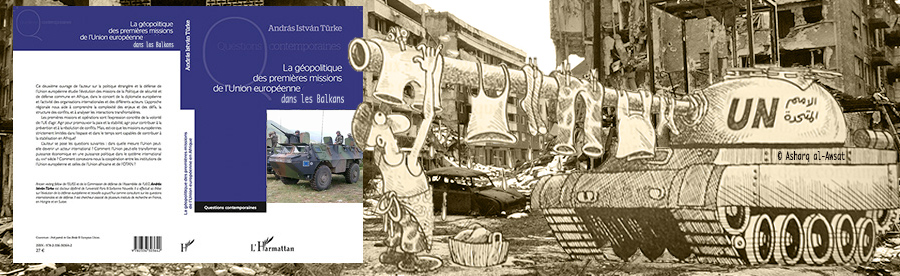
We are looking for sponsors for the English translation of these books, please contact turkeandras(at)gmail(dot)com