
Vous êtes ici
Agrégateur de flux
AI is cultivating a sustainable food revolution [Advocacy Lab]
Embracing new food production opportunities could allow AI to redefine agri‑food systems, improving sustainability and profitability
Catégories: Afrique, European Union
« Totalement inacceptable » : les ministres de l’UE redoublent d’appels pour des sanctions contre Israël après la défaite d’Orbán
« La réaction disproportionnée et indiscriminée d’Israël est tout à fait problématique et répréhensible », a déclaré le ministre belge des Affaires étrangères
The post « Totalement inacceptable » : les ministres de l’UE redoublent d’appels pour des sanctions contre Israël après la défaite d’Orbán appeared first on Euractiv FR.
Catégories: Afrique, Union européenne
EU prosecutor Kövesi in Athens as Greek government slams ‘absurd’ charges
Greek officials repeatedly accusing Kövesi of political manoeuvring and overreach
Catégories: Afrique, European Union
Corporate boss to lead agriculture in Hungary, despite ‘small farm’ campaign promises
The new farm minister Szabolcs Bóna leads a big farm and is an advocate of large-scale agriculture
Catégories: Afrique, European Union
Europe’s power pricing problem deepens industrial uncertainty [Advocacy Lab]
High power prices are forcing Europe’s industry to cut output and delay investment
Catégories: Afrique, European Union
‘Nobody expected them to like it’: DG Comp chief on battling Big Tech
"They’re entitled not to like [the DMA] – what they are not entitled to do is not comply with it," new-in-post DG Anthony Whelan tells Euractiv
Catégories: Afrique, European Union
La tension persiste à Masisi après deux jours de combats entre l’AFC/M23 et les Wazalendo
La situation humanitaire demeure très précaire ce mardi 21 avril 2026, au lendemain de violents affrontements qui ont opposé, toute la matinée de lundi, les combattants de l’AFC/M23 à une coalition des Wazalendo à Mitimingi, dans le groupement Ufamandu 2, secteur de Katoyi, territoire de Masisi (Nord-Kivu). Selon des sources locales, une accalmie est observée ce mardi, mais la situation reste particulièrement tendue.
Catégories: Afrique, European Union
L’US Air Force décide finalement de garder ses avions d’attaque A-10 Warthog au moins jusqu’en 2030
Peu après l’invasion de son territoire par la Russie, l’Ukraine demanda aux États-Unis, non sans insistance, de lui fournir plusieurs exemplaires de l’avion d’attaque A-10 Thunderbolt II [ou Warthog] qui, surnommé le «tueur de char», devait alors être progressivement retiré du service par l’US Air Force. Seulement, malgré l’appui d’élus et d’anciens responsables militaires américains...
Cet article L’US Air Force décide finalement de garder ses avions d’attaque A-10 Warthog au moins jusqu’en 2030 est apparu en premier sur Zone Militaire.
Catégories: Defence`s Feeds, Défense
Trump’s Geriatric Foreign Policy
Things are moving head-spinningly fast. Developments in the Middle East, in particular, have made more twists and turns than most of us can even keep up with. With all the air strikes and twitter-born threats, though, we may lose sight of just how antiquated much of our current foreign policy is.
There is something truly archaic about Donald Trump’s approach to international relations. Many of us tend to think “Make America Great Again” harkens back to some golden time in relatively recent memory, perhaps the go-go years of the Reagan 1980s. I’m not so sure. I’m struck by how much Trump’s worldview mostly seems to come from my grandfather’s time or even before. So many of his major policy initiatives have a 19th century sensibility, or at best a mid-20th century one. I would be surprised to learn that the President had done significant research into the history of American diplomacy, or that he had reflected deeply on how he wanted to tie his own policy into the longer-term currents of US politics. But I so often have the feeling that Donald Trump is channeling some inchoate version of an older American story dimly recalled from his 1950s elementary school American history class in Queens. His vision is that of an old man, largely inaccessible even to middle-aged Americans, much less young voters. Trump has been lucky, thus far, that the vision fortuitously resonates with his base, even if his supporters don’t necessarily get the references.
There’s an irony here. Donald Trump is in many respects the most revolutionary president the United States has had in the post-war period, and perhaps ever. He has challenged our alliances and longstanding partnerships, mostly abandoned a leadership role in a global system in large part created by his predecessors, rejected the free-trade philosophy that has guided American economic policy for 80 years or more. Further, he is the first American leader to have fully embraced social media, understood intuitively how to harness this revolutionary new way of communicating directly with his supporters without being filtered through traditional media. Overall, though, his revolution smacks more of radical reaction than innovative change.
One often has the impression that Trump sees himself as the president after Ulysses S. Grant instead of the one after Joe Biden. His take on foreign policy seems in many ways much more like his late 19th century predecessors than his early 21st century ones. The America of that time – a continental power in full territorial expansion, largely outside the power struggles of Europe or Asia, its industry growing by leaps and bounds behind exclusionary tariffs – may be the very America he means us to rediscover.
That would certainly explain his rather old-fashioned approach to foreign policy. In the first hundred years or so of its existence, the United States grew from thirteen original states hugging the Atlantic seaboard to a vast American empire. Sometimes, our expansion came through conquest, with the Mexican American War in the 1840s, for example, bringing in vast new lands from Texas to California. Sometimes, we made some very astute real estate deals, like the Louisiana Purchase in the early 19th century or the acquisition of vast Alaska from the Russians in the 1860s. The idea was that huge, “empty” territories were there for the taking, that entrepreneurial, courageous Americans had the right to exploit the riches of unexplored wild lands. In that context, Trump’s periodic obsession with Greenland, for example, makes perfect sense. Indeed, the first serious thinking about the United States acquiring Greenland came in 1867 right after our purchase of Alaska, when the Andrew Johnson Administration commissioned a study on the possibility. There were a few more aborted attempts to get the territory subsequently.
Similarly, Trump’s frequent focus on Latin America harks back to a much earlier time. With its “Donroe Doctrine” – what a ridiculous name – this administration makes a clear link with the 1823 Monroe Doctrine, which sought to ensure that great powers of the day left Latin America to US influence. Its modern version, as laid out in State Department planning documents, essentially seeks the same. “Under the new ‘Donroe Doctrine,’” the most recent Agency Strategic Plan says, “the United States has re-established absolute primacy in our hemisphere—both by bringing anti-American and rogue states to heel, and by forging powerful new security and economic partnerships with like-minded states.” Trump has repeated the long and often painful history of 19th and 20th century interferences in the region in places like Panama, Nicaragua, Honduras, Cuba, Haiti, the Dominican Republic, Chili, and so on. Trump’s old-school intervention in Venezuela to overthrow President Maduro, his sometime blockade of Cuba, and his frequent comments on the desirability of a return the Panama Canal to American suzerainty all seem like they’re torn from some history of Yankee imperialism from past centuries.
His on-again, off-again trade wars feel equally dated. In the 1800s, tariffs were a primary source of revenue for the federal government, and particularly in the later half of the century high tariffs were used to dope up America’s burgeoning industrial growth. Some of the highest import duties in the history of the United States were imposed not under Donald Trump but under President Benjamin Harrison in 1890. The so-called McKinley Tariffs reached as much as 50% on most imported goods. Trump seems bent of returning us to that era. You could almost imagine him dreaming of new railroads being built across the continent, the first skyscrapers going up in cities like New York and Chicago, the first Model-T Fords coming off the assembly line, all encouraged and protected by a wall of trade barriers.
His immigration policy, obviously, seeks to bring us back to an earlier time. Until the adoption of the Immigration and Nationality Act (INA) of 1965 under President Johnson, America’s immigration law was overtly and unabashedly racist. The Chinese Exclusion Act in the 1882 and the Immigration Act of 1924 sought to impose a policy that overwhelming favored immigration from northern and western Europe. The 1924 law also created the Border Patrol, so active under this administration. Trump’s immigration policy goes right back to those days, self-consciously. The architect of his war on immigrants, White House Deputy Chief of Staff Stephen Miller, has been overtly critical of the INA’s end to geographic quotas. “If you bring those societies into our country and then give them free welfare, what do we think is going to happen,” he said on Fox News in December. “We need a moratorium on immigration from Third World countries until we can heal ourselves as a nation.”
Even the current war with Iran, apparently now on hold for the moment, pulls us back into an earlier time. Of course, as Trump may or may not know, this is not the first time we’ve sought regime change in Iran. The CIA played a major role in the overthrow of Iranian Prime Minister Mohammed Mossadegh in 1953, after the populist politician moved to nationalize British Petroleum. Of course, that CIA-sponsored coup gave us the Shah, the best friend both the United States and Israel had in the region for a quarter century. The Shah, unfortunately, was also the leader whose regime provoked the Iranian revolution and inadvertently brought us the current hardline theocratic regime that has proven so problematic for American policy over the last forty years. With his threats to bomb Iran into the Stone Age, Trump seems to have drawn few lessons from the failure of overwhelming American airpower to create the political conditions for victory in places like Vietnam or Afghanistan. Trump instead seems to be channeling General Curtis Lemay, the head of Strategic Air Command when Trump was a boy. Lemay, a forceful advocate massive air power, once said, “if you kill enough of them, they stop fighting.”
Retrouvez régulièrement les éditos de Jeff Hawkins, ancien diplomate américain, chercheur associé à l’IRIS, pour ses Carnets d’un vétéran du State Department.
L’article Trump’s Geriatric Foreign Policy est apparu en premier sur IRIS.
Catégories: Afrique, Diplomacy & Defense Think Tank News
Parliament hard pressed to find deal on industrial AI rules cuts
MEPs were already split on further cuts but search for compromise is piling pressure on prior divisions
Catégories: Afrique, European Union
La Cour de justice fustige la Hongrie : sa loi anti-LGBT viole les valeurs fondamentales de l’UE
C'est la première fois qu'un pays est jugé en violation des « valeurs de respect de la dignité humaine » de l'UE
The post La Cour de justice fustige la Hongrie : sa loi anti-LGBT viole les valeurs fondamentales de l’UE appeared first on Euractiv FR.
Catégories: Afrique, Union européenne
SOS du mouvement « Debout Congolais » face à l’augmentation du handicap lié aux conflits dans l'Est de la RDC
Lors d’un forum sur la paix et la sécurité organisé lundi 20 avril à Kinshasa, le mouvement citoyen « Debout Congolais » a dénoncé l’impact dévastateur des combats dans l'Est de la RDC, qualifiant la guerre de « machine de fabrication » de personnes vivant avec handicap. Les participants appellent le Gouvernement à une prise en charge intégrale des victimes civiles et militaires.
Catégories: Afrique, European Union
Kémi Séba : entre extradition au Bénin et asile politique en Afrique du Sud
Kémi Séba, a été arrêté en Afrique du Sud. Visé par un mandat d'arrêt international émis par le Bénin, le sort du dirigeant de l'ONG ''Urgences panafricanistes'' est désormais entre les mains de la justice sud-africaine qui statue sur une ''une procédure d'extradition''.
Catégories: Afrique, European Union
Rumen Radev aims to boost Bulgaria’s healthcare budget to match EU levels [Advocacy Lab]
Radev’s team pledges to retain drug price discount policies while introducing centralised negotiations to drive down costs
Catégories: Afrique, European Union
Police raid Russia’s top publisher in ‘LGBT propaganda’ case
The Kremlin has for years been hardening repressive laws against the LGBTQ community
Catégories: Afrique, European Union
The Real Reason Taiwan’s Defense Procurement Is Stalling
Doubts about U.S. credibility are making arms purchases harder to sustain.
Catégories: Afrique, Diplomacy & Crisis News
Le Premier ministre tchèque Babiš prône un changement de cap « pragmatique » vis-à-vis de Taïwan
PRAGUE – Le Premier ministre tchèque Andrej Babiš a annoncé un virage vers une politique plus « pragmatique » à l’égard de la Chine, affirmant que l’approche pro-Taïwan du gouvernement précédent avait « nui aux entreprises tchèques » sans apporter grand-chose en retour. Cette décision marque une rupture avec les efforts déployés par l’administration précédente […]
The post Le Premier ministre tchèque Babiš prône un changement de cap « pragmatique » vis-à-vis de Taïwan appeared first on Euractiv FR.
Catégories: Afrique, Union européenne
Why Do Uzbek Female Labor Migrants Chose Turkiye?
Migration enables Uzbek women to renegotiate traditional gender roles and assume greater economic responsibility, even if their experiences are shaped by legal precarity and social vulnerability.
Catégories: Afrique, Diplomacy & Crisis News
Brands lose buzz as supermarket labels eat into big food
Once favoured by consumers in times of crisis, store-brands are here to stay, retailers say
Catégories: Afrique, European Union
Enfant violé, enfance volée ? Parlons-en avec Romain Lemire et Frédéric Pommier
En France, un enfant est victime de violences sexuelles toutes les trois minutes, ce qui équivaut à 160 000 enfants chaque année. Un tiers d’une classe d'école. Plus de cinq millions d’adultes ont été victimes de violences sexuelles dans leur enfance. C’est un adulte sur dix. Parmi ces Français, Frédéric Pommier et Romain Lemire qui racontent chacun de leur côté et chacun à leur façon les viols qu'ils ont subi petit ; les quarante ans qui leur a fallu pour parvenir à vivre avec et pour parler au nom de tous ceux qui n’ont pas pu.
Catégories: European Union, France
Pages


© 2012-2018 Europa Varietas Foundation © 2015-2018 Europa Varietas Association
www.europavarietas.org | info(@)europavarietas(dot)org | Switzerland

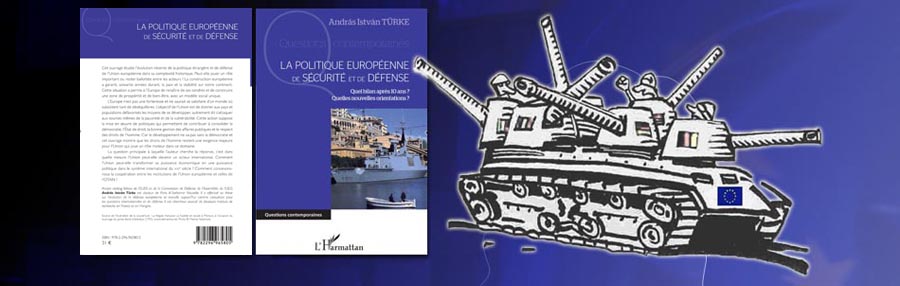
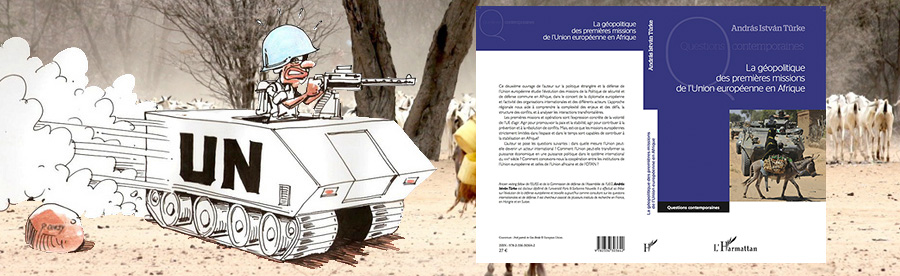
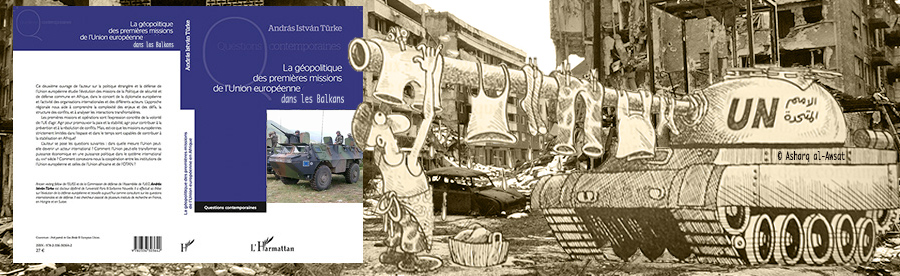
We are looking for sponsors for the English translation of these books, please contact turkeandras(at)gmail(dot)com