
You are here
Europäische Union
Santé : David Lisnard dévoile son «plan d’action rapide» inspiré des ordonnances de 1958
DÉCRYPTAGE - Le candidat de Nouvelle Énergie propose une réorganisation du système et l’instauration d’une loi de programmation annuelle de la santé sur le modèle du cadre fixé pour les armées.
L’idée d’une « banque de la démocratie » s’invite dans le débat politique à l’Assemblée
DÉCRYPTAGE - Alors que certains candidats ont des difficultés à financer leur campagne présidentielle, l’idée d’une « banque de la démocratie », lancée par François Bayrou il y a quelques années, refait son apparition.
Categories: Europäische Union, France
Politique intérieure, diplomatie : Poutine en difficulté ? | Les mardis de l’IRIS
Chaque mardi, Pascal Boniface reçoit un membre de l’équipe de recherche de l’IRIS pour décrypter un fait d’actualité internationale. Aujourd’hui, échange avec Jean de Gliniasty, directeur de recherche à l’IRIS, ancien ambassadeur de France en Russie, sur la situation politique intérieure en Russie et la diplomatie menée par Vladimir Poutine. Le président russe est-il en difficulté ?
L’article Politique intérieure, diplomatie : Poutine en difficulté ? | Les mardis de l’IRIS est apparu en premier sur IRIS.
Categories: Diplomacy & Defense Think Tank News, Europäische Union
Highlights - Unwavering support to Ukraine & strengthening defence cooperation with Canada - Committee on Security and Defence
On 6 May, SEDE Members will have an exchange of views with Herald Ruijters, Deputy Director-General at DG DEFIS, on the stepping-up EU military support to Ukraine, focussed on the priorities for the 60 billion defence pillar of the Ukraine Support Loan. The following day, Members will discuss enhancing EU support to Veterans in Ukraine with representatives from EEAS, the EU CSDP Advisory Mission and the Commission. EU-Canada relations will also be high on the agenda this week,
Source : © European Union, 2026 - EP
with an exchange of views with the Canadian Ambassador to Belgium, Nicholas Brousseau, on the EU-Canada Security and Defence Partnership ahead of an upcoming SEDE visit to the country, as well as the vote, jointly with ITRE, on the agreement for Canada to join the EU's Security Action for Europe (SAFE) loan programme.
Source : © European Union, 2026 - EP
Categories: Diplomacy & Defense Think Tank News, Europäische Union
Video einer Ausschusssitzung - Dienstag, 5. Mai 2026 - 12:30 - Ausschuss für auswärtige Angelegenheiten - Unterausschuss Menschenrechte
Dauer des Videos : 60'
Haftungsausschluss : Die Verdolmetschung der Debatten soll die Kommunikation erleichtern, sie stellt jedoch keine authentische Aufzeichnung der Debatten dar. Authentisch sind nur die Originalfassungen der Reden bzw. ihre überprüften schriftlichen Übersetzungen.
Quelle : © Europäische Union, 2026 - EP
Categories: Afrique, Europäische Union
INTERVIEW : Vaincre le communisme a été « bien plus facile » que de renverser Orbán, assure un vétéran de 1989
Le premier député anticommuniste de Hongrie espère que Péter Magyar rétablira l'État de droit et la démocratie
The post INTERVIEW : Vaincre le communisme a été « bien plus facile » que de renverser Orbán, assure un vétéran de 1989 appeared first on Euractiv FR.
Categories: Europäische Union, Union européenne
Video einer Ausschusssitzung - Dienstag, 5. Mai 2026 - 09:30 - Ausschuss für auswärtige Angelegenheiten - Entwicklungsausschuss
Dauer des Videos : 60'
Haftungsausschluss : Die Verdolmetschung der Debatten soll die Kommunikation erleichtern, sie stellt jedoch keine authentische Aufzeichnung der Debatten dar. Authentisch sind nur die Originalfassungen der Reden bzw. ihre überprüften schriftlichen Übersetzungen.
Quelle : © Europäische Union, 2026 - EP
Haftungsausschluss : Die Verdolmetschung der Debatten soll die Kommunikation erleichtern, sie stellt jedoch keine authentische Aufzeichnung der Debatten dar. Authentisch sind nur die Originalfassungen der Reden bzw. ihre überprüften schriftlichen Übersetzungen.
Quelle : © Europäische Union, 2026 - EP
Categories: Afrique, Europäische Union
Adieu à Marc Laimé
Lundi 27 avril 2026, sa famille, ses amis et ses anciens collègues se sont réunis au Père-Lachaise à Paris pour un ultime adieu à Marc Laimé, décédé le vendredi 17 avril. À sa famille et ses proches, toute l'équipe du Monde diplomatique adresse ses condoléances les plus attristées.
- Carnets d'eau
Categories: Défense, Europäische Union
La France instaure des repas universitaires à un euro pour tous les étudiants
Une enquête réalisée en janvier a révélé que 48 % des étudiants ont déjà dû se passer de manger pour des raisons financières et que 23 % d'entre eux le font plusieurs fois par mois
The post La France instaure des repas universitaires à un euro pour tous les étudiants appeared first on Euractiv FR.
Categories: Europäische Union, Union européenne
Berlin pose des garde-fous sur l’utilisation de ses armes par la Turquie
Alors que le désaccord entre Washington et Berlin s'étend à la mer Égée, le ministre allemand des Affaires étrangères cherche à rassurer la Grèce sans compromettre l'équilibre délicat avec Ankara sur les questions de défense
The post Berlin pose des garde-fous sur l’utilisation de ses armes par la Turquie appeared first on Euractiv FR.
Categories: Europäische Union, Union européenne
Video einer Ausschusssitzung - Dienstag, 5. Mai 2026 - 08:00 - Ausschuss für auswärtige Angelegenheiten
Dauer des Videos : 90'
Haftungsausschluss : Die Verdolmetschung der Debatten soll die Kommunikation erleichtern, sie stellt jedoch keine authentische Aufzeichnung der Debatten dar. Authentisch sind nur die Originalfassungen der Reden bzw. ihre überprüften schriftlichen Übersetzungen.
Quelle : © Europäische Union, 2026 - EP
Categories: Afrique, Europäische Union
INTERVIEW : L’ambassadeur des Émirats arabes unis plaide pour des « partenaires fiables » face à l’Iran
L'ambassadeur Ahmed Alattar appelle les partenaires internationaux à faire preuve de plus de clarté et de fiabilité
The post INTERVIEW : L’ambassadeur des Émirats arabes unis plaide pour des « partenaires fiables » face à l’Iran appeared first on Euractiv FR.
Categories: Europäische Union, Union européenne
Press release - MEPs update requirements for periodic vehicle checks
EU citizens should have more ways to get a car checked, but frequency of mandatory tests should not change, say Transport and Tourism Committee MEPs.
Committee on Transport and Tourism
Source : © European Union, 2026 - EP
Committee on Transport and Tourism
Source : © European Union, 2026 - EP
Categories: Europäische Union, European Union
Press release - MEPs update requirements for periodic vehicle checks
EU citizens should have more ways to get a car checked, but frequency of mandatory tests should not change, say Transport and Tourism Committee MEPs.
Committee on Transport and Tourism
Source : © European Union, 2026 - EP
Committee on Transport and Tourism
Source : © European Union, 2026 - EP
Categories: Európai Unió : hírek magyarul, Europäische Union
« On est dans un no man’s land » : après la candidature de Jean-Luc Mélenchon, le reste de la gauche sous pression avant 2027
DÉCRYPTAGE - Minée par ses divisions internes, la gauche non-mélenchoniste peine à faire émerger une offre alternative au leader Insoumis, reparti dimanche soir en campagne présidentielle.
Categories: Europäische Union, France
Video einer Ausschusssitzung - Dienstag, 5. Mai 2026 - 07:30 - Ausschuss für auswärtige Angelegenheiten
Dauer des Videos : 30'
Haftungsausschluss : Die Verdolmetschung der Debatten soll die Kommunikation erleichtern, sie stellt jedoch keine authentische Aufzeichnung der Debatten dar. Authentisch sind nur die Originalfassungen der Reden bzw. ihre überprüften schriftlichen Übersetzungen.
Quelle : © Europäische Union, 2026 - EP
Categories: Afrique, Europäische Union
Mourir pour Zilupe ? La guerre qui vient
Le vieux lien transatlantique se meurt, la défense européenne tarde à apparaître et dans ce clair-obscur stratégique Vladimir Poutine pourrait surgir en prenant pied dans les pays baltes pour mettre fin à toute aide à l’Ukraine… sous la menace de la force nucléaire.
Incapables de se défendre comme les États-Unis – ce qui n’est ni financièrement possible, ni stratégiquement souhaitable – et ne voulant pas se battre comme les Ukrainiens – au prix de dizaines de milliers de morts – les Européens doivent inventer leur propre façon de faire la guerre ; une guerre qui ne sera pas la copie de celle qui se déroule en Ukraine.
La défense européenne doit donc se renforcer conventionnellement mais aussi intégrer une composante nucléaire spécifiquement européenne afin d’éviter tout chantage de la part de la Russie, mais aussi tout abus du protecteur américain.
C’est la voie que trace l’évolution de la doctrine nucléaire française. Cette évolution pourrait marquer le début d’une cohésion indispensable pour que les États européens puissent conjurer ensemble une menace qu’ils ne peuvent affronter isolément. Un nouvel avenir possible se dessine. Aux Européens de le construire. Vite.
À téléchargerL’article Mourir pour Zilupe ? La guerre qui vient est apparu en premier sur IRIS.
Categories: Diplomacy & Defense Think Tank News, Europäische Union
Which Type of Armament Cooperation Do We Want/Need? The Case of Sweden
Even though the security landscape has changed drastically since the Cold War, the main goals for Swedish arms cooperation have stayed roughly the same. Cooperation is seen as valuable for gaining access to competence, for preserving domestic competence, and for decreasing unit costs for procured equipment.
The Swedish experiences of international arms collaboration vary. Success factors include constructive dialogues and relations with the partner countries and companies, and trust. Challenges include country specific equipment requirements, protection of domestic defence companies, and the differences in export regulations.
Sweden will, like other countries, continue to seek the arms cooperations that benefit its national security and its defence industry. More specifically, Sweden is interested in exploring the potential of NATO collaboration, in the light of the newly acquired membership. Sweden also recognises the potential of the EU initiatives like the EDIP and the EDF, but it is through the combination of NATO and EU initiatives that real impact can be achieved. Upcoming strategic procurement decisions will also form the Swedish industry and what collaborations Sweden will pursue in the future.
À téléchargerL’article Which Type of Armament Cooperation Do We Want/Need? The Case of Sweden est apparu en premier sur IRIS.
Categories: Diplomacy & Defense Think Tank News, Europäische Union
Developing a coordinated EU approach to housing
Written by Marketa Pape
While the right to housing is recognised by the European Pillar of Social Rights, the supply of housing in the EU has not kept up with demand. The recent cost-of living crisis has made the lack of adequate, affordable and sustainable housing more palpable. While the responsibility for housing provision lies with EU Member States, regions and cities, the debates around the 2024 European elections showed that citizens expected the EU to step up its action beyond guidance and funding.
In response, European Commission President Ursula von der Leyen made housing part of a Commissioner’s portfolio. In parallel, all EU institutions started work to contribute to the new EU policy.
More than a year later, the basis of a coordinated EU approach is in place. European leaders have for the first time discussed the challenge of affordable housing in the European Council. Existing EU rules have been reviewed and EU funding possibilities made more flexible.The European Investment Bank has stepped up its investment support and, together with partner banks, is finalising a pan-European housing investment portal.
The Commission has put forward the European affordable housing plan and accompanying initiatives, which included changes to State aid rules, a housing construction strategy and a proposed recommendation on the New European Bauhaus policy and funding initiative. The Commission also outlined further steps, including legislative ones.
For its part, the European Parliament has put forward a set of recommendations prepared by its Special Committee on the Housing Crisis, ranging from simpler and digital procedures for granting housing permits – within a 60-day deadline – to tax measures to support low- and middle-income households.
Read the complete briefing on ‘Developing a coordinated EU approach to housing‘ in the Think Tank pages of the European Parliament.
Categories: Europäische Union, European Union
Budget expenditure tracking and performance framework [EU Legislation in Progress]
Written by Alessandro D’Alfonso, Marin Mileusnic and Tim Peters.
CONTEXTOn 16 July 2025, the European Commission adopted a proposal for a regulation establishing a budget expenditure tracking and performance framework and other horizontal rules for the Union programmes and activities (‘performance regulation’), as part of a wide-ranging package on the next EU long-term budget – the 2028-2034 multiannual financial framework (MFF). The proposal aims to simplify and harmonise how EU spending is tracked and its performance measured, moving towards a single system with standardised indicators. It defines horizontal spending principles with a view to streamlining their application across the EU budget: climate and biodiversity, ‘do no significant harm’ to the environment, social policies, and gender equality. Although competitiveness and preparedness play a major role in the next long-term budget, and the European Parliament had requested to include them as horizontal spending principles, the Commission did not include them.
Ahead of the proposal, Parliament had called for further improvements in performance reporting under the EU budget, while underlining that the ‘implementation of horizontal principles should not lead to an excessive administrative burden on beneficiaries’. A stronger performance framework can improve Parliament’s decision-making on EU spending through more transparency. However, increased transparency from a proposed single portal to access EU budgetary data will depend on what information is made available. A briefing requested by Parliament’s Committee on Budgetary Control underlined that improved access to information – such as exchanges between the Commission and Member States, or to information about suspended milestones – was essential for public accountability. According to the European Court of Auditors, the proposal can improve processes for performance reporting and integration of EU horizontal policy priorities, but has design weaknesses to be addressed, including vague indicators, lack of clear results-based linkages, and risks of measuring implementation rather than achievements. The Court estimates that the proposal may achieve simplification between the Commission and the Member States, but that the administrative burden at national, regional and beneficiary levels may remain unchanged or even worsen.
Legislative proposal2025/0545(COD) – Proposal for a regulation of the European Parliament and of the Council establishing a budget expenditure tracking and performance framework and other horizontal rules for the Union programmes and activities – COM(2025) 565,
NEXT STEPS IN THE EUROPEAN PARLIAMENTFor the latest developments in this legislative procedure, see the Legislative Train Schedule: 2025/0545(COD)
Read the complete briefing on ‘Budget expenditure tracking and performance framework‘ in the Think Tank pages of the European Parliament.
Categories: Europäische Union, European Union
Pages


© 2012-2018 Europa Varietas Foundation © 2015-2018 Europa Varietas Association
www.europavarietas.org | info(@)europavarietas(dot)org | Switzerland
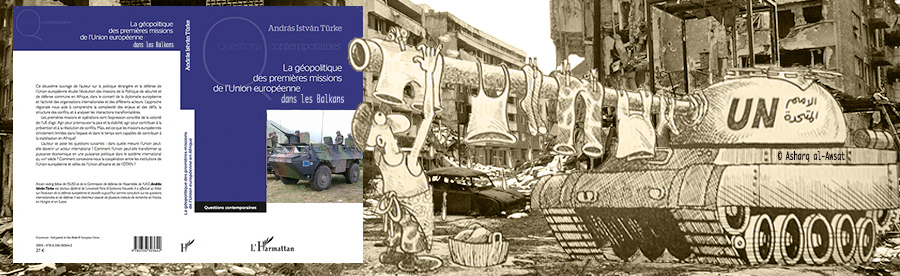
We are looking for sponsors for the English translation of these books, please contact turkeandras(at)gmail(dot)com