
You are here
Diplomacy & Defense Think Tank News
Turkey, the EU, and China in the world: does turbulence lead to convergence?
The European Think Tanks Group and the German Institute for Development and Sustainability (IDOS) teamed up with the Istanbul Policy Center to organise a public seminar and a closed-door workshop to explore how three key actors – Turkey, the European Union and China – are responding to the above trends and changes. Comparing their current policies, agendas, and past practices provided a means to explore whether their approaches to international cooperation, particularly in the context of their engagements with the Global South, are converging (or diverging) during today’s turbulent times, and to determine the scope and relevance of further comparative research. This blog post highlights some key points of what was discussed and links them to current academic and policy debates.
Categories: Afrique, Diplomacy & Defense Think Tank News
Wir brauchen keine neue Erbschaftsteuer, sondern eine ehrliche
Milliardenerbschaften bleiben oft steuerfrei. Eine Reform der Erbschaftsteuer erfordert keine Revolution, aber gezielte Veränderungen für mehr Fairness und Effizienz. , Die Debatte über die Erbschaftsteuer flammt alle paar Jahre wieder auf – meist wenn das Bundesverfassungsgericht droht, das nächste Loch in das ohnehin löchrige Regelwerk zu reißen. Schnell fordern manche eine grundlegende Reform, andere eine Abschaffung der Steuer und wieder andere eine Erhöhung ...
Categories: Defense`s Feeds, Diplomacy & Defense Think Tank News
BAV-Direktorin Christa Hostettler muss sparen: Wann haben Sie sich zuletzt über die SBB geärgert?
Bahnprojekte werden teurer, später realisiert oder gar gestrichen. Ein Gespräch mit der neuen Direktorin des Bundesamts für Verkehr über unpünktliche Züge, Ärger beim Gütertransport – und den Knatsch zwischen der SBB und Stadler.
Categories: Diplomacy & Defense Think Tank News, Swiss News
Kommentar zu Flugscham: Ego statt Öko
Am Flughafen Zürich jagt ein Rekord den nächsten. Geflogen wird mehr denn je – trotz Klimawandel. Billig, schnell, bequem, als wollten wir die letzten schönen Orte noch sehen, bevor die Erde endgültig kippt.
Categories: Diplomacy & Defense Think Tank News, Swiss News
Drei Modelle im Vergleich: Welcher Womanizer ist der richtige für dich?
Womanizer hat gleich mehrere Sextoys auf den Markt gebracht, die alle auf ihre eigene Weise deine Lust auf ein neues Level heben. Diese Must-haves landen bei Amorana am häufigsten im Warenkorb und sind derzeit im Black Friday Sale erhältlich!
Categories: Diplomacy & Defense Think Tank News, Swiss News
Guidelines for sustainable hydrogen projects in developing countries
Despite the potential of renewable hydrogen to galvanize economies and climate action, governments and development banks often lack a coherent framework to assess and approve hydrogen projects on sustainability grounds. Decision-making processes regarding land allocation, permitting and infrastructure access remain fragmented, increasing the risof extractive investment models that provide limited local benefits while causing environmental harm. Transparent, universally accepted sustainability guidelines can help decision makers select project partners that align with their respective priorities and objectives, including the UN Sustainable Development Goals (SDGs). Moreover, such a framework can enhance investor confidence and public trust by ensuring that hydrogen projects deliver tangible socioeconomic benefits to host communities. Recognizing this need, a broad coalition of stakeholders has collaborate to develop the Guidelines for Sustainable Hydrogen Projects, integrating expertise from multiple disciplines to create a flexible yet comprehensive decision-making tool. The Guidelines serve as a reference for governments, development banks and other stakeholders in evaluating hydrogen project proposals. Rather than prescribing rigid requirements, they provide a non-exhaustive set of criteria that can be adapted to local contexts. The Guidelines emphasize maximizing domestic value creation while safeguarding environmental and social standards. Applicable to large-scale projects with a minimum capacity of 200 megawatts (MW) - including renewable electricity generation, water desalination, electrolysis, and related infrastructure - they help ensure that hydrogen investments contribute to long-term sustainable development. By aligning with the SDGs, they promote inclusive economic growth, responsible resource management and climate action.
Categories: Afrique, Diplomacy & Defense Think Tank News
Technological change: history, theory and measurement: a brief account
Technological change, an overwhelming fact in recent socioeconomic history, involves, as Joseph A. Schumpeter famously put it, “creative destruction” on a large scale: it gives rise to new goods, production methods, firms, organisations, and jobs, while rendering some received ones obsolete. Its impact extends beyond the economy and affects society, culture, politics, and the mind-set of people. While it allows solving certain problems, it causes new ones, inducing further technological change. Against this background, the paper attempts to provide a detailed, yet concise exploration of the historical evolution and measurement of technological change in economics. It touches upon various questions that have been raised since Adam Smith and by economic and social theorists after him until today living through several waves of new technologies. These questions include: (1) Which concepts and theories did the leading authors elaborate to describe and analyse the various forms of technological progress they observed? (2) Did they think that different forms of technological progress requested the elaboration of different concepts and theories – horses for courses, so to speak? (3) How do different forms of technological progress affect and are shaped by various strata and classes of society? Issues such as these have become particularly crucial in the context of the digitisation of the economy and the widespread use of AI. Finally, the paper explores the impact of emerging technologies on the established theoretical frameworks and empirical measurements of technological change, points to new measurements linked to the rise of these technologies, and evaluates their pros and cons vis-à-vis traditional approaches.
Categories: Afrique, Diplomacy & Defense Think Tank News
Neuigkeiten aus dem SOEP - Kompakt im aktuellen SOEPnewsletter (November 2025)
Der
Categories: Afrique, Diplomacy & Defense Think Tank News
Neuigkeiten aus dem SOEP - Kompakt im aktuellen SOEPnewsletter (November 2025)
Der
Categories: Afrique, Diplomacy & Defense Think Tank News
SOEP-IS: Call for Submissions
Die SOEP Innovations-Stichprobe (SOEP-IS) verfolgt das Ziel, innovative Datenerhebung für die Wissenschafts-Community zu ermöglichen und eignet sich daher in besonderem Maße für die Etablierung neuer und zielgruppenspezifischer Messinstrumente in Langzeiterhebungen, für Kurz- und Langzeitexperimente ...
Categories: Afrique, Diplomacy & Defense Think Tank News
Meet the Parties: Strengthening Multilateral Diplomacy through Inclusive Engagement with Non-state Actors
Event Video
Photos
Photos
jQuery(document).ready(function($){$("#isloaderfor-jomaxb").fadeOut(300, function () { $(".pagwrap-jomaxb").fadeIn(300);});});
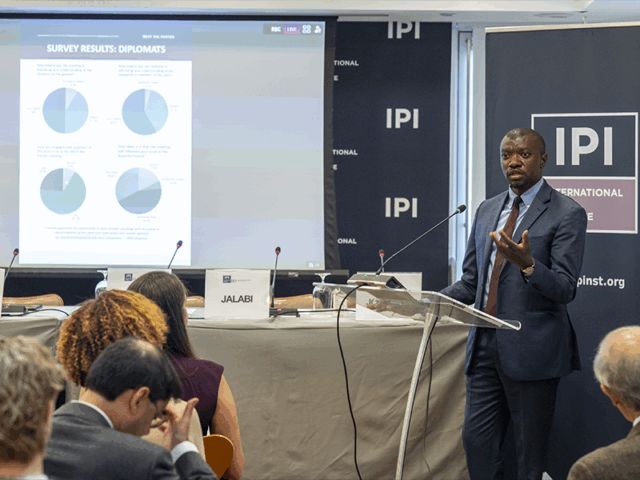
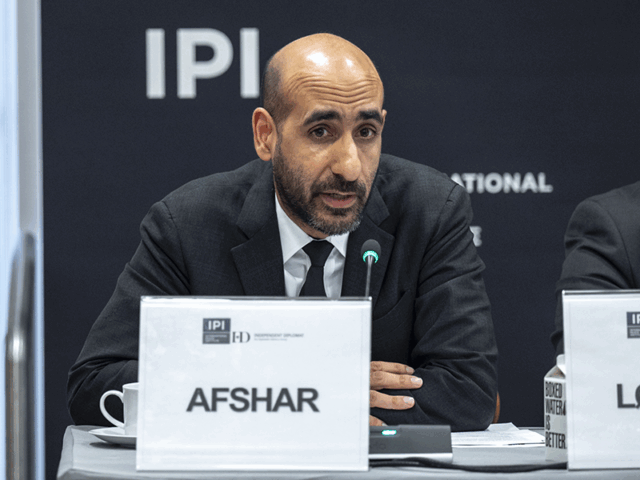
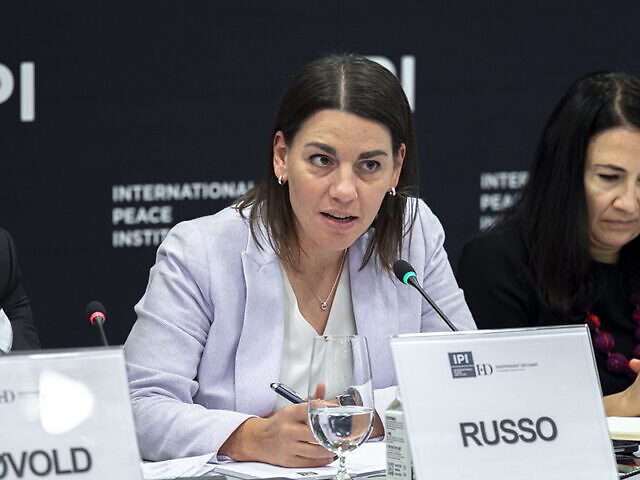
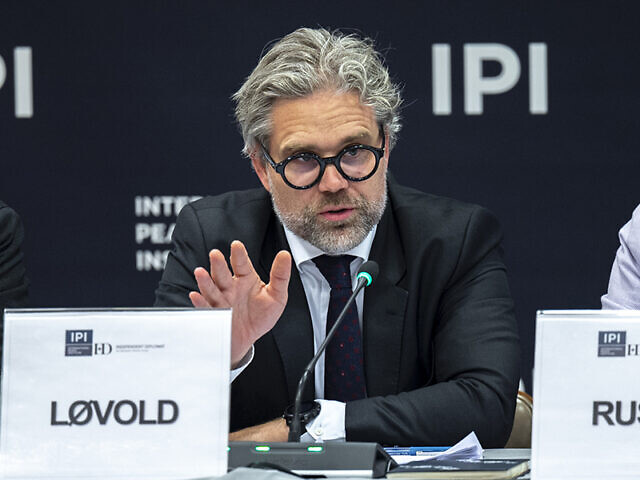
Download ReportIPI, together with Independent Diplomat cohosted a discussion on November 13th on innovative means to engage non-state actors in multilateral conflict resolution and prevention.
As armed conflicts reach their highest level in decades and the UN Security Council faces mounting criticism for its inability to prevent or resolve contemporary crises, there is an urgent need for more effective approaches to international peacemaking. One gap in current approaches is the lack of meaningful engagement with non-state actors, including armed groups, political opposition parties, and civil society movements—particularly within the Security Council. To fill this gap, the nonprofit diplomatic advisory group Independent Diplomat (ID) launched the “Meet the Parties” (MTP) platform.
MTP offers an impartial, confidential platform for UN Security Council members to engage multilaterally with non-state stakeholders—many of them politically contested. Over the past two years, ID has facilitated dozens of discreet MTP meetings between Security Council members and non-state actors from Afghanistan, Cameroon, South Sudan, Syria, and Sudan. MTP demonstrates that informal, unconventional approaches to diplomacy can positively influence both affected parties and international stakeholders.
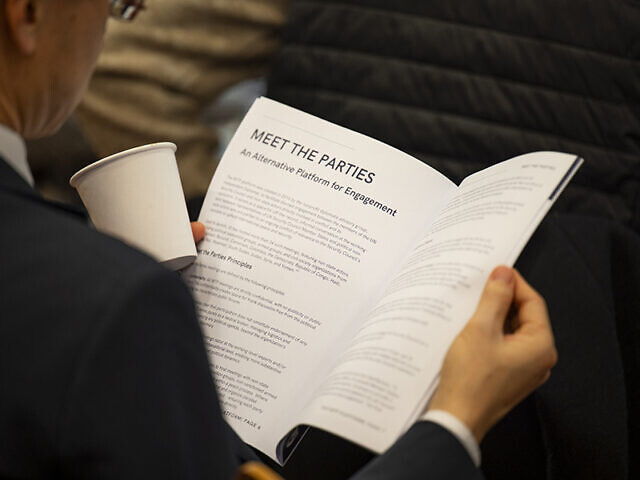
This event presented a new policy report with findings from the first comprehensive assessment of the MTP initiative. The report spotlights practical methods to strengthen the inclusion of non-state actors in Security Council consultations. It also explores the transferability of these lessons beyond the Security Council, including to the UN Peacebuilding Commission, the African Union, and other multilateral forums.
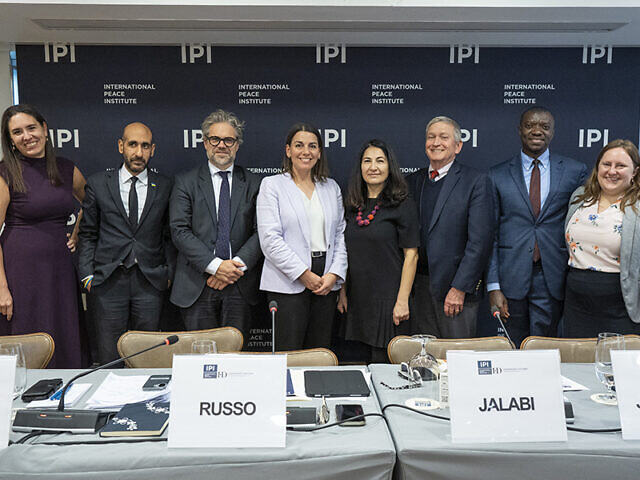
Speakers:
Reza Afshar, OBE, Executive Director, Independent Diplomat
Andreas Løvold, Deputy Permanent Representative of Norway to the UN
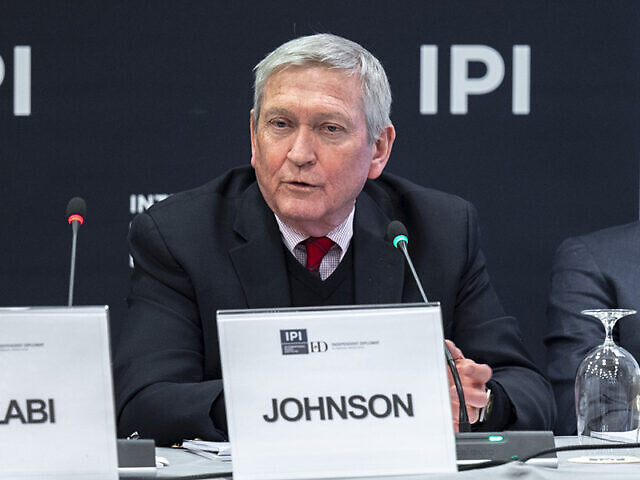
Larry Johnson, Former UN Assistant Secretary-General for Legal Affairs
Kevin Irakoze, Assistant Professor, University of North Carolina at Chapel Hill
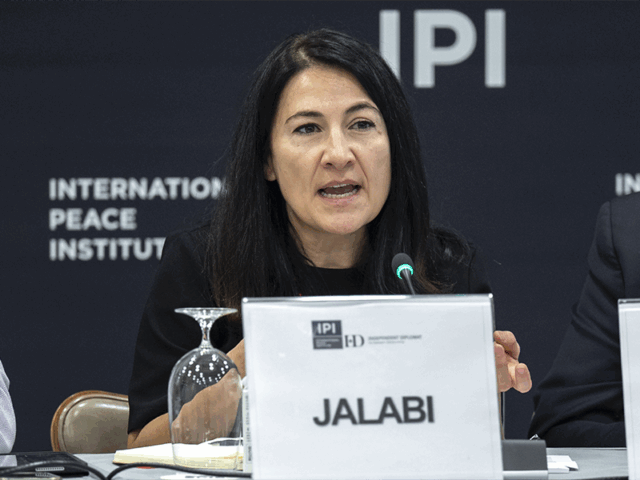
Mariam Jalabi, Co-founder, Syrian Women’s Political Movement
Moderator:
Jenna Russo, Director of Research, Head of the Brian Urquhart Center for Peace Operations, International Peace Institute
The post Meet the Parties: Strengthening Multilateral Diplomacy through Inclusive Engagement with Non-state Actors appeared first on International Peace Institute.
Categories: Africa, Diplomacy & Defense Think Tank News
Athens and Tirana: From Crisis to the Gradual De-Escalation of Tensions – The perspective of the Albanian media
In this issue of MORE, the focus is on Greek–Albanian relations between March and October 2024, shaped by the Fredi Beleris case—a local legal dispute that evolved into a major diplomatic and media controversy. Beleris, mayor-elect of Himara, was convicted for electoral corruption but later elected to the European Parliament for Greece’s New Democracy party, intensifying tensions over democracy, minority rights, and judicial independence.
In Albania, pro-government media framed his conviction as proof of judicial reform, while opposition outlets denounced it as political persecution. In Greece, coverage was overwhelmingly sympathetic, portraying Beleris as a political prisoner. Widespread misinformation—including fake stories and manipulated images—deepened mistrust and polarization.
Tensions peaked during Beleris’s October 2024 visit to Tirana as an MEP, marked by protests and symbolic confrontation. Yet, by late 2024, relations began to improve, aided by Albania’s post-election pro-EU stance and significant progress in EU accession, with five of six negotiation clusters opened.
Covering the period from March to October 2024, MORE 6 shows how one legal case exposed the fragility of regional trust, but also how diplomatic pragmatism and the shared goal of European integration can turn confrontation into cooperation.
The Media Observatory Reports are part of the broader “ALGREE – Albania–Greece: Understanding. Connecting. Partnering” project, implemented by the South-East Europe Programme of the Hellenic Foundation for Foreign & European Policy (ELIAMEP) with support from the Open Society Foundations – Western Balkans and the Friedrich Naumann Foundation for Freedom Greece and Cyprus. Based on systematic monitoring of leading Albanian and Greek media, the reports examine how each country portrays the other and how media narratives shape mutual perceptions and shared regional agendas.
Categories: Diplomacy & Defense Think Tank News, Swiss News
The 6th P-TEC Meeting in Athens: Greece at the Core of Transatlantic Energy Realignment
Michalis Mathioulakis, Energy Strategy Analyst, Academic Director of the Greek Energy Forum and ELIAMEP Research Associate , explains how the 6th Ministerial Meeting of the Partnership for Transatlantic Energy Cooperation (P-TEC), held in Athens in November 2025, highlighted the emergence of a new transatlantic energy architecture with Greece at its center, serving as the key Mediterranean entry point for U.S. gas flows to Southeast Europe and Ukraine.
Read the ELIAMEP Explainer here.
Categories: Diplomacy & Defense Think Tank News, Swiss News
Can Europe Seize the Opportunity to Strengthen Its Strategic Capabilities? – ELIAMEP’s experts share their views
Ricardo Borges de Castro & Leopold Schmertzing, Non-Resident Fellows on Strategic Foresight, ELIAMEP
In recent years, the European Union has increased its investment in strategic foresight capabilities. Within its institutions – the European Commission, the European Parliament, the Council of the EU, and the European External Action Service – and collectively through the European Strategy and Policy Analysis System (ESPAS), an EU inter-institutional network focused on global trends, there has been a concerted effort to boost Europe’s anticipatory edge. Yet, recent events show that these processes and insights have not sufficiently permeated the EU and, especially, national policymaking and preparedness. There is now a window of opportunity for Europe to review and strengthen its strategic capabilities.
No One Saw it Coming?
This year once again revealed how unprepared much of European politics remains for plausible events and crises. Donald Trump’s re-election and its implications for global politics and trade, Moscow’s ever-evolving forms of aggression towards Ukraine and intimidation towards Europe, and the recent Nexperia’s chip supply-chain shock: what else needs to happen before Europe stops being caught on the back foot and finally acts instead of reacting?
It does not have to be this way. While there are no crystal balls in policymaking and the future cannot be predicted, there are ways to improve how governments and European institutions respond, prepare and, if possible, mitigate or avert future crises. It is called strategic foresight and anticipation. This should not be a policy luxury item, but an established practice.
Preparation and resilience building begin with anticipation: identifying plausible, high-impact developments, before thinking them through systematically – from their origins and implications to ways to potentially avoid them. This needs political and real capital, but this is money well spent: the reality is that the current levels of uncertainty, volatility, and geopolitical and geoeconomic upheaval are likely to remain or even increase.
Crisis Management or Smart Democracy?
Europe cannot rely on emergency summits or improvised backroom negotiations to define its place in a changing international system, ensure its security and autonomy, or rebuild its economic and political strength. The EU needs to move from the constant crisis management of the last decade to anticipatory democracy.
Over the last years, the European Union and several European countries have built up their anticipatory and planning capabilities by setting-up and mainstreaming foresight units and departments into policy- and decision-making cycles. Today, the European Commission, the European Parliament, the Council of the EU, the EEAS, and the Committees have more robust foresight and anticipatory tools and processes than in the past and the ESPAS network continues to provide a forum for EU institutions, bodies and agencies to informally collaborate and share their perspectives on future challenges and opportunities, as well as strengthen their internal foresight and preparedness mechanisms.
Likewise, countries such as Spain or Portugal have joined others like Finland, Estonia or Slovenia in embedding foresight into their governance or parliamentary systems by creating new, whole-of-government departments for planning and strategic anticipation. The recent establishment of a Foresight Unit in the new German National Security Council is an additional relevant sign that could be a blueprint for other European nations. What is more, since the early 2020s there exists an EU-wide ministers for the future (and their sherpas) network that seeks to address key issues for Europe’s future.
Despite these positive developments and the potential of the existing work and capabilities for futures thinking and planning, European policymakers continue to be surprised or confounded by unexpected events and uncertainty. More foresight is certainly welcome in Europe, but what the EU needs is better foresight, more effective and agile foresight, and, above all, more honest foresight.
Europe’s Window of Opportunity?
There is a window of opportunity for the EU to strengthen its strategic and anticipatory capabilities and to become a global hub for strategic foresight.
The EU institutions should do a ‘lessons learned’ exercise to assess what has worked and what did not work over the last ten years in building anticipatory and preparedness capabilities. While these processes are more common in the US, it is crucial that the EU understands what needs to be improved, where the unnecessary and costly overlaps and duplications are, and where collaboration or division of labour is needed or more effective.
A few of the problems in the European context are common to other parts of the world such as the fragmentation of foresight work across or within institutions, processes that shun politically charged topics, poor linkage to decision-makers, or the discontinuity of foresight functions after new electoral cycles. But it would be worth to study and understand what are EU-specific challenges that have undermined the impact of foresight and anticipatory efforts. Knowing the weaknesses is the first step to strengthen the EU’s culture of preparedness.
The needed overhaul of EU foresight capabilities is more important than ever because it happens at a time when close partners such as the United States – known for its strong foresight work and traditions – is scaling back its outreach, or shutting down important processes such as the Global Trends report, while competitors like China link anticipation, planning, and prioritisation in their next, the fifteenth, Five-Year Plan.
Since 2019, Singapore has also not organised its traditional International Risk Assessment and Horizon Scanning Symposium (IRAHSS). This opened a gap for what used to be the premier global policy gathering for meaningful exchanges on strategic foresight, risks, and future opportunities among strategists, policy- and decision-makers from around the world.
Just do It
Although the EU cannot replace the US or Singapore, the ESPAS network should seize this moment to become a policy-oriented, international strategic foresight hub. As it did during President Trump’s first mandate, ESPAS could provide a global common good, strengthening long-term multilateralism and collaboration, and improving European resilience and strategic capabilities. Today’s 2025 ESPAS Annual Conference should be the starting point for a strengthened foresight ambition in Europe and beyond.”
Categories: Diplomacy & Defense Think Tank News, Swiss News
Pages
the old site is here


© 2012-2015 Europa Varietas Foundation © 2015-2020 Europa Varietas Association
www.europavarietas.org | info(@)europavarietas(dot)org | Switzerland
This is a GDPR ready site
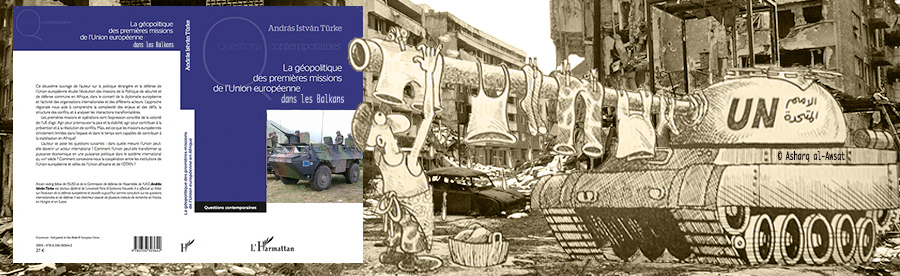
We are looking for sponsors for the English translation of these books, please contact turkeandras(at)gmail(dot)com