
You are here
Swiss News
Press release - Mark Carney calls for an “alliance for the future” between the EU and Canada
“Our response to the current geopolitical disruption should take on a new dimension,” Canada’s Prime Minister Mark Carney said, addressing the European Parliament on Thursday.
Source : © European Union, 2026 - EP
Source : © European Union, 2026 - EP
Categories: European Union, Swiss News
Press release - Mark Carney calls for an “alliance for the future” between the EU and Canada
“Our response to the current geopolitical disruption should take on a new dimension,” Canada’s Prime Minister Mark Carney said, addressing the European Parliament on Thursday.
Source : © European Union, 2026 - EP
Source : © European Union, 2026 - EP
Categories: European Union, Swiss News
Ahead of COP17, UN Biodiversity Chief Urges Urgent Realignment of Finance with Nature Goals
Closing plenary of the recent Kunming Dialogue. Credit: ENB-IISD/Anastasia Rodopoulou
By Stella Paul
KUNMING, China, Sep 17 2026 (IPS)
The world may have enough money to protect nature. The bigger problem, according to the head of the UN Convention on Biological Diversity (CBD), is that too much of it is still being spent on activities that destroy it.
With just four years left to meet the world’s 2030 biodiversity goals, Astrid Schomaker, Executive Secretary of the CBD, said governments must urgently change where money flows if they are to slow the loss of nature.
Her warning comes just weeks before governments meet in Yerevan, Armenia, for COP17, the UN biodiversity conference scheduled for October 19-30.
Speaking at a press conference organised by the CBD Secretariat on September 11 – after the three-day Kunming Dialogue, Schomaker said governments need to redirect financial flows and reform incentives that encourage activities harmful to nature. Without such changes, she warned, progress under the Kunming-Montreal Global Biodiversity Framework (KMGBF) will remain too slow.
What’s Slowing Biodiversity Action?
The Kunming-Montreal Global Biodiversity Framework, adopted in Montreal in 2022, sets 23 targets for protecting and restoring biodiversity by 2030. Since its adoption, governments have been carrying out the first-ever global stocktake of how the framework is being implemented, examining progress across countries and individual targets.
The stocktake began after COP16 and is looking at the full picture of implementation, from the targets countries have set for themselves to the policies, plans, finance and other measures they are putting in place to achieve them. Its findings are being compiled in the forthcoming State of Biodiversity Action report, which will present the final global assessment at COP17.
The three-day Kunming Dialogue, held from Sept. 7 to 9, offered governments, scientists, Indigenous Peoples, youth representatives and civil society organisations an early look at the trends emerging from this stocktake. While more than 70 percent of countries have submitted national reports and over 90 percent have established biodiversity targets aligned with the global framework, the emerging picture is far less encouraging. Progress remains uneven, with implementation lagging behind the scale and pace needed to achieve the 23 targets by 2030. The emerging findings suggest that global efforts are not yet moving fast enough or at the scale needed to achieve the 23 targets by 2030. In other words, while countries have made progress in setting commitments, implementation remains well behind what is required.
“Progress is being made clearly, but it is uneven, and it is clearly also not at the pace and scale required,” Schomaker told IPS.
Gap Between Global Goals and National Action
One of the biggest problems is that biodiversity commitments have not yet been fully carried into national policies, budgets and economic decisions.
According to Schomaker, some of the largest gaps are in finance, resource mobilisation and efforts to bring biodiversity into the work of government ministries and economic sectors beyond the environment.
Jillian Campbell, Head of Planning, Monitoring and Knowledge at the CBD Secretariat, said the problem is not that countries have failed to set targets. Rather, there is often a gap between what was agreed globally and what countries have committed to doing at home.
“Most parties have set national targets covering almost every global target. However, the national targets often don’t cover the full extent of the global targets,” she told IPS.
As countries turned the global framework into their own national plans, some of its ambition was lost along the way. This is particularly visible in areas where action depends on ministries beyond the environment, including finance, agriculture, infrastructure and development.
That raises a bigger question — and one that is likely to be central at COP17: is the problem really a lack of money for biodiversity, or is it where existing money is going?
For Schomaker, the answer is clear.
“The biggest elephant in the room of all of that is the misalignment of financial systems,” she told IPS. “There is enough money around in the world economy. The question is, where does that money go?”
Money Flowing in the Wrong Direction
Governments, businesses and financial institutions continue to channel large amounts of money into activities that damage ecosystems, even as they commit themselves to protecting nature.
Changing that pattern, Schomaker said, should be one of the central priorities for COP17.
The discussions in Kunming highlighted a growing understanding that biodiversity loss is not caused only by what happens in forests, rivers and oceans. It is also shaped by decisions made in boardrooms, government ministries and financial institutions.
Participants pointed to subsidies, investments and other financial incentives that continue to make activities harmful to nature more attractive or profitable.
Asad Naqvi, Secretary of the Subsidiary Body on Implementation, said the answer to the biodiversity funding problem may therefore lie partly in changing how existing money is used rather than simply searching for new sources of funding.
He noted that governments are still spending large sums on incentives that undermine biodiversity, particularly through harmful subsidies in agriculture and fossil fuels. Redirecting those resources, he suggested, could help close financing gaps while addressing some of the root causes of nature loss.
Biodiversity Beyond Environment Policy
Finance, however, is only part of the challenge.
The Kunming Dialogue also highlighted the need for governments to treat biodiversity as an issue that cuts across the entire economy, rather than something that belongs mainly to environment ministries.
Agriculture, finance, infrastructure and development ministries all make decisions that can either protect or damage ecosystems. Unless biodiversity is considered in those decisions, governments may find themselves trying to repair environmental damage with one hand while creating more of it with the other.
That broader approach is expected to be an important part of the discussions at COP17.
For many observers, the significance of COP17 will depend on how governments respond to the findings of the State of Biodiversity Action report — and whether they can turn commitments into action faster.
The conference is expected to focus on speeding up implementation, closing finance gaps and tackling the targets where progress remains furthest behind.
As delegates prepare to meet in Yerevan, the debate is moving beyond whether governments support the global biodiversity framework.
With only four years left before the 2030 deadline, bringing finance into line with the needs of nature may become one of the defining tests of the global biodiversity agenda.
IPS UN Bureau Report
Categories: Africa, Swiss News
À la veille de la rentrée : découvrez les prix des fruits & légumes et du poulet sur le marché de gros
Après un été marqué par des tensions sur le pouvoir d’achat, des flambées notables sur certains fruits, des incendies ravageurs et diverses pénuries, les marchés […]
L’article À la veille de la rentrée : découvrez les prix des fruits & légumes et du poulet sur le marché de gros est apparu en premier sur .
Categories: Afrique, Swiss News
Press release - European Parliament calls for urgent action against drug trafficking networks
MEPs demand a coordinated European response to drug trafficking networks spanning maritime surveillance, port security, international cooperation and prevention.
Committee on Civil Liberties, Justice and Home Affairs
Source : © European Union, 2026 - EP
Committee on Civil Liberties, Justice and Home Affairs
Source : © European Union, 2026 - EP
Categories: European Union, Swiss News
Press release - European Parliament calls for urgent action against drug trafficking networks
MEPs demand a coordinated European response to drug trafficking networks spanning maritime surveillance, port security, international cooperation and prevention.
Committee on Civil Liberties, Justice and Home Affairs
Source : © European Union, 2026 - EP
Committee on Civil Liberties, Justice and Home Affairs
Source : © European Union, 2026 - EP
Categories: Europäische Union, Swiss News
Press release - European Parliament calls for urgent action against drug trafficking networks
MEPs demand a coordinated European response to drug trafficking networks spanning maritime surveillance, port security, international cooperation and prevention.
Committee on Civil Liberties, Justice and Home Affairs
Source : © European Union, 2026 - EP
Committee on Civil Liberties, Justice and Home Affairs
Source : © European Union, 2026 - EP
Categories: European Union, Swiss News
600 faillites côté français : l’Institut Montaigne révèle le coût réel de la crise Alger-Paris
Une onde de choc silencieuse traverse le tissu économique de l’Hexagone. Alors que les discours officiels tentent de préserver les apparences, la réalité des chiffres […]
L’article 600 faillites côté français : l’Institut Montaigne révèle le coût réel de la crise Alger-Paris est apparu en premier sur .
Categories: Afrique, Swiss News
Alicante : 1 500 chardonnerets entassés dans une voiture, un trafic vers l’Algérie démantelé
La Garde civile espagnole a intercepté un automobiliste de 57 ans qui tentait d’embarquer vers l’Algérie avec 1 500 chardonnerets élégants entassés dans son véhicule. […]
L’article Alicante : 1 500 chardonnerets entassés dans une voiture, un trafic vers l’Algérie démantelé est apparu en premier sur .
Categories: Afrique, Swiss News
BMS orange en Algérie : jusqu’à 40 mm de pluie attendus dès 14h dans 9 wilayas
Le ciel se charge à nouveau sur le nord-est du pays. L’Office national de la météorologie (ONM) vient de placer neuf wilayas en vigilance orange, un BMS de […]
L’article BMS orange en Algérie : jusqu’à 40 mm de pluie attendus dès 14h dans 9 wilayas est apparu en premier sur .
Categories: Afrique, Swiss News
Press release - Make social media and the on-line environment safer, say MEPs
On Thursday, Parliament adopted proposals to oblige platforms, EU countries and the Commission to guarantee a safe online environment for young people in the EU.
Committee on Culture and Education
Source : © European Union, 2026 - EP
Committee on Culture and Education
Source : © European Union, 2026 - EP
Categories: European Union, Swiss News
Pressemitteilung - Parlament nimmt süchtig machende Social-Media-Tricks ins Visier
Am Donnerstag nahm das Parlament Vorschläge an, die soziale Medien, EU-Staaten und die Kommission dazu verpflichten sollen, die digitale Welt für junge Menschen sicherer zu machen.
Ausschuss für Kultur und Bildung
Quelle : © Europäische Union, 2026 - EP
Ausschuss für Kultur und Bildung
Quelle : © Europäische Union, 2026 - EP
Categories: Europäische Union, Swiss News
Press release - Make social media and the on-line environment safer, say MEPs
On Thursday, Parliament adopted proposals to oblige platforms, EU countries and the Commission to guarantee a safe online environment for young people in the EU.
Committee on Culture and Education
Source : © European Union, 2026 - EP
Committee on Culture and Education
Source : © European Union, 2026 - EP
Categories: European Union, Swiss News
Debate: Canada and the EU: a perfect match?
EU Commission President Ursula von der Leyen has announced in the European Parliament in Strasbourg that she wants to bring the EU's relations with Canada "to the highest level possible". In the presence of Canadian Prime Minister Mark Carney she stated that she wanted to open the door for Canada "to be the first associate member of the EU". While commentators are clear on the motives behind the plan, some puzzle over the details.
Categories: European Union, Swiss News
Good idea with a few hurdles to overcome | La Repubblica - Italy
Categories: European Union, Swiss News
Debate: What did we learn from von der Leyen’s State of the EU address?
According to EU Commission President Ursula von der Leyen, the EU is, in priniciple, well equipped to meet the current challenges. "A stronger, independent Europe is now emerging", she said in her State of the Union address on Wednesday. She stressed, however, that more investment in defence as well as institutional changes such as the creation of a consultation mechanism in the event of a threat will be necessary to enhance Europe's defence capabilities.
Categories: European Union, Swiss News
Pages
the old site is here


© 2012-2015 Europa Varietas Foundation © 2015-2020 Europa Varietas Association
www.europavarietas.org | info(@)europavarietas(dot)org | Switzerland
This is a GDPR ready site
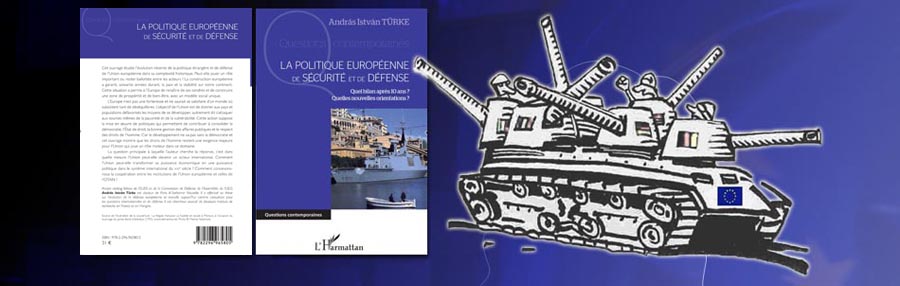
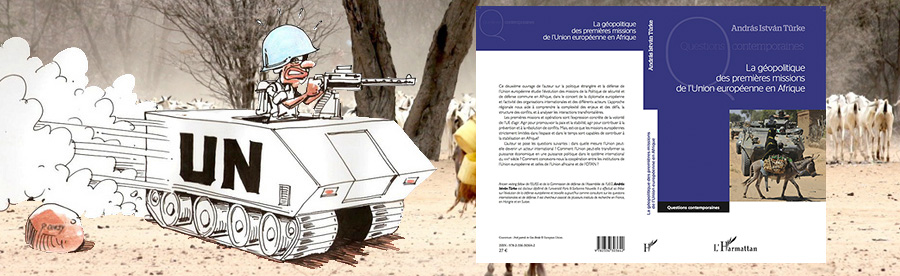
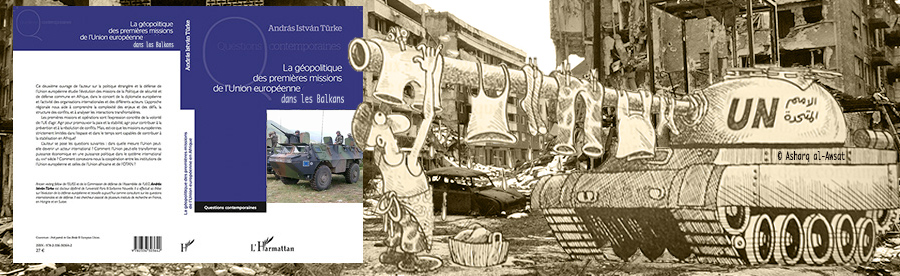
We are looking for sponsors for the English translation of these books, please contact turkeandras(at)gmail(dot)com