
You are here
Swiss News
Real bindet seinen Mittelfeldmotor langfristig an sich
Real Madrid bindet Aurélien Tchouaméni bis 2032 an sich: Der Franzose unterschreibt in der spanischen Hauptstadt einen neuen Vertrag.
Categories: Swiss News
Sustainability: Council and Parliament strike deal on simpler transparency rules for financial product
The Council and the European Parliament reached a provisional agreement on simpler transparency rules for sustainable financial products sold in the EU.
Categories: Európai Unió : hírek magyarul, Swiss News
Enlargement: EU and Montenegro close accession negotiations on taxation and regional policy
The EU and Montenegro provisionally closed accession negotiations on taxation (chapter 16) and regional policy and coordination of structural instruments (chapter 22).
Categories: Európai Unió : hírek magyarul, Swiss News
Media advisory - Presentation of the revised MFF negotiating box and Press briefing ahead of the 26-27 November Special European Council
Press conference on the revised negotiating box for the EU’s next MFF will take place on Saturday 21 November at 11.00, followed by Press briefing ahead of the Special European Council meeting of 26-27 November 2026.
Categories: Európai Unió : hírek magyarul, Swiss News
Equipping Europeans for the age of AI: Council approves conclusions
The Council has approved conclusions highlighting the need for citizens at all stages of life to be equipped with the skills and competences to engage critically and responsibly with artificial intelligence.
Categories: Európai Unió : hírek magyarul, Swiss News
Internal market for services: Council adopts regulation on the e-declaration of posted workers
Council gives its final approval to the regulation on the e-declaration of posted workers.
Categories: Európai Unió : hírek magyarul, Swiss News
Jetzt tragen wir Denim von Kopf bis Fuss
Von Jeans können wir nie genug haben – und diese Saison erst recht nicht. Denn jetzt tragen wir Denim von Kopf bis Fuss: unangestrengt und am liebsten im perfekt abgestimmten Doppelpack.
Categories: Swiss News
LA BATAILLE DE ZOGBO
Cotonou n'a pas toujours été telle qu'elle est. En 1890, à l'avènement au trône de Behanzin, elle rassemblait quelques cases de pêcheurs xwla autour de magasins européens le long d'un littoral qui s'étendait au nord jusqu'à l'actuel marché Ganhi. Le chenal reliant le Nokoue à la mer, n'existait que depuis cinq ans. C'était une infrastructure militaire creusée par la France.
À dix kilomètres au nord, dans l'épaisse jungle, se trouvait Zogbo, modeste village tôfin qui sera le théâtre , le 1er mars 1890, de l'un des face-à-face les plus féroces entre les amazones et une patrouille du commandant Terrillon. Ce jour-là, tomba le gilet pare-balles mystique du Agoodjié Nanga. "Ouanilo Gbêhanzin, prince de Djimè." En librairie !
Tiburce
Categories: Afrique, Swiss News
Baltisberger zurück beim GCK – Pestoni ist jetzt Buchautor
Lausannes NHL-Neuzugang steht wieder auf dem Eis. Verletzter SCB-Merelä mit Worten an die Fans. Und was hat der EVZ mit dem neuen Game «GTA 6» zu tun? Hier kommt das Liga-Inside.
Categories: Biztonságpolitika, Swiss News
Bruno Mars trauert um seinen Vater (†74)
Bruno Mars trauert um seinen Vater Peter Hernandez (†74). Auf Instagram nimmt der Sänger mit privaten Schnappschüssen und herzzerreissenden Worten Abschied von seinem grössten musikalischen Vorbild.
Categories: Africa, Swiss News
Bruno Mars trauert um seinen Vater (†74)
Bruno Mars trauert um seinen Vater Peter Hernandez (†74). Auf Instagram nimmt der Sänger mit privaten Schnappschüssen und herzzerreissenden Worten Abschied von seinem grössten musikalischen Vorbild.
Categories: Swiss News
Mosers Tampa Bay stoppt McDavids Mega-Lauf
Irgendwann geht jede Serie zu Ende. Das weiss nun auch Connor McDavid. Hautnah mit dabei ist auch ein Schweizer, als der Captain der Edmonton Oilers eine Premiere in dieser Saison erlebt.
Categories: Africa, Swiss News
After the ICJ Verdict, What for Dhaka?
By Mohammad Zaman
DHAKA, Bangladesh, Nov 20 2026 (IPS)
The world’s highest court has delivered a historic legal and moral victory. It does not get any more definitive than this. On 19 November 2026, the International Court of Justice (ICJ) found that Myanmar committed genocide against the Rohingya in northern Rakhine State. It is the first time the court has held a state responsible for committing genocide under the 1948 Genocide Convention. By a 9–6 majority, the judges also found that Myanmar failed to prevent and punish genocide. The ICJ has spoken for the Rohingya. The ruling is final, and there is nowhere left to appeal. However, turning this verdict into a safe journey home will take political muscle that the court itself does not have. The international community must act now.
Dr Mohammad Zaman
A verdict seven years in the makingThe case was brought in November 2019 by The Gambia, a small West African state with no direct connection to the crimes, backed by the Organisation of Islamic Cooperation. The court examined the military’s 2017 “clearance operations” in detail: an estimated 10,000 Rohingya killed, and nearly 400 villages, about 40 per cent of those in three northern townships, partly or wholly destroyed before being bulldozed and built over. It concluded that Myanmar’s security forces intentionally killed members of the group, caused them serious bodily and mental harm, and imposed measures intended to prevent births.
Reading the judgment, ICJ President Yuji Iwasawa said: “The evidence of brutal acts of sexual violence and the targeting of children for violence in Rohingya communities also supports an inference that there was a desire to destroy the foundations of the group. The systematic nature of these actions further indicates a reasonable inference that Myanmar acted with genocidal intent.”
A legal and moral victory
The legal weight of this ruling is hard to overstate. In the 2007 Bosnia case, the court found that Serbia had failed to prevent the Srebrenica genocide but stopped short of holding it responsible for committing genocide. This time there is no such hedge. The court also made clear that genocidal intent can coexist with other aims, including military ones. That undercuts Myanmar’s long-standing claim that it was simply fighting an insurgency.
The moral victory matters just as much. For decades, the Rohingya have been denied citizenship, confined to camps and dismissed by Myanmar’s generals. Now the world’s highest court has put their suffering on the authoritative record. UN Secretary-General António Guterres called the ruling a “powerful recognition of the Rohingya victims of genocide”. That recognition cannot be undone, and it is a form of justice in its own right.
What the court ordered, and what it cannot do
The court’s directives are binding. Myanmar must stop any ongoing violations and pass legislation giving full effect to the Convention. It must investigate, prosecute and punish those responsible, and give guarantees that the atrocities will not happen again. It must also provide restitution, including the “safe, voluntary and dignified return” of displaced Rohingya to their homes and the reunification of families, and compensate the victims. Myanmar has two years to report on what it has done.
In practical terms, little is likely to change in the short run. The ICJ has no police force. Nor does it try individuals: it rules on disputes between states. The fate of Senior General Min Aung Hlaing, who oversaw the 2017 campaign and now heads the state, lies with the International Criminal Court. The ICC prosecutor’s pending warrant application against him now carries greater weight.
Enforcement and the politics of the veto
If Myanmar ignores the judgment, just as The Gambia says it failed to comply with the court’s 2020 provisional measures, The Gambia can take the matter to the UN Security Council under Article 94 of the UN Charter. This is where justice meets geopolitics. Any one of the five permanent members can veto action, and history offers little comfort. When the court ruled against the United States in the Nicaragua case in 1986, Washington vetoed the resolutions calling for compliance. In 2007, China and Russia vetoed a draft resolution on Myanmar’s human rights record.
China holds the key
No country matters more here than China. Beijing is Myanmar’s most important patron. It has shielded Naypyidaw at the UN, invested heavily in Rakhine and has acted as a broker between the junta and ethnic armed groups. Its priority is stability along its economic corridor to the Bay of Bengal, not accountability.
The situation on the ground complicates matters further. The junta has lost much of Rakhine State to the Arakan Army, and Myanmar has been in turmoil for years. When the ICJ orders a safe return to the Rohingya’s “place of residence”, Naypyidaw can simply say it no longer controls the territory. Any credible repatriation will therefore have to be negotiated with both the junta and the Arakan Army, most likely with Beijing as guarantor. China wants Rakhine stable and its investments secure. If Dhaka and its partners can show that an orderly, rights-based return serves that goal, China’s interests may line up with the court’s orders.
What Bangladesh should do now
Bangladesh has carried the heaviest burden of a crisis it did not create. About 1.4 million Rohingya now live in the camps around Cox’s Bazar. Since 2017, repatriation talks have produced little. The verdict gives Dhaka a kind of leverage it has never had before. It should use the verdict to work with allies to find out a workable solution.
First, make the judgment the baseline. Every repatriation deal should meet the court’s standard: a safe, voluntary and dignified return to the Rohingya’s original homes, not to transit camps, with a clear path to citizenship.
Second, talk to whoever controls the ground. Dhaka should engage the Arakan Army pragmatically, alongside Naypyidaw, so that any agreement can be carried out in Rakhine.
Third, work with China, not around it. Bangladesh should press Beijing to guarantee a deal and present a stable, rights-based return as good for China’s investments.
Fourth, build a coalition for compliance. Bangladesh should work with The Gambia, the OIC, the 11 states that intervened in the case, ASEAN and Japan to keep Myanmar’s compliance before the UN General Assembly and Security Council, and to hold Myanmar to its two-year reporting deadline.
Finally, keep the Rohingya at the centre. Refugees must have a voice in any negotiation. Reparations must reach those living in Bangladesh, and humanitarian funding, education and livelihoods in the camps must be protected while talks continue.
From verdict to homecoming
The ICJ has done its part. It has named the crime, identified the state responsible and set out what justice requires. The verdict will not, by itself, send a single family home. But it changes the terms of every conversation about the Rohingya from this day on. Whether it becomes a turning point or a footnote now depends on what allies and states do next, starting with Bangladesh.
Dr. Mohammad Zaman has written extensively on the Rohingya crisis since 2017. His recent edited (co-editors Robert Anderson and Kawser Ahmed) book is titled Rohingya Stories: History and Geopolitics in a Multipolar World (Springer 2025).
IPS UN Bureau
Categories: Africa, Swiss News
Luxusvilla von Bandenführer fliegt in die Luft
El Salvador greift in Port-au-Prince das Luxusanwesen des mächtigen haitianischen Bandenführers Jeff Gwo Lwa an. Präsident Nayib Bukele bestätigt die Attacke auf X und bezeichnet sie als Geschenk an das haitianische Volk.
Categories: Balkan News, Swiss News
The Future of Surgery in Africa
Two surgeons perform a surgery on their patient, Miracle, in the operating room at the National Cleft Care Center in Kumasi, Ghana. Credit: Smile Train
By Nkeiruka Obi
LAGOS, Nigeria, Nov 20 2026 (IPS)
In too many communities across our continent, a baby born with a cleft lip or palate is met with fear instead of a plan. Some families are told the child is cursed. Some mothers are even forced out of their homes. Yet a cleft is one of the most common and treatable conditions in medicine. A safe operation, done early, lets a child eat, speak and grow up with a bright future.
So when that child goes untreated, the problem is not biology. It is a sign that something is missing: the surgeon, the anesthetist, the nurse, the working operating room, the reliable electricity, the road to the right hospital. In this way, cleft is a bellwether for the strength of health systems overall.
Across sub-Saharan Africa, 93% of people cannot get safe, affordable surgery and anaesthesia when they need it, compared with under 4% in wealthier regions. In Ethiopia alone, roughly five million needed operations go undone each year.
From November 19 to 21, health leaders, surgeons, researchers and partners from across Africa will meet in Addis Ababa for the fourth Pan-African Surgical Healthcare Forum (PASHeF). Its goal is ambitious and overdue: a continental action framework for surgical care.
A doctor measures the nutritional development of a cleft patient at a hospital in Tanzania. Credit: Smile Train
Surgery is health care, not a luxury
For decades, surgery was treated as something that could wait until vaccines, bed nets, and clinics were in place. As a result of that longstanding underinvestment, an estimated 93 million Africans need surgical care every year, yet only about 5% receive it.
The World Health Assembly has recognized emergency and essential surgery and anaesthesia as a core part of universal health coverage. Invest in surgical capability, and you strengthen the whole hospital’s ability to deliver across a wide range of needs: emergency care, safe childbirth, trauma, cancer.
Ethiopia took that commitment seriously. In 2016, it became one of the first countries to write a national surgical plan, Saving Lives Through Safe Surgery (SaLTS).
What we have learned
The challenges were familiar: leadership changes, too little reliable data, and no dedicated budget to reach the whole country. A study of the plan’s rollout found that government ownership was the most important ingredient for success.
Experience from outside government points the same way. Over 25 years, Smile Train’s approach has been to support local teams working inside national systems rather than fly in visiting surgeons. Those teams have now performed nearly 250,000 free cleft surgeries across Africa, more than 46,000 of them in Ethiopia since 2007. Three lessons stand out.
Build with government, not beside it. In Kumasi, Ghana, the Ministry of Health, Komfo Anokye Teaching Hospital and the Ghana Cleft Foundation co-created the National Cleft Care Center. Government clinicians staff it, and cleft surgery there has gone from one day a week to every day.
Train together. When Africa’s surgical colleges agreed on a single cleft surgery curriculum, it spread across the continent in English, French and Portuguese.
Fix the basics. A well-equipped theatre is useless in a blackout, yet families are still asked to bring diesel for the generator. Solar systems installed with Kids Operating Room now power more than 85 children’s operating theatres in 28 countries, three of which are public hospitals in Ethiopia.
Together they show what works: government ownership, a local workforce, data that is tracked, and infrastructure that actually runs.
What the framework must do
The Addis Ababa forum should commit African governments to four key things:
- • Put surgery in the budget. Plans without money stall. Finance ministries belong at the table from day one, and domestic funding should anchor what partners add.
• Train and keep the workforce. Shared regional curricula, scholarships, and alumni networks can prepare young specialists to replace an aging generation of surgeons.
• Count what matters. Every country should track surgical access and outcomes in its national health data, as Ethiopia now does with its registry.
• Start with families. Ending the stigma around conditions like cleft takes midwives, community health workers, religious leaders and traditional rulers, not just doctors.
A year ago, the African Union and Africa CDC unveiled the Health Security and Sovereignty Agenda, a blueprint for African countries to build stronger health institutions, finance health from their own resources and grow local capacity. Surgery is where that ambition is tested: a country that can staff, equip, power and pay for its own operating theatres can meet its people’s needs on its own terms.
These steps can have a meaningful impact now and for future generations. As long as children are born, some will be born with a cleft. A poor child in a rural district deserves the same chance of a safe operation as an affluent child in a capital city. This week in Addis Ababa, Africa’s leaders can commit to making that happen.
Nkeiruka Obi is Vice President and Regional Director, Africa, Smile Train
IPS UN Bureau
Categories: Africa, Swiss News
Sophia Thomalla verzockt Wahnsinns-Summe!
Bitterer TV-Absturz bei «Wer wird Millionär?»: Sophia Thomalla zockt um eine halbe Million – und fällt auf 500 Euro zurück. Schuld daran war ausgerechnet der Rat ihres vertrauten Telefonjokers Silvio Heinevetter.
Categories: Nyugat-Balkán, Swiss News
Trump wettert nach Putin-Gipfel gegen Nato-Verbündete
Trump soll am Berliner Ukraine-Gipfel gegen Nato-Verbündete gewettert haben. Laut dem «Telegraph» forderte er sie telefonisch auf, die finanziellen Nothilfen für die Ukraine zu beenden.
Categories: Défense, Swiss News
Wie der Japaner selbst den VW Käfer abhängte
Mit dem Corolla bot Toyota vor 60 Jahren dem aufstrebenden Mittelstand mehr Auto fürs Geld. Daraus entstand das meistverkaufte Modell der Welt. Die Story eines Familienautos, das sich über zwölf Generationen weiterentwickelte, seiner Ursprungsidee aber treu blieb.
Categories: Határon túli magyar portálok összesített hírei, Swiss News
Russell vor Gasly – das tippte keiner am Spieltisch
Nach dem ersten Training ohne Zeiten hat sich das Wetter in Las Vegas geändert. Kein Regen, aber immer noch sehr nasse Strecke. Schnellster im Endspurt: Russell vor Gasly – da hätte man am Spieltisch viel Geld verdient.
Categories: Africa, Swiss News
Ski-Star lacht sich über Sturz von Bruder schlapp
Lara Colturi zeigt ihr Können nicht nur auf der Skipiste: Nach ihrem zweiten Platz in Levi tauscht die Albanerin die Ski gegen Schlittschuhe – zusammen mit Bruder Yuri wagt sie sich aufs Eis.
Categories: Africa, Swiss News
Pages
the old site is here


© 2012-2015 Europa Varietas Foundation © 2015-2020 Europa Varietas Association
www.europavarietas.org | info(@)europavarietas(dot)org | Switzerland
This is a GDPR ready site
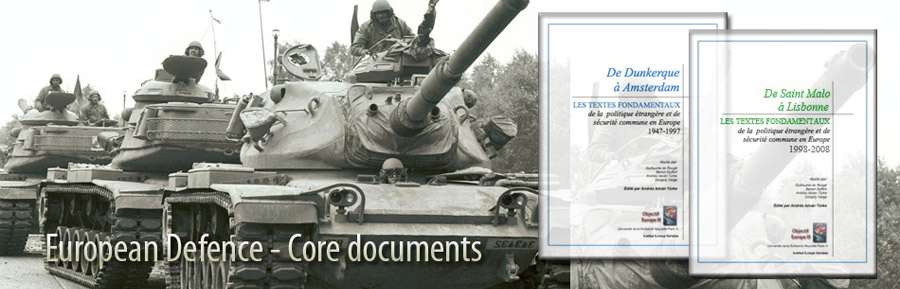
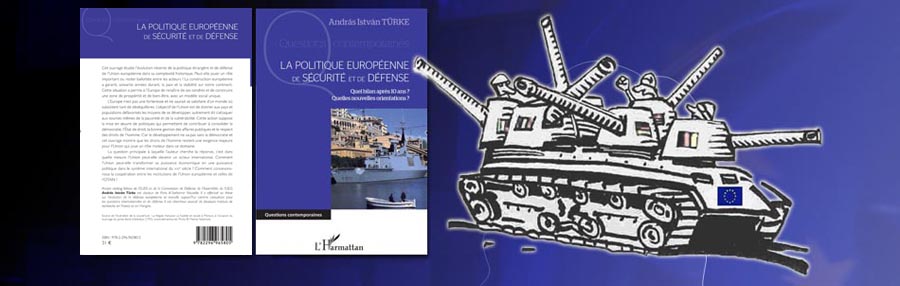
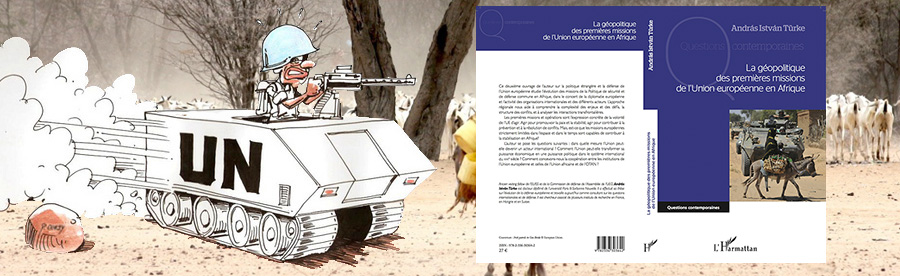
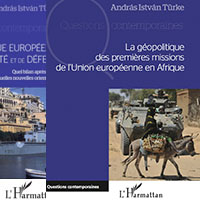
We are looking for sponsors for the English translation of these books, please contact turkeandras(at)gmail(dot)com