
You are here
Europäische Union
Entwurf der Tagesordnung - Donnerstag, 19. November 2026 - PE797.658v01-00 - Ausschuss für auswärtige Angelegenheiten
Quelle : © Europäische Union, 2026 - EP
Categories: Balkan News, Europäische Union
Minutes - Tuesday, 10 November 2026 - PE797.666v01-00 - Committee on Security and Defence
Source : © European Union, 2026 - EP
Categories: Europäische Union
Press release - AI in democracy: ensuring oversight and compliance with EU values
The European Parliament calls for parliamentary scrutiny and regulation of the impact of artificial intelligence on EU democratic processes, institutional balance, and fundamental rights.
Committee on Constitutional Affairs
Source : © European Union, 2026 - EP
Committee on Constitutional Affairs
Source : © European Union, 2026 - EP
Categories: Europäische Union, Union européenne
Pressemitteilung - Abstimmen trotz Babypause: Parlament will Stimmrechtsübertragung erlauben
Am Donnerstag sprach sich das Parlament dafür aus, dass EU-Abgeordnete ihr Stimmrecht vor und nach der Geburt eines Kindes übertragen können.
Rechtsausschuss
Quelle : © Europäische Union, 2026 - EP
Rechtsausschuss
Quelle : © Europäische Union, 2026 - EP
Categories: Europäische Union, Union européenne
Press release - Civil protection mechanism: making the EU crisis-ready
MEPs want the next EU crisis prevention and response tool to do more to anticipate crises before they happen, and to do better at supporting recovery efforts.
Committee on the Environment, Public Health and Food Safety
Committee on Public Health
Source : © European Union, 2026 - EP
Committee on the Environment, Public Health and Food Safety
Committee on Public Health
Source : © European Union, 2026 - EP
Categories: Europäische Union, Union européenne
Press release - Tilly Metz elected Vice-President of the European Parliament
On Thursday, MEPs elected Tilly Metz as Parliament Vice-President, replacing Nicolae Ștefănuță.
Committee on Legal Affairs
Source : © European Union, 2026 - EP
Committee on Legal Affairs
Source : © European Union, 2026 - EP
Categories: Europäische Union, Union européenne
À Lyon, le Maroc et la France réaffirment les perspectives de leur partenariat stratégique
Le positionnement du Maroc dans les dynamiques de coopération euro-africaines et les perspectives du partenariat stratégique entre Rabat et Paris ont été au centre d'une conférence organisée à Lyon, le mardi 10 novembre 2026.
Le Centre marocain de recherche sur la globalisation (NejMaroc), en partenariat avec le Consulat général du Maroc à Lyon, a organisé une conférence à Lyon, sur le positionnement du Maroc dans les dynamiques de coopération euro-africaines et les perspectives du partenariat stratégique entre Rabat et Paris. Cette rencontre a mis en évidence les atouts du Royaume, notamment son attractivité auprès des investisseurs internationaux, le développement de ses grands projets économiques et sa capacité à nouer des partenariats stratégiques.
Organisée à l'occasion de la célébration de la Marche verte et de la Fête de l'Unité, la conférence s'est tenue sous le thème « France-Maroc : un partenariat stratégique entre diplomatie et expertise ». Elle a réuni des élus locaux, des représentants des autorités, ainsi que des acteurs des milieux universitaire et associatif.
Intervenant à cette occasion, la consule générale du Maroc à Lyon, Rajae Benchaji, a souligné les transformations économiques, institutionnelles et infrastructurelles engagées par le Royaume sous le leadership de SM le Roi Mohammed VI. Elle a notamment mis en avant une vision stratégique de long terme, axée sur le développement national et le renforcement du rayonnement du Maroc à l'échelle régionale et internationale.
La diplomate a également rappelé que cette dynamique s'inscrit dans une approche de co-développement visant à renforcer l'intégration économique du continent africain. Elle a notamment cité l'Initiative Royale visant à faciliter l'accès des pays du Sahel à l'océan Atlantique, ainsi que le projet de gazoduc Maroc-Nigeria.
Parmi les réalisations structurantes évoquées figurent également les infrastructures de transport et de logistique, notamment le complexe portuaire Tanger Med, les lignes à grande vitesse, la voie express Tiznit-Laâyoune-Dakhla, ainsi que les projets portuaires Nador West Med et Dakhla Atlantique.
S'agissant des relations entre le Maroc et la France, Rajae Benchaji a relevé le renforcement de la coopération bilatérale dans plusieurs secteurs stratégiques, dont les transports, l'enseignement, la culture, la défense, l'aviation civile et la gestion de l'eau.
De son côté, le secrétaire général de NejMaroc, Yassine El Yattioui, a présenté le Maroc comme une puissance africaine émergente et un partenaire majeur de la France dans les initiatives de coopération entre l'Europe et l'Afrique. Il a mis en avant les principaux facteurs de compétitivité du Royaume, notamment la modernisation de son économie, sa diplomatie active, son ouverture aux investissements étrangers et son potentiel de développement à l'échelle nationale et régionale.
Yassine El Yattioui a insisté sur la nécessité de consolider les relations maroco-françaises et d'élargir les domaines de coopération, en particulier dans les secteurs économique, diplomatique, scientifique et éducatif.
Les échanges ont également porté sur les perspectives de coopération entre les universités marocaines et françaises, ainsi que sur le rôle des nouvelles générations dans le rapprochement entre les deux pays.
Cette conférence marque le lancement d'un cycle de rencontres destiné à renforcer le dialogue entre les acteurs institutionnels, universitaires et territoriaux des deux pays. Des délégations représentant notamment les municipalités d'Oyonnax, de Vaulx-en-Velin et de Vénissieux ont pris part à cette première rencontre.
Categories: Afrique, Europäische Union
COP31: New Research Ties Extreme Weather and Mental Health Challenges in Africa
People wade through flooded streets in Lekki, Lagos, Nigeria, with vibrant mural art on buildings. Credit: Ben Iwara/Pexels.
By Ignatius Banda
ANTALYA, Türkiye & BULAWAYO, Zimbabwe, Nov 12 2026 (IPS)
Floods. Extreme heat. Droughts. African communities have experienced it all and more.
And as has come to be expected, humanitarian agencies have responded by providing essential emergency assistance such as food aid and other critical needs for affected communities amid increasingly dwindling funding.
Amid those challenges, researchers are now calling for a shift in how African governments and aid agencies respond before and after extreme weather events by focusing on mental health challenges that emerge as a direct result of floods.
According to the Africa Centre for Strategic Studies, 27 African countries “experienced unusually heavy rainfall in 2024” and affected 11 million people. Floods left more than 2,500 dead, four million displaced, and communities lost hundreds of thousands of livestock.
The extent of such losses is enough to break the stoicism of families already struggling to make ends meet in a continent where millions live in extreme poverty.
A cohort of African researchers in diverse fields that include psychiatry, epidemiology, climate science and medicine are pointing to these figures to investigate the impact of extreme weather on the mental health of flood and extreme weather victims.
And ahead of COP31 underway in Türkiye, the link between climate change and mental health in countries on the receiving end of what is considered human-driven nature’s fury is gaining traction as researchers explore the resilience of flood victims beyond relief aid.
While this year’s Conference of the Parties has “resilient health infrastructure and climate-resilient cities” as part of “action agenda priorities”, African researchers are pushing for the inclusion of mental health and psychosocial support as a critical flashing point that demands more attention in climate change discussions.
The new study led by Professor Collins Iwuji of the Africa Health Research Institute under a project called Weather Events and Mental Health in Africa (WEMA) that brought together academics and nongovernmental organisations provides insights into the devastating effects of floods in Burkina Faso, Mozambique, Kenya and South Africa.
Members of civil society demonstrate in the corridors. Credit: UN Climate Change/Kubilay Ciftci
“There is a need to explore the lived experiences of people and communities impacted by climate change, especially those living in communities facing social and structural vulnerabilities,” the study found.
WEMA researchers say the findings are not representative of the whole African continent but “broaden the evidence on flooding and mental health across these regions.”
It raises questions about how the continent is handling the psychological impact of flooding on vulnerable communities with families losing their homes and livelihoods and how they deal with grief.
Last year, research by the United for Global Mental Health consortium found that “mental health was not included in the majority of national adaptation policies and, when it was included, it was often mentioned superficially and with no corresponding adaptation action.”
Dr Sanae Okamoto, a researcher at the United Nations University in Maastricht specialising in climate change and mental health, has observed that globally, governments were only allocating “around two percent of their health budgets to mental health, a number that will need to increase as climate change intensifies.”
Amid that deficit, WEMA scientists say the study seeks to change this situation, especially as the link between climate and mental health is also attracting the attention of European experts who are intensifying their research on the psychological effects of climate change.
And with the spectre of a super El Nino, preparing for climate-induced mental health challenges has become even more urgent.
The WEMA study notes that “the risks and impacts of climate change on mental health are already rapidly accelerating, resulting in several direct, indirect, and overarching effects that disproportionately affect those who are most vulnerable and marginalised.”
This report also comes as other researchers say new ideas such as “climate change anxiety” have entered the lexicon as part of efforts to understand the wider psychological impact of extreme weather.
“Across four countries we found that individuals exposed to flooding have a higher burden of mental disorders compared to individuals that were not,” said Professor Collins Iwuji of the Africa Health Research Institute, the WEMA research project lead.
“If you took away flooding, you would reduce the number of mental disorders in our study population by 25 percent,” Iwuji told Bhekisisa Centre for Health Journalism, the WEMA media partner.
A 2021 study covering young people aged between 16 and 25 years carried out in Australia, Brazil, Finland, France, India, Nigeria, the Philippines, Portugal, the UK, and the USA found that “climate change has important implications for the health and futures of children and young people, yet they have little power to limit its harm, making them vulnerable to climate anxiety.”
WEMA says the study was carried out because the “limited data on the specific effects of EWEs on mental health in Africa highlights the need for more research to guide policy and practice.”
“Mental health support must be integrated into disaster preparedness and response and the provision of psychological first aid in the immediate aftermath of these events, not six months later,” Owuji said.
Meanwhile, Oxfam reports that there have been more than 8,000 flood deaths this year (the highest level since 2013) and that monthly temperature records are being recorded in more than 100 countries, despite the toll 87 private jets have so far landed at Antalya Airport during the UN climate summit (COP31).
It says the carbon pollution of a person in the richest 1 percent has contributed 34 times more to today’s extreme heatwaves than the average person and 100 times more than someone in the poorest 50 percent.
“These records are not accidents of weather. They are the foreseeable consequences of a fossil-fuelled economy in which those who pollute most are also the best protected from its consequences,” said Oxfam International Executive Director Amitabh Behar.
Oxfam’s analysis of data from Polluterjet reveals that 87 private jets have landed at Antalya Airport since 7 November, emitting an estimated 777 tonnes of CO₂, which is equivalent to flying around the world more than three times.
Nigerian billionaire Aliko Dangote’s private jet flew approximately 4,370 kilometres from Lagos to Antalya, emitting an estimated 30 tonnes of CO₂, which is roughly the same as the average person emits in six years. During COP30 last year, 66 private jet journeys were recorded.
IPS UN Bureau Report
Related Articles
Categories: Africa, Europäische Union
Le DIGITAL 08H dévoile ses cinq numéros gagnants
DIGITAL 08H : Avez-vous tenté votre chance ?
Le tirage DIGITAL 08H N°352 a livré son verdict !
Jeudi 12 Novembre 2026
Avez-vous joué ?
Avez-vous misé sur vos numéros porte-bonheur ?
RÉSULTAT : 07 • 54 • 22 • 45 • 52
Félicitations aux heureux gagnants !
Pas encore gagné ? Gardez le sourire !
Rendez-vous au prochain tirage de 11H pour une nouvelle chance.
Jouez dans les centres de jeux ou en ligne : Tapez 590# ou lnbloto.bj
Jouez avec modération et responsabilité. Le jeu doit rester un plaisir.
A TOI DE JOUER #Akaxòa
#LNBSA #XòGbɔnAlɔkpaVo #JeuResponsable #LaChanceAvecModération
LA CROIX DU JOUR

Categories: Afrique, Europäische Union
‘The War Must Stop’: Nobel Peace Laureate Oleksandra Matviichuk on the Urgent Need to Protect Ukraine’s Women and Children
By Sania Farooqui
BENGALURU, India, Nov 12 2026 (IPS)
Four years after Russia’s all-out invasion of Ukraine, the human cost of the war keeps rising. Even though the global public eye is primarily glued to the progress of the conflict itself, its geopolitical implications and territorial bargaining, the millions of Ukrainian women and children experience the burden of this war that changed their lives and future forever.
Oleksandra Matviichuk, Nobel Peace Laureate & Head of the Centre for Civil Liberties
For Oleksandra Matviichuk, Ukrainian human rights lawyer, Nobel Peace Prize winner and Head of the Centre for Civil Liberties, recording the human cost of the war has become the major part of her fight for justice and accountability.Matviichuk believes that until the war goes on, Ukrainian women would keep paying an unusual price for the opportunity to raise their children safe from Russian aggression.
Women were actively involved in humanitarian activities in Ukraine; they took care of displaced people and continued providing basic services to communities, as well as taking on duties that traditionally belong to men who either fight in the army or have fallen during the war.
However, their participation in the conflict is a huge personal sacrifice for women.
The war aggravates inequalities faced by women and girls as it makes them more vulnerable to gender-based violence, poverty, internal displacement, and psychological distress. Besides, women-led NGOs, which provide vital services ranging from psychosocial help, violence prevention, and humanitarian aid, face serious difficulties with funding in times of increased needs.
From Matviichuk’s perspective, the implications of the war go far beyond the humanitarian crisis. For her, it is the clash between two opposing systems – democracy and authoritarianism.
Matviichuk talks about the freedoms that Ukrainian women have in family and social life, comparing them with the limitations of women living in authoritarian states.
“We are fighting for our daughters. We want our daughters would never appear in situation when they have to prove someone that they also are human beings and have all freedom and all rights,” she says.
Probably there is no place where the costs of this war will become more obvious than in the life of Ukrainian children.
Children displaced, interrupted in their studies, separated from family members, attacked, and witnessing the destruction of infrastructure have lost all sense of stability and security. Many Ukrainians are forced to spend childhood in the world of air raid sirens, uncertainty and continuous loss of relatives.
According to Matviichuk, the psychological consequences of living in such conditions for a long time can cause terrible damage because trauma leaves a person trapped in the past, depriving of any future.
For the families living in Ukraine, the war has stripped them of one of the most basic necessities that can exist for anyone in this world, that is, the assurance of security in terms of knowing that they would be alive the next day. Talking about the kind of life that they have to lead today, Matviichuk explains that they go to sleep without knowing whether they or their children will wake up on the next day. “It’s very difficult to live like us when we go to bed and our children go to bed, we have no idea whether or not we will get up next morning because war is lottery and probably it will be your residential building that would be hit this night,” she explains.
However, Matviichuk says that the first sign of healing is when children start dreaming.
Collaborating with colleagues who work as psychological support for children, she asked them to record what Ukrainian children dream about.
As the result, it became clear not only how devastating war could be but how simple the children’s wishes are.
Some children dream of going to school without the need of studying online anymore. Others want to become football players in order to make their deceased parents proud of them. There is also a dream of inventing something that will help to save other people, while another dreams of becoming Secretary-General od the United Nations to prevent wars.
Others simply want their loved ones back.
“I dream that my grandmother, my best friend Misha and my dog would be alive,” reads one child’s response.
Another dreams of a new computer, Lego and, most importantly, “that Russia would stop sending missiles and drones at us.”
These are not extraordinary aspirations. They are the ordinary dreams of children who want safety, education, family and the freedom to imagine a future.
Besides the direct ramifications of displacement and violence, Matviichuk brings up another issue that is even more serious: the fate of Ukrainian children who live under the control of Russian occupation.
She says that there are systematic measures aimed at eliminating the identity of Ukrainian children through education, prohibition of language and culture, and militarization.
Matviichuk points out that children are being educated with the help of Russian textbooks which do not recognize the existence of Ukraine as a separate country. In addition, there have been reports of sending the children to Russian re-education camps where they undergo military training and identity reshaping.
According to her, the problem might be far-reaching: these children will get Russian passports and might be conscripted into the Russian army in the future.
“This is not just a human rights problem. This is a security problem.”
The issue requires the immediate international response, especially concerning the protection of children under occupation, their reunification with families, preventing forced transfer and preserving their cultural identity.
The humanitarian disaster is even further compounded by the uncertainties associated with international peace talks. Even though diplomatic endeavors have led to some hope regarding the possibility of stopping the ongoing war, Matviichuk seems to question the adequacy of such peace talks to address the problems of the people affected by the conflict.
According to Matviichuk, there is a need for continued pressure on Russia through international sanctions and confiscation of frozen Russian assets to end the war.
The international community needs to create economic and political costs that exceed the gains in the continuation of the war for the Kremlin.
Apart from these measures, it is essential to increase humanitarian efforts, empower women organizations, prevent violence against children, and provision of education, health and psychological services.
It is also important for the international community to focus on war crime prosecution, repatriation of deported children, and freeing illegally detained people.
Women and children who have been experiencing the impacts of war for years cannot only recover from rebuilding of their dilapidated structures. There is a need for the restoration of their dignity, security, economic independence and active participation in their nation-building process.
As Matviichuk explains, the effects of the war will be felt by many generations to come. Children who will lose several years of learning and who will feel the loss of their families and security will require support for many years to come even after the war ends.
The real question, however, is not only how fast Ukraine will recover, but also if the international community is ready to invest in the future that is free from fears for women and children.
A sustainable peace should guarantee not only the end of the war but also justice, accountability, freedom, and respect for the dignity of people.
Most importantly, a sustainable peace should give Ukrainian children something which they lost because of the war, the right to dream about their future.
Sania Farooqui is an independent journalist and host of The Peace Brief, a platform dedicated to amplifying the voices of women in peacebuilding and human rights.
IPS UN Bureau Report
Categories: Africa, Europäische Union
Press release - EP TODAY
Categories: Europäische Union, Union européenne
Le numérique pour améliorer le suivi des élevages de poulets de chair
L'unité de gestion du Projet d'inclusion des jeunes (ProDIJ) franchit une nouvelle étape dans la modernisation de sa composante Aviculture. Le programme a obtenu le feu vert nécessaire à la contractualisation d'une mission portant sur la conception et le déploiement d'un système numérique de suivi des sites d'élevage de poulets de chair.
Dans le cadre de la mise en œuvre du ProDIJ, une mission de conception et de déploiement d'un système numérique de suivi des sites d'élevage de poulets de chair sera bientôt réalisée. Évalué à 423,728 millions FCFA, cet investissement vise à renforcer le suivi technique des exploitations et à améliorer les conditions de production des jeunes bénéficiaires.
La prestation selon La Marina, sera confiée à un cabinet spécialisé dans le développement de solutions technologiques agricoles (AGRITECH). Le dispositif prévu reposera sur trois principaux outils : des capteurs de température installés dans les bâtiments d'élevage, une application mobile destinée aux exploitants et une plateforme de suivi accessible à l'unité de gestion du ProDIJ. Ces capteurs permettront de mesurer la température à l'intérieur des poulaillers et de recueillir des données sur les conditions d'élevage. Ce paramètre joue un rôle important dans la croissance, l'alimentation et la santé des poulets de chair.
Les variations de température pouvant affecter le développement et la survie des volailles, la disponibilité de données régulières devrait aider les éleveurs à mieux apprécier l'environnement de production et à adapter leurs pratiques.
L'application mobile constituera, pour sa part, un outil d'accès aux informations relatives aux exploitations. Elle devra également faciliter la transmission des données de production et le signalement des éventuelles difficultés rencontrées par les bénéficiaires. Au niveau du ProDIJ, la plateforme permettra de centraliser les informations provenant des différents sites et de renforcer le suivi technique des élevages accompagnés.
Cette architecture numérique devrait ainsi améliorer la circulation de l'information entre les exploitants et l'équipe de gestion du programme. Les fonctionnalités définitives, notamment les éventuels systèmes d'alerte automatique et les autres paramètres de surveillance, dépendront toutefois des spécifications techniques retenues dans le cadre de la prestation.
Une opération inscrite dans les orientations du financement additionnel
Le déploiement de cette solution technologique s'inscrit dans les orientations définies pour le financement additionnel du ProDIJ, dont le document d'évaluation a été approuvé le 25 juin 2025. Celui-ci prévoit notamment l'intégration d'outils numériques dans les exploitations avicoles destinées aux jeunes entrepreneurs.
Les investissements envisagés portent entre autres sur l'utilisation de capteurs intelligents, de dispositifs de contrôle de la température, d'équipements automatisés et d'outils de collecte de données en temps réel. L'objectif est d'améliorer la gestion quotidienne des élevages, de renforcer les mesures de biosécurité et d'accroître la productivité des exploitations.
D'un montant de 41,3 millions de dollars, le financement additionnel soutenu par la Banque mondiale ambitionne de favoriser l'intégration de 1 000 jeunes dans la chaîne de valeur avicole. Il prévoit également un déploiement progressif des installations ainsi qu'un accompagnement technique des bénéficiaires afin de consolider leurs capacités de production et de gestion.
Un déploiement prévu sur douze mois
La mission de conception et de déploiement du système numérique est prévue pour une durée de douze mois. Son démarrage interviendra après l'accomplissement des formalités préalables à la signature du contrat.
La portée effective de cet investissement dépendra notamment du nombre de sites équipés, du calendrier de déploiement, de l'appropriation des outils par les éleveurs et des modalités de maintenance des installations.
Categories: Afrique, Europäische Union
Les structures d'accompagnement des entreprises intègrent de nouveaux membres
L'Association des Structures d'Appui et d'Encadrement des Entreprises (ASA2E) accueille 23 nouvelles structures pour renforcer les synergies et professionnaliser l'accompagnement entrepreneurial au Bénin.
L'Association des Structures d'Appui et d'Encadrement des Entreprises (ASA2E) renforce son réseau. A l'issue d'un appel à manifestation d'intérêt suivi de l'évaluation des candidatures, 23 nouvelles structures ont été retenues pour rejoindre l'association. Leur intégration officielle a été marquée par une cérémonie de cooptation organisée, mardi 10 novembre 2026 à Cotonou, au siège de la Chambre de Commerce et d'Industrie du Bénin (CCI Bénin).
Pour Paul DAHOUE, président de l'ASA2E, cette ouverture constitue une étape importante dans le renforcement de l'action collective des structures qui accompagnent les entreprises au Bénin. « Vous apportez des compétences, une expérience et une énergie nouvelles », a-t-il déclaré à l'endroit des nouveaux membres.
L'association entend surtout consolider les synergies entre les acteurs de l'accompagnement entrepreneurial. Une ambition partagée par les nouveaux adhérents. L'adhésion à l'ASA2E doit permettre aux structures du secteur de « travailler ensemble la main dans la main pour être plus professionnels », selon Dieu-Donné KONNON, Directeur Général de COTEF SARL. Une meilleure collaboration entre confrères favorisera également une reconnaissance accrue de leurs métiers auprès de l'État et des institutions qui sollicitent leurs services.
Structurer le métier et mutualiser les expertises
Les nouveaux membres attendent de l'ASA2E un cadre de collaboration capable de mieux organiser le secteur et de valoriser les compétences de chacun.

L'enjeu est notamment de mettre les expertises en commun afin d'offrir aux entreprises un accompagnement plus complet. « Il y a des expertises avérées, tout le monde ne fait pas forcément la même chose. Donc, la complémentarité nécessaire qu'il faut pour que les entreprises accompagnées puisse avoir tout le paquet nécessaire, je crois que cela peut être structuré au niveau de cette association », a indiqué Dieu-Donné KONNON, Directeur Général de COTEF SARL.
M. M.

LISTE DES NOUVEAUX MEMBRES DE L'ASA2E
1- SECOFI BENIN SARL
2- GUICHET D'ECONOMIE LOCALE NORD BENIN (GEL NORD BENIN)
3- GROUPE DE RECHERCHE, D'ACTION ET D'APPUI POUR LE DEVELOPPEMENT RURAL (GRAADER)
4- COSINUS CONSEILS SARL
5- COTEF SARL
6- JEUNESSE ET EMPLOIS VERTS POUR UNE ECONOMIE VERTE (JEVEV)
7- VIE ET ENVIRONNEMENT (VEE)
8- FIDUCIAIRE D'EXPERTISE ET D'INGENIERIE CONSEIL (FIDEXI CONSEIL)
9- GUICHET D'ECONOMIE LOCALE DU SUD BENIN (GEL SUD BENIN)
10- ENTREPRISE DE DEVELOPPEMENT DES FILIERES AGRICOLES
11- MOUVEMENT RURAL DE JEUNESSE CHRETIENNE DU BENIN
12- HIGH PERFORMANCE MANAGEMENT & CONSULTING (HPMC)
13- CENTRE DE DEVELOPPEMENT ECONOMIQUE LOCAL (CDEL)
14- GROUPE D'APPUI D'ENCADREMENT ET DE RECHERCHE EN MILIEU RURAL
15- INSTITUT PHENIX (IP SARL)
16- CABINET D'ETUDE ET DE RECHERCHE, D'AUDIT ET DE GESTION D'EXPERTISE ET DE MANAGEMENT (CERAGEM)
17- SOL CONSULT AFRICA (SOLCA SAS)
18- FRAM BUSINESS
19- FUTURE STUDIO
20- BTECH
21- CABINET D'ASSISTANCE EN GESTION ET FORMATIONS (CAGF)
22- PROMOTION JEUNESSE UNIE POUR LE DEVELOPPEMENT (PJUD-BENIN ONG)
23- GROUPEMENTS POUR LA PROMOTION ET L'EXPLOITATION DES RESSOURCES DE L'ENVIRONNEMENT (GROPERE_ONG)

Categories: Afrique, Europäische Union
ÄNDERUNGSANTRÄGE 1 - 202 - Entwurf eines Berichts Umsetzung der Gemeinsamen Außen- und Sicherheitspolitik – Jahresbericht 2026 - PE796.458v01-00
ÄNDERUNGSANTRÄGE 1 - 202 - Entwurf eines Berichts Umsetzung der Gemeinsamen Außen- und Sicherheitspolitik – Jahresbericht 2026
Ausschuss für auswärtige Angelegenheiten
David McAllister
Quelle : © Europäische Union, 2026 - EP
Ausschuss für auswärtige Angelegenheiten
David McAllister
Quelle : © Europäische Union, 2026 - EP
Categories: Balkan News, Europäische Union
Press release - Opening: 11-12 November plenary session in Brussels
Parliament held a minute’s silence for victims of the Bulgarian motorway accident, the shooting in Krakow, the racist attack in Trappes and La Verrière, and the Urda train collision.
Source : © European Union, 2026 - EP
Source : © European Union, 2026 - EP
COP31: Why Africa Must Rethink Nuclear Energy
Campaigners protest against nuclear energy at COP31 in Antalya, Turkey. Credit: Farai Shawn Matiashe/IPS
By Farai Shawn Matiashe
ANTALYA, Türkiye, Nov 11 2026 (IPS)
Gabriel Sheunopa Manyangadze holds a placard reading “No nuclear spin, let renewables win” as a campaigner leads protesters against nuclear energy in Africa at the United Nations climate summit in Antalya, Turkey.
The activists warned African leaders of the investments required to establish nuclear energy and the dangers its waste poses.
“We have realised that when people put nuclear forward as a solution, they are only looking at it from a short-term perspective. They do not look at the long-term effects that include pollution,” Manyangadze, a food and climate justice manager at the Southern African Faith Communities Environment Institute based in South Africa, told IPS during a protest against nuclear energy as a climate solution at the ongoing Conference of the Parties, or COP31.
South Africa is the only country on the continent that has a commercial nuclear power plant.
Located in Melkbosstrand near Cape Town, the Koeberg Nuclear Power Station has an installed capacity of around 1,854 MW, providing roughly 5% of the country’s electricity. Its units will operate until the 2040s.
But there are concerns about the sustainability of this nuclear power plant.
False Climate Solution
Manyangadze said the power generation company is struggling to dispose of nuclear waste.
“They are dumping the liquid waste and the solid waste that is being generated from the power plant in a place called Vaalputs, but the area is still radioactive, affecting the environment in the surrounding areas,” he said.
The Vaalputs National Radioactive Waste Disposal Facility is South Africa’s primary and only radioactive waste disposal site in the Northern Cape. The 10,000-hectare site handles near-surface disposal of solid and solidified low-level and intermediate-level radioactive waste from Eskom’s Koeberg Nuclear Power Station. Nuclear waste remains radioactive for up to 300,000 years.
Though the National Nuclear Regulator (NNR) licenses and regulates it, with continuous environmental and seismic monitoring showing no detectable radiological impact outside safe limits since operations began, farmers fear leaks into nearby water could affect agricultural productivity.
Manyangadze said that communities who live around this area have not prepared for a disaster. “We work with the people around the nuclear facility, and they are not clear on what to do in case of a disaster,” he says.
There are concerns about the capacity of African governments to handle and prevent a nuclear disaster.
There have been major nuclear disasters around the world after explosions released radioactive materials into the environment, affecting thousands of people and polluting the environment.
The Chernobyl Disaster in Ukraine on 26 April 1986 involved a flawed safety test combined with operator errors that caused an uncontrolled power surge, triggering a steam explosion that released massive amounts of radioactive isotopes across Europe, leading to the deaths of dozens of people and the permanent evacuation of over 160,000 people.
An earthquake and tsunami caused the Fukushima Daiichi nuclear disaster on 11 March 2011. The floods knocked out active cooling systems and backup diesel generators, resulting in explosions, the deaths of dozens of people and the displacement of 164,000 people.
Some parts of Africa are facing climate change disasters like floods, mudslides, landslides, and storms, which are becoming more frequent. Such weather poses a threat to power plants, as happened in Fukushima.
At the United Nations climate summit in the Mediterranean country, the COP31 presidency is pushing for a global target to increase electricity’s share of final energy consumption to 35%, up from the current 20%, by 2035.
Proponents of nuclear energy are pushing for investments and the expansion of nuclear reactors to generate electricity to meet this global electrification target.
Rachitaa Gupta from the Global Campaign to Demand Climate Justice said that nuclear energy is not the solution that is needed to fix the energy crisis in the Global South.
“Most of this nuclear energy is being pushed on indigenous lands. It is our communities that are subjected to uranium mining and its devastating consequences,” she said.
“Our lands are being destroyed for nuclear energy plants, but the power does not even go to the people. It powers data centres that are being promoted by big technology companies. This is not for the people but for corporations.
South Africa’s Eskom and the Department of Electricity and Energy plan to procure an additional 5,200 MW to 10,000 MW of nuclear capacity by 2039 under the Integrated Resource Plan 2025. They plan to start public consultations in late 2026.
Togo, Kenya, Nigeria, Rwanda, Morocco, Ghana and Egypt are some of the African countries that are also considering nuclear energy.
Russia’s Rosatom is constructing a four-unit El Dabaa Nuclear Power Plant, 320 kilometres northwest of Cairo. The first nuclear power plant in the country and in the region, El Dabaa, will generate 4,800 MW of electricity.
Amos Wemanya, a senior climate advisor at Power Shift Africa, a research group in Kenya, said that nuclear power is not the best energy option for Africa right now because it takes a long time to set up, while the continent needs energy quickly.
“These people need access to electricity as soon as possible so that this power can help them power their development, power their prosperity. It takes a very long time to build a nuclear power plant,” he said.
“So we cannot be investing our limited resources at the moment in an energy system that is not going to help our people achieve our development as soon as possible.”
Nuclear energy requires high upfront investments running into billions of dollars, which are relatively lower once the plant is operational. A kilowatt is $5,300, or about $6bn more for a single large-scale reactor, estimates the World Nuclear Association. This is beyond the reach of most African countries that are struggling to service their debts and provide services like health, jobs and education.
Manyangadze said nuclear energy will ruin the South African economy.
Alternatives
About 600 million people lack access to electricity in Africa. Sub-Saharan Africa accounts for roughly 85% of the global population lacking electricity.
Gupta said they protested that if there is a push for energy, it needs to be clean, renewable energy, and not polluting energy, like nuclear energy.
“The model must not be the same as the fossil fuel energy systems, which are exploiting our communities,” she said.
Wemanya said that Africa needs an energy source that can transform the lives of communities.
“We need an energy system that is easy to deploy. There are so many alternative sources, renewable sources such as solar, that are easy to deploy and can benefit off-grid communities,” he said.
He said that wind and solar are cheaper alternatives compared to nuclear energy. “We cannot afford to invest in a nuclear energy system that is not fit for purpose for our continent,” he said.
According to the IEA, Africa contains 60% of the world’s best solar resources.
“And in most of the countries, particularly from where I come from in Southern Africa, we have the sun, and we can actually build our energy around renewables like the sun and the wind,” Manyangadze said.
IPS UN Bureau Report
Related Articles
Categories: Africa, Europäische Union
Chinesischer Nationalspieler wechselt in die Swiss League
Transfermeldungen, -gerüchte und die wichtigsten News zum Eishockey: Hier gehts zum Ticker.
Categories: Europäische Union, Swiss News
«Skifahren» als falsche Antwort – Aargauer Gemeinde lehnt Einbürgerung ab
Der Aargauer Regierungsrat rügt Neuenhof wegen der abgelehnten Einbürgerung einer türkischen Frau. Die Gemeinde habe ihre Deutschbewertung ungenügend begründet und unzulässige Fragen gestellt.
Categories: Europäische Union, Swiss News
FRANCE: ‘The Government Should Learn to Respect Its People, Listen to Them and Consult Them’
By CIVICUS
Nov 11 2026 (IPS)
CIVICUS discusses France’s student protest movement with Aminata and Mariam Touré, two sisters involved in the protests. Aminata is a member of the Popular Youth Front (Front de la Jeunesse Populaire), a collective of young people from working-class neighbourhoods.
Aminata and Mariam Touré
Weeks of protests led by secondary school students have swept France, triggered by underfunded public services and limited opportunities. The wave forms part of a broader global series of recent protests, often led by members of Gen Z, sparked by everyday economic concerns and a rejection of the political establishment. On 17 October, some 550,000 people protested, according to official figures, but the day descended into the worst violence seen in years. Human rights groups have also documented extensive police brutality, including against children.Why did you decide to take action?
In our secondary schools, we have holes in the walls, missing chairs, toilets without doors, overcrowded classrooms and absent teachers. Students completing secondary education also face constant pressure from Parcoursup, the national higher education admissions platform.
During the last heatwave, in Saint-Denis, in the northern suburbs of Paris, pupils fainted during their exams because there was no air conditioning and it was too hot in the exam halls. Pupils who were ill were forced to attend lessons, as these were the only days when teachers were present. With no school nurses on hand, they were unaware they were contagious and passed viruses on to each other.
These catastrophic situations only affect poor regions, rural areas and France’s overseas territories, which are even poorer. You never hear about this in central Paris, where the government concentrates its budget. A parliamentary report has shown that the state spends less per pupil in Seine-Saint-Denis than elsewhere. The result is that every child there loses, on average, the equivalent of a whole year’s schooling over the course of their education. For the start of the 2024 school year, the Seine-Saint-Denis inter-union group estimated there was a shortfall of 5,000 teachers, 2,200 support staff for pupils with disabilities and 175 senior education advisers. This is effectively a two-tier education system.
We’ve been raising these issues with our head teachers, but the government is doing nothing, apart from passing pointless laws. Blocking access to our schools was the only way to make ourselves heard. Thanks to that, we’re now the focus of national and global attention.
How did the movement spread?
The blockades began as early as 31 August in overseas territories. It’s just that, due to media censorship, we always find out too late. The movement then spread to Créteil, in the Paris suburbs, and then to other working-class areas of the Île-de-France region, notably Essonne, Hauts-de-Seine, Seine-Saint-Denis and Val-de-Marne.
At first, everyone blockaded their own school. Then, solidarity among school pupils and support from trade unions brought us together on the streets for a common cause. School and student unions, and the General Confederation of Labour, one of France’s main trade union confederations, helped organise the protests and put forward our demands. Other movements joined us, including the gilets jaunes, the social protest movement that emerged in 2018. This solidarity proved decisive for each and every one of us.
Faced with the state’s contempt, the movement went national. Even privileged young people became aware of their educational privileges and the need to draw attention to this inhumane situation. The media have shown this. Attention paid to the blockades increased tenfold when students also blockaded elite institutions such as the University of Assas, the Catholic Institute of Paris and the Parisian secondary schools Louis-le-Grand and Montaigne.
What are your concerns about the national budget?
We are calling for more funding for education. The government is investing heavily in defence. The defence budget has risen from €32.2 billion (approx. US$34.8 billion) in 2017 to almost €54 billion (approx. US$58.3 billion) in 2026, and is set to reach €64 billion (approx. US$69.1 billion) in 2027. It will have almost doubled in a decade. But for education, the government is content with a mere increase of €200 million (approx. US$216 million) in 2026, while cutting thousands of jobs. This is not investment. It is a publicity stunt.
At the same time, the government is increasing pressure on people while easing the burden on big business. Life is becoming increasingly difficult. All the movements agree on one point: we must invest in education. However, the government continues to arm the police on a massive scale while depriving the education sector of the resources it needs to function.
How do you respond to the looting and violence of 17 October?
We are against all violence, whether it comes from the police or protesters. Looting is regrettable, but it is even more regrettable that greater importance is attached to insured shops than to people who lose a limb or the use of a sense. As a citizen, when I see a young person who has looted a shop receiving a harsher sentence than a man convicted of raping his daughter, my anger redoubles.
The state’s response is so violent that it unfortunately drives some people to loot even more, as this is the only time when anyone looks at you or listens to you. But these excesses backfire on us. The media use them to stifle our demands, which diverts attention from our struggles and weakens the movement.
The movement is torn between those who seem to want revolution and those who want peace, but one cannot exist without the other. Our history books teach us that all France’s great advances have stemmed from revolts, destruction and riots. We don’t find these tools in some shadowy online network or from belligerent leaders. We find them in our textbooks. Nevertheless, like the majority of protesters, we will continue to mobilise peacefully until the government listens to us.
How do you view the police response?
It’s a disgrace. We feel as though we’re at war. Police officers hit, shove, insult and threaten us. One slogan has appeared on several placards, referring to the police’s riot units: ‘We send out SOS signals, we get the CRS instead’. That’s where we’re at. Trust in the authorities was never as low as it has been since the protests began.
These aren’t isolated incidents. It’s a doctrine. Since the gilets jaunes protests, the French approach to policing has been documented as one of Europe’s most brutal. Activist groups have recorded around 20 protesters who have lost an eye and several who have lost a hand, and in Marseille, a local, Zineb Redouane, died after being hit by a teargas canister.
Violence isn’t limited to blows with batons. On 17 October, I was on my period, and I was doused with teargas for no reason, while my friends and I were helping unprotected people, many of them tourists, with saline solution and milk. The next day, I felt excruciating pain in my stomach. I then discovered that many women exposed to teargas report menstrual cycle disturbances.
We are living in an authoritarian state, where violence reigns and the social contract has been broken. The most severe violence is that perpetrated by the state, because it’s supposed to protect us and be legitimate. Yet it maims us without a shred of empathy.
How do you view the president’s reaction?
President Emmanuel Macron’s speech following the protests was shameful, despicable and deeply disrespectful. When he demands we choose sides, then singles out the left as responsible, he shows that he’s not listening to us. Asking us to choose sides ignores the fact that we don’t want to be on his side. Pointing the finger at so-called culprits shows that he fails to grasp the extent of the damage he has caused and continues to cause.
In 2017, Macron was elected by claiming to speak for the people. Two years later, he introduced a series of measures that harmed workers. We see this even in housing policy. Cuts are being made to housing for poor people while multinationals get richer. This is a political choice.
The government should learn to respect its people, listen to them and consult them. We expect it to take action to improve conditions in secondary schools and for our views to be taken into account, because it’s our future’ at stake.
What impact do you hope to have on the 2027 presidential election?
We hope the candidates will talk more about the problems facing young people and propose tangible solutions. We want to show that secondary school pupils, too, can make their voices heard and that they must not be ignored simply because they are young. I hope all French people will be taken into account in the debates, and that we will stop talking about Islam and migrants and focus more on precarious living conditions, dignity and security. I won’t be able to vote, as I’ll still be 17. It will also be a chance to see whether those who do vote realise that their voice matters, both for them and for us.
In 2024, Macron dissolved the National Assembly following the victory of the far-right National Rally in the European elections. Then, even though the left came out on top in the snap general election, he appointed a right-wing government.
In the wake of the dissolution, we formed the Popular Youth Front, a collective rooted in working-class neighbourhoods, to put voting back at the heart of people’s concerns, as abstention rates are extremely high in those neighbourhoods. Our open letter was signed by over 6,000 young people from working-class neighbourhoods and rural areas. But it’s clear we must fight both against the far right, which is not yet in power, and against the government.
What the world sees as a spontaneous revolt by Gen Z is anything but spontaneous. These are exactly the demands we were putting forward in working-class neighbourhoods two years ago. This uprising is the predictable result of a slow, bipartisan abandonment of working-class and racialised young people. This abandonment is not the work of the far right that everyone fears, but of the centre that claims to be blocking its advance. The proof lies in its response. A government that responds to children with teargas and calls this ‘urban violence’ has already adopted the authoritarian reflex it claims to be protecting our country against.
CIVICUS interviews a wide range of civil society activists, experts and leaders to gather diverse perspectives on civil society action and current issues for publication on its CIVICUS Lens platform. The views expressed in interviews are the interviewees’ and do not necessarily reflect those of CIVICUS. Publication does not imply endorsement of interviewees or the organisations they represent.
One of those featured and photographed in this article is a minor. She appears with her parents’ consent, which was obtained in writing prior to the interview. Her name and all details that could identify her are included with her permission, as reconfirmed at every stage of the publication process.
GET IN TOUCH
Instagram
Mariam Touré/Instagram
SEE ALSO
Gen Z protests: new resistance rises CIVICUS | State of Civil Society Report 2026
France’s student protests: a new generation demands respect CIVICUS Lens 23.Oct.2026
India’s young people find their voice CIVICUS Lens 07.Aug.2026
Categories: Africa, Europäische Union
REPORT ‘Towards an EU strategy to protect and strengthen the international justice system and its institutions, mechanisms and partners’ - A10-0281/2026
REPORT ‘Towards an EU strategy to protect and strengthen the international justice system and its institutions, mechanisms and partners’
Committee on Foreign Affairs
Mounir Satouri
Source : © European Union, 2026 - EP
Committee on Foreign Affairs
Mounir Satouri
Source : © European Union, 2026 - EP
Categories: Europäische Union, European Union
Pages
the old site is here



© 2012-2015 Europa Varietas Foundation © 2015-2020 Europa Varietas Association
www.europavarietas.org | info(@)europavarietas(dot)org | Switzerland
This is a GDPR ready site
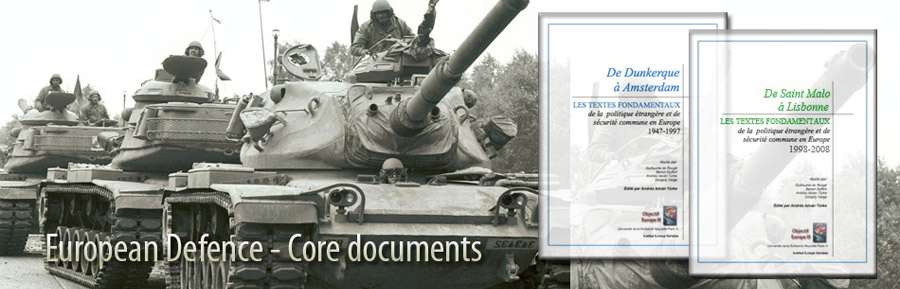
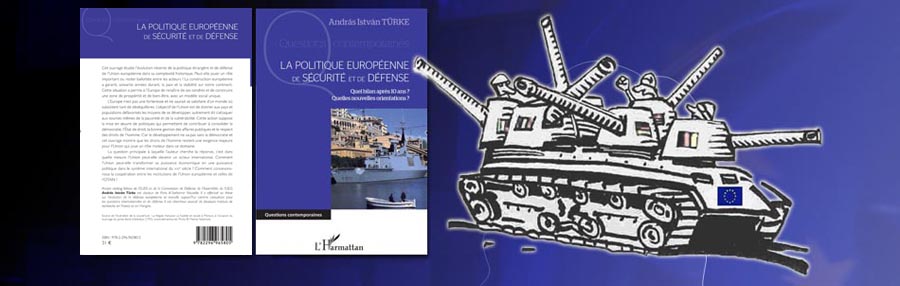
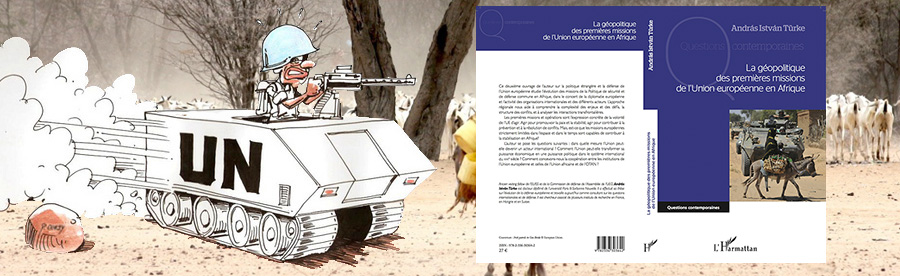
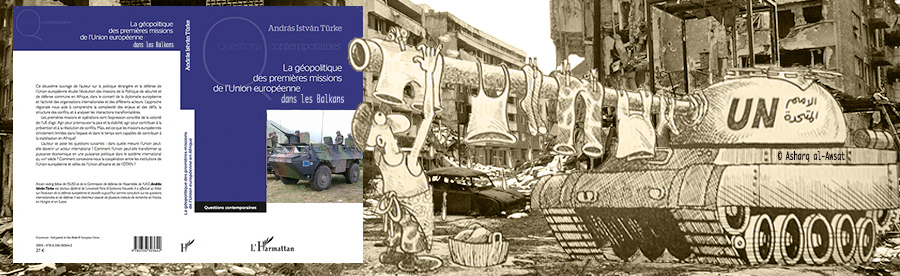
We are looking for sponsors for the English translation of these books, please contact turkeandras(at)gmail(dot)com