
You are here
Európai Unió : hírek magyarul
Governing Just Transitions through policy coherence: challenges and opportunities on the path towards climate-neutral, sustainable futures
Just Transitions have emerged as a central pillar of global climate policy, particularly following their formal inclusion in the Paris Agreement in 2015. Their rapid adoption at both national and international levels is notable given persistent shortcomings in global climate and sustainable development governance. However, Just Transition initiatives remain fragmented, conceptually contested, and predominantly focused on energy, and their governance has received comparatively little academic attention. At the same time, policy coherence, a governance principle concerned with maximising synergies and minimising trade-offs and extensively studied in the context of the 2030 Agenda, is widely invoked in policy discourse as essential for Just Transitions, yet its role in Just Transition governance has received little systematic attention in the literature. This dissertation therefore asks: to what extent can policy coherence enable the governance of Just Transitions, and under which conditions? Just Transitions here are understood as transitions that advance climate-neutral, sustainable futures in ways that are substantively just, with substantive justice defined as the expansion of opportunity freedoms, the reduction of inequalities across all dimensions, and the fulfilment of the 2030 Agenda’s promise to ‘leave no one behind.’ Part I (Chapters 2–3) examines the relationships between policy coherence, Just Transition, goal attainment, and inequality reduction. Drawing on survey data from 131 COP28 delegates (Chapter 2) and empirical analysis of 40 sustainable development policy processes across multiple countries (Chapter 3), the findings indicate that policy coherence is widely perceived as integral to Just Transitions and is strongly associated with multidimensional, cross-sectoral approaches that extend beyond energy. Empirical analysis further shows that higher coherence is linked to greater policy effectiveness in achieving multiple objectives. However, coherence alone does not reliably reduce inequalities and, in some cases, can exacerbate them. Part II (Chapters 4–6) examines the temporal, discursive, and political conditions under which policy coherence can enable the governance of Just Transitions. Drawing on policy document analysis and semi-structured interviews, these conditions are analysed through an in-depth case study of Germany’s energy transition, the Energiewende, a high-stakes transition context. Findings demonstrate that governing Just Transitions through policy coherence requires balancing short-, medium-, and long-term objectives, as temporal dynamics alter policy interactions and reveal trade-offs and synergies that evolve over time (Chapter 4). Moreover, policy coherence is socially and discursively constructed, with actors’ perceptions and interpretations strongly shaping whether policies and their implementation are experienced as coherent or incoherent (Chapter 5). Political inequalities in decision-making around the German coal phase-out and onshore wind phase-in further constrain coherence and can lead to slower climate mitigation outcomes (Chapter 6). Together, the findings indicate that while policy coherence may appear to be a necessary principle for the governance of Just Transitions, it is not sufficient. While widely endorsed, its ability to enable the governance of Just Transitions is context-dependent and contingent on its implications for social justice. In addition, policy coherence should not be seen as a fixed end-state, but as a dynamic and imperfect governance principle that is deeply shaped by politics and discourse.
Press release - MEPs push for continued engagement and concrete results on trade with China
In China, the European Parliament’s Trade Committee delegation discussed trade imbalances, market access concerns, as well as opportunities for dialogue.
Committee on International Trade
Source : © European Union, 2026 - EP
Committee on International Trade
Source : © European Union, 2026 - EP
Categories: Afrique, Európai Unió : hírek magyarul
Press release - Gender equality week: women in leadership
Parliament is marking gender equality week with debates on women’s leadership experiences, and how to drive change and inspire the next generations of women leaders.
Committee on Women’s Rights and Gender Equality
Source : © European Union, 2026 - EP
Committee on Women’s Rights and Gender Equality
Source : © European Union, 2026 - EP
Categories: Európai Unió : hírek magyarul, European Union
Indigene Völker brauchen mehr als nur einen Platz am Verhandlungstisch
Dabei sein ist nicht alles: Kann die UN-Biodiversitätskonferenz über den Einbezug von indigenen Völkern und lokalen Gemeinschaften (IPLC) von den Klimaverhandlungen lernen?
Bonn, 28.10.2026. Es ist gut belegt, dass das Wissen von IPLC und deren Land- und Meeresnutzungspraktiken maßgeblich zum Erhalt der biologischen Vielfalt beitragen. Laut einer WWF-Studie befinden sich 91 % der von IPLC genutzten Flächen in einem „guten oder mäßigen ökologischen Zustand“.
Die Beteiligung von IPLC wird auf der diesjährigen Weltbiodiversitätskonferenz (COP17) in Eriwan ein wichtiger Punkt der Verhandlungen sein. Konkret geht es um die Umsetzung von Artikel 8(j), der die Einbeziehung von „traditionellem Wissen, Innovationen und Praktiken“ vorschreibt. Laut der vorläufigen Tagesordnung steht dabei die Arbeitsweise des neu eingerichteten ständigen Nebenorgans (SB8J) auf dem Programm, das mit der Umsetzung betraut ist.
Das SB8J ist zwar das erste ständige Nebenorgan zu diesem Thema im Rahmen der drei Rio-Konventionen, knüpft jedoch an frühere Bemühungen zur Stärkung der indigenen Beteiligung an. Im Rahmen des Übereinkommens über die biologische Vielfalt (CBD) ersetzt es eine 1998 eingerichtete Ad-hoc-Arbeitsgruppe. Dies festigt das Mitspracherecht indigener Völker und spiegelt deren langjährigen Kampf wider, Beteiligung und Einfluss institutionell zu verankern. Beim klimapolitischen Pendant der CBD, der UNFCCC, hat die „Facilitative Working Group“ (FWG) den Auftrag, indigene Belange zu vertreten. Besonders an ihr ist, dass staatliche und nichtstaatliche Akteure und Vertreter*innen von IPLC gleichberechtigt vertreten sind.
Die Verhandlungsführer*innen der Biodiversitäts-COP können von den Erfolgen und Misserfolgen der FWG lernen. So ist es der FWG einem ihrer Berichte zufolge gelungen, sich stärker in die Klimaverhandlungen einzubringen und maßgeblich zur politischen Gestaltung beizutragen. Visahürden, Sprachbarrieren und begrenzte finanzielle Mittel für die Teilnahme an den COPs bleiben jedoch Hindernisse.
Einige der größten Herausforderungen für die Arbeit der FWG sind jedoch struktureller Art und dürften sich weder innerhalb einer Arbeitsgruppe noch eines Nebenorgans lösen lassen. Dazu gehört die grundlegende Diskrepanz zwischen dem auf Kennzahlen und Marktmechanismen beruhenden Ansatz der UNFCCC zur Bekämpfung des Klimawandels und dem Umweltverständnis vieler IPLC, das den Menschen als Teil einer umfassenden Lebensgemeinschaft und nicht als von der Natur getrennt begreift. Beide Ansätze lassen sich nur schwer in einem Governance-Rahmen vereinbaren, der die Natur quantifiziert und ökonomisch bewertet und die miteinander verflochtenen Themen Klima, Biodiversität und Bodendegradation in getrennten Rio-Konventionen behandelt.
Ein weiteres Problem ist die häufige Darstellung indigener Völker als schutzbedürftig statt als handlungsfähige Akteure, die multilaterale Prozesse aktiv mitgestalten können. Zwar soll die FWG primär deren Fähigkeiten zur Beteiligung an der Klimakonvention stärken. Doch in einer Institution, die von und für nationale Regierungen geschaffen wurde, sind die Spielräume nichtstaatlicher Akteure von Natur aus begrenzt. Trotz ihrer gleichberechtigten Vertretung bleibt die Arbeitsgruppe letztlich ein Gremium ohne Stimmrecht innerhalb einer riesigen Organisation.
Wie das SB8J letztendlich gestaltet sein mag – es wird sich von der FWG unterscheiden. Als ständiges Gremium wurde es als „von den Vertragsparteien geleiteter Prozess“ vorgeschlagen. Zudem ist es in einer Konvention verankert, die auf eine längere Geschichte der formellen Auseinandersetzung mit IPLC-Belangen zurückblickt. Dennoch agieren beide Gremien innerhalb einer zwischenstaatlichen Institution, in der die Entscheidungsgewalt letztlich bei den nationalen Regierungen liegt.
Das Beispiel der FWG zeigt für das SB8J deutlich, dass ein neues Gremium allein noch keine echte Teilhabe garantiert. Teilhabe erfordert Raum und Ressourcen. Die Interessen von IPLCs sollten in allen relevanten Tagesordnungspunkten der verschiedenen COPs und auf nationaler und lokaler Ebene berücksichtigt werden. Dazu gehören sowohl der Zugang zu globalen Finanzierungsmechanismen zum Schutz der Biodiversität als auch nationale Territorialrechte. Ein vielversprechendes Beispiel sind die 1994 ins Leben gerufenen kleinbäuerlichen Schutzzonen (Zonas Reserva Campesina) in Kolumbien. Sie sollten die Entwaldung stoppen, nachhaltige Land- und Forstwirtschaft fördern und Landkonzentration verringern. Einige kleinbäuerliche Organisationen betrachten sie als strategisches Instrument, um ihre territoriale Autonomie zu wahren und agroökologische Alternativen zur agroindustriellen Expansion zu fördern. Heute tragen mehr als 64 dieser Zonen zum Biodiversitätsschutz und zum Erhalt traditioneller Anbaumethoden bei. Solche Ansätze funktionieren jedoch nur, wenn Behörden lokale Konzepte und Wissensformen respektieren, statt starre Kennzahlen vorzuschreiben. Sie müssen anerkennen, „dass alle Akteure Fähigkeiten, Erfahrungen und Perspektiven einbringen, die für den Naturschutz nützlich sind“.
Die zentrale Erkenntnis für die CBD ist: Inklusion darf nicht auf die eigens dafür geschaffenen Institutionen beschränkt bleiben. Diese Gremien können zwar Räume für gleichberechtigteren Austausch schaffen und indigenes sowie lokales Wissen auf innovative Weise in multilaterale Prozesse einbringen. Echte Teilhabe zeigt sich jedoch erst, wenn IPLC Entscheidungen – zumindest über ihre eigenen Gebiete – maßgeblich beeinflussen können. Dafür müssen sie finanziell sowohl bei der Teilnahme an den COPs als auch bei der Verwaltung ihrer Gebiete unterstützt werden und ihren Einfluss auf allen Regierungsebenen geltend machen können.
Weekly schedule of President António Costa
Weekly schedule of President António Costa, 26 October-1 November 2026.
Categories: Európai Unió : hírek magyarul, Swiss News
Press briefing - EU-Canada summit of 29-30 October 2026
The press briefing will take place on Tuesday 27 October 2026 at 10:30.
Categories: Európai Unió : hírek magyarul, Swiss News
Speech by President António Costa to the Hungarian National Assembly on the 70th anniversary of the Hungarian revolution of 1956
On 23 October 2026, European Council President António Costa travelled to Budapest and delivered a speech to the Hungarian National Assembly on the 70th anniversary of the Hungarian revolution of 1956.
Categories: Európai Unió : hírek magyarul, Swiss News
EU Inc: Council adopts position on a new EU corporate law for innovative companies
Council adopts its negotiating position on the regulation to create a 28th regime corporate legal framework, EU inc.
Categories: Európai Unió : hírek magyarul, Swiss News
EU-Western Balkans summit to take place in Brussels on 25 November
EU and Western Balkans leaders will meet in Brussels on 25 November. The Summit will highlight the strategic importance of the relations between the EU and the Western Balkans. The President of the European Council will represent the EU at the summit together with the President of the European Commission.
Categories: Európai Unió : hírek magyarul, Swiss News
Joint press release following General Secretary of the Central Committee of the Communist Party of Viet Nam and President of the Socialist Republic of Viet Nam Tô Lâm’s visit to the European Council and the European Commission
On 22 October 2026, European Council President António Costa and European Commission President Ursula von der Leyen held talks with President of Viet Nam Tô Lâm in Brussels on bilateral cooperation, regional security and global challenges.
Categories: Európai Unió : hírek magyarul, Swiss News
Presentation of letters of credence to the President of the European Council António Costa and the President of the European Commission Ursula von der Leyen
President Costa and President von der Leyen received letters of credence from nineteen new Ambassadors to the European Union.
Categories: Európai Unió : hírek magyarul, Swiss News
Savings and investments union: Council and Parliament strike deal to revitalise the EU’s securitisation market
The Council and the Parliament agreed new rules to revitalise the EU’s securitisation market - an integral part of the savings and investments union (SIU) and the ‘One Europe, One Market’ roadmap to boost economic growth.
Categories: Európai Unió : hírek magyarul, Swiss News
Libya/Türkiye: Statement by the High Representative on behalf of the EU on the ratification of the Libya-Türkiye MoU by Libya’s House of Representatives
Statement by the High Representative on behalf of the EU on the ratification of the Libya-Türkiye MoU by Libya’s House of Representatives.
Categories: Európai Unió : hírek magyarul, Swiss News
Simplification: Council agrees negotiating stance to cut red tape for small packaging producers
Council agrees negotiating position on proposal for a regulation suspending extended producer responsibility.
Categories: Európai Unió : hírek magyarul, Swiss News
Digital rulebook: Council agrees position to simplify data protection, privacy and cyber reporting rules
Simplification: Council agrees position to streamline EU’s data, privacy and cyber reporting rules.
Categories: Európai Unió : hírek magyarul, Swiss News
ETS market stability reserve: Council and Parliament reach provisional agreement on targeted amendment
The Council and the European Parliament reached a provisional agreement on amending the rules on the invalidation of allowances in the market stability reserve, in order to increase long-term market liquidity and predictability within its emission trading system.
Categories: Európai Unió : hírek magyarul, Swiss News
Joint statement by the President of the European Council António Costa and the President of the European Commission Ursula von der Leyen
Joint statement by the President of the European Council António Costa and the President of the European Commission Ursula von der Leyen.
Categories: Európai Unió : hírek magyarul, Swiss News
A Tanács és a Parlament egyezségre jutott az uniós ökológiai gazdálkodás támogatását célzó aktualizált intézkedésekről
A Tanács és az Európai Parlament ideiglenes megállapodásra jutott az ökológiai termékek termelésére, címkézésére, tanúsítására és kereskedelmére vonatkozó egyszerűbb és egyértelműbb szabályokról.
Categories: Európai Unió : hírek magyarul, Swiss News
Journalisten berichten von «Brutalität» an RN-Parteitag
Die rechtsextreme Partei Rassemblement National hielt am Sonntag ihren Parteitag im französischen Orléans ab. Bei einer Rede von Parteipräsident Jordan Bardella starteten Anwesende eine Störaktion. Journalisten berichteten zudem von «Brutalität» der Sicherheitskräfte.
Categories: Európai Unió : hírek magyarul, Swiss News
Pläne für das Besucherzentrum des Parlaments wackeln
Das Parlament wollte der Bevölkerung seine Arbeit mit einem neuen Besucherzentrum näherbringen. Doch das Projekt steht bereits wieder auf der Kippe. Eine Ständeratskommission verlangt eine günstigere Lösung.
Categories: Európai Unió : hírek magyarul, Swiss News
Pages
the old site is here


© 2012-2015 Europa Varietas Foundation © 2015-2020 Europa Varietas Association
www.europavarietas.org | info(@)europavarietas(dot)org | Switzerland
This is a GDPR ready site
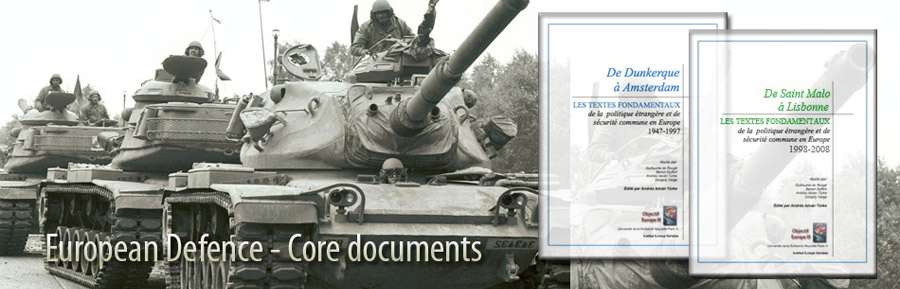
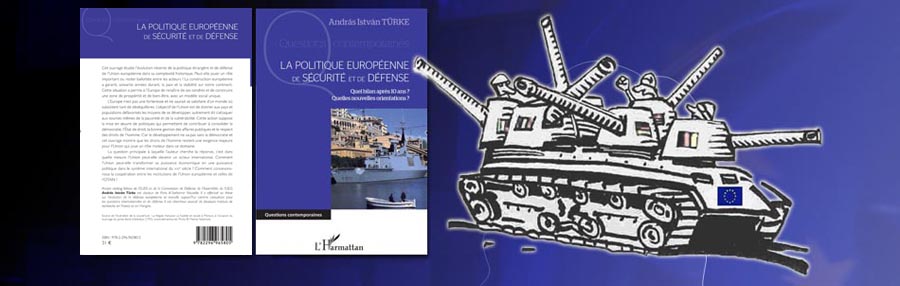
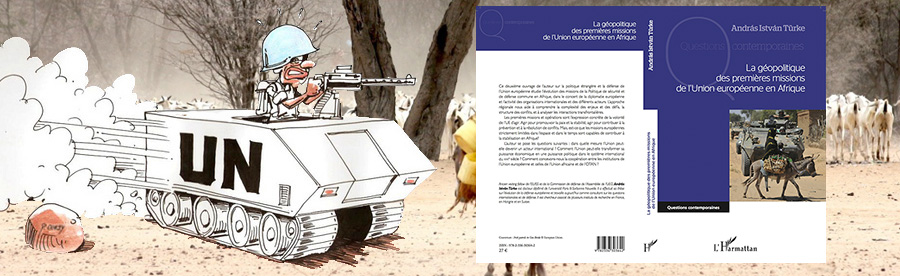
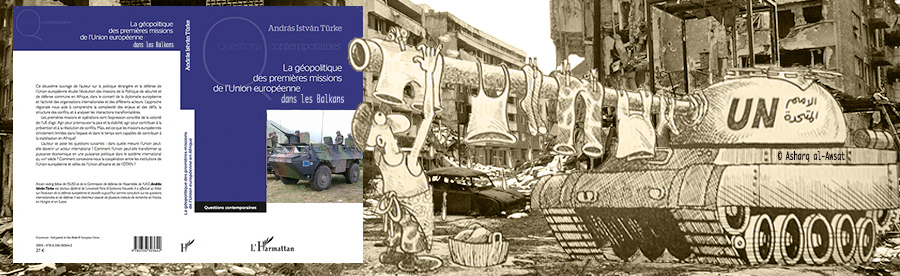
We are looking for sponsors for the English translation of these books, please contact turkeandras(at)gmail(dot)com