
You are here
Feed aggregator
HARVEST: Two deals and an early check
In today's edition: CAP, fisheries, grain
Categories: European Union
Paris, Berlin join Eastern Europe in anti-carbon pricing crusade
Four EU heavyweights are among those pushing for an industry-friendly carbon pricing overhaul
Categories: European Union
Poorer Czechs nearly four times more likely to skip Covid vaccination [Partner Content]
Czechia’s poorest adults were almost twice as likely to remain unvaccinated against Covid-19, a major study finds, pointing to access barriers rather than simple refusal
Categories: European Union
US threatens to reignite Airbus-Boeing trade war
Washington warns that a multi-billion European financing package for Airbus could jeopardise tariff truce
Categories: European Union
FIRST AID: Lithuania eyes pharma dependence
In today's edition: tobacco, digital health, disinformation
Categories: European Union
Clarity needed on EU’s regenerative agriculture policies, say farmers [Partner Content]
Regenerative farming could help deliver the EU’s green goals, but farmers say uptake hinges on clear economic incentives, a workable definition and fewer rules, not more
Categories: European Union
VOLTAGE: Europe’s climate ‘risk reality’ reckoning
In today's edition: marine protection, energy cartels, Russian gas
Categories: European Union
Fixing youth mental health in Europe means looking beyond healthcare [Partner Content]
New WHO findings on childhood adversity, concerns about AI chatbots and the debate over social media restrictions highlight the need for a cross-sector approach to young people’s mental health
Categories: European Union
THE HACK: Anthropic discloses ‘Brussels effect’ risk
In today's edition: Canada-IRIS², EU Inc, French riots
Categories: European Union
Ulster's Augustus enjoying South Africa homecoming
Ulster back row Juarno Augustus is relishing being back in his native South Africa as he prepares to face his former club Stormers after recovering from ankle surgery.
Categories: Africa
Choosing the Next UN Secretary-General: The Threat of Veto or Veto Itself Must Not Silence the World
By Anwarul K. Chowdhury
NEW YORK, Oct 27 2026 (IPS)
The selection of the next Secretary-General of the United Nations has reached a critical juncture. It raises fundamental questions about fairness, transparency, regional balance, and the democratic legitimacy of the world’s most universal organization.
Ambassador Anwarul K. Chowdhury
The announcement on 21 October by the United Arab Emirates nominating its Minister of State, Ambassador Lana Nusseibeh, has introduced another dimension to an already prolonged selection process.Ambassador Nusseibeh is an experienced diplomat with an established record of service to the United Nations. However, the timing of this candidature raises legitimate questions about the integrity and credibility of the selection process.
Two Women Lead a Historic Selection Process
Six rounds of Security Council straw polls have already taken place. Two distinguished and competent women from the Latin American and the Caribbean regional group of the United Nations, Rebeca Grynspan of Costa Rica and Carolyn Rodrigues-Birkett of Guyana, have emerged as the two topmost leading candidates, with the former receiving at the last straw poll the Charter-required minimum nine votes of the 15-member Council.
It is a not only a historic first but a pioneering opening in the selection of the first woman as the Secretary-General of the United Nations, thereby fulfilling a Charter obligation (Article 8) and at least a decade-long global aspiration to set right the aberration of a lineup of men only at the leadership of the UN.
The two topmost candidates have campaigned diligently, presented their visions, engaged with Member States as well as civil society and endured the rigours and uncertainties of successive straw polls. Their perseverance deserves our sincere respect and recognition.
Yet their candidatures face opposition from two permanent members of the Security Council.
The Veto Must Not Override the Will of 191 Member States
This brings us to a fundamental question: Why should the preferences of two veto-wielding countries outweigh the collective interests of the remaining 191 UN Member States?
The United Nations belongs to all its members. Its leadership should reflect that universal ownership.
The veto, inherited from the geopolitical circumstances of 1945, continues to cast a long shadow over the Organization. When the preferences of a few determine the choices available to the many, the principle of sovereign equality becomes increasingly difficult to reconcile with institutional practice.
The overwhelming majority of Member States should not be held hostage to the veto preferences of two powerful permanent members. Grynspan and Rodrigues-Birkett have even received three positive encouragement, thereby majority of the five veto-wielding members.
The General Assembly Must Assert Its Charter Authority
There is also a constitutional dimension which deserves renewed attention.
Article 97 of the UN Charter clearly stipulates that the Secretary-General shall be appointed by the General Assembly upon the recommendation of the Security Council.
The General Assembly’s authority to appoint is explicit. It should never be reduced to a ceremonial rubber-stamping of the Council’s decisions negotiated behind closed doors.
If the Assembly finds a recommendation unacceptable, it has the authority to reject it. That constitutional responsibility should be exercised with independence, conviction, and without fear or favour.
The General Assembly represents the universal membership. Its voice, its authority must count.
Regional Balance and the Case for Latin America and the Caribbean
Regional representational balance is another essential consideration.
An established, though informal, understanding has guided the geographical rotation of the Secretary-Generalship. Asia was represented immediately before the current Secretary-General, António Guterres, who is the fourth head of the UN from West Europe, by Ban Ki-moon of the Republic of Korea.
Latin America and the Caribbean have produced only one Secretary-General, Javier Pérez de Cuéllar of Peru, who served from 1982 to 1991, 35 years ago from now.
The region’s expectation that its turn has arrived therefore rests on a compelling historical foundation.
Its candidates have invested considerable effort in the selection process. They have faced scrutiny, uncertainty, and political resistance. They weathered the storm with dignity.
To bypass them now, primarily because two permanent members remain dissatisfied, would raise troubling questions about the value of the entire process.
Late Candidatures and the Credibility of the Process
Late candidatures are permissible under existing practices. Nevertheless, entering the contest after six straw polls, including the decisive color-coded exercise identifying permanent-member opposition, inevitably raises concerns about procedural fairness.
It resembles arriving at harvest time to enjoy the fruit without having planted or nurtured the tree.
Various political calculations, sometimes rather arbitrary, surrounding the Secretary-General’s appointment have surfaced and featured often. They should not become a substitute for a transparent and credible selection process.
The next Secretary-General must possess integrity, independence, and courage. Gender equality and regional balance in representation should strengthen, rather than diminish, the search for these qualities.
The selection now before Member States is an opportunity to demonstrate that the United Nations remains faithful to its founding principles.
Eighty-One Years, Nine Men, Not One Woman
Above all, let me reiterate that one historic injustice and unacceptable reality demand correction.
In its eighty-one years of existence, the United Nations has not yet elected a woman Secretary-General — eight decades plus, nine men, and not one woman.
What an embarrassment – what a shame!
How can an institution that speaks of equality at every podium continues to model inequality at its pinnacle?
The credibility of the UN’s advocacy depends on its own reflection in the mirror.
This is an extraordinary contradiction for an Organization committed to gender equality and women’s empowerment.
The appointment of a woman as the tenth Secretary-General is long overdue.
The current two leading women candidates should not withdraw because of the threat of veto and pressurized by these two P5 members.
Their candidatures remain alive and valid before the General Assembly till it takes the final decision.
The veto must not become the voice of the United Nations.
The General Assembly must assert its rightful authority, as empowered by Article 97.
Ambassador Anwarul K. Chowdhury, former Under-Secretary-General and High Representative of the United Nations, Initiator of the UNSCR 1325 on Women and Peace and Security as the President of the UN Security Council in March 2000 underscoring women’s equality of participation; President/Chairman of the UNICEF Executive Board on two occasions; Founder of the Global Movement for The Cultural of Peace (GMCoP) and a well-known analyst of the UN system’s work.
IPS UN Bureau
Categories: Africa
Soudan : plus de vingt morts après une attaque de drone contre un marché à Nyala
L’armée soudanaise mène régulièrement des attaques sur cette ville, où les Forces de soutien rapide ont instauré une autorité rivale de celle du gouvernement reconnu par la communauté internationale.
Categories: Afrique
Côte d’Ivoire : un an après la réélection d’Alassane Ouattara, une scène politique cadenassée
Les principaux partis de l’opposition ivoirienne, dont plusieurs responsables ont été convoqués par la justice, se disent victimes d’un « harcèlement » de la part du pouvoir.
Categories: Afrique
Attentat de Trappes : Omar Sy et de nombreuses personnalités dénoncent "les mots de la haine"
Dans un texte publié sur le site de Politis, près d'une centaine de personnalités issues du monde de la culture et du sport ont appelé mardi à refuser le racisme, après l'attentat terroriste survenu dans les Yvelines.
Categories: France
From 44 Countries, One Shared Commitment: A Child Marriage-Free World
Members of the Global Catholic Congress pose with a poster supporting an end to child marriage. Credit: JRC
By Kizito Makoye
ROME & DAR ES SALAAM, Oct 27 2026 (IPS)
The message from Just Rights for Children (JRC) was clear: protecting children must take precedence over customs used to justify their marriage.
The Global Catholic Congress, representing 44 countries, has endorsed JRC’s campaign to end child marriage by 2030. Announced in Rome on 22 October, the commitment brings influential faith leaders into a global effort to end a practice that continues to deprive millions of children, particularly girls, of their childhood.
“Every child deserves a childhood filled with dignity, education, safety and hope,” said Rajeev Kochuparambil, president of the Global Catholic Congress, announcing its support for the campaign.
“Ending child marriage is a collective moral responsibility that calls upon families, communities and faith institutions to stand together.”
Welcoming the congress’s support, JRC founder Bhuwan Ribhu said faith leaders could play a decisive role in preventing child marriage.
“When faith stands with justice and the protection of children, child marriage can end in one day,” he said.
His words convey a sense of urgency that global progress has yet to match.
UNICEF estimated in 2023 that 640 million girls and women alive at the time had married in childhood. About one in five young women aged 20–24 had married before turning 18, down from nearly one in four a decade earlier. Despite this progress, the rate of decline remained insufficient to eliminate child marriage by 2030.
Behind these figures are girls whose marriages can interrupt their education, restrict their independence and limit their future economic opportunities. UNFPA describes child marriage as both a consequence and a driver of gender inequality, with girls from poorer households and rural communities disproportionately affected.
For the JRC campaign, religious leaders provide a way to reach families and communities where they make decisions about marriage.
According to JRC, the Rome gathering brought together senior Catholic clergy, bishops, archbishops and community leaders from across several continents, including India, the United States, Canada, Africa, Australia, Singapore, the Middle East and Europe. Participants signed a joint pledge to help end child marriage and mobilise faith communities to protect children’s dignity, safety and freedom.
The commitment places responsibility on institutions whose relationships with families extend beyond wedding ceremonies. The campaign seeks to encourage faith leaders to challenge harmful social norms, engage parents and mobilise communities to intervene before a child marriage takes place.
The alliance reflects the international reach of the challenge. UNICEF’s assessment found that South Asia accounted for 45 percent of the world’s child brides, followed by sub-Saharan Africa with 20 percent. India alone accounted for approximately one-third of the global total.
JRC’s approach combines community mobilisation with intervention when a child faces an imminent marriage. According to the organisation, its work involves engaging parents, faith leaders and those involved in wedding ceremonies through counselling and persuasion, with legal action where necessary. Children, friends and relatives can also alert its teams to planned marriages.
The organisation also seeks to address the pressures that can lead families to arrange early marriages by connecting vulnerable households with government assistance and scholarship programmes.
This broader approach matters because changing the law alone cannot address all the social and economic pressures that sustain child marriage. The World Bank has highlighted the importance of combining legal reform with education, economic opportunities and efforts to change social norms.
The Rome pledge comes amid wider international efforts to end child, early and forced marriage. On 4 September 2026, the UN General Assembly adopted a resolution establishing 27 November as the annual International Day for the Elimination of Child, Early and Forced Marriage. The first observance will take place next month. Ribhu has been among those advocating for the establishment of the international day.
IPS UN Bureau Report
Related Articles
Categories: Africa
Wanted: A Feminist UN Secretary-General for ‘We the Peoples’, Not the Powerful
By Mandeep S.Tiwana
NEW YORK, Oct 27 2026 (IPS)
Notwithstanding last minute shenanigans and the possibility of backroom deals by powerful states, two women from Latin America are leading contenders in the race for the UN’s next Secretary-General. After 80-plus years of men-only leadership, momentum is building to break the glass ceiling at the global institution dedicated to saving future generations from the scourge of war.
Design flaws in the somewhat opaque appointment process that bestow arbitrary veto powers on the five permanent UN Security Council members could, however, torpedo the aspiration for equitable representation for women at the helm for the world body. But there is still time to build public pressure on governments to do the right thing by appointing a feminist woman leader from Latin America and the Caribbean in deference to the principle of regional rotation.
UN in crisis
The next Secretary-General will preside over a fractious UN facing one of its hardest tests. Russia and the USA, which as Security Council permanent members are supposed to maintain international peace and security, are actively violating the UN Charter’s ban on aggression. Their ill-conceived invasions of Ukraine and Iran are causing large-scale death and destruction.
The USA has also recently imposed sanctions on the International Criminal Court, making it harder to pursue justice for the Israeli genocide of Palestinians and conflicts fuelled by powerful states in Congo, Sudan and Yemen. China, another permanent Council member, continues to provide cover for crimes against humanity committed by Myanmar’s brutal military junta, currently embroiled in a civil war against dissidents.
Demands on the UN are increasing. Over 100 million forcibly displaced people need the UN’s support. But the institution faces a deep financial crisis caused by delays in payments of dues by bigger countries and an unnecessarily complicated funding model. The funding crisis comes as the challenges are mounting up. Climate commitments are being undermined by fossil fuel lobbies and petrostates as the world hurtles towards tipping points. Repressive states are pushing to reverse hard-won human rights that the UN is supposed to protect, including sexual and reproductive freedoms for women. Some two-thirds of Sustainable Development Goals targets, which seek to promote social progress and better standards of living, are not being met, driven by a combination of inadequate resourcing and escalating attacks on civic space.
The UN needs a leader who can break the mould by being much more than a bureaucrat beholden to states. The next Secretary-General should seek to derive legitimacy by representing the needs and aspirations of over eight billion people around the world. With confidence in multilateralism at breaking point, the exercise of feminist leadership principles that combine active listening, courage, consensus building and empathy for victims of abuses, will be crucial.
She must be able to bravely stand up for the UN Charter and its commitment to human dignity and justice under international law. When Soviet leader Nikita Khrushchev demanded that Dag Hammarskjöld resign as Secretary-General in 1960, he reminded the UN General Assembly that big powers are not the ones that need the UN for protection: “it is all the others.” In 2004, Kofi Annan had the courage to call the US invasion of Iraq illegal in a rebuke to US President George W. Bush.
Given the pressures, it may be a good idea for the next Secretary-General to declare they will stand for only one term, thereby avoiding the trap of being overly cautious towards the most powerful states in their first term so they can be re-elected. Security Council permanent members have shown they will block re-appointments if a Secretary-General does not do their bidding. In 1996, Boutros Boutros Ghali was denied a second term because of a US veto.
Civic engagement needed
A deep commitment to human rights and the quest for transparency, accountability and participation will determine how the next Secretary-General will be remembered by future generations in how approached this hard and often thankless job. Civic engagement should be at the heart of the UN’s agenda. Just 75 of 193 UN member states, accounting for only seven per cent of the world’s population, respect their people’s freedoms to organise, speak out and protest peacefully.
To start changing this, in her first 100 days, the next Secretary-General should appoint a UN Civil Society Envoy to drive the UN’s outreach to people and civil society around the world, elevate the issue of reprisals against activists who engage with the UN and highlight unfair blocking by states of civil society organisations that seek to participate in the UN’s work.
From the time of its founding in 1945 amid the ruins of war, oppressed people have looked to the UN to be the conscience of the world. In the second half of the 20th century, the UN, through leaders like U Thant, championed the aspirations of discriminated and colonised peoples for self-rule and dignity. The next Secretary-General should prioritise the voices of excluded peoples by bringing the voices of those on the sharp end of repression into rooms where decisions are made. She can build consensus the feminist way, by never letting a door close.
During the Cuban Missile Crisis in the early 1960s, U Thant kept communication channels open with both the world’s superpowers, proposed the standstill that helped pull the world back from the brink of nuclear war and then persuaded Cuban leader Fidel Castro to de-escalate the situation. The next Secretary-General’s moral clarity can shape the world of tomorrow. She must be mindful of the needs and aspirations of young people who have the greatest to gain from a functioning UN but have the least voice.
Her leadership must be bold, inventive and unafraid to fail. Dag Hammarskjöld invented the UN’s peacekeeping role during the 1956 Suez crisis, going beyond the UN Charter. He died in 1961 attempting to broker a ceasefire in the Congo. Kofi Annan publicly owned the UN’s failures in Rwanda and Srebrenica, then turned those lessons into the Responsibility to Protect. The world’s first woman Secretary-General must help the UN win back legitimacy and trust among the world’s people. To do that, she will need to be creative and not be constrained by tradition or fear of failure.
Mandeep S. Tiwana is the secretary general of civil society alliance, CIVICUS. He also serves as CIVICUS’s representative to the UN headquarters in New York.
IPS UN Bureau
IPS UN Bureau
Categories: Africa
Les appels à la mobilisation lycéenne continuent malgré les annonces du gouvernement
Après un mois de blocus et de manifestations, le gouvernement a annoncé lundi plusieurs mesures destinées à apaiser la colère des lycéens. Le remplacement progressif de Parcoursup d'ici 2028 ou les 15 000 places supplémentaires dans l'enseignement supérieur n'ont pas convaincu les organisations lycéennes et étudiantes, qui ont appelé à poursuivre la mobilisation.
Categories: France
Why Trump Expects the Nobel Peace Prize
By Jomo Kwame Sundaram
KUALA LUMPUR, Malaysia, Oct 27 2026 (IPS)
Much of the world has been bemused by US President Donald Trump’s expectation of the Nobel Peace Prize. While aggressive towards most of the world, friend and foe alike, he has treated hostile nuclear powers more respectfully.
Jomo Kwame Sundaram
War is peace!One needs more than Orwell to understand why Trump seriously expected the Nobel for 2025 following his bombing spree, let alone this year after resuming his war on Iran for Israel.
Outdoing every previous US president, Trump authorised over 500 bombings of ten countries in the first year of his second term.
Besides attacking Nigeria, Afghanistan, Iran, Iraq, Libya, Pakistan, Somalia, Syria, Yemen, and Venezuela, he also threatened Mexico, Cuba, Colombia, and Greenland with attacks. But Trump is not alone.
Every US president since World War II has committed war crimes, violating the UN Charter and the Geneva Convention. Over 4.5 million died in these wars, which created 38 million refugees in 2001-19 alone!
Trump believes he deserves the Prize. After he won the November 2024 presidential election, he pledged, “We had no wars for years…I’m not going to start a war. I’m going to stop wars…
“We will measure our success not only by the battles we win, but also by the wars that we end, and perhaps most importantly, the wars we never get into. My proudest legacy will be that of a peacemaker and unifier.”
Yet, Trump has also promised to build the world’s greatest military to achieve ‘peace through strength’, claiming he will not actually need to use it.
Barack Obama has acknowledged he does not know why he won the prize in the first year of his presidency. He then illegally bombed seven nations – Afghanistan, Pakistan, Yemen, Somalia, Libya, Syria, and Iraq – without UN Security Council approval!
George W. Bush attacked five countries while Trump 2.0 not only ‘re-bombed’ Obama’s seven, but also surpassed him by adding Nigeria, Iran, and Venezuela!
After Biden gave tens of billions of dollars’ worth of weapons to Israel to ‘carpet bomb’ Gaza, Trump surpassed his predecessor’s generosity despite his contempt for him.
New US military strategy
Trump boastfully rebranded the US Defense Department as the Department of War at the start of his second term, to signal a more offensive and aggressive stance.
The latest US National Defense Strategy (NDS) sees NATO allies “strongly positioned to take primary responsibility for Europe’s conventional defense”.
The NDS envisages US control of the Panama Canal and Greenland, echoing Trump’s ‘Donroe doctrine’ for the Western Hemisphere, while claiming to avoid future interventions abroad!
In 2024, worldwide military spending totalled $2.7 trillion, with the US accounting for over a third! US spending then exceeded the aggregate expenditure of the next nine largest spenders, all Washington allies except for China and Russia.
Fortune magazine projects that the new US military spending target of $1.5 trillion will exceed the combined expenditure of the next 35 highest-spending countries!
The new NDS reasserts Trump’s claims that US allies took advantage of earlier Washington administrations to subsidise their own defence.
When Trump demanded, during his first term, that they spend at least 2% of GDP on the military, their responses were largely lukewarm. In 2025, NATO allies agreed with Trump to increase military spending to 5% of GDP!
The NDS asserts its War Department will be key to NATO “even as we calibrate US force posture and activities in the European theater” to focus on US priorities.
While reiterating “Russia will remain a persistent but manageable threat to NATO’s eastern members for the foreseeable future”, it envisages cutting US troops on Ukraine’s borders.
Unsurprisingly, the US’s NATO allies complain that Trump has created a ‘security vacuum’ undermining Europe’s confrontation of Russia.
China U-turn or American tai-chi?
The Biden NDS viewed China as the US’s main adversary. In contrast, Trump’s new NDS sees China as an established power in the Indo-Pacific region that only needs to be discouraged from dominating the US and its allies.
The goal “is not to dominate China; nor is it to strangle or humiliate them… This does not require regime change… Trump seeks a stable peace, fair trade, and respectful relations with China”!
Unlike Biden’s NDS commitment to “support Taiwan’s asymmetric self-defense”, the new NDS gives no assurances on Taiwan, although Beijing remains committed to reunification, by force if necessary.
Incredibly, it seeks to “open a wider range of military-to-military communications” with counterparts in China. Unsurprisingly, the US has since also eschewed new trade wars with China.
So why does Trump expect the Nobel Peace Prize? He probably sees himself as less belligerent than his predecessors to ‘near peer’ powers such as China and Russia.
Attacking and bombing ‘insignificant’ small non-nuclear powers probably does not matter to him. His attitude towards ‘shithole’ countries is similar.
Likewise, Trump claimed no one died when the US raided Venezuela on 3 January, apparently referring only to US fatalities, although over a hundred Latin Americans were killed!
IPS UN Bureau
Related Articles
- US Military Strategy Document Misleads. Deliberately?
- Trump Reboots US National Security Strategy, Foreign Policy
- Trump Accord Sows Discord in US Empire
- Trump Wants World to Subsidise US Empire
- Imperialism (Still) Rules
- New Geopolitics Worse for Global South
- The Global South in the New Cold War
- Racism, Shitholes and Re-election
Categories: Africa
Maï-Ndombe : deux morts dans l’attaque d’un véhicule transportant des fonds sur la RN17
Deux personnes ont été tuées, une autre blessée et quatre ont survécu à une attaque armée survenue dimanche soir 25 octobre sur la Route nationale 17 (RN17), dans le territoire de Kutu, au Maï-Ndombe. Le véhicule pris pour cible appartenait à la SOFIBanque et transportait des fonds en provenance d’Isaka à destination de Bandundu-ville.
Categories: Afrique
Laos Expected to Scuttle ASEAN’s South China Sea Code of Conduct
Sources say Vientiane is poised to replace Phnom Penh as China’s spoiler in ASEAN.
Categories: Diplomacy & Crisis News
Pages


© 2012-2018 Europa Varietas Foundation © 2015-2018 Europa Varietas Association
www.europavarietas.org | info(@)europavarietas(dot)org | Switzerland
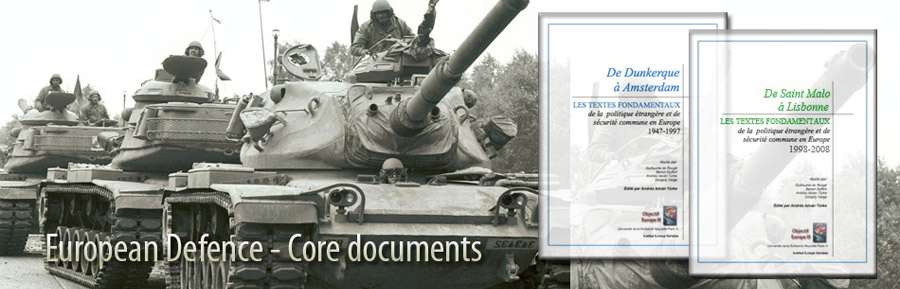
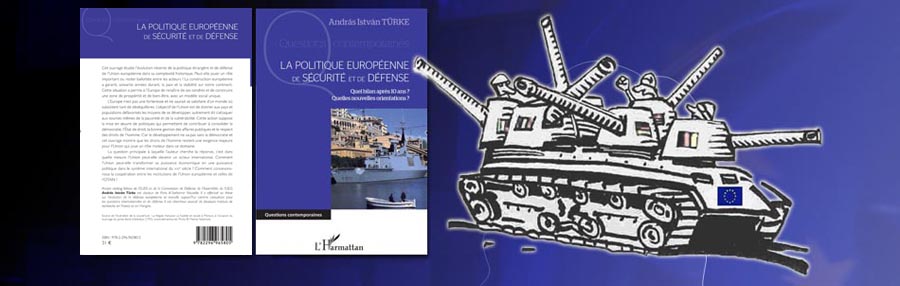
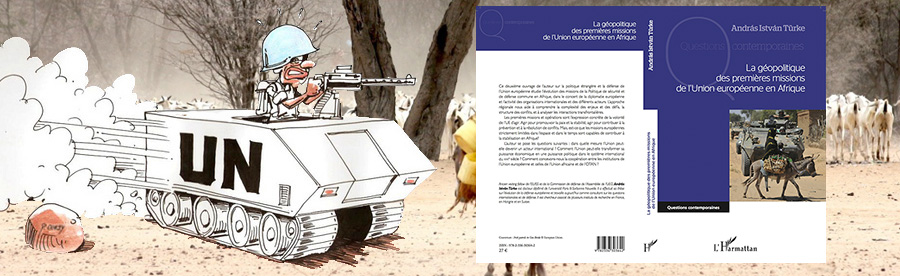
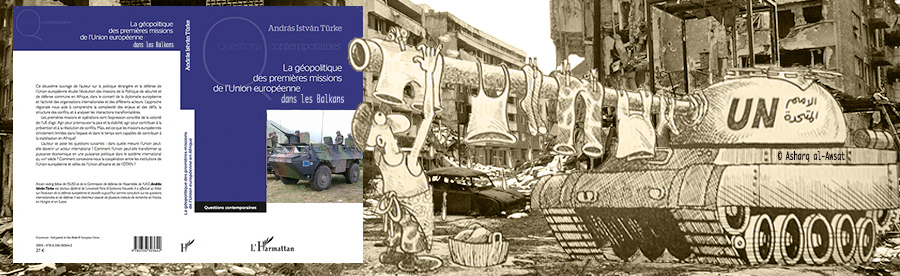
We are looking for sponsors for the English translation of these books, please contact turkeandras(at)gmail(dot)com