
You are here
Feed aggregator
Armed Conflict, Funding Cuts and Supply Chain Pressures Deepen Global Hunger Risks
A local farmer harvests sorghum produced from seeds donated by the Food and Agriculture Organization (FAO) through the “Improving Seeds” project. Credit: FAO/Fred Noy
By Maximilian Malawista
UNITED NATIONS, Jun 23 2026 (IPS)
Armed conflict, economic shocks, and climate pressures are driving worsening food insecurity across many of the world’s most vulnerable regions, according to the latest Hunger Hotspots report outlook for June-November 2026, jointly released by the World Food Programme (WFP) and the Food and Agriculture Organization (FAO).
The report analyzes 13 hunger hotspots where acute food insecurity is expected to worsen through 2026, with Yemen, Palestine, Sudan, South Sudan, Somalia, Nigeria and Haiti among the areas of highest concern. Conflict remains the primary driver of food insecurity in 12 of the 13 hotspots identified in the report.
The report found that in the past five years conflict levels have doubled, with one in six people worldwide being exposed to armed violence in 2025. It identified 117.3 million people as being forcibly displaced as of 2025, severely overwhelming host communities and deepening food insecurity.
The report also warns that famine risks are persisting in multiple locations. Sudan was identified as facing one of the world’s most severe food crises, while famine risks were also identified in Yemen, Gaza, South Sudan, and Somalia. The report also elevated Nigeria and Somalia to the highest point of concern due to deterioration of projections that large parts of their populations could face catastrophic levels of food insecurity through the outlook period. Nigeria is projected to have the largest number of people facing high levels of acute food insecurity among all the identified hotspots, at approximately 34.8 million people affected.
Beyond conflict the main driver of food insecurity, economic and supply chain pressures are compounding, developing new vulnerabilities. At the report’s launch on June 18, representatives from WFP and FAO warned that disruptions to global trade routes can further worsen food insecurity. According to FAO officials, nearly one-quarter of global oil supplies and one-third of the global fertilizer trade pass through the Strait of Hormuz, meaning disruptions can hike fuel prices, transportation and insurance costs, and fertilizer. The FAO says these cascading effects can increase cost of humanitarian operations, raise food prices, and delay delivery of assistance to those who are already undergoing acute food insecurity. For households with already extremely low purchasing power, and humanitarian organizations with a continuously stressed budget, an increase in these factors can have severe consequences.
WFP and FAO warn the climate risks are also mounting, mentioning El Nino’s capabilities of producing uneven rainfall patterns, which could disrupt local agricultural production across multiple vulnerable regions.
While this happens, humanitarian organizations are being further constricted with fewer resources to respond with. According to WFP and FAO, funding to humanitarian groups declined by an estimated 59 percent between 2022 and 2025, which are levels seen last in 2016-2017. During the same period, the share of the population facing high levels of acute food insecurity has doubled, meaning with less than half the funding, humanitarian groups have to deal with double the amount of people in need, as compared to funding and food insecurity levels in 2016-2017. This combination of shrinking aid and rising food insecurity forces humanitarian groups to scale back assistance, despite growing needs.
Responding to a question from Inter Press Service regarding supply chain disruptions, and risk prevention, Rein Paulsen, FAO Director of the Office of Emergencies and Resilience argued that strengthening local food production is part of the solution, also adding that an investment of USD 17.7 million resulted in “the production of some 515 million US dollars’ worth of food in Sudan.” He added that in some contexts, millet production has helped hundreds of thousands of households, despite conflict and disruptions to supply chains. “Greater emphasis on local production is part of the answer,” Paulsen said.
According to FAO figures cited by Paulsen, the millet production program generated roughly USD 29 worth of food production for every dollar invested. The WFP and FAO have stressed that many modern famines are preventable and foreseeable, warning that sustained funding, humanitarian access and early intervention remain critical to preventing food insecurity from escalating into catastrophe.
IPS UN Bureau Report
Follow @IPSNewsUNBureau
!function(d,s,id){var js,fjs=d.getElementsByTagName(s)[0],p=/^http:/.test(d.location)?'http':'https';if(!d.getElementById(id)){js=d.createElement(s);js.id=id;js.src=p+'://platform.twitter.com/widgets.js';fjs.parentNode.insertBefore(js,fjs);}}(document, 'script', 'twitter-wjs');
Categories: Africa
Telekom Srbija et la géopolitique de l'influence dans les Balkans occidentaux
La liberté des médias ne peut plus seulement se défendre à l'intérieur des frontières nationales. Dans les Balkans, des réseaux transfrontaliers peuvent façonner l'espace informationnel régional. Telekom Srbija est à l'offensive dans plusieurs pays. Décryptage.
- Articles / Médias indépendants, Sports, Gratuit, Vucic, Serbie, Relations régionales, Médias
Categories: Balkans Occidentaux
AI is Already Rewriting Reality for Billions of People– But It is Getting Women Wrong
By UN Women
UNITED NATIONS, Jun 23 2026 (IPS)
A study of 133 AI systems found that 44 per cent demonstrated gender bias and 26 per cent demonstrated both gender and racial bias. Yet only 51 per cent of marketers currently use human oversight to test AI-generated creative before release. Ahead of the United Nations Global Dialogue on Artificial Intelligence Governance from 6 – 7 July and AI for Good Global Summit in Geneva, Switzerland from 7-10 July, UN Women sets out what is at stake – and what must change – to build a gender-equal digital future.
- 1. The AI content era is here. And the window to shape it is closing fast.
Generative AI is now among the most widely used technologies in day-to-day marketing and communications work, in the United Kingdom (UK) alone, 88 per cent of advertising and media agencies are already using it in some form. Discriminatory algorithms could therefore further perpetuate gender inequality and discrimination. As AI tools become embedded in content generation and media buying at scale, decisions about who gets seen, how they are portrayed, and whose stories get told are being made at speed, and largely without human scrutiny or gender perspective.
2. Bias and discriminatory algorithms are not a glitch in AI – it is a pattern documented across systems at scale.
Large Language Models (LLMs) have been found to consistently associate women with “home,” “family,” and “children,” and men with “business,” “executive,” “salary,” and “career.” When tasked with completing sentences that start with a person’s gender, about 20 per cent of responses from LLMs exhibited sexist and misogynistic attitudes, including portrayals of women as sex objects and property of their husbands. These are the predictable output of AI systems trained on decades of unequal representation of women and men. AI bias is not only a system design problem, but also a policy problem. Of 138 countries assessed, only 24 referenced gender in a national AI strategy, and just 18 included substantive gender-responsive provisions, risking inequality being “baked in” to future systems.
3. AI is intensifying violence against women and girls in digital spaces.
According to UN Women data, women and girls globally already have less access to digital spaces – and when they do, they are far more likely to experience online violence. Almost one in four surveyed women human rights defenders, activists and journalists had experienced AI-assisted online violence and 12 per cent report having experienced the non-consensual sharing of personal images, including intimate or sexual content. Six per cent say they have been targeted through “deepfakes” or manipulated images/video, while more than one in four have received unsolicited sexual advances through digital messaging. AI is compounding this. Deepfakes are among the most visible examples of AI-enabled abuse that disproportionately targets women and girls. As AI-generated content becomes the norm, the tools for harassment, manipulation, and image-based abuse are scaling alongside it.
4. Women are being locked out of the rooms where AI is built.
Gen AI is expected to drive job growth in tech-intensive sectors, yet women remain underrepresented in Science, Technology, Engineering and Mathematics (STEM) and AI, making up only 30 per cent of the AI workforce globally. The people designing these systems are not representative of the billions of people the systems are expected to serve – and that glaring gap is compounding the problem.
5. The economic disruption of AI will fall hardest on women.
Women outside the AI sector are nearly twice as likely as men to hold jobs at high risk of automation. AI disparity does not manifest in gender inequality alone – harms are multiplied across race, disability, socioeconomic status, and geography. The communities already most underrepresented in media and labour markets face the greatest risk of being left further behind.
6. Inclusive AI is a commercial imperative.
In a first-ever global study, the Unstereotype Alliance, an industry-led initiative convened by UN Women, proved that inclusive advertising has a positive impact on business profit, sales and brand value. Brands that create inclusive advertising, free of gender stereotypes, enjoy +3.46 per cent short-term sales and +16.26 per cent long-term sales uplift. They are 62 per cent more likely to be a consumer’s first choice, have 54 per cent higher pricing power, and experience 15 per cent higher customer loyalty. As AI becomes central to how campaigns are planned and produced, the brands that embed inclusion into those processes stand to gain – and those that do not, face significant reputational and commercial risk. The Unstereotype Alliance playbook launched in June 2026 gives marketers a way to catch bias before it ships, every time they use generative AI.
UN Women calls for gender equality and the rights and experiences of women and girls to be embedded at every stage of AI life cycle from development, deployment, and governance. When designed with safety and used with intention, AI can help detect stereotypes, broaden representation, and improve accessibility at scale. The choice of whether it does lies with the people making decisions – in governments, in companies, in experts researching and developing AI – and it depends on whether we incorporate the voice, expertise, and lived experience of women and girls from diverse contexts, civil society organizations who work with them and know their issues deeply.
For interviews or more information, contact the UN Women media team at media.team@unwomen.org.
IPS UN Bureau
Follow @IPSNewsUNBureau
!function(d,s,id){var js,fjs=d.getElementsByTagName(s)[0],p=/^http:/.test(d.location)?'http':'https';if(!d.getElementById(id)){js=d.createElement(s);js.id=id;js.src=p+'://platform.twitter.com/widgets.js';fjs.parentNode.insertBefore(js,fjs);}}(document, 'script', 'twitter-wjs');
Categories: Africa
THE HACK: No hopes for a single telecom market
In today's edition: digital omnibus, AI-generated CSAM, big tech regulation
Categories: European Union
FIRST AID: Could Swiss pharma be next?
In today's edition: illicit tobacco, food safety, drug pricing
Categories: European Union
Royaume-Uni: Andy Burnham, un potentiel Premier ministre sur la même ligne que Starmer face à l'UE?
Le 23 juin 2016, les électeurs britanniques votaient à 51,89% en faveur du retrait du Royaume-Uni de l’Union européenne et d’Euratom. Depuis le Brexit, le Royaume-Uni a vu passer six Premiers ministres, en comptant David Cameron. Le dernier en date, Keir Starmer avait fait du rapprochement avec l’Union européenne (UE) une de ses priorités. La position de son successeur potentiel, Andy Burnham au sujet de l’UE, éveille la curiosité des Européens sans toutefois les passionner.
Categories: Union européenne
HARVEST: The ‘three Fs’ challenge
In today's edition: protein, fisheries, animal welfare
Categories: European Union
Why the China-Iran Relationship Has Been Friendly But Distant Since Ancient Times
The two civilizations have consistently found each other to be useful, yet they haven’t invested heavily in their partnership.
Le Potentiel : « Ebola et sécurité régionale : Tshisekedi et Ndayishimiye ouvrent des consultations stratégiques à Kinshasa »
Revue de presse de ce mardi 23 juin
À la une des médias ce mardi matin : le tête-à-tête à Kinshasa entre les présidents congolais Félix Tshisekedi et burundais Évariste Ndayishimiye.
Categories: Afrique
Roumanie : la crise politique s'approfondit, l'extrême droite prospère
Le libéral Adrian Veștea n'a pas obtenu l'investiture du Parlement pour diriger un cabinet à majorité social-démocrate. La crise politique s'approfondit après bientôt deux mois sans gouvernement et l'AUR caracole toujours plus haut dans les sondages.
- Articles / Roumanie vote, Roumanie, Politique, Courrier des Balkans
Categories: Balkans Occidentaux
Mondial 2026 : Norvège (3-2) Sénégal, les supporters sénégalais entre déception et espoir
Battu 3-2 par la Norvège, le Sénégal voit ses chances de qualification se compliquer. À Dakar, les supporters sont partagés entre déception et espoir. Malgré le revers, beaucoup continuent de croire aux Lions pour la suite de la compétition.
Categories: Afrique
DG MENA seizes the moment
Also, in Tuesday’s edition: Brexit, bullets, return hubs
Categories: European Union
Dix ans après le Brexit: comment le Royaume-Uni se rapproche à nouveau de l’Union européenne
Le 23 juin 2016, les Britanniques votaient à 51,9% en faveur de la sortie de l'Union européenne. Une décennie plus tard, le Royaume-Uni n’a pas réintégré le giron européen. Pourtant, les relations entre Londres et Bruxelles se sont nettement apaisées et les deux partenaires cherchent désormais à panser les plaies héritées du Brexit.
Categories: Union européenne
Une trentaine d'élèves finalistes victimes d’une attaque armée sur le chemin des centres d’examen d'État à Walikale
Une trentaine d’élèves finalistes ont été victimes d’une attaque menée par des hommes armés non identifiés, vendredi 19 juin, sur l’axe routier Kiseya–Kilambo, dans le groupement Bafuna (territoire de Walikale), au Nord-Kivu. Selon des sources locales, les élèves se rendaient vers les centres de passation de l’Examen d’État à Ntoto et Byungu, après un long trajet à pied à travers la forêt.
Categories: Afrique
L’Egypte devenue importatrice de GNL réinvestit dans le gaz, tout en misant sur le mix énergétique pour alléger sa dépendance
Après une violente chute de la production, le pays relance son secteur gazier, l’hydrocarbure étant à la fois une source de sécurité énergétique, un élément de stabilisation sociale et une rente.
Categories: Afrique
Will Swiss pharma be next?
Trump puts pressure on Swiss companies to raise pharma prices in Europe
Categories: European Union
How Cyprus became a gateway for illicit tobacco
Smugglers exploit the island's division to move cheap cigarettes into Europe
Categories: European Union
INTERVIEW: Rules revision won’t create a single EU telecoms market, top MEP says
Kobosko opposes indefinite spectrum licenses for mobile operators
Categories: European Union
Pages


© 2012-2018 Europa Varietas Foundation © 2015-2018 Europa Varietas Association
www.europavarietas.org | info(@)europavarietas(dot)org | Switzerland
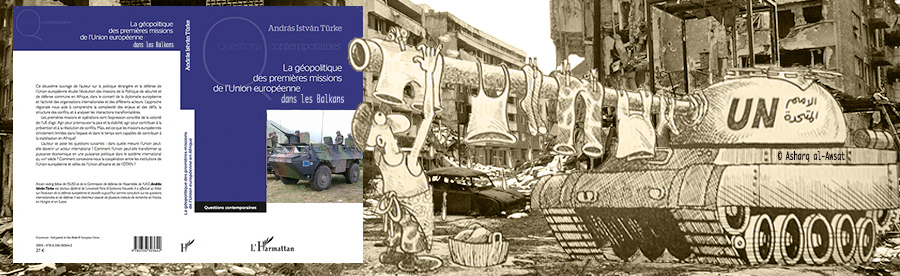
We are looking for sponsors for the English translation of these books, please contact turkeandras(at)gmail(dot)com