
You are here
Feed aggregator
Ces 5 lieux qui ont marqué l'histoire de l'esclavage en Afrique
Angoisse des captifs, silence dans les puits des enchaînés, douleur, peur... ces sentiments demeurent jusqu'aujourd'hui dans ces lieux de mémoires pour les peuples africains.
Le sang versé
Le jeune Moshen Meftah finance ses études en reprenant le travail qui fut celui de son père : il prie et jeûne pour les défunts de familles qui le paient à cet effet. Il nettoie les tombes, les asperge d'eau de rose, s'applique à bien prononcer l'arabe des prières. Il gère son emploi du temps funéraire sur son portable, et se fait payer par virement. Il admire Mahmoud Darwich, et rêve d'aller finir ses études à Beyrouth. Une de ses clientes lui a confié la tâche de s'occuper des rites pour (…)
- Contrebande / Iran, Littérature, Guerre irano-irakienne
Categories: Défense, Europäische Union
Tax obstacles in the single market
Written by Pieter Baert.
Simplification strategyAs highlighted in the recent reports by Mario Draghi and Enrico Letta, barriers to cross-border business operations continue to hinder the effective functioning of the EU single market. Removing such obstacles is not only central to the idea of the EU, but also represents an important opportunity for economic growth. In response, the European Commission has launched a broad initiative to ‘stress-test’ the entire EU rulebook to eliminate overlaps, contradictions, and unnecessary complexity. This agenda includes legislative simplification, for instance through a series of Omnibus proposals, and renewed efforts to deepen the single market. Among the options under consideration is the introduction of a ’28th regime’, to offer innovative companies a pan-European legal framework that companies can opt into.
In terms of taxation policy, the European Commission intends to table an omnibus package on taxation for the second quarter of 2026, and a recast of the Directive on Administrative Cooperation (DAC).
Costs, fragmentation and uncertaintyIn the context of cross-border activity, a tax obstacle can be understood broadly. It not only refers to explicit discrimination, but to any fiscal or administrative friction, such as: legal uncertainty; duplicative reporting requirements that disproportionately affect cross-border activity, as businesses must navigate multiple tax authorities; reporting systems; relief procedures; and divergent interpretations of the same EU rules. From an economic perspective, such barriers distort competition by favouring firms that remain domestic or that already operate at scale. They weaken the competitive pressure that the single market is meant to generate, with knock-on effects on prices, innovation, and market concentration. Empirical evidence further suggests a negative impact on investment decisions when businesses face uncertainty about the final tax treatment of an investment.
Any discussion of tax barriers must start from a fundamental legal and political reality: direct taxation remains largely within the competence of the Member States. Member States retain the right to determine who is taxed, on what, when, and at what rate, leaving the EU with a mandate to act only as necessary for the establishment and functioning of the internal market. These limited legal pathways for the EU result in distinct national tax environments, compelling cross-border workers and businesses to navigate different tax rulebooks including those governing labour income, corporate income, and capital gains. Attempts at harmonisation are long-standing: the idea of a common corporate tax base has been discussed since the 1960s. However, successive proposals failed to secure sufficient support, and the most recent proposal – BEFIT – is pending in the Council since 2023.
Even in areas where EU law provides a common framework, tax barriers can remain pervasive. For instance, despite the existence of the VAT Directive, value added tax (VAT) was identified as the most frequently reported tax-related obstacle in the single market in the Commission’s 2025 Single Market and Competitiveness Report. A particularly acute problem is VAT registration in another Member State. While the underlying VAT concepts are largely harmonised, administrative procedures are not. Registration procedures can vary widely between Member States in terms of documentation requirements, digitalisation, and processing times (see Table 1). The forthcoming expansion of the VAT One-Stop Shop under the VAT in the digital age package will significantly lower the need for multiple VAT registrations. However, where a company carries out activities outside the scope of the One-Stop Shop or where timely recovery of input VAT is commercially critical, companies may still need, or choose, to obtain VAT registrations in several Member States, each subject to national administrative procedures and compliance burdens.
Table 1 VAT registration challenges VAT registrationRegistrationVAT rules may be particularly complex: suppliers may not be aware that they must register for VAT in another country, leading to unintentional non-compliance, disputes and loss of tax revenue.DocumentationDifferent Member States may request different supporting documents (originals/copies) during the registration process (invoices, company statutes, company directors’ identity, etc.).LanguageLanguage barriers can hinder communication for foreign traders. Authorities may require documents in the local language, requiring professional translation.Nature of processDegree of digitalisation varies between Member States; manual procedures, delays and inconsistent follow-up increase uncertainty.ReportingOnce registered, the business must file VAT returns, EC-sales listings, etc.PaymentsOnce registered, the business must remit VAT according to local deadlines.Tax adviceComplexity of registration and subsequent obligations may force businesses to rely on external tax and accountancy expertise.Table Source: P. Baert, Single market, single VAT registration? Development and future of the one-stop shop, EPRS, European Parliament, 2025
More broadly, the unanimity requirement in tax matters represents a high barrier to achieving legislative progress at EU level. As a result, directives — rather than directly applicable regulations — remain the default legislative instrument. This inevitably leaves room for divergent national transposition and application. In response, the EU has increasingly relied on coordination and soft-law instruments, including guidance issued by the VAT Committee, recommendations and initiatives such as the European Trust and Cooperation Approach (ETACA) framework, to mitigate fragmentation.
New challengesAs the economy evolves, new tax barriers are emerging. Digitalisation has enabled employees to work from anywhere, but where an employee resides in one Member State and works for an employer established in another, overlapping national rules can lead to double taxation, disputes and high compliance costs. Employers may also face a ‘permanent establishment’ risk if an employee’s home office is deemed to create a taxable presence in another jurisdiction. These risks act as hidden barriers to labour mobility within the single market. The Commission plans to propose a recommendation to Member States on this issue in 2026.
The increased ‘servitisation’ of the EU economy presents a further challenge for the single market, as new business models combine elements of both goods and services (e.g. subscription-based manufacturing models). Current VAT rules, however, continue to rely on a rigid distinction between supplies of goods and supplies of services, each with different place of taxation rules. In hybrid scenarios, this can create legal uncertainty and disputes between Member States over taxing rights, increasing compliance costs and litigation risks for businesses.
Read this ‘at a glance’ note on ‘Tax obstacles in the single market‘ in the Think Tank pages of the European Parliament.
Categories: Európai Unió : hírek magyarul, European Union
zwei studentische Hilfskräfte (w/m/d) in der Abt. Makroökonomie
Die Abteilung Makroökonomie des Deutschen Instituts für Wirtschaftsforschung (DIW Berlin) analysiert gesamtwirtschaftliche Zusammenhänge mit empirischen und theoretischen Methoden. Die Forschungsarbeiten der Abteilung ordnen sich den drei Themenbereichen Konjunkturpolitik der europäischen Währungsunion, Makroökonomie und Verteilung und Makroökonomische Aspekte des Klimawandels zu. In den Forschungsarbeiten werden Modelle entwickelt und Datensätze generiert. Die Forschungsergebnisse bilden die Grundlage für die Infrastruktur der Prognose und Politikberatung. So fließen die Ergebnisse direkt in die Prognosen des DIW Berlin und die Gemeinschaftsdiagnose ein.
Wir suchen zum nächstmöglichen Zeitpunkt zwei studentische Hilfskräfte (w/m/d) für jeweils 12 Wochenstunden.
Categories: Balkans Occidentaux, Diplomacy & Defense Think Tank News
Draft agenda - Monday, 26 January 2026 - Tuesday, 27 January 2026 - PE782.379v01-00 - Committee on Security and Defence
Source : © European Union, 2026 - EP
Projet d'ordre du jour - Mardi 27 janvier 2026 - PE782.445v02-00 - Sous-commission "Droits de l'homme"
Source : © Union européenne, 2026 - PE
Categories: European Union, Union européenne
Kanada wirbt für Allianz der Mittelmächte
Kanadas Premier Mark Carney sieht die bestehende Weltordnung am Ende und wirbt für neue Bündnisse. Welche Rolle Europa dabei spielen könnte und wo die Grenzen einer engeren Anbindung Kanadas an die EU liegen, erläutert Politologin Laura von Daniels.
Categories: Diplomacy & Defense Think Tank News, European Union
Europas Wege aus der gefährlichen Abhängigkeit von den USA
Categories: Diplomacy & Defense Think Tank News, European Union
EU-Energiepolitik zwischen Versorgungssicherheit, Dekarbonisierung und strategischer Autonomie mit, ohne oder gegen die USA
Categories: Diplomacy & Defense Think Tank News, European Union
Europäische Klimapolitik gegen die USA: Auf der Suche nach starken Klimapartnerschaften
Categories: Diplomacy & Defense Think Tank News, European Union
Die Handelspolitik der Europäischen Union bedarf eines Neustarts
Categories: Diplomacy & Defense Think Tank News, European Union
When Home Becomes Uninhabitable
With climate change advancing, the planned relocation of entire communities from risk areas is becoming unavoidable. It is already a reality worldwide and will become increasingly necessary in the future as a measure of climate adaptation and disaster risk reduction. Relocation can save lives and reduce the risk of displacement. Nevertheless, this measure is considered a “last resort” because it is expensive, deeply affects livelihoods, social networks and cultural identities, and carries new risks. To be effective, it must be participatory, human rights-based, and accompanied by development-oriented measures that strengthen the well-being and resilience of those affected and reduce structural inequalities. Many places lack the political will, concrete strategies and resources for this – especially in low-income countries with already limited adaptation capacities. These countries are therefore heavily dependent on international support, which has mostly been fragmented, ad hoc and uncoordinated. The longer the absence of adequate structures persists, the greater the risk that human security will be severely compromised, fundamental human rights violated and entire communities (once again) displaced – posing risks to regional stability and global security. The German government should specifically address gaps in the international system, facilitate access to knowledge and resources, and strengthen multi-sectoral learning. Germany’s current engagement in Fiji should be expanded in the medium term to other climate-vulnerable regions and countries, with a focus on community-driven relocation projects.
Categories: Diplomacy & Defense Think Tank News, European Union
Europas Soft Power in der geopolitischen Zeitenwende erneuern – unzeitgemäße Betrachtungen
Categories: Diplomacy & Defense Think Tank News, European Union
Multilateralismus und Völkerrecht: UN‑Politik mit, ohne, gegen die USA
Categories: Diplomacy & Defense Think Tank News, European Union
Humanitäre Hilfe und Entwicklungszusammenarbeit: Herausforderungen jenseits finanzieller Engpässe
Categories: Diplomacy & Defense Think Tank News, European Union
Nachhaltiges Friedensengagement in Zeiten kurzlebiger »Deals«
Categories: Diplomacy & Defense Think Tank News, European Union
Mit, ohne, gegen Washington: Die Neubestimmung der Beziehungen Europas zu den USA
Die Epoche der Pax Americana, die nach dem Zweiten Weltkrieg Deutschlands und Europas Sicherheit garantierte, kommt an ihr Ende. Die Europäer können sich nicht mehr auf die Allianz und Partnerschaft mit den USA verlassen. Deshalb sucht Europa Wege aus der gefährlichen Abhängigkeit von Washington, die – auch über die Präsidentschaft von Donald Trump hinaus – Frieden, Demokratie und Wohlstand auf dem Kontinent sichern. Das ist nicht von heute auf morgen zu bewerkstelligen, sondern erfordert über die nächsten fünf bis zehn Jahre einen erheblichen Aufwuchs an Ressourcen und strategische Überlegungen. Die vierzehn Beiträge dieser SWP-Studie zeigen, wie unterschiedlich die Ausgangsbedingungen und Potentiale je nach Politikfeld und Herausforderungen sind, um Strategien des Übergangs zu entwickeln. Dabei ziehen die Europäer mit Blick auf Washington ein Miteinander, Ohneeinander und sogar Gegeneinander ins Kalkül. Entsprechend fallen die Analysen zur Agency der Europäer und den Spielräumen für eine europäische Russland-, Nahost- und Chinapolitik sehr differenziert aus. Die Trumpsche Logik des schnellen Dealmakings und der Unilateralismus unter den Vorzeichen von »MAGA« kollidieren vielfach und prinzipiell mit der multilateralen, an das Völkerrecht gebundenen Außen- und Sicherheitspolitik und einem nachhaltigen Friedensengagement der EU. Stichworte für die dringliche Neuorganisation von Sicherheit in Europa sind die Europäisierung der Nato und eigene militärische Fähigkeiten, neue sicherheitspolitische Führungskonstellationen in Europa und eine Governance in der Technologie- und Cybersicherheitspolitik, die konfliktfähig und resilient ist. Auch in der geopolitischen Zeitenwende sollte die EU ihre Soft Power fortentwickeln. Bei den existentiellen Fragen des globalen Regierens – von der UN- und Völkerrechtspolitik über die internationale Handelspolitik bis hin zur Klima- und Energiepolitik – müssen die Europäer neue Partnerschaften und gegebenenfalls auch neue institutionelle Lösungen ohne und gegen die USA finden.
Categories: Diplomacy & Defense Think Tank News, European Union
Deutschlands Chinapolitik: Künftig vorwiegend ohne die USA
Categories: Diplomacy & Defense Think Tank News, European Union
Europäische Nahostpolitik: mit, ohne oder gegen die USA?
Categories: Diplomacy & Defense Think Tank News, European Union
Russlandpolitik ohne, mit oder gegen die USA? Was geht und was nicht geht
Categories: Diplomacy & Defense Think Tank News, European Union
Pages


© 2012-2018 Europa Varietas Foundation © 2015-2018 Europa Varietas Association
www.europavarietas.org | info(@)europavarietas(dot)org | Switzerland
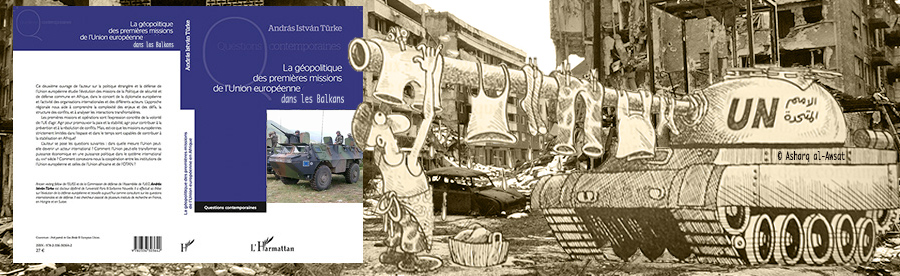
We are looking for sponsors for the English translation of these books, please contact turkeandras(at)gmail(dot)com