
You are here
Africa
Underdogs, history and late goals - Africa's World Cup
The 2026 World Cup saw Africa send its largest ever contingent to the finals, but five sides were eliminated by late goals as underdogs Cape Verde impressed.
Categories: Africa
Renewed Hostilities in the Strait of Hormuz Threaten to Compound Global Supply Chain Costs
Map of the Strait of Hormuz. Credit: Wikimedia/Goran_tek-en
By Maximilian Malawista
UNITED NATIONS, Jul 17 2026 (IPS)
A continuation of hostilities within the Strait of Hormuz is once again threatening one of the world’s most critical supply chain arteries, posing another wave of disruption which could choke the global energy, shipping and commodity markets. With roughly a quarter of global seaborne oil trade transiting through the Strait, alongside significant flows of liquefied natural gas and fertilizers, further constraints on commercial traffic could send new cost pressures cascading through supply chains that have yet to absorb the full effects of the earlier conflict.
Unlike the initial disruption, this latest escalation is hitting an already elevated and damaged cost base. U.S. President Donald Trump had proposed a 20 percent charge on cargo transiting the Strait, a plan he abandoned on July 14th after pressure from Gulf allies. At a current crude oil price of roughly USD 85 per barrel, a 20 percent levy on all cargo would amount to an additional USD 17 per barrel, around 17 times Iran’s previously proposed USD 1 per barrel toll.
Yet, the larger challenge remains whether an assurance of safety through the Strait can really be guaranteed. While Washington has promised to safeguard commercial vessels attempting to transit, multiple vessels have been struck by Iranian forces, including the UAE-flagged supertankers Mombasa and Al Bahiyah on July 12th. Both vessels have a capacity of roughly 2 million barrels of oil, placing the potential value of a full cargo at roughly USD 171 million before insurance, maintenance and transit costs are considered.
If continued attacks deter vessels from transiting the Strait, constrained oil flows could combine with increased insurance premiums and higher transport costs, pushing additional expenses through global supply chains and eventually onto consumers.
These effects are already visible when examining vessel movements. On July 15th, a total of five transits were recorded, three inbound and two outbound, with one of those ships being Iranian-flagged outbound. Daily throughput in deadweight tonnage (DWT) stood at 130,311 DWT, or just 1.27 percent of the 10.3 million DWT pre-conflict daily average. Meanwhile, approximately 450 vessels remain waiting to transit the Strait, including 120 tankers, 180 bulk carriers and 150 other vessels.
War risk premiums, the additional fees charged to insure vessels operating within conflict zones, have skyrocketed from a 0.15 percent pre-conflict rate to 5 percent, a more than 33-fold increase. Very large crude carriers (VLCCs) can be valued from USD 130 million to more than USD 170 million, meaning a five percent premium could add an additional cost of USD 6.5 million to USD 8.75 million per voyage. For a VLCC carrying 2 million barrels, that would amount to roughly USD 7.5 million, compared with approximately USD 2.225 million under Iran’s proposed USD 1-per-barrel toll combined with pre-conflict war-risk premiums.
However, the compounding effects extend beyond oil. Data from the World Trade Organization’s (WTO) Strait of Hormuz Trade Tracker shows that while crude oil shipments had begun to recover marginally, liquefied natural gas (LNG) and fertilizer-related shipments remain at a virtual standstill, with zero outbound shipments currently recorded. Renewed escalations risk further restricting already depressed commodity flows, with approximately one-third of the world’s seaborne fertilizer trade and one-fifth of global LNG transiting through the Strait.
Using a volume index in which 100 represents average volume levels, the WTO recorded a volume index of 25.69 for LNG on July 5th, following nearly four months in which shipments were recorded on only four other days. Fertilizer-related shipments showed greater resilience, recording a volume index of 97.62 on June 23rd. However, no further fertilizer-related shipments have been recorded, leaving the trade flow at a standstill for more than three weeks.
These restrictions could be particularly damaging for energy- and food-importing economies, notably developing countries that spend significant shares of national income on essential imports of energy and food. Simultaneous increases in fuel, transportation, and agricultural inputs risk creating a broader inflationary shock. Higher fertilizer costs can increase agricultural production costs, while elevated energy and shipping expenses raise the cost of transporting goods from exporters to importers, leaving consumers exposed to several layers of the same disruption.
The disruption has also carried a significant human cost. The International Maritime Organization (IMO) has warned against continued commercial transit through the Strait, with IMO Secretary-General Arsenio Dominguez urging shipowners, operators, and flag States, along with all relevant authorities to “avoid exposing seafarers to unnecessary danger by transiting the Strait.” At the same time, the United States has announced that it will resume a naval blockade targeting vessels transiting to and from Iranian ports. Iran, meanwhile, has framed its control over the Strait as a national security issue and has threatened that it will remain closed “until the end of America’s evils.”
At its 137th session, the IMO Council reaffirmed that the right of transit through straits used for international navigation “should not be threatened, impeded, denied, hampered, impaired or suspended,” reiterating that any measures taken by coastal states to regulate traffic in vital shipping lanes should be done in accordance with IMO regulations under the International Convention on the Safety of Life at Sea (SOLAS). The Council also stated that traffic through the Strait must “remain free of any tolls and charges, in accordance with international law, including the IMO Convention.”
UN High Commissioner for Human Rights Volker Türk warned that “Reports on the closure of the Strait of Hormuz are very alarming for their impact on human rights far beyond the region,” describing the Strait as “a vital lifeline on which millions are reliant.”
The dangers are also being borne directly by seafarers trapped in the Persian Gulf. Of approximately 20,000 seafarers stranded by the crisis, around 11,000 have been evacuated through an IMO-supported initiative. However, evacuation operations have reportedly been paused since June 25, leaving thousands still stranded.
The economic consequences of the initial disruption were already substantial before this latest escalation. According to the World Bank, global energy prices rose by 24 percent following the conflict’s onset, with fertilizer prices projected to rise by more than 30 percent in 2026. Renewed hostilities in the Strait now threaten to compound these pressures, demonstrating how insecurity within a narrow stretch of water can transmit costs across global supply chains, from ships at sea to businesses, households and economies around the world.
IPS UN Bureau Report
Follow @IPSNewsUNBureau
!function(d,s,id){var js,fjs=d.getElementsByTagName(s)[0],p=/^http:/.test(d.location)?'http':'https';if(!d.getElementById(id)){js=d.createElement(s);js.id=id;js.src=p+'://platform.twitter.com/widgets.js';fjs.parentNode.insertBefore(js,fjs);}}(document, 'script', 'twitter-wjs');
Categories: Africa
Three years of War in Sudan: A Crisis the World Can’t Ignore
UN Human Rights Chief Volker Türk visit to the Al Afad IDP camp, in Sudan. Credit: Anthony Headley/OHCHR
It has been three years since the start of war in Sudan. Survivors and human rights defenders struggle to keep human rights a reality as millions of lives have been impacted by violence, displacement and silence.
By UN High Commissioner for Human Rights
GENEVA, Jul 17 2026 (IPS)
Three years into the war in Sudan, survivors and human rights defenders are struggling to respond to overwhelming needs amid widespread violence, displacement, and limited global attention. As horrific violations and abuses intensify and those documenting them become targets, calls for accountability and sustained international engagement grow more urgent.
“The violations are severe: torture, rape, and other forms of sexual violence affecting women, men, and children,” said Dr. Nahid Jibrallah, founder and director of the SEEMA Centre for the Protection of Women and Children, a Sudanese civil society organization that has spent years supporting those affected by violence.
SEEMA Centre, now based in Kampala, Uganda, due to the war, provides medical, psychosocial, and legal and social assistance to Sudanese victims of torture in Uganda, as well as to their family members, with the support of the UN Voluntary Fund for Victims of Torture. Through the project supported by the Fund, it expands its services to Sudan to provide critical services and support to victims of torture, leveraging its experience and expertise to document and report on violations, advocate for accountability, and provide targeted services to those affected.
The Fund is issuing a special call for emergency applications for Sudan in response to the surge in needs of survivors.
While Sudan has endured periods of conflict over decades, the current war which began in April 2023, has reshaped the country in devastating ways.
UN High Commissioner for Human Rights, Volker Türk, recalled in a statement during his recent visit to Sudan, that he was shocked by accounts of extreme brutality, including atrocity crimes.
“I heard harrowing stories from survivors who witnessed the killing of their loved ones, and from women who had been subjected to gang rape and other forms of torture,” he said.
The conflict has also driven Jibrallah and her team to flee the country, so they are now working from Uganda.
“Torture is used as a weapon to control communities, including sexual abuse and also trafficking,” she said.
She said her colleagues at SEEMA Centre and other frontline groups, haven’t been spared the brunt of war. The war has created not only a humanitarian emergency, but a protection crisis for those trying to respond. She said that doctors, lawyers, health personnel, and human rights activists have been threatened, detained, tortured, and even killed for carrying out their work. The very people documenting violations and supporting survivors have become targets themselves.
The scale of suffering is unlike anything they have faced.
“Unfortunately, we cannot respond to this high level of need,” Jibrallah said. “The need is overwhelming, complicated, and spread across areas where even access is a challenge.”
“What we need is not to compromise human rights for any political agenda,” Jibrallah said. “We do not want resources to go to fuel the war or to mask human rights violations.”
UN Human Rights in Sudan
Sudan is now facing the world’s largest displacement crisis. Since the conflict began in April 2023, an estimated 14 million people have been forced from their homes, both within Sudan and across its borders.
“What makes Sudan’s crisis even more alarming is its invisibility. The world is not watching closely enough, but we are here, despite insecurity and access restrictions,” said Li Fung, UN Human Rights’ Representative in Sudan, on the staggering human cost of the Sudan conflict.
UN Human Rights has continued to monitor, document and analyze serious violations of human rights and international humanitarian law, despite access and security constraints. This work not only informs protection, humanitarian, and political responses today, but preserves vital evidence for future accountability and access to justice for victims and their families.
Civilians continue to endure the most horrific violations and abuses, forced displacement, trauma, and a dire humanitarian situation. Through its engagement on the ground, the Office is documenting violations, listening to survivors and communities, working with civil society and community networks, and bringing their voices to the attention of the world to press for action to end the war.
To this end, Jibrallah emphasised that documenting violations is essential and stressed the need for accountability: “It is very important to ensure accountability and to study this data, and to ensure that this will not happen again. It should be used for sustainable peace.”
IPS UN Bureau
Follow @IPSNewsUNBureau
!function(d,s,id){var js,fjs=d.getElementsByTagName(s)[0],p=/^http:/.test(d.location)?'http':'https';if(!d.getElementById(id)){js=d.createElement(s);js.id=id;js.src=p+'://platform.twitter.com/widgets.js';fjs.parentNode.insertBefore(js,fjs);}}(document, 'script', 'twitter-wjs');
Categories: Africa
Taliban Use Dress Code to Justify Arbitrary Arrests of Women
“It is no longer clear what is allowed and what is not. Uncertainty keeps people in their homes. The city has fallen silent, and businesses are struggling.” Credit: Learning Together.
By External Source
HERAT, Afghanistan, Jul 16 2026 (IPS)
One morning in June, Halima (name changed), went to the market in Herat, her hometown in western Afghanistan, with her mother. She was wearing a long coat and a surgical mask covering her face. She could not have imagined that just a few minutes later she would be sitting in prison.
Vehicles from the Ministry of the Promotion of Virtue and Prevention of Vice, or morality police, arrived at the market right after Halima and her mother. According to Halima, female employees of the ministry began arresting women without asking any questions. Cars waiting nearby took the detainees away.
“Everything happened quickly. Some tried to escape, while others were terrified. We did not understand on what basis the Taliban selected those to be arrested.”
Halima says that some of the women arrested were wearing burqas that covered both their faces and bodies. Like Halima, some were wearing long coats and face masks. Still, the morality police seized her.
“My mother cried and begged them not to take me. She was threatened with a one-month prison term, along with corporal punishment and a fine, if she tried to prevent my arrest. No one dared to come and help, even though my mother yelled.”
Women were being arrested, kicked and beaten, humiliated and mocked. Taliban troops stood by their SUVs, watching as their female colleagues grabbed the women. They grabbed those whose clothing did not conform to the Taliban’s concept of dress code
The phones of the arrested girls and women were confiscated. There were about 30 of them, and all were taken to a so-called shelter run by the Department of Labor and Social Affairs. It houses both single women and newly arrested women. None of them were allowed to contact their families. The next morning they were transferred to a prison.
The women’s wing of the prison was dirty and poorly equipped. Fear and uncertainty filled the minds of every prisoner.
“I sat in a corner and looked at my fellow prisoners: young girls, middle-aged women, and mothers who were worried about their children. There were about 60 of us. Everyone was either wearing a burqa or wearing what I thought was appropriate clothing. Yet, each of us was imprisoned because we supposedly did not follow the dress code,” says Halima.
The next day she was released. At home, her mother hugged her and they both cried. Halima was told that her father had paid 16,000 Afghanis (about 220 euros) for his daughter’s release. In addition, the family had to sign a guarantee that none of the women in the family would go out again without proper clothing.
After returning home, nothing felt the same. Halima’s brothers were furious and claimed that she had tarnished the family’s honor by going to prison.
“As if I had committed a crime! But I still believe that I did nothing wrong,” she says.
“Fear has become a part of my life. I will never forget those two nights in prison. I kept wondering whether all my fellow prisoners had been released and whether others had been arrested after us. I wondered what would happen to the women and girls of this country,” says Halima.
“I can’t go out like I used to. I’m always afraid when I leave home. I keep thinking about what will happen if I’m arrested again.”
Halima is not alone in her experiences. The Taliban have recently begun enforcing the dress code for women in Herat more strictly.
In early June, mosques in the city announced stricter regulations, and reports of the arrests of women and girls across the city began spreading on social media. The arrests have raised concerns, sparked protests and heightened security across the province.
According to the UN, at least 30 women were arrested in Herat over the first weekend of June.
Suhaila (name changed) remembers the moment when anger and powerlessness led many in Herat to protest.
The day before the protests, Suhaila went shopping at the market. Earlier that day, the imam of the local mosque had announced a new Taliban order: women who violated the dress code would be arrested and imprisoned without the possibility of appeal.
Suhaila’s father believed that the threats from the authorities should be taken seriously and that her daughter should not go out without full-body clothing. Suhaila followed her father’s advice and dressed as instructed, but still experienced something at the market that she will never forget.
“As soon as I arrived at the market, I sensed an unusual atmosphere of confusion. Women were moving restlessly from one side of the market to the other, and many were trying to do their shopping and leave as quickly as possible.”
Then it started happening. Women were being arrested, kicked and beaten, humiliated and mocked. Taliban troops stood by their SUVs, watching as their female colleagues grabbed the women. They grabbed those whose clothing did not conform to the Taliban’s concept of dress code.
“I wanted to scream and protest, but I was at the market with my little sister. I held her tightly to me and just cried. I was afraid that if I opened my mouth, they would take us, too.”
Zainab did not escape.
That evening, Suhaila joined a WhatsApp group for young people in her neighborhood, where they discussed what had happened. The group had dozens of messages about the arrests. Some shared photos and stories of what had happened, while others shared personal experiences of family members.
Soon, the group began dicussing the possibility of organizing a protest. Some warned that protesting would lead to more arrests and perhaps even deaths. Others believed that remaining silent in the face of injustice would rob people of their self-respect.
Suhaila decided to join the protests. She wanted to give a voice to the girls and women whose arrests she had witnessed. In the morning, she left for the agreed-upon meeting point without telling her father about her plans and despite her mother’s objections. The protesters began chanting slogans demanding women’s rights to education, work, and freedom.
The protest grew quickly but did not last long. Suddenly, Taliban SUVs approached the crowd from several directions and surrounded it. The protesters were beaten, and the Taliban opened fire. Desperate screams could be heard everywhere, and people looked for shelter wherever they could. Some were injured, while others tried to help them.
Among those arrested were also Suhaila’s friends.
“Zainab did not escape. The last time I saw her was when she was forced into a Taliban car. No one has heard from her since,” Suhaila says.
“We do not feel safe even in our homes. The Taliban are going from street to street looking for protesters,” Suhaila says of the atmosphere after the protests.
Fear is everywhere. Women no longer want to go to the market, and many families leave their homes only when forced to.
It is no longer clear what is allowed and what is not. Uncertainty keeps people in their homes. The city has fallen silent and businesses are struggling.
Shakoor (name changed) believes that it is not just a question of women’s clothing.
“Girls and women have a special status in this city. Arresting a woman or publicly humiliating her is considered an attack on the dignity and honor of the family. That is why the reaction has been so strong, and this time men have also demonstrated.”
The local Taliban administration believes that tightening the dress code for women protects social values.
Governor Noor Ahmad Islamjar believes the protests are the result of misunderstandings and outside influence. In a television interview, he reminded the public that demonstrations are not allowed.
The Taliban regime says the women arrested will be released after receiving a warning, their families will be notified, and they will be required to sign a pledge to follow the dress code. However, not all families know what has happened to their loved ones.
One of them is Suhaila’s friend, Zainab. Her family has not heard from her since her arrest.
Autonomous Weapons: The Wave of the Future in Military Conflicts Worldwide
UN Secretary-General António Guterres at the launch of the preliminary report from the UN Independent Panel on AI. Credit: UN Photo/Mark Garten
By Thalif Deen
UNITED NATIONS, Jul 16 2026 (IPS)
As the international community continues to weigh the good, the bad and the deadly in artificial intelligence (AI), which is spreading far and wide with apparently no guardrails, the United Nations is taking a closer look at the impact, both positive and negative, of AI.
UN Secretary General Antonio Guterres said last week that “the technology is heightening the danger, with sophisticated and increasingly autonomous new weaponry, including drones, able to inflict massive harm on populations.”
The new weapons, particularly Unmanned Aerial Vehicles (UAVs), more commonly known as drones, seem to be a new wave of killing machines in recent conflicts, including the US vs. Iran, Israel vs. Palestine and Lebanon, and Russia vs. Israel, plus scores of civil wars in Africa and Asia.
Simon Adams, Professor of Human Rights at Murdoch University in Australia and former President and CEO of the Center for Victims of Torture—a leading international human rights and humanitarian NGO—told Inter Press Service no country in the world has openly admitted to deploying a weapon that is completely autonomous in the sense of killing humans without a person also being involved in the decision-making process.
“But there are already a number of powerful states—including several that sit around the table at the UN Security Council—who are increasingly dependent on drones, robots and AI systems to fight wars for them. Algorithms are choosing bombing targets and are already responsible for killing civilians in some major conflict zones.”
AI has the potential to improve the lives of billions of people on this planet. It would be a moral failing of epic proportions and a global tragedy if AI were harnessed to innovate new ways for humans to outsource the dirty work of waging war to robots, he said.
“Killer robots are a horror that belongs in science fiction. There is nothing more sinister than outsourcing killing and warfighting to emotionless, faceless machines that will select which humans get to live or die. Lethal autonomous weapons systems are ethically indefensible and should be illegal. We need a global ban before it is too late.”
Guterres has also reiterated his call to have them banned by international law, adding that some decisions must remain forever human, none more than taking a human life.
David Swanson, campaign coordinator for RootsAction, told IPS dozens of national governments have already stated their support for banning autonomous weapons, and dozens of others expressed their inclination to support such a ban.
So, a treaty could be established among those nations, on the model of the recent Treaty on the Prohibition of Nuclear Weapons (TPNW) and then work could be done to add more nations to it. The initial signers and ratifiers would be the small and medium nations with the most willingness to defy the will of the U.S. government.
This banning of a particular type of weapon would ignore, as does the TPNW, the existence of the Treaty on the Nonproliferation of Nuclear Weapons, which requires disarmament of all weapons. It would also fail to address the morally repugnant act of ordering a young person, on pain of severe punishment, to press a button that sends a missile into people thousands of miles away—an act of dubious moral superiority to setting loose fully autonomous killer robots, he declared.
“But the biggest denier of reality in all of this is the U.S. government, which pioneered drone wars, was widely warned that it would not like the results when other nations followed suit, went on to suffer huge damage from foreign drones in places like the Persian Gulf during the current war on Iran, and altered its agenda not one iota. As guns sometimes appear to have more rights within the United States than children do, all forms of weaponry seem to be treated as deserving first consideration in U.S. foreign policy’,” he said
According to the New York Times of July 13, for decades Western governments have ordered supplies like tanks, fighter jets and submarines from contractors such as Lockheed Martin or Northrop Grumman—items that take years to deliver and are dizzyingly expensive: an F-35 jet can run to over $100 million.
“But the current trend is clear: defense technology is becoming cheaper and nimbler, with breakthroughs developed by privately funded companies rather than governments,” says an article authored by Vivienne Walt.
Of the Pentagon’s $1.5 trillion budget request by the current US administration for next year, about $55 billion is earmarked for the creation of a new unmanned, AI-powered arsenal.
Singling out a more positive non-military use of drones, the Times said last month that Sri Lanka, faced with one of the worst outbreaks of dengue fever in years, is using military drones to scan rooftops and find mosquito breeding grounds to eliminate them. The country’s air force has been routinely flying drones over high-rise buildings to identify breeding sites.
Nick Mottern, co-coordinator of the Weaponized Drone Ban Treaty Campaign, told IPS: “We are calling for a treaty to remove all weapons from drones, rather than to ban drones controlled autonomously by AI.
This is because all militaries will claim that there will always be a human in ultimate control of AI-augmented drones in spite of the fact that the drone will identify targets using AI, select weapons using AI, and present a human with all elements of the decision to kill using AI.
A treaty banning weapons on drones is the only way to stop the drone tsunami, he declared
Speaking at the First Global Dialogue on AI Governance in early July, Guterres said the world faced more than 120 conflicts in 2025.
Conflicts are becoming more protracted, more complex, and more interconnected, he pointed out. “We see widespread violations of international law and a growing sense of impunity. Technology is heightening the danger, with sophisticated — and increasingly autonomous — new weaponry, including drones, able to inflict massive harm on populations.”
“And online hate speech, misinformation and disinformation are spread and amplified in an instant. Too often, early warning signs are ignored. And responses are often a little too late.”
IPS UN Bureau Report
Follow @IPSNewsUNBureau
!function(d,s,id){var js,fjs=d.getElementsByTagName(s)[0],p=/^http:/.test(d.location)?'http':'https';if(!d.getElementById(id)){js=d.createElement(s);js.id=id;js.src=p+'://platform.twitter.com/widgets.js';fjs.parentNode.insertBefore(js,fjs);}}(document, 'script', 'twitter-wjs');
Categories: Africa
Eleven people die in fire at Algerian foster care home
Along with the fatalities, 19 people suffered injuries, the authorities say.
Categories: Africa
Asante Kotoko in talks to appoint South African veteran Eric Tinkler as new head coach
Asante Kotoko are on the verge of appointing experienced South African tactician Eric Tinkler as their new head coach, ending the club rsquo;s search for a permanent manager. The Porcupine Warriors have been operating without a substantive head coach since the exit of Karim Zito, with interim handlers Prince Yaw Owusu and later Hamza Oben .
Categories: Africa
Carlos Queiroz deserves the chance to stay as Black Stars coach - Kofi Adams
Minister of Sports and Recreation, Kofi Adams, believes Carlos Queiroz deserves the opportunity to continue as head coach of the Black Stars following Ghana rsquo;s encouraging performance at the 2026 FIFA World Cup.
Categories: Africa
I would have sacked Otto Addo earlier if the decision were mine alone - Sports Minister Kofi Adams
Sports and Recreation Minister Kofi Adams has revealed that he would have parted ways with former Black Stars head coach Otto Addo much earlier had the decision rested solely with him. Addo, 50, returned as Ghana head coach in March 2024 on a three-year contract with an option for a further two years.
Categories: Africa
Carlos Queiroz has not resigned as Black Stars coach - GFA ExCO member Nana Oduro Sarfo
Ghana Football Association (GFA) Executive Council member Nana Oduro Sarfo has dismissed reports suggesting that Black Stars head coach Carlos Queiroz has resigned from his position. The Portuguese tactician was appointed as Otto Addo rsquo;s successor in April ahead of the 2026 FIFA World Cup after the former Ghana international was reli .
Categories: Africa
World Cup 2026: 'That's why he's the king' - Lionel Messi breaks English hearts
Four years ago it felt as if Lionel Messi 39;s story was told. He had finally won the World Cup, aged 35, in what he said was his last game in the tournament and - depending on your point of view - cemented his place as football 39;s greatest ever player.
Categories: Africa
Full Effects of Strait of Hormuz Disruption May Not Be Felt Until Second Half of 2026
A cargo vessel docked at a port facility. Credit: UNCTAD
By Maximilian Malawista
UNITED NATIONS, Jul 16 2026 (IPS)
The full economic impact of the disruptions in the Strait of Hormuz may not become clear until the second half of 2026, warns the United Nations Conference on Trade and Development (UNCTAD).
Prior to the closure, an average of 129 maritime vessels transited daily through the strait, carrying approximately 34 percent of globally traded crude oil and 20 percent of the world’s liquefied natural gas (LNG). Asia is by far the largest importer of Gulf crude and oil products, receiving 91 percent of Gulf crude and petroleum products or roughly 16.5 million barrels per day.
Daily oil exports through the Strait of Hormuz by destination, million barrels per day (mb/d). Credit: Maximilian Malawista (Data: IEA)
While much of the global economy appears to be absorbing the shock rather decently, UNCTAD warned that the broader consequences of the Strait of Hormuz disruption have yet to fully materialize.
“I should qualify that the full picture on Hormuz disruptions should become clearer in the second half of 2026, once the higher costs have been fully absorbed through value chains, the broader macroeconomy, and financial conditions.” UNCTADS’s Head of Macroeconomic and Development Policies, Anastasia Nesveailtova, told Inter Press Service.
Oil prices in recent months have reached an amount higher than USD 100 per barrel, up from roughly USD 60 per barrel last June. While the immediate effects have been largely visible in the energy markets, economists note that secondary shocks often take months to fully solidify through the broader global economy.
Higher fuel costs increase expenses for agricultural producers, shipping companies, and manufacturers, all which are heavily reliant on energy intensive operations. As businesses begin to absorb these costs, they are often felt later by the consumer as it takes time for the full supply chain costs to trickle down.
UNCTAD warned about these secondary effects as early as March this year, noting that “Freight rates for oil tankers and war risk insurance premiums are surging, while marine fuel costs are also rising, increasing shipping costs across supply chains.”
Credit: Maximilian Malawista (Data: UNCTAD)
Beyond transport costs, the disruption also threatens global agricultural supply chains. UNCTAD notes that “Around one-third of global seaborne fertilizer trade (about 16 million tonnes) passes through the strait,” raising concerns that prolonged disruption of the strait could increase agricultural production costs by limiting access to fertilizer.
Several countries that rely heavily on fertilizer imports from the Persian Gulf are also major agricultural producers and exporters. According to UNCTAD, Australia for example sources 32 percent of its seaborne fertilizer imports from the Gulf. According to the World Trade Organization (WTO), Australia is among the world’s largest agricultural exporters, accounting for 12.8 percent of global agricultural exports, making it a top five exporter.
Likely as a result of fertilizer being a critical input to agricultural production, a decrease in supply of fertilizer signals an increase in price, meaning growing food becomes more costly. These effects also reach other exporters such as Pakistan, Thailand and New Zealand, but largely will affect them less than the secondary result of a supply constriction which raises regional food prices for vulnerable countries.
UNCTAD records that Sudan receives 54 percent of its fertilizer through seaborne imports from the Gulf, along with the United Republic of Tanzania, Somalia, and Mozambique also receiving large percentages from the region. Sudan and Somalia in particular are currently in a humanitarian food insecurity crisis, with parts of Mozambique also continuing to experience food security pressures.
The economic consequences of the Strait of Hormuz’s disruption may therefore extend far beyond just energy markets, reaching consumers worldwide through higher through higher transportation, agricultural and supply chain expenses.
IPS UN Bureau Report
Follow @IPSNewsUNBureau
!function(d,s,id){var js,fjs=d.getElementsByTagName(s)[0],p=/^http:/.test(d.location)?'http':'https';if(!d.getElementById(id)){js=d.createElement(s);js.id=id;js.src=p+'://platform.twitter.com/widgets.js';fjs.parentNode.insertBefore(js,fjs);}}(document, 'script', 'twitter-wjs');
Categories: Africa
New monkey species with orange lips found 'hiding' in DR Congo forest
Scientists describe "amazing feeling" to look into the face of an animal that so few people knew existed.
Categories: Africa
Special police team to investigate killing of an anti-migrant leader in South Africa
The March and March provincial leader died of his injuries in hospital several days after being shot.
Categories: Africa
How Farmers Are Learning About Restoring Soils and Scaling Agroecology in Kenya
Ferdinand Wafula (left) explains a point to farmers during an exchange visit in Makueni, Kenya. Credit: Isaiah Esipisu/IPS
By Isaiah Esipisu
MAKUENI, Kenya, Jul 15 2026 (IPS)
At Yumbuni Village in Kenya’s Makueni County, farmers from Vihiga and Kakamega counties have travelled over 560 kilometres to join their colleagues in Kathonzweni Ward and see the progress of experiments being carried out on different homemade organic fertilisers and other farm inputs.
“In a special way, we are conducting community-led agroecology research, comparing the performance of different on-farm-made biofertilisers in three counties: Kakamega, Vihiga and here in Makueni,” said Ferdinand Wafula, Coordinator of Bio Gardening Innovations (BIOGI), a local non-profit organisation coordinating the activity with support from the Agroecology Fund and the Drylands Natural Resource Centre (DNRC).
On Daniel Mulinge’s farm, members of the Yumbuni Community-Based Organisation (CBO) have strategically planted some of the most commonly used drought-tolerant crops, such as pigeon peas, cowpeas, bush beans, and open-pollinated maize varieties, among others, on different small blocks and in rows.
Each row is labelled based on the type of biofertiliser used during planting, among them bokashi, solid biostimulants, inoculated compost and composted manure, with a control line, planted without any form of fertiliser.
“Unlike in conventional farming, where nutrients from synthetic fertilisers are introduced to dead soils so as to feed the plant directly, here, we are giving life to the soil using organic fertilisers so that the soil can eventually feed the plant,” said Mulinge, who is one of the Lead Farmers in Makueni.
After planting, each row is monitored from the time of germination, with all features recorded in terms of germination rate for each row and the strength and length of the shoots. The next record is taken during flowering, to determine which lines flower first and at maturity. For bush beans for example, they count the number of healthy plants in each row at maturity, the number of pods on each bush, and the number of beans in each pod.
They also record the weight of 100 beans from each row to determine which biofertiliser delivered the best quality.
“This is a practical farm model for agroecology transition, and through this exercise, farmers are finding practical answers through hands-on, farmer-led experimentations that strengthen their understanding and their confidence,” said Wafula. “Our objective is to identify practical actions that are needed to scale successful agroecolocal innovation from the existing few farmers to the entire community,” he said.
According to the Heinrich Böll Foundation, soil degradation in East Africa is a silent crisis. The organisation points out that over 40 percent of soils are degraded, which threatens the region’s agricultural foundation and resilience. Yet, among other reasons, the problem is caused by unsustainable farming practices.
But according to BIOGI, use of biofertilisers can easily heal the soil over time, reduce and eventually eliminate dependence on expensive synthetic fertilisers, conserve soil moisture and facilitate adaptation to the climate crisis.
So far, in the first season, bokashi biofertiliser is emerging as one of the best inputs in both the Makueni dryland ecosystem and the tropical environment of Kakamega and Vihiga counties.
Unlike traditional composters, bokashi is a fertiliser made by fermenting organic matter in an oxygen-free environment. The process uses an activator made of micro-organisms like lactic acid bacteria or yeasts to help decompose waste by promoting fermentation. They break down organic matter while inhibiting the proliferation of bacteria responsible for putrefaction.
This is a technique that originated from Japan, with farmers using kitchen wastes to make small quantities of bokashi for kitchen gardens. But in Kenya, farmers are now producing it in larger quantities and even selling it in agro-vets.
“For the beans, lines that were planted using bokashi were able to give between 20 and 25 pods per bush, followed by those planted using compost manure, which yielded up to 18 pods per bush on average,” said Mulinge. The same trend was observed in Vihiga and Kakamega.
“Bokashi has performed well on vegetables such as kale, pumpkin and scallions in Vihiga County,” said Julius Asitiba, one of the farmers who travelled for the knowledge exchange trip.
According to Wafula, these findings will be of great value to county governments that have unveiled their agroecology policies. “I call upon county governments to invest in such farm inputs and research so that farmers do not have to depend on imported inputs that are often affected by geopolitics,” he said.
The ongoing community-led research was designed for three long rainy seasons for both ecologies of Western and Eastern Kenya, considering that seasons are not constant in terms of amount of rainfall, among other climatic factors.
“This is just the first season,” said Wafula. “We intend to repeat the experiments for two more seasons so that we generate as much data as possible.”
Beyond documenting the performance of biofertilisers, farmers are also sharing indigenous knowledge on pest control and the conservation of biodiversity.
According to Mulinge, pests in all the trials in Makueni are controlled using biopesticides made from locally available materials that include hot chilli, leaves from the neem tree, garlic and onions, Mexican marigold and even tobacco leaves.
IPS UN Bureau Report
Follow @IPSNewsUNBureau
!function(d,s,id){var js,fjs=d.getElementsByTagName(s)[0],p=/^http:/.test(d.location)?'http':'https';if(!d.getElementById(id)){js=d.createElement(s);js.id=id;js.src=p+'://platform.twitter.com/widgets.js';fjs.parentNode.insertBefore(js,fjs);}}(document, 'script', 'twitter-wjs');
Related Articles
Categories: Africa
Sierra Leone drops treason charge against ex-president over attempted coup
Ernest Bai Koroma was arrested in 2023 after gunmen broke into an armoury and some jails, freeing inmates.
Categories: Africa
Former 'street kid' key to South Africa's police corruption inquiry
Vusimusi "Cat" Matlala, due to appear at the Madlanga Commission, grew up hustling to make a living.
Categories: Africa
How a former 'street kid' is key to South Africa's police corruption inquiry
Vusimusi "Cat" Matlala, due to appear at the Madlanga Commission, grew up hustling to make a living.
Categories: Africa
Rastafarians in Kenya fail in bid to get cannabis legalised for religious purposes
The court acknowledged the need for a broader national debate on cannabis policy in Kenya.
Categories: Africa
Boss of fake government agency arrested in Nigeria after weeks on the run
The case has gripped Nigeria since President Bola Tinubu ordered a corruption investigation last week.
Categories: Africa
Pages


© 2012-2018 Europa Varietas Foundation © 2015-2018 Europa Varietas Association
www.europavarietas.org | info(@)europavarietas(dot)org | Switzerland
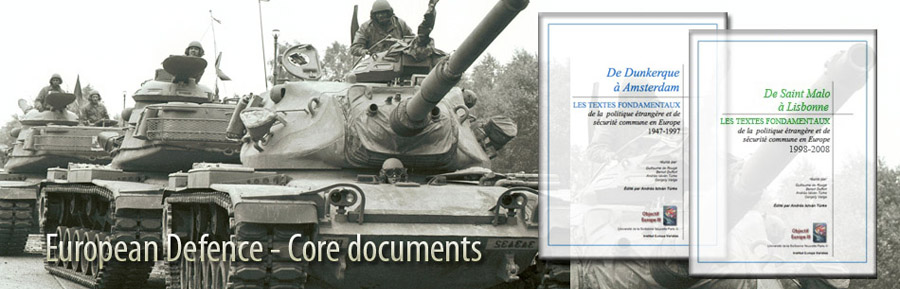
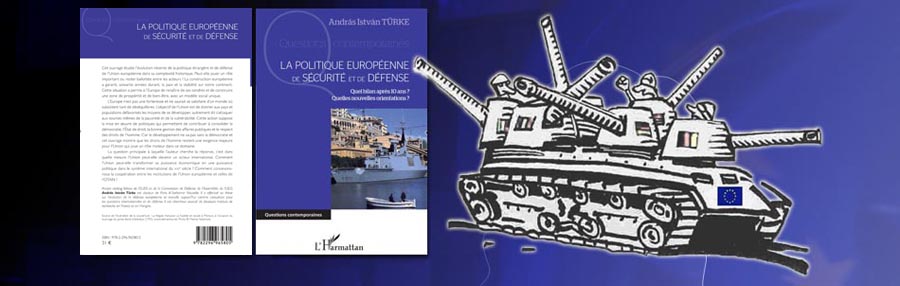
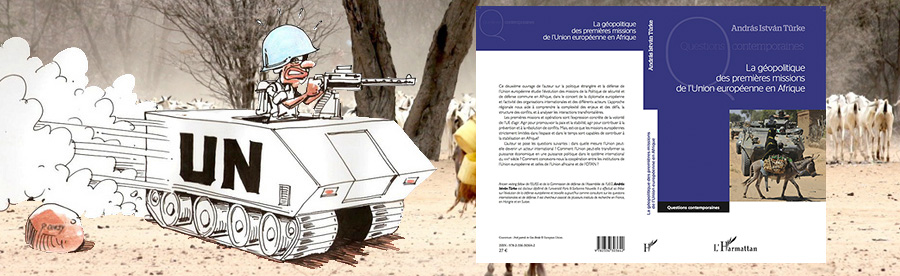
We are looking for sponsors for the English translation of these books, please contact turkeandras(at)gmail(dot)com