
Vous êtes ici
Agrégateur de flux
Législatives en Slovénie : face-à-face gauche-droite et scène politique éclatée
La Slovénie est déjà en campagne pour les législatives du 22 mars. La droite menée par le vétéran « trumpiste » Janez Janša accuse le gouvernement de centre-gauche de Robert Golob de mener une expérience « socialiste ». Ce dernier compte sur ses mesures sociales pour emporter un second mandat. Décryptage.
- Articles / Slovénie, Politique, Courrier des Balkans, Jansa
Catégories: Balkans Occidentaux, Diplomacy & Crisis News
EU action on cancer – State of play
Written by Laurence Amand-Eeckhout
BackgroundAs defined by the World Health Organization (WHO), cancer is a generic term for a large group of diseases that can affect any part of the body. One defining feature of cancer is the rapid creation of abnormal cells that grow beyond their usual boundaries, which can then invade adjoining parts of the body and spread to other organs (metastasis). Cancer arises from the transformation of normal cells into tumour cells in a multistage process that generally progresses from a pre-cancerous lesion to a malignant tumour.
According to the WHO’s International Agency for Research on Cancer (IARC), at least 40 % of all cancer cases could be prevented with effective primary prevention measures, meaning that around four in 10 cancers are potentially avoidable by reducing exposure to established modifiable risk factors. The main risk factors for cancer include tobacco use, alcohol consumption, unhealthy diet, obesity, physical inactivity, hormonal factors, environmental and occupational exposures, ultraviolet radiation, and infections such as those caused by hepatitis B and C viruses and some types of human papillomavirus. The burden of cancer can also be reduced through early detection and timely access to appropriate treatment.
World Cancer Day takes place every year on 4 February. It was established on 4 February 2000 at the initiative of the Union for International Cancer Control. The three-year ‘United by unique‘ campaign (2025-2027) aims to raise awareness of the importance of people-centred care.
Facts and figuresAccording to estimates from the IARC, about one in five people worldwide will develop cancer at some point during their lifetime.
There are no official EU statistics for the total number of people currently living with cancer in the EU. Available Eurostat data focus on deaths from cancer, cancer healthcare and equipment for treatment.
Cancer is currently the second leading cause of mortality in the EU, after cardiovascular diseases (Eurostat). In 2024, around 2.7 million people were diagnosed with cancer in the EU and around 1.27 million died (data published in December 2025 by ECIS, the European Cancer Information System). Compared with 2022, this represents a slight decrease of 1.7 % in new cases and 1.9 % in deaths. Nevertheless, these estimates illustrate the substantial burden of cancer, and projections indicate that these figures are expected to rise further: owing to an ageing population, unhealthy lifestyles, and unequal access to screening and care, by 2040, cancer diagnoses are expected to increase by 19 %, and cancer deaths by 27 %, which would make cancer the leading cause of death in the EU.
According to the EU Country Cancer Profiles Synthesis Report 2025, published jointly by the European Commission and the Organisation for Economic Co-operation and Development (OECD), between 2023 and 2050 cancer is expected to reduce population life expectancy by 1.9 years on average in the EU compared with a scenario without cancer.
The four most common cancer causes of death for both men and women in the EU are estimated to be lung cancer (19.7 % of all cancer deaths), followed by colorectal (12.2 %), pancreatic (7.5 %) and breast cancer (7.3 %). Among men, the main diagnoses are prostate cancer, followed by lung and colorectal cancer. Among women, the main diagnosis is breast cancer.
As highlighted in the 2024 joint European Commission/OECD report on cancer inequalities, significant inequalities persist across the EU in exposure to risk factors, particularly affecting those with lower levels of education, who show higher rates of smoking, obesity and harmful alcohol consumption, resulting in higher cancer incidence and mortality. In addition, substantial gender-based differences exist in exposure to cancer risk factors, to the detriment of men, particularly with regard to tobacco use, alcohol consumption, unhealthy diets and overweight.
In 2021, the Commission estimated the overall economic impact of cancer to exceed €100 billion annually. In a 2025 report, the OECD estimates that in the EU-27+2 (Iceland and Norway), workforce productivity is reduced by €50 billion each year, with cancer projected to cost €97 billion annually between 2024 and 2050.
EU actionSince the mid-1980s, the EU has worked alongside Member States to combat cancer. Under Article 168 of the Treaty on the Functioning of the European Union, the EU complements and adds value to national public health actions. EU efforts focus on prevention, research and information (e.g. awareness campaigns), while fostering cooperation between Member States. The EU also adopts legislation tackling cancer risk factors, such as exposure to environmental pollution or hazardous substances and radiation, obesity, alcohol-related harm, tobacco consumption and smoke- and aerosol-free environments. In 2023, the revised Consumer Credit Directive (Directive (EU) 2023/2225) strengthened consumer protection in credit agreement, particularly for cancer survivors (‘right to be forgotten’).
In February 2021, as part of the European health union, the European Commission adopted the Europe’s Beating Cancer plan to address cancer-related inequalities and help improve prevention, treatment and care. A total of €4 billion has been allocated to the plan, drawn from various programmes. The plan is structured around four key action areas (prevention; early detection; diagnosis and treatment; and quality of life for cancer patients, survivors and carers) and supported by 10 flagship initiatives, under implementation. In February 2025, the Commission published a review of the plan from its launch until the end of 2024. It highlights that implementation is well underway (more than 90 % of actions have either been concluded or are ongoing), that the plan is a successful example of a health-in-all-policies-based approach, and that governance of the plan has proved to be efficient so far, with several groups providing expertise (comprising stakeholder representatives, Member State experts and Commission services). However, delays and gaps persist, notably concerning financial and institutional barriers.
The EU has invested continuously in cancer research through successive framework programmes for research and innovation. Under Horizon Europe (2021-2027), the Cancer Mission ensures that new research and innovation developments are effectively translated into concrete solutions to improve cancer control.
European ParliamentIn June 2020, the European Parliament set up a Special Committee on Beating Cancer (BECA), which ended its mandate in December 2021. The committee’s final report was adopted by Parliament in February 2022. Its recommendations focus on cancer prevention, equal access to cancer care across borders, and a European approach addressing medicine shortages.
In its resolution of 13 December 2023 on non-communicable diseases (NCDs), Parliament pointed out that many people living with NCDs (including cancer) are undiagnosed and unaware of their illness, and thus fail to get proper, timely treatment. It invited the Commission to collect examples of best practices regarding screening for and early detection of NCDs. Parliament also stressed the importance of ensuring the collection of comparable, high-quality data on NCDs at EU level.
Since the start of the current legislature, MEPs have submitted a range of written questions to the Commission concerning cancer-related issues. In 2025, these included questions on the funding of the Europe’s Beating Cancer plan (E‑004037/2025) and its inclusion in the next multiannual financial framework (E-004760/2025); the protection of cancer survivors from discrimination (E-001252/2025); the harmful effects of sunbeds (E-001259/2025); measures to reduce cancer risk in children and young people (E-002125/2025 ); and the assessment of the effectiveness of innovative cancer therapies (E-001448/2025).
The Committee on Public Health (SANT) monitors the implementation of the Europe’s Beating Cancer plan. It is preparing an own-initiative report to assess the plan’s implementation, supported by an EPRS study (European implementation assessment) published in October 2025. The study, which assesses the implementation of the plan across EU Member States between 2021 and 2024, focuses on three core areas: gaps and delays in implementation, particularly in prevention, cancer care and quality of life; the plan’s impact on cancer inequalities across the EU; and lessons learned and their relevance for future EU initiatives on NCDs. It also proposes actions to improve cancer prevention and control in the EU.
Read this ‘at a glance’ note on ‘EU action on cancer – State of play‘ in the Think Tank pages of the European Parliament.
Catégories: Európai Unió : hírek magyarul, European Union
High Seas Treaty Will Transform Our Fragile Ocean for the Better
Game-changing international ocean treaty comes into force. Credit: NOAA
Deep-sea corals were among the treasures found during an expedition in the North Marianas Islands in the Pacific Ocean. Source: UN News
By Pietro Bertazzi and Oliver Tanqueray
AMSTERDAN / LONDON, Feb 3 2026 (IPS)
“The ocean’s health is humanity’s health”, said UN Secretary-General Antonio Guterres, in September 2025.
He was commenting after the High Seas Treaty (BBNJ) [1] finally achieved ratification, going on to call for “a swift, full implementation” from all partners. As of January 17, 2026, the treaty has come into force, meaning the time for implementation is now. What is the High Seas Treaty?
Only 1% of the high seas are currently protected. The new treaty will greatly increase safeguards, with significant implications for activities covering nearly 50% of the Earth’s surface.
The High Seas Treaty establishes, for the first time, a legal mechanism to govern activities affecting biodiversity in the areas of the ocean that lie outside the jurisdiction of any single country (ie their Exclusive Economic Zones, typically 200 miles from their coastline).
The agreement was achieved after nearly 20 years of dialogue, much of which was carried by Small Island Developing States (SIDS), Indigenous peoples and coastal communities. For them, the relationship with the ocean is most direct and the threats to it are most existential.
The entry into force of such a significant legal instrument sends a powerful message on the value of collaboration, and its importance in confronting the environmental risks facing the economy and humanity.
The agreement will change the ways that activities taking place in the High Seas – and those affecting them – will be planned, monitored, managed and reported on. This level of transparency will drive a cycle of accountability and improvement in the relationship between our economy and the natural world on which it depends.
What you need to know
The treaty’s role as an international legal mechanism will have significant effects on companies and financial institutions to respond to.
Key outcomes
1. Increased transparency on ocean-based activities
The agreement sets out monitoring and transparency requirements of countries – including Environment Impact Assessments (EIA) – alongside high seas genetic material, samples and digital sequence data, as well as a publicly accessible database to promote publicly available real economy data and data exchange.
This means that many aspects of companies’ high seas-related projects will be accessible to stakeholders.
Anticipating increased public information on environmental studies and mitigation plans, companies should prepare to report on high seas activities, such as fishing, shipping, energy infrastructure, mining and bioprospecting, as well as potential impacts of new activities such as carbon dioxide removal technologies.
Companies can also further identify opportunities through new publicly available data and recognize the halo benefits that increased coverage of marine-protected areas brings.
2. Increased expectations on corporate disclosure
New EIAs will amplify the need for standardized corporate data on marine impact – coupled with growing investor and policy focus on companies’ high seas activities, strategies and governance.
Financial institutions (FIs) and regulators will expect companies to report on how they comply with treaty obligations such as the number of high seas environmental assessments completed, presence in protected areas, and contributions to capacity building.
Asset owners will ask for metrics on exposure to high seas biodiversity risks. Governments may require reporting from firms to compile national reports and monitor compliance.
Companies should expect new jurisdictional regulations on ocean activities, as Member States take steps to implement the Agreement, via enhanced environmental rules and disclosure obligations.
For FIs, there is increased focus on integrating ocean health into Environmental, Social and Governance (ESG) analysis, with risks and opportunities in blue finance and sustainable ocean industries only going to grow.
This creates a need to ensure that portfolio companies are equipped to comply with new regulations and secure relevant permissions to operate in international waters. Failure to do so creates risks to ongoing operations as well as litigation and reputational exposure.
3. Strengthened multilateral collaboration
The agreement creates legal mechanisms for area-based management tools, including Marine Protected Areas (MPAs). For disclosers and financial institutions, this means enhancing readiness to adapt to exclusions or operating conditions on shipping lanes, fishing grounds, mining sites, and cable routes. Industries will need to track MPA designations and adjust operations (for example by rerouting vessels or ceasing extraction) to remain compliant.
CDP stands ready to support the ocean
Working with companies and data users, CDP will integrate and standardize key metrics needed to implement the High Seas Treaty. This ensures that stakeholders have the reliable, comparable data needed to implement collective goals, and companies can demonstrate their leadership on ocean stewardship.
From 2026 onwards, CDP will be expanding its questionnaire to gather ocean-related data. In the first year of disclosure, we will generate insights on processes for identifying, assessing, and managing ocean-related dependencies, impacts, risks, and opportunities.
This work is being done in collaboration with our Capital Markets Signatories – many of which have already shown demand for ocean-related data – and disclosing companies, focusing on those with the most significant ocean impacts and dependencies.
High Seas, higher ambitions
There is still much to do to improve the protection of marine areas and restoration of ocean health. But the BBNJ is a significant step forward in this effort.
In a year where nature is placed on the main stage of the international agenda, companies, FIs and governments alike have an opportunity to embed ocean health into global financial systems.
Countries must also complement the agreement with a drive to protect coastal waters not part of their direct control. Many ocean-impacting activities will not be constrained by the BBNJ. Only 4.2% of fishery production, for example, takes place on the high seas[2]. This means there will be a continued role for Member States to conserve and sustainably use the biological diversity in areas within their jurisdiction.
We must build momentum behind the opportunities enabled by this historic deal – collaboration and transparency will play a vital part in turning this momentum into action.
Footnotes
- 1. The treaty is formally called the ‘Agreement under the United Nations Convention on the Law of the Sea on the Conservation and Sustainable use of Marine Biological Diversity of Areas Beyond National Jurisdiction’, or ‘BBNJ’.
2. By volume, the total catch from the high seas accounts for 4.2% of annual marine capture fisheries production. Schiller L, Bailey M, Jacquet J, Sala E. ‘High seas fisheries play a negligible role in addressing global food security.’
Pietro Bertazzi is Chief Policy and interim Growth Officer, CDP, and Oliver Tanqueray is Head of Ocean, CDP.
Carbon Disclosure Project (CDP) is a global non-profit that runs the world’s only independent environmental disclosure system for companies, capital markets, cities, states and regions to manage their environmental impacts.
IPS UN Bureau
Follow @IPSNewsUNBureau
!function(d,s,id){var js,fjs=d.getElementsByTagName(s)[0],p=/^http:/.test(d.location)?'http':'https';if(!d.getElementById(id)){js=d.createElement(s);js.id=id;js.src=p+'://platform.twitter.com/widgets.js';fjs.parentNode.insertBefore(js,fjs);}}(document, 'script', 'twitter-wjs');
Catégories: Africa, Biztonságpolitika
La victoire de l’UDR Antoine Valentin en Haute-Savoie contre LR est-elle un signe de l’« union des droites » ?
ANALYSE - Dans la 3e circonscription de Haute-Savoie, le candidat de l’UDR, allié au RN, a terrassé le candidat LR, incarnant ainsi dans les urnes une union des droites.
Catégories: Balkans Occidentaux, France
Group of 77—Representing 134 Nations, Plus China—Protest Funding Cuts for South-South Cooperation
Credit: UN/Monicah Aturinda Kyeyune
By Thalif Deen
UNITED NATIONS, Feb 3 2026 (IPS)
A sharp cut in funding for “South-South Cooperation” (UNOSSC) has triggered a strong protest from the 134-member Group of 77 (G-77), described as the largest intergovernmental organization of developing countries within the United Nations.
The protest has been reinforced by four UN ambassadors, two of them former chairs of the G77—Colombia (1993) and South Africa (2015), along with Brazil and India.
Traditionally, the G77 has been backed by China, the world’s second largest economy, and a veto wielding member of the Security Council
A letter of protest, addressed to Alexander De Croo, Administrator, UN Development Programme (UNDP), which funds and oversees the UNOSSC, says South-South cooperation remains a central pillar of the work of the United Nations and is of particular importance to the Group of 77 and China.
The UNOSSC, established by the UN General Assembly at the initiative of the G-77, “plays a critical role in supporting, coordinating and implementing South-South and triangular cooperation initiatives and projects across the United Nations development system, including in support of the UN development agenda”.
“Against this background, the G-77 and China wish to express its serious concern regarding the significant reduction in resources proposed to be allocated by UNDP to UNOSSC under the 2026–2029 Strategic Framework,” says Ambassador Laura Dupuy Lasserre, Permanent Representative of Uruguay to the United Nations and Chair of the Group of 77, in a letter to the UNDP Administrator.
The scale of the proposed reduction is described as “substantial and, if implemented, would severely constrain the Office’s ability to effectively deliver on its mandate.”
The reduction is estimated at 46% of funds allocated by UNDP to UNOSSC under the proposed 2026-2029 Strategic Framework. And in dollar terms, the proposed allocation amounts to USD 16.6 million, down from the USD 30.7 million under the 2022-2025 Strategic Framework. (the amount actually disbursed was approximately USD 22 million).
Of particular concern is the potential impact of these funding reductions on the management and operational capacity of Trust Funds administered by UNOSSC, including the Perez-Guerrero Trust Fund for South-South Cooperation (PGTF) and other financing mechanisms that provide critical support to developing countries.
The G77 Chair has received a démarche from the Chair of the Committee of Experts of the PGTF conveying the concerns that the ability of the PGTF to continue fulfilling its regular operations might be at stake.
“Reduced institutional capacity to manage these Trust Funds would undermine their effectiveness and would have adverse consequences for beneficiary countries that rely on these instruments to advance development priorities”, warns the letter.
The Group of 77 (and China) is of the view that consideration of the proposed Strategic Framework requires further clarification before approval and should therefore be postponed.
Furthermore, the Group underscores the importance of continued transparency and structured dialogue with Member States.
“Any proposals involving the restructuring or reconfiguration of UNOSSC should be submitted for review and approval, in line with the fact that the Office was established by a resolution of the General Assembly and therefore falls under the authority of Member States.”
“In light of the above, the Group of 77 and China respectfully requests that UNDP give due consideration to all available options to substantially increase the allocation of resources to UNOSSC.”
Such action, the letter said, would be essential to safeguard the effective implementation of the Office’s mandate, protect the integrity and functionality of Trust Fund operations, and avoid negative impacts on developing countries.
Meanwhile, the letter from the four ambassadors reads:
-
- 1. “South-South cooperation remains a central pillar of the work of the United Nations and is of particular importance to developing countries. The United Nations Office for South-South Cooperation plays a vital role in supporting, coordinating and implementing South-South cooperation initiatives across the United Nations development system, including in support of the Sustainable Development Goals (SDGs).
2. It is, therefore, with grave concern that we note the dramatic reduction (46%) of funds allocated by UNDP to UNOSSC under the proposed 2026-2029 Strategic Framework: only USD 16.6 million, down from the USD 30.7 million allocated under the 2022-2025 Strategic Framework, the amount actually disbursed having been approximately USD 22 million.
3. While we fully understand the current financial difficulties faced by the UN system as a whole, we believe that the allocation of funds proposed to South-South cooperation imposes losses that are considerably higher than the average reduction experienced by UNDP programs. In addition, given the said current difficulties, it is even more likely that, in 2026-2029, the actual disbursement could be significantly less than the original allocation.
4. In this case, UNOSSC would be left with very modest funding. It is beyond doubt that expected deep cuts in funding will negatively and profoundly impact the Office’s ability to continue providing its invaluable support to developing countries, including in trust fund management. In this particular regard, reduced capacity in UNOSSC to properly support trust funds would be detrimental to the best interests of dozens of developing countries.
5. In light of the foregoing, we kindly request that UNDP promptly consider all means at its disposal to substantially increase allocation to UNOSSC, thus allowing for the effective implementation of the Office’s mandate and avoiding damage to many developing countries.
6. A second concern relates to the proposed shift of the Office toward a more policy-oriented approach, which could aggravate the steep cut in funding mentioned above. While we fully recognize the importance of policy guidance, we strongly believe that an appropriate balance between policy and programming functions must be preserved in UNOSSC, thus ensuring that strategic orientation is underpinned by adequate programmatic capacity.
7. We trust that these considerations will be duly taken into account, acted upon and unambiguously reflected in the final version of the Strategic Framework for 2026-2029.”
IPS UN Bureau Report
Follow @IPSNewsUNBureau
!function(d,s,id){var js,fjs=d.getElementsByTagName(s)[0],p=/^http:/.test(d.location)?'http':'https';if(!d.getElementById(id)){js=d.createElement(s);js.id=id;js.src=p+'://platform.twitter.com/widgets.js';fjs.parentNode.insertBefore(js,fjs);}}(document, 'script', 'twitter-wjs');
Catégories: Africa, Biztonságpolitika
Procès en appel des assistants RN : des réquisitions scrutées pour Marine Le Pen, candidate à 2027
Le parquet général de la cour d'appel de Paris va prononcer mardi ses réquisitions contre Marine Le Pen et dix cadres de l'ex Front national, dans le cadre du procès en appel pour détournements de fonds publics concernant les assistants parlementaires des eurodéputés.
Catégories: Balkans Occidentaux, France
Scandale des laits infantiles contaminés en France : ce que l'on sait
Une contamination à la toxine céréulide secoue le marché des laits infantiles depuis mi-décembre. Des lots ont été rappelés, des normes renforcées et des enquêtes sont en cours sur des hospitalisations et des décès. Les autorités et les industriels sont accusés d’avoir réagi trop tard.
Catégories: Balkans Occidentaux, France
Serbie : des proches de Vučić pris la main dans le pot de cannabis
Cinq tonnes de marijuana empaquetées dans des centaines de boîtes en carton : voici ce que la police a trouvé dans l'entrepot de la société Florakom, près de Kruševac... Celle-ci appartient à un cadre du SNS au pouvoir, très proche du ministre de la Défense, Bratislav Gašić.
- Le fil de l'Info / Vucic, Serbie, Défense, police et justice, Courrier des Balkans, drogues
Catégories: Afrique, Balkans Occidentaux
Serbie : des proches de Vučić pris la main dans le pot de cannabis
Cinq tonnes de marijuana empaquetées dans des centaines de boîtes en carton : voici ce que la police a trouvé dans l'entrepot de la société Florakom, près de Kruševac... Celle-ci appartient à un cadre du SNS au pouvoir, très proche du ministre de la Défense, Bratislav Gašić.
- Le fil de l'Info / Vucic, Serbie, Défense, police et justice, Courrier des Balkans, drogues
Catégories: Balkans Occidentaux, Diplomacy & Crisis News
Gilets jaunes : un policier va être jugé, soupçonné d'avoir éborgné Jérôme Rodrigues
La cour d'appel de Paris a confirmé le renvoi devant une cour criminelle d'un policier pour avoir éborgné Jérôme Rodrigues, figure du mouvement des "gilets jaunes", lors d'une manifestation en 2019 à Paris.
Catégories: Balkans Occidentaux, France
Présidentielle 2027 : l’hypothèse d’une candidature de François Hollande fait son chemin
DÉCRYPTAGE - De plus en plus de socialistes plébiscitent l’ancien président de la République, qui reste lourdement lesté par son bilan.
Catégories: Balkans Occidentaux, France
Indonesia’s Stock Market Sell-Off, Explained
Last week, the IHSG Composite Index plunged by 8 percent, wiping out an estimated $80 billion in market value.
Présidentielle 2027 : comment Raphaël Glucksmann veut tenir la primaire en échec
DÉCRYPTAGE - L’eurodéputé et fondateur de son propre parti, bien placé dans les sondages, propose aux socialistes de créer une « plateforme commune » en vue de la présidentielle.
Catégories: Balkans Occidentaux, France
The Paradox of Wartime Commerce
Why states keep trading even in the midst of conflict.
The Predatory Hegemon
Catégories: Diplomacy & Crisis News
Zu wenige Schüler hier, fehlende Klassenzimmer dort: Warum es schwierig ist, rechtzeitig Schulhäuser zu bauen
Wegen der sinkenden Geburtenzahlen werden überall in der Schweiz Klassen zusammengelegt und Schulhäuser geschlossen. Doch nicht in allen Gemeinden gibt es genügend Schulraum.
Catégories: Pályázatok, Swiss News
Political Activists File Fresh Impeachment Complaints Against Philippine Vice President
After surviving an impeachment attempt last year, Sara Duterte has once again been accused of corruption and betraying the public's trust.
Shanties in a Lagos lagoon: Bulldozed and burnt
Residents suspect the demolitions are aimed at gentrifying the waterfront in Nigeria's biggest city, but officials deny this.
Catégories: Africa, European Union
Timor-Leste Opens Legal Proceedings Against Myanmar’s Military Junta
A human rights group representing the Chin ethnic minority last month submitted a legal complaint in Dili accusing the military of a litany of abuses.
Paix, pardon et sécurité : Les dozos mobilisés à Bobo-Dioulasso pour le Dankoun 2026
À l'occasion de la célébration annuelle du Dankoun, rituel majeur de la confrérie dozo, l'Union nationale des dozos du Burkina a organisé une série d'activités à Bobo-Dioulasso. Le vendredi 30 janvier 2026, une importante délégation de dozos, conduite par le « dozoba » Aly Konaté, a effectué une tournée auprès des autorités coutumières et religieuses de la ville. Objectif : accomplir des sacrifices et des rituels de pardon entre dozos, tout en implorant le retour de la paix et de la sécurité au Burkina Faso.
L'Union nationale des dozos du Burkina a organisé, du 28 au 31 janvier 2026 à Bobo-Dioulasso, la 13e édition du Dankoun. Cet évènement majeur de la confrérie a été ponctué par plusieurs activités dont le rituel d'immolation pour la paix et la sécurité au Burkina Faso. C'était le vendredi 30 janvier dernier. Cette journée a ainsi permis à la confrérie d'effectuer une tournée chez des chefs coutumiers et religieux. La délégation s'est rendue chez le grand imam de la mosquée de Dioulasso, chez le Golotigui, le chef de Kibidoué, le chef de Dagasso, le chef dioula, etc.
Le clou de cette activité a eu lieu à Kibidoué à travers l'immolation d'animaux, dont une partie s'est faite loin des caméras et appareils photo. Après cette tournée symbolique chez les chefs coutumiers, le président de l'Union nationale des dozos du Burkina a animé un point de presse au cours duquel il a longuement expliqué l'organisation, les valeurs et la mission de la confrérie dozo, souvent au cœur de controverses et de perceptions négatives.
Le clou de cette activité a eu lieu à Kibidoué à travers l'immolation d'animaux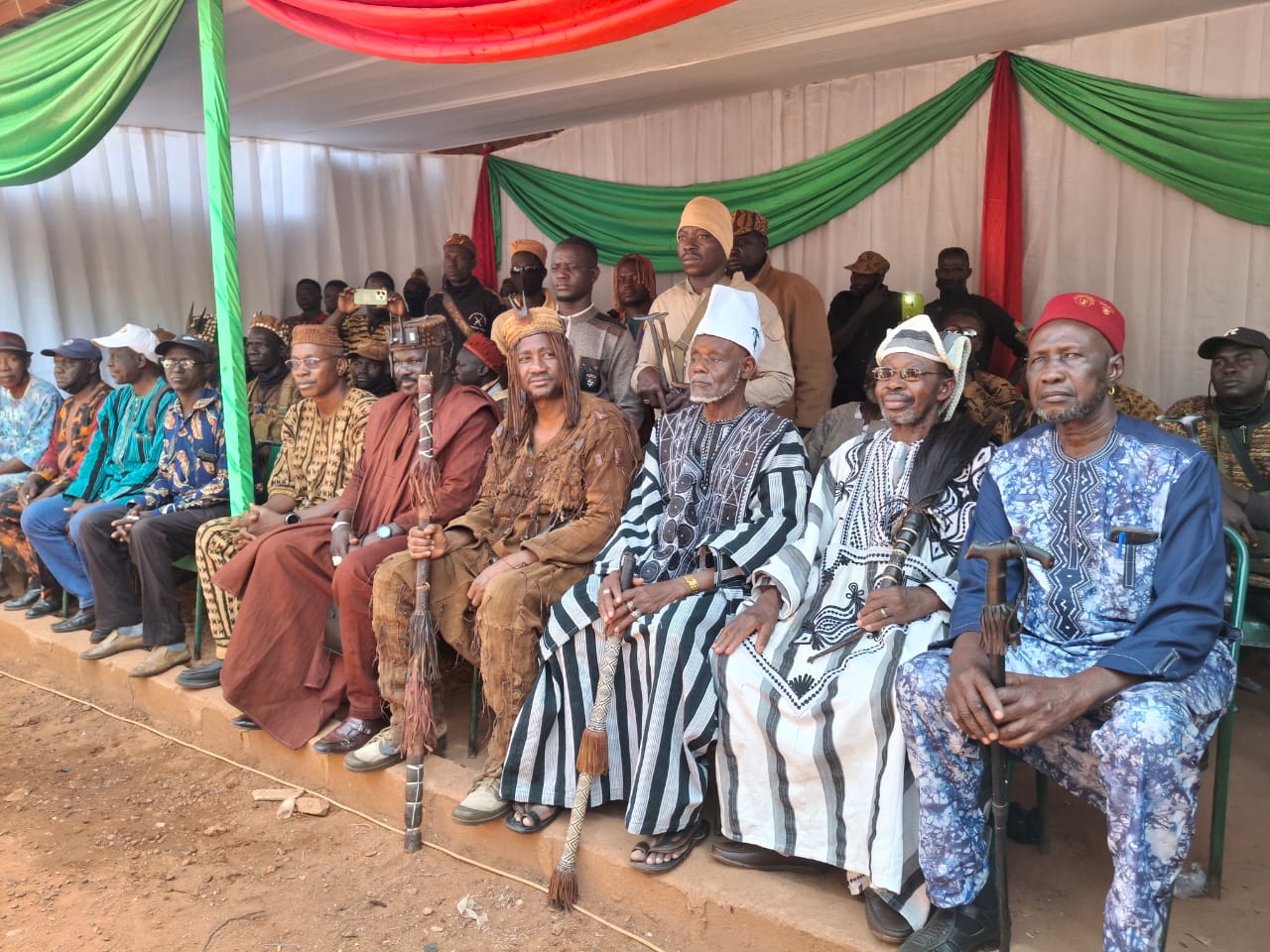
« Le dozo, c'est d'abord une école et une confrérie »
Pour Aly Konaté, les amalgames autour du « dozoya » sont nombreux. « Un dozo est un guerrier, un tradipraticien, un protecteur de son village, de son quartier et de son pays. Il est aussi un protecteur de l'environnement », a-t-il expliqué. Selon lui, il est important de distinguer la confrérie dozo, qui repose sur des règles traditionnelles et initiatiques, de l'Union nationale des dozos, créée pour des raisons administratives afin d'exister légalement vis-à-vis de l'État burkinabè.
« Dozo, ce n'est pas une association au sens moderne du terme. Un chef dozo n'est ni voté ni imposé. Il est intronisé selon des règles connues des initiés, et il meurt chef dozo », a insisté le « dozoba » Aly Konaté. Il précise que l'Union nationale regroupe aujourd'hui environ une centaine d'associations, avec 208 chefs dozos reconnus à travers le pays. À l'en croire, « dozoya », souvent mal compris, est présenté comme une école. « On devient dozo par initiation. Mais pour pratiquer le « dozoya », il faut aller à l'école du « dozoya ». Ceux qui ont suivi cette école sont appelés les « dozoden » (littéralement : enfant-dozo) », explique Aly Konaté.
Les dozos n'ont pas marchandé leur participation aux différentes activités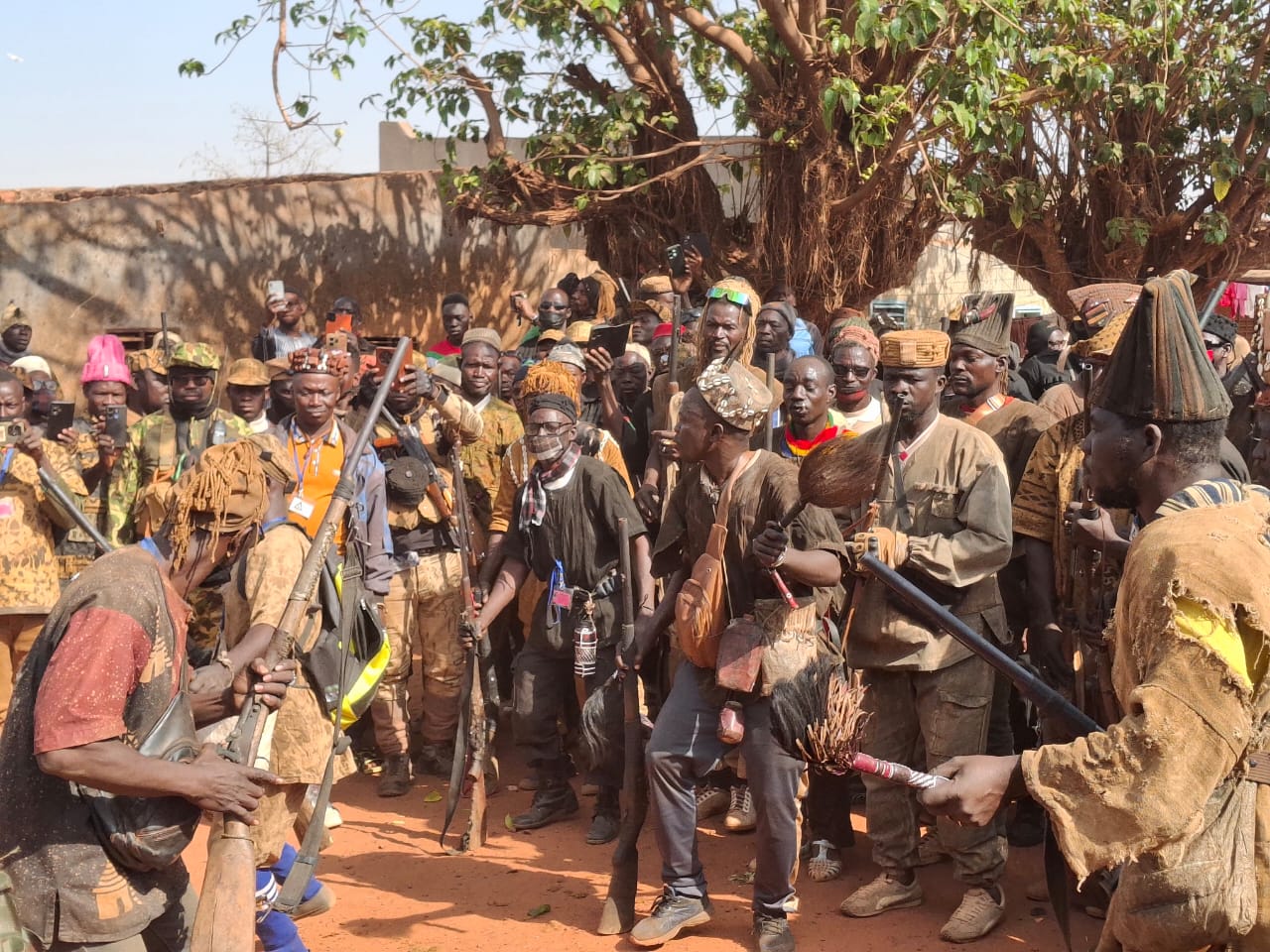
Financement du Dankoun : « Nous n'avons jamais mendié »
Interrogé sur le financement des activités, notamment du Dankoun, le président de l'union se veut catégorique : « Nous n'avons jamais mendié pour organiser nos rituels. » Selon lui, chaque dozo participe avec ses propres moyens. « Le président ne paye pas de poulet. Chaque dozo vient avec son poulet, son matériel rituel et son transport », affirme-t-il.
Il ajoute que la majorité des rituels se déroulent en brousse, loin des regards du public et des médias. « Ce que vous voyez, ce n'est que la façade. Le cœur de la cérémonie est ailleurs », précise-t-il, soulignant que la capacité d'accueil et de prise en charge des initiés fait partie des responsabilités d'un chef dozo. « Un chef dozo n'est jamais un pauvre. Il doit avoir le savoir, la connaissance et les moyens », martèle-t-il.
Dozoba, dozoden, soma : lever la confusion
Le « dozoba » Aly Konaté est également revenu sur la différence entre « dozoba, dozoden et soma », des appellations souvent confondues. « Chef dozo est une appellation française. En dioula, on dit « dozoba » », explique-t-il. Le terme renvoie symboliquement à la relation mère-enfant dans l'initiation, la “mère dozo” étant celle ou celui qui enseigne les premiers pas dans la confrérie. Concernant les « soma », il précise qu'il s'agit généralement de dozos plus âgés, qui ne vont plus en brousse et se consacrent aux soins par les plantes et les savoirs traditionnels. « Un jeune initié de deux ou trois ans ne peut pas se proclamer soma ou chef dozo », tranche-t-il.
Le présidium lors de la conférence de presse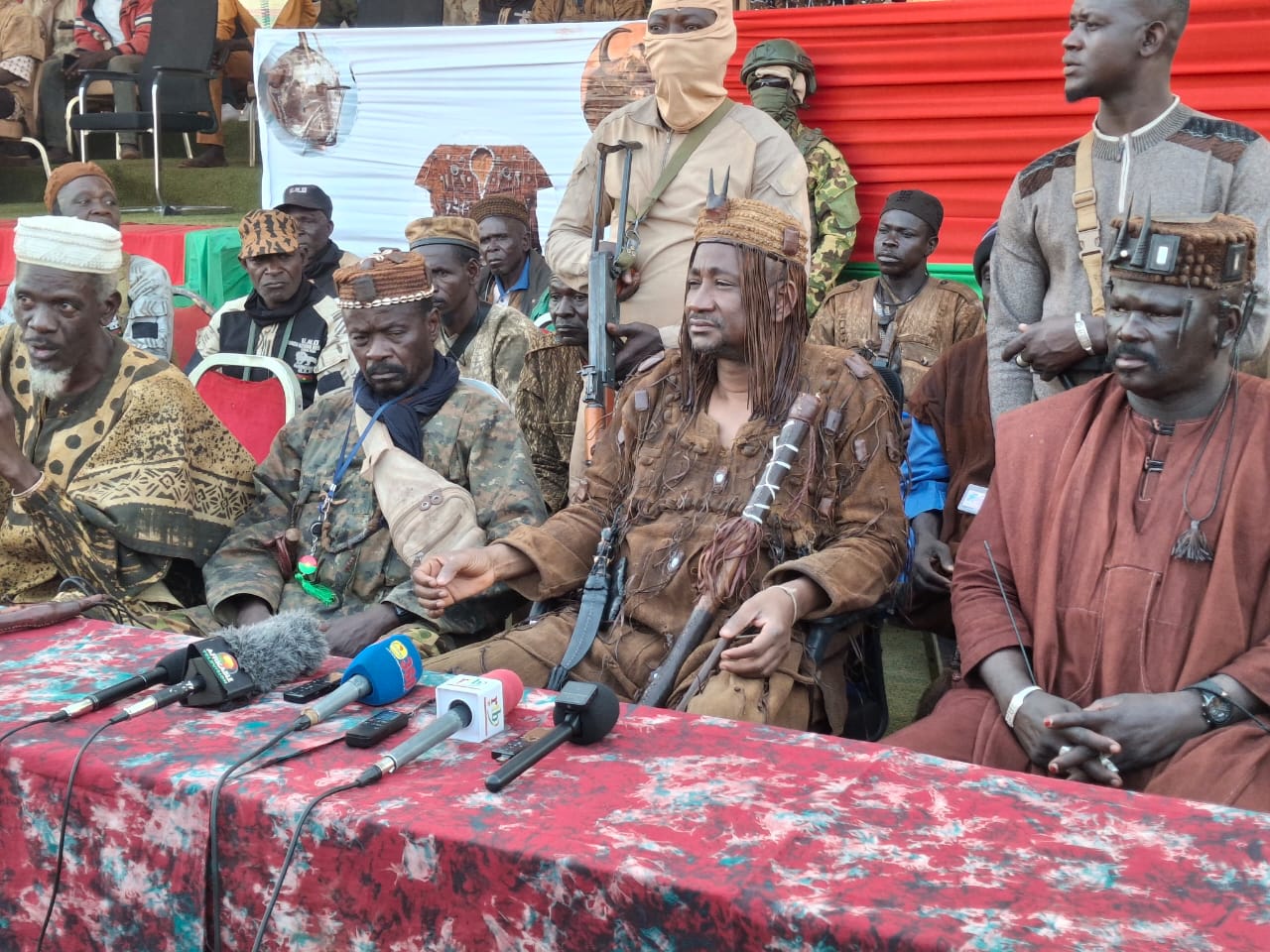
Les coups de feu, « le nom de famille des dozos »
La question des coups de feu lors des cérémonies dozos, source d'inquiétude pour certaines populations, a également été abordée. « Quand on dit dozo, on parle d'armes et de fusils. Les coups de feu, c'est le nom de famille de la confrérie », laisse entendre Aly Konaté. Il explique que d'autres groupes traditionnels, comme les « soma ou les doma », ne procèdent pas de la même manière, même si les tenues peuvent se ressembler aux yeux des non-initiés.
« On devient dozo par initiation. Mais pour pratiquer le « dozoya », il faut aller à l'école du « dozoya » », selon Aly Konaté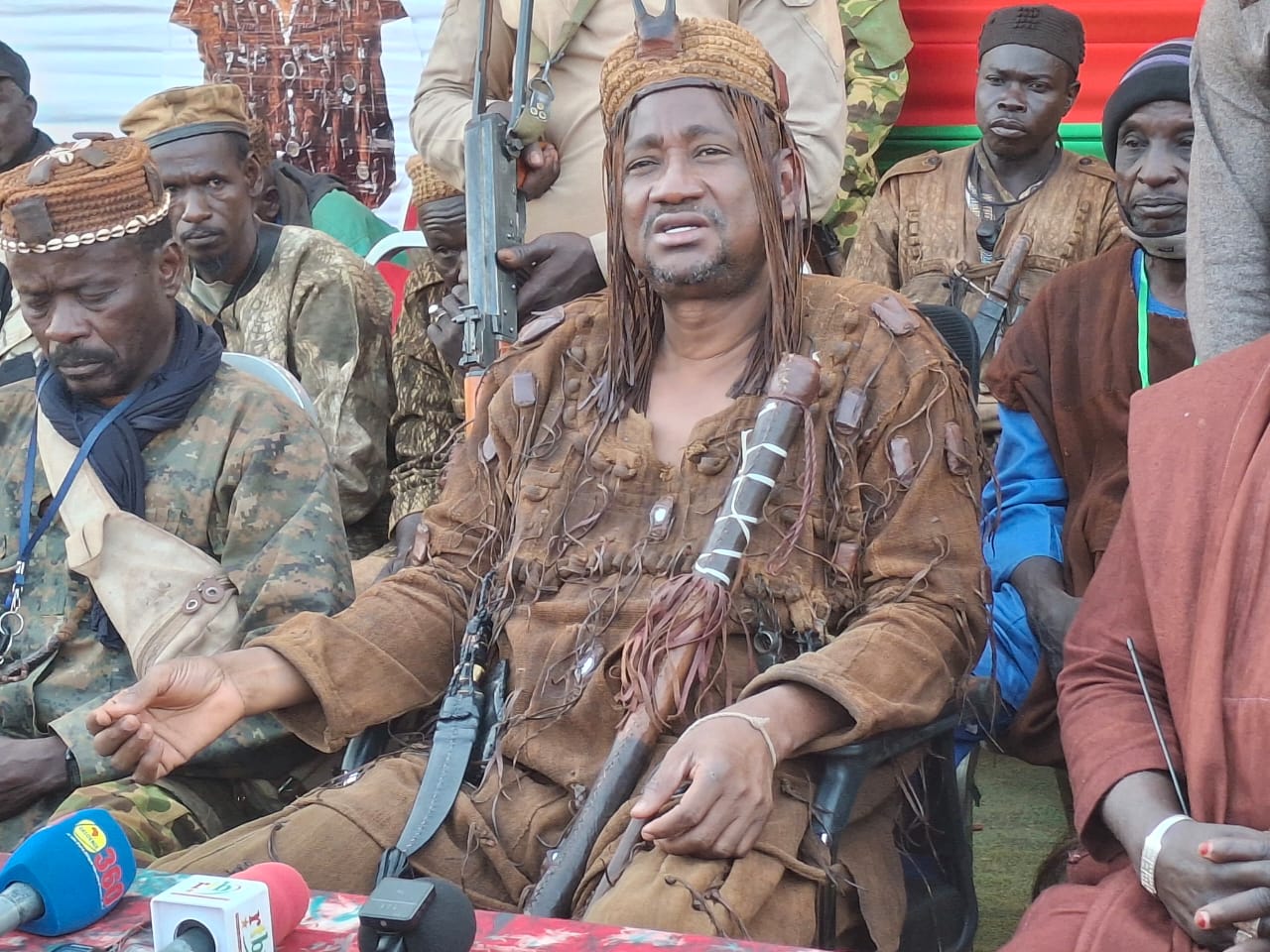
Sur la lutte contre le terrorisme, le président de l'union souligne une contribution significative des dozos à la sécurisation du territoire, notamment dans l'Ouest du pays. « Il n'y a pas de différence aujourd'hui entre les FDS et les dozos. C'est la même lutte que nous menons », a-t-il affirmé, soulignant la collaboration étroite avec les forces de défense et de sécurité. Il met également en avant les actions en faveur de la cohésion sociale, citant la rencontre avec le grand imam de Bobo-Dioulasso comme un signal fort. « Ce n'est ni une guerre religieuse ni une guerre ethnique », insiste-t-il, appelant les médias à jouer pleinement leur rôle dans la communication en temps de guerre.
« Nous n'avons jamais mendié pour organiser nos rituels », a indiqué Aly Konaté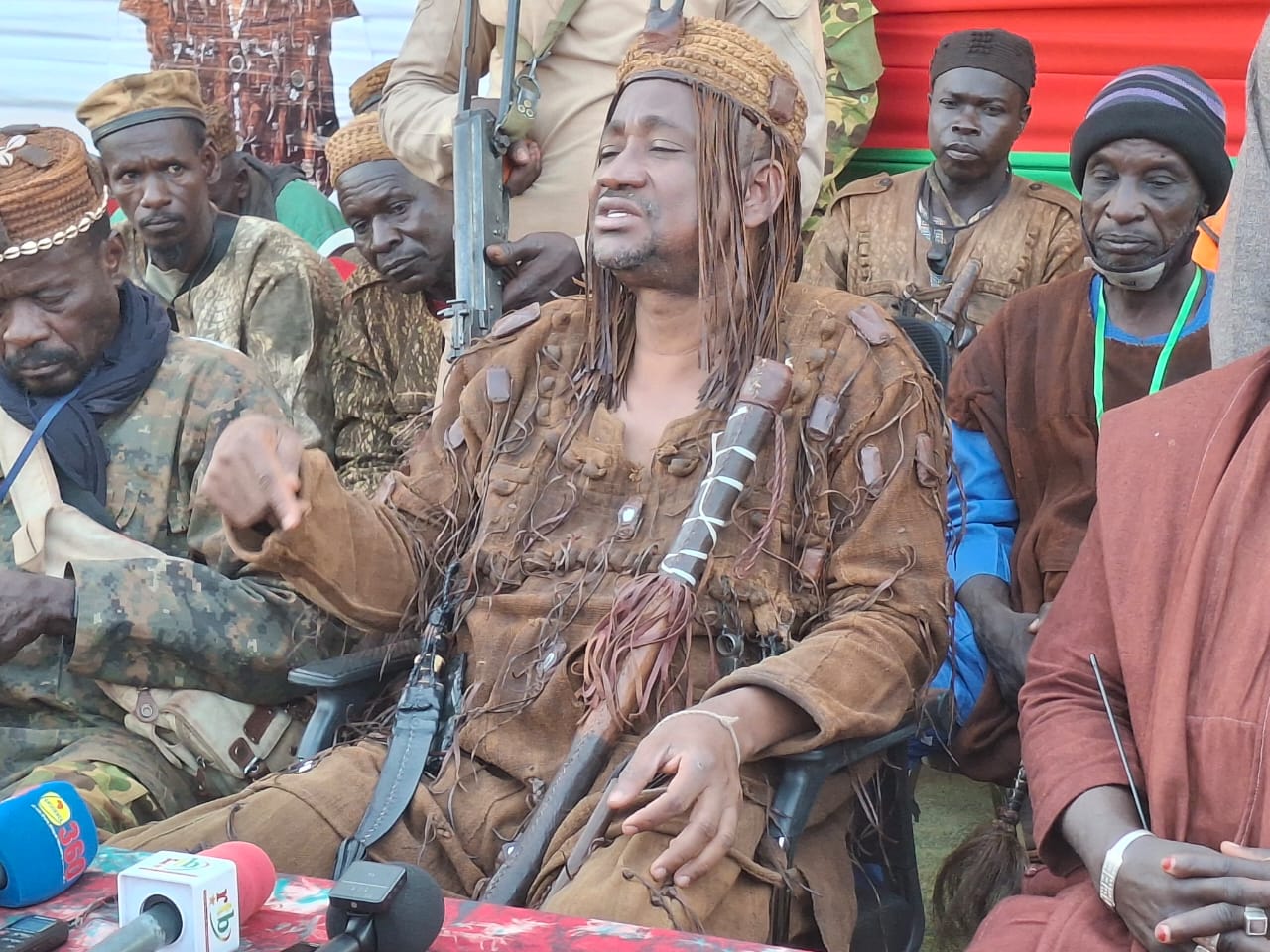
Un rituel de pardon et de transmission
Le Dankoun, rappelle Aly Konaté, est avant tout un moment de communion, de pardon et de transmission des savoirs. Chaque année, les dozos se retrouvent pour demander pardon, partager leurs connaissances et soigner ceux qui ont rencontré des difficultés dans l'exercice de leurs missions. Cette année, plus de 3 000 initiés sont déjà recensés, et les initiations se poursuivent. Au cours de cette conférence de presse, le « dozoba » Aly Konaté n'a pas manqué de lancer un appel aux hommes de médias et à l'ensemble des Burkinabè pour leur implication dans la lutte contre le terrorisme. « Chaque jour, demandons-nous ce que nous avons fait pour aider notre pays qui est en guerre », a-t-il lancé.
Romuald Dofini
Lefaso.net
Catégories: Afrique, European Union
Pages



© 2012-2018 Europa Varietas Foundation © 2015-2018 Europa Varietas Association
www.europavarietas.org | info(@)europavarietas(dot)org | Switzerland




We are looking for sponsors for the English translation of these books, please contact turkeandras(at)gmail(dot)com