
Vous êtes ici
Agrégateur de flux
Togo : l’École nationale polytechnique ouvre son concours d’entrée pour 2026
L’École nationale polytechnique (ENP) lance son concours d’entrée au titre de l’année académique 2026. L’annonce a été faite par le ministère de l’Éducation nationale et le ministère délégué chargé de l’Enseignement supérieur et de la Recherche. Le recrutement est ouvert aux nouveaux bacheliers désireux de poursuivre une formation d’ingénieur ou de technicien supérieur.
Deux parcours sont proposés aux candidats. Il s’agit du cycle Ingénieur, d’une durée de cinq ans et sanctionné par un diplôme de niveau Bac+5, et du cycle Technicien supérieur, d’une durée de trois ans, débouchant sur une Licence professionnelle. Les formations seront dispensées sur les campus de l’ENP à Lomé et à Kara.
Plusieurs spécialités proposées à Lomé et Kara
À Lomé, sur le site du Lycée scientifique de Lomé, le cycle Ingénieur offre six spécialités : Génie civil, Génie électrique, Génie mécanique, Informatique et Systèmes, Intelligence artificielle et Big Data, ainsi que Logistique et Transport.
Le parcours Technicien supérieur propose cinq spécialités, à savoir Génie civil, Génie électrique, Génie mécanique, Génie logiciel et Systèmes et réseaux informatiques.
À Kara, sur le campus Nord de l’Université de Kara, les candidats au cycle Ingénieur pourront opter pour la Sécurité informatique et cybersécurité, le Génie civil ou le Génie énergétique et habitat.
Pour le parcours Technicien supérieur, quatre spécialités sont ouvertes : Maintenance industrielle et services, Équipements agro-industriels, Génie logiciel, ainsi qu’Exploitation et maintenance des installations d’eau et d’assainissement.
Qui peut faire acte de candidature ?
Pour le cycle Ingénieur, le concours est ouvert aux titulaires d’un baccalauréat deuxième partie des séries C, D ou E, ou d’un diplôme équivalent obtenu à partir de 2025.
Pour le parcours Technicien supérieur, peuvent candidater les titulaires d’un baccalauréat deuxième partie des séries C, D, E, F1, F2, F3, F4 ou Ti, ou d’un diplôme équivalent obtenu à partir de 2025.
Le dossier de candidature doit notamment comprendre une demande manuscrite adressée au Directeur général de l’ENP, précisant le campus choisi, le parcours souhaité ainsi que deux spécialités classées par ordre de préférence.
Les candidats devront également fournir un extrait légalisé de l’acte de naissance, un curriculum vitae détaillé, les relevés de notes légalisés des deux parties du baccalauréat et un certificat médical attestant leur aptitude à exercer le métier d’ingénieur ou de technicien supérieur.
Le dossier devra être complété par l’original du reçu de paiement des frais de candidature, fixés à 10 000 francs CFA. Le paiement doit être effectué auprès d’Ecobank Togo sur le compte indiqué dans le communiqué.
Dépôt des dossiers du 17 août au 11 septembre
Le dépôt des candidatures est prévu du 17 août au 11 septembre 2026, les jours ouvrables, de 8 heures à 15 heures.
Les dossiers pourront être déposés notamment à l’École nationale polytechnique de Lomé, à la Direction des affaires académiques et de la scolarité (DAAS) de l’Université de Kara, ainsi que dans les directions régionales de l’éducation de Tsévié, Atakpamé, Kpalimé, Sokodé et Dapaong.
Le processus de sélection se déroulera en trois étapes. Une première phase de présélection sur étude des dossiers est prévue le 18 septembre 2026. Les candidats retenus seront ensuite convoqués pour l’épreuve écrite, fixée au 30 septembre 2026, sur le campus choisi lors de la candidature.
L’épreuve écrite portera sur les mathématiques, les sciences physiques et un test psychotechnique. Les candidats présélectionnés devront se munir d’une carte nationale d’identité valide ou d’une carte d’identité scolaire de l’année 2025-2026.
La sélection définitive est prévue le 2 octobre 2026. Les candidats admis seront publiés par ordre de mérite sur la base des résultats obtenus à l’épreuve écrite.
Pour toute information complémentaire, les candidats sont invités à se rapprocher du secrétariat de l’ENP à Lomé ou de la DAAS de l’Université de Kara.
Togoactualité
The post Togo : l’École nationale polytechnique ouvre son concours d’entrée pour 2026 appeared first on Togo Actualite - Premier site d'information du Togo.
Catégories: Afrique
In memoria : Emile Bassono
13 Août 1996 – 13 Août 2026
30 ans qu'il a plu au Seigneur de te rappeler auprès de lui…
Ton héritage perdure à travers tes accomplissements
et les souvenirs que tu as laissé dans nos cœurs papa.
30 ANS
Emile Bassono
Journaliste, Ancien Ministre, Ancien Directeur de l'École
Française des Attachés de Presse (EFAP–Afrique/Abidjan),
Homme de conviction, de foi et de valeurs,
ton exemple continue d'éclairer nos pas et d'inspirer nos vies.
Pour le 30ème anniversaire de son décès,
son épouse, ses enfants et sa famille vous invitent à une messe de requiem
qui sera célébrée pour le repos de son âme le jeudi 13 août 2026
à 18H30 à la paroisse Saint Jean XXIII de Ouagadougou.
Union de prières.
Celui qui croit en moi vivra, même s'il meurt.
Jean 11:25
Catégories: Afrique
Décès de Dr MILLOGO Missa : Remerciements et faire-part
Le Chef du village de OUALANA dans la Commune de LENA, Province du Houet, Région du Guiriko ;
Les grandes familles : MILLOGO, OUATTARA, SANOU ;
Les familles alliées : GUIGMA, OUEDRAOGO, TIENDREBEOGO et TONDE ;
Très touchées par les marques de sympathie, de solidarité et de compassion reçues à l'occasion du rappel à Dieu le Mardi 28 Juillet 2026, des obsèques et des funérailles de leur frère, fils, oncle, père, Dr MILLOGO Missa, Contrôleur Général de Police, précédemment Directeur de la Police Judiciaire (DPJ) à la Direction Générale de la Police Nationale (DGPN),
adressent leurs sincères et profonds remerciements à tous ceux qui, de près ou de loin, se sont associés à leur douleur.
Leur reconnaissance va particulièrement :
● Au Camarade Ministre de la Sécurité ;
● Au Camarade Ministre du Commerce, de l'Industrie et de l'Artisanat ;
● Au Camarade Directeur Général de la Police Nationale (DGPN) et l'ensemble de son personnel ;
● Au Camarade Directeur Général de la Garde de Sécurité Pénitentiaire (DGGSP) et l'ensemble de son personnel ;
● Aux Camarades Gouverneurs des Régions du Guiriko et de Tannounyan ;
● A la Camarade Présidente de la Délégation Spéciale (PDS) de la Commune de Lèna et ses collaborateurs ;
● Aux autorités administratives, coutumières et religieuses ;
● Aux ainés retraités de la Police Nationale ;
● Aux camarades de promotion, anciens collaborateurs et compagnons d'armes du défunt ;
● A ses amis et connaissances, pour leur soutien constant et leur présence à chaque étape des obsèques ;
● A l'ensemble du personnel du Centre Hospitalier Universitaire de Tengandogo, pour les soins prodigués et l'accompagnement apporté au défunt et à sa famille ;
● Aux voisins des quartiers Rimkiéta et Cissin ainsi qu'aux populations des villages de la Commune de Lèna et de la Région du Guiriko, pour leur disponibilité, leur hospitalité et leur assistance tout au long des cérémonies.
Les familles s'excusent de ne pouvoir citer tous ceux qui ont apporté leur soutiens multiformes.
Que chacun trouve ici l'expression de leur profonde gratitude. Puisse Dieu, dans son infinie bonté, rendre au centuple à tous ceux, sans acception, qui les ont soutenus dans cette douloureuse épreuve.
Union de prières pour le repos de son âme !
Catégories: Afrique
Russia-Ukraine War Escalates With Black Sea Strikes, North Korean Missiles
Kyiv and Moscow are trading heavier and heavier blows.
Catégories: Diplomacy & Crisis News
Ein Baby starb im 5. Monat: Lothar Matthäus' Tochter erlitt vor Mutterglück zwei Fehlgeburten
Im Mai ist Viola Matthäus erstmals Mutter geworden. Der Weg dorthin war für die Tochter von Lothar Matthäus und ihren Mann Andreas Gangl von schweren Verlusten gezeichnet.
Catégories: Swiss News
Die skurrilsten Trends: Warum du jetzt Murmeltiere auf Onlyfans findest
Die Plattform Onlyfans ist eigentlich für freizügige Inhalte bekannt – doch diese neuen Stars haben etwas ganz anderes zu bieten. US-Forscher veröffentlichen dort jetzt Videos von Murmeltieren.
Catégories: Swiss News
China Is Finding New Ways to Coerce Uyghurs Abroad
Beijing is a pioneer in softer tools of transnational repression.
Catégories: Diplomacy & Crisis News
Zwangsadoptionen bei Jenischen – Bund sperrte sich: Sie musste acht Jahre lang für ihre Entschädigung kämpfen
Als Baby wurde eine Jenische der Mutter entrissen. Doch der Bund verweigerte ihr jahrelang die Entschädigung – weil sie bei den Adoptiveltern glücklich war.
Catégories: Swiss News
Erdei magány után tanulják újra az életet a szinevéri medvebocsok
Két, a Kárpátok erdeiben magára maradt medvebocsot nevelnek és rehabilitálnak a Szinyeviri Barnamedve-rehabilitációs Központban. Roma és Ánya egyelőre elkülönített kifutóban él, ahol fokozatosan szokják az új környezetet.
A két kölyköt lakott terület közelében találták meg az emberek. Egy ideig vártak, hátha előkerül az anyjuk, végül azonban a rehabilitációs központ munkatársait hívták segítségül. A bocsokat ezt követően a központba szállították.
Medvebocsokat mentettek meg KárpátaljánA szakemberek elsődleges célja, hogy minél inkább megőrizzék az állatok természetes viselkedését.
A kölykök jelenleg külön kifutóban mozoghatnak, fürödhetnek és fokozatosan alkalmazkodhatnak az új körülményekhez. Legalább három hónapig maradnak elkülönítve, mivel a nagyobb medvék között egyelőre veszélyben lennének.
A Szinevéri Nemzeti Park területén működő rehabilitációs központ mintegy 12 hektárnyi erdős területen fekszik, és jelenleg több mint harminc barnamedvének ad otthont. Az állatok többsége korábban cirkuszokban, magánvadasparkokban vagy állatkertekben élt, ezért nem alkalmasak a természetbe való visszaengedésre.
A központ vezetője, Jaroszlav Bundzják szerint a fogságban felnőtt medvék nem tanulják meg az erdei élethez szükséges viselkedést. Szabadon engedve könnyen lakott területek vagy utak közelébe kerülhetnének, ami az állatok és az emberek számára egyaránt tragikus következményekkel járhat.
A medvéket naponta kétszer etetik. Egy kifejlett hím akár 18 kilogramm táplálékot is elfogyaszthat naponta, amelynek fontosabb elemei között alma, sárgarépa és kenyér is szerepel.
Forrás: suspilne.media
Nyitókép: Facebook/Національний природний парк „Синевир”
Kapcsolódó:
Kárpátalja ma: felébredtek a szinevéri park medvéiThe post Erdei magány után tanulják újra az életet a szinevéri medvebocsok appeared first on Kárpátalja.ma.
Catégories: Határon túli magyar portálok összesített hírei
CAN féminine 2026: le Malawi élimine l’Algérie et file en finale
Mercredi 12 août, l’Algérie et le Malawi s'affrontaient au stade olympique de Rabat, en demi-finale de la CAN 2026 féminine. Jamais les deux pays ne s’étaient encore hissées à ce stade de la compétition. Les Malawites se sont imposées 3-1.
Catégories: Afrique
Seniorin (86) abgezockt: Fiese Handwerker putzen Plattenweg – 20'000 Franken futsch!
Im Raum Winterthur fällt eine 86-Jährige auf einen betrügerischen Handwerker herein. Erst will er ihr nur den Weg zum Haus putzen, dann das halbe Gebäude sanieren. Die Seniorin überweist 20'000 Franken. Das Geld ist futsch. Solche Fälle häufen sich derzeit schweizweit.
Catégories: Swiss News
Phosphate : ce grand projet algérien entrera en production dès 2027
Le ministre d’État, ministre des Hydrocarbures, Mohamed Arkab, a présidé la cérémonie de signature des contrats d’exécution pour la réalisation des infrastructures stratégiques du projet […]
L’article Phosphate : ce grand projet algérien entrera en production dès 2027 est apparu en premier sur .
Catégories: Afrique
138 Milliarden auf dem Konto: Federer schlägt Bälle mit reichstem Europäer
In Taormina schlägt Roger Federer Tennisbälle mit Bernard Arnault, Europas reichstem Mann. Der Louis-Vuitton-Chef und die millionenschwere Schweizer Tennislegende geniessen ihre Freundschaft auf Siziliens malerischem Tennisplatz.
Catégories: Swiss News
BRRRRT Act’s Text Reveals New Details About Plan to Save the A-10s
New details in the BRRRRT Act’s full text reveal plans to keep selected Warthogs recoverable, examine potential foreign transfers and test emerging autonomous systems.
Weeks after it was first introduced to the U.S. Congress, the full text of the ‘BRRRRT Act’ has now been released. The bill’s text now reveals that the proposed legislation goes considerably further than simply preventing the U.S. Air Force from retiring the A-10 Thunderbolt II.
In fact, in addition to requiring the service to maintain at least 126 Warthogs through Fiscal Year 2033, the bill would preserve selected retired aircraft in recoverable condition, restore A-10 sustainment and training capacity, examine potential transfers to foreign partners, and explore experimenting with autonomous capabilities relevant to the A-10 mission set.
H.R. 9780, the “Bolstering Recognition, Resurgence, Retention, and Remembrance of the Thunderbolt Act of 2026,” was introduced in the House of Representatives on July 20, 2026, by Rep. Abe Hamadeh (R-Ariz.), with Rep. Don Davis (D-N.C.) and four other lawmakers as original cosponsors. The bill was referred to the House Armed Services Committee and the House Foreign Affairs Committee on the same day.
As we previously reported, the legislation would prohibit the Department of Defense from reducing the A-10 inventory below 126 aircraft from FY2027 onward, unless a higher number is deemed necessary by the Secretary of the Air Force. However, the bill also seeks to preserve the broader enterprise required to operate the aircraft.
A U.S. Air Force A-10C Thunderbolt II aircraft assigned to the 357th Fighter Generation Squadron demonstrates live fire at the Barry M. Goldwater Range near Gila Bend, Arizona, June 11, 2026. | Source: U.S. Air Force photo by Senior Airman Christopher Ornelas Jr.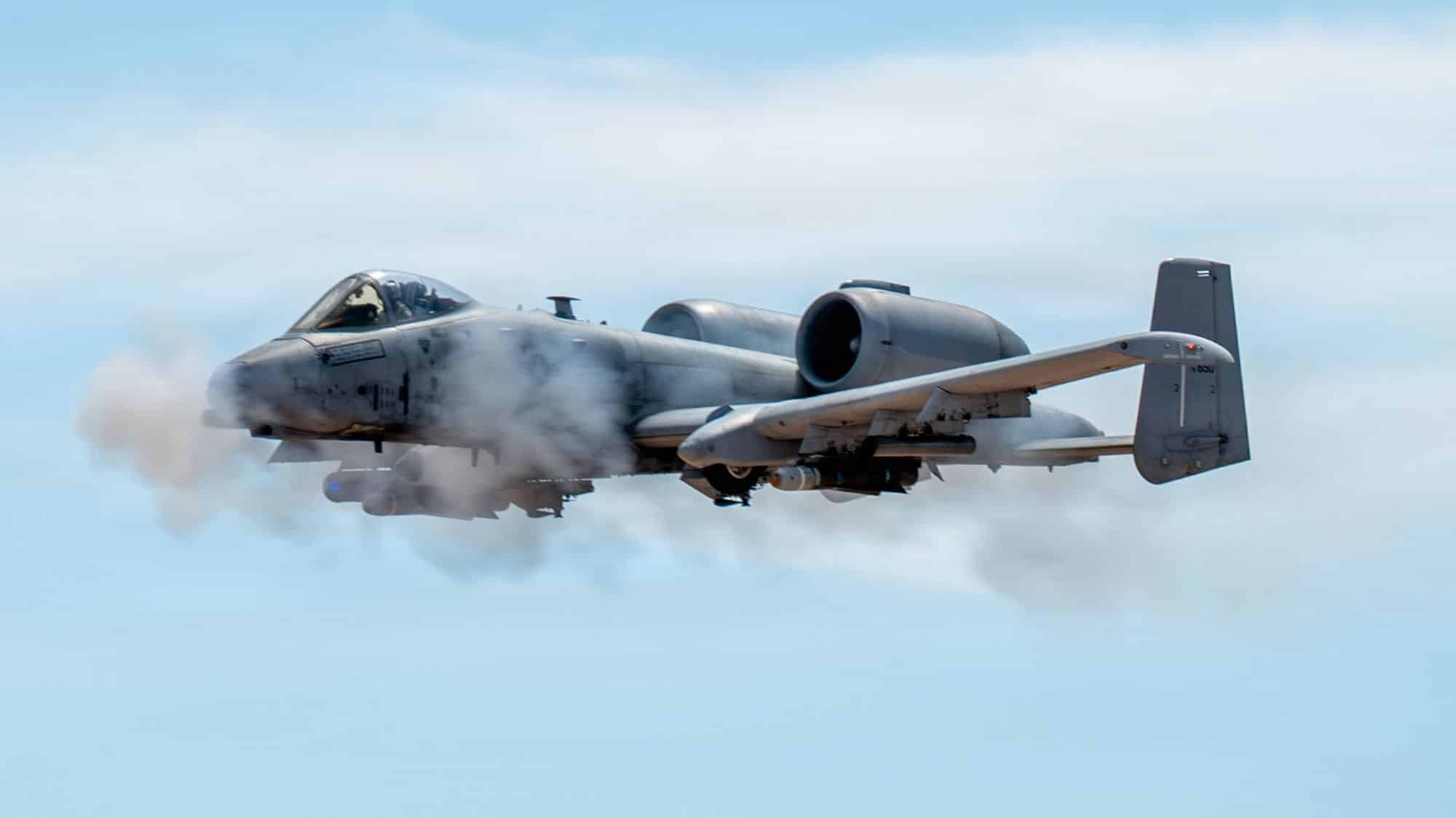
Specifically, it would prevent reductions in A-10 unit personnel, pilot training capacity, operational test capacity, depot maintenance and sustainment activities. At the same time, the legislation requires the Air Force to restore sufficient capacity to support the fleet through FY2033.
A real replacement for the A-10One of the bill’s most significant provisions is its definition of what would constitute an acceptable replacement. The bill specifically mentions that this replacement must achieve full operational capability before the restriction on the A-10’s retirement can be waived.
The replacement would have to be operationally fielded and supported by the necessary pilots, maintainers, training, sustainment logistics and depot facilities. More importantly, the replacement needs to assume the missions currently assigned to the A-10 as its primary missions, including Close Air Support (CAS), Forward Air Controller-Airborne (FAC-A), Combat Search And Rescue (CSAR) support, personnel recovery support and armed overwatch.
This means that simply assigning A-10 missions to existing aircraft, such as the F-35, F-16, F-15E and F-15EX would not necessarily satisfy the legislation’s requirements. The Pentagon would have to demonstrate that the required operational effects, personnel and supporting infrastructure are actually available.
A U.S. Air Force A-10C Thunderbolt II aircraft approaches an HC-130J Combat King II aircraft for aerial refueling in the U.S. Central Command area of responsibility, May 9, 2026. | Source: U.S. Air Force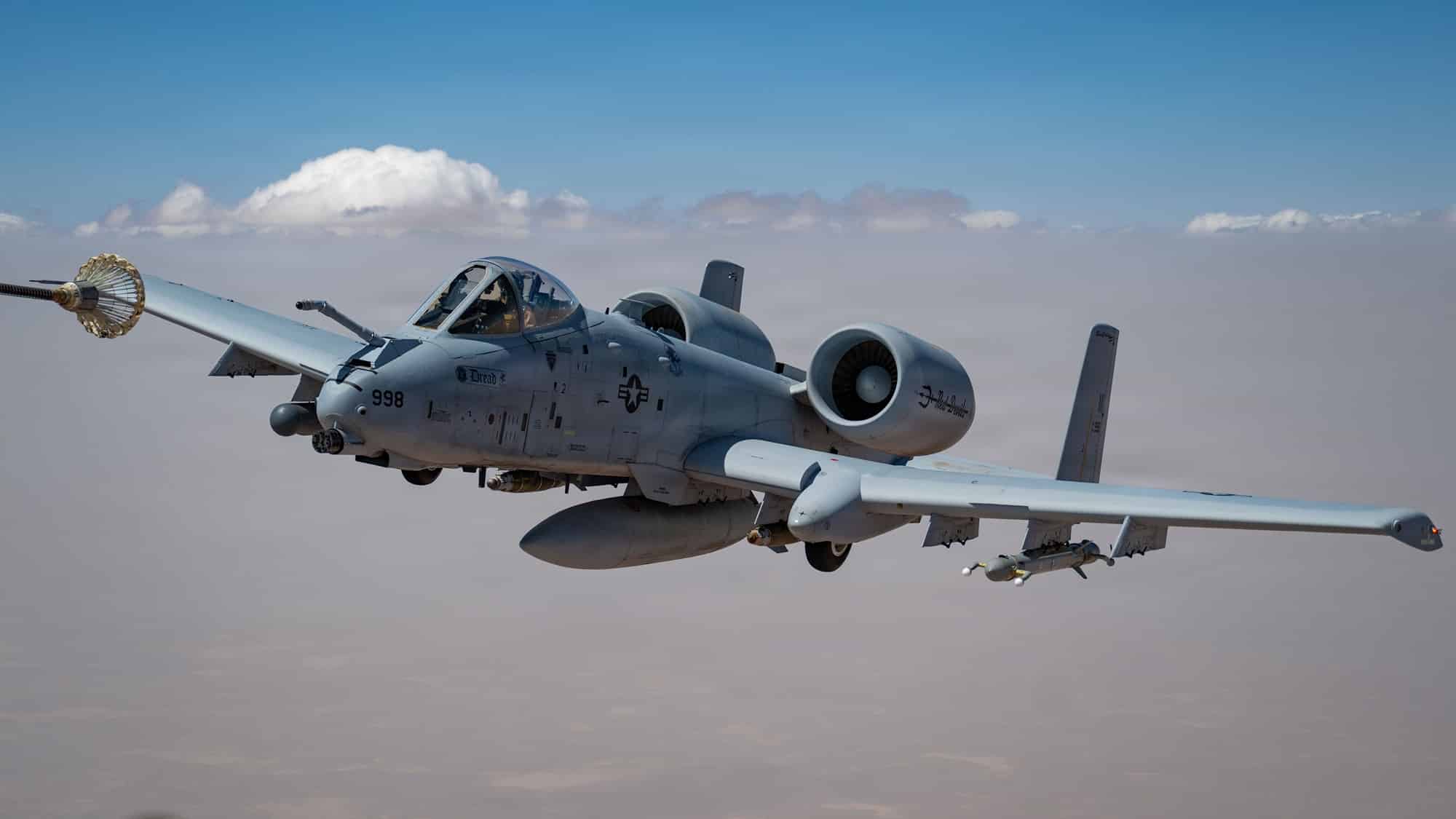
Then, the Secretary of War would have to certify that a replacement aircraft has fully assumed the A-10’s mission. That certification would also need to be approved in writing by the Secretary of the Army, the Commandant of the Marine Corps, and the Commander of U.S. Special Operations Command, confirming that it would satisfy their requirements.
Retired Warthogs in recoverable storage and no cannibalizationIn addition to preserving a minimum fleet in service, the bill also takes aim at what happens to A-10s once they leave operational service. Selected retired aircraft would have to be preserved in a recoverable storage condition, likely referring to the Type-1000 storage which maintains the aircraft in a condition that allows recall for future service.
The bill describes that the stored A-10s would retain the major systems, mission equipment and structural components needed for a potential return to service, training, testing or transfer to a foreign partner. Additionally, the aircraft could not be demilitarized or otherwise altered in a way that would unnecessarily compromise their future recoverability.
An important point in the legislation would also prohibit the cannibalization or parting out of certain A-10s. These include aircraft that have received wing replacements or service-life-extension modifications, retain more than 1,500 projected flying hours, or have been identified as candidates for reconstitution, contingency activation or foreign transfer.
A U.S. Air Force A-10 Thunderbolt II fires flares as it departs from aerial refueling with a KC-135 Stratotanker over the U.S. Central Command area of responsibility, Sept. 23, 2025. | Source: U.S. Air Force photo by Senior Airman Natalie Jones
Until the Air Force submits a required sustainment roadmap, the bill would further prevent retired or retiring aircraft sent to the 309th Aerospace Maintenance and Regeneration Group (AMARG) at Davis-Monthan Air Force Base from being placed into storage or processing categories equivalent to non-recoverable reclamation, disposal or broad parts-harvest status.
Moreover, the roadmap would have to look even beyond 2033, should a replacement not be ready by then. The legislation mentions a contingency plan for maintaining sufficient A-10 capacity through FY2037 and an assessment of the costs and consequences of attempting to reconstitute the mission after its termination.
Possible A-10 transfers to foreign operatorsSince the BRRRRT Act aims to keep the A-10 in service with the U.S. Air Force, perhaps the most unexpected provision in the bill is the one that directs the Pentagon to examine whether surplus A-10s could be transferred to foreign partners. It must be noted, however, that this is not the first time lawmakers direct the Pentagon to explore such a possibility.
In fact, in 2024 lawmakers directed the military to explore a possible transfer of A-10s to Jordan. The possibility was mentioned in the 2025 National Defense Authorization Act (NDAA).
U.S. Air Force A-10 Thunderbolt II aircraft fly over the U.S. Central Command area of responsibility, Dec. 15, 2024. | Source: U.S. Air Force photo by Staff Sgt. Jackson Manske
The new bill says surplus aircraft could retain value for security cooperation, partner burden-sharing and contingency operations. The administration would need to assess whether aircraft could be transferred through Foreign Military Sales, the Excess Defense Articles program or other authorities, or maintained in recoverable condition for future use.
The Secretary of War, the Secretary of the Air Force and the Defense Security Cooperation Agency would have to brief Congress on the feasibility of such transfers by January 2027. It is important to note, however, that the bill does not authorize an A-10 transfer to any particular country.
Autonomous capabilities relevant to the A-10’s mission setThe BRRRRT Act also appears to look at Manned-Unmanned Teaming (MUM-T) as a possible replacement for some of the A-10’s missions. The bill would require the Air Force to develop a plan for competitive experimentation, prototyping and operational assessment of autonomous, semi-autonomous, AI-enabled and adjunct aircraft capabilities relevant to the A-10 mission set.
According to the text, the initiative would encourage participation by nontraditional defense contractors, commercial technology companies and venture-backed defense firms capable of rapidly developing autonomy, sensing, communications and mission-system technologies. Also, the legislation explicitly calls for meaningful human command and control over mission-critical functions, including target engagement, weapons release and mission abort.
A U.S. Air Force A-10 Thunderbolt II assigned to the 303rd Expeditionary Fighter Squadron provides rescue escort during exercise Blue Phoenix in the U.S. Central Command area of responsibility, Aug 5, 2025. | Source: U.S. Air Force photo by Airman 1st Class Keagan Lee
It thus appears that there might be an opening towards a replacement of at least some of the capabilities, although the focus is obviously on a true replacement for the A-10 aircraft and its main mission set. The Secretary of the Air Force would have 180 days to present a report about this plan.
Preserving the A-10’s combat experienceThe legislation would also require the Pentagon to examine what can be learned from the A-10’s combat history, specifically citing the aircraft’s employment from Operation Desert Storm through current operations, including recent support to the recovery of downed aircrew during Operation Epic Fury.
A report to Congress would have to be presented by January 2027, would examine the A-10’s combat employment and identify lessons applicable to force design with the A-10’s successor, doctrine, training and capability development. The report would also assess potential further A-10 modernization options.
In parallel, the bill mentions the return of the A-10 demonstration team, preserving the aircraft’s visibility during the 250th anniversary of the United States. The team would operate until 2033.
H/T to John Bennett for the heads up.
Catégories: Defence`s Feeds
Újraszervezik az iskolai étkeztetést a Beregszászi kistérségben
A 2026/2027-es tanév kezdetére a Beregszászi kistérség valamennyi iskolásának étkeztetését igyekeznek megfelelően megszervezni – erről tartottak munkamegbeszélést Babják Zoltán polgármester, az oktatási intézmények vezetői, valamint az oktatási és kulturális osztály képviselői részvételével.
A megbeszélésen elhangzott, hogy a kistérségben már meghatározták az iskolai étkeztetés megszervezésének modelljeit, az iskolák pedig meghirdették a catering szolgáltatásokra vonatkozó közbeszerzési eljárásokat.
A Beregszászi Városi Tanács emellett 2 millió hrivnyát különített el az oktatási intézmények szükséges étkészleteinek és konyhai felszerelésének beszerzésére.
A tanévkezdés előtt több szervezési, műszaki és közegészségügyi kérdést is rendezni kell annak érdekében, hogy szeptember 1-jétől biztosított legyen a gyermekek minőségi, biztonságos és folyamatos étkeztetése.
A városvezetés célja, hogy az új tanévben a Beregszászi kistérség minden tanulója számára megfelelő körülmények között legyen elérhető az iskolai étkeztetés.
Kapcsolódó:
Ingyenes étkeztetés, új iskolabuszok és óvóhelyek Közel 143 ezer kárpátaljai diák részesülhet ingyenes meleg étkezésbenThe post Újraszervezik az iskolai étkeztetést a Beregszászi kistérségben appeared first on Kárpátalja.ma.
Catégories: Határon túli magyar portálok összesített hírei
Leser zu Tanmaxxing-Trend: «Wer so leichtsinnig ist, soll die Arztkosten selber zahlen!»
Auf Tiktok kursiert ein Trend, bei dem junge Menschen sich absichtlich einen Sonnenbrand holen. Das sogenannte Tanmaxxing soll zu einer optimalen Körperbräune führen. Damit schockieren die Social-Media-Nutzer nicht nur Dermatologen, sondern auch unsere Leserschaft.
Catégories: Swiss News
17 Tipps fürs Pendeln: Schweiss, Dönerwolken und Quasselstrippen – so wird die Fahrt nicht zum Albtraum
Zugreisen sind heutzutage sehr bequem, wenn da nicht die nervigen Mitpassagiere wären. Die Tipps des Beobachters zeigen, wie es besser geht.
Catégories: Swiss News
Unterhaltspflicht erklärt: So lange müssen Eltern ihre volljährigen Kinder unterstützen
Lehre, Berufsmatur, Fachhochschule – und die Eltern müssen weiter zahlen? Bei volljährigen Kindern ist die Unterhaltspflicht weniger eindeutig, als das Gesetz vermuten lässt. Der Beobachter erklärt, was es zu beachten gibt und was gilt.
Catégories: Swiss News
Pages



© 2012-2018 Europa Varietas Foundation © 2015-2018 Europa Varietas Association
www.europavarietas.org | info(@)europavarietas(dot)org | Switzerland




We are looking for sponsors for the English translation of these books, please contact turkeandras(at)gmail(dot)com