
Vous êtes ici
Afrique
Le pays à la tête du mouvement réclamant des réparations pour l'esclavage
Le Ghana est devenu le principal porte-parole de l'Afrique pour faire savoir au monde entier que les pays occidentaux doivent verser des réparations.
Catégories: Afrique
Le Liberia annonce recevoir 1200 personnes expulsées des États-Unis d’ici un an
Le Liberia a annoncé mardi 18 août qu'il accueillerait jusqu'à 1 200 personnes de nationalité étrangère expulsées des États-Unis, dans le cadre du programme sans précédent du président Donald Trump d'expulsion de ressortissants étrangers en situation irrégulière vers des pays tiers.
Catégories: Afrique
Le député Didier Katembera exige le démantèlement des barrières « illégales » sur les axes Mwenga et Uvira
Le député provincial Didier Katembera sollicite l'intervention du ministère de la Défense nationale pour ordonner le démantèlement immédiat des postes de contrôle illégaux érigés dans les territoires de Mwenga et d'Uvira (Sud-Kivu).
Catégories: Afrique
A Madagascar, « entre désir de liberté et attachement aux traditions », la « gen Z » photographiée par Charlotte Yonga
« Jeunesse en milieux hostiles » (6/7). A Madagascar, la « gen Z » a été à l’origine d’un vaste mouvement de contestation qui, en 2025, a fait tomber le pouvoir en place. Un an plus tôt, la photographe franco-camerounaise Charlotte Yonga avait fait poser ces jeunes, sans perspectives d’avenir, dans leur intimité. Des portraits qu’elle met en dialogue avec des paysages luxuriants. Un travail exposé cet été dans le cadre des Rencontres de la photographie d’Arles.
Catégories: Afrique
Le Potentiel : le gouvernement renforce la riposte à l'approche de la rentrée scolaire
Les tabloïds et médias en ligne chinois parus ce mercredi 19 août commentent largement l’annonce du Gouvernement congolais d’instaurer l’enseignement à distance dans 18 zones de santé à haut risque d’Ebola, afin de limiter la propagation du virus. Ils reviennent également sur l’évolution de la situation sanitaire dans les provinces affectées.
Catégories: Afrique
En Zambie, le président sortant, Hakainde Hichilema, réélu, son principal adversaire conteste le résultat
Dénonçant des restrictions et des actes d’intimidation pendant la campagne, son principal concurrent, Brian Mundubile, a déclaré qu’il « présenterait des preuves aux instances judiciaires compétentes et qu’il épuiserait toutes les voies légales ».
Catégories: Afrique
L’enseignement à distance prévu dans 18 zones de santé à haut risque d’Ebola dès la rentrée 2026-2027
Le Gouvernement congolais prévoit de mettre en place l’enseignement à distance dans 18 zones de santé considérées à haut risque d’Ebola, dès la rentrée scolaire 2026-2027.
Catégories: Afrique, European Union
La multiplication des incendies inquiète les habitants de Bunia
En deux semaines, au moins quatre incendies ont été enregistrés dans différents quartiers de Bunia (Ituri). Face à cette recrudescence, plusieurs habitants dénoncent l'insuffisance des moyens de lutte contre les incendies dans une ville de plus d'un million d'habitants et qui compte une cinquantaine de stations-service. Ils appellent les autorités à renforcer les capacités d'intervention des services de secours.
Catégories: Afrique
Vingt ans après le scandale du «Probo Koala», l’Afrique est-elle toujours victime du «colonialisme des déchets»?
En Côte d’Ivoire, il y a 20 ans jour pour jour, Abidjan suffoquait sous les émanations des déchets toxiques. Plus de 500 tonnes de produits nocifs, débarqués par le navire Probo Koala puis déversés sur plusieurs sites de la capitale économique, répandaient une odeur nauséabonde et causaient la mort de 17 personnes. Deux décennies plus tard, cette catastrophe écologique et sanitaire reste dans les esprits des habitants et proches des victimes.
Catégories: Afrique
RDC: déjà à court d’ambulances, la riposte contre l'épidémie d'Ebola fragilisée par les violences
En République démocratique du Congo (RDC), les Nations unies s’inquiètent des violences qui touchent les équipes engagées dans la riposte contre Ebola. Une difficulté supplémentaire pour une réponse sanitaire déjà confrontée à plusieurs obstacles sur le terrain. Dans certaines zones touchées par l’épidémie, l’insécurité, les agressions et les résistances communautaires perturbent les interventions, alors que certains moyens essentiels à la prise en charge restent insuffisants. L’épidémie a désormais fait plus de 2 300 morts dans le pays.
Catégories: Afrique
Deux Français arrêtés et détenus au Togo depuis le 27 juillet, selon le Quai d’Orsay
Il s’agit de deux réalisateurs travaillant pour une société de production française, selon le ministère des affaires étrangères français, dont la production devait être diffusée sur France Télévisions, d’après des médias locaux.
Catégories: Afrique
Chine/BIRTV 2026 : L'intelligence artificielle au cœur de la révolution des médias
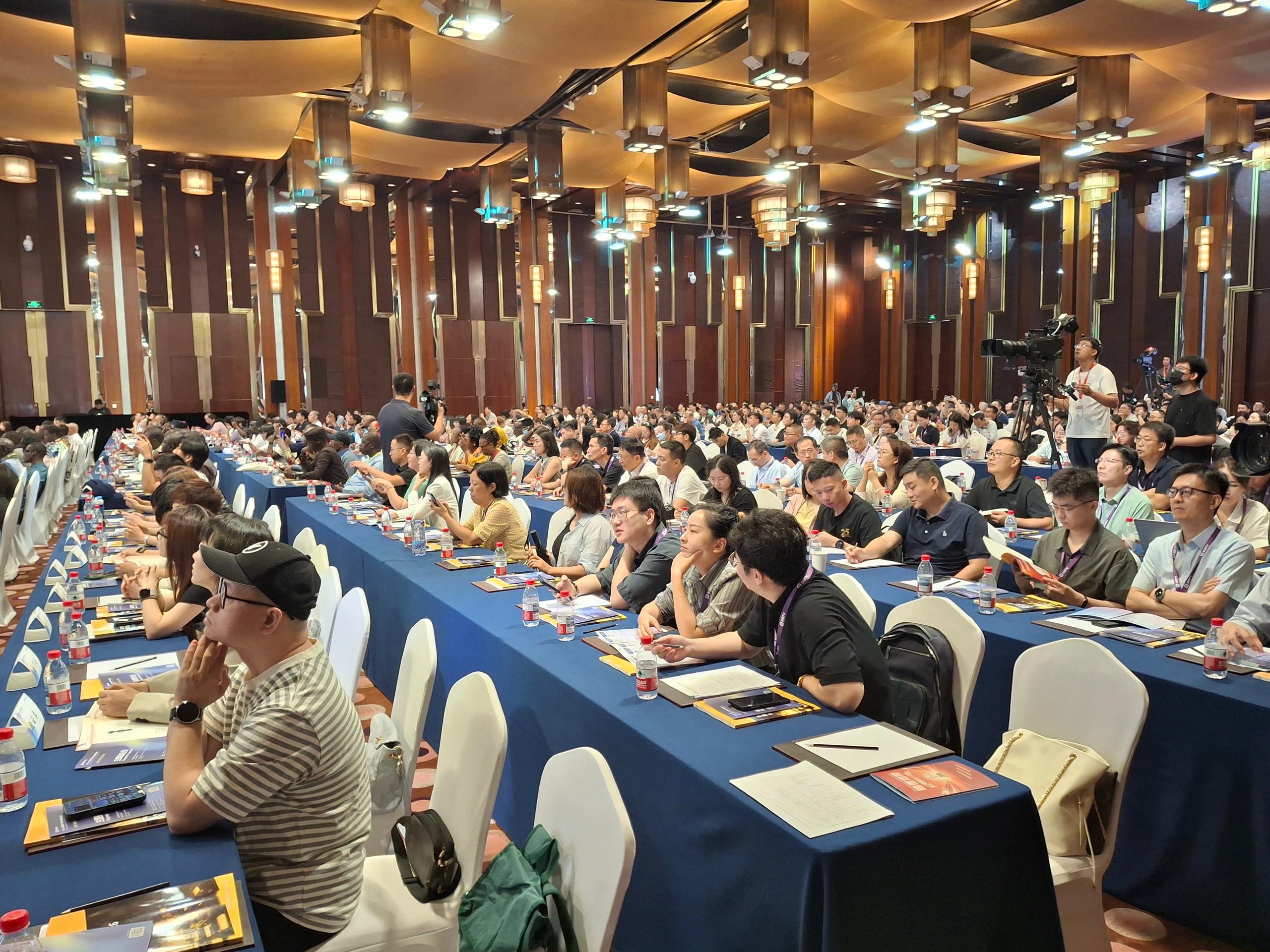
De la conception d'un programme à sa diffusion, en passant par le montage, la production virtuelle et la personnalisation des contenus, l'intelligence artificielle s'invite désormais dans presque tous les maillons de la chaîne audiovisuelle. À l'ouverture du séminaire thématique de la 33e édition du Beijing International Radio, TV & Film Exhibition (BIRTV), ce mardi 18 août 2026 à Beijing, professionnels chinois et internationaux ont dessiné les contours d'un paysage médiatique en pleine mutation. Avec une conviction partagée : l'IA ouvre des possibilités inédites, mais impose aussi de nouvelles exigences en matière de sécurité, de gouvernance et de responsabilité.
Dans une salle où se côtoient professionnels des médias, industriels, chercheurs et acteurs de l'audiovisuel venus de plusieurs horizons, un mot revient avec insistance : intelligence artificielle. À BIRTV 2026, l'IA n'est plus présentée comme une technologie lointaine ou expérimentale. Elle est désormais décrite comme un outil qui transforme concrètement la manière dont les médias conçoivent, produisent et diffusent leurs contenus. Le thème même de cette 33e édition donne le ton : « Tous médias, ultra-haute définition, intelligence renforcée ». L'exposition entend présenter, sur l'ensemble de la chaîne, les innovations technologiques et les nouveaux usages du secteur audiovisuel.
De l'homme-machine à « l'homme-intelligence »
Dans les médias traditionnels, la production reposait principalement sur l'intervention humaine. Aujourd'hui, ce modèle évolue. Selon les intervenants chinois, l'industrie audiovisuelle entre progressivement dans une nouvelle phase, caractérisée par la collaboration entre l'homme et la machine. L'ambition affichée va même plus loin, passer de la simple collaboration homme-machine à une forme de « coexistence » entre intelligence humaine et intelligence artificielle. Cette mutation concerne pratiquement toute la chaîne de production.
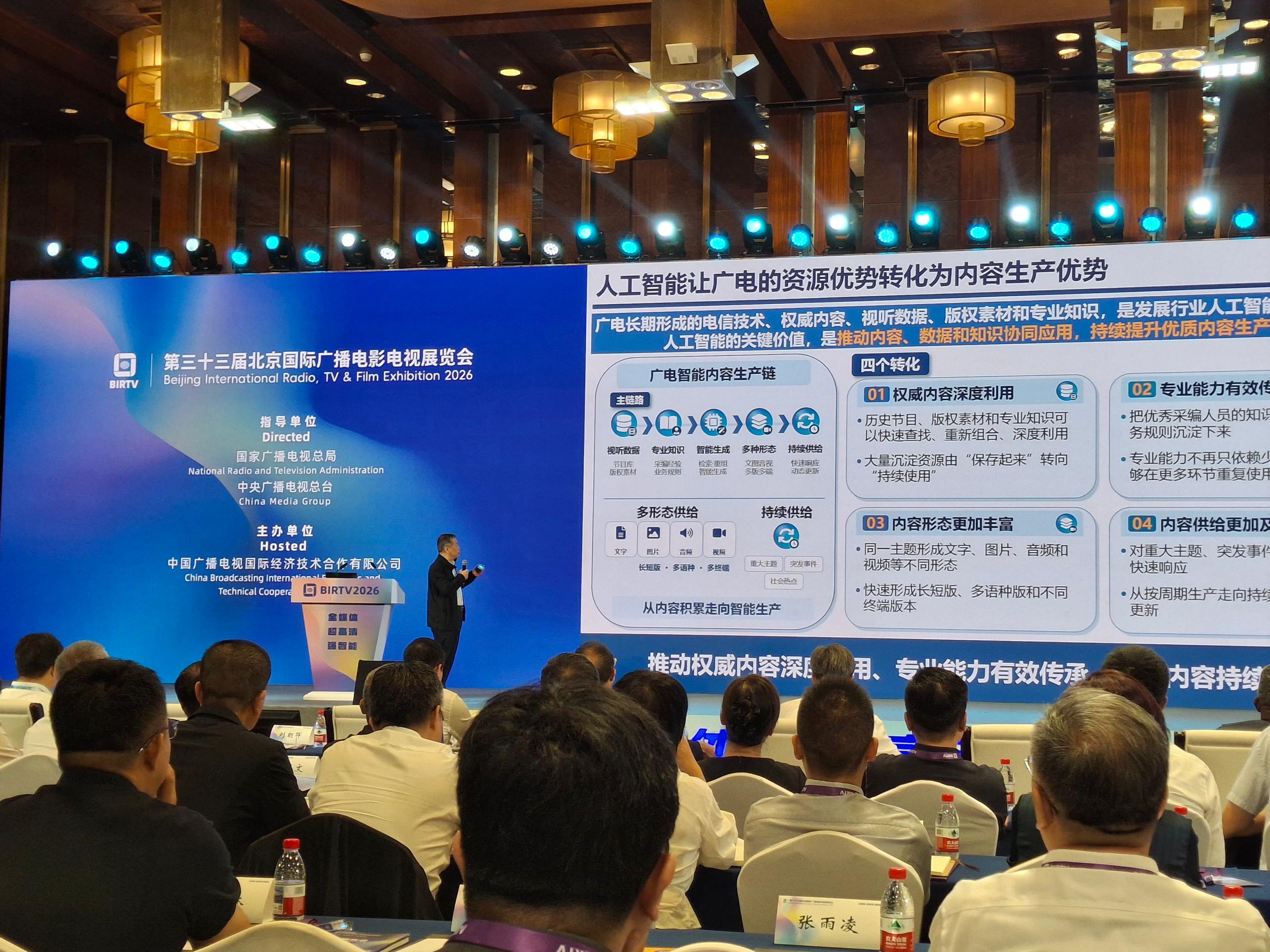
L'intelligence artificielle peut désormais intervenir dans la planification des programmes, la recherche d'idées, la génération de contenus, l'organisation des grilles, le montage, la production virtuelle ou encore la diffusion. Autrement dit, l'IA ne se limite plus à assister le journaliste ou le technicien sur une tâche précise. Elle commence à devenir un véritable outil transversal de production audiovisuelle. Pour les professionnels chinois, cette évolution permet notamment de réduire les coûts de production et de raccourcir les délais de réalisation. Le secteur audiovisuel voit ainsi apparaître ce que les intervenants présentent comme une nouvelle productivité fondée sur l'intelligence technologique.
Quand le média apprend à connaître son audience
La transformation ne s'arrête toutefois pas au studio ou à la salle de montage. Elle touche également la diffusion. En s'appuyant sur le big data et les grands modèles d'intelligence artificielle, les médias disposent de nouvelles possibilités pour analyser les comportements des publics, mieux comprendre leurs attentes et adapter les contenus. L'objectif affiché est alors de passer de la diffusion traditionnelle à une diffusion intelligente, capable de mieux atteindre les audiences. La technologie pourrait ainsi permettre aux médias de ne plus seulement produire un contenu pour un public indistinct, mais de mieux déterminer quel contenu proposer, à quel public et dans quel contexte. Une évolution qui pourrait profondément modifier les stratégies éditoriales des chaînes de télévision, des radios et des plateformes numériques.
L'autre visage de l'IA : le risque des deepfakes
Mais à BIRTV, le discours ne se limite pas à l'enthousiasme technologique. Les intervenants chinois insistent également sur la nécessité de construire une intelligence artificielle « sûre, fiable et contrôlable ». Cette exigence passe notamment par le renforcement des mécanismes de supervision des systèmes d'IA, l'identification des contenus générés artificiellement ainsi que le développement des capacités de détection et de vérification des deepfakes.
L'enjeu est de taille pour les médias. À mesure que les outils d'intelligence artificielle deviennent capables de produire des images, des voix et des vidéos de plus en plus réalistes, la frontière entre contenu authentique et contenu artificiellement généré devient plus difficile à établir. Pour les professionnels de l'information, la question n'est donc plus uniquement de savoir comment utiliser l'IA, mais aussi comment contrôler les contenus qu'elle produit. La gouvernance de l'intelligence artificielle devient ainsi un enjeu éditorial à part entière. Les responsables chinois appellent donc à un équilibre entre innovation et prévention des risques, avec l'objectif affiché de promouvoir une IA « bénéfique » et accessible au plus grand nombre.
L'ABU : « La technologie seule ne suffit pas »
Cette vision trouve un écho dans l'intervention du représentant de l'Asia-Pacific Broadcasting Union (ABU), Ahmed Nadeem. Dans son message, il souligne que l'intelligence artificielle transforme déjà la manière de créer, produire, distribuer et personnaliser les contenus. À cette révolution de l'IA s'ajoutent les progrès de l'ultra-haute définition et des technologies de production légère, qui offrent aux professionnels de nouvelles possibilités pour raconter des histoires avec davantage d'efficacité et de créativité.
Ahmed Nadeem, secrétaire général de Asia-Pacific Broadcasting Union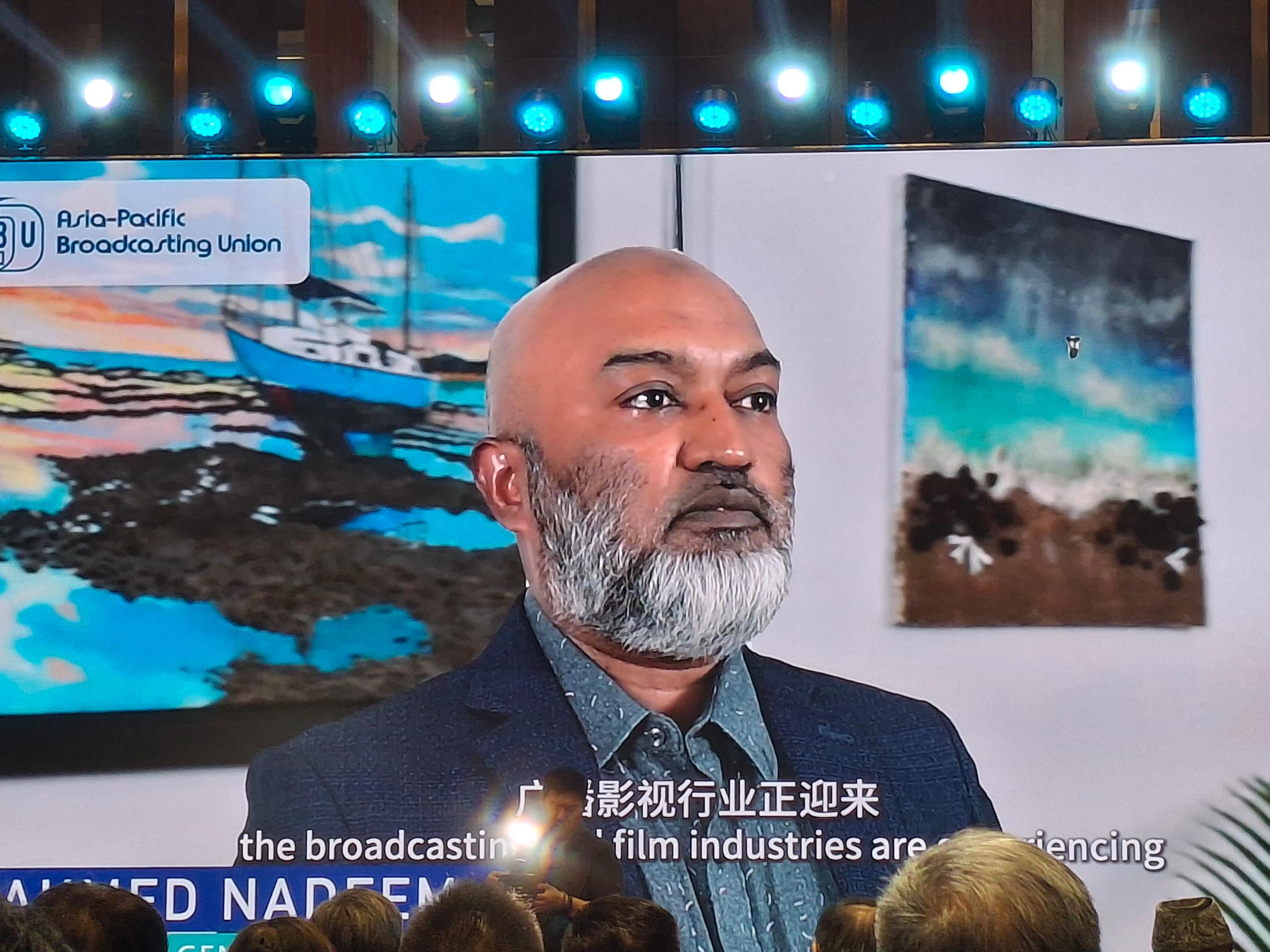
Mais le représentant de l'ABU apporte une nuance essentielle. La technologie, à elle seule, ne suffit pas à produire de grands contenus. La véritable richesse de l'espace audiovisuel asiatique réside, selon lui, dans sa diversité culturelle, ses langues, sa créativité et surtout ses populations. La technologie doit donc rester un moyen au service de la création et de la narration. L'enjeu est de permettre aux professionnels de raconter des histoires locales authentiques, capables de toucher leurs propres audiences tout en trouvant un écho auprès du public international.
Pour l'ABU, la transformation numérique doit également être inclusive, responsable et centrée sur l'humain. Cela implique de réduire les écarts technologiques et les écarts de connaissances entre les professionnels et les régions, mais aussi de renforcer la coopération internationale. Cette préoccupation rejoint largement le discours chinois sur la gouvernance de l'IA. « Car derrière la course aux performances technologiques se dessine une autre bataille : celle de la maîtrise des usages », a-t-il expliqué.
Qui contrôle les outils ? Qui vérifie les contenus ? Comment identifier une vidéo générée artificiellement ? Comment préserver la confiance du public ? Et surtout, comment éviter que la puissance de l'IA ne fragilise davantage l'écosystème informationnel ? Autant de questions auxquelles les professionnels des médias devront désormais apporter des réponses.
Romuald Dofini
Lefaso.net
Catégories: Afrique
Ouverture de nouvelles filières dans les lycées techniques agricoles
De nouvelles offres de formation seront ouvertes dans les lycées techniques agricoles dès la rentrée scolaire 2026-2027. L'information est rendue publique ce mardi 18 août 2026, à travers un communiqué de presse.
Selon ce communiqué, ces nouvelles offres de formation qui conduisent à l'obtention du Diplôme de Technicien aux Métiers (DTM), portent sur les métiers d'Aviculture, cuniculture et élevages non conventionnels ; Elevage de bovins et de petits ruminants ; Elevage de porcins ; Pisciculture et aquaculture ; Horticulture vivrière et ornementale ; Production céréalière et légumineuse ; Production de racines et tubercules ; Production de plantes à vibres et textile ; Arboriculture fruitière, forestière et produits forestiers non ligneux ; Palmiers à huile et cocotiers.
L'intégralité du communiqué et les détails sur les débouchés
Catégories: Afrique
La combinaison gagnante du DIGITAL 20 H
DIGITAL 20H : Avez-vous tenté votre chance ?
Le tirage DIGITAL 20H N°230 a livré son verdict !
Mardi 18 août 2026
Avez-vous joué ?
Avez-vous misé sur vos numéros porte-bonheur ?
RÉSULTAT : 29 • 89 • 72 • 19 • 42
Félicitations aux heureux gagnants !
Pas encore cette fois ? Gardez le sourire.
Rendez-vous à 00H pour le prochain tirage.
Jouez dans les points de vente de la LNB ou : Tapez *590# ou rendez-vous sur lnbloto.bj
Jouez avec modération et responsabilité. Le jeu doit rester un plaisir.
Catégories: Afrique
Succession de Petkovic : la FAF négocie avec Gustavo Poyet
La quête du futur patron technique des Verts vient de connaître un virage inattendu. Alors que les premières négociations n’ont rien donné de concret, un […]
L’article Succession de Petkovic : la FAF négocie avec Gustavo Poyet est apparu en premier sur .
Catégories: Afrique
Décès de OUANGO Daporé Maxime : Remerciements et faire-part
« Il essuiera toute larme de leurs yeux. Il n'y aura plus de mort, ni deuil, ni lamentation, ni douleur car l'ancien monde s'en est allé. » Apocalypse 21:4
Les grandes familles OUANGO, OUEDRAOGO, NIODOGO, KIMA, NOBA et SAWADOGO à Nakaba, Koupéla, Bitou, Ouagadougou, Bobo-Dioulasso, France ;
Les familles alliées : KONE, BENON,BENAO, YAMEOGO, KABORE, et TOUGMA
Le Professeur OUANGO Ganda Jean Gabriel ;
NIODOGO Kibsa Charles ;
Les frères et sœurs du défunt ;
Son épouse OUANGO/KONE Josiane ;
Les enfants Hervé et Laure ;
Les petits-enfants, Chérubin, Dylan, Maxime, Ashlyn ; Joseph ;
Adressent leurs sincères remerciements aux parents, amis, anciens collègues, voisins et connaissances pour leurs soutiens multiformes lors du retour à Dieu le 07 août suivi de l'inhumation le 10 août 2026, de leur frère, époux, père, fils, oncle et grand-père,
OUANGO Daporé Maxime, Adjudant-chef major de gendarmerie à la retraite.
Les familles tiennent à remercier toutes les personnes qui les ont accompagnés durant cette épreuve douloureuse, en particulier :
– la hiérarchie militaire ;
– les autorités administratives, coutumières et religieuses ;
– monsieur le directeur général de la décentralisation et du développement local ainsi que tous les collègues de service ;
– Monsieur les curés et vicaires des paroisses de Koupela et Baskouré ;
– les prêtres, religieuses et religieux ;
– la coordination Saint Joseph de Kilwin ;
– les valets de Marie du champ Saint Augustin de Bissighin ;
– la CCB sainte Véronique de Birghuin ;
– la communauté musulmane de Kilwin ;
– les voisins de quartier ;
– les anciens, les hommes, les femmes et les jeunes résidents ou ressortissants de Nakaba ;
– la 22ème promotion des élèves gendarmes ;
– les amis et collègues de service ;
– les diplomates et anciens collaborateurs du consulat du Burkina Faso à Bouaké (RCI) ;
– la BNSP de Koupela
– le personnel du CHU Yalgado OUEDRAOGO, pour les soins et l'accompagnement apportés au défunt et sa famille ;
– Tous les amis et promotionnaires ;
Les familles s'excusent de ne pouvoir citer nommément toutes les personnes qui ont compati à leur chagrin. Sachez que vos précieuses marques de sympathie, d'affection, de prière, de soutien, vos beaux gestes nous ont tenu chaud au cœur et réconfortés lors de cette douloureuse épreuve qui nous affecte tant.
Veuillez trouver à travers ce communiqué l'expression de notre reconnaissance émue et de nos remerciements.
Que le Seigneur de l'espérance et de toutes grâces exauce nos prières pour Daporé Maxime OUANGO et comble chacun au-delà de ses attentes.
« Donne-lui, Seigneur, le repos éternel et que la lumière sans fin brille sur lui ».
Communion de prières !
Catégories: Afrique
Harcèlement sexuel filmé à Ouargla : l’agresseur arrêté et placé en détention
Une femme importunée en pleine rue, un téléphone dégainé pour tout enregistrer, puis une séquence qui s’emballe sur les réseaux sociaux. L’affaire de harcèlement à […]
L’article Harcèlement sexuel filmé à Ouargla : l’agresseur arrêté et placé en détention est apparu en premier sur .
Catégories: Afrique
Un couple arrêté avec du Tramadol et du chanvre indien
Un couple a été interpellé, lundi 17 août 2026, au quartier Houssouko, à Porto-Novo.
Les agents de Police du commissariat du 4e arrondissement de Porto-Novo ont investi, sur la base de renseignements, un domicile à Houssouko dans la soirée du lundi 17 août 2026.
Une quantité de matière végétale séchée, suspectée d'être du chanvre indien, ainsi que des comprimés de Tramadol, communément appelés « kolo », y ont été découverts.
Les occupants des lieux, un homme et sa compagne, ont été arrêtés.
L'homme, conducteur de taxi-moto, est soupçonné de participer à la distribution des produits.
Sa compagne a participé à leur conservation et à leur gestion.
Les deux suspects ont été placés en garde à vue.
Ils devraient être présentés au procureur de la République à l'issue de la procédure.
L'opération s'inscrit dans les actions menées par la Police républicaine contre les réseaux de vente et de consommation de substances psychotropes.
M. M.
Catégories: Afrique
La BIDC obtient une importante revalorisation de sa notation de crédit par Moody's
La note d'émetteur à long terme de la Banque d'investissement et de développement de la CEDEAO (BIDC), passe de B2 à B1, assortie d'une perspective stable. Ce relèvement de l'agence de notation Moody's publié le 14 août 2026, confirme le renforcement de la situation financière de la Banque, sa résilience, ainsi que son statut grandissant d'institution de financement du développement de premier plan en Afrique de l'Ouest. L'annonce a été faite par un communiqué de la BIDC publié ce lundi 17 août.
De la note B2, la Banque d'investissement et de développement de la CEDEAO passe à B1, assortie d'une perspective stable selon le dernier relèvement de l'agence de notation Moody's, publié le 14 août dernier.
Ce relèvement selon un communiqué de la banque, marque une étape décisive dans sa progression régulière vers une notation de catégorie investissement (investment grade). « Il envoie aux investisseurs internationaux et aux partenaires au développement un signal fort quant à la trajectoire crédible de la Banque, qui devrait lui permettre d'accéder aux marchés internationaux de capitaux à des conditions de plus en plus compétitives », lit-on dans le communiqué de la BIDC qui souligne que Moody's a mis en avant plusieurs facteurs clés à l'origine de cette amélioration. Il s'agit de la solidité du profil de solvabilité de la BIDC, un niveau de capitalisation adéquat et une qualité d'actifs résiliente, alors même que la Banque poursuit l'expansion de ses activités de financement à un rythme soutenu.
L'agence a également salué les progrès accomplis dans la diversification des sources de financement de la BIDC, ainsi que le soutien constant de ses actionnaires — illustré par la poursuite des libérations de capital et le développement de partenariats stratégiques.
L'entrée historique de la Banque africaine de développement (BAD) au capital de la BIDC en tant que premier actionnaire institutionnel, approuvée par son conseil d'administration en juin 2026, a largement contribué à cette avancée. Ce partenariat renforce non seulement les fonds propres et les normes de gouvernance de la BIDC, mais confirme également la crédibilité croissante de la Banque en tant qu'acteur régional de premier plan, capable de mobiliser des ressources à grande échelle pour accélérer la transformation structurelle de l'Afrique de l'Ouest.
« Cette révision à la hausse de la notation témoigne clairement des progrès réalisés par la BIDC dans le renforcement de ses bases financières et de ses capacités institutionnelles », a déclaré M. George Agyekum Donkor, PhD, Président de la BIDC et de son Conseil d'administration. « Elle confirme la confiance que nos actionnaires, nos partenaires et la communauté internationale placent en nous. Nous démontrons qu'une banque régionale de développement peut être à la fois ambitieuse et résiliente, et que l'Afrique de l'Ouest dispose d'une institution crédible et efficace, prête à prendre les rênes de son programme de développement », s'est-il réjoui.
Ce relèvement de notation intervient alors que la BIDC déploie sa Stratégie de croissance, de résilience et d'optimisation (GRO) 2026-2030, un ambitieux plan quinquennal donnant la priorité au développement des infrastructures, au financement des énergies renouvelables, à la croissance du secteur privé et au renforcement de la résilience climatique. Au cours des dernières semaines, la BIDC a intensifié ses opérations stratégiques, faisant avancer des projets dans les secteurs des infrastructures, de la santé et de l'énergie, des projets qui contribuent déjà à améliorer l'accès à l'électricité, à créer des emplois et à jeter les bases d'une croissance économique durable dans l'ensemble de la sous-région.
À propos de la BIDC
La Banque d'Investissement et de Développement de la CEDEAO (BIDC) est l'Institution de Financement du Développement des quinze États de l'Afrique de l'Ouest. Basée à Lomé, en République togolaise, la Banque s'engage à financer des projets et programmes de développement portant sur diverses initiatives dans les secteurs des infrastructures et des services sociaux de base, du développement rural et de l'environnement, de l'industrie ainsi que des services sociaux, à travers ses guichets dédiés aux secteurs privé et public.
Les interventions de la BIDC se font sous forme de prêts à long, moyen et court terme, de prises de participation, d'octroi de lignes de crédit et mise en place d'accords-cadres de refinancement, des opérations d'ingénierie financière et services connexes.
Catégories: Afrique
Pages



© 2012-2018 Europa Varietas Foundation © 2015-2018 Europa Varietas Association
www.europavarietas.org | info(@)europavarietas(dot)org | Switzerland




We are looking for sponsors for the English translation of these books, please contact turkeandras(at)gmail(dot)com