
You are here
Határon túli magyar portálok összesített hírei
152/2025 : 4 December 2025 - Opinion of the Advocate General in the case C-528/24
Boothnesse
AG Medina: Under the EU-UK Trade and Cooperation Agreement, the rule of speciality is an enforceable essential procedural guarantee
AG Medina: Under the EU-UK Trade and Cooperation Agreement, the rule of speciality is an enforceable essential procedural guarantee
151/2025 : 4 December 2025 - Judgment of the Court of Justice in Joined Cases C-580/23, C-795/23
Mio and Others
Freedom of movement for persons
Copyright protection for utilitarian objects is subject to the same requirements as for other subject matter
Freedom of movement for persons
Copyright protection for utilitarian objects is subject to the same requirements as for other subject matter
Élections au Kosovo : la candidature de la Lista Srpska encore une fois sur la sellette
Le parti albanais au pouvoir Vetëvendosje a provoqué un tollé international en refusant de valider la candidature de la Lista Srpska, principale formation serbe du Kosovo, pour les élections législatives du 28 décembre.
- Le fil de l'Info / Kosovo Vetëvendosje, Elections Kosovo, Une - Diaporama, Politique, Relations régionales, Kosovo, Une - Diaporama - En premierFor 78 Years, the Palestinians have Been Denied their Inalienable Rights & their Right to Self-Determination
Credit: UN Photo/Loey Felipe September 2025
By Annalena Baerbock
UNITED NATIONS, Dec 4 2025 (IPS)
For seventy-eight years, the question of Palestine has been on the agenda of this General Assembly, almost as long as the institution itself.
Resolution 181 (II) was adopted by the General Assembly on November 29 1947 – laying the foundation for the Two State Solution and calling for the establishment of both an Arab State and a Jewish State in Palestine.
But while the Jewish State, the State of Israel, is a recognized Member State of the United Nations, the Arab State, the State of Palestine, is not.
Seventy-eight years later, Palestine has still not been admitted to the UN as a full Member.
For 78 years the Palestinian people have been denied their inalienable rights – in particular, their right to self-determination. Now, it is high time that we take decisive action to end this decades-long stalemate.
The atrocities committed by Hamas on October 7th set off one of the darkest chapters in this conflict. Two years of war in Gaza have left tens of thousands of civilians killed, including many women and children. Countless more have been injured, maimed, and traumatized for life.
Communities are starving; civilian infrastructure is in ruins; almost the entire population is displaced. Children, mothers, fathers, families like us.
The hostages who have been finally released and reunited with their loved ones are slowly recovering from captivity under extremely dire conditions, while other families are mourning over the returned bodies. Again, children, fathers, mothers, families like us.
And while the horrors of Gaza have dominated the news for two years, settlement expansion, demolitions and increased settler violence in the occupied West Bank, including East Jerusalem continue to undermine the prospects for a sovereign, independent, contiguous and viable Palestinian state.
Palestinian communities are bifurcated by the rapid expansion of settlements. Movement, communication and access to essential services and livelihoods are severely restricted for Palestinians by checkpoints, confiscations and demolitions.
While in my previous capacity, I visited a small village in the West Bank to actually meet with Palestinian farmers and teachers who wanted to show me what settlement expansion and settler violence meant for their daily lives.
As we stood on a hillside overlooking their farmland, a drone from an Israeli settlement began hovering above us, circling in the air, monitoring what we were doing and probably saying.
We know what happens when foreign people and cameras are no longer there. It’s not just a drone watching; it’s outright violence, including farmers being attacked as they try to go to work, as they try to harvest.
Beyond the violence itself are the daily indignities confronting the residents of the West Bank, including children getting to school or thousands of pregnant women rushing to hospital to receive care or give birth, only to be stopped at checkpoints or by road closures.
All that has happened in the last two years has all underlined what we have known since decades. The Israeli–Palestinian conflict cannot be resolved through illegal occupation, de jure or de facto annexation, forced displacement, recurrent terror or permanent war.
This only adds to grievances and fuels the flames of conflict.
Israelis and Palestinians will only live in lasting peace, security, and dignity when they live side by side in two sovereign and independent states, with mutually recognized borders and full regional integration –
As outlined in the New York Declaration, which is indeed a ray of hope, and the adoption of Resolution 2803 in which the Security Council endorsed the “Comprehensive Plan to End the Conflict in Gaza”.
We see unfortunately again on a daily basis that these are only words on paper if we do not deliver. We need to ensure that the ceasefire is consolidated and becomes a permanent end to hostilities. Since this ceasefire at least 67 children have been killed; and again, we see children being left without parents, or left in the rubble.
This has to end.
And as we brace for the increasing cold in New York ourselves, imagine what winter means for the people of Gaza: tents collapsing under rain, families shivering without shelter, children facing the night with nothing but thin fabric between them and the wind, and countless people still going to sleep hungry.
If we want to live up to our commitments, we need humanitarian agencies, on the ground without hindrance and without excuse.
And we need to ensure that humanitarian aid is delivered throughout all Gaza in a full, safe, unconditional and unhindered manner, in full accordance with international humanitarian law and humanitarian principles. And this includes delivery through UNRWA.
And as outlined in the advisory opinion of the International Court of Justice on the obligations of Israel in relation to the presence and activities of the United Nations in the Occupied Palestinian Territory, allowing UNRWA to fulfil its mandate and continue operations there is not merely a gesture of goodwill, it is a legal obligation.
Both the General Assembly and the Security Council have been consistent on the parameters that must guide any peaceful resolution of the conflict. So, we know what we have to do.
These parameters are again reiterated in the draft resolution before this Assembly today, relating to the New York Declaration, which was endorsed by a vast majority of Member States, and identified a comprehensive and actionable framework including tangible, timebound and irreversible steps for the implementation of the Two-State-Solution, in particular that resolution underlined that Gaza must be unified with the West Bank. There must be no occupation, siege, territorial reduction, or forced displacement.
It underlines that Hamas must end its rule in Gaza and hand over its weapons to the Palestinian Authority.
It makes clear that the Palestinian Authority must continue implementing its credible reform agenda focusing on good governance, transparency, fiscal sustainability, fight against incitement and hate speeches, service provision, business climate and development.
And it calls on the Israeli leadership to immediately end violence and incitement against Palestinians, and immediately halt all settlement, land grabs and annexation activities in the Occupied Palestinian Territory, including East Jerusalem. It makes clear that it has to end the violence of the settlers.
As diplomats we all know this is hard diplomatic work. And therefore , I want to be frank and clear.
The quest for peace, stability and justice in the Middle East needs our United Nations. It needs this Assembly to play a meaningful role.
It requires every Member State to walk the talk: to engage in this process, to uphold the United Nations Charter, to adhere to international law, and the promise this institution made to all the people of the world eighty years ago.
Let us recall once more: self-determination, and the right to live in one’s own state in peace, security, and dignity, free from war, occupation and violence, is not a privilege to be earned, but a right to be upheld.
IPS UN Bureau
Follow @IPSNewsUNBureau
!function(d,s,id){var js,fjs=d.getElementsByTagName(s)[0],p=/^http:/.test(d.location)?'http':'https';if(!d.getElementById(id)){js=d.createElement(s);js.id=id;js.src=p+'://platform.twitter.com/widgets.js';fjs.parentNode.insertBefore(js,fjs);}}(document, 'script', 'twitter-wjs');
Excerpt:
Annalena Baerbock In her address as President of the UN General Assembly
Categories: Africa, Határon túli magyar portálok összesített hírei
Alapkőletétel Dunaszerdahelyen: Templomot építenek a DAC-stadion tövébe
Dunaszerdahelyen, a stadion közelében új templom épül, melyet Szent Istvánnak szentelnek. Szombaton (11. 29.) délelőtt ünnepélyesen megáldották a telket és letették az alapkövet, melyet II. János Pál pápa szlovákiai látogatása során 1990-ben megáldott – tájékoztatott a nagyszombati érsekség.
Categories: Határon túli magyar portálok összesített hírei, Swiss News
Fresh Lens For Nuanced Multifaceted Climate Solutions Needed
Drone view from Combu Island, with the city of Belém, where COP30 took place, in the background. Credit: Alex Ferro/COP30
By Umar Manzoor Shah
SRINAGAR, Dec 4 2025 (IPS)
“I see more philanthropic support aligning with systems thinking, linking climate stability, biodiversity protection, Indigenous leadership, and community resilience,” says Michael Northrop, Program Director at the Rockefeller Brothers Fund.
In an interview with Inter Press Service (IPS), he says funding is increasingly moving beyond isolated interventions and siloed approaches. The intersection between climate, nature, and Indigenous rights can be considered together. He sees philanthropy moving in that direction, and the momentum is growing.
Northrop is particularly excited about the recent COP30 Tropical Forest Forever Facility (TFFF) announcement. Over the past two years, the Fund has backed the facility while in its development stages. TFFF targets the protection of 1.2 billion hectares of tropical rainforests across more than 70 low- and middle-income countries.
The TFFF was launched during COP 30 with USD 5.5 billion in commitments from sponsor countries, strong endorsements from 53 countries, and plans for delivery. It has a long-term goal of raising about USD 125 billion.
All-in-one Solution
He calls it a nature solution, a climate solution, an Indigenous peoples and local communities solution, and an economic development solution, all in one.
“The Brazilian government raised almost USD 7 billion in early contributions. They aim to secure another USD 15 billion from governments over the next 12 to 18 months, then attract USD 100 billion in private investment. This structure focuses on investment instead of grants or loans. Countries will get paid per hectare of standing forest they conserve,” Northrop told IPS.
Northrop sees this initiative as a major departure from traditional models. It rewards protection instead of exploitation and avoids burdening countries with increased debt.
He appreciates Brazil’s leadership in promoting this initiative, stating that the RBF has been working with Brazilians and other nations for nearly two years. “The current challenge is moving from concept to a mature investment mechanism that can finance forest protection at scale.”
Indigenous peoples and local communities already protect nature more effectively than any other model, he says.
“Half of the world’s remaining intact forests are within Indigenous territories. Almost 45 percent of global biodiversity exists within those lands, although formal recognition of land rights often lags. In regions such as the Amazon, the Congo Basin, and Southeast Asia, granting tenure to indigenous communities has helped protect forests, marine resources, and ways of life.”
Michael Northrop, Program Director at the Rockefeller Brothers Fund, in a remote Ecuadorian Amazon rainforest. Photo: Supplied
He emphasizes that when giving sovereignty and governance responsibilities to Indigenous Peoples and Local Communities (IPLCs), they do not require extensive external resources.
“They need safety, legal recognition, and the freedom to live on and defend their lands. This is a powerful message that is now understood more widely.”
Single Lens Needed to Tackle Multiple Issues
One of the greatest obstacles, according to Northrop, lies in the way global systems compartmentalize climate, nature, and indigenous issues. Climate change, he says, is treated through one lens, biodiversity through another, and Indigenous rights through yet another.
These areas are interdependent but managed separately. Negotiators at UN climate summits differ from those at biodiversity forums. They often belong to different ministries, speak different scientific languages, and focus on different priorities. As a result, policy responses malfunction.”
Northrop believes the disconnect reflects human cognitive limits.
“Most people cannot think deeply about these big systems all at once. Yet he notes progress in recognizing connections, supported through the powerful visual mapping of these connections that Earth Insight did before COP30. He believes accessible visuals help experts see the interdependencies more effectively.
The fund uses field visits to identify partners. Northrop says the institution does not have a big staff, so it relies on travel and direct engagement. The Fund looks for people who think on a large scale and design strategies to solve complex problems. Reviewing paper proposals alone is insufficient. He says real understanding comes from meeting people, seeing their environments, and learning what drives them.
There are enormous numbers of positive examples of effective philanthropy, but even with these, the overall volume of the work is insufficient. He notes a generational shift in the sector that contributes to current impact.
“Earlier, philanthropic institutions often hired academics without social change and policy change experience. Today, staff are increasingly drawn from social movements, campaign organizations, and policy implementation roles.”
He finds this shift encouraging.
Michael Northrop, Program Director at the Rockefeller Brothers Fund (RBF), inspects oil pipelines in the Ecuadorian Amazon. RBF stresses that Indigenous peoples and local communities already protect nature more effectively than any other model. Photo: Supplied
Still, philanthropy cannot substitute for strong governance and policy. He points to worrying trends in the United States, where decisions that protected social and environmental systems are being reversed. He insists progress depends on government action alongside philanthropic support. Both are needed.
At COP30, Northrop notes a split in approaches among countries. “A large number wanted to phase out fossil fuels and halt deforestation. Others, including major oil-producing nations, continue to push for extraction. The world has already crossed the threshold for burning new fossil fuel reserves if it hopes to protect the planet.”
Unfortunately there is also continued pressure to industrialize forest landscapes through oil, mining, logging, and agriculture.
Fossil Fuel Phase-Out Efforts
Northrop expects philanthropy will support the 80 countries that have committed to a fossil fuel phase-out. This approach may need adoption outside the formal COP mechanisms, given the split in Belém. He also expects strong philanthropic engagement to support efforts to end deforestation.
He would like to see immediate action on phasing out fossil fuels and ending deforestation. He says the world cannot wait.
The link between forest protection and fossil fuel restraint is direct. Extraction becomes more difficult if forest areas are left intact. Keeping reserves in the ground helps safeguard forests. Northrop believes strategies must be aligned.
He sees growing collaboration among philanthropic groups focused on nature and climate—a new and expanding trend—which must continue because neither philanthropy nor policy can solve these issues alone. Both must work together with civil society and indigenous communities.
Northrop is clear about the biggest challenge for climate philanthropy—achieving scale. Philanthropy alone cannot deliver transformation at the necessary magnitude. Only policy can. Philanthropy must help develop and support strong policy and governance to scale systemic change.
His personal motivation, which developed early in life, continues to drive him. He says he’s fortunate to have met so many mission-driven people throughout his four decades of work on nature, climate, and development. He has deep respect for how social change agents’ minds work. What keeps him going, he says, is listening. He tries to understand what people are doing and what inspires them. He credits individuals who have driven major changes in the environmental, health, and education systems for inspiring his work.
Northrop believes there is more philanthropy today and that more players think globally. He welcomes new actors with practical experience in change-making. He warns that philanthropic support must be backed by stable national and international policy.
“The coming months will test whether the Tropical Forest Forever Facility advances beyond the pilot stage. If it succeeds, it could become one of the most significant efforts yet devised to reward protection instead of destruction.”
IPS UN Bureau Report
Follow @IPSNewsUNBureau
!function(d,s,id){var js,fjs=d.getElementsByTagName(s)[0],p=/^http:/.test(d.location)?'http':'https';if(!d.getElementById(id)){js=d.createElement(s);js.id=id;js.src=p+'://platform.twitter.com/widgets.js';fjs.parentNode.insertBefore(js,fjs);}}(document, 'script', 'twitter-wjs');
Excerpt:
Michael Northrop, Program Director at the Rockefeller Brothers Fund, says the Tropical Forest Forever Facility, announced at COP30, is an all-in-one nature, climate, Indigenous peoples, local communities and economic development solution.
Categories: Africa, Határon túli magyar portálok összesített hírei
Meteorológiai figyelmeztetés a reggeli köd miatt
A Szlovák Hidrometeorológiai Intézet (SHMÚ) elsőfokú meteorológiai figyelmeztetést adott ki csütörtökön (12. 4.) 10:00 óráig az egész országra a köd előfordulásának a veszélye miatt (50-200 m-es látótávolság). Óvatosan közlekedjenek az útnak indulók!
Categories: Határon túli magyar portálok összesített hírei, Swiss News
Gyáván beléfojtották a szót a Bejelentővédelmi Hivatal elnökébe az alkotmányjogi bizottság ülésén
Zuzana Dlugošová, a Bejelentővédelmi Hivatal elnöke a parlament alkotmányjogi bizottságának szerdai (12. 3.) ülésén a hivatal tervezett megszüntetésének következményeiről kívánt beszélni. A koalíciós képviselők nem engedték, hogy felszólaljon. František Mikloško (KDH) tiltakozásul kivonult az ülésről, írta az Aktuality.
Categories: Határon túli magyar portálok összesített hírei, Swiss News
Borús, ködös csütörtök – gyenge csapadékkal
A Szlovák Hidrometeorológiai Intézet (SHMÚ) előrejelzése szerint felhős/borús, helyenként ködös, többnyire szélcsendes időjárás várható csütörtökön (12. 4.). Elvétve, főleg a Zsolnai kerületben és a Szepesség északi részén, felszakadozhat a felhőzet. Elszórtan, délnyugaton és Közép-Szlovákia déli részén helyenként, ködszitálás vagy gyenge eső fordulhat elő. A hegyekben havazás lesz a jellemző.
Categories: Határon túli magyar portálok összesített hírei, Swiss News
Press release - New genomic techniques: deal to support the green transition in farming
The new rules will make the EU food system more secure and sustainable, with climate- and pest-resistant plants that give higher yields and require fewer fertilisers and pesticides.
Committee on the Environment, Public Health and Food Safety
Source : © European Union, 2025 - EP
Committee on the Environment, Public Health and Food Safety
Source : © European Union, 2025 - EP
Übles Revanche-Foul: Für diese Aktion muss Bozon unter die Dusche
Genf-Bozon lässt sich zu einem Revanche-Foul gegen HCD-Barandun hinreissen. Die Schiedsrichter schauen sich die Szene an. Nachdem Tim Bozon von Jung an der Bande malträtiert wurde, sucht er sich als Opfer das Knie von Barandun aus.
Categories: Határon túli magyar portálok összesített hírei, Swiss News
Slapstick vom Feinsten: Berner hauen sich um, dann steht der Schiri im Weg
Dionicio lässt gleich mehrere Spieler stehen, die Bieler haben viel Raum vor sich, verlieren aber die Scheibe und der SCB kontert. Ejdsell zieht alleine auf Säteri los, aber da hat er die Rechnung ohne den Schiri gemacht.
Categories: Határon túli magyar portálok összesített hírei, Swiss News
Energydrinks, Chips, Kaugummi: So gefährlich ist der Hype um Koffein-Produkte
Von Chips bis Kaugummi: Immer mehr Essen und Getränke enthalten Koffein. Das ist vor allem für Junge riskant. Der Konsumentenschutz schlägt Alarm.
Categories: Határon túli magyar portálok összesített hírei, Swiss News
Entwurf der Tagesordnung - Donnerstag, 11. Dezember 2025 - PE781.209v02-00 - Ausschuss für auswärtige Angelegenheiten
Quelle : © Europäische Union, 2025 - EP
REPORT on European Defence Readiness 2030: assessment of needs - A10-0243/2025
REPORT on European Defence Readiness 2030: assessment of needs
Committee on Security and Defence
Christophe Gomart
Source : © European Union, 2025 - EP
Committee on Security and Defence
Christophe Gomart
Source : © European Union, 2025 - EP
Feuer in Menziswil (FR): Mann (32) wird bei Hausbrand schwer verletzt
Am Mittwochnachmittag brach in einem Haus in Menziswil (Düdingen) ein Feuer aus. Ein Mann wurde dabei schwer verletzt und musste ins Spital gebracht werden.
Categories: Határon túli magyar portálok összesített hírei, Swiss News
Netflix-Star Criscilla Anderson (†45) verstorben: «Wenn ihr das hier lest, bin ich endlich in den Armen von Jesus»
Die Netflix-Star Criscilla Anderson ist im Alter von 45 Jahren an Darmkrebs gestorben. In einer letzten Botschaft an ihre Fans ermahnte sie, nicht in der Dunkelheit dieses Moments zu verharren.
Categories: Határon túli magyar portálok összesített hírei, Swiss News
Drama um Herzogin Meghans Vater: Thomas Markle nach Not-OP auf Intensivstation
Thomas Markle, Vater von Herzogin Meghan, befindet sich nach einer Not-OP auf der Intensivstation in den Philippinen. Der 81-Jährige wurde am Dienstag ins Krankenhaus eingeliefert und muss sich nun einem zweiten Eingriff unterziehen, um ein Blutgerinnsel zu entfernen.
Categories: Határon túli magyar portálok összesített hírei, Swiss News
So steht es um «Onkel Joey» Dave Coulier: «Full-House»-Star bekommt zweite Krebsdiagnose innerhalb von zwei Jahren
Erst im Frühjahr gab «Full House»-Star Dave Coulier bekannt, seine Krebserkrankung nach einer langwierigen Chemotherapie besiegt zu haben. Doch nun der nächste Schicksalsschlag für den «Onkel Joey»-Darsteller: Im Oktober bekam er die neue Diagnose Zungenkrebs.
Categories: Határon túli magyar portálok összesített hírei, Swiss News
Es drohen Strafen nach der Scharia: Polizei sprengt Sex-Orgie mit 200 Männern
Polizisten stürmen in der malaysischen Hauptstadt Kuala Lumpur eine mutmassliche Sex-Orgie. Etwa 200 Männer sollen ein Fitnesscenter in einen Sex-Club verwandelt haben. Ihnen drohen 20 Jahre Haft und Auspeitschung.
Categories: Határon túli magyar portálok összesített hírei, Swiss News
Pages
the old site is here


© 2012-2015 Europa Varietas Foundation © 2015-2020 Europa Varietas Association
www.europavarietas.org | info(@)europavarietas(dot)org | Switzerland
This is a GDPR ready site
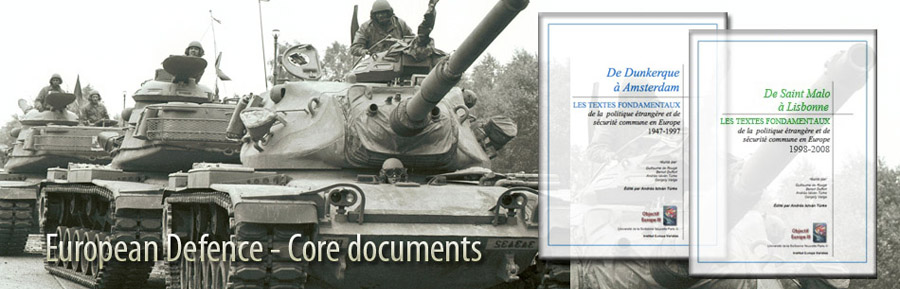
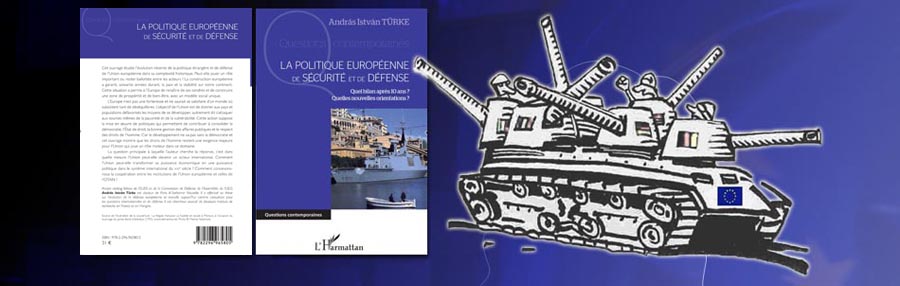
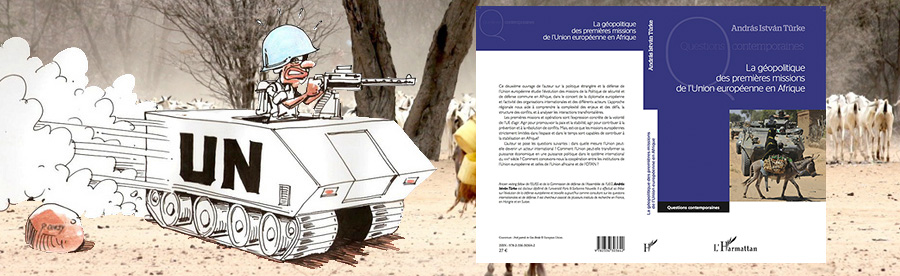
We are looking for sponsors for the English translation of these books, please contact turkeandras(at)gmail(dot)com