
You are here
Feed aggregator
Újabb ukrán támadás érte a Krími hidat
Újabb ukrán támadás érte a Krími hidat, a hídon ideiglenesen a vasúti forgalmat is leállították – közölte az orosz közlekedési minisztérium, amely szerint a szakértők felmérik a keletkezett károkat.
Szergej Akszjonov, az elcsatolt félsziget orosz kormányzója a Max-csatornáján azt közölte, hogy minden illetékes szolgálat a helyén van.
Az orosz szárazföldet a Krím félszigettel összekötő hídon keletkezett újabb károkról Akszjonov az első közlésében nem tett bejelentést. Személyi sérülés nem történt.
A Krímben csütörtök reggel drónriadót rendeltek el. A belgorodi régió hatóságai egy civil haláláról és egy sebesültről tettek bejelentést.
Az ukrán hadsereg hétfőre és keddre virradóra is csapást mért a hídra, megrongálva a szerkezetét, és lerombolva a közúti híd egyik hajózható árkádját. A vasúti forgalmat kedd este újraindították.
Az orosz védelmi minisztérium szerint este nyolctól reggel nyolcig az orosz légvédelem 53 repülőgép típusú, pilóta nélküli ukrán repülőszerkezetet fogott el és semmisített meg tíz régió felett.
Forrás: MTI
The post Újabb ukrán támadás érte a Krími hidat appeared first on Kárpátalja.ma.
Categories: Határon túli magyar portálok összesített hírei
Mehr Gewicht für Anliegen der Gen Z? Maßnahmen für junge Menschen zahlen sich besonders häufig aus
Zusammenfassung:
19. November 2026 – Wie zuletzt bei den Protesten von „Gen Z regelt“ fordern junge Menschen, dass ihre Stimme in gesellschaftlichen und politischen Debatten stärker gehört und ihre Anliegen ernster genommen werden. Sie pochen unter anderem auf mehr Geld für Bildung und soziale Gerechtigkeit. Diese Kurzstudie wertet knapp 200 wissenschaftliche Studien der Online-Datenbank Policy Impacts Library aus, in der politische Maßnahmen und ihre gesellschaftlichen sowie wirtschaftlichen Auswirkungen untersucht und miteinander verglichen werden. Das Ergebnis stützt die Forderung nach Investitionen in junge Menschen: 27 von 28 evaluierten Maßnahmen für Kinder und Jugendliche stiften mehr volkswirtschaftlichen Nutzen, als sie den Staat netto kosten. 18 davon entlasten den Haushalt unterm Strich sogar, weil spätere Mehreinnahmen und Einsparungen die Ausgaben übersteigen. Bei Maßnahmen für Menschen ab 65 Jahren gilt das nur für eine von sieben. Betrachtet man Kosten und Nutzen langfristig, zahlen sich Investitionen in junge Menschen somit zumeist aus. In Zeiten knapper Haushalte ist das ein wichtiges Argument bei der Prioritätensetzung für politische Maßnahmen – wenn auch nicht das einzige.
Categories: Diplomacy & Defense Think Tank News
Souveraineté commerciale au Mali : l’État crée la Société SUGU S.A. pour sécuriser ses approvisionnements et ses exportations
Mali Actu - maliactu.net - Mali Actualités, Les Actus et Informations sur le Mali
Mali Actu
Souveraineté commerciale au Mali : l’État crée la Société SUGU S.A. pour sécuriser ses approvisionnements et ses exportations
Chapô : Face aux tensions géopolitiques et à la volatilité des marchés mondiaux, le gouvernement malien se dote d’un nouvel outil économique. Adoptée en Conseil…
Souveraineté commerciale au Mali : l’État crée la Société SUGU S.A. pour sécuriser ses approvisionnements et ses exportations
Mali Actu :
Souveraineté commerciale au Mali : l’État crée la Société SUGU S.A. pour sécuriser ses approvisionnements et ses exportations
Categories: Afrique
Torockó nagyon jól teljesített a PNRR-s pénzek lehívásában
Kiemelkedően teljesített a PNRR-s alapok lehívásában Torockó. A Fehér megyei község önkormányzata lakosonként több, mint 15 000 lejt kapott, ami több mint hétszerese a megyei átlagnak, miközben Fehér megye egészében is jól, az országos rangsor hatodik helyén áll az önkormányzatoknak lakosonként kifizetett PNRR-források tekintetében. Torockó önkormányzatának számlájára több mint 15 és fél millió lej érkezett […]
Articolul Torockó nagyon jól teljesített a PNRR-s pénzek lehívásában apare prima dată în Kolozsvári Rádió Románia.
Categories: Határon túli magyar portálok összesített hírei
Generation Zukunft / Der UNFPA-Weltbevölkerungsbericht 2026 warnt vor einer abgehängten Jugend
Deutsche Stiftung Weltbevölkerung (DSW): Bonn (ots) - Weltweit befindet sich jeder fünfte junge Mensch weder in Beschäftigung noch in schulischer oder beruflicher Ausbildung. Was sich aktuell auf den Straßen manifestiert, ist kein deutsches oder europäisches, sondern ein globales ...
Schatten-KI als Frühwarnsystem für mangelnde Innovation im Unternehmen
Slalom Germany: Schatten-KI ist ein Risiko für Unternehmensdaten und Compliance. Doch sie ist zugleich ein sehr deutliches Signal der Mitarbeiter an die Geschäftsführung, dass Prozesse nicht innovativ genug sind. Wenn KI-Initiativen zu langsam verlaufen oder ...
KfW Research: Bauhauptgewerbe besonders stark von Fachkräftemangel betroffen
KfW: Frankfurt am Main (ots) - - 31 Prozent der Unternehmen aus dem Bauhauptgewerbe klagen über fehlendes qualifiziertes Personal - Über alle Branchen hinweg melden 23 Prozent der Unternehmen einen Mangel von Fachkräften - Aufschwung kommt langsam in ...
Zverevs Ex-Freundin klagt erneut gegen den Tennis-Star
Alexander Zverev wurde erneut von seiner Ex-Freundin Brenda Patea angeklagt. Es geht dabei um Geld und um die Frage, ob sich der Tennis-Star nach dem eingestellten Verfahren wegen häuslicher Gewalt unschuldig nennen darf.
Categories: Swiss News
"Politik beginnt bei uns" - Wie Beteiligung von Kindern und Jugendlichen gelingt / Mitbestimmung und Teilhabe im SOS-Kinderdorf e.V.
SOS-Kinderdorf e.V.: München (ots) - Kinderrechte werden dort lebendig, wo Kinder und Jugendliche mitreden, mitentscheiden und Verantwortung übernehmen können. Zum Internationalen Tag der Kinderrechte am 20. November zeigt SOS-Kinderdorf e.V., wie Beteiligung im ...
Protecting Wildlife Requires Gender Equity
Young global ambassadors for biodiversity from South Africa performing at the start of a COP17 plenary session on 28 October. Credit: IISD/ENB Mike Muzurakis
By Céline Delacroix
MONTREAL, Canada, Nov 19 2026 (IPS)
The United States isn’t just lagging behind the global effort to protect biodiversity, it’s pulling in the opposite direction. When the 196 nations that are parties to the United Nations Convention on Biological Diversity concluded their annual 17th Conference of Parties (COP17) in Yerivan, Armenia, last month, the only member state not there (also the only one that hasn’t ratified the CBD) was the United States. It’s an outlier on both biodiversity and the gender issues related to it.
Russia, China, even North Korea are parties to the CBD and sent delegations to COP17. During negotiations Russia objected to language about “human rights-based approaches and inclusive participation,” but in the end all parties, Russia included, agreed to call for “full, equitable, inclusive, effective, and gender-responsive approaches and participation as well as rights,” to consider women’s roles, knowledge, and practices regarding wildlife management, “and apply gender-responsive approaches, in line with the Gender Plan of Action.” The United States alone stands apart from that Plan, in which the CBD formally recognizes gender equity and reproductive agency matter for biodiversity and sustainability.
They matter because converting wild habitat to human needs, especially crops and livestock grazing, drives land degradation and biodiversity loss, and tracks closely with population trends. Greater gender equity correlates with fewer unintended pregnancies, slower population growth, stronger environmental policies, and lasting environmental, social, and economic benefits.
Women and girls are on the front lines. They’re disproportionately affected by land degradation and deforestation, droughts, and floods; they’re more likely to be displaced or die from climate events. They’re usually the ones securing food, water, and firewood for their families, producing up to 80% of food in rural areas, and managing crop and grazing lands. It therefore stands to reason that they should be considered and consulted on protecting land, water, biodiversity, and the climate.
The U.S. didn’t just fail to support this principle. It went out of its way to oppose it.
At a related summit meeting in Mongolia in September on the UN Convention to Combat Desertification (CCD), the U.S. delegation alone objected to gender-responsive approaches (for example to drought response) and to including civil society and “synergies” (i.e., coordinating implementation of the CCD with other Rio conventions on biological diversity and climate change). That effectively tabled those issues until the next CCD summit.
Yet gender-responsiveness, inclusivity, and a synergistic approach to the nexus between population trends and sustainability are indispensable for protecting biodiversity and the planet. Until recently this would have been an uncontroversial statement, but now the U.S. has ceded leadership on these fronts and is working to roll them back, protecting biodiversity is up to the rest of the world, and it’s not on track.
The CBD aims to preserve at least 30% of the world’s land, inland waters, and coastal and marine biodiversity by 2030 (“30×30” for short) and mobilize at least $200 billion a year to reverse biodiversity losses. But the CBD’s own review found most national biodiversity targets aren’t within reach, nor is the 30×30 goal. COP17 laid out the “Yerivan Pathway” to accelerate action, but financing is short by $700 billion a year.
To meet CBD goals, we’ll need to focus and invest more, not less, in gender equity and the nexus between population trends, climate change, and biodiversity. We’ll need to insist on implementing the Gender Plan of Action, recognize under-resourced women’s organizations not only as stakeholders but as decisionmakers and implementers, and fund them accordingly. We’ll also need to recognize that since upholding reproductive rights is central to gender equity, it’s also central to sustainable development, as The Guttmacher-Lancet Commission has shown.
Family planning, reproductive health, and gender equity are central to protecting the climate and biodiversity as well as advancing human welfare. Enabling people to choose whether and when to have children reduces unintended pregnancies, improves women’s health, slows population growth, and eases pressure on ecosystems.
Better reproductive health also leads to greater agency, education, economic empowerment, and workforce participation for women. This pays gigantic dividends. If we spent $79 billion on meeting unmet family planning and maternal health needs by 2030, it would yield $660 billion in economic benefits. That could help position countries to fund more biodiversity protection.
Gender equity and reproductive rights are essential to biodiversity, not incidental. It’s not enough to fund protected areas or restoration projects; any lasting conservation also needs robust family planning, maternal and community health, so pressure on nature eases and women can make their contributions to stewardship. It’s part of the transformative change nature needs.
This would be easier to achieve if the United States were funding instead of fighting it. The world can have effective biodiversity action without an American buy-in, but we won’t get it without focusing on the needs, rights, and empowerment of women.
Céline Delacroix is adjunct professor at the University of Ottawa’s School of Health Sciences, a senior fellow with the Population Institute, and director of the FP/Earth Project.
This story was originally published by the The Revelator
IPS UN Bureau
Excerpt:
The recent United Nations Convention on Biological Diversity called for gender-responsive approaches. The United States objected and is the only nation not accepting the plan.
Categories: Africa
Az energetikai infrastruktúrát támadta az orosz hadsereg
A dél-ukrajnai Mikolavij megyében 99 településen szűnt meg az áramszolgáltatás a csütörtökre virradóra végrehajtott orosz dróncsapások következtében, valamint az Ukrajna középső-keleti részén fekvő Dnyipropetrovszk megye két járását is dróntámadás érte – jelentették az ukrán hatóságok.
Több mint tíz csapást mértek az orosz csapatok Nyikopol térségére és a Szinelkivszkij járás több településére csütörtökre virradóra, egy 50 éves férfi megsebesült – tudatta Olekszandr Hanzsa, Dnyipropetrovszk megye katonai kormányzója a Telegramon. Családi házak, gazdasági épületek, gépjárművek és egy mezőgazdasági vállalat is megrongálódott – fűzte hozzá.
Forrás: MTI
The post Az energetikai infrastruktúrát támadta az orosz hadsereg appeared first on Kárpátalja.ma.
Categories: Határon túli magyar portálok összesített hírei
Krankenkassen unter Druck: Müssen Arbeitgeber jetzt für die Gesundheit ihrer Mitarbeiter einspringen?
GS Makler GmbH: Straubing (ots) - Die gesetzliche Krankenversicherung steht finanziell unter Druck. Mit einer Reform will die Bundesregierung die Beiträge 2027 stabilisieren, während gleichzeitig die Beitragsbemessungsgrenzen steigen sollen. Für Unternehmen ...
KI, Patente, Zölle / Gesundheitswesen zwischen Wachstum, Stellenabbau und Fachkräftemangel / Manpower Healthcare & Life Sciences World of Work 2026
ManpowerGroup Deutschland GmbH: Frankfurt am Main (ots) - - Sieben globale Trends verändern den Personalbedarf in der Gesundheits- und Life-Sciences-Branche - Wachstum und Restrukturierungen stellen Unternehmen und Beschäftigte vor neue Herausforderungen - 74 Prozent der ...
Des chars israéliens passent la ligne jaune à Gaza, l’état de catastrophe nationale déclaré aux Fidji, la Cour des comptes européenne alerte sur la « bombe à retardement » des PFAS… Notre récap de l’actualité internationale
De l’incursion israélienne dans le centre de Gaza aux suites de la guerre en Ukraine, en passant par les ravages d’El Niño aux Fidji, la candidature historique de Hakeem Jeffries à la présidence de la Chambre des représentants et l’alerte de la Cour des comptes européenne sur les PFAS, retour sur l’actualité internationale de ces dernières heures.
Categories: France
KI-Kompetenzlücken: Drei von vier Unternehmen setzen auf externe Fachkräfte / Randstad Report "Tech-Talente im Wandel: Teams für das KI-Zeitalter aufstellen"
Randstad Deutschland GmbH & Co. KG: Eschborn (ots) - Um kritische KI-Kompetenzlücken zu schließen, setzen Unternehmen häufig auf flexible Beschäftigungsmodelle - zunehmend auch international. Welche Rolle dabei externe Fachkräfte und digitale Recruiting-Kanäle spielen, zeigt der ...
Überraschung bei KI-Umfrage: Ältere Tierhalter:innen vertrauen der KI mehr als junge
Weenect: Berlin (ots) - Weenect-Umfrage unter 1.824 Tierhalter:innen in Europa: Mehr als jede:r Zweite nutzt KI für Fragen rund um Hund und Katze, in Deutschland, Österreich und der Schweiz sind es fast sechs von zehn Wenn die Katze nicht mehr frisst oder ...
Présidentielle : Marine Tondelier se dit « prête à travailler à une coalition autour de la candidature de Jean-Luc Mélenchon »
La secrétaire nationale des Écologistes a ouvert, mercredi 18 novembre au soir, lors de son passage au journal télévisé de France 2, la porte à un soutien à Jean-Luc Mélenchon pour la présidentielle de 2027. Une perspective accueillie favorablement par les Insoumis, mais qui devra encore être soumise au vote des adhérents écologistes.
Categories: France
"Joko & Klaas gegen ProSieben" mit gutem Start in die Herbststaffel, ProSieben verschiebt heute Abend seine Prime Time für "Joko & Klaas LIVE"
ProSieben: Unterföhring (ots) - Gut gespielt: Die neue Staffel "Joko & Klaas gegen ProSieben" erzielt am Mittwochabend zum Auftakt einen Marktanteil von sehr schönen 12,5 Prozent (Overnight-Quote) in der ProSieben-Senderzielgruppe der 14- bis 49-Jährigen. ...
Dozens missing after boat carrying 100 migrants sinks off Senegal
Some local media report that at least four bodies have been recovered.
Categories: Africa
The Caribbean Needs COP31 to Deliver Accessible, Affordable and Aligned Climate Finance
By Daniel M. Best
ANTALYA, Türkiye, Nov 19 2026 (IPS)
In the five years since the UN’s COP26 climate talks called for adaptation finance to double, some 3,610 lives have been lost and another 6.5 million people affected by floods, hurricanes, droughts, and wildfires across the Caribbean.
Daniel M. Best
Behind these statistics are real people, families and communities: a breadwinner whose life has been lost; a family displaced from a home that took decades to build; a child whose education is interrupted when a school becomes an emergency shelter; or a small business that never reopens after a flood or hurricane.Not only is the region disproportionately impacted by climate hazards, but the intensity of climate extremes is growing, resulting in a widening climate finance gap.
The latest warning from the Caribbean Institute for Meteorology and Hydrology (CIMH) is unequivocal: persistent heat, reduced rainfall, drought, and growing pressure on water resources are becoming more pronounced. Unlike hurricanes, drought and extreme heat do not announce themselves with a single moment of landfall. They intensify gradually, placing sustained pressure on communities, economies, and public services. Climate risk, therefore, is not simply an environmental concern; it is a fundamental development challenge.
Multilateral Development Banks have an important role to play in securing resilient futures, but we must work together to reduce fragmented support while at the same time, pursue financial innovation. To this end, the Caribbean Development Bank (CDB) is developing a regional country platform with the Green Climate Fund and a multi-guarantor debt-swap facility with the World Bank, Inter American Development Bank (IDB), and Central American Fund for Development in Latin America and the Caribbean.
It is also expanding lending capacity through an Exposure Exchange Agreement with the Central American Bank for Economic Integration (CABEI0, a Government of Canada credit guarantee of US$400 million, and a pioneering Contingent Capital Facility to create Tier 2 capital that can support additional lending.
But MDBs cannot deliver climate-resilient futures alone. As I watch COP31 unfold, there are three priorities I would like to see advanced.
First, discussions at this year’s UN COP31 climate talks must move from promises to delivery on adaptation finance.
It is estimated that adaptation funding would have to increase six-fold to meet the needs of Caribbean nations and other Small Island Developing States (SIDs). Last year’s commitment to triple adaptation finance was welcome, but the true measure of success will be whether countries can access the resources needed to build resilience on the ground.
This is particularly important as countries seek to translate climate strategies and commitments into investable projects that support climate-resilient cities, strengthen food security, protect oceans and coastal ecosystems, and build health systems capable of withstanding climate shocks.
Second, negotiators should lobby for the global climate finance architecture to evolve to become more accessible, affordable and responsive to vulnerability.
Roughly half of the Bank’s borrowing members have debt-to-GDP ratios above 60 per cent, placing them at risk of debt distress. The CDB’s US$460 million Special Development Fund programme, our largest concessional lending and grant programme, along with our accreditation to institutions that provide grant and soft loans, support the region but more needs to be made available. Equally important is how eligibility for these concessional resources is determined. Criteria that more explicitly incorporate vulnerability should be adopted as it is more closely aligned, both practically and conceptually, with the real risks facing small states.
Countries need financing arrangements in place before disasters occur. Insurance, contingent credit, and debt-payment pause clauses can play complementary roles. Insurance can transfer specified risks; credit can provide liquidity; and a payment pause can create breathing space. These benefits must be weighed against costs and future repayment obligations.
Lastly, negotiations should focus on keeping the goal of limiting warming to 1.5°C within reach to avoid even worse climate extremes. Every fraction of a degree matters and carries profound implications for our communities, our economies and, in some cases, our very existence.
Achieving that goal will require a faster transition to clean energy, tangible action to reduce methane and other greenhouse gas emissions, and sustained investment in sustainable production and consumption. The world must close the gap between ambition and action.
The test before us is no longer whether we understand the risks. We do. The question is whether we will match the urgency of the challenge with the ambition of our response.
For vulnerable nations, delay carries a cost measured not in dollars, but in lives, livelihoods and lost development gains. The choices made at COP31 will reverberate far beyond the negotiating halls, shaping the resilience and prosperity of communities for decades to come.
Daniel M. Best is President of the Caribbean Development Bank
IPS UN Bureau
Categories: Africa
Pages


© 2012-2018 Europa Varietas Foundation © 2015-2018 Europa Varietas Association
www.europavarietas.org | info(@)europavarietas(dot)org | Switzerland

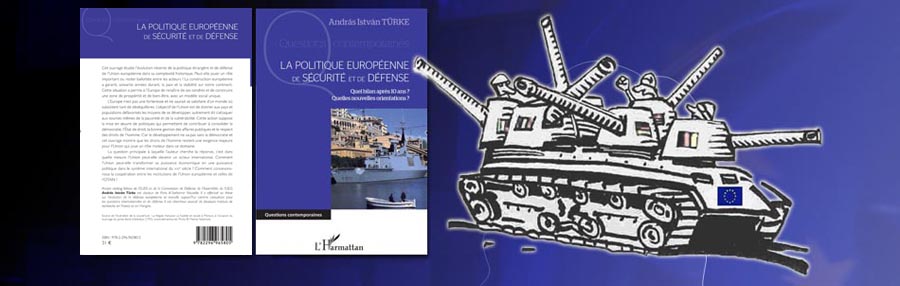
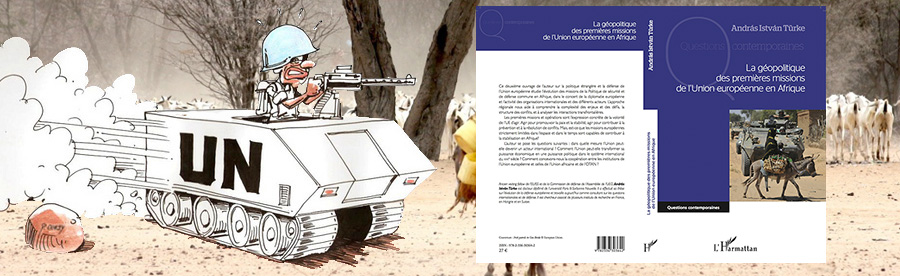
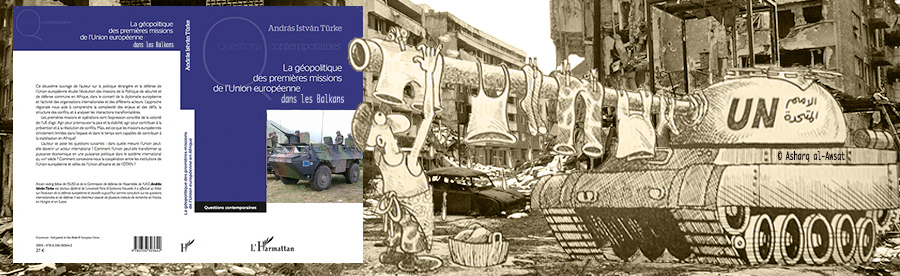
We are looking for sponsors for the English translation of these books, please contact turkeandras(at)gmail(dot)com