
You are here
Feed aggregator
L'Ukraine frappe le pont reliant la Russie à la Crimée annexée par Moscou
L'Ukraine a « frappé » le pont reliant la Russie à la péninsule de Crimée annexée par Moscou en 2014, restreignant la circulation sur cet ouvrage stratégique, a annoncé lundi 16 novembre le chef des autorités locales nommé par Moscou.
Categories: Union européenne
Des candidats au parcours VAE soutiennent leurs dossiers de preuves à la CCI Bénin
Cinq professionnels ayant suivi le parcours de Validation des Acquis de l'Expérience (VAE), mis en œuvre par l'IRAE-CCI Bénin (Institut spécialisé de la CCI Bénin pour l'accompagnement entrepreneurial), ont soutenu leurs dossiers de preuves, vendredi 13 novembre 2026. L'étape de soutenance marque l'aboutissement d'un processus destiné à faire reconnaître officiellement les compétences acquises au cours de leur expérience professionnelle.
Mis en œuvre en collaboration avec Smart Campus Dijon dans le cadre de l'accord de partenariat entre la CCI Bénin et son homologue de la métropole de Bourgogne, le programme VAE vise à offrir aux professionnels des entreprises, la possibilité de faire valider leurs compétences et leur savoir-faire, développés au fil des années en entreprise, en vue de l'obtention d'un diplôme.
Selon Hyppolite CAPO CHICHI, Vice-Président de la Commission Formation de la CCI Bénin, représentant le Président du Conseil Pédagogique de l'IRAE-CCI Bénin, la Validation des acquis de l'expérience est un dispositif de certification destiné aux personnes qui maîtrisent un métier grâce à leur parcours professionnel, mais qui ne disposent pas nécessairement d'un diplôme correspondant à leurs compétences. « C'est un parcours de diplôme qui permet à des professionnels qui ont acquis de l'expérience dans leur vie professionnelle de pouvoir la faire reconnaître officiellement et d'être certifiés ou diplômés », a-t-il expliqué. Il considère cette démarche comme un moyen de valoriser le capital humain des entreprises, en donnant une reconnaissance formelle aux compétences de leurs collaborateurs.

Les cinq candidats de la promotion 2026 ont ainsi présenté leurs preuves afin de démontrer leur maîtrise des métiers qu'ils exercent. À l'issue du processus, le diplôme qui leur sera délivré sera un diplôme français, a précisé le Vice-Président de la Commission.
Le Président du jury, Olivier DALLA PIAZZA, directeur de SmartCampus Dijon, a indiqué que l'évaluation des candidats repose principalement sur leurs compétences professionnelles. Le jury prend également en considération leur aptitude à fédérer des équipes, à conduire des projets en entreprise, à s'approprier les valeurs de leur organisation et à contribuer à son développement économique.
Parmi les candidats, figure Roméo SETON, chargé des affaires cash management dans une banque. Après quinze années d'expériences professionnelles dans différents établissements bancaires et à plusieurs postes de responsabilité, il a présenté des éléments de preuves retraçant les compétences et les connaissances acquises au cours de son parcours pour le diplôme de Bachelor Responsable Développement Commercial (RDC).
Satisfait de cette expérience, il a salué le sérieux du dispositif ainsi que la qualité de l'accompagnement dont il a bénéficié tout au long du processus, notamment pour la préparation et la mise en cohérence des éléments de preuves avec les blocs de compétences du référentiel RDC. Il a également exprimé sa reconnaissance à l'Institut pour le Renforcement et l'Accompagnement Entrepreneurial (IARE) de la CCI Bénin et à SmartCAMPUS de Dijon (France) pour leur soutien durant le parcours.
Pour Roméo SETON, la VAE constitue une opportunité de valoriser ses compétences acquises par l'expérience et de retrouver une nouvelle dynamique dans son travail avec plus de confiance dans sa carrière.
À travers la VAE, la CCI Bénin entend contribuer à la reconnaissance des compétences professionnelles, tout en favorisant le développement du capital humain et le renforcement des performances des entreprises.
F. A. A.
Categories: Afrique
Dans « L’Hospitalité », le philosophe Souleymane Bachir Diagne rappelle le devoir d’accueillir, contre l’« idéologie anti-empathie »
S’opposant au repli identitaire, le philosophe fait l’éloge de l’hospitalité et esquisse une politique de l’empathie.
Categories: Afrique
Time to Home
After a flood or other disaster, finding a safe home can take years. At COP31, we should commit to measuring – and shortening – that wait.
By Amy Pope and Anacláudia Rossbach
UNITED NATIONS, Nov 16 2026 (IPS)
Somewhere tonight, a family that lost its home to the water is asleep in a school gymnasium. The tent, the blankets and the first meal arrived within hours. But a secure home will take years. Every climate disaster ends with the same question, and few climate budgets have a line for it: where will we sleep tonight?
Amy Pope, Director General of IOM, at COP31 in Antalya, Turkiye. Credit: IOM
Humanity has always adapted by moving, and moving is often the most humane adaptation we have. What has changed is the arriving. Families displaced by disasters often seek safety in cities already struggling to provide adequate housing. Globally, about 1.16 billion people live in slums and informal settlements.1 With integrated planning, housing, infrastructure and basic services, cities receiving displaced people can turn arrival into resilience rather than risk.The scale is no longer in doubt. In 2025, disasters caused 29.9 million internal displacements – 13% above the ten-year average. Almost 13.6 million people were living in displacement caused by disasters at year’s end, 37% more than a year earlier.2 Climate is rarely the only force at work, and conflict and violence triggered more displacements than disasters last year.3 However, climate can deepen these pressures – and people displaced for any reason need somewhere safe to live. We track emissions and estimate disaster losses. But we need a clearer picture of how long families wait for a safe home.
Anacláudia Rossbach, Executive Director, UN-Habitat, speaking at a High level Dialogue in COP31 in Antalya, Turkiye. Credit: UN-Habitat
Two clocks start running after every disaster. The first counts hours and days: rescue, tents, water, food. The second counts months and years: land, permits, finance, construction, tenure. It is slow, and too often no one is accountable for it. Yet the second clock is set in the first weeks. Where a site is placed, whether people have secure rights to occupy the land, whether a shelter can be upgraded rather than replaced: these early choices help determine whether a family is on a path home or into years of limbo. Without sustained support, temporary shelter can become a long-term settlement exposed to the next flood. That gap can deepen poverty and undermine adaptation.We propose to give that gap a name and a number: time to home. It is the time between the day a family is displaced and the day it is living in a safe, affordable home with secure tenure – meaning protection against forced eviction – whether it chooses to return, settle where it is, or live elsewhere. Building on existing work on durable solutions to internal displacement, this measure would track one essential part of recovery. The idea is simple to grasp: make the wait visible, understand what prolongs it, and work to shorten it. Measuring that wait would bring together the expertise of our two organizations. IOM knows where people go and what they face on the way and where they first find shelter, as the agency that tracks displacement and co-leads the global Shelter, Land and Site Coordination Cluster. UN-Habitat knows what the land, the law and the city allow when they arrive. Working with governments and communities, we can build a clearer picture of the gap and what would help shorten it.
Behind the number lies a conviction we share. A safe home is a foundation for adapting to a changing climate and living with dignity. Without stable housing, people can face greater barriers to enrolling children in school, finding work, opening a bank account, or accessing support. Helping people stay safely, move safely, and find a secure home requires connected policies and investment.
At COP31 in Antalya, we ask governments for three commitments:
- 1. Put housing into adaptation plans. Include housing and secure tenure for people who stay and those who move in national adaptation plans and in the implementation of their Nationally Determined Contributions (NDCs) under the Paris Agreement, and adopt or pilot time to home among their indicators of progress. Where relocation is necessary, measure whether people have freely made informed decisions and can access safe housing, essential services and work.
2. Fund the transition to a safe home. Bring adaptation finance and funding for loss and damage together with recovery and development finance to bridge the gap between emergency shelter and long-term housing. Work with local governments and community organizations, including in cities receiving displaced people, so that shelter is a first step toward a secure home. Track how this funding improves people’s housing and safety.
3. Plan for safe homes before a crisis. Where climate risks are known, identify suitable land and agree with communities on access, tenure and services. Prepare cities to receive people who need to move, so that they have safe options and support before a crisis forces them to leave. Invest in upgrading informal settlements, affordable housing and resilient infrastructure to help people stay safely wherever possible. Throughout these efforts, protect people against forced eviction.
We will not ask of others what we are not prepared to do ourselves. IOM and UN-Habitat are ready to work together to put time to home into practice: drawing on IOM’s displacement tracking and shelter operations and UN-Habitat’s urban and land data, we will work to measure it, and what each month of waiting costs, in selected cities and settlements, and to share what we learn openly, including whether land and tenure, rather than construction, are the longest part of the wait. We invite every government, city and partner that wants to shorten the wait to join us in Antalya.
As climate risks grow, people will continue to adapt where they live, and some will need to move. Everyone should have the chance to build a safe future wherever they live. Climate adaptation has an address. Let us make sure that everyone has one.
Notes and sources
- 1.- UN-Habitat estimate for 2024: about 1.16 billion people, or 24.8% of the global urban population, live in slums and informal settlements. UN-Habitat, Transforming informal settlements: Data, standards and practice, session summary, 13th World Urban Forum, Baku, May 2026.
2.- Internal Displacement Monitoring Centre (IDMC), Global Report on Internal Displacement 2026: summary, May 2026. In 2025: 29.9 million disaster displacements, 13% above the decadal average; almost 13.6 million people displaced by disasters at year end, 37% more than at the end of 2024. The 13.6 million figure includes people displaced in earlier years who were still displaced at the end of 2025. The 29.9 million figure counts displacements (movements), which can include the same person more than once. Both figures cover all disasters, including geophysical hazards such as earthquakes, not only climate-related events. Full report: doi.org/10.55363/IDMC.ETWG8973.
3.- IDMC, Global Report on Internal Displacement 2026 (same source). In 2025, conflict and violence triggered a record 32.3 million displacements, more than the 29.9 million caused by disasters, the first time on record. IDMC counts displacements (movements), not distinct individuals.
Amy Pope is the Director General of the International Organization for Migration (IOM). Anacláudia Rossbach is the Executive Director of UN-Habitat.
IPS UN Bureau
Excerpt:
After a flood or other disaster, finding a safe home can take years. At COP31, we should commit to measuring – and shortening – that wait.
Categories: Africa
Ashok Swain on the Mounting Opposition to Modi’s Authoritarian Rule
In India, “fear is gradually being replaced by political confidence. Modi remains in power, but his aura of invincibility has been seriously weakened.”
Categories: Diplomacy & Crisis News
Israel/United States : US to expand Israel tunnel cooperation despite tensions
With the US Congress finalising the annual defence policy bill, the 2027 National Defense Authorization Act (NDAA), some aspects of the security partnership with Israel are being challenged by lawmakers. Others, such as the sharing of intelligence relating to underground [...]
Categories: Defence`s Feeds, Défense
Egypt : Cairo pressing EU members to tighten grip on Muslim Brotherhood
Egypt's assistant minister of defence for foreign relations, Walaa Adel Bibers, is set to attend the Schuman Security and Defence [...]
Categories: Defence`s Feeds
France/United States : DGSE at learned society, Trump's lawyer to ODNI, China legislator purge, ANSSI relocates
France – Ex-DGSE chief addresses learned societyThe man who headed France's DGSE foreign intelligence service from 2017 to 2024, Bernard [...]
Categories: Defence`s Feeds
France/Myanmar : In Paris, Burmese opposition issues calls for anti-drone jammers
Zin Mar Aung, the foreign minister of Myanmar's opposition National Unity Government (NUG) formed by Burmese democrats in response to [...]
Categories: Defence`s Feeds
France : MPs scrap clause causing concern for government on encrypted messaging
Introduced in the French Senate, Article 16a of the cybersecurity bill sought to ban any mechanism that would allow access to encrypted data. This served as a real challenge for both the intelligence services and the judiciary.
Categories: Defence`s Feeds
France : Interior ministry faces senior recruitment dilemma ahead of 2027 presidential election
Two top French police officials will reach the mandatory retirement age of 67 in early 2027, forcing them to step down just before the presidential election. This presents a major headache for the interior ministry.
Categories: Defence`s Feeds
INTERVIEW - «Ohne die reichen Leute könnten die Schweizer nicht so gut leben, wie sie es heute tun», sagt Samih Sawiris, der Ägypter, der einen Schweizer Skiort neu erfindet
Samih Sawiris hat seinem Sohn Naguib ein Milliardenunternehmen übergeben. Jetzt sprechen die beiden über ihre ungewöhnliche Familiengeschichte und die Schattenseiten des Luxustourismus.
Categories: Oroszország és FÁK, Swiss News
Economic Diplomacy Abroad and Restrictions at Home: Myanmar’s International Trade Dilemma
Ongoing conflicts and restrictive domestic economic policies continue to undermine Naypyidaw's pursuit of foreign investment and trade.
Categories: Diplomacy & Crisis News
Sinopec Demands Derail Oil Refinery Plans at Sri Lanka’s Hambantota
How readily can Sri Lanka replace investments at the SACL hub project and the Hambantota oil refinery?
Categories: Diplomacy & Crisis News
Bengal’s BJP Government Targets Christians
Once known for its secular ethos, Bengal is witnessing a surge in violent attacks on Christians.
Categories: Diplomacy & Crisis News
Nepali Prime Minister Balen Shah Continues to Test the Limits of Executive Power
The prime minister and his advisers must understand that urgency does not mean dispensing with consultation or due process.
Categories: Diplomacy & Crisis News
It Is Time For Timor-Leste to Acknowledge the Victims of the Santa Cruz Massacre
Those who were raped and sexually tortured during the Indonesian occupation still await formal recognition by Dili.
Categories: Diplomacy & Crisis News
ASEAN Leaders Pledge to Pursue ‘Calibrated Engagement’ With Myanmar
The bloc has moved to harmonize its approach with that of some individual member states, who have ramped up their bilateral engagements with Naypyidaw in recent months.
Categories: Diplomacy & Crisis News
Updated FOIP and Economic Security
How to keep the international division of labor while overcoming vulnerability
Categories: Diplomacy & Crisis News
Au Maroc, Casablanca, sous pression immobilière, veut préserver ses immeubles Art déco
L’Etat marocain accélère depuis ces dernières années sa politique de protection du patrimoine architectural hérité du protectorat français mais aussi des années qui ont suivi l’indépendance.
Categories: Afrique
Pages


© 2012-2018 Europa Varietas Foundation © 2015-2018 Europa Varietas Association
www.europavarietas.org | info(@)europavarietas(dot)org | Switzerland

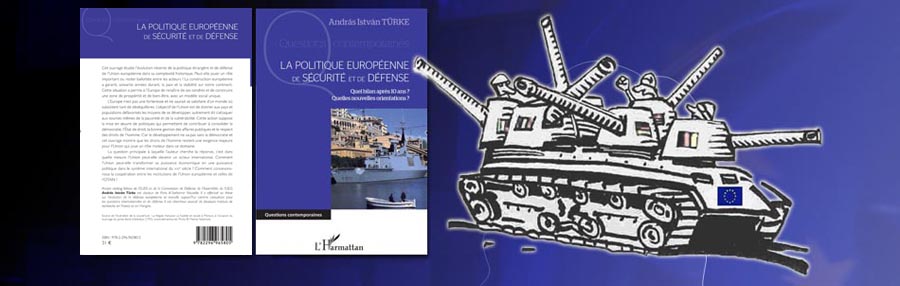
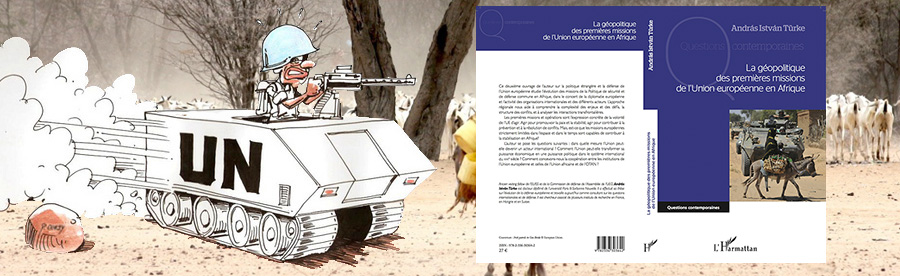
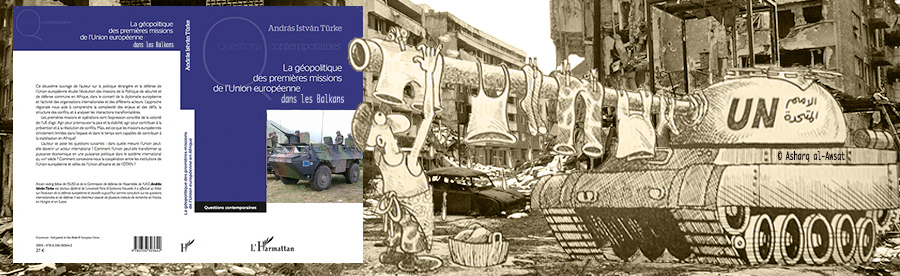
We are looking for sponsors for the English translation of these books, please contact turkeandras(at)gmail(dot)com