
You are here
Feed aggregator
Should BRICS+ Lead the Global South?
By Jomo Kwame Sundaram and Nurina Malek
KUALA LUMPUR, Malaysia, Jun 26 2026 (IPS)
Leadership of the Global South has gradually declined since the 1980s. Many hope BRICS+ will fill the vacuum, but its purpose and membership suggest such hopes may be misplaced. A repurposed Non-Aligned Movement (NAM) offers the best way forward.
Jomo Kwame Sundaram
Golden AgeThe post-World War Two (WW2) Keynesian ‘Golden Age’ saw significant postwar reconstruction and post-colonial development, especially in South Asia.
In 1964, developing countries formed the G77 caucus and created the UN Conference for Trade and Development (UNCTAD) within the UN system.
In 1974, the UN General Assembly called for a New International Economic Order (NIEO) after President Nixon ended the 1944 Bretton Woods international monetary system in 1971.
In 1979, the US Fed responded to Western stagflation by sharply raising interest rates. This triggered fiscal and sovereign debt crises in Latin America and Africa, forcing many to seek IMF emergency funds to cope.
Meanwhile, the Thatcher-Reagan-inspired counter-revolution against Keynesian and development economics led to ‘neoliberal’ Washington Consensus policy reforms, deepening economic contraction.
At New York’s Plaza Hotel, the US got its G7 caucus of the world’s 7 largest allied economies to address its overvalued dollar by requiring the currencies of Japan and Germany to appreciate sharply.
Nurina Malek
G7-encouraged financial liberalisation, especially the IMF-promoted opening of national capital accounts in the 1990s, increased the frequency and impact of crises.With its legitimacy at stake following the East Asian, Russian, and other financial crises of 1997-99, G7 finance ministers agreed in 1999 to create a more inclusive G20 grouping of finance ministers of the world’s 20 largest economies.
Soon after the 2008 global (actually Western) financial crisis began, the first G20 leaders’ summit convened in the White House in November 2008.
Making BRICS
‘BRICs’ was coined in late 2001 by then-Goldman Sachs Global Economic Research head Jim O’Neill, referring to Brazil, Russia, India, and China.
Ostensibly to include Africa, the BRICs invited South Africa to join, creating BRICS as a coalition of the five more independent large ‘emerging market’ economies.
Also serving as a caucus within the G20, BRICS has tried to improve international monetary and financial relations. It has since admitted more nations into an expanded BRICS+ with two tiers of affiliation.
To be sure, neither BRICS nor BRICS+ was ever intended to represent the even more diverse interests of the entire Global South. Understandably, it serves its ‘financially significant’ developing economy members.
BRICS and the South
The BRICS promise a world less dominated by the rich and powerful nations of the Global North, mainly in the West.
The world has been dominated by the US since the end of WW2, and especially after the first Cold War. Despite occasional dissent, the US’s European NATO allies seem happy playing second fiddle.
Many developing countries have long felt that existing arrangements do not serve their best interests. The BRICS seem to offer some ‘voice’ and alternative bases for international economic cooperation.
BRICS has undoubtedly strengthened the Global South’s voice and developed new arrangements to support developing country interests, especially to finance development.
The BRICS have also advocated on specific international issues for the Global South. All five BRICS countries have also led developing-country groupings on specific issues with varying degrees of success.
Unsurprisingly, many developing countries appreciate the BRICS role in such matters, with some choosing to publicly align with and even affiliate with it.
However, the BRICS expansion into BRICS+ is unlikely to resolve many problems faced by developing nations due to international power asymmetries and imbalances.
Potential and problems
The diversity of the Global South complicates any grouping’s claim to represent it.
BRICS+ brings together countries with very different political and economic systems, priorities and aspirations, including development goals and interests.
This diversity enhances BRICS’ broad appeal but also makes it difficult to ensure it becomes an effective platform consistently advocating all developing nations’ interests.
This challenge becomes more apparent when the interests and ambitions of weaker developing countries are compared with those of the major BRICS+ powers.
Many vulnerable nations are preoccupied with food security, structural change, deindustrialisation, environmental sustainability, planetary heating, and financialization.
Meanwhile, BRICS members seek to pursue their own strategic interests, garner finance and investments, boost their exports and increase their influence internationally.
Such objectives are not inherently contradictory, but rarely fully aligned. This makes it more difficult to pursue shared interests, advocate collectively, and sustain cooperation.
BRICS+ membership by invitation also limits its effective accountability to the Global South. It is unrealistic to expect BRICS+ to consistently advocate for the full range of concerns of all developing countries, especially the poorest and least influential.
The Global South should undoubtedly try to benefit from the economic weight and voice of BRICS+. But it can best advance its shared interests with its own voice and organised strength via a revived NAM, repurposed for peace, development and justice.
IPS UN Bureau
Follow @IPSNewsUNBureau
!function(d,s,id){var js,fjs=d.getElementsByTagName(s)[0],p=/^http:/.test(d.location)?'http':'https';if(!d.getElementById(id)){js=d.createElement(s);js.id=id;js.src=p+'://platform.twitter.com/widgets.js';fjs.parentNode.insertBefore(js,fjs);}}(document, 'script', 'twitter-wjs');
Related Articles
- A New Non-Alignment for the Global South
- Can East Asia Show the Way?
- Will Europe Wage Peace?
- New Geopolitics Worse for Global South
- The Global South in the New Cold War
- IMF Urges Non-alignment in Second Cold War
- Deepening Stagflation: Out of the Frying Pan into the Fire
- War or Peace, Barbarism or Hope
Categories: Africa
Yemen : Western firms taking part in construction of strategic airport in Marib
An international airport, due to open in early 2027, is currently being built a dozen kilometres north of the city [...]
Categories: Defence`s Feeds
China/Europe : Funky Monkey, the Brussels pub popular with European diplomats and Chinese state media
While European institutions are beginning to wake up to the multifaceted threats from China (see our Deep Dive), there remain [...]
Categories: Defence`s Feeds
France : DGSI investigates IT assistant at General Secretariat for European Affairs
Interdit d'accès aux documents classifiés “Secret” en octobre 2023, un assistant informatique a vu son recours devant le tribunal administratif rejeté le 11 juin.
Categories: Defence`s Feeds
China/France/United States : Beijing pressures Paris over Chinese businessman arrested in France at Washington's request
A Chinese national was arrested in France on 14 April following an extradition request from the US authorities. Beijing is now putting pressure on Paris to block the proceedings.
Categories: Defence`s Feeds
Who Is Winning Africa’s Drone Wars?
Ukraine isn’t the only battlefield shaping autonomous warfare.
Categories: Diplomacy & Crisis News
Die Sommer werden immer heisser – was das für die Schweiz bedeutet
Seit Tagen herrschen Temperaturen über 35 Grad. Hitzeperioden dürften sich weiter häufen, das Land muss sich an die Veränderungen anpassen. Wie Landwirtschaft, Verkehr, Spitäler, Tourismus und Städte damit umgehen.
Categories: Swiss News
INTERVIEW - Mitte-Chef Bregy ist für die EU-Verträge, sagt aber: «Ich werde mich für das Ständemehr einsetzen»
Seit einem Jahr ist er im Amt, nun sagt Philipp Matthias Bregy, wie seine Partei die jüngsten Niederlagen bei kantonalen Wahlen überwinden will und welche Fragen zu den EU-Verträgen das Parlament jetzt klären muss.
Categories: Swiss News
Die Zuwanderer aus der EU sind fleissiger als die Schweizer – aber reicht das, um das Unbehagen zu überwinden?
Auch nach der Abstimmung über die 10-Millionen-Schweiz ist der Druck in der Migrationspolitik gross. Der Bund liefert neue Zahlen für die anstehenden Debatten. Sie klären nicht alles.
Categories: Swiss News
ASEAN Membership for Timor-Leste
Doors open, but structural risks remain.
Categories: Diplomacy & Crisis News
An Overview of Corruption Investigations in the Philippines
The current ubiquity of corruption underscores the normalization of impunity in the country's politics, despite recent democratic uprisings.
Categories: Diplomacy & Crisis News
EUHealthGov with Dr Chloé Bérut: Digital Health and the transformation of EU health policymaking
On 25 June 2026, EUHealthGov hosted Dr Chloé Bérut (Ca’ Foscari University of Venice) for a presentation on digital health and the transformation of EU health policymaking.
Chloé presented the results of her MSCA postdoctoral research project, which focused on digital health interoperability. Interoperability refers to the ability of data to circulate between different computer systems. Ensuring interoperability of health data across member states is the EU’s priority in relation to digital health. Chloé emphasised that even though this may seem like a purely technical issue, questions of interoperability are inherently political.
Her research investigated these political dimensions, looking at whether and how interoperability – and digitalisation more broadly – create new decision-making dynamics at EU level. The findings she presented were based on two case studies: EU cooperation around COVID-19 contact-tracing apps and the ongoing development of the European Health Data Space (EHDS). Health data, she noted, represents a pioneer case of EU-level data interoperability governance.
She first explored the role of private actors and illustrated the enormous power that tech giants now have in the sphere of health(care) policy through the digitalisation of healthcare. Their ownership of the digital infrastructure means they can shape policy either directly and/or indirectly. In the case of the contact-tracing app, she explained how Google and Apple announced that their systems would only support decentralised contact tracing apps, which effectively took away the choice for member states to decide whether to use a centralised or decentralised system. In the case of the EHDS, tech giants tend to offer the most competitive digital environment, placing them in a strategically influential position. In the Q&A, the question of how the EU’s digital strategy is informed by the EU’s goal to ensure strategic autonomy – and whether the reliance on US tech giants is perceived as a vulnerability – was further discussed.
A second theme presented by Chloé was how and where decisions about interoperability standards are made at EU level. She identified the European Commission as leading the process and using the scientific evidence deriving from EU-funded digital health projects to inform its position and approach. A major finding she put forward is that these EU-funded research projects should be understood as a form of governance, as they provide the standards and knowledge base which inform future decision-making. This point was further discussed in the Q&A, where Chloé elaborated on the complexity and ‘messy’ dynamics of how these projects feed into policymaking.
Chloé’s presentation also highlighted that the pandemic gave the European Commission the political space to coordinate health data, and that its performance and ability to showcase competence mattered more than the need to politically justify EU-level action. She also reflected on how digitalisation can lead to a ‘technologization of political debate’, and that this runs the risk of oversimplifying complex issues, and exacerbating inequalities. An example here was the ‘opt-in/opt-out’ debate, which gives citizens the impression of control over their health data through a binary choice, while the question of consent in a legal sense is in fact much more complex. Finally, her findings revealed new political cleavages emerging in debates over digitalisation, where Green and far-right parties depart (for varying reasons) from the consensus uniting the other parties.
Speaker bio: Dr Chloé Bérut is an MSCA postdoctoral researcher at Ca’ Foscari University of Venice. Her work focuses on digital health in the European Union, the ways in which these policies are shaped at the EU level, and how they influence domestic policymaking in this sector. More recently, her research has expanded beyond the field of health to explore broader questions about how digitalization transforms EU policymaking across different sectors. Her work has been published in several academic journals and edited volumes, including Governance, European Policy Analysis, and West European Politics.
The post EUHealthGov with Dr Chloé Bérut: Digital Health and the transformation of EU health policymaking appeared first on Ideas on Europe.
Categories: European Union
UNCTAD: A Shift of Risk, Geopolitical Tension Weighs on Global Markets Heavier than Trade Policy
As of now, geopolitics overtook trade policy uncertainty as the primary concern for countries. Credit: Unsplash / Sajimon Sahadevan
By Maximilian Malawista
UNITED NATIONS, Jun 25 2026 (IPS)
Amidst increased geopolitical tensions, the risk of volatile energy markets, trade corridors, and regional stability in the Middle East has garnered more attention than trade policy in terms of its power to alter the global economy, according to new findings from the United Nations Conference on Trade and Development (UNCTAD).
In their report on trade and development, “Global Economy Faces a Geopolitical Challenge”, UNCTAD says that a protracted escalation “raises the likelihood of deeper disruptions in global trade and finance, potentially, foreshadowing a cascading crisis”.
Credit: UN Conference on Trade and Development (Trade and Development Foresights 2026)
Daily crude oil prices in the Middle East since the beginning of the conflict have risen from around USD 60-70, to a fluctuating rate between a high of over USD 110-. With oil prices surging more than 60 percent, and gas doubling in price, many markets have been left in an inflating scenario as higher energy prices increase macroeconomic pressure and overall slow and contract the economy.
The increase per barrel is largely due to a constriction of supply, where most Gulf economies can barely output oil due to a lack of transport ability through the strait of Hormuz. The International Monetary Fund (IMF) records a spike in the price of Brent crude rising over USD 100 per barrel and remaining at elevated levels, with European gas also jumping roughly “60 percent amid disruptions to LNG exports”.
The numbers are impacted by an estimated loss of capacity of 10 million barrels per day of oil and “about 500 million cubic meters per day of natural gas”. This is roughly 10 percent of global oil production, and roughly 5 percent of global natural gas production for every single day.
The IMF records the following:
Daily Traffic through the Strait of Hormuz (in number of vessels) between 26 February and 6 April 2026. Credit: IMF
Oil being an inelastic good means that consumers won’t be able to curb their spending. Rather, they have to pay more for as long as the conflict lasts as fuels are needed for many essential routine tasks, from driving your car, to taking your vitamins, to growing your food, and having your Amazon packages shipped.
In their April 2026 Regional Economic Outlook Update for the Middle East and Central Asia, the IMF details that a continued conflict will likely for every 10 percent rise in the average oil price lead to a loss of about 0.5 percent of GDP and an inflation increase of around 1 percent in Gulf economies, ultimately affecting global markets heavily.
As the report notes, “Longer trade disruptions or greater damage to oil production capacity raises the possibility of higher and more sustained oil prices and a larger risk premium than is currently embedded in oil futures prices”.
However, for developing countries higher energy prices hit a lot harder to consumers in developing countries, which in this case don’t have the same money to spare. The IMF warns that “Low-income countries and other fragile and conflict-affected states in the MENAP region are especially vulnerable to higher energy, fertilizer, and food prices”.
Due to the conflict, estimates stand that vulnerable economies, mostly least developed countries (16.1 billion) and small island developing states (4.3 billion), could incur a USD 20 billion a year increase in spending, representing a huge composition of their GDP expenditure.
Among least-developed nations, Mauritania is recorded to have their bill increase by 7.3 percent, The Gambia 6.3 percent, Burkina Faso 5.0 percent, Liberia and Zambia 4.3 percent, with 17 other least developed countries also estimating to increase their spending by at least 0.5 percent in terms of GDP points.
Similarly for small-island developing states, Vanuatu is recorded to have an increase of 5.8 percent, Maldives 5.2 percent, Tonga 4.4 percent, Mauritius 4.2 percent, and Fiji 3.2 percent, with 18 other small developing states recording an increase of at least 0.6%.
UNCTAD also expects this conflict to take away capital investment into developing nations, as these assets are perceived as riskier. The UNCTAD report states that “the start of the Middle East conflict triggered a sell-off of developing countries’ assets, with equity markets of emerging markets sliding by more than 12 per cent between 28 February and 29 March.” Likely such effects will trigger a compacting of issues, contributing to an economic downturn that could take years to recover from depending on the length of the conflict.
IPS UN Bureau Report
Follow @IPSNewsUNBureau
!function(d,s,id){var js,fjs=d.getElementsByTagName(s)[0],p=/^http:/.test(d.location)?'http':'https';if(!d.getElementById(id)){js=d.createElement(s);js.id=id;js.src=p+'://platform.twitter.com/widgets.js';fjs.parentNode.insertBefore(js,fjs);}}(document, 'script', 'twitter-wjs');
Categories: Africa
US Counterterrorism Aircraft Could Be Surprisingly Useful in a Taiwan War
Some equipment central for the Global War on Terror could play important roles in a potential conflict against China.
Categories: Diplomacy & Crisis News
The Overlooked Impact of Flooding on Crops, Soils and Food Systems
When agricultural crops are lost to flooding, food costs rise, food systems are weakened, and our ability to meet our food security needs is threatened. Credit: Shutterstock
By Esther Ngumbi and Christy Gibson
URBANA, Illinois, US, Jun 25 2026 (IPS)
Across the United States, record-breaking extreme weather events have already occurred, including severe storms and Tornadoes in the State of Illinois to flooding in Texas, southern Wisconsin and the South. Throughout the summer and the remainder of the growing season, additional severe weather events will come through, including several hurricanes and tropical storms beginning with Tropical Storm Arthur.
While the impacts of severe weather on people, communities, and infrastructure dominate headlines, the damage flooding inflicts on agricultural systems, crop productivity, and food security often goes unnoticed and underestimated.
Equally concerning is the noticeable lack of focused dialogue among researchers, policymakers, and other key stakeholders in agricultural crop production and food systems, including farmers, about whether current best management practices and innovations are keeping pace with efforts to mitigate the negative impacts of severe weather and flooding on agriculture.
The impacts of flooding on crops and soils, as well as the beneficial web of microbes, can persist long after floodwaters have receded. Research shows that even after floodwaters have receded, plants continue to grow slowly and remain highly vulnerable to pests and diseases, further exacerbating crop damage and yield losses
Flooding can affect agricultural crops, including corn and vegetables like tomatoes, in many ways. These effects range from altered growth patterns and the wiping out of millions of acres of crops to tons of unsellable vegetables due to potential contamination from floodwaters.
I have seen this firsthand in my research at the University of Illinois Urbana-Champaign. In just a few days, due to a lack of oxygen, crops like tomatoes and corn visibly stop growing, and when flooding is severe, they suffocate to death.
Belowground, flooding is also harmful to beneficial soil microbes that provide many benefits to plants, including improving nutrient availability and uptake, fixing nitrogen, promoting growth, boosting resilience to biotic and abiotic threats, and improving soil health and fertility.
By harming beneficial microbes and other organisms, including earthworms, flooding can disrupt the belowground ecosystem that sustains healthy soils, crop growth, resilient agricultural production systems, and food security.
Disturbingly, the impacts of flooding on crops and soils, as well as the beneficial web of microbes, can persist long after floodwaters have receded. Research shows that even after floodwaters have receded, plants continue to grow slowly and remain highly vulnerable to pests and diseases, further exacerbating crop damage and yield losses.
Alarmingly, current studies show that agricultural losses from flooding do parallel those caused by drought, and future projections indicate that the intensity, frequency, and severity of flooding events will continue to increase.
Ultimately, flooding causes systemic issues and disruptions across food systems, affecting all stakeholders connected to agriculture, a trillion-dollar industry. These impacts that come along with flooding can increase food costs, trigger higher insurance claims, and place additional mental burden on farmers and agricultural workers.
The question then becomes: What can be done to prepare for this future? What best practices and innovations can be implemented? What can farmers, researchers, policymakers, and all stakeholders in agriculture do to ensure that the crops we depend on to meet food security, along with the practices and flooding mitigating innovations in place, can withstand flooding?
First, there is a need for more investment in flooding research in the United States and globally. Compared with drought, we know far less about the full extent of flood impacts on agricultural crops, from the onset of flooding through the post-flood recovery phase.
Additionally, we do not know whether the current best management practices and innovations that farmers are deploying to cope with flooding are effective.
Investing in research will enable researchers to build a comprehensive understanding of flood impacts on plants, soils, and microbiomes in current and projected future climates, while uncovering the many strategies plants use to resist, adapt, and thrive.
Notably, our understanding of flooding impacts to crops, microbes, agroecosystems, and agricultural productivity remains siloed and fragmented across disciplines. Yet flooding impacts span multiple disciplines, including plant biology, entomology, agronomy, microbial and soil ecology, predictive modelling, and climate systems biology and engineering.
Arguably, there is a need to collaborate across disciplines to develop a more integrated and holistic understanding of how flooding affects crops and agroecosystems. In doing so, we will advance scientific knowledge and lay the groundwork for developing solutions to address and conquer flooding and its negative impacts on agriculture.
Necessarily so, there is an urgent need to conduct field-based research across a spectrum of climates, soils, and management practices. Although researchers have made great strides in building foundational knowledge about flooding impacts on crops, most of this research has been conducted in controlled settings, primarily in greenhouses.
To capture the complexity and inherent variability of agricultural systems, soils, and environments, field experiments are necessary. These experiments can offer insights and help determine the factors that determine crop resilience.
A metric of success for researchers is collaborating with farmers and using farms as living laboratories to understand flooding and co-build flooding solutions. These collaborations offer many benefits, as farmers are the ones who suffer most, but also have on the ground intelligence that research may not have.
When researchers and farmers co-build solutions, the resulting insights, solutions, and innovations become more practical, trusted, and embraced by farmers and in turn, these can be quickly integrated and translated into the suite of strategies and solutions farmers are deploying to mitigate flooding.
Research alone would still not go very far. Policymakers, governments, philanthropists, the private sector, and the media are equally needed if we are to make strides in addressing flooding and its negative impacts.
Media outlets such as NBC, CNN, local TV news channels, and major outlets, including The New York Times, The Washington Post, USA Today, and The News-Gazette, can expand public understanding of flooding by discussing and sharing the rarely highlighted consequences of flooding for agricultural production. Greater visibility can raise awareness and highlight the need to invest in flooding research.
In the end, we cannot solve a problem we do not fully understand. Only by acknowledging and demonstrating the impacts of flooding through research and having the media and other stakeholders share widely about the consequenses of severe weather including flooding on agriculture can we begin to identify the sustainable short- and long-term solutions needed to protect our agricultural systems.
When agricultural crops are lost to flooding, food costs rise, food systems are weakened, and our ability to meet our food security needs is threatened. It’s time to paint a realistic picture of flooding and acknowledge its full impact. In doing so, we can begin to develop solutions that help us withstand flooding and the extreme weather-related challenges ahead. Time is of the essence.
Esther Ngumbi, PhD is Assistant Professor, Department of Entomology, African American Studies Department, University of Illinois at Urbana-Champaign.
Christy Gibson is an Illinois Distinguished Postdoctoral Scholar in the Department of Crop Sciences at the University of Illinois Urbana-Champaign, where she studies how floods and droughts reshape farming systems and the ecosystems that sustain them.
Categories: Africa
EU-Kazakhstan: Connectivity at the Core
Amid Kazakhstan and the European Union's multifaceted relations, connectivity remains a throughline.
Categories: Diplomacy & Crisis News
Kenyans mark two years since Gen Z protests
Two years on, families of those killed during Kenya’s 2024 anti-government protests returned to Parliament to remember their loved ones and demand justice.
Categories: Africa
Seven Shadows: A Ground-Level View of Gender Bias in UN Peacekeeping Operations
Despite progress in increasing the participation of women in UN peacekeeping operations, gender bias continues to shape the experiences of peacekeepers in ways that can affect both inclusion and operational effectiveness.
This policy paper examines how gender bias manifests itself across seven dimensions of peacekeeping work: day-to-day operations, field deployments, organizational processes, professional development, engagement with host populations, data and assessments, and communications. Drawing on focus groups and interviews with personnel from the UN Peacekeeping Force in Cyprus (UNFICYP), as well as a cross-mission survey, the paper highlights how informal norms and structural barriers continue to shape women’s experiences in mission environments.
The paper argues that addressing gender bias requires moving beyond representation targets to examine the systems, practices, and organizational cultures that influence how peacekeeping personnel are recruited, deployed, supported, and promoted. It offers recommendations to strengthen accountability, leadership, data collection, training, and institutional learning across UN peace operations.
The post Seven Shadows: A Ground-Level View of Gender Bias in UN Peacekeeping Operations appeared first on International Peace Institute.
Categories: Diplomacy & Defense Think Tank News
Highlights - DROI-AFET exchange of views with Volker Türk, UN High Commissioner for Human Rights - Subcommittee on Human Rights
On Thursday 25 June, the AFET Committee, jointly with its Subcommittee on Human Rights (DROI), held an exchange of views with Volker Türk, UN High Commissioner for Human Rights, to discuss global human rights challenges and efforts to ensure their promotion and protection worldwide.
Live streaming
Photos
Source : © European Union, 2026 - EP
Live streaming
Photos
Source : © European Union, 2026 - EP
Categories: Union européenne
Latest news - Next SEDE meetings - Committee on Security and Defence
The next meeting of the Committee on Security and Defence (SEDE) is scheduled to take place on Wednesday, 15 July 2026 from 9:00 - 12:30 and 14:30 - 18:30 and Thursday, 16 July 2026 from 9:00 - 12.30 in Brussels (room TBC).
Further information about the SEDE meetings can be found here.
_______________________
SEDE missions 2026:
- Canada - 26-28 May 2026
- Taiwan - 30 March - 2 April 2026
- Poland and Czechia - 16-18 February 2026
- Ukraine - 5-6 February 2026
- Djibouti - 27-29 October 2025
- Greenland - 15-19 September 2025
- Norway - 27-30 May 2025
- Moldova and Ukraine - 14-17 April 2025
- Bosnia and Herzegovina - 24-27 February 2025
- Israel and Palestine - 5-8 February 2025
- United Kingdom - 28-30 October 2024
- Ukraine - 25-26 October 2024
SEDE Committee meetings' calendar 2026
SEDE Committee meetings' calendar 2025
EP calendar 2026
Source : © European Union, 2026 - EP
Categories: Europäische Union
Pages


© 2012-2018 Europa Varietas Foundation © 2015-2018 Europa Varietas Association
www.europavarietas.org | info(@)europavarietas(dot)org | Switzerland
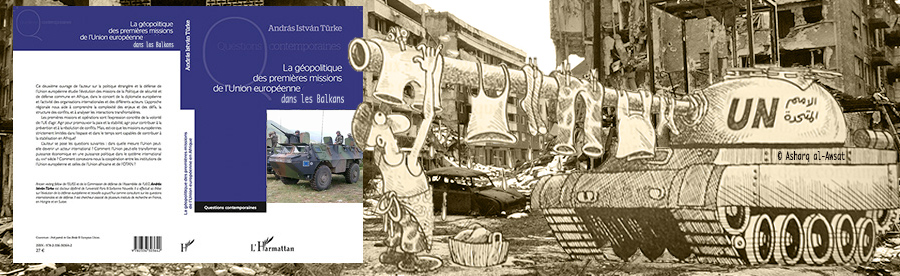
We are looking for sponsors for the English translation of these books, please contact turkeandras(at)gmail(dot)com