
Vous êtes ici
Agrégateur de flux
La France dans le monde : des moyens réduits pour la diplomatie ?
De l'argent pour les armes, pas pour la diplomatie. La France nourrit de grandes ambitions internationales mais elle ne s'en donne pas les moyens. Pire, elle supprime des postes et diminue le budget du ministère des Affaires étrangères. Et ce au moment où la diplomatie reste indispensable pour faire face aux bouleversements géopolitiques et géoéconomiques du monde.
Catégories: France
Les résultats du tirage Loto Star de 11H
LES RÉSULTATS LOTO STAR SONT LÀ !
TIRAGE N°138/26 Mercredi 18 Novembre 2026 (11H)
82 • 26 • 64 • 57 • 63
Félicitations aux heureux gagnants !
Pas encore gagné ? Gardez le sourire !
Rendez-vous au prochain tirage de 14H pour une nouvelle chance.
Jouez dans les centres de jeux ou en ligne : Tapez 590# ou lnbloto.bj
Jouez avec modération et responsabilité. Le jeu doit rester un plaisir.
A TOI DE JOUER #Akaxòa
#LNBSA #XòGbɔnAlɔkpaVo #JeuResponsable #LaChanceAvecModération
Catégories: Afrique
The Manila Summit: Promise and Peril for India’s Quad Chairmanship
Since the Quad’s revival in 2021, New Delhi has not hosted any leaders’ summit on its own soil.
Catégories: Diplomacy & Crisis News
France : les parents d'Inass Touloub condamnés pour actes de torture
La mère d'Inass Touloub, fillette de quatre ans retrouvée morte au bord de l'A10 à l'été 1987, a été condamnée mardi 17 novembre à 20 ans de réclusion criminelle, tandis que le père écope d'une peine de 15 ans de prison pour complicité. Les deux accusés sont incarcérés immédiatement avec cette décision, rendue 39 ans après les faits et qui marque l'aboutissement d'un des plus anciens cold cases français.
Catégories: France
Ouganda: le fils de Yoweri Museveni affirme vouloir succéder à son père à la présidence
En Ouganda, Muhoozi Kainerugaba est de retour sur le réseau social X depuis lundi 16 novembre, après une semaine d’absence. Le fils du président Yoweri Museveni, qui s’est déjà vanté d’avoir fait enlever et torturer des opposants, affiche désormais ses ambitions présidentielles et s’en prend de nouveau à Kizza Besigye. Des déclarations qui relancent les questions sur la succession du chef de l'État.
Catégories: Afrique
Mobilisations en France : la police au bord de l'épuisement professionnel
Au lendemain de la mobilisation du 17 novembre, on relève que les cortèges étaient plutôt calmes : 146 000 personnes ont manifesté selon le ministère de l'Intérieur, plus de 500 000 pour la CGT. À force d’encadrer ces manifestations, des CRS se disent à bout : manque de repos, fatigue physique, prime de risque jugée insuffisante, la colère monte et le syndicat appelle à une "journée noire" le 26 novembre.
Catégories: France
DZ Mafia : deux figures du narcotrafic marseillais condamnées à la perpétuité
Deux figures du narcotrafic marseillais, membres de la DZ Mafia, ont été condamnées à la perpétuité pour un triple assassinat commis en 2020. Le frère […]
L’article DZ Mafia : deux figures du narcotrafic marseillais condamnées à la perpétuité est apparu en premier sur .
Catégories: Afrique
Ramadan 2027 en Algérie : Bonatiro annonce la date du 1er jour
Loth Bonatiro a affirmé que les calculs astronomiques permettent de déterminer avec précision et à l’avance les échéances lunaires, ouvrant ainsi la voie à l’établissement […]
L’article Ramadan 2027 en Algérie : Bonatiro annonce la date du 1er jour est apparu en premier sur .
Catégories: Afrique
Kisangani renforce son réseau de transport urbain avec dix nouveaux bus
La ville de Kisangani, chef-lieu de la province de la Tshopo, est dotée de dix nouveaux bus destinés au transport public. Ces véhicules, mis à la disposition de la population, depuis le 13 novembre, par le président de la République par l’entremise de la fondation Doudou Fwamba, visent à améliorer la mobilité urbaine et à répondre aux difficultés de déplacement auxquelles sont confrontés de nombreux habitants.
Catégories: Afrique
Gaz : Sonelgaz propose un service gratuit aux foyers, comment en profiter ?
À l’approche de l’hiver, Sonelgaz Distribution poursuit sa campagne de sensibilisation aux risques liés à l’utilisation du gaz. Dans sa 10e publication consacrée aux gestes […]
L’article Gaz : Sonelgaz propose un service gratuit aux foyers, comment en profiter ? est apparu en premier sur .
Catégories: Afrique
Madagascar: un accident faisant 26 morts relance la polémique sur la sécurité routière
À Madagascar, au moins 26 personnes sont mortes dans le sud du pays. Dans la nuit de lundi à mardi, leur mini-bus a été emporté par un torrent alors qu’il traversait une rivière. Cinq passagers sont toujours portés disparus. Un drame qui relance la question de la sécurité routière, dans un pays où les routes tuent des milliers de personnes chaque année.
Catégories: Afrique
Communiqué de presse - Réseaux électriques: les députés et le Conseil s’accordent pour accélérer les procédures d’autorisation des projets
L’accord vise à accélérer les procédures d’autorisation des projets liés aux réseaux électriques et aux énergies renouvelables, pour favoriser l’approvisionnement et faire baisser les prix.
Commission de l'industrie, de la recherche et de l'énergie
Source : © Union européenne, 2026 - PE
Commission de l'industrie, de la recherche et de l'énergie
Source : © Union européenne, 2026 - PE
Catégories: Union européenne
INDIA: ‘It Used to Be the State’s Job to Enrol Every Eligible Adult. Now People Have to Prove They Belong’
By CIVICUS
Nov 18 2026 (IPS)
CIVICUS discusses protests sparked by the mass removal of voters from India’s electoral rolls with Sanjana, a young development professional based in New Delhi who has joined the protests and volunteered at a voter helpdesk.
Sanjana
Since October 2026, people have been taking to the streets of Delhi against the Election Commission’s Special Intensive Revision of the electoral rolls, which has struck an estimated 130 million names off the lists. A broad coalition of student groups, opposition parties and the Cockroach Janta Party, a Gen Z protest movement with mass appeal among young people, is demanding that the exercise be reversed. The government has responded with violence, heavy security and arrests. Meanwhile, volunteers are helping excluded voters in their efforts to get back on the rolls.What’s wrong with the electoral roll revision?
For a start, it has no precedent. The Manual on Electoral Rolls of the Election Commission of India (ECI), published in March 2023, lists four types of revision, and the current ‘Special Intensive Revision’ (SIR) is not one of them. Yet the ECI presents it as routine, claiming it has been conducted eight times since independence.
The core problem is that the SIR is flipping the burden of proof. It used to be the state’s job to enrol every eligible adult. Now people have to prove they belong. The most controversial requirement is that voters prove they, their parents or grandparents appeared on the 2002 rolls. Software then checks these links for ‘logical discrepancies’, such as a parent who appears to have too many children.
The system flagged 13.1 million voters in West Bengal state and 23.5 million in Madhya Pradesh, 17 and 41 per cent of voters in those states. Within weeks, the Bengal figure fell to around 9.5 million because the ECI changed the criteria for what counted as a discrepancy partway through. In Goa, 97 voters were left off the final roll because of software issues, even after officials cleared them. In Uttar Pradesh, the software auto-generated 87,127 forms to delete voters without giving any reason.
There’s dissent even inside the ECI. Two commissioners recorded objections to decisions taken without their knowledge 14 times in 10 months. The ECI has also centralised control over the software, to the point that states have written to the central government to complain they have no access.
Who’s being excluded?
As many as 130 million names have been struck off the rolls across 30 states and territories, with Delhi the hardest hit. Almost 33 per cent of its voters were excluded at the draft stage.
In Bihar, the first state to go through the SIR, the exercise crashed the state’s elector-to-adult population ratio from 97 to 88 per cent, against 99 per cent nationwide. In Bengal, over nine million voters were deleted. In Karnataka, the figure was nearly 10 million, with Bengaluru alone losing over 4.3 million. Overall, at least 120 million eligible adults are likely to be left off the final SIR lists.
The appeals system barely works. In Bengal, of 2.22 million appeals seeking reinstatement, only 1,607 voters were restored in time to vote in the 2026 state election. Can the result be considered valid? Some ask whether those voters would have backed the Trinamool Congress, the main rival to Prime Minister Narendra Modi’s party in the state. But the real problem is that they could not vote at all, whoever they would have chosen. In a democracy, every citizen’s vote should count.
Those struck off are the people least likely to have the right documents. First of all, women are affected. An analysis in The Hindu found that in the nine Bihar constituencies with the most deletions, 56 per cent of those deleted were women, mostly aged 18 to 39. This points to married women, since marriage is the main reason women move. A woman who moved to her husband’s village is now asked to trace herself back to a 2002 roll. The gender gap on the rolls had narrowed from two million to 700,000 women by early 2025. The SIR pushed it back up to 1.6 million.
Analysis of the Bihar SIR also shows that Muslims made up 24.7 per cent of the 6.5 million voters excluded from the draft rolls and 33 per cent of those deleted from the final list, despite comprising only 16.9 per cent of the state’s population. This matches what I saw at the helpdesk where I volunteered in Nizamuddin, a mostly Muslim neighbourhood of Delhi.
Migrant workers, urban poor people and displaced people have also been disproportionately affected. When your home is bulldozed, your address disappears with it. The problem is so widespread that Delhi’s election office had to hold special camps for people whose neighbourhoods had been demolished. The state demolishes your home and then asks you to prove where you live.
The ECI keeps saying a notice is not a deletion. But for a domestic worker who has to miss a day’s wages, find a lawyer and chase a landlord for a rental agreement, the notice is the punishment. The government is disenfranchising people without saying so.
How are civil society groups helping people get back on the rolls?
Civil society groups such as Voter Adhikar Manch have set up helpdesks close to where excluded groups live, with volunteers who help people file petitions and gather the documents they need to answer their notices.
Many people have been flagged for ‘logical discrepancies’ by software that had not been properly tested. In Nizamuddin, for instance, many cases carried the same flag: ‘You have been linked as son/daughter with someone who is claimed by six others as father, giving suspicion of a likely incorrect match’. That’s absurd in a country with a long history of large families. Many people who had moved house were put on the list of ‘absent, shifted or dead’ voters.
In Nizamuddin, there was a case of a domestic worker who’d received a notice in English, which she didn’t understand. She missed a day’s work to come to us. It turned out she had no document to prove her current address. Her old voter ID card listed Sunder Nagar, a settlement the government demolished in 2023. She’s lived in the same rented home in Nizamuddin since December 2023, but the landlord refuses to give her a rental agreement. The lawyer at the helpdesk offered to speak to the landlord, but she feared retaliation and losing her home. So the lawyer wrote a letter to the ECI asking for police verification of her residence instead.
So much effort, money and distress just to vote in a democracy. Of course this exercise will disenfranchise the poor. It’s an old authoritarian tactic. Helpdesks support people nearby, but India is vast and they cannot reach every neighbourhood. What happens to everyone else?
Who’s leading the protests and what are they demanding?
The protest movement against the SIR is a broad coalition. Alongside opposition leaders, leftist parties and left-wing student organisations such as the All India Students’ Association (AISA) and the Students’ Federation of India, it includes the Cockroach Janta Party (CJP).
CJP has mass appeal among Gen Z and draws a liberal crowd. Its pull was clear in the July protests calling for the education minister to resign over leaked papers in the national medical entrance exam. Because the protests focused on a single issue, the crowd swelled across ideological and party lines. After that success, CJP launched campaigns such as ‘Fix the Schools’, which flags failings in schools across rural India. Through these campaigns and an active social media presence, it has kept a spirit of dissent alive among large numbers of liberal young people.
The protest coalition wants Chief Election Commissioner Gyanesh Kumar to resign and the SIR rolled back with its deletions declared void. But some groups go further. CJP wants an inquiry and criminal charges against Kumar, a freeze on the 2025 electoral rolls and elections held on those rolls. It also wants an independent body to select election commissioners. AISA wants wrongly deleted voters restored and the 2023 law on appointing election commissioners repealed, since it removed the Chief Justice from the selection panel and gave commissioners sweeping legal immunity. The Congress party and others such as the Dravida Munnetra Kazhagam have also demanded a return to ballot papers.
Everyday people have taken to the streets, asking why the government is protecting Kumar when the ECI is supposed to be autonomous and the public is calling for his impeachment.
How have authorities responded?
The October protests at Jantar Mantar, Delhi’s designated protest site, were met with aggressive repression. Instead of holding Kumar to account, the government deployed 40,000 security personnel in Delhi to confront the people protesting against him, some of them pulled from sensitive security zones. Ahead of the protest, it shut 57 metro stations and cancelled trains to Delhi. It had CJP leaders arrested and several of their allies put under preventive detention or house arrest and made to sign ‘peace bonds’ barring them from future protests.
The state’s strategy of exhaustion also targets leaders beyond CJP. Neha Bora, a young AISA activist, has endured repeated illegal detentions and refuses to sign a peace bond. At a hearing on her case, a mob of 50 to 60 Hindu nationalist supporters chanted slogans such as ‘beat the traitors of the country with shoes’ and made direct threats, right outside a police station. Police have even picked up bystanders in the name of ‘keeping peace’.
How does the struggle for voting rights connect with other struggles?
Beyond Delhi, political momentum is building on many issues. Protests against caste discrimination in universities, against Google data centres and against land grabs share a common message: the people of India have had enough of the Modi regime.
These protests also face harsh repression. In Assam, Indigenous rights activist Pranab Doley, who has led protests against a proposed luxury hotel near Kaziranga National Park, was detained under the National Security Act, a preventive detention law, a day after he was granted bail. The project threatens people’s livelihoods and relationship with the area’s rich biodiversity. In Arunachal Pradesh, authorities have met protests against the Siang Upper Multipurpose Project, a planned mega-dam, with brutal repression. Police used teargas and authorities charged four activists under the state’s anti-terror law.
The movement needs to treat every protest as part of a broader anti-authoritarian wave. Anger over voting rights is intense, and the crowds it has brought onto the streets have opened space to speak out on many issues, including Palestine. But in this charged atmosphere, the movement must not lose sight of high unemployment, inflation, levels of income inequality that are worse than under British rule, women’s safety, land grabs, and caste-based atrocities and discrimination, which hit the most excluded people hardest. The movement in Delhi must connect with these struggles across the country.
What’s needed to protect voting rights?
The SIR must be halted completely and its irregularities examined by the judiciary. Kumar must resign, and the 2023 law that shields the ECI from action must be repealed. Then the Supreme Court must hear the case against those responsible, based on an audit by independent bodies that include civil society. Above all, the state must go back to registering every eligible voter instead of making people prove they have the right to vote.
Even if fewer people had been deleted, there would still be good reason to protest. What we object to is the intention behind the exercise, whatever the numbers. We defend the right of every citizen to vote.
CIVICUS interviews a wide range of civil society activists, experts and leaders to gather diverse perspectives on civil society action and current issues for publication on its CIVICUS Lens platform. The views expressed in interviews are the interviewees’ and do not necessarily reflect those of CIVICUS. Publication does not imply endorsement of interviewees or the organisations they represent.
India is currently on the CIVICUS Monitor watchlist, which identifies countries where a severe deterioration in the quality of civic space is taking place.
SEE ALSO
Gen Z protests: new resistance rises CIVICUS | State of Civil Society Report 2026
India’s revolt against disenfranchisement CIVICUS Lens 06.Nov.2026
India’s young people find their voice CIVICUS Lens 07.Aug.2026
Catégories: Africa
Présidentielle 2027 : face à Marine Le Pen, Jean-Luc Mélenchon gagnera l’élection, assure Darmanin
Soutien d’Édouard Philippe, le ministre de la Justice a appelé Bruno Retailleau et Gabriel Attal à se désister en faveur du candidat Horizons, sans passer par une primaire, afin d’empêcher le patron de LFI d’accéder au second tour.
Catégories: France
Ghana's new $60m presidential jet sparks public outrage
The purchase has sparked outrage over its cost as many Ghanaians struggle with rising cost of living.
Catégories: Africa
Fifa : Philippe Diallo peut-il battre Gianni Infantino à la présidence?
Le président de la Fédération française de football, Philippe Diallo, a été choisi par l’UEFA pour affronter Gianni Infantino, lors de l’élection à la présidence de la Fifa, le 18 mars 2027, à Rabat. L’instance européenne, qui lui apporte son soutien unanime, cherche à proposer une autre voie après ses désaccords avec le président sortant. Pourquoi le choix de l'UEFA s'est-il finalement porté sur Philippe Diallo pour affronter Gianni Infantino ? Même si le président de la FFF a le soutien unanime de l’UEFA, le président sortant bénéficie notamment de celui de la CAF. Comment peut-il convaincre les fédérations africaines à voter pour lui ?
Catégories: Union européenne
«Hubs de retour» : pourquoi les Européens misent sur le Rwanda?
Cinq pays européens, l’Allemagne, l’Autriche, le Danemark, la Grèce et les Pays-Bas, veulent ouvrir au Rwanda, en 2027, un premier « hub de retour » destiné à des personnes dont la demande d’asile a été rejetée et qui ne peuvent pas être renvoyées dans leur pays d’origine. Que sait-on exactement de ce projet ? Pourquoi le Rwanda en est-il le principal pays partenaire ?
Catégories: Union européenne
Guillaume Tabard : «Marine Le Pen sous le totem des 62 ans, un tournant bienvenu»
CONTRE-POINT - Au fil des ans, le Rassemblement national poursuit sa mue économique. Dans cette campagne, la candidate à la présidentielle a désormais pour premier souci la crédibilité.
Catégories: France
Pages



© 2012-2018 Europa Varietas Foundation © 2015-2018 Europa Varietas Association
www.europavarietas.org | info(@)europavarietas(dot)org | Switzerland


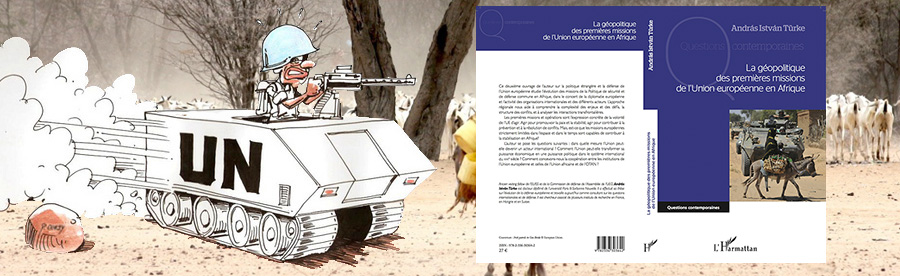
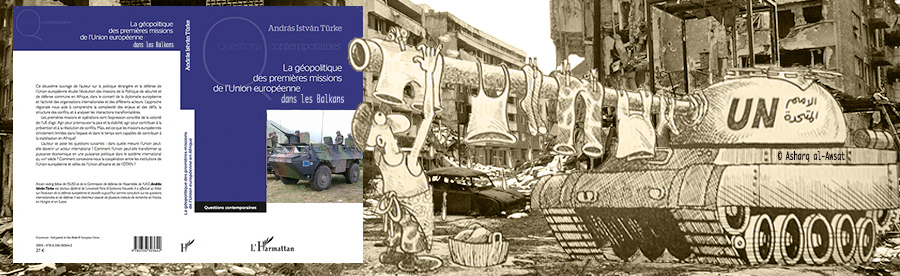
We are looking for sponsors for the English translation of these books, please contact turkeandras(at)gmail(dot)com