
You are here
Feed aggregator
Serbie : la diaspora manifeste dans plus de 50 villes du monde
Samedi 9 mai, à l'occasion du jour de l'Europe, les communautés serbes de la diaspora réparties sur les cinq continents ont organisé des rassemblements dans plus de cinquante villes du monde pour exiger des élections libres. Reportage à Bruxelles.
- Le fil de l'Info / Serbie, Populations, minorités et migrations, Politique, Vucic, Courrier des Balkans
Categories: Afrique, Balkans Occidentaux
Au Kenya, Macron affirme que l'ère du "pré carré" français en Afrique est terminée depuis 2017
L'ère du "pré carré" français en Afrique francophone a pris fin en 2017 : le dirigeant français Emmanuel Macron a justifié dimanche, à son arrivée au Kenya, d'avoir choisi ce pays anglophone pour le seul grand sommet franco-africain de sa présidence, minimisant au passage le divorce avec trois États sahéliens.
Categories: Afrique, Kelet-Közép-Európa
Afrique du Sud : la procédure de destitution de Ramaphosa relancée
La Cour constitutionnelle sud-africaine a rouvert vendredi la porte à une procédure de destitution du président Cyril Ramaphosa dans le cadre d'un scandale lié à un important vol d'argent liquide, en invalidant un vote du Parlement qui s'y était opposé.
Categories: Afrique
Concert de chant byzantin
Le samedi 9 mai 2026, à 20 h, la basilique cathédrale de Saint-Denis accueillera un concert exceptionnel rassemblant les chœurs de cinq traditions orthodoxes byzantines présentes en région parisienne : grecque, bulgare, roumaine, antiochienne et serbe. L'événement, porté par l'association Choeurs Byzantins, dépasse le cadre d'une manifestation musicale ordinaire : il propose une rencontre des écoles psaltiques d'Orient autour d'un même patrimoine liturgique millénaire.
Une prière chantée (…)
Elles du monde
Categories: Balkans Occidentaux, Diplomacy & Crisis News
Sommet Afrique-France : qui financera l’avenir économique de l’Afrique ?
À l’occasion du sommet Africa Forward organisé à Nairobi au Kenya, le Journal de l’Afrique s’intéresse aux grands enjeux économiques entre la France et le continent africain. Investissements, financement du développement, souveraineté économique, jeunesse, innovation : ce sommet veut repositionner les relations Afrique-France autour du business et des partenariats économiques dans un contexte mondial de forte concurrence. Fatimata Wane reçoit Adama Mariko, économiste, secrétaire général du mouvement Finance en Commun et responsable au sein du groupe AFD, pour analyser les nouveaux rapports économiques entre l’Afrique et la France et les défis du financement du développement africain.
Categories: Afrique
A Sétif, Emmanuel Macron vient d’humilier une fois de plus la France
En envoyant Madame Alice
Rufo, ministre déléguée aux Armées et aux anciens combattants, déposer une
gerbe de fleurs lors d’une cérémonie algérienne de mise en accusation de la France,
Emmanuel macron a donc décidé une fois pour toutes de valider l’histoire
officielle algérienne.Dans cette repentance à sens unique qui n’en
finit pas, Emmanuel Macron a en effet fait l’impasse sur les morts français
pour s’aligner servilement sur
l’histoire officielle algérienne.Or, ce qui s’est passé à Sétif et dans sa région au mois de mai 1945 est bien éloigné de la doxa (Voir mon livre « Algérie l’Histoire à l’endroit »)
La suite de cette analyse (86%) est réservée aux abonnés à l'Afrique Réelle.
Pour vous abonner, cliquer ici

l’histoire officielle algérienne.Or, ce qui s’est passé à Sétif et dans sa région au mois de mai 1945 est bien éloigné de la doxa (Voir mon livre « Algérie l’Histoire à l’endroit »)
La suite de cette analyse (86%) est réservée aux abonnés à l'Afrique Réelle.
Pour vous abonner, cliquer ici
Categories: Afrique, Europäische Union
"Les choses évoluent de manière très positive" : les parents de Christophe Gleizes sur France 24
Sylvie Godard et Francis Godard, la mère et le beau-père de Christophe Gleizes, étaient invités sur le plateau de France 24 samedi 9 mai pour parler des derniers développements concernant la détention du journaliste en Algérie. Ils évoquent le changement de stratégie pour obtenir sa libération avec sa renonciation au pourvoi en cassation, ouvrant ainsi la voie à une possible grâce du président algérien Abdelmadjid Tebboune, ainsi que le dégel diplomatique entre la France et l’Algérie.
Categories: Diplomacy & Defense Think Tank News, France
Mercenaires et opportunistes : la véritable histoire des samouraïs, les guerriers millénaires du Japon
Ces légendaires chevaliers d'autrefois étaient-ils vraiment aussi intrépides, loyaux, prêts au sacrifice, disciplinés et typiquement japonais que nous le pensions ?
The New Leaders Calling the Shots in Iran
Categories: Diplomacy & Defense Think Tank News, Union européenne
«Soit c’est nous, soit c’est eux» : le maire LFI Bally Bagayoko évoque une «insurrection populaire» en cas de victoire du RN à la présidentielle
Le maire LFI de Saint-Denis et Pierrefitte-sur-Seine a évoqué une «insurrection populaire» face à une éventuelle victoire du RN en 2027, dans un entretien où il multiplie également les attaques contre Emmanuel Macron, les médias du groupe Bolloré et les partis de gauche opposés à Jean-Luc Mélenchon.
Categories: France, Union européenne
Ombres et lumières de l'agrivoltaïsme
Promettant de concilier agriculture et production d'électricité solaire, l'agrivoltaïsme connaît un développement fulgurant en France. Derrière l'ambition écologique affichée, toutefois, l'appétit financier des énergéticiens est grand. Le laisser-faire réglementaire actuel risque de sacrifier (…)
/ France, Agriculture, Énergie, Climat
Categories: Diplomacy & Crisis News, Europäische Union
Ces nouvelles règles de la FIFA qui vont révolutionner la Coupe du Monde 2026
De nouvelles règles devraient entrer en vigueur lors de la Coupe du monde 2026, décidées par International Football Association Board (IFAB), l’organe qui fixe les lois du jeu.
Categories: Afrique
Ces nouvelles règles de la FIFA qui vont révolutionner la Coupe du Monde 2026
De nouvelles règles devraient entrer en vigueur lors de la Coupe du monde 2026, décidées par International Football Association Board (IFAB), l’organe qui fixe les lois du jeu.
Comment la guerre en Iran a influencé l'arrestation de l'un des hommes les plus recherchés d'Europe, qui dirigeait son présumé empire de la drogue depuis Dubaï
L'arrestation de Daniel Kinahan à Dubaï intervient dans un contexte de pression internationale accrue contre le crime organisé et de coopération policière croissante, sous l'influence des tensions géopolitiques au Moyen-Orient.
Comment la guerre en Iran a influencé l'arrestation de l'un des hommes les plus recherchés d'Europe, qui dirigeait son présumé empire de la drogue depuis Dubaï
L'arrestation de Daniel Kinahan à Dubaï intervient dans un contexte de pression internationale accrue contre le crime organisé et de coopération policière croissante, sous l'influence des tensions géopolitiques au Moyen-Orient.
Serbie : Enes Halilović, une voix littéraire venue du Sandžak de Novi Pazar
C'est un premier roman qui nous vient du Sandžak de Novi Pazar, dans le sud de la Serbie. Avec Gens sans tombes, Enes Halilović donne corps à une vérité plurielle, traversée de récits contradictoires et de fragments de vie. Une œuvre ancrée dans les Balkans, mais tournée vers une interrogation universelle sur la parole, la mémoire et le sens.
- Articles / Courrier des Balkans, Serbie, Culture et éducation, crise sandzak“Consulting Citizens? Be Our Guest – But Only on Our Conditions”
By Karolina Borońska-Hryniewiecka (Polish Academy of Science & Paris 1 – Panthéon Sorbonne) & Jan Kotýnek Krotký (Masaryk University)
On 9 May 2026, we celebrate Europe Day and the fourth anniversary of the closing event of the Conference on the Future of Europe (CoFoE) hailed as a landmark transnational democratic experiment. During CoFoE hundreds of randomly selected citizens from all EU Member States deliberated alongside Members of European Parliament (MEPs) and national parliaments (MPs), producing far‑reaching recommendations for the European Union’s future.
Yet, for all the fanfare, the political follow‑up has been sobering. Most visibly, member state governments have declined to open the process of treaty reform based on the Conference’s proposals, despite the European Parliament’s plea to do so. While the CoFoE inspired a new generation of European Commission’s Citizens Panels and made them a permanent feature of the EU’s participatory toolbox, these deliberative fora remain largely disconnected from parliamentary arenas where political conflict and decision‑making actually take place. At the same time, the EU and its member states are experiencing the crisis of representative democracy manifested by decreasing trust in parliaments, increasing polarisation, populist electoral gains and widespread citizens’ dissatisfaction with democracy in general.
Four years on, one uncomfortable question looms: is the EU drifting towards a model of citizen participation that is rich in symbolism, but thin on political impact and true connection with representative policy-making?
Our recent JCMS article analyses how both MEPs and MPs talk about increased citizen participation in EU policy‑making. We depart from the premise that citizen participation is more likely to gain attention and appreciation from members of parliament when it is institutionally “coupled” with representation and the formal policy-making stage. To achieve our goal, we examine debates in the European Parliament, inter-parliamentary committee meetings, and several national parliaments between 2020 and 2023. We explore the underlying factors behind these positions, such as party ideology, institutional level, and views on European integration. Based on this analysis, we develop a refined typology of political discourses on EU‑level deliberative mini‑publics (DMPs), distinguishing between consultative, sceptical and power‑sharing stances.
A consultative Union – by design
Our first key finding is both simple and striking: across arenas and party families, a consultative discourse clearly dominates which means that parliamentarians overwhelmingly appreciate citizen participation and see value in deliberative mechanisms – as long as they remain advisory and do not fundamentally redistribute decision‑making power. In this discourse, citizens should be regularly asked, listened to, and perhaps even involved “permanently,” but final authority must stay firmly with elected representatives.
In practice, it suggests that most parliamentarians support what we call a “consultative Union”: a system where citizen participation is welcomed, but structurally non‑binding. The Commission citizens panels fit this logic very well – they create new spaces for citizen input, yet their policy-shaping potential remains largely discretionary.
MPs and MEPs: more similar than you might think
The second and unexpected finding concerns the relationship between national and European parliamentary arenas. While we might expect supranational MEPs to be more supportive than national MPs of transnational citizen involvement in EU policy-making, and national MPs to be more sceptical of EU‑level participatory innovations, our analysis suggests otherwise. We find no significant discursive differences between MEPs and MPs.
Such finding not only confirms that political conflict increasingly cuts across, rather than between, the national and supranational levels but is also normatively important since any EU participatory instrument that aspires to be more than window‑dressing needs the support of both national and European parliamentarians. The example of CoFoE showed how quickly legitimacy clashes emerge when that support is uneven.
Power‑sharing or populist plebiscites?
Perhaps the most politically explosive insight from our study is that not all calls for “giving power back to the people” mean the same thing. At first glance, there seems to be substantial support for what we label power‑sharing discourse: representatives who are willing to put citizens on an equal footing with politicians and accept binding forms of citizen involvement in EU decision‑making.
But once we look closely, this power‑sharing discourse splits into two very different strands.
In what we call deliberative power‑sharing discourse parliamentarians advocate binding deliberative mechanisms whose recommendations would directly shape EU reforms – and see citizens as partners in co‑constructing policy. This language is most prominent among Greens/EFA, the radical left and some liberal actors, who stress that strong participation can reinforce representative democracy.
On the other hand, plebiscitary power‑sharing discourse opposes institutionalized, transnational citizen deliberation postulating instead referendums that bypass parliaments and EU institutions. This strand is particularly visible among Eurosceptic and far‑right representatives, who demand EU‑wide referendums on European questions and present them as the only “real” expression of the people’s will.
This finding matters for how we interpret populism’s relationship to democratic innovation. It shows that far‑right and hard Eurosceptic parties may be enthusiastic about direct‑democracy instruments, yet deeply hostile to transnational deliberative settings such as CoFoE due to their distrust of EU‑organised participatory forums as biased or manipulated. Instead, they favour top‑down referendums whose questions and framing they hope to control. In this plebiscitary power‑sharing discourse, citizens are invoked less as co‑deliberators and more as a weapon, or at least a legitimating force for decisions aimed at weakening EU institutions.
Beyond consultation: reconnecting citizens and parliaments
What follows from these findings for the EU’s broader “citizen turn” is that the real challenge is not to invent ever more participatory instruments, but to better connect existing deliberative experiments to representative politics at both EU and national levels.
Our study suggests that while many politicians are not opposed to citizen involvement per se, they are often wary of deliberative designs that either sideline them or appear to instrumentalise citizens. This is precisely why thinking seriously about institutional linkages matters: for example, involving both MEPs and national MPs in transnational citizens’ assemblies, or hosting pan‑European citizen panels in national parliaments during rotating EU Council presidencies.
At the moment, the Commission‑led citizens’ panels risk reproducing the main weakness of CoFoE: citizens are invited to deliberate, but their recommendations are only loosely coupled to the arenas where political conflict is structured and decisions are actually taken. This fuels suspicion that participation serves primarily to legitimise pre‑set policy trajectories – “democracy without politics”, as some have called it.
Karolina Borońska-Hryniewiecka is Associate Professor at the Institute of Political Studies, Polish Academy of Science, and Associated Research Fellow at the CESSP, Paris 1 – Panthéon Sorbonne. She is currently leading an NCN OPUS-funded project exploring transnational political discourse on EU institutional reform. Her work appeared in, among others, West European Politics, European Political Science Review, Journal of European Integration, and Parliamentary Affairs.
Jan Kotýnek Krotký is Assistant Professor at the International Institute of Political Science, Masaryk University. He is currently leading a post-doctoral project on citizen participation in the EU, supported by the Czech Science Foundation. His articles appeared in journals such as West European Politics, JCMS: Journal of Common Market Studies, Journal of Contemporary European Studies, and European Security.
The post “Consulting Citizens? Be Our Guest – But Only on Our Conditions” appeared first on Ideas on Europe.
Categories: European Union, France
Exposition | Adriana Popović & Aleksandra Kokotović : « Formes de l'hybride »
Le titre de l'exposition fait référence aux multiples hybridités qu'elle explore : celle qui unit les deux artistes, celle des formes et des matériaux employés, celle des références puisées dans l'histoire de l'art, la géopolitique ou la science-fiction, et enfin celle du caractère double des œuvres, qui, malgré leur matérialité affirmée, ouvrent une fenêtre sur l'âme humaine et ses aspirations. Adriana Popović (1970, Paris) possède une double formation artistique et scientifique : formée (…)
- Agenda / Serbie, Région parisienne
Categories: Balkans Occidentaux, Diplomacy & Crisis News
Pages


© 2012-2018 Europa Varietas Foundation © 2015-2018 Europa Varietas Association
www.europavarietas.org | info(@)europavarietas(dot)org | Switzerland
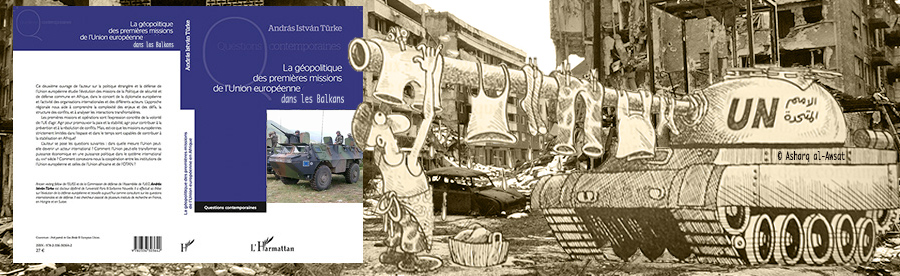
We are looking for sponsors for the English translation of these books, please contact turkeandras(at)gmail(dot)com