
You are here
Europäische Union
Media advisory - Justice and Home Affairs Council of 1 and 2 October 2026
Main agenda items, approximate timing, public sessions and press opportunities.
Categories: Europäische Union
Gerichtshof der EU: Die Vertreter der Mitgliedstaaten ernennen einen Richter beim Gerichtshof und eine Richterin und einen Richter beim Gericht
Die Vertreter der Mitgliedstaaten ernennen einen Richter beim Gerichtshof und eine Richterin und einen Richter beim Gericht.
Categories: Europäische Union
Council agrees negotiating stance to simplify and streamline food and feed safety requirements
Council sets its position to simplify and streamline food and feed safety requirements.
Categories: Europäische Union
MFR 2028-2034: Rat legt Verhandlungsposition zur künftigen Unterstützung für den Fischereisektor durch die EU fest
Rat einigt sich auf eine partielle Verhandlungsposition zur EU-Unterstützung für die Fischerei-, Aquakultur- und Meerespolitik für den Zeitraum 2028-2034.
Categories: Europäische Union
Rat stärkt EU-Architektur für die Reaktion auf Bedrohungen im Weltraum
Der Rat hat einen Beschluss angenommen, mit dem die EU-Architektur für die Reaktion auf Bedrohungen im Weltraum angesichts eines zunehmend unverantwortlichen und feindseligen Verhaltens in diesem Bereich gestärkt wird.
Categories: Europäische Union
Menschenrechtsverletzungen in Russland: Rat nimmt zehn Personen wegen des Ausschlusses der Partei Jabloko von den Wahlen zur Staatsduma in die Sanktionsliste auf
Der Rat hat restriktive Maßnahmen gegen zehn russische Personen verhängt, die für die Unterdrückung der Meinungsfreiheit und der Vereinigungsfreiheit sowie die Unterbindung des Zugangs zu Informationen in Russland verantwortlich sind.
Categories: Europäische Union
EU verhängt Sanktionen wegen rechtswidrigen Deportationen ukrainischer Kinder nach Russland
Der Rat hat restriktive Maßnahmen gegen weitere zehn Personen und 17 Organisationen angenommen, die für die systematische rechtswidrige Deportation und Zwangsumsiedlung ukrainischer Kinder in die Russische Föderation und in vorübergehend besetzte Gebiete verantwortlich sind.
Categories: Europäische Union
Europäische Verteidigungsindustrie: Rat bestimmt die ersten fünf Vorhaben von gemeinsamem Interesse
Der Rat hat heute einen Durchführungsbeschluss angenommen, in dem die Liste der ersten fünf europäischen Verteidigungsvorhaben von gemeinsamem Interesse im Rahmen des Programms für die europäische Verteidigungsindustrie enthalten ist.
Categories: Europäische Union
Europäische Friedensfazilität: Rat nimmt Unterstützungsmaßnahme für die Verteidigungskapazitäten von Cabo Verde an
Der Rat hat die zweite bilaterale Unterstützungsmaßnahme im Rahmen der EFF in Höhe von 60 Mio. € angenommen, um die Einsatzbereitschaft der Streitkräfte Cabo Verdes zu stärken.
Categories: Europäische Union
Europäische Staatsanwaltschaft: Rat ernennt neue Staatsanwälte für Deutschland und Slowenien
Der Rat hat heute eine neue Staatsanwältin und einen neuen Staatsanwalt der Europäischen Staatsanwaltschaft (EUStA) ernannt: Tanja Frank Eler für Slowenien und Christopher Wenzl für Deutschland.
Categories: Europäische Union
Zivile GSVP-Missionen der EU: Rat erneuert Mandate der EU BAM Rafah und der EUPOL COPPS bis zum 30. Juni 2027
Der Rat hat die Mandate der zivilen GSVP-Missionen EU BAM Rafah und EUPOL COPPS um neun Monate verlängert und die Operationen bis zum 30. Juni 2027 fortgesetzt.
Categories: Europäische Union
„Arzneimittelpaket“: Rat nimmt neue Vorschriften für gerechteren und wettbewerbsfähigeren EU-Arzneimittelsektor an
Der Rat hat das „Arzneimittelpaket“ angenommen, das den Arzneimittelsektor der EU gerechter und wettbewerbsfähiger gestalten soll.
Categories: Europäische Union
Koordinierung der Systeme der sozialen Sicherheit: Rat gibt endgültig grünes Licht für aktualisierte Vorschriften
Der Rat hat Rechtsvorschriften angenommen, mit denen die Koordinierung der Sozialsysteme klarer, gerechter und leichter durchsetzbar werden soll.
Categories: Europäische Union
President of the Eurogroup, Kyriakos Pierrakakis, travels to Basel and Frankfurt
Kyriakos Pierrakakis, President of the Eurogroup, is travelling to Basel for a meeting with the Bank of International Settlements and to Frankfurt where he will speak at a Bundesbank conference.
Categories: Europäische Union
Joint Communiqué - Seventh Trilateral Meeting of the African Union, the European Union and the United Nations
Joint Communiqué - Seventh Trilateral Meeting of the African Union, the European Union and the United Nations, New York, 20 September 2026
Categories: Europäische Union
Press briefing - Justice and Home Affairs Council of 1 and 2 October 2026
The press briefing ahead of the Justice and Home Affairs Council will take place on Tuesday, 29 October 2026 at 14.00.
Categories: Europäische Union
Media advisory - Agriculture and Fisheries Council of 28-29 September 2026
Main agenda items, approximate timing, public sessions and press opportunities.
Categories: Europäische Union
Press release - COP31: Environment MEPs set out priorities ahead of Antalya climate summit
Preparing for the COP31 in Antalya, the Environment Committee is calling for a faster fossil fuel phase-out, more climate finance and stronger support for vulnerable countries.
Committee on the Environment, Public Health and Food Safety
Source : © European Union, 2026 - EP
Committee on the Environment, Public Health and Food Safety
Source : © European Union, 2026 - EP
Categories: Europäische Union
Press release - A tribute to Anna Politkovskaya
20 years on from her assassination, Human Rights and EU-Russia Parliamentary Cooperation committee MEPs will pay tribute to Russian journalist Anna Politkovskaya in Strasbourg.
Subcommittee on Human Rights
Source : © European Union, 2026 - EP
Subcommittee on Human Rights
Source : © European Union, 2026 - EP
Categories: Europäische Union
Missions - SEDE mission to Taiwan - 30 March - 2 April 2026 - 30-03-2026 - Committee on Security and Defence
This was the first official visit of the European Parliament’s Committee on Security and Defence (SEDE) to Taiwan, giving it a strong political significance. It took place at a particularly sensitive moment, marked by Russia’s war of aggression against Ukraine, ongoing instability in the Middle East and persistent tensions in the Indo-Pacific.
Location : Taiwan
SEDE mission report including the final programme
Source : © European Union, 2026 - EP
Location : Taiwan
SEDE mission report including the final programme
Source : © European Union, 2026 - EP
Categories: Europäische Union
Pages


© 2012-2018 Europa Varietas Foundation © 2015-2018 Europa Varietas Association
www.europavarietas.org | info(@)europavarietas(dot)org | Switzerland
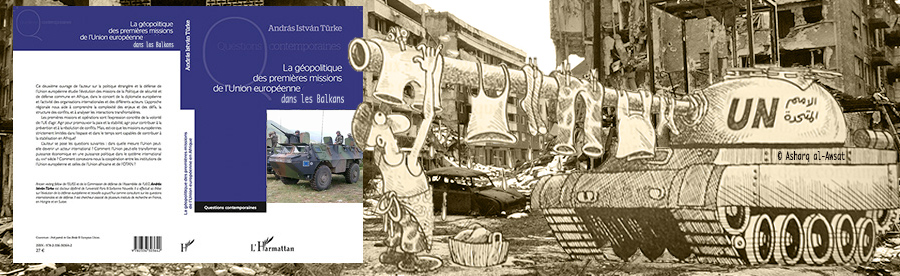
We are looking for sponsors for the English translation of these books, please contact turkeandras(at)gmail(dot)com