
You are here
Feed aggregator
Meeks Delivers Remarks During Floor Debate on Lebanon War Powers Resolution
Representative Gregory W. Meeks, Ranking Member of the House Foreign Affairs Committee, today delivered the following remarks on the floor, as prepared, during debate on H. Con. Res. 108, the War Powers Resolution to bar U.S. Armed Forces from hostilities in Lebanon.
Categories: Defence`s Feeds
Skepticism In Iran Over Israel-Lebanon Framework Agreement
When the United States, Israel, and Lebanon signed their trilateral framework agreement in Washington, the reaction in Tehran was swift -- and, across the political spectrum of Iranian state-aligned media -- almost uniformly hostile.
Categories: Defence`s Feeds
Israel must uphold its obligations under international law and take urgent steps to halt the violence in the West Bank: UK statement at the UN Security Council
Statement by Ambassador James Kariuki, UK Chargé d'Affaires to the UN, at the UN Security Council meeting on Palestine.
Categories: Defence`s Feeds
Today's top news: Venezuela, Lebanon, Occupied Palestinian Territory, Sudan, Afghanistan
Rescue teams race to find survivors as humanitarian response ramps up
Categories: Defence`s Feeds
PLA Southern Theater Command conducts routine patrol in South China Sea amid Philippines' 'joint patrols' with external countries
The PLA Southern Theater Command (STC) naval and air forces conducted a routine patrol in the South China Sea on Saturday and Sunday, said Senior Captain Zhai Shichen, spokesperson for the PLA STC, on Monday.
Categories: Defence`s Feeds
UN Commission warns of exceptionally grave human rights situation in eastern Democratic Republic of the Congo
Civilians in eastern Democratic Republic of the Congo have described an exceptionally grave human rights crisis marked by allegations of sexual violence and unlawful killings, the UN Independent Commission of Inquiry on the Human Rights Situation in the South and North Kivu Provinces of the Democratic Republic of the Congo warned today.
Categories: Defence`s Feeds
HRC 62 - EU statement - Enhanced Interactive Dialogue on the oral update of the Commission of Inquiry on the situation of human rights in North Kivu and South Kivu Provinces of the Democratic Republic of the Congo
No description
Categories: Defence`s Feeds
Sudan: UN welcomes extension of vital aid corridor amid rising insecurity
The United Nations has welcomed Sudan's decision to extend the opening of an aid corridor with neighbouring Chad and continues to express concern over the ongoing escalation in El Obeid, capital of North Kordofan state.
Categories: Defence`s Feeds
Venezuela earthquake death toll passes 1,700 as UN continues to scale up response
Five days after powerful earthquakes struck central-northern Venezuela, the death toll continues to climb along with the intense rescue operation and the UN coordinates humanitarian assistance, warning that recovery "is going to take time."
Categories: Defence`s Feeds
Over 1,300 excess deaths linked to Europe heatwave: WHO
More than 1,300 excess deaths have been recorded across Europe since June 21 linked to high temperatures, World Health Organization (WHO) Director-General Tedros Adhanom Ghebreyesus said on social media platform X on Sunday.
Categories: Defence`s Feeds
Alain Berset: Europe must look beyond rearmament to safeguard democratic security
Council of Europe conference highlights strategic foresight as a pillar of Europe's democratic future
Categories: Defence`s Feeds
Sri Lanka: Effective National Preventive Mechanism needed to address persistent risks of torture and ill-treatment, UN torture prevention body says
Sri Lanka must strengthen its National Preventive Mechanism and take concrete action to address persistent risks faced by people deprived of liberty, the UN Subcommittee on Prevention of Torture (SPT) said after its second visit to the country, citing concerns over prolonged pre-trial detention, overcrowding and inadequate conditions in detention facilities and other places where people are deprived of liberty.
Categories: Defence`s Feeds
World News in Brief: Afghanistan airstrikes, rights violations in DR Congo, Gaza displacement
At least 28 civilians were killed and 49 injured in airstrikes carried out in Paktya, Paktika and Kunar provinces in Afghanistan on Sunday evening, the UN Mission in the country has reported.
Categories: Defence`s Feeds
Since the Start of the Full-Scale War, the Russian Army Has Been Given as Many as 15 Deadlines for Capturing Our Donetsk Region - Address by the President
No description
Categories: Defence`s Feeds
We Expect the Negotiating Clusters on Ukraine's Path to European Union Membership to Be Opened as Soon as Possible - Ihor Zhovkva
No description
Categories: Defence`s Feeds
President of Ukraine and Denmark's Minister of Defense Discussed Preparations for the Drone Deal and Joint Work on Anti-Ballistic Capabilities
No description
Categories: Defence`s Feeds
Olga Zykova at URC 2026: Since 2022, international partners have provided Ukraine with nearly $180 billion in budget support
Deputy Minister of Finance of Ukraine Olga Zykova participated in the Ukraine Recovery Conference 2026 (URC 2026), held in Gdańsk on June 24-26. She spoke at the panel discussion "Recovery Despite the War - Future in the Making", dedicated to the strategic vision for Ukraine's recovery and reconstruction amid the full-scale war.
Categories: Defence`s Feeds
Ministry of Defence concludes year-long Smart Force Academy cycle, bringing together nearly 200 Ukrainian defence companies
The Ministry of Defence of Ukraine, together with its partners, has completed the 12-month Smart Force Academy educational programme for Ukrainian manufacturers of weapons and military equipment. A total of 385 representatives from 199 defence companies took part in the training, accounting for around 20% of the sector's enterprises. Nearly 40% of participants were company founders, co-owners, or executives.
Categories: Defence`s Feeds
The Cabinet of Ministers of Ukraine approves the framework for using EU funds for defence procurement
Ukrainian defence manufacturers will gain additional opportunities to expand production and fulfil contracts for the Defence Forces of Ukraine.
Categories: Defence`s Feeds
Over €100 million for defense technologies: Government gives the green light to international grants from Brave1 and partner countries
Ukraine is launching Brave International, the official unified framework for cooperation with international partners to advance defense innovation. The relevant resolution was adopted by the Cabinet of Ministers of Ukraine.
Categories: Defence`s Feeds
Pages


© 2012-2018 Europa Varietas Foundation © 2015-2018 Europa Varietas Association
www.europavarietas.org | info(@)europavarietas(dot)org | Switzerland
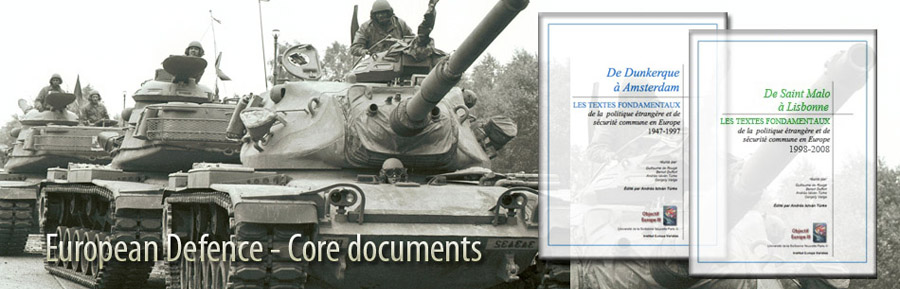
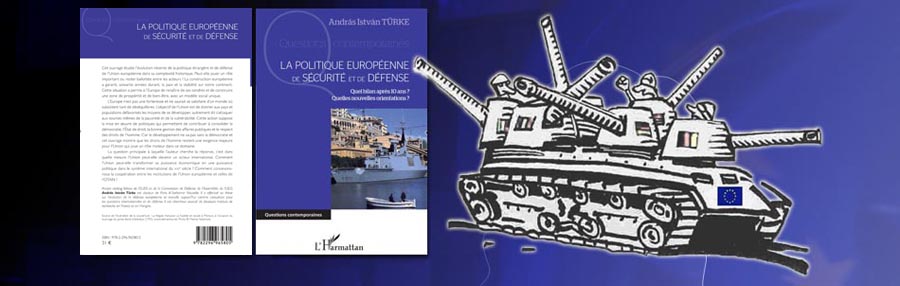
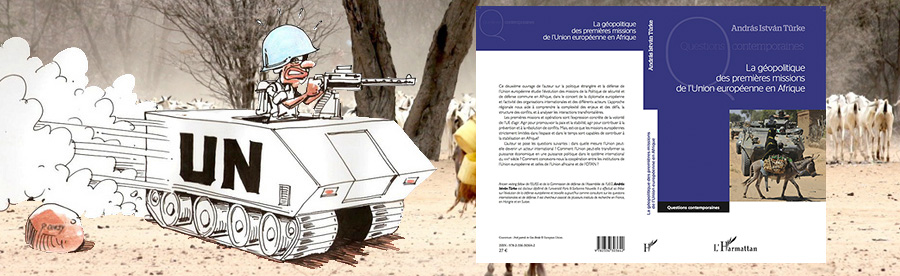
We are looking for sponsors for the English translation of these books, please contact turkeandras(at)gmail(dot)com