
You are here
Feed aggregator
Press release - EU survey: rising concerns push demand for more European action
At a time of heightened geopolitical tensions, citizens are increasingly anxious about their future and want the EU to act with unity and ambition.
Source : © European Union, 2026 - EP
Source : © European Union, 2026 - EP
Categories: European Union, France
Press release - EU survey: rising concerns push demand for more European action
At a time of heightened geopolitical tensions, citizens are increasingly anxious about their future and want the EU to act with unity and ambition.
Source : © European Union, 2026 - EP
Source : © European Union, 2026 - EP
Categories: Diplomacy & Crisis News, European Union
There Is Only One Sphere of Influence
America can project power with little constraint—and its rivals cannot.
Russia/Ukraine : Black Owl Team: Ukraine's bludgeoning of Russia's digital fortress
On 12 June last year, members of Black Owl Team (BO Team), a group of hackers working for the Ukrainian government, took to their Telegram channel to claim responsibility for yet another cyberattack on a strategic Russian company. This time, [...]
Categories: Afrique, Defence`s Feeds
United States : US start-up poised to assist Abu Dhabi in its online counter-influence battle
Faced with a rapidly changing regional environment, the Emirati authorities are looking to strengthen their data collection and analysis capabilities [...]
Categories: Afrique, Defence`s Feeds
Trouble Is Brewing in Syria
Sustaining the country’s progress requires a more inclusive transition.
The Free World Needs Taiwan
Solidarity will protect prosperity.
Did Trump Jump the Gun With the US-India Trade Deal Announcement?
India and the U.S. seem to have agreed only on a framework to address the reciprocal tariff agreement. More work lies ahead for a full trade agreement.
Categories: Diplomacy & Crisis News, Európai Unió : hírek magyarul
INTERVIEW - «Der Polizist wird zum Eventmanager» – «Uniformierte werden schnell entmenschlicht»
Zuletzt gab es Kritik an der Polizeiarbeit. Nadine Vögeli präsidiert den Polizei-Personalverband, Thomas Zuber ist Kommandant der Kantonspolizei Solothurn. Sie sagen, Polizisten würden unter Rassismusverdacht gestellt und respektlos behandelt. Das Hauptproblem liege aber anderswo.
Categories: Pályázatok, Swiss News
Informatik-Ärger bei der Auszahlung von Arbeitslosengeldern: Bis in zwei Wochen soll der Rückstand weitgehend aufgeholt sein
Wegen technischer Pannen wurden im Januar laut Bundesangaben nur knapp 85 Prozent der erwarteten Arbeitslosengelder ausbezahlt. Der Rest soll bald folgen. Doch bei den Neuanmeldungen gibt es noch einen bedeutenden Rückstau.
Categories: Pályázatok, Swiss News
KI-Therapeut für Depressive: Warum Krankenkassen jetzt zahlen – und Fachleute trotzdem Grenzen sehen
Bald müssen alle Krankenkassen ein Onlineprogramm für psychisch kranke Menschen bezahlen. Das soll erst der Anfang sein – denn digitale Therapien sind laut wissenschaftlichen Erkenntnissen vielversprechend.
Categories: Pályázatok, Swiss News
Nur ein kleiner Teil der Schäden der Tragödie von Crans-Montana ist versichert. Erst langsam zeigt sich, wer dafür aufkommen muss
Die Brandkatastrophe dürfte einen Schaden in dreistelliger Millionenhöhe verursacht haben. Offene Fragen gibt es derzeit rund um die Haftung.
Categories: Pályázatok, Swiss News
Why a beauty spot in South Africa could be about to run out of water
Official estimates suggest that around 55% of the town's drinkable water is lost to leaking pipes.
Categories: Africa, European Union
Sovereign Wealth Funds and Foreign Policy
Five of the world’s most active and largest sovereign wealth funds are to be found in the Gulf Region: the Saudi Public Investment Fund (PIF), the Qatar Investment Authority (QIA) and the United Arab Emirates’ Abu Dhabi Investment Authority (ADIA), Mubadala and ADQ. These funds not only serve to convert oil revenues into investment capital, thereby enabling the transition from rent-based to more diversified economies; they also contribute to expanding the foreign policy capabilities of the countries in which they are based. Institutional and personnel linkages enable the Saudi, Qatari and UAE governments to deploy their funds strategically, which, in turn, allows them to significantly expand their hard, soft, and sharp power – for example, through domestic and foreign investments in sectors such as armaments, media, sports and new technologies as well as through cooperation with politically influential actors. At the same time, the Gulf monarchies seek to portray their sovereign wealth funds as apolitical and purely profit-oriented – a narrative that is facilitated by the establishment of subsidiaries or cooperation with private equity firms. Understandably, Germany and its European partners have an interest in attracting sovereign wealth funds as investors, but they must not overlook the risks involved. These include third parties gaining access to critical infrastructure, sensitive military and security technology being leaked and the Gulf monarchies exercising political influence. Further, Germany and the EU must take a more fundamental look at how the three Gulf monarchies have increased their foreign policy options through the sovereign wealth funds. This is important as the actions of Saudi Arabia, the UAE and Qatar – at both the regional and international level – are at times contrary to German and European interests.
Categories: Diplomacy & Defense Think Tank News, Europäische Union
Spheres of influence are officially back - and China stands to gain
Russia’s full-scale invasion of Ukraine, the United States abducting Venezuela’s president,and U.S. President Donald Trump’s public musings about annexing Greenland all point in the same direction. After decades marked by Western dominance, economic globalization and the expansion of multilateral institutions, the ostentatious exercise and threat of raw military power are back at the center of world politics. Overall, we are seeing the return of overt geopolitics: a style of major power politics that does not bother to hide behind international law or multilateral norms. That’s good news for China – and bad news for Taiwan.
Categories: Diplomacy & Defense Think Tank News, Union européenne
Spheres of influence are officially back - and China stands to gain
Russia’s full-scale invasion of Ukraine, the United States abducting Venezuela’s president,and U.S. President Donald Trump’s public musings about annexing Greenland all point in the same direction. After decades marked by Western dominance, economic globalization and the expansion of multilateral institutions, the ostentatious exercise and threat of raw military power are back at the center of world politics. Overall, we are seeing the return of overt geopolitics: a style of major power politics that does not bother to hide behind international law or multilateral norms. That’s good news for China – and bad news for Taiwan.
Spheres of influence are officially back - and China stands to gain
Russia’s full-scale invasion of Ukraine, the United States abducting Venezuela’s president,and U.S. President Donald Trump’s public musings about annexing Greenland all point in the same direction. After decades marked by Western dominance, economic globalization and the expansion of multilateral institutions, the ostentatious exercise and threat of raw military power are back at the center of world politics. Overall, we are seeing the return of overt geopolitics: a style of major power politics that does not bother to hide behind international law or multilateral norms. That’s good news for China – and bad news for Taiwan.
Categories: Afrique, Diplomacy & Defense Think Tank News
Pheu Thai is Banking on Corruption to Remedy Thailand’s Informal Economy
After the collapse of the party's "digital wallet" stimulus plan, voters should not be fooled by its recently announced 1 million-baht election sweepstakes.
Factures d'eau impayées : La brigade Laabal accorde une semaine aux débiteurs pour se mettre à jour à compter de ce 3 février 2026
L'Office national de l'eau et de l'assainissement (ONEA) a tenu une conférence de presse ce mardi 3 février 2026, dans les locaux de l'institution, sis à Ouagadougou.
Cette conférence avait pour but d'alerter sur la situation préoccupante des impayés de factures d'eau et d'assainissement et d'annoncer les mesures prises pour y remédier.
Selon le directeur général de l'ONEA, Idrissa Sourabié, la santé financière de l'office est sérieusement affectée par l'accumulation des arriérés, estimés à près de 35 milliards de francs CFA au 31 janvier 2026. Un niveau jugé critique, qui fragilise la trésorerie, ralentit les investissements et menace, à terme, la continuité ainsi que la qualité du service public d'approvisionnement en eau potable.
« Pour accomplir sa mission de service public, pour rendre l'eau disponible chaque jour, pour réaliser des infrastructures structurantes, pour étendre les réseaux et sécuriser durablement l'approvisionnement en eau potable, I'ONEA a besoin de ressources financières. La mobilisation de ces ressources financières passe d'abord par le recouvrement des factures d'eau et de travaux. Au 31 janvier 2026, les impayés des factures d'eau, d'assainissement et des travaux réalisés par l'ONEA sont estimés à près de 35 milliards de FCFA. Ce niveau d'arriérés est critique au regard des besoins du secteur car il fragilise la trésorerie de l'office, ralentit les investissements et menace, à terme, la continuité et la qualité du service public. Aujourd'hui, nous lançons un appel aux clients et à toutes les structures qui enregistrent des impayés dans leurs portefeuilles. Payer sa facture d'eau est un acte de solidarité, un geste de responsabilité. Il est donc essentiel que chacun assume pleinement ses responsabilités », a expliqué le directeur général de l'ONEA, Idrissa Sourabié.
« Au 31 janvier 2026, les impayés des factures d'eau, d'assainissement et des travaux réalisés sont estimés à près de 35 milliards de FCFA », a déclaré le directeur général de l'ONEA, Idrissa Sourabié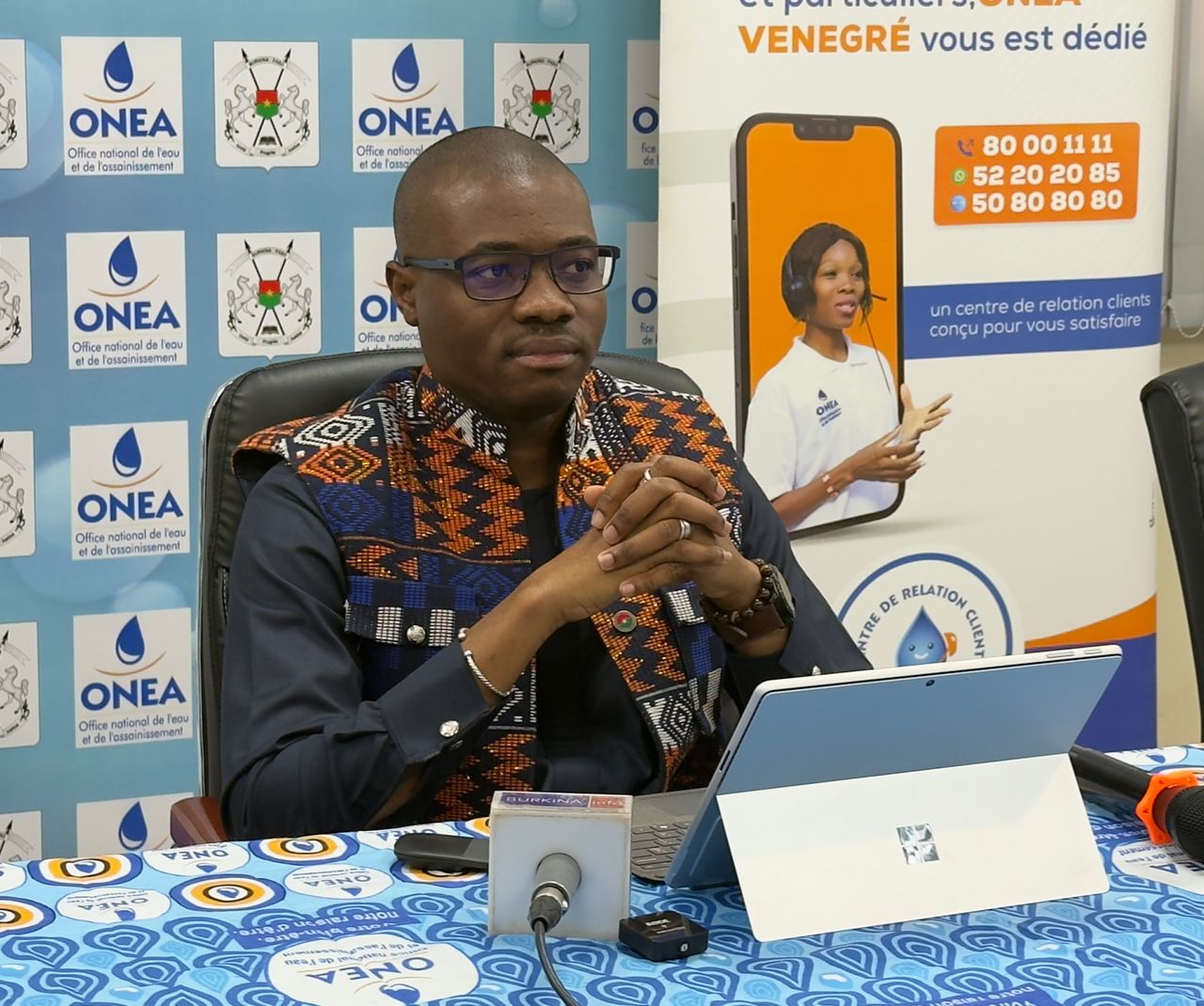
Tout en rappelant avoir toujours privilégié le dialogue et la flexibilité dans le recouvrement des créances, l'ONEA a annoncé un changement de posture en raison de l'ampleur des impayés.
Le directeur général a annoncé l'officialisation du partenariat entre l'ONEA et la Brigade Laabal, appelée à appuyer les actions de recouvrement. La brigade interviendra notamment dans la sensibilisation des citoyens, la lutte contre l'incivisme lié au non-paiement des factures et l'accompagnement des actions de terrain pour le bien-être collectif.
« Au regard de son caractère social, l'ONEA a toujours privilégié le dialogue et la flexibilité. Mais cette approche ne peut justifier l'accumulation d'arriérés aussi importants, c'est pourquoi, avec les orientations des structures de tutelle, l'ONEA opte désormais pour un changement de posture. Nous nous engageons désormais dans une dynamique claire de renforcement du recouvrement, fondée sur un suivi rigoureux des créances ; la responsabilisation de chaque consommateur ; la mise à contribution de la brigade Laabal. Payer sa facture d'eau est un devoir citoyen, un acte patriotique, un devoir collectif, et une condition indispensable pour garantir l'accès à l'eau potable pour tous ; financer les infrastructures d'aujourd'hui et de demain et renforcer la souveraineté de notre pays dans le secteur vital de l'eau. Nous scellons officiellement le partenariat entre l'ONEA et la brigade Laabal. La brigade Laabal intervient donc en appui à l'ONEA dans la sensibilisation des citoyens, la lutte contre l'incivisme en matière de paiement de factures, la lutte contre la fraude et l'accompagnement dans la facilitation des actions menées pour le bien-être collectif, conformément à la vision de refondation nationale », a-t-il précisé.
L'ONEA et la Brigade Laabal donnent 7 jours aux débiteurs pour régulariser les factures d'eau impayées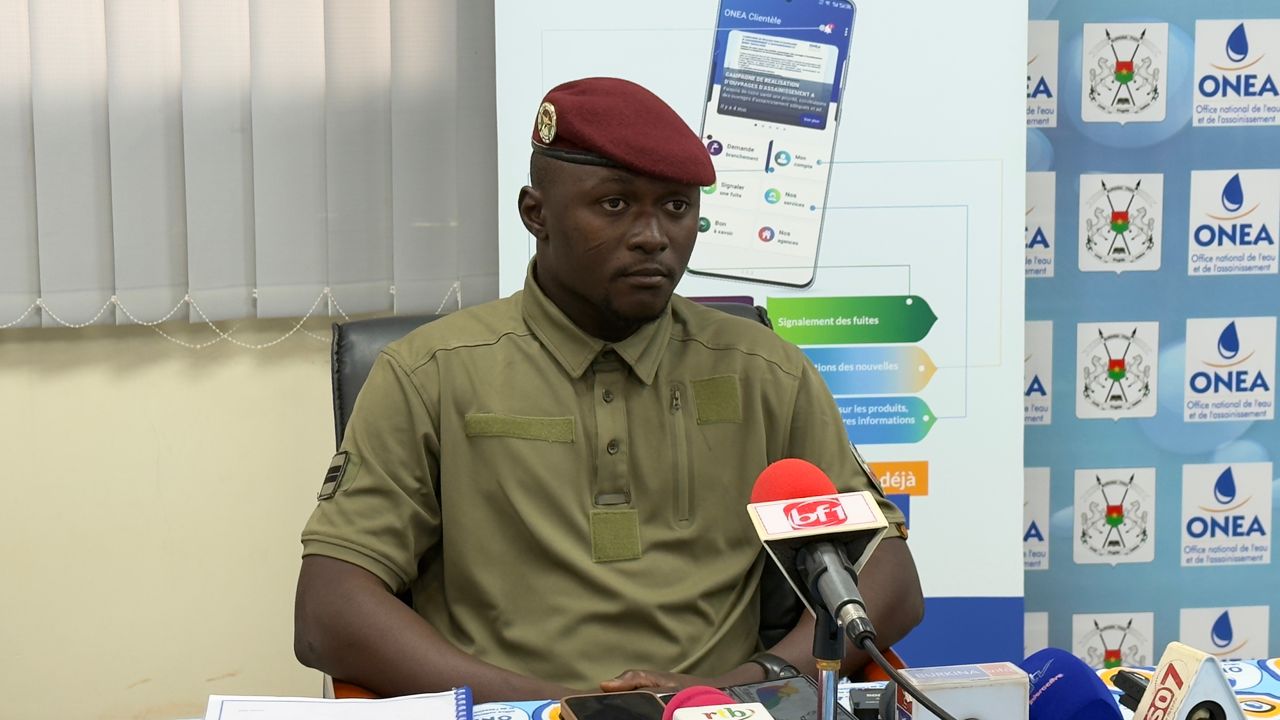
Prenant la parole, le commandant de la brigade Laabal, le lieutenant Franck Octave Kabré, a invité l'ensemble des débiteurs, particuliers comme entreprises, à régulariser leur situation dans un délai d'une semaine. Passé ce délai, des mesures de réquisition pourraient être engagées.
« L'État burkinabè a mis toutes les dispositions nécessaires pour que la population se sente bien, mais malheureusement certains actes inciviques de certaines personnes qui rament à contre-courant ne cessent de mettre les bâtons dans les roues chaque jour. C'est dans ce sens que nous sommes ici pour dire qu'on ne peut pas se construire dans l'opposition aux règles ou lois qui sont établies. Payer sa facture d'eau est un acte civique et en même temps un devoir. Donc refuser de payer sa facture d'eau est un acte incivique et un manquement à son devoir. Et c'est là qu'intervient donc la brigade Laabal, qui est une brigade civique pour l'ordre et la discipline. Le mot d'ordre a été lancé et le message est clair et reste le même. Nous appelons les particuliers, les différentes entreprises à se mettre à jour en payant leurs factures et cela dans un délai d'une semaine. Passé ce délai, ils seront naturellement réquisitionnés. Ils vont contribuer d'une autre manière à construire le pays et ils vont payer leurs factures. Nous appelons la population au sens de la responsabilité et nous espérons que ce message, lorsqu'ils l'auront entendu, ils vont se mettre à s'exécuter en payant leur facture », a souligné le commandant de la brigade Laabal.
En rappel, l'Office national de l'eau et de l'assainissement (ONEA) a pour missions d'assurer l'approvisionnement en eau potable des populations et la fourniture de services d'assainissement adéquats.
Hanifa Koussoubé
Lefaso.net
Categories: Afrique, European Union
L'histoire des Roms dans les Balkans, du Moyen-Âge à la Première Guerre mondiale
Dans le cadre de notre cycle de discussions sur l'histoire des Balkans, l'Institut français de Serbie a l'honneur d'accueillir l'historien Bernard Lory, grand spécialiste de l'histoire des Roms dans les Balkans, qui participera à des discussions à Belgrade (le mardi 3 février) et à Niš (le mercredi 4 février). Il se rendra ensuite, le 5 février, en Macédoine du Nord, à Skopje.
Bernard Lory est un historien français reconnu, professeur émérite de l'INALCO (Institut national des langues et (…)
Categories: Balkans Occidentaux, Diplomacy & Crisis News
Pages



© 2012-2018 Europa Varietas Foundation © 2015-2018 Europa Varietas Association
www.europavarietas.org | info(@)europavarietas(dot)org | Switzerland




We are looking for sponsors for the English translation of these books, please contact turkeandras(at)gmail(dot)com