
You are here
Feed aggregator
AI’s potential to facilitate more agile development cooperation
Two features of AI stand out among technological innovations: It is exceptionally powerful, and its (computing) power is increasing faster than any previous technology in human history. AI is not a tool that can simply be added to the existing arsenal just for the sake of task automation and increased efficiency (Sinanoglu, 2025a). Its consequences are so profound that using it to advance broader development objectives requires changes to some of the ways development cooperation works. In this chapter, we go beyond more general assessments (OECD, 2025) of the use of AI by governments (OECD, 2026) and of the global development risks posed by AI (United Nations Independent International Scientific Panel on Artificial Intelligence, 2026). We argue that successful development cooperation for sustainable futures depends on collaboration with others in iterative and adaptive ways to exploit opportunities for positive change more effectively in challenging contexts. To this end, current development-cooperation structures and processes should be reformed to facilitate and encourage organisational learning (Brandi & Büge, 2026) and adopt a more iterative approach to cooperation. To what extent does development cooperation currently deploy AI tools for such organisational learning? By “AI”, we mean generative and agentic artificial intelligence. We also distinguish between “AI in development” and “AI for development”. Whereas the former refers to how AI is used in middle- and low-income countries, the latter refers to how the development sector can use AI. We catalogued how the supply side of development cooperation (donors, ministries, agencies, development banks, United Nations (UN) entities, humanitarian implementers and funders) uses AI in its own operations, programming, advisory work and evaluations. The database comprises 172 AI deployments and, while not exhaustive, provides a comprehensive primary-source snapshot that lets us answer three questions empirically: Who is deploying AI? What for? And how far has it matured? (See Figure 9) Our data suggest that almost 60 per cent of recorded uses fall into just two functions: getting services to people in the field (programme delivery) and speeding up the back office at headquarters (internal operations). Together, the functions most closely tied to organisational learning – monitoring, evaluation, planning and coordination – account for only roughly 19 per cent of deployments. In short, the sector is now using AI to do its existing work faster, but not yet to change how it works and learns.
Categories: Diplomacy & Defense Think Tank News
Global health beyond 2030: protecting ambition in a fragmented world
The Sustainable Development Goals (SDGs) were agreed in 2015 in a political environment in which broad multilateral agreement still appeared possible. They reflected the belief that universal goals, shared language and collective implementation could organise international cooperation, even if
they were never free from contestation (Biermann, Kanie, & Kim, 2017; Chaturvedi et al., 2020). For global health, this mattered. The 2030 Agenda broadened the health agenda beyond selected infectious diseases and maternal and child health. It included universal health coverage, non-communicable diseases, mental health, sexual and reproductive health and rights, and the wider social, economic and environmental determinants of health (Murray, 2015; WHO, 2015). With only a few years left until 2030, progress remains uneven and many health-related targets are off track. At the same time, the political context for a future global development framework has changed substantially. Global health cooper-
ation is increasingly shaped by donor retrenchment, weaker multilateralism, geopolitical competition and ideological polarisation (Held, Kickbusch, McNally, Piselli, & Told, 2019; Kickbusch & Liu, 2022). Issues such as gender equality, vaccination, climate action and migration have become more contested. These tensions now affect financing, normsetting, institutional stability and the conditions under which cooperation remains possible. Three shifts are particularly important. First, financing has become more uncertain. Aid cuts and donor retrenchment weaken multilateral health institutions and create incentives for selective, interest-driven cooperation (Poddar & Rao, 2025; Witter et al., 2025). Second, ideological polarisation makes established health commitments more contested, especially around sexual and reproductive health and rights, vaccination, and climate and health (Greene, 2026; Khosla & Allotey, 2025). Third, the global health order is becoming more multipolar. Regional organisations, middle powers,
South-South cooperation and issue-based coalitions are gaining influence (Bull & Banik, 2025; Franz et al., 2024; Lal, 2026). Together, these shifts affect who leads, which priorities are defended and how ambition is defined. At stake is not only whether new commitments can be agreed, but whether the core principles of global health cooperation can be preserved. These include rights-based commitments, universality and equity, national ownership in implementation and international solidarity through coordinated collective action. These principles are grounded in the normative framework of the World Health Organization (WHO) and reflected, although unevenly, in the 2030 Agenda and subsequent declarations on universal health coverage (UN, 2015, 2019, 2023; WHO, 1948). The risk is not only stagnation. A more serious risk is selective rollback. Commitments that seemed relatively stable during the SDG period may become vulnerable in post-2030 negotiations. This applies particularly to sexual and reproductive health and rights, vaccination and climate-related health commitments (Haeuser et al., 2025; Khosla & Allotey, 2025; Romanello et al., 2024). If consensus becomes harder to reach, the price of agreement may be dilution. A future framework may preserve the language of multilateralism while narrowing the substance of global health ambition (see also Berger & Leininger in this volume).
Categories: Diplomacy & Defense Think Tank News
Domestic revenue mobilisation, the financing gap and why tax expenditures matter
As governments increasingly prioritise national interests, security concerns and geopolitical competition over collective global responsibilities, traditional development finance mechanisms are being weakened, repurposed or redirected towards advancing narrow strategic objectives. The Organisation for Economic Co-operation and Development projects a 23 per cent decline in official development assistance (ODA) between 2024 and 2025 (OECD, 2026). This reduction not only has immediate consequences for the lives and livelihood of millions of people in low-income countries (LICs) who depend on external assistance, but also creates uncertainty for partner countries, disrupts long-term development planning, and undermines the legitimacy and effectiveness of development cooperation. At the same time, development finance needs have risen sharply and continue to rise due to the climate crisis, the impacts of the COVID-19 pandemic, supply chain disruptions and rising food and energy prices. Together, these pressures have contributed to a projected USD 6.4 trillion financing gap for achieving the Sustainable Development Goals (SDGs) by 2030 (OECD, 2025a). Against this backdrop, mobilising greater volumes of private capital aligned with the SDGs has become increasingly important (on the need for the European Union to become more adept at facilitating private investment, see the contribution by Keijzer & Furness in this volume). In particular, blended finance has frequently been promoted as one key instrument to achieve this objective (on domestic revenue mobilisation as another key approach, see the contribution by Sen & von Haldenwang in this volume). However, despite growing attention from policy-makers and development institutions, the scale of blended finance has remained well below expectations and so far made only a limited contribution to closing the SDG financing gap. Although transaction volumes increased from USD 11.5 billion in 2020 to USD 18.3 billion in 2024, they remain small relative to the estimated USD 4 trillion annual SDG financing gap (Convergence, 2025; OECD, 2025a). As such, the Sevilla Commitment (UNCTAD, 2025) calls for scaling up private capital mobilisation through blended finance and a broader use of risk-sharing instruments. This chapter discusses the benefits and limits of blended finance as well as reforms that are needed at different levels to scale up blended finance and enhance its development impact.
Categories: Diplomacy & Defense Think Tank News
SSU and Defence Forces units strike Moscow oil refinery, causing massive fire on site
The Security Service of Ukraine, along with the Unmanned Systems Forces, Special Operations Forces and the Defence Intelligence of Ukraine, as well as other units of the Defence Forces, struck the Kapotnya oil refinery in Moscow, located just 15 km from the kremlin.
Categories: Defence`s Feeds
Russia And Ukraine Launch Attacks On Final Day Of Russian Parliamentary Vote
There was no letup in fighting between Russia and Ukraine on September 20, as voters in Russia cast ballots on the final day of parliamentary elections from which a political party calling for peace was excluded.
Categories: Defence`s Feeds
State media program confirms PLA Air Force J-35A codename Yunlong, expert says naming reflects both capabilities, cultural symbolism
A state media program aired on Saturday night labeled the J-35A stealth fighter with the codename Yunlong (Cloud Dragon/Loong). A Chinese military expert said this appears to be the first official confirmation of the fighter's codename, which reflects both its capabilities and Chinese cultural symbolism. China's proactive release of its own codenames for warplanes in recent years signals a new emphasis on commanding naming discourse, a shift from passive acceptance to active shaping, the expert said.
Categories: Defence`s Feeds
Russia's Starlink Rival Faces Problems In Orbit And Threats On The Ground
Russia is building its own version of Starlink -- Elon Musk's constellation of satellites in low-earth orbit that can provide fast Internet access anywhere in the world.
Categories: Defence`s Feeds
Africa CDC welcomes U.S. Convened G20+ Ebola Meeting and Calls for United Action, Faster Delivery and Full Transparency
The Africa Centres for Disease Control and Prevention (Africa CDC) welcomes the leadership of the United States in convening the G20 Foreign Ministers Meeting on Accelerating Collective Action to Defeat Ebola, to be held on 23 September 2026 in New York, on the margins of the United Nations General Assembly.
Categories: Defence`s Feeds
DR Congo expands Ebola vaccination to Ituri, over 3,700 people vaccinated
Ebola vaccination was expanded Saturday to Ituri Province, the epicenter of the outbreak in eastern Democratic Republic of the Congo (DRC), with more than 3,700 people having received the Ervebo vaccine in the country, Xinhua reported.
Categories: Defence`s Feeds
Trump Says Houthi Rebels Agree Not To Fight The US
US President Donald Trump on September 20 said Yemen's Houthi rebels have agreed not to attack US-linked sites, even as the Iran-allied militant group intensifies its fight against US ally Saudi Arabia, a Fox News reporter quoted the president as saying.
Categories: Defence`s Feeds
Yemen's Houthis claim attack on Riyadh, heralding escalation in tensions with Saudi Arabia
Yemen's Houthi group said Saturday that it had launched large-scale attacks targeting the Saudi capital Riyadh and Yanbu, a major industrial and energy hub on Saudi Arabia's Red Sea coast, marking a major escalation in the confrontation between the two sides.
Categories: Defence`s Feeds
Iranian Army downs advanced US spy drone over Strait of Hormuz
The Iranian Army has intercepted an advanced Orbiter reconnaissance drone over the Strait of Hormuz, the latest in a series of American unmanned aircraft brought down by the country's armed forces during the war.
Categories: Defence`s Feeds
Saddam's fate awaits Trump and Netanyahu: IRGC commander
The advisor to the chief commander of the Islamic Revolution Guards Corps (IRGC), hailing the resilience of the Iranian people and Armed Forces against foreign aggressors, says US President Donald Trump, Israeli Prime Minister Benjamin Netanyahu, and their supporters will face the same fate as former Iraqi dictator Saddam Hussein.
Categories: Defence`s Feeds
Iran warns US, regional states of 'painful' attacks if they act against Tehran
Iran's central military command has warned the United States and its regional allies that any new action against Iran would trigger "continuous, effective and painful" attacks targeting US bases and interests across the region.
Categories: Defence`s Feeds
Ghalibaf: 'War or Talks' Dilemma is Unacceptable for Iran
Iran believes the war or negotiations dilemma is false because one should both fight and negotiate, Iranian Parliament Speaker Mohammad Bagher Ghalibaf said in a statement.
Categories: Defence`s Feeds
Iran Says Economy Has Contracted 10 Percent Since Start Of War
Iran's Statistical Center said the country's economy contracted by more than 10 percent during the Middle East war, which began on February 28 with US-Israeli attacks on Iranian military and economic sites.
Categories: Defence`s Feeds
Pages


© 2012-2018 Europa Varietas Foundation © 2015-2018 Europa Varietas Association
www.europavarietas.org | info(@)europavarietas(dot)org | Switzerland
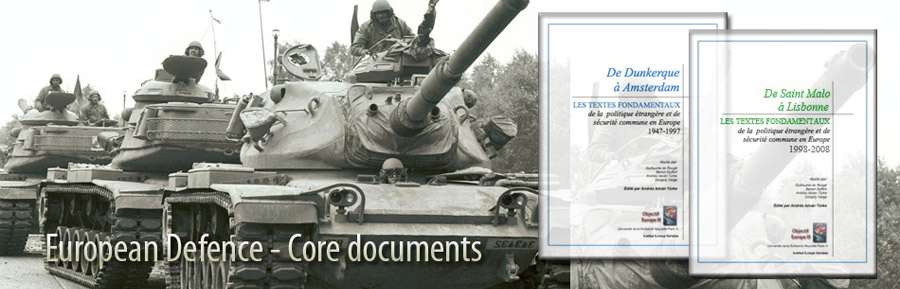
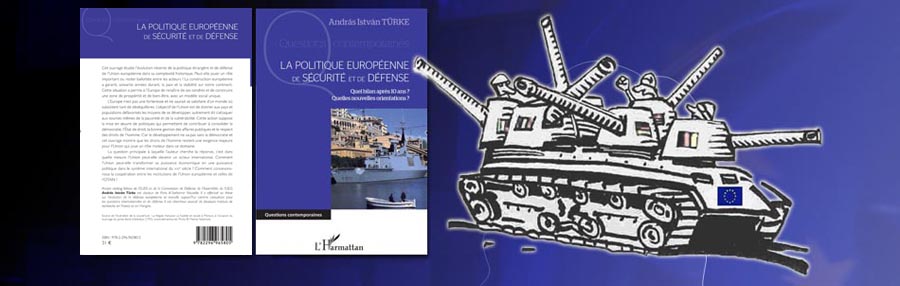
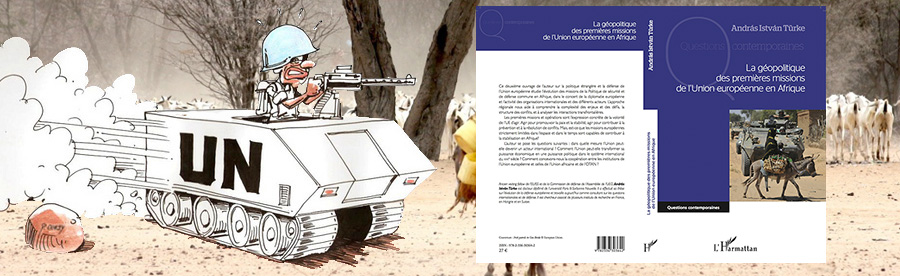
We are looking for sponsors for the English translation of these books, please contact turkeandras(at)gmail(dot)com