
You are here
European Union
Press release - Press conference on updated air passenger rights on Tuesday at 14.00
After the final vote in the European Parliament on Tuesday, key EP negotiators Andrey Novakov and Virginijus Sinkevičius will brief journalists on the EU air passenger rights rules review.
Committee on Transport and Tourism
Source : © European Union, 2026 - EP
Committee on Transport and Tourism
Source : © European Union, 2026 - EP
Categories: European Union
Press release - Press conference on updated air passenger rights on Tuesday at 14.00
After the final vote in the European Parliament on Tuesday, key EP negotiators Andrey Novakov and Virginijus Sinkevičius will brief journalists on the EU air passenger rights rules review.
Committee on Transport and Tourism
Source : © European Union, 2026 - EP
Committee on Transport and Tourism
Source : © European Union, 2026 - EP
Categories: European Union
Minutes - Wednesday, 3 June 2026 - PE789.884v01-00 - Committee on Foreign Affairs
Source : © European Union, 2026 - EP
Categories: European Union
Press release - Press briefing on next week’s plenary session
Spokespersons for Parliament and for the political groups will hold a briefing on the 6-9 July plenary session, on Friday at 11.00 in Parliament’s Anna Politkovskaya press room.
Source : © European Union, 2026 - EP
Source : © European Union, 2026 - EP
Categories: European Union
What Presenting My First Empirical Chapter Taught Me
I presented at the Latin American Studies Association congress in Paris in May on a panel titled “Mexico in Global Competition.” LASA is the largest scholarly association in the world for the study of Latin America, with over 13,000 members and an annual congress running to several hundred sessions across disciplines working on the region. This was the first time I had attended a LASA Congress, though it was not my first conference, and the conference was exactly the mix I had hoped for: historians, political scientists, and practitioners, several career stages in the same panel slots, all genuinely curious about each other’s work rather than waiting their turn to speak.

Jess Gosling at LASA 2026
I had been planning for this moment for a while, So, rather than writing chapters in isolation and looking for conferences afterwards, I tried to align each chapter of my thesis with a conference, where I could test out the thesis of each chapter properly, in front of people who knew the region itself, rather than just the theory alone. My Mexico chapter is the first empirical chapter of my thesis, assembled from fieldwork completed at the British Embassy in Mexico City in July 2025. Paris was the first time I had presented a full empirical chapter, rather than a conceptual paper, outside that of my own seminar room.
My PhD chapter argues that UK soft power in Mexico operates through individuals and relationships rather than being driven by state projection: drawing on interviews with both British officials working in Mexico and locally employed Mexican staff from the embassy. A panel the day before mine had spent an hour on nineteenth-century postal diplomacy and contemporary trade negotiations with a level of regional expertise that sharpened my sense of what a rigorous account of Mexico would require. The questions after my own paper pushed in the same direction: people wanted to know more about how the Mexican staff I interviewed experienced these dynamics, and where the line sits between genuine co-production and something more asymmetric. Those are exactly the type of questions I wanted my chapter to be answering well and hearing them from people who study Latin America for a living informed me precisely where my argument still needed more weight.
What struck me the most was how supportive that scrutiny felt. Nobody was trying to catch me out. They treated a PhD chapter with just the same careful attention and worthiness as anyone’s else’s paper, with several people, among the audience being academics from Mexico, Argentina, and Spain, who all stayed afterwards to talk through specific points with me, and asked about the comparative chapters still to come on South Korea and Poland. I left with a growing list of people whose work I now wish to follow, contacts who feel less like networking and more like the start of an actual research community.

Jess Gosling Presenting at LASA
My paper itself was in English (as was my presentation), but the corridor conversations afterwards were not always, and that felt like its own small milestone, one I am still a little proud of. When I started the PhD, I could barely hold a conversation in Spanish. Talking through my own ideas in Spanish with some Portuguese with people I had met, even haltingly, mattered more to me than I expected.
The other community came from somewhere I had not planned for at all. I fell in, almost by accident, with a group of Brazilian PhD students on the first afternoon, and they adopted me for the rest of the week, talking me through the conference over dinner and breakfasts some mornings. Most of them were historians working on questions far from mine, but this did not matter.

Jess with PhD Students she met at LASA
I went on my own, out of curiosity. During gaps in my schedule, to panels on Brazil’s foreign policy and on Global South diplomacy, and one on Chile, Argentina, and Uruguay that ranged from feminist foreign policy to the social backgrounds of foreign ministers. There were a lot of Early Career Researchers (ECRs) , often putting arguments in front of people for the first time, and there was a real solidarity in that, regardless of which region or discipline any of us worked in.
If any of this is useful to other PhD students presenting an empirical chapter for the first time, here are a few things which might be useful to think about.
Firstly, align your chapters with conferences rather than the other way round. I chose LASA because it matched my Mexico chapter and the timeline, which meant I arrived with something ready for scrutiny with the right people to present it to.
Secondly, go to panels in the days before you need to present your own paper at your panel. Try to attend other panels in subfields which you do not work in. Some of the biggest insights and reflections on my own argument came from a session I attended the day before, out of curiosity, and the friendships that carried me through the week came from panels on Brazil that had nothing to do with my research.
Thirdly, let the gaps in your evidence stay visible in the Q&A rather than being managed away. I had written a line into my paper anticipating the obvious limitation, and answering the questions honestly told me more about where the chapter needed to go, than what a smoother performance would have taught me.
Finally, don’t be afraid to go out of your comfort zone, even when that means going it alone. I went to LASA without knowing a single person there and ended up befriending people who work in different fields entirely. The Brazilian cohort I fell in with made the week feel like a shared experience rather than something to get through alone.
The challenge was real. So was the welcome.
The post What Presenting My First Empirical Chapter Taught Me appeared first on Ideas on Europe.
Categories: European Union
Press release - Electricity grids: MEPs back plans to accelerate energy project permit process
The proposal adopted on Thursday will allow faster permitting for electricity grids and renewables projects, to help cut energy prices through the domestic supply of clean energy.
Committee on Industry, Research and Energy
Source : © European Union, 2026 - EP
Committee on Industry, Research and Energy
Source : © European Union, 2026 - EP
Categories: European Union
Speech by President António Costa at the opening ceremony of the Irish Presidency of the Council of the European Union
President António Costa travelled to Dublin (Ireland) to attend the opening ceremony of the Irish Presidency of the Council of the European Union, where he delivered a speech.
Categories: European Union
Remarks by President António Costa at the press conference with Taoiseach of Ireland Micheál Martin
On Wednesday 1 July, President Costa travelled to Dublin to attend the official opening of the Irish presidency of the Council of the European Union. Ahead of the ceremony he met with Taoiseach Micheál Martin.
Categories: European Union
European Parliament, Council and Commission receive Ombudsman award for excellence in open administration for user-friendly EU Law Tracker
The EU Law Tracker wins the 2026 Ombudsman Award for Good Administration in the “excellence in open administration” category, recognising its role in making EU law-making more transparent, accessible and easier to follow.
Categories: European Union
Council and Parliament agree on clarified rules for road tolls and user charges for heavy-duty vehicles
The Council and the European Parliament reached a provisional agreement on targeted amendments to the Eurovignette directive.
Categories: European Union
Council and Parliament strike deal for a stronger European Chemicals Agency
The Council of the European Union and the European Parliament have reached a provisional agreement on bolstering the management and funding of the European Chemicals Agency (ECHA).
Categories: European Union
Council agrees roadmap for European cooperation in education and training until 2030
The Council has approved the resolution on the second cycle of the strategic framework for European cooperation in education and training towards the European Education Area (2026-2030), which sets out the work programme for cooperation at EU level in the areas of education and training over the next five years.
Categories: European Union
Statement by the High Representative on behalf of the European Union on the alignment of certain countries concerning restrictive measures in view of the situation in Russia
Statement by the High Representative on behalf of the European Union on the alignment of certain third countries with Council Decision (CFSP) 2026/1363 of 15 June 2026 amending Decision (CFSP) 2024/1484 concerning restrictive measures in view of the situation in Russia.
Categories: European Union
Statement by the High Representative on behalf of the European Union on the alignment of certain countries concerning restrictive measures in view of Russia’s destabilising activities
Statement by the High Representative on behalf of the European Union on the alignment of certain third countries with Council Decision (CFSP) 2026/1351 of 15 June 2026 amending Decision (CFSP) 2024/2643 concerning restrictive measures in view of Russia’s destabilising activities.
Categories: European Union
Council highlights demographic dimension of Europe’s housing crisis
The Council has approved conclusions calling on member states to take into account the interplay between housing needs and demographic trends when developing housing policies.
Categories: European Union
President Costa travelling to Ireland and France
President of the European Council, António Costa, will travel to Dublin (1 July) for the opening ceremony of the Irish presidency of the Council of the EU, and to Aix-en-Provence (2-3 July) to participate in the “Rencontres Économiques”. On 4 July, President Costa will visit Marseille, Avignon and the ITER Headquarters in Saint Paul-lez-Durance.
Categories: European Union
Research fund for coal and steel: Council gives its final approval
Council gives its final approval to the package to reform the research fund for coal and steel
Categories: European Union
European Public Prosecutor's Office: Council appoints new prosecutors for France and Malta
The Council today appointed two new prosecutors to the European Public Prosecutor's Office. European prosecutors supervise investigations and prosecutions and, together with the European Chief Prosecutor, form the EPPO College.
Categories: European Union
Pages

© 2012-2018 Europa Varietas Foundation © 2015-2018 Europa Varietas Association
www.europavarietas.org | info(@)europavarietas(dot)org | Switzerland
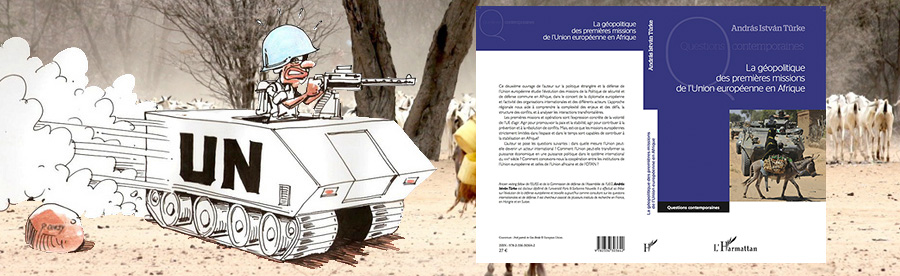
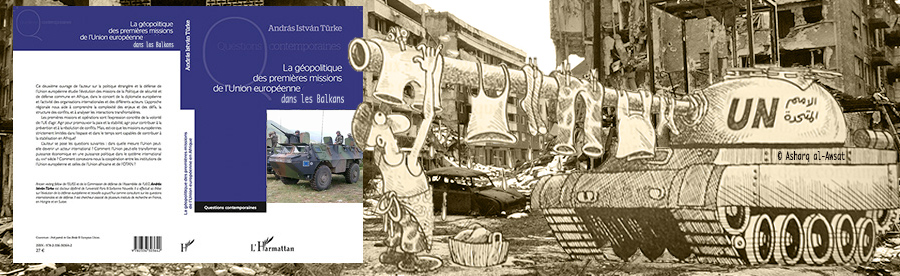
We are looking for sponsors for the English translation of these books, please contact turkeandras(at)gmail(dot)com