
Vous êtes ici
Kelet-Közép-Európa
The ramifications of aid cuts on refugee lives: case of the Differentiated Assistance (DA) model and the Shirika Plan in Kenya
International support has failed to keep pace with the growing numbers of refugees and internally displaced persons, thus creating a financing gap between their needs and available resources. The recent US withdrawal from funding development and humanitarian programmes has only compounded this financing gap which has existed for more than a decade.
In response to this, the international community – through Agenda 2030, the Grand Bargain, the 2016 New York Declaration, and the Comprehensive Refugee Response Framework (CRRF) – has advocated for a shift from seeing refugees as emergencies to integrating them into the host countries’ developmental agenda. In Kenya, these policy proposals are most recently being implemented through the Shirika Plan, the Differentiated Assistance (DA) model, and development plans of refugee-hosting counties such as Turkana and Garissa. First, the Shirika Plan is a government-led initiative that was proclaimed in 2023 to realise the socio-economic inclusion of refugees within the local context in line with the progressive provisions of the Refugee Act of 2021. Implementation of this policy is yet to begin as it is pegged on elusive donor funding. Second, the DA model is led by the office of the United Nations High Commissioner for Refugees (UNHCR) and the World Food Programme (WFP) and is aligned with the Shirika Plan. The preparatory activities for DA were undertaken throughout 2024 and implementation commenced in August 2025. DA seeks to increase refugee self-reliance through livelihood interventions and providing support based on the specific needs and capabilities of different refugee households as opposed to the previous blanket support that was based on refugee registration status. However, implementation has so far only focussed on reducing aid, without corresponding investment in self-reliance measures.
DA and the Shirika Plan are framed in government and international circles as solutions for addressing funding shortfalls and fostering refugee integration by supporting self-reliance. However, there has been little progress in enhancing refugee self-reliance. At the same time, aid cuts are implemented based on a needs-categorisation of refugee households that proceeds without adequate background information. The lack of alternative livelihoods has exacerbated vulnerabilities and has sparked protests in refugee camps. Emerging evidence points to negative coping mechanisms, including higher school drop-out rates; reported cases of youths joining criminal religious groups; increased conflicts at family level; and rising cases of women becoming sex workers. This Policy Brief highlights the emerging ramifications of implementing DA that is anchored in the provisions contained in the Shirika Plan. The Brief also goes further to suggest recommendations for action to the government of Kenya and the international community.
Key policy messages:
• There is a need to enhance synergy between UNHCR and the Kenyan government such that the state implements the Shirika Plan alongside DA without premising its implementation on donor aid.
• UNHCR needs to obtain more extensive household economic data and involve refugees in deciding who is most vulnerable to more accurately disaggregate refugee households into appropriate categories.
• The Kenyan government and international actors need to closely monitor and address potential nega-tive implications of implementing DA and the Shirika Plan.
Fred Ikanda is a Senior Lecturer in the department of Sociology and Anthropology, Maseno University, Kenya, and associated researcher at IDOS.
Michael Owiso is Director, Odera Akang’o Campus, and Dean, School of Development and Strategic Studies, Maseno University, Kenya, as well as associated researcher at IDOS.
Catégories: Diplomacy & Defense Think Tank News, Kelet-Közép-Európa
Es gibt bessere Wege, Vermögen zu besteuern
Die Reichen stärker besteuern? Klingt fair und könnte Milliarden einbringen. Doch eine Vermögensteuer ist nicht effizient, Immobilien lassen sich besser besteuern. , Deutschland steht vor einer gewaltigen finanzpolitischen Herausforderung: Bildung, Innovation, Klimaschutz, Infrastruktur und sozialer Zusammenhalt erfordern Milliarden. Gleichzeitig schrumpft der Spielraum des Staates – Schuldenbremse und demografischer Wandel begrenzen den Handlungsspielraum. ...
Catégories: Diplomacy & Defense Think Tank News, Kelet-Közép-Európa
Neuigkeiten aus dem SOEP - Kompakt im aktuellen SOEPnewsletter (März 2026)
Der
Catégories: Diplomacy & Defense Think Tank News, Kelet-Közép-Európa
Neuigkeiten aus dem SOEP - Kompakt im aktuellen SOEPnewsletter (März 2026)
Der
Catégories: Diplomacy & Defense Think Tank News, Kelet-Közép-Európa
Claudia Kemfert: „Temporäre Lockerung der Ölsanktionen gegen Russland ist energiepolitischer Kurzschluss“
Wegen der steigenden Öl-Preise lockern die USA vorübergehend die Sanktionen gegen Russland. Claudia Kemfert, Leiterin der Abteilung Energie, Verkehr, Umwelt im DIW Berlin, kommentiert dies wie folgt:
Die temporäre Lockerung der Ölsanktionen gegen Russland ist energie- und geopolitisch ein falsches Signal. Sanktionen sollen den finanziellen Spielraum für Kriegsführung begrenzen. Wenn sie kurzfristig aufgeweicht werden, stärkt das genau jene fossilen Machtstrukturen, die Konflikte überhaupt erst ermöglichen. Die temporäre Lockerung der Ölsanktionen gegen Russland ist ein klassischer energiepolitischer Kurzschluss: Ein kurzfristiges Markt- oder Preisproblem wird ausgerechnet mit der Energiequelle beantwortet, die das Problem strukturell verursacht hat.
Wir sehen hier erneut das Muster der Fossilokratie: Kurzfristige Interessen am fossilen Energiesystem werden über langfristige sicherheits-, klima- und energiepolitische Ziele gestellt. Das stabilisiert Abhängigkeiten statt sie zu überwinden. Gerade jetzt wäre das Gegenteil notwendig: eine konsequente Reduktion fossiler Abhängigkeiten durch den beschleunigten Ausbau erneuerbarer Energien, Effizienz, Elektrifizierung und resilientere Energiesysteme. Wer Sanktionen gegen fossile Kriegsfinanzierung lockert, begeht einen energiepolitischen Kurzschluss – und verlängert damit die fossile Abhängigkeit und ihre geopolitischen Konflikte.
Catégories: Diplomacy & Defense Think Tank News, Kelet-Közép-Európa
From Nuuk to Reykjavik: The High North’s geopolitical scramble and the consequences for the EU and its enlargement policy
The policy brief by Ioannis Alexandris (Research Fellow, Wider Europe Programme – ELIAMEP & Researcher, think nea – New Narratives of EU Integration) and Dimitra Koutouzi (Defence Policy Analyst), “From Nuuk to Reykjavik: The High North’s geopolitical scramble and the consequences for the EU and its enlargement policy”, was prepared in the framework ELIAMEP’s initiative think nea – New Narratives of EU Integration, supported by the Open Society Foundations – Western Balkans.
This policy brief explores how the rapidly evolving geopolitical dynamics in the Arctic are intersecting with the European Union’s enlargement policy. Heightened strategic competition in the High North—combined with uncertainty surrounding the transatlantic security architecture—has reopened debates in Iceland about reviving its EU accession process. Against this backdrop, the brief examines how a potential Iceland track could reshape the EU’s broader enlargement agenda.
While Iceland represents a relatively “low-friction” candidate due to its deep regulatory alignment with the EU, its potential return to accession negotiations raises important questions about the coherence and credibility of the Union’s enlargement strategy. Progress with an advanced Nordic partner could generate political momentum for enlargement but may also risk overshadowing more politically complex accession processes in the Western Balkans and Eastern Europe. Countries that have waited over a decade in the accession queue may perceive accelerated progress for Iceland as evidence of a differentiated enlargement logic driven by geopolitical urgency rather than merit-based conditionality.
The brief therefore situates Iceland within the EU’s evolving enlargement landscape, highlighting how geopolitical considerations—including Arctic security, strategic autonomy, and shifting transatlantic relations—are increasingly shaping accession debates. Ultimately, it argues that the Union must balance strategic opportunities in the North Atlantic with the need to maintain credibility and fairness toward existing candidates, particularly in the Western Balkans.
You can read the policy brief here.
Catégories: Diplomacy & Defense Think Tank News, Kelet-Közép-Európa
Ohne weitere Eskalation könnte der Iran-Krieg Erholung der deutschen Wirtschaft nur leicht verlangsamen – Kommunale Investitionen müssen besser unterstützt werden
Iran-Krieg und US-Handelspolitik belasten deutsche Wirtschaft etwas, stoppen aber bisher Aufschwung nicht – Gestiegene Energiepreise dürften Inflation um 0,4 Prozentpunkte erhöhen und Wirtschaftswachstum um 0,1 bis 0,2 Prozentpunkte senken – Expansive Finanzpolitik stützt deutsche Erholung – In ...
Catégories: Diplomacy & Defense Think Tank News, Kelet-Közép-Európa
A tánc, amely elárulja honnan jössz
Catégories: Afrique, Kelet-Közép-Európa
Az AI kilépett a chatablakból: 2026-ban már helyettünk foglal, vásárol és dönt
Catégories: Afrique, Kelet-Közép-Európa
Korhű jelmezes mulatsággal robbantotta be a Strobl-évadot a Magyar Képzőművészeti Egyetem
Catégories: Afrique, Kelet-Közép-Európa
Tengeren, kártyaparti és ír vircsaft – Interjú Szabó Győzővel
Catégories: Afrique, Kelet-Közép-Európa
Noten zum Sieg gegen den FCZ: Lausanne-Teenie sticht aus schwachem Kollektiv heraus
Lausanne schlägt den FCZ dank eines späten Treffers mit 2:1. Wer hat dabei wie abgeschnitten? Hier gehts zu den Noten.
Catégories: Kelet-Közép-Európa, Swiss News
Familien-SUV Lynk & Co 08 verspricht 200 km E-Reichweite: Chinas Plug-in-Hybrid der Rekorde im Test
Mit bis zu 200 Kilometern Elektro-Reichweite kommt der neue Lynk & Co 08 weiter als jeder andere Plug-in-Hybride auf dem Markt. Der erste Test zeigt, ob der schwedisch-chinesische Familien-SUV auch in anderen Disziplinen überzeugen kann.
Catégories: Kelet-Közép-Európa, Swiss News
Leopard zieht sich zurück: Hund befreit Artgenossen von Todes-Biss
Im indischen Bundesstaat Madhya Pradesh nähert sich ein Leopard leise einem Hund und packt ihn plötzlich am Hals. Ein anderer Hund stürmt heran und greift den Leoparden an. Der Ausgang des Kampfes wird dich überraschen.
Catégories: Kelet-Közép-Európa, Swiss News
Gemeinsam mit dem Papa: Ex-Abfahrtsweltmeister auf Davoser Pisten unterwegs
Ski-Legende Kjetil Jansrud entspannt in Davos: Der norwegische Olympiasieger dreht mit seinem Vater gemütlich Runden auf der Piste und geniesst am Abend ein traditionelles Schweizer Fondue.
Catégories: Kelet-Közép-Európa, Swiss News
Noten zur Lausanne-Pleite: «Inexistent»: FCZ-Duo nicht nur von Coach Hediger abgewatscht
Der FCZ verliert gegen Lausanne nach einem späten Gegentreffer mit 1:2. Wer hat dabei wie abgeschnitten? Hier gehts zu den Noten.
Catégories: Kelet-Közép-Európa, Swiss News
A Mozinet mutatja be Magyarországon az Arany Medve-díjas Sárga levelek című filmet
Catégories: Defence`s Feeds, Kelet-Közép-Európa
Egy karácsonyi este, ahol a tét a lélek – készül a Tengeren a Thália Színházban
Catégories: Defence`s Feeds, Kelet-Közép-Európa
Pages


© 2012-2018 Europa Varietas Foundation © 2015-2018 Europa Varietas Association
www.europavarietas.org | info(@)europavarietas(dot)org | Switzerland
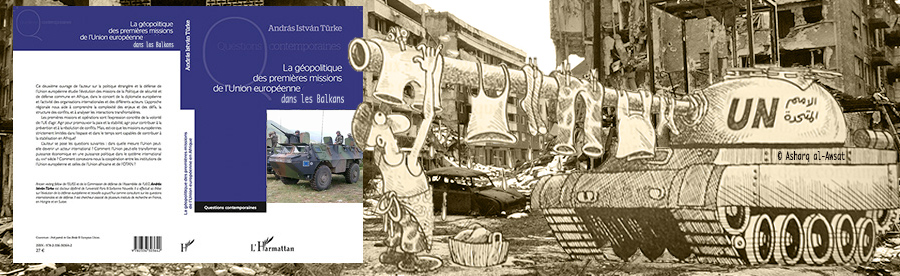
We are looking for sponsors for the English translation of these books, please contact turkeandras(at)gmail(dot)com