
You are here
Deutsches Institut für Entwicklungspolitik / Analysen

Publikationen des German Institute of Development and Sustainability (IDOS)
Updated: 1 hour 56 min ago
Was ist nötig, um demokratische Institutionen zu sichern?
Bonn, 14. September 2026. Morgen ist der Tag der Demokratie, doch Demokratie steht weltweit unter Druck. Auch in der Bundesrepublik Deutschland fordert Rechtspopulismus die freiheitlich-demokratische Grundordnung heraus wie selten zuvor.
Bei der Wahl zum sachsen-anhaltinischen Landtag vor einer Woche schnitt der als gesichert rechtsextrem eingestufte Landesverband der Alternative für Deutschland (AfD) als stärkste Partei ab. Voraussichtlich wird er eine Regierungsbeteiligung in der Landesregierung haben. Auch in anderen Bundesländern sowie bundesweit kommt die Partei auf hohe Umfragewerte. Vor dem Hintergrund dieser Bedrohung der Demokratie in Deutschland lohnt sich die Frage, welche Erkenntnisse man aus der Forschung zu Autokratisierung und internationalem Demokratieschutz für Deutschland ziehen kann. Dabei zeigt sich, dass man, um die Resilienz von Demokratie zu steigern, mit Mut ihre politischen Institutionen schützen und doch, wenn nötig, neugestalten muss. Denn sie bilden die Säulen und Pfeiler einer Demokratie, die diese zusammenhalten.
Säulen und Pfeiler einer Demokratie: das politische InstitutionengefügeDas demokratische Institutionengefüge Deutschlands lässt sich aus vielerlei Blickwinkeln beschreiben. Im Hinblick auf die Beteiligung der AfD an Landesregierungen ist im öffentlichen Diskurs derzeit allerdings insbesondere der Föderalismus im Fokus. Dieser kann, wenn eine demokratiefeindliche Partei ein Bundesland regiert, treffend als „geflutetes Schott“ eines leckgeschlagenen Schiffs bezeichnet werden: zwar beschränkt der Föderalismus den eintretenden Angriff auf demokratische Strukturen auf ein Bundesland, dennoch kann er auch die Regierungsführung auf der Bundesebene erschweren. Vor allem aber bietet die Forschung keine Indizien, dass Föderalismus an sich Demokratien resilienter gegenüber demokratischer Erosion macht. Während Föderalismus Indiens beispielsweise Demokratieabbau nicht viel entgegensetzen kann, zeigt er sich in den USA als wichtiger Schutzmechanismus. In Indien kann die Regierungspartei die Institutionen derart dominieren, dass sie föderale Strukturen selbst angreift und sogar Bundesstaaten auflöst. In den USA erschwert dagegen die bundesstaatliche Verwaltung von Wahlen deren Vereinnahmung und Manipulation.
In umgekehrter Richtung kann in Deutschland eine Landesregierung zahlreiche wichtige Institutionen angreifen oder umgestalten, etwa Teile des Bildungssystems, der Landesjustiz, der Medien, der Polizei oder des Verwaltungsapparats. Wie man im Falle des Department of Government Efficiency (DOGE) in den USA beobachten konnte, darf man bei derartigen Angriffen auf Institutionen nicht darauf hoffen, dass ihnen aufgrund von gesetzlicher Unrechtmäßigkeit beizeiten Einhalt geboten wird. Dafür ist der Schaden in Institutionen häufig zu schnell und gleichzeitig unwiderruflich angerichtet. Stattdessen ist es wichtig, Angriffe auf Institutionen umgehend zu kontern und möglichst zu blocken.
Angriffe auf Institutionen kontern und blockenIn den Bereich des Konterns fiele zum Beispiel das Einfrieren von Bundes- und EU-Finanzierungen im Falle von Landesverstößen gegen die freiheitlich-demokratische Grundordnung. Sanktionsmechanismen dieser Art haben sich etwa im Falle des europäischen Rechtsstaatsmechanismus bei demokratischer Erosion in Polen und Ungarn als wirkmächtig erwiesen. Sanktionsmechanismen allein sind jedoch häufig nicht hinreichend und riskieren, politisch-gesellschaftliche Polarisierung zu verstärken. Daher müssen Angriffe auf Institutionen auch durch durchdachte Reformen politischer Regeln geblockt werden.
Hierzu zählt die sachsen-anhaltinische Parlamentsreform vom April dieses Jahres. Änderungen von Mehrheitsbestimmungen und Sperrminoritäten sind jedoch ein zweischneidiges Schwert. Demokratische wie nicht-demokratische Parteien können sie unter veränderten Mehrheitsverhältnissen für ihre Zwecke nutzen. Statt sich auf Mehrheitsbestimmungen und Sperrminoritäten zu konzentrieren, kann es daher sinnvoller sein, durch institutionelle oder verfassungsrechtliche Regelungen „Verzögerungen“ in politische Prozesse einzubauen. Dies kann geschehen, indem entweder der Prozess der Entscheidungsfindung selbst oder das Inkrafttreten von Entscheidungen zeitlich gestreckt wird. Beispielsweise können Veränderungen an der niederländischen Verfassung nur in Kraft treten, nachdem sie auch von dem nächstgewählten Parlament verabschiedet wurden. In Dänemark wiederum kann ein Drittel der Parlamentsabgeordneten nach der Verabschiedung eines Gesetzes ein Referendum über das neue Gesetz verlangen. Derartige „Verzögerungs“-Regelungen machen demokratische Aushandlungsprozesse zwar langwieriger; sie fügen dem Institutionengefüge eines Landes jedoch weitere Schutzmechanismen hinzu.
Willy Brandt wird zugeschrieben, gesagt zu haben, dass „unsere Demokratie“ eine „wachsame, eine kämpferische und eine sich stets erneuernde Demokratie sein“ muss. Dies gilt mehr denn je.
Categories: Afrique, Diplomacy & Defense Think Tank News
The role of poultry farming in food security and dietary diversity: evidence from Ethiopia
Family poultry farming is widely promoted as a nutrition-sensitive agricultural intervention, yet rigorous causal evidence on its dietary and food security impacts remains limited. Using three rounds of panel data from the World Bank’s Living Standards Measurement Study - Integrated Surveys on Agriculture for Ethiopia (2011/12-2015/16), we follow a household fixed-effects strategy to examine the effect of poultry farming on egg consumption, dietary diversity, consumption expenditure, and food security. Despite 53% of households owning poultry in 2015/16, only 9% consumed eggs and 2% consumed chicken meat in the preceding seven days, revealing a stark production-consumption gap. Fixed-effects estimates show that poultry ownership increases the probability of egg consumption by 4 percentage points at the extensive margin, while each additional egg-laying chicken per capita raises it by 8 percentage points. Controlling for household income leaves these estimates unchanged, confirming that nutritional gains operate through direct access to own-produced eggs rather than income effects. Placebo tests find no significant association with milk or non-poultry meat consumption, further supporting this hypothesis. Poultry ownership is associated with higher household dietary diversity scores, but has no significant effect on food security, suggesting improvements in dietary quality without broader food quantity gains. Gender-disaggregated analysis shows that, despite lower ownership rates, female-headed households manage flocks more intensively and channel benefits more effectively into household food consumption. We also find a significant positive association between poultry ownership and diarrhea among children under five, underscoring the need to integrate hygiene and sanitation measures into poultry promotion programs.
Categories: Biztonságpolitika, Diplomacy & Defense Think Tank News
Unravelling the effects of Indonesia's oil palm export ban on global stock markets
Export bans are frequently used as trade policy instruments to stabilise domestic prices, but they often generate unintended consequences. This study examines the effects of Indonesia's palm oil export ban, introduced in April 2022 and lifted in May 2022, on the performance of the global agricultural sector and the stock markets of palm oil–producing countries. Drawing on a conceptual framework, we develop hypotheses regarding how stock indices with different industrial compositions respond to such trade policy interventions. Using an event study methodology, we analyse daily stock market data from palm oil–producing countries as well as a global agriculture-specific MSCI index. The analysis encompasses both nationally diversified stock indices and a global sector–specific index. The results reveal statistically significant negative cumulative abnormal returns for the global agricultural index following the introduction of the export ban, whereas national cross-industry indices show statistically insignificant reactions. Following the lifting of the ban, the global agricultural index experienced statistically significant positive cumulative abnormal returns, whereas national indices exhibited mixed and statistically insignificant responses. These findings are consistent with the conceptual framework, suggesting that the policy primarily affected the global agricultural sector while leaving diversified national stock markets largely unaffected. Importantly, the effects associated with the introduction and subsequent lifting of the ban did not fully offset each other, resulting in an overall negative net effect on the global agricultural index.
Categories: Afrique, Diplomacy & Defense Think Tank News
No time for lamentation: a new agenda for cooperation (Chair's summary of the Hamburg Sustainability Conference 2026)
The Hamburg Sustainability Conference (HSC) 2026 convened around 1,600 participants from 112 countries at a moment of profound disruption and redistribution of power. The HSC confirmed sustainability as the organizing framework linking peace and stability, economic
resilience and competitiveness, planetary boundaries and international cooperation. The rules-based international order is under pressure, fiscal space is shrinking and conflicts are multiplying, while climate change, biodiversity loss and resource depletion are compounding
these pressures on economies and societies already stretched thin. Yet the world has never possessed greater technological capabilities, financial wealth and scientific knowledge. What matters now is how we use these resources to deliver shared prosperity and resilience.
The discussions at HSC 2026 can be summarized along three narrative arcs. The first asks why cooperation remains essential in a more multipolar world. Legitimacy depends on changing the terms of North–South relations, broadening representation and building a cooperative multipolar order in which a wider group of actors can shape and defend common rules. The launch of the South–North Commission on Development offers a structured process for rethinking international cooperation toward fairer partnerships and a sustainability Agenda beyond 2030. The second narrative arc examines what needs to change. Sustainability transformation pays
off economically, but only where investment can flow, risks are shared and governance is predictable. Nature and human capital are systematically undervalued. The bottleneck is the institutional and financing structures needed to unlock them at scale. The third narrative arc addresses how cooperation can deliver. It shows that partnerships accelerate sustainable development when they move from one-off initiatives to systems that mobilize finance, create markets and build local capabilities. Scaling Capital for Sustainable Development (SCALED), Innovative Capital Mobilization in Africa (ICAMA), critical-mineral and hydrogen partnerships, and urban examples from Mombasa and eThekwini show how tangible forms of cooperation can turn commitments into sustainable investment, deeper value chains and locally owned action. This shift is especially visible in Africa, where partnerships are increasingly framed around opportunity, value creation and agency. The road ahead runs through the Triple COP+ year, the G20 under UK chairmanship, and the SDG Summit in September 2027. HSC 2026 demonstrated that navigating the new - disruptive - normal is possible. The task now is to prove it at scale. […]
Categories: Diplomacy & Defense Think Tank News, Swiss News
Sovereign trust funds for planned climate relocations
Climate-induced planned relocation is becoming an unavoidable policy issue for some highly exposed communities. Although relocation should remain a last resort after other realistic options for adaptation in place have been assessed, ensuring that the money is available when needed to support relocation is critical. The challenge is that funding is insufficient, drawn from diverse sources and often arrives too late and in fragmented forms: for example, one project for housing, another for infrastructure, and little predictable support for consultation, land negotiations, safeguards, livelihoods, host communities or long-term maintenance. The financing problem is therefore not only the scale of the costs, but the difficulty of organising money over time and across institutions and safeguards. This can leave governments reacting after crises rather than planning before risks become unmanageable.
Sovereign trust funds offer one practical way to address this gap. They do not create finance by themselves, but they can provide a country-owned platform for receiving, sequencing and reporting domestic revenue, bilateral support, multilateral development bank (MDB) finance, climate funds, disaster risk finance, and loss and damage resources. They present an alternative to predominantly loan- and grant-based financing for planned relocation. Fiji’s Climate Relocation of
Communities Trust Fund shows both the promise and limits of this approach: It provides a legal and institutional basis for relocation finance within government and links international funding to procedures, but it still requires capitalisation, administrative capacity and long-term technical support. The model presents an opportunity to support sovereign, rights-based financing systems rather than relying solely on donor-funded, often piecemeal relocation projects. It can also make funding available at the appropriate time and without undue time pressure.
Key policy messages:
• Finance planned relocation before a crisis, especially assessment, consent, land, safeguards and project preparation.
• Treat relocation as a long-term investment in the collective good, rather than solely as a construction or emergency response measure.
• Support sovereign trust funds where they are legally mandated at the national level, budget-linked, transparent and capitalised.
• Use finance to uphold quality and rights, including community-led processes, support for host communities and support for long-term livelihoods.
Categories: Diplomacy & Defense Think Tank News, Swiss News
Agree to disagree: why the AU and the EU should engage in pragmatic partnerships
The AU–EU partnership should embrace the plurality within both unions, make interests transparent, and enable pragmatic cooperation between coalitions of willing countries, helping to bring proclaimed ambitions closer to actual practice, explain Benedikt Erforth and Lena Gutheil.
Categories: Biztonságpolitika, Diplomacy & Defense Think Tank News
Digitalization and innovation in Egyptian firms: does female ownership and management matter?
This paper examines how leadership gender configurations shape digitalisation and innovation in Egyptian manufacturing. Using the 2020/21 Egyptian Industrial Firm Behavior Survey (EIFBS) covering 2,338 firms, we construct a four-category gender variable (female owners and male managers (FOMM), male owners and female managers (MOFM), female owners and female managers (FOFM) and all-male baseline) and analyse how these owner–manager gender mixes relate to the adoption of digital technologies (DT) and to innovation outputs, and how these relationships vary by firm size and DT use. Our analysis suggests that firms with male owners and female managers (MOFM) are most likely to adopt DT across specifications. The cross-sectional data suggests that mixed-gender firms are associated with a higher probability of spending on R&D, but not with higher innovation outputs in firms with female owners (i.e. FOMM and FOFM) – pointing toward an innovation conversion gap in those firms. Heterogeneity results show that the MOFM adoption premium of DT and a negative association between FOMM and innovation are strongest in small firms. DT use moderates gender gaps: female-owned firms not using DT are significantly less likely than all-male firms to generate innovation outputs, but this penalty disappears when female-owned firms use DT. A combined size–sector analysis suggests that the divergence between MOFM and FOMM/FOFM is driven mainly by small food manufacturers, with average marginal effects elsewhere broadly comparable. The results highlight leadership composition as a correlate of technology adoption and the role of DT in converting innovation inputs into outputs.
Categories: Diplomacy & Defense Think Tank News, Swiss News
Formal and informal labour demand in Egyptian manufacturing firms
This paper investigates the determinants and dynamics of labour demand and specifically informal labour in Egypt’s manufacturing sector, using nationally representative firm-level data from the 2020/21 Egyptian Industrial Firm Behavior Survey. Applying ordinary least squares and fractional logit models, we analyse total employment, the share of informal labour, and its average annual change over the firm life cycle. Three key findings emerge. First, employment is positively associated with capital, exporting, technology adoption, innovation, industrial zones, worker training, and managerial education, and negatively associated with sole proprietorships, wages, and total factor productivity. Second, informal employment is more common among private sector firms, sole proprietorships, and firms using more part-time workers, and less prevalent among firms adopting technology or led by more educated managers. Third, changes in informality over time are modest: most formal firms exhibit no change in the share of informal workers. Notably, formal firms that did not initially employ informal labour tend to increase their informal share, while firms that formalised continue to rely heavily on informal employment. Together, these findings underscore the persistence of informality and limited transitions towards full formalisation within Egypt’s formal manufacturing sector.
Categories: Diplomacy & Defense Think Tank News, Swiss News
Trade, treaties, and aid: insights into North-South trade in critical raw materials
Categories: Diplomacy & Defense Think Tank News, Swiss News
International cooperation and contestation in the Trump Era: how can countries exercise agency in a fragmenting order?
Countries now act in an international cooperation architecture whose rules are disputed from several directions at once. One of those directions is the hegemon itself, the US. The paper argues that the Trump administration’s disruption matters because it moves the largest actor from affirming to contesting across several arenas at once. That reshuffles the calculus for every country. This paper asks how countries can exercise agency when the international order itself is fragmenting. The paper surveys the bewildering array of concepts on state agency and proposes a schema built on two continua. The first is the medium or type of agency, meaning material/institutional versus ideational/discursive. The second is orientation to the prevailing order in a specific arena (not in general) as affirming versus contesting. Countries are not fixed in one position. Whether the same state contests the rules depends on its interests in a particular arena. Each potential position is available only to a country that can pay the arena’s entry fee. The entry fee is the resources, broadly defined, a position demands before a country can take it up. The paper sets out the strategic positions available in a fragmenting system. It names a further position, norm imperialism, where material instruments are turned against an ideational object. The implications for different types of country are discussed.
Categories: Central Europe, Diplomacy & Defense Think Tank News
Whatever happened to the ‘Good Old Days’ of development cooperation? Trump 2.0, crisis politics and the post-2030 development agenda
This chapter seeks to explain why development cooperation norms that looked stable in the mid-2010s became contested after 2016. We link this to crisis politics and the post-2030 agenda. Here, the ‘good old days’ means the mid-2010s cooperation moment. In 2015, four agreements were adopted within months: the 2030 Agenda (SDGs), the Paris Agreement, the Sendai Framework for Disaster Risk Reduction, and the Addis Ababa Action Agenda on financing for development. Their adoption set shared expectations about collective action. These agreements did not create a single regime, but they shared a narrative of common problems, shared responsibility, and multilateral problem-solving, backed by monitoring, review, and had a basis in evidence. Only a decade later, that consensus has evaporated. Development cooperation faces intersecting pressures operating through budget contractions, institutional precarity, and public narratives fuelled by the populist right in many DAC donor countries. In this new context, many DAC donors are shifting attention towards direct national interests, including security, migration policing, and geo-politics/geo-economic priorities, amid fiscal squeeze, intensified by the Trump 2.0 administration’s anti-multilateralism. Our chapter argues that the mid-2010s moment was highly contingent on an alignment of interests, institutions, and policy narratives, rather than a settled consensus, and that shifting political ‘mood’ has unravelled that spirit dramatically. We use a policy norm dynamics framework that traces norm contestation through actors and networks, institutions, and context and policy narratives, and introduces ‘epochal moods’ as the over-arching political climate that shape the nature and form of development cooperation. We outline the competing normative regimes of development cooperation and what they imply for positioning on a post-SDG/post-2030 collective framework.
Categories: Central Europe, Diplomacy & Defense Think Tank News
Youth cohort size, social media and political participation in Africa
Data and code that form the basis of the analyses and findings presented in the accompanying publication “African youth and the future of democracy: How social media and cohort size shape political participation” by Godfred Bonnah-Nkansah and Christine Hackenesch, published in Government & Opposition. The dataset comprises individual-level youth data (for persons 15-29 years old), in thirty-nine (39) African countries sampled in the Afrobarometer survey Rounds 6-9, complemented by country-level data on GDP per Capita from the World Bank; youth bulge ratio from the United Nations (UN) Population Bureau; and the V-Dem liberal democracy index.
Categories: Diplomacy & Defense Think Tank News, Swiss News
Der Weg für arme Länder aus der Schuldenfalle
Etwa die Hälfte der einkommensschwachen Länder ist derzeit zahlungsunfähig oder hat ein großes Risiko, zahlungsunfähig zu werden. Was die Weltgemeinschaft dagegen tun muss, erläutert eine IDOS-Wissenschaftlerin.
Categories: Diplomacy & Defense Think Tank News, Swiss News
The future Global Development Agenda will have to be shouldered by Middle Powers
Niels Keijzer, Hyeyoung Woo & Jee Hee Yoon outline the potential ways middle powers may best organise to shoulder the global development agenda and the (quasi-) multilateral institutions could support them in this regard?
Categories: Diplomacy & Defense Think Tank News, Swiss News
Between shock and opportunity: Hormuz and deepening North Africa–Europe relations
With the world’s attention fixed on the Strait of Hormuz, developments in North Africa have made fewer headlines in Europe. The crises in the Middle East are likely to deepen the geostrategic interdependence of North Africa and Europe, creating opportunities for both regions.
Categories: Diplomacy & Defense Think Tank News, Swiss News
Doom or adaptation? Research findings on the complex interlinkages between climate change and human mobility and their implications for societal and political discourses
In the face of ever-new temperature records and serious natural disasters, the effects of climate change no longer appear to be just abstract visions of
the future. The fears triggered by global warming, particularly in the Global North, are strongly focused on the issues of forced displacement and migration. The fear that climate change could rob millions of people—especially in the Global South—of their homes soon, and that these people could
then set off for Europe or North America as climate refugees, is reflected in countless media reports in recent years. Furthermore, non-governmental
organizations regularly use the alarmist, if not to say doomsday, narrative of a steady increase in the number of climate refugees and the existential
threat posed by climate change to billions of people worldwide to promote their work. The scientific debate on the links between climate change and human mobility has intensified considerably over the last 15 years, and numerous research projects, some of them large-scale, have been launched on the topic of “climate migration.” This chapter wants to reflect on the findings of these research activities, also considering global migration trends. The fundamental implications for the political and (global) social handling of the nexus between climate change and human mobility will be worked out.
Categories: Diplomacy & Defense Think Tank News, Swiss News
Governing the climate-mobility nexus: frameworks, institutions, and perspectives
This chapter deals with climate mobility and how it is addressed in international politics. Yet, no internationally binding convention explicitly addresses climate-related mobility. However, there are a couple of existing agreements, frameworks, policy processes and related institutions offering potential scope to address various aspects of the climate-mobility nexus. The policy landscape shaped in this way cuts across different policy and action areas such as climate policy, disaster risk management, human rights or migration/displacement policy. Particularly relevant frameworks and processes – including, for instance, the Global Compact on Migration or the Sendai Framework – and institutions such as the International Organization for Migration (IOM) are analysed in this chapter. Furthermore, the chapter also highlights focus areas of action in the contemporary policy landscape that has been formed around the topic of climate mobility and briefly explores potential future (coordination) models for this policy landscape.
Categories: Diplomacy & Defense Think Tank News, Swiss News
Umwelt- und klimabedingte Mobilität: eine Analyse des medialen Diskurses
Das Ziel dieser Studie war es, gängige Narrative und Frames zu umwelt- und klimabedingter menschlicher Mobilität zu analysieren und einzuordnen. Frames und Narrative prägen die Wahrnehmung und Bewertung von Migration, indem sie bestimmten Akteuren spezifische Rollen und Verantwortlichkeiten zuschreiben.
Die Studie konzentriert sich innerhalb des öffentlichen Diskurses auf mediale Narrative. Dazu wurden 95 Artikel deutschsprachiger Leitmedien aus dem Zeitraum von August 2020 bis August 2024 untersucht. Die Auswertung erfolgte mittels qualitativer Inhaltsanalyse unter Verwendung der Kodierungssoftware MaxQDA. Dabei kam ein deduktiv-induktives Kodierungssystem zum Einsatz, um die Ergebnisse systematisch zu erfassen und miteinander zu vergleichen. Die deduktive Kodierung basierte auf einem Diskursanalyseschema, das zentrale Aspekte diagnostischer, prognostischer und motivationaler Framings berücksichtigt.
Im Rahmen der Diskursanalyse konnten drei prägende Narrative identifiziert werden, die die mediale Berichterstattung über umweltbedingte Mobilität maßgeblich beeinflussen: (a) Der dominante humanitär-wissenschaftliche Diskurs: das Leid des Südens und die Verantwortung des Nordens, (b) Der marginale Abwehrdiskurs: „Das Boot ist voll“ und „Klimaflüchtlinge gibt es eigentlich nicht“ und (c) Der aufkommende Diskurs zu Klimaflucht im Globalen Norden: differenziert und individualisiert.
Diese Studie ist Teil des UBA-Forschungsvorhabens „Politik am Nexus Umwelt, Entwicklung und Migration kohärent gestalten“ und trägt zur besseren Einordnung sowie zum tieferen Verständnis des öffentlichen Diskurses über diesen Nexus und seine gesellschaftliche Bedeutung bei.
Categories: Diplomacy & Defense Think Tank News, Swiss News
Was ist klimabedingte Vertreibung? Trends, Ansätze und Herausforderungen
Die Auswirkungen des Klimawandels auf Flucht und Migration sind nicht mehr nur eine abstrakte Zukunftsvision. Die zunehmende Häufigkeit und Intensität von Extremereignissen wie Wirbelstürmen oder Dürren sowie immer neuer Temperaturrekorde auf der ganzen Welt haben einen maßgeblichen Einfluss auf Umsiedlungspläne, Binnenvertreibung und in geringerem Maße auf grenzüberschreitende Vertreibung. Die Ängste, die durch die globale Erwärmung ausgelöst werden, sind – insbesondere im Globalen Norden – auch eng mit den Themen Vertreibung und Migration verbunden. Die Befürchtung, dass der Klimawandel schon bald zig Millionen Menschen, gerade im Globalen Süden, ihrer Heimat berauben und sie dann als Flüchtlinge nach Europa treiben könnte, spiegelt sich in unzähligen Medienberichten der letzten Jahre wider. Immer wieder befeuerten umstrittene Prognosen zum Ausmaß der erwarteten »Klimaflucht« die mediale Aufmerksamkeit […]. Der Beitrag beginnt mit einem globalen Profil der klimabedingten Vertreibung auf der Basis aktueller Daten. Anschließend wird der wissenschaftliche Diskurs über den Zusammenhang zwischen Klima und Vertreibung dargestellt. Im dritten Teil des Beitrags werden die rechtlichen und politischen Rahmenbedingungen analysiert, in denen Vertreibung im Kontext des Klimawandels grundsätzlich berücksichtigt und adressiert wird.
Categories: Diplomacy & Defense Think Tank News, Swiss News
Hitzestress: Wie der Klimawandel unsere Welt bereits heute verändert
Bemerkbar macht sich die menschengemachte globale Erwärmung etwa in der Nahrungsmittel- und Wassersicherheit, bei Wirtschaftssystemen, bei Siedlungs- und Infrastrukturen, bei bewaffneten Konflikten, bei der Kultur oder auch bei Flucht und Migration. Ebenso gibt es bedeutende Wechselwirkungen mit der Künstlichen Intelligenz, einem anderen großen Menschheitsthema des 21. Jahrhunderts. Dieses Heft möchte genau diese Themen unter die Lupe nehmen und darlegen, wie die Klimakrise sich auf die genannten Bereiche ausgewirkt hat bzw. welche Wechselbeziehungen es jeweils gibt. Es soll allein um den Kenntnisstand zum Status Quo gehen, nicht um Prognosen oder mögliche Szenarien. In einer Schlussbetrachtung wird versucht, die dargelegten Erkenntnisse einzuordnen.
Categories: Diplomacy & Defense Think Tank News, Swiss News
Pages
the old site is here


© 2012-2015 Europa Varietas Foundation © 2015-2020 Europa Varietas Association
www.europavarietas.org | info(@)europavarietas(dot)org | Switzerland
This is a GDPR ready site


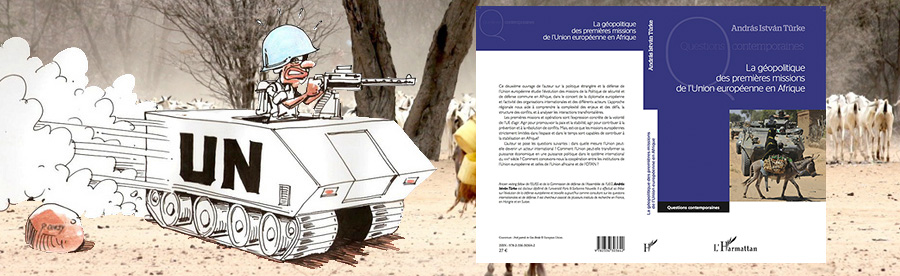
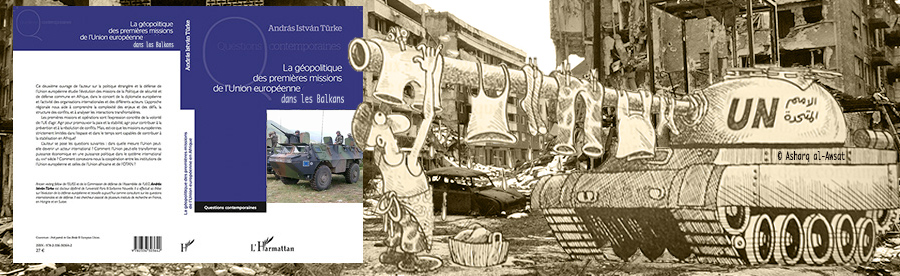
We are looking for sponsors for the English translation of these books, please contact turkeandras(at)gmail(dot)com