
You are here
Afrique
Remarks by Kyriakos Pierrakakis, President of the Eurogroup, at the Rencontres Économiques
Kyriakos Pierrakakis, President of the Eurogroup, attended the Rencontres Économiques in Aix-en-Provences. He spoke at the plenary session 'One World, Clashing Visions: Who Sets the Standards?'.
Categories: Afrique, Europäische Union
Weekly schedule of President António Costa
Weekly schedule of President António Costa, 6-12 July 2026.
Categories: Afrique, Europäische Union
Chemical weapons: EU sanctions six individuals involved in Navalny’s poisoning and death
The Council imposed restrictive measures on six Russian individuals involved in the development of chemical weapons, notably epibatidine, which is highly likely the cause of Alexei Navalny’s death.
Categories: Afrique, Europäische Union
Dans le détroit d'Ormuz, la BBC découvre des navires saisis et des pêcheurs de requins alors qu'un calme précaire revient
La BBC se rend à Bandar Abbas pour observer comment la guerre américano-israélienne contre l'Iran a affecté la vie quotidienne dans cette ville portuaire.
Categories: Afrique, Swiss News
Dans le détroit d'Ormuz, la BBC découvre des navires saisis et des pêcheurs de requins alors qu'un calme précaire revient
La BBC se rend à Bandar Abbas pour observer comment la guerre américano-israélienne contre l'Iran a affecté la vie quotidienne dans cette ville portuaire.
Categories: Afrique, Balkans Occidentaux
Un Béninois nommé président du Conseil d'Administration de l'ALCoMA
Le Béninois Wilfrid Lauriano Do Rego a été nommé président du Conseil d'Administration de l'Autorité de gestion du Corridor Abidjan-Lagos (ALCoMA) pour un mandat de quatre ans.
Le Conseil d'Administration de l'Autorité de gestion du Corridor Abidjan-Lagos (ALCoMA), réuni les 11 et 12 juin à Lagos, au Nigeria, a installé sa nouvelle équipe dirigeante chargée d'accompagner la mise en œuvre du vaste projet d'intégration régionale reliant cinq pays d'Afrique de l'Ouest.
A cette occasion, l'expert-comptable et financier béninois Wilfrid Lauriano Do Rego a été porté à la présidence du Conseil d'Administration pour les quatre prochaines années. Sa nomination découle des dispositions de l'Accord intergouvernemental qui institue une rotation alphabétique entre les Etats membres, en commençant par le Bénin.
Un autre Béninois, Jacques Ayadji, occupe également le poste de vice-président.
Fort de plus de 36 ans d'expérience dans l'audit, la finance et la gouvernance d'entreprises, Wilfrid Lauriano Do Rego a exercé des fonctions de conseil et siégé au sein des conseils d'administration de multinationales, d'institutions financières, de fonds d'investissement et d'organisations africaines.
Lors de cette réunion inaugurale, le Conseil a également arrêté les principales orientations destinées à accélérer le développement du Corridor Abidjan-Lagos et à concrétiser les objectifs fixés par les chefs d'État des cinq pays concernés.
Pour accompagner la phase de démarrage de l'Autorité, deux sous-comités intérimaires ont été créés. Le premier supervisera le recrutement du directeur général ainsi que du secrétaire juridique et corporatif de l'ALCoMA, tout en examinant les politiques de rémunération. Le second sera chargé des questions financières, notamment de la mobilisation des ressources, de la préparation des budgets, de l'architecture financière de l'institution ainsi que de la gestion des risques et des recettes liées au corridor.
Le Conseil a par ailleurs pris acte de la désignation de Chris Appiah, directeur des transports de la CEDEAO, comme représentant de l'organisation régionale au sein de l'instance.
M. M.
Categories: Afrique, European Union
Les candidatures ouvertes pour accueillir les CAN 2028, 2032 et 2036
La Confédération Africaine de Football (CAF), a officiellement ouvert l'appel à candidatures pour l'organisation des Coupes d'Afrique des Nations 2028, 2032 et 2036.
La Confédération Africaine de Football (CAF) a invité ses Associations Membres qui représentent 54 pays africains à soumettre des candidatures pour accueillir la COUPE D'AFRIQUE DES NATIONS (CAN ) 2028, 2032 et 2036 .
La compétition CAF CAN est le plus grand événement sportif d'Afrique et figure également parmi les plus grands événements sportifs au monde, avec plus de 3,2 milliards de téléspectateurs et 6 milliards de vues numériques à l'échelle mondiale.
La CAF a également rappelé que la CAN 2027 sera co-organisée par le Kenya, la Tanzanie et l'Ouganda, avec une phase finale prévue du 19 juin au 17 juillet 2027.
M. M.
Categories: Afrique, European Union
Bertin Nahum parmi les lauréats du Palmarès Santé 2026 de TIME France
L'entrepreneur franco-béninois, Bertin Nahum a été désigné parmi les 20 lauréats du Palmarès Santé 2026 de TIME France, une distinction qui récompense les personnalités ayant marqué le secteur de la santé par leur innovation et leur impact.
Bertin Nahum parmi les 20 lauréats du Palmarès Santé 2026 de TIME France. Attribuée par un jury indépendant, cette reconnaissance salue son parcours d'exception ainsi que la contribution majeure du récipiendaire au développement de la robotique chirurgicale mini-invasive.
À la tête de Quantum Surgical, dont il est le président et cofondateur, Bertin Nahum a notamment piloté la conception du robot Epione, une technologie de pointe qui assiste les médecins dans le traitement ciblé de certaines tumeurs. Déjà déployée en Europe et aux États-Unis, cette solution innovante a permis la prise en charge de plus de 1 400 patients, confirmant ainsi son potentiel dans l'amélioration des traitements contre le cancer.
Ingénieur de formation, Bertin Nahum s'est imposé au fil des années comme l'une des figures européennes de la chirurgie robotisée. Après le succès de Medtech et du robot ROSA, racheté en 2016 par le groupe américain Zimmer Biomet, il a fondé Quantum Surgical en 2017 avec l'ambition de révolutionner les interventions mini-invasives en oncologie. Cette nouvelle distinction vient couronner plus de deux décennies d'innovations consacrées au progrès médical.
Cette consécration intervient quelques semaines après son passage au Bénin, du 20 au 27 avril 2026, à l'invitation de la Fondation Sèmè City. Au cours de ce séjour, il a été reçu par plusieurs hautes autorités béninoises, notamment le président Patrice Talon, le président élu Romuald Wadagni et le ministre de la Santé Benjamin Hounkpatin. A cette occasion, Bertin Nahum a réaffirmé son attachement à son pays d'origine et exprimé sa volonté de mettre son expertise et son réseau international au service de la modernisation du système de santé béninois.
F. A. A.
Categories: Afrique, European Union
Le Lycée International Français Pierre Manoël Talon intégralement homologué au terme de ses deux premières années.
Établissement scolaire de la Fondation Claudine Talon, Pierre Manoël obtient l'homologation de son cycle Lycée par arrêté du ministère français de l'Éducation nationale, de l'Enseignement supérieur et de la Recherche, en date du 19 juin 2026.
Cette décision ministérielle acte l'extension de l'homologation obtenue en juin 2025 pour la maternelle, l'élémentaire et le collège. Ainsi, deux ans seulement après son ouverture en septembre 2024, l'établissement est officiellement reconnu de la Petite Section jusqu'à la Terminale.
L'obtention de cette homologation complète dans un délai aussi restreint constitue une trajectoire tout à fait singulière au sein du réseau de l'AEFE, un acteur sans équivalent dans le paysage éducatif mondial qui rassemble aujourd'hui 612 établissements sur 5 continents. Cette étape valide la rigueur du projet pédagogique de l'établissement, l'excellence des formations et la conformité des enseignements aux standards internationaux, offrant aux élèves une véritable ouverture sur le monde.
✅ École maternelle (homologuée en 2025)
✅ École élémentaire (homologuée en 2025)
✅ Collège (homologué en 2025)
✅ Lycée (extension d'homologation accordée en 2026)
Le développement de l'institution se poursuit avec la même exigence. Dès la rentrée de septembre 2026, l'établissement franchira un nouveau cap avec l'ouverture de son internat d'excellence. Conçu pour offrir un cadre d'apprentissage optimal, celui-ci accueillera dans un premier temps les élèves boursiers de la Fondation Claudine Talon, avant d'élargir ses admissions à des élèves non boursiers à compter de la rentrée 2027.
Le Lycée International Français Pierre Manoël Talon remercie ses équipes, ses partenaires et les familles qui contribuent à la réussite de ce projet, et poursuit sa mission avec responsabilité et rigueur.
La Rédaction


Categories: Afrique, European Union
La préfète de l'Ouémé au contact des populations sinistrées
Plusieurs localités du département de l'Ouémé ont été inondées suites aux pluies diluviennes enregistrées ces derniers jours. La préfète du département s'est rendue vendredi 3 juillet 2026, dans les localités de Vakon et à Akpro-Missérété pour s'enquérir des dégâts afin de prendre des mesures visant à soulager les peines des sinistrés.
La préfète de l'Ouémé au contact des populations victimes des inondations après les pluies torrentielles enregistrées ces derniers jours. Marie Akpotrossou était accompagnée du directeur départemental adjoint de la Police républicaine, et plusieurs autres personnalités.
De Vakon à Akpro-Missérété, la préféte a pu constater les dégâts et échangé avec les populations.
A Vakon, les deux bassins de rétention d'eau réalisés selon la préfète, ont contribué à réduire les effets des inondations dans certaines zones. Mais d'autres aménagements selon ses explications, seraient nécessaires pour mieux évacuer les eaux et limiter les risques lors des prochaines saisons.
Marie Akpotrossou n'a pas manqué d'attirer l'attention des populations sur la fragilité de certaines zones qui servent de passage naturel pour les eaux de ruissellement. Des solutions durables devront être trouvées pour protéger les populations exposées, a-t-elle annoncé.
Du côté d'Akpro-Missérété, les responsables communaux ont été conviés à des réflexions sur les actions de prévention à mener dans les secteurs dits sensibles. Evoquant l'embouchure de Hessou, la préfète a souhaité une meilleure collaboration entre les communes et les services techniques de l'État pour prévenir les inondations.
F. A. A.
Categories: Afrique, European Union
Le pont de Djonou repensé dans un projet plus ambitieux
Le projet de reconstruction du pont de Djonou, dans la commune d'Abomey-Calavi, s'inscrit désormais dans un programme de plus grande envergure. Le ministre porte-parole du gouvernement, Wilfried Léandre Houngbédji, a expliqué les raisons du retard accusé par ce chantier, annoncé il y a deux ans.
Les fortes pluies de ces derniers jours ont rendu le pont de Djonou impatricable. Les inondations ont provoqué d'importants embouteillages, obligeant l'Agence béninoise de protection civile à intervenir pour évacuer les eaux stagnantes.
Selon Wilfried Léandre Houngbédji, le projet, initialement prévu sur financement du budget national, a été intégré à un programme de mobilité urbaine financé avec l'appui de la Banque mondiale.
« Nous sommes entrés dans un programme avec la Banque mondiale, un programme dit de mobilité urbaine, dans lequel le pont de Djonou, comme celui de Cotonou, a été intégré », a-t-il expliqué.
Cette nouvelle orientation a nécessité une reprise complète des études techniques. « Entre-temps, nous avons vu les choses plus grand, plus moderne et plus futuriste », a indiqué le ministre.
À travers ce projet, le gouvernement ambitionne notamment de développer le transport fluvial entre Porto-Novo, Cotonou et Abomey-Calavi. « À terme, nous voulons favoriser le transport fluvial de Porto-Novo à Calavi en passant par Cotonou, et mettre en exploitation notre plan d'eau ; pour cela, il fallait une certaine dimension », a-t-il précisé.
Selon le ministre porte-parole du gouvernement, cette vision explique le retard observé dans le lancement des travaux. Le président de la République a demandé au ministre du Cadre de vie et des Transports de rechercher les voies et moyens pour accélérer la réalisation de l'ouvrage.
« La réflexion du chef de l'État a été de demander au ministre du Cadre de vie et des Transports comment accélérer la réalisation de ce pont, pour que nous ne revivions plus la situation enregistrée il y a quelques jours », a rapporté Wilfried Léandre Houngbédji.
Des mesures d'urgence ont été prises afin de limiter les conséquences des fortes pluies. « Le ministre du Cadre de vie et des Transports a pris des dispositions pour qu'une pelle amphibie intervienne en appoint, afin de drainer davantage les eaux et éviter qu'elles ne stagnent au point de déborder », a-t-il indiqué.
Les travaux de reconstruction, une fois lancés dans le cadre du programme de mobilité urbaine, devraient durer entre deux et trois ans. « Nous aurons alors un meilleur confort, et les eaux ne resteront plus là », a conclu le ministre. Le chantier démarrera donc à l'issue des études techniques.
Categories: Afrique, European Union
Un enfant tue son père à coups de machette à Gbodjè
Un drame secoue le quartier Gbodjè, dans l'arrondissement de Godomey, commune d'Abomey-Calavi depuis la matinée de ce dimanche 5 juillet 2026. Un enfant a donné la mort à son père à coups de machette.
Parricide à Gbodjè. Dans ce quartier de l'arrondissement de Godomey, dans la commune d'Abomey-Calavi, un enfant a tué son père ce dimanche 5 juillet 2026. La victime, ancien fonctionnaire de Police selon nos sources, dormait tranquillement dans sa chambre quand le mis en cause l'a pris à partie, lui assenant des coups de machette. Grièvement blessé, le retraité succombe à ses blessures avant sa prise en charge sanitaire.
Le fils, auteur du meurtre de son père, est connu dans le voisinage comme consommateur de produits psychotropes. Une situation qui serait à l'origine de tensions récurrentes dans la famille depuis plusieurs années, rapportent nos sources. Il s'agirait d'un repris de justice.
Interpellé et placé en garde à vue, il devra répondre de ses actes devant les juridictions.
F. A. A.
Categories: Afrique, Európai Unió : hírek magyarul
Romuald Wadagni en Mauritanie ce lundi
Le président de la République, Romuald Wadagni, se rendra ce lundi 6 juillet 2026 à Nouakchott, en République islamique de Mauritanie, dans le cadre d'une visite d'État. Cette mission intervient à l'invitation de son homologue mauritanien, Mohamed Ould Cheikh El Ghazouani, selon un communiqué de la Présidence du Bénin.
Au cours de son séjour, les deux chefs d'État auront un tête-à-tête consacré au renforcement des relations d'amitié et de coopération entre le Bénin et la Mauritanie. Les discussions porteront notamment sur les axes prioritaires du partenariat bilatéral, ainsi que sur les questions régionales d'intérêt commun.
Selon la Présidence béninoise, cette visite s'inscrit dans la dynamique diplomatique impulsée par le chef de l'État en vue de maintenir un dialogue soutenu avec les partenaires africains. Elle traduit également la volonté du Bénin de promouvoir une action concertée sur les défis liés au développement, à la sécurité et à l'intégration en Afrique de l'Ouest ainsi que dans l'espace sahélo-saharien.
Les travaux entre les deux délégations seront sanctionnés par la publication d'un communiqué conjoint à l'issue de l'entretien entre les deux présidents.
A.A.A
Categories: Afrique, European Union
Six façons d'inciter les enfants à manger des légumes
De petits changements dans la façon dont les enfants perçoivent la nourriture au quotidien peuvent avoir un impact durable sur leurs habitudes alimentaires.
Categories: Afrique, Balkans Occidentaux
Le Cabo Verde réserve un grand accueil populaire aux Requins Bleus, héros du Mondial
Les Requins Bleus du Cap-Vert ont atterri à Praia, la capitale, après leur impressionnant parcours en Coupe du Monde, qui s'est achevé en huitièmes de finale.
Categories: Afrique, Balkans Occidentaux
La France s'impose au Paraguay et rejoint le Maroc en quarts
L'équipe de France a obtenu sa qualification pour les quarts de finale de la Coupe du monde 2026. Opposés au Paraguay ce samedi 4 juillet à Philadelphie en huitième de finale, les Bleus ont dû batailler fort avant de s'imposer au Paraguay sur un score étriqué de 1-0.
La France poursuit son aventure au mondial 2026, après sa qualification en quart de finale. Face au Paraguay ce samedi 4 juillet, les hommes de Didier Deschamps ont rapidement pris la maîtrise du ballon, mais se sont heurtés à un bloc paraguayen particulièrement discipliné. Bien regroupés en défense et agressifs dans les duels, les Sud-Américains ont longtemps empêché les Français de se créer de véritables occasions, malgré une nette domination.
Au retour des vestiaires, la pression française s'est intensifiée. Les offensives se sont multipliées jusqu'à la 70e minute, lorsque Désiré Doué, lancé dans la surface, a provoqué un penalty après une faute de Gomez. Sans trembler, Kylian Mbappé a transformé la sanction et inscrit le seul but de la rencontre.
Malgré quelques arrêts décisifs du gardien paraguayen Gill, la France a ensuite parfaitement maîtrisé la fin de match pour préserver son avantage jusqu'au coup de sifflet final.
Grâce à cette victoire, les Bleus se qualifient pour les quarts de finale, où ils retrouveront le Maroc, tombeur du Canada (3-0). Une affiche particulièrement attendue entre deux sélections ambitieuses, avec une place dans le dernier carré de la compétition.
F. A. A.
Categories: Afrique, European Union
Les Amazones U17 s'inclinent face au Nigéria
Les Amazones U17 du Bénin ont concédé une courte défaite (3-2) face aux Flamingos du Nigeria, samedi 4 juillet 2026, à Ikenne (Nigeria).
En manche aller du dernier tour des éliminatoires de la Coupe du monde féminine U17 de la FIFA Maroc 2026, les Amazones U17 du Bénin se sont inclinées face aux Flamingos du Nigeria.
Les joueuses béninoises ont entamé la rencontre grâce à l'ouverture du score de Yenido Romaine Gandonou dès la 14e minute.
Les Nigérianes ont toutefois réagi avant la pause par Queen Joseph (24e), renvoyant les deux équipes aux vestiaires sur un score de 1-1.
Au retour des vestiaires, Oluwakemi Adegbuyi a donné l'avantage aux Flamingos à la 62e minute.
Loin de céder, les Amazones ont égalisé dix minutes plus tard par Nazifatou Dangui (72e), relançant totalement la rencontre. Mais Ifeanyi Kindness a redonné l'avantage au Nigeria trois minutes plus tard (75e), inscrivant le but de la victoire.
Les Amazones devront s'imposer, au match retour prévu à Lomé, pour espérer décrocher une première qualification historique à la Coupe du monde féminine U17 de la FIFA, Maroc 2026.
M. M.
Categories: Afrique, Határon túli magyar portálok összesített hírei
Le Maroc écrase le Canada et file en quart de finale
Le Maroc poursuit son remarquable parcours à la Coupe du monde 2026. Opposé au Canada ce samedi 4 juillet en huitième de finale, les Lions de l'Atlas ont écrasé leurs adversaires par un score de 3 buts à 0.
Le Maroc s'impose avec autorité au Canada en huitième de finale de la Coupe du monde 2026. Et ce, malgré un bon début de match pour la sélection canadienne. Très entreprenants, les hommes de Jesse Marsch ont imposé leur rythme durant les 45 premières minutes et se sont créés plusieurs occasions franches.
Solides dans l'organisation mais peu inspirés offensivement, les Marocains ont souffert face à la pression adverse. Ils ont également été contraints de composer avec la sortie sur blessure de Saibari avant la pause.
Au retour des vestiaires, la sélection marocaine change le rythme du jeu. Plus tranchants et plus efficaces, les Lions de l'Atlas ont ouvert le score à la 51e minute grâce à Azzedine Ounahi, qui a repris victorieusement un coup franc parfaitement exécuté par Achraf Hakimi.
Alors que le Canada tentait de revenir dans la partie, Ounahi s'illustre une nouvelle fois et inscrit un doublé à la 82e minute, sur une passe décisive de Brahim Diaz.
Dans le temps additionnel, Soufiane Rahimi scelle définitivement le sort de la rencontre concluant une contre-attaque et porte le score à 3-0.
Avec cette victoire, le Maroc valide son ticket pour les quarts de finale de la Coupe du monde 2026. Les Lions de l'Atlas affronteront la France qui s'est imposée au Paraguay 1-0.
F. A. A.
Categories: Afrique, Határon túli magyar portálok összesített hírei
Huit des dix pays les plus peuplés du monde ne participent pas au mondial de football. Pourquoi ?
De nombreux pays à forte population passent régulièrement à côté du plus grand événement sportif mondial. Que peuvent-ils faire pour inverser la tendance ?
Categories: Afrique, Swiss News
Huit des dix pays les plus peuplés du monde ne participent pas au mondial de football. Pourquoi ?
De nombreux pays à forte population passent régulièrement à côté du plus grand événement sportif mondial. Que peuvent-ils faire pour inverser la tendance ?
Categories: Afrique, Balkans Occidentaux
Pages
the old site is here


© 2012-2015 Europa Varietas Foundation © 2015-2020 Europa Varietas Association
www.europavarietas.org | info(@)europavarietas(dot)org | Switzerland
This is a GDPR ready site
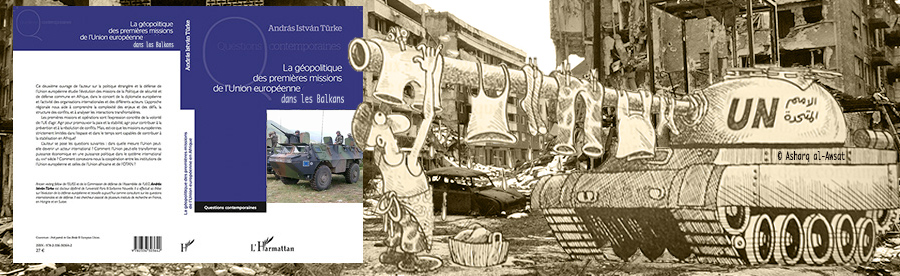
We are looking for sponsors for the English translation of these books, please contact turkeandras(at)gmail(dot)com