
You are here
European Union
FIRST AID: Macron promises action on One Health
In today's edition: Week ahead, tariff aftermath, and little bears that are more sweet than healthy
Categories: Diplomacy & Defense Think Tank News, European Union
THE HACK: Who are AI gigafactories for?
In today's edition: US Congress vs ASML, lawyer’s view of EU Inc, DPO's deepfake porn probe
Categories: Diplomacy & Defense Think Tank News, European Union
From Dialogue to Delivery: The Pacific’s Climate Mobility Moment
Workers in Kiribati were building sea walls to protect against rising sea levels from climate change. Credit: UNFPA/Carly Learson
By Andie Fong Toy, Nobuko Kajiura and Peter Emberson
BANGKOK, Thailand, Apr 7 2026 (IPS)
Rising seas, intensifying storms, saltwater intrusion and shifting coastlines are the lived realities of Pacific communities today. Families are making difficult decisions about whether to stay, adapt or move. Some communities have already relocated. Others are preparing for that possibility. Many are determined to stay for as long as possible on lands that hold ancestral meaning and identity.
Climate mobility is not simply a policy category. It is about people, culture, dignity and the future of Pacific societies. With the endorsement of the Pacific Regional Framework on Climate Mobility in 2023, Pacific leaders articulated a collective approach grounded in human rights, community leadership and regional solidarity.
But frameworks alone do not move communities to safer ground. Implementation does.
A Pacific vision anchored in community
At the heart of the Framework is a simple but powerful principle: Climate mobility must be guided by the voices and priorities of Pacific communities themselves. This is not abstract diplomacy. It reflects lived experience, where communities are asking how to preserve identity, protect livelihoods and ensure that mobility, if necessary, occurs with dignity rather than desperation.
The Framework seeks to ensure that these decisions are not forced by crisis, but shaped through planning, consultation and collective responsibility. Mobility has long histories through voyaging and internal migration in the Pacific, but climate change introduces new pressures requiring coordinated governance.
Stories from community representatives who have already experienced planned relocation show that this is not merely a technical exercise. It is a human process touching identity, belonging, spirituality and intergenerational memory.
A deeply personal story shared by people forced to leave their village during a period of social conflict in Fiji’s colonial past is a reminder that movement has long been part of human history. What matters is whether that movement occurs with dignity, opportunity and support, or under conditions of hardship and loss.
Climate mobility policy, when relocation becomes necessary, should open pathways to resilience rather than trauma.
A regional responsibility
Communities across the Pacific face similar challenges, yet each context is unique. Regional cooperation allows sharing lessons, strengthening capacities and solidarity expressed in practical ways.
But collaboration must also be genuine.
The Pacific has long benefited from strong partnerships with development partners, including technical work that contributed to the development of the Framework.
Yet, a quiet caution as implementation begins. Climate mobility cannot become another item on the international development checklist.
Too often, global processes risk becoming procedural: workshops are convened, reports produced, partnerships announced, while communities remain marginal in decision-making.
This approach will not suffice. Partners must genuinely listen. Communities, relocated or contemplating relocation, carry knowledge that cannot be replicated in technical reports. Their experiences reveal the social, cultural and emotional dimensions of mobility that policy frameworks must address.
Effective climate mobility governance requires sustained cooperation across institutions and sectors, civil society practitioners and various development partners. No single agency can carry this work alone.
But coordination must be guided by humility. International partners must recognise that Pacific communities are not passive beneficiaries of policy. They are custodians of knowledge and agents of their own futures.
The global context: A critical moment
Later this year, the global climate community will gather once again for negotiations under the United Nations Framework Convention on Climate Change when the human dimensions of climate change are becoming increasingly visible around the world.
Yet global governance mechanisms for addressing these realities of climate-driven displacement and migration remain fragmented.
The Pacific’s approach offers important lessons.
Pacific leaders have proactively confronted the issue, acknowledging mobility as part of the climate response landscape while emphasising rights, dignity and community agency.
The Pre-COP dialogue, to be hosted by Fiji and Tuvalu, provides an opportunity to bring Pacific perspectives into the global climate negotiation process directly, reminding the international community that climate mobility is not an abstract concept.
From framework to action
The Implementation Plan for the Framework is in place. Governance mechanisms are emerging through technical working groups and partnership platforms.
Now these commitments must translate into real outcomes for communities.
This means investing in community-led planning processes, supporting governments to strengthen legal and institutional frameworks and ensuring that relocation, where necessary, is accompanied by adequate resources, land access and long-term livelihood opportunities.
It also means recognising that mobility is only one part of the broader climate resilience agenda. Many Pacific communities remain determined to stay on their lands for as long as possible, supported by adaptation measures and protective infrastructure.
Climate mobility policy must therefore operate alongside, not instead of, ambitious climate mitigation and adaptation efforts.
The ball is now in our court
The Pacific has demonstrated leadership in confronting the complex dimensions of climate change, but implementation will require sustained commitment from governments, development partners, regional organisations and communities themselves.
The ball is now in the court of all stakeholders and partners.
Engagement must be genuine. Partnerships must be meaningful. Listening must precede action.
Above all, the work must remain anchored in the aspirations and dignity of Pacific peoples.
Climate mobility is not simply about moving people. It is about safeguarding cultures, protecting rights, and ensuring that communities can navigate a changing climate with agency and hope.
Andie Fong Toy is Head of ESCAP Subregional Office for the Pacific); Nobuko Kajiura is Economic Affairs Officer, ESCAP Subregional Office for the Pacific and Peter Emberson is Consultant, ESCAP Subregional Office for the Pacific.
IPS UN Bureau
Follow @IPSNewsUNBureau
!function(d,s,id){var js,fjs=d.getElementsByTagName(s)[0],p=/^http:/.test(d.location)?'http':'https';if(!d.getElementById(id)){js=d.createElement(s);js.id=id;js.src=p+'://platform.twitter.com/widgets.js';fjs.parentNode.insertBefore(js,fjs);}}(document, 'script', 'twitter-wjs');
Categories: Africa, European Union
Iran ambassador to Pakistan says efforts to end war at ‘critical, sensitive stage’
Pakistan is mediating between Iran and the United States
Categories: Diplomacy & Defense Think Tank News, European Union
Le Vatican condamne la guerre mais maintient ses liens avec une institution liée à l’Iran
Selon une source, l'accord de coopération avec l'université de Téhéran remonte à 2007
The post Le Vatican condamne la guerre mais maintient ses liens avec une institution liée à l’Iran appeared first on Euractiv FR.
Categories: European Union, Union européenne
L’affaire Rima Hassan interroge l’immunité des députés européens et leur liberté d’expression
Cette affaire relance le débat sur les limites du contrôle des discours en France au nom de la lutte antiterroriste
The post L’affaire Rima Hassan interroge l’immunité des députés européens et leur liberté d’expression appeared first on Euractiv FR.
Categories: European Union, Union européenne
Le Danube en eaux troubles
Également dans l'édition de mardi : la lettre de Brunner, le nouveau visage de l'euro, les coupes de cheveux militaires, les bases britanniques à Chypre
The post Le Danube en eaux troubles appeared first on Euractiv FR.
Categories: European Union, Union européenne
Missiles chinois : la Serbie muscle son arsenal et inquiète les Balkans
Avec l'acquisition de missiles hypersoniques chinois intégrés à ses MiG-29, la Serbie inquiète ses voisins. Entre rivalité militaire avec la Croatie, tensions persistantes avec le Kosovo et stratégie d'équilibre entre Chine et Occident, à quel jeu joue Belgrade ?
- Articles / Radio Slobodna Evropa, Serbie, Défense, police et justice, Relations régionales
Categories: Balkans Occidentaux, European Union
Missiles chinois : la Serbie muscle son arsenal et inquiète les Balkans
Avec l'acquisition de missiles hypersoniques chinois intégrés à ses MiG-29, la Serbie inquiète ses voisins. Entre rivalité militaire avec la Croatie, tensions persistantes avec le Kosovo et stratégie d'équilibre entre Chine et Occident, à quel jeu joue Belgrade ?
- Articles / Radio Slobodna Evropa, Serbie, Défense, police et justice, Relations régionales
Categories: Balkans Occidentaux, European Union
HARVEST: Middle East ripple
In today's edition: The policy week ahead
Categories: Diplomacy & Defense Think Tank News, European Union
Tentative de sabotage contre le gazoduc Turkstream en Serbie : Orbán se frotte les mains
S'agit-il d'une opération de diversion téléguidée par Moscou ? Les autorités serbes ont affirmé dimanche avoir déjoué une attaque contre le gazoduc Turkstream qui relie la Serbie et la Hongrie. Viktor Orbán a aussitôt désigné l'Ukraine... Kiev dément toute implication.
- Le fil de l'Info / Serbie, Relations régionales, Défense, police et justice, Orban Balkans, Ukraine, Courrier des Balkans, Énergie Balkans
Categories: Balkans Occidentaux, European Union
Tentative de sabotage contre le gazoduc Turkstream en Serbie : Orbán se frotte les mains
S'agit-il d'une opération de diversion téléguidée par Moscou ? Les autorités serbes ont affirmé dimanche avoir déjoué une attaque contre le gazoduc Turkstream qui relie la Serbie et la Hongrie. Viktor Orbán a aussitôt désigné l'Ukraine... Kiev dément toute implication.
- Le fil de l'Info / Serbie, Relations régionales, Défense, police et justice, Orban Balkans, Ukraine, Courrier des Balkans, Énergie Balkans
Categories: Balkans Occidentaux, European Union
Dark Side of the Danube
Also, in Tuesday’s edition: Brunner’s letter, Euro visions, army hairstyles, CY bases
Categories: Diplomacy & Defense Think Tank News, European Union
Made in Europe means scaling what already works [Promoted Content]
The urgency is real. The latest Deloitte monitoring report shows that 83% of Europe’s competitiveness indicators have not improved in the last two years. The chemical closures and investment radar by Cefic, the European chemical industry association, shows a wave of capacity being shut down while investment flows to regions with clearer industrial policy and […]
Categories: Diplomacy & Defense Think Tank News, European Union
EU recalibrates the case for AI gigafactories
Commission eyes inference role alongside original AI training hub plans
Categories: Diplomacy & Defense Think Tank News, European Union
Euro identity crisis: Beethoven or birds?
Europe has been soul-searching for years. Now it has to settle on an answer, and print it
Categories: Diplomacy & Defense Think Tank News, European Union
Clip it, tie it, or trim it: What 18 countries say about military hairstyles
Italy recruits are being told to lay off the hair gel or hairspray
Categories: Diplomacy & Defense Think Tank News, European Union
Cyprus wants British sovereign bases deal modelled on return of Chagos Islands
‘We are calling for a reassessment of the relationship and a renegotiation of the status on the terms of 2026,’ said lawmaker Chrisis Pantelides
Categories: Diplomacy & Defense Think Tank News, European Union
INTERVIEW: ‘If both sides can live with it, that’s a deal’ – Australia’s EU envoy on trade agreement
Agricultural sensitivities on both sides reflected in the deal
Categories: Diplomacy & Defense Think Tank News, European Union
‘Not all about bullets’: EIB urges Europe to fix military mobility gaps
The European Investment Bank aims to invest €5 billion on defence and security projects this year
Categories: Diplomacy & Defense Think Tank News, European Union
Pages


© 2012-2018 Europa Varietas Foundation © 2015-2018 Europa Varietas Association
www.europavarietas.org | info(@)europavarietas(dot)org | Switzerland

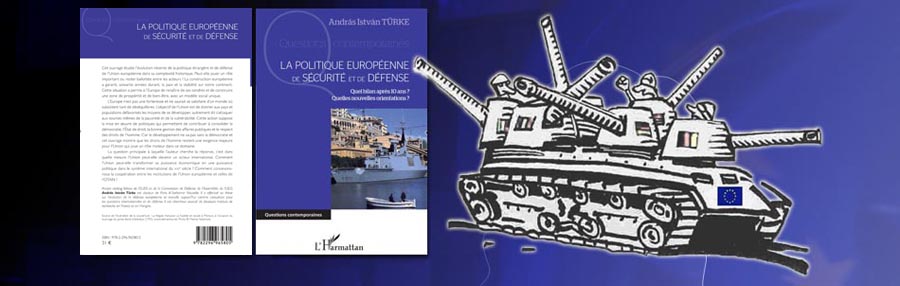
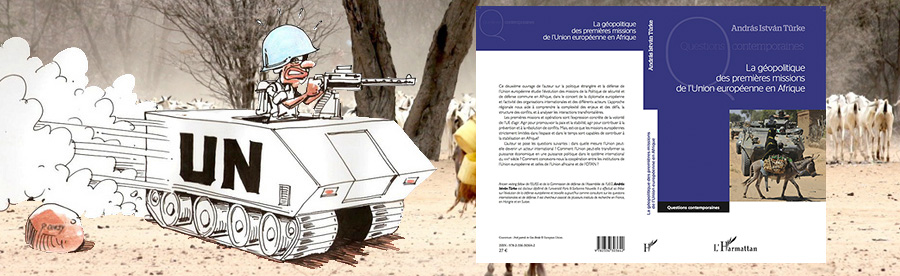
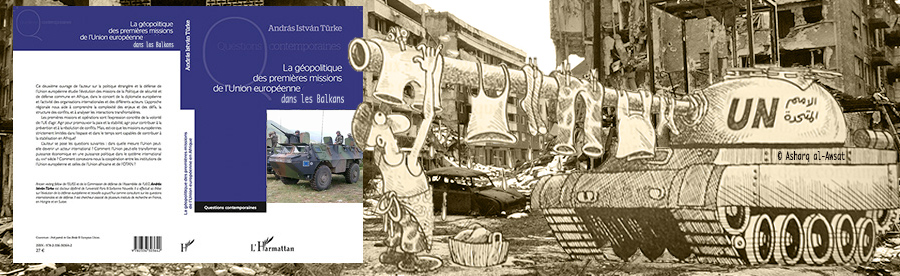
We are looking for sponsors for the English translation of these books, please contact turkeandras(at)gmail(dot)com