
You are here
European Union
“On les met en Méditerranée” : nouveau dérapage sur CNews visant les Maghrébins incarcérés en France
Invité sur CNews, le chroniqueur Jean-Claude Dassier, déjà condamné en 2022 pour provocation à la haine envers les musulmans, a suggéré de jeter les prisonniers […]
L’article “On les met en Méditerranée” : nouveau dérapage sur CNews visant les Maghrébins incarcérés en France est apparu en premier sur .

Le plus grand CHU d’Algérie depuis l’indépendance prend forme dans cette wilaya (vidéo)
Ce lundi 3 mars, le ministre du Logement, de l’Urbanisme et de la Ville, Mohamed Tarek Belaribi, s’est rendu sur le chantier du centre hospitalier […]
L’article Le plus grand CHU d’Algérie depuis l’indépendance prend forme dans cette wilaya (vidéo) est apparu en premier sur .
Selon Bonatiro, les Algériens fêteront l’Aïd El-Fitr en ce jour
L’astronome et astrophysicien algérien, Loth Bonatiro, a livré ses prévisions concernant la célébration de l’Aïd el-Fitr pour l’année 2026. Selon ses calculs, le premier jour […]
L’article Selon Bonatiro, les Algériens fêteront l’Aïd El-Fitr en ce jour est apparu en premier sur .
Décès de Omer Marie Bruno TAPSOBA : Faire-part
Les grandes familles TAPSOBA, OUEDRAOGO, KABRE, COMPAORE, ILBOUBO, YANOGO, NACOULMA à Dagnoen, Katr-yarr, Dapoya, Saint-Léon, Gounghin, Bilbalogho, Ouidi, Tampouy ; le Dagnoén Naaba SAANEM et ses chefs coutumiers ; le BALOUM Naaba de Dagnoén ; le OUEDANG Naaba de Manga ;
Les familles alliées : TAMINI, YODA, N'KERBU, SAWADOGO, KINDA, OUEDRAOGO, ILBOUDO ;
L'épouse TAPSOBA/TAMINI Marie Emilie ;
Les frères et sœurs : Roger Marie, Giséle Marie Alice, Clotaire Marie ;
Les enfants : Ange Patrick, Anthony Rodrigue Galyam, Cédric Clovis Sidwendkieta, Stéphane Davy Ghislain ;
Les petits enfants : David Evan Claver, Anaelle Maria Grace, Melvin Nathanael Elishama, Soléa Adrielle ;
Ont la profonde douleur de vous annoncer le rappel à Dieu de leur époux, frère, père, grand-père, oncle, Omer Marie Bruno TAPSOBA ; décès survenu dans la nuit du 1er au 2 mars 2026 des suites de maladie ;
Ainsi, le programme des obsèques de Feu Colonel Major à la retraite TAPSOBA Omer Marie Bruno, Ancien Chef d'Etat-Major de la Gendarmerie Nationale -de 2017 à 2021-, s'articule comme suit :
Jeudi 05 Mars 2026 :
Levée du corps de la chambre mortuaire du CHU-Bogodogo à 16h00 pour le domicile du défunt à « Katr-yarr » ;
Veillée de prière à 20h00 audit domicile.
Vendredi 06 Mars 2026 :
Départ du domicile du défunt à 8h00 ;
Messe et absoute à 9h00 à la Paroisse Saint Sébastien au Camp Sangoulé LAMIZANA ;
Inhumation au cimetière municipal de Gounghin.
« Que son âme repose en paix ! »
AMEN !!!
Guerre au Moyen-Orient : l’ambassade d’Algérie à Doha fait une mise au point importante
Suite à l’annonce de la suspension de l’accueil physique du public, motivée par le contexte sécuritaire régional au Moyen-Orient et les directives des autorités locales, […]
L’article Guerre au Moyen-Orient : l’ambassade d’Algérie à Doha fait une mise au point importante est apparu en premier sur .
Dutch PM ‘open’ to Orbán’s Ukraine pipeline demand
The Hungarian prime minister is blocking a €90 billion loan to Ukraine
Categories: Európai Unió : hírek magyarul, European Union
The Brief – The least Europe can do for Iran
When Iranian-supplied drones strike Ukrainian cities, when advanced Russian engines enhance Iran’s missile reach, when energy routes are threatened, European security is directly implicated
Categories: Európai Unió : hírek magyarul, European Union
Care Policies and Women, Peace and Security
[margin]Attend In-Person[/margin] [margin]Attend Virtually[/margin]The International Peace Institute (IPI), in partnership with UN Women and with the support of the Open Society Foundations, is cohosting a policy forum on “Care Policies and Women, Peace and Security.”
Remarks will begin at 1:15pm EDT
table {border: 1px solid #606060;} Live Broadcast | Watch onRefresh this window at the scheduled time to watch the video.
Held in the context of the 70th annual Commission on the Status of Women (CSW70), and reflecting this year’s review theme on “women’s full and effective participation and decision-making in public life, as well as the elimination of violence, for achieving gender equality and the empowerment of all women and girls,” this side event will position care systems as a core enabler of the women, peace and security (WPS) agenda.
Building on UN Women’s newly launched global “Guidance Note on Addressing Care in Times of Conflict and Crisis,” the discussion will examine how unequal and unrecognized care responsibilities constrain women’s participation in peacebuilding, weaken social cohesion, and undermine recovery and sustaining peace outcomes.
The event will also launch a forthcoming IPI report, “Linking Local Care Initiatives in Latin America to Feminist Foreign Policy: Lessons Learned from Mexico City’s UTOPÍAS,” which examines how innovative local care policies can inform multilateral feminist policymaking and the implementation of feminist foreign policy.
The forum will bring together policymakers, practitioners, and researchers to reflect on how care can be better integrated into national action plans, feminist foreign policies, and broader peacebuilding frameworks, particularly drawing from experiences in the Global South.
The post Care Policies and Women, Peace and Security appeared first on International Peace Institute.
Pedro Sánchez defies Washington to win Spain
The Spanish PM is betting his confrontation with Donald Trump will rally the country's left behind him
Categories: Európai Unió : hírek magyarul, European Union
Trump denounces UK, Spain over Iran stance
Trump threatened to cut all trade with Spain
Categories: Európai Unió : hírek magyarul, European Union
Menopause should be a ‘fundamental health right’, MEPs say
The issue is set to feature in the Commission's upcoming EU equality strategy
Categories: Európai Unió : hírek magyarul, European Union
États-Unis – Algérie : le chargé d’affaires Mark Shapiro de retour à Alger
Les États-Unis en Algérie ont désormais un nouveau chef de mission par intérim. Désigné chargé d’affaires par le président américain Donald Trump, Mark Shapiro est […]
L’article États-Unis – Algérie : le chargé d’affaires Mark Shapiro de retour à Alger est apparu en premier sur .
OPINION on the Commission’s 2025 Rule of Law report – annual report 2025 - PE781.246v02-00
OPINION on the Commission’s 2025 Rule of Law report – annual report 2025
Committee on Foreign Affairs
Adrián Vázquez Lázara
Source : © European Union, 2026 - EP
Committee on Foreign Affairs
Adrián Vázquez Lázara
Source : © European Union, 2026 - EP
Categories: Central Europe, European Union
Cyprus fears ‘chaotic’ terrorism from Turkey-occupied territory as EU help ramps up
More than 10,000 pro‑regime Iranians reside in the Turkey-occupied part of Cyprus, Euractiv has learned
Categories: Europäische Union, European Union
Food contact materials in the EU: State of play
Written by Ivana Katsarova.
Food contact materials (FCMs) include all materials that come into physical contact with food during its production, processing, packaging and storage. They contain thousands of chemicals, some of which can migrate into food, especially at high temperatures, during long contact times or with certain food types.
Scientific evidence shows that such migration is common and may contribute to human exposure to hazardous substances, including endocrine disruptors, carcinogens and reproductive toxicants. Well-known examples include phthalates, bisphenols and PFAS, which remain authorised in some applications despite links to adverse health effects. Current risk assessments often consider substances individually and may underestimate combined or cumulative exposure.
The EU’s core legislation is Regulation (EC) 1935/2004, which sets out general safety and labelling rules, supported by the Good Manufacturing Practice Regulation (EC) 2023/2006. However, only four material types – plastics, ceramics, regenerated cellulose film and active/intelligent materials – are subject to fully harmonised EU rules. The remaining materials (paper, inks, coatings, rubber, metal, etc.) rely mostly on national rules, leading to regulatory fragmentation, uneven safety standards and unclear requirements for industry. In addition, existing rules focus largely on known intentionally added substances, while non‑intentionally added substances (NIAS), impurities and degradation products remain insufficiently addressed.
A 2022 Commission evaluation found the framework only partially effective, with gaps in enforcement, control of NIAS and harmonisation. The Commission has recently reiterated its commitment to further harmonising EU legislation on FCMs.
The European Parliament has pushed for stronger rules, contributing to recent EU‑wide bans on BPA and PFAS in food packaging.
Citizens and stakeholders broadly support a comprehensive revision establishing clearer standards, harmonised testing and stronger consumer protection.
Read the complete briefing on ‘Food contact materials in the EU: State of play‘ in the Think Tank pages of the European Parliament.
Categories: Afrique, European Union
Iran strikes put Mediterranean back in EU threat focus
So far, EU defence projects remain more buzzwords than action
Categories: Europäische Union, European Union
Commission eyes tougher rules for older data centres
Incoming tech sovereignty package could also set minimum performance standards for new data centres by 2030, per a draft strategy obtained by Euractiv
Categories: Europäische Union, European Union
OPINION on the proposal for a Council regulation laying down the Multiannual Financial Framework for the years 2028 to 2034 - PE781.487v02-00
OPINION on the proposal for a Council regulation laying down the Multiannual Financial Framework for the years 2028 to 2034
Committee on Foreign Affairs
Dan Barna
Source : © European Union, 2026 - EP
Committee on Foreign Affairs
Dan Barna
Source : © European Union, 2026 - EP
Categories: Central Europe, European Union
Pages


© 2012-2018 Europa Varietas Foundation © 2015-2018 Europa Varietas Association
www.europavarietas.org | info(@)europavarietas(dot)org | Switzerland
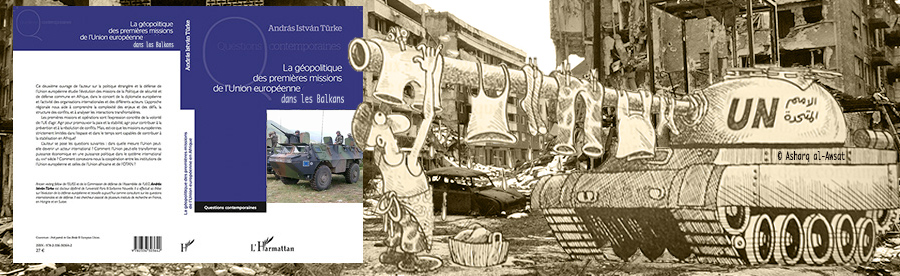
We are looking for sponsors for the English translation of these books, please contact turkeandras(at)gmail(dot)com