
You are here
Feed aggregator
Les enseignants suspendent leur grève et reprennent les cours ce lundi en Équateur
Les enseignants de la province éducationnelle Équateur 1 suspendent leur mouvement de grève et reprennent les cours dès ce lundi 14 septembre. La décision a été prise samedi 12 septembre à Mbandaka, lors d’une assemblée générale de la Dynamique des syndicats des enseignants.
Categories: Afrique
Les décès communautaires compliquent encore la riposte contre Ebola à Bule en Ituri
Categories: Afrique
China/United States : Xi Jinping relying on Guoanbu to juggle Trump's tactics during Washington trip
Much to Beijing's dismay, the White House is keeping a firm grip on the organisation of every aspect of President Xi Jinping's state visit to Washington on 24 September, from protocol and venues to public engagements. Since the conclusion of [...]
Categories: Defence`s Feeds
Israel/United Kingdom : Western intelligence and populism proves key topic at IAFIE academic conference in London
The influence of populism on Western intelligence services was a major theme at the International Association for Intelligence Education (IAFIE) [...]
Categories: Defence`s Feeds
China/France/United States : Former DRM's masterstroke, Chinese coursework for sale, space sensors at ODNI
France – Wise remarks on Iran from the ex-DRM and new CEMATDid General Jacques Langlade de Montgros's foresight in February [...]
Categories: Defence`s Feeds
Argentina/France/United Kingdom : London troubled by possible arrival of French-made subs off Falklands
Concerns are beginning to emerge in the corridors of the strategic affairs department at the Foreign Office (FCDO) in London. [...]
Categories: Defence`s Feeds
Germany : REPMUS sees Germany's Stark Defence and Quantum Systems get up to speed with naval drones
NATO's military exercise REPMUS (Robotic Experimentation and Prototyping with Maritime Unmanned Systems) organised by the Portuguese Navy in Troia and [...]
Categories: Defence`s Feeds
China/Europe : The Swiss loophole: how the EU struggles to protect sensitive space research from Beijing
"All Swiss, all European," touts the website of Argus Space AG, a Swiss firm registered in the Erlenbach commercial register [...]
Categories: Defence`s Feeds
Europe’s Hidden Trade Advantage
Slow and steady wins the negotiation.
Categories: Diplomacy & Crisis News
En Méditerranée centrale, une chasse à l’homme en haute mer sponsorisée par l’UE
« Le Monde » a embarqué en juillet à bord de l’« Ocean-Viking », le navire de sauvetage affrété par SOS Méditerranée. L’ONG française dénonce l’intensification de la violence en mer contre les migrants et les humanitaires de la part d’acteurs libyens soutenus et financés par l’Union européenne.
Categories: Afrique
A Matter of Trust: Google, Artificial Intelligence, and the Public Sphere
Bertha Chan explains how Google seeks to mitigate risk while pushing forward the frontiers of AI.
Categories: Diplomacy & Crisis News
A Dakar, l’art de la sape vise le « 100 % made in Sénégal »
L’élégance est partout dans les rues de la capitale sénégalaise. Elle encourage la création, qui reste dépendante des importations de fibres textiles.
Categories: Afrique
How a Hindu Sect’s Anti-women Diktat Triggered a Strike at the Eiffel Tower
BAPS, a sect close to India’s ruling BJP, asked for women staff to be kept away from the iconic tourist site when its monks visited.
Categories: Diplomacy & Crisis News
The Dynamics of Dependence Beyond Thailand’s Immediate Neighborhood
The past year has seen considerable steps forward in the country's relationships with Singapore and Indonesia.
Categories: Diplomacy & Crisis News
Myanmar’s Military-backed President Ticks Cambodia Off His Diplomatic Bucket List
Min Aung Hlaing leaves Phnom Penh after a two-day visit aimed at shoring up his regime's regional legitimacy.
Categories: Diplomacy & Crisis News
Thailand Accuses Cambodia of Stationing Troops at World Heritage Site During Border Fighting
Last week, UNESCO released a report detailing the extensive damage caused to the World Heritage Site by Thai military attacks.
Categories: Diplomacy & Crisis News
International Trade Theory Not Developmental
By Jomo Kwame Sundaram
KUALA LUMPUR, Malaysia, Sep 14 2026 (IPS)
Most free trade advocates falsely claim that comparative advantage ensures developmental gains from trade liberalisation. Mainstream trade theory does not promise that partial trade liberalisation guarantees optimal international specialisation.
Jomo Kwame Sundaram
Specialisation?Developing countries are supposedly better off after specialising in relatively simple activities contributing to global supply chains, such as primary commodity production and low-skill, labour-intensive manufacturing.
Why should developing countries specialise in producing and exporting mineral or agricultural primary commodities? After all, most economists recognise the greater gains in growth, employment, and income from dynamic modern activities, especially manufacturing.
Comparative advantage supposedly gained by trade liberalisation supposedly ensures gains from international specialisation. However, tropical agriculture has instead experienced falling relative prices rather than higher-value-added secondary and tertiary activities in the North.
As Hans Singer and Raul Prebisch showed in 1950, export prices for primary commodities have fallen much more over the long term relative to the prices of manufactures. Bilge Erten has shown these trends continuing into the early 21st century.
Evidence since the late 20th century suggests that the prices of manufactured goods produced by developing countries have fallen relative to those of more sophisticated, high-tech goods from more developed economies.
Intellectual property rents
Due to intense competition among developing countries producing ‘generic’ manufactures, developed-country firms secure higher rents from intellectual property rights (IPRs) – namely, ‘surplus’ from monopoly power so conferred – on their manufactured exports.
The latter are priced higher due to the ‘exclusive’ monopoly power protected by IPRs and ‘branding’ strengthened by transnational law with the establishment of the multilateral World Trade Organization and related law on trade-related intellectual property rights (TRIPS).
In fact, the prices of generic primary commodities and ‘unbranded’ manufactures have fallen due to more intense competition. In contrast, the prices of ‘exclusive’ products, due to monopoly IPRs and transnational corporate branding, remain higher.
However, such rents do not accrue to mass-produced generic products, whether primary commodities or manufactures made with easily accessible materials and production techniques, subject to intense market competition.
The last decade-long commodity ‘super-cycle’ price boom, which ended around 2004, generated windfall earnings and investible capital. While it undoubtedly lifted many boats for growth, if not development, it did not contradict longer-term trends.
Biased theory
The economic literature on development, trade, and monopolistic competition recognises the possibility of increasing – not just diminishing – returns to scale in manufacturing, enabling average costs to fall.
Such gains from trade are not from one-time ‘static’ improvements in resource allocation. Instead, these benefits stem from dynamic changes driven by production expansion, specialisation, and differentiation for larger markets.
Potential gains from greater external market access can be significant, but only if building on an existing industrial base, capacity and capabilities. Proactive support through appropriate industrial, investment, and technology policies can be crucial.
This pragmatic developmental approach to trade policy contradicts the neoclassical Heckscher-Ohlin ‘pure’ trade theory, the received conventional wisdom invoked by contemporary advocates of trade liberalisation.
Some Keynesian economists promoted balance-of-payments-constrained growth. Cross-border flows of goods and services are determined by the level and growth rate of economic activity, with the exchange rate determining relative prices.
This approach, implying fewer gains from trade, is rejected by trade liberalisation advocates. Developing countries’ gains from specialisation are reduced by falling relative prices, with consumers benefiting from productivity gains at the expense of producers.
If developing-country firms do not manufacture products at productivity levels comparable to those in developed countries, claims of trade gains from consumers’ ‘love of variety’ become quite irrelevant.
Agricultural trade liberalisation
The Western push for agricultural trade liberalisation sought to eliminate tariffs to ensure food security while ignoring subsidies that developed countries could afford.
Although agricultural export subsidies have been largely eliminated, OECD food producers continue to benefit from production subsidies, thereby enabling productivity and trade gains.
As many developing countries became net importers of subsidised agribusiness exports from OECD exporters, price increases due to subsidy withdrawal hurt consumers, especially in developing countries.
Comparable gains in developing-country agriculture have often been modest due to the decline in infrastructure and support services, especially after the imposition of the ‘neoliberal’ Washington Consensus by the West in the 1980s.
The increasing private foreign corporate domination of agricultural research, development, and extension has also significantly reduced net gains to developing-country smallholder farmers.
Neoliberal reforms, including structural adjustment programmes, have reduced, contracted out or privatised government and public-sector alternatives. This raised the costs of credit, marketing, and inputs, including seeds, fertilisers, herbicides, pesticides, machinery and fuel.
While trade liberalisation of manufactured imports eroded the policy space needed for investment and technology policies for development, agricultural trade liberalisation has undermined ‘food security’ in most developing countries.
Thus, many African net food-exporting nations became net food importers in the 1980s, following the neoliberal reforms imposed by structural adjustment programmes on indebted nations.
IPS UN Bureau
Related Articles
- Trade Liberalisation Never Lifted All Boats
- Trump Tariffs Creating Less Manufacturing Jobs
- Trade Liberalisation Undermines Development
- No African Development from Western Trade Policies
- Trump Undresses Rival Trade Myths
- Trump’s ‘Shock and Awe’ Tariffs
- Trade Liberalisation Kicked Away African Development Ladder
- Trade Deception Returns in Pan-Africanist Guise
- Weaponizing Free Trade Agreements
- Trade Liberalization for Development?
- Agricultural Trade Liberalization Undermined Food Security
Categories: Africa
Episodic Summitry Alone Cannot Reset India-China Relations
Agreements are reached to facilitate meetings between leaders ahead of multilateral summits, but often don't move much beyond that.
Categories: Diplomacy & Crisis News
Ahead of Credentials Showdown, Myanmar Accuses UN Representative of ‘Illegal’ Acts
Naypyidaw is seeking the replacement of Kyaw Moe Tun, who pledged his loyalty to the opposition after the 2021 coup.
Categories: Diplomacy & Crisis News
Matadi : les retraités de l’ONATRA réclament plus de 100 mois d’arriérés de leur rente
Categories: Afrique
Pages


© 2012-2018 Europa Varietas Foundation © 2015-2018 Europa Varietas Association
www.europavarietas.org | info(@)europavarietas(dot)org | Switzerland
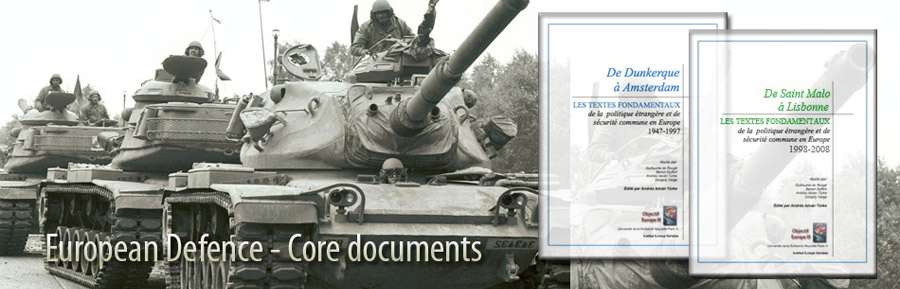

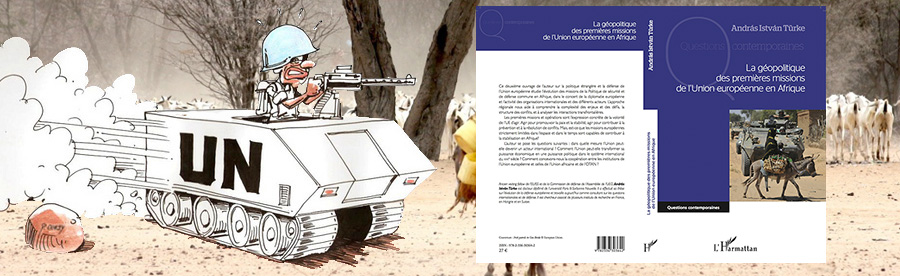
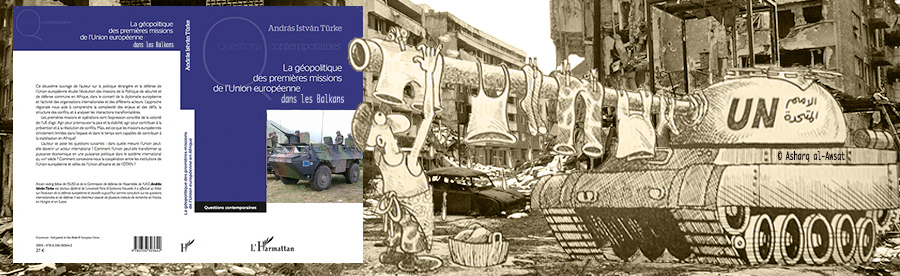
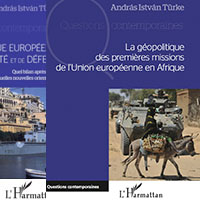
We are looking for sponsors for the English translation of these books, please contact turkeandras(at)gmail(dot)com