
You are here
Feed aggregator
Comment Trump a gagné plus d'un milliard de dollars grâce aux cryptomonnaies dès la première année de son second mandat
Les revenus du président provenant des cryptomonnaies dépassent largement ses gains issus de l'immobilier et des articles à l'effigie de Trump, tels que les montres.
Categories: Afrique
Algeriens Wähler bleiben den Urnen grösstenteils fern
Algerierinnen und Algerier waren diese Woche aufgerufen, ein neues Parlament zu wählen. Von den rund 24 Millionen Wahlberechtigten ging gemäss vorläufigen Ergebnissen nur etwa jeder Fünfte an die Urnen. Wie ist das zu interpretieren? Ein Gespräch mit der Maghreb-Expertin Isabelle Werenfels.
Categories: Diplomacy & Defense Think Tank News
Unbeaten in 34 matches - why Morocco are World Cup contenders
As Morocco beat Canada to book their place in the last-8, their World Cup campaign can no longer be seen as a fairytale.
Categories: Africa
Seven-try South Africa outclass England in Nations Championship
South Africa reassert their dominance over England with a commanding victory at Ellis Park in the opening round of games in the new Nations Championship.
Categories: Africa
Que faire lorsqu'on découvre 40 000 corps enterrés sous la maison familiale ?
Le 8 janvier 1996, lors de travaux de rénovation, Merced Guimarães dos Anjos a découvert des ossements – des vestiges du cimetière perdu des Nouveaux Noirs, utilisé entre 1770 et 1830 environ et qui aurait contenu quelque 40 000 corps.
Categories: Afrique
Une bombe à retardement au fond du Golfe
Une reprise progressive de la circulation dans le détroit d'Ormuz devrait soulager les pays consommateurs d'hydrocarbures, mais laissera une région lézardée par les rivalités. Celle qui voit s'opposer l'Irak, l'Iran et le Koweït à propos de la délimitation de leurs eaux territoriales respectives (…)
/ Irak, Koweït, Mer, Frontières, Droit international, Golfe
Categories: Défense, Diplomacy & Crisis News
Meeting between Prime Minister Muhammad Shehbaz Sharif and President Recep Tayyip Erdoğan
No description
Categories: Defence`s Feeds
«Die Gewaltenteilung in der Türkei ist weitgehend ausgehöhlt», sagt eine Soziologin
Categories: Diplomacy & Defense Think Tank News
Les habitants d'une ville éthiopienne ont été contraints d'abattre leurs chiens par centaines suite à des décès dus à la rage
Certains habitants ont, à contrecœur, pendu leurs chiens pour éviter d'être arrêtés ou de recevoir une amende, ont confié des témoins à la BBC.
Categories: Afrique
Après 250 ans, le rêve américain survit, mais de justesse
Le rêve américain a persisté depuis l'époque des Pères fondateurs, mais la foi en cet idéal s'estompe.
Categories: Afrique
More cows than pupils - what is behind mass school closures in rural Kenya?
More than 2,000 primary schools are facing closure as enrolment numbers plummet.
Categories: Africa
Europäische Flaggen mit Namen: Ein Überblick
In diesem Artikel werden wir Ihnen einen umfassenden Überblick über die verschiedenen europäischen Flaggen geben und dabei Ihre einzigartigen Designs und historischen Hintergründe hervorheben. Jedes Land in Europa hat seine eigene nationale Flagge, die einzigartige Elemente und Farbkombinationen enthält, die oft mit der Geschichte und Kultur des Landes verbunden sind.
Von der klassischen Schwarz-Rot-Gold-Kombination der deutschen Flagge bis hin zu den markanten Blau-Weiß-Streifen Griechenlands – die Vielfalt europäischer Flaggen ist ein faszinierendes Thema. Lassen Sie uns gemeinsam diese farbenfrohe Reise durch Europa unternehmen und mehr über die Bedeutung und das Aussehen jeder dieser bemerkenswerten Nationalflaggen erfahren.
Das Wichtigste in Kürze- Europäische Flaggen haben einzigartige Designs und Farbkompositionen, die oft mit nationaler Geschichte und Kultur verbunden sind.
- Deutschlands Flagge: Horizontale Streifen in Schwarz, Rot und Gold seit dem 19. Jahrhundert.
- Frankreichs Flagge: Vertikale Streifen in Blau, Weiß und Rot, repräsentiert nationale Ideale.
- Schwedens Flagge: Gelbes Kreuz auf blauem Hintergrund symbolisiert Landschaft und Christentum.
- Griechenlands Flagge: Blau-weiße Streifen mit Kreuz, repräsentiert Unabhängigkeit und nationale Identität.
Die Flagge von Deutschland besteht aus drei horizontalen Streifen in den Farben schwarz, rot und gold. Diese Kombination repräsentiert das Land seit dem 19. Jahrhundert.
Interessanter Artikel: Städte am Meer in Europa: Wohin geht Ihre Reise?
Flagge von Frankreich: Blau-Weiß-Rot, senkrechte StreifenEuropäische Flaggen mit Namen: Ein ÜberblickDie Flagge von Frankreich ist ein bekanntes Symbol Europas. Sie besteht aus drei senkrechten Streifen in den Farben Blau, Weiß und Rot.
Flaggen sind Symbole von Einheit und Stolz, Sie erzählen die Geschichten der Nationen, die Sie vertreten. – Kofi Annan
Italiens Flagge: Grün-Weiß-Rot, ins Auge fallendItaliens Flagge: Die Farbkombination Grün, Weiß und Rot ist unverkennbar bekannt. Der schlichte Streifendesign macht die Flagge prägnant und unverwechselbar.
Englands Flagge: Rotes Kreuz, weißer HintergrundEnglands Flagge ist durch ein rotes Kreuz auf einem weißen Hintergrund gekennzeichnet. Sie ist Teil des Union Jacks, der Nationalflagge des Vereinigten Königreichs.
Verwandte Themen: Air Europa Sitzplatzreservierung: Ihr Guide
.table-responsiv {width: 100%;padding: 0px;margin-bottom: 0px;overflow-y: hidden;border: 1px solid #DDD;overflow-x: auto;min-height: 0.01%;} Land Design Farbkombination Deutschland Horizontale Streifen Schwarz-Rot-Gold Frankreich Vertikale Streifen Blau-Weiß-Rot Italien Vertikale Streifen Grün-Weiß-Rot England Kreuz Rot-Weiß Schweden Kreuz Gelb-Blau Spanien Horizontale Streifen mit Wappen Rot-Gelb Griechenland Streifen und Kreuz Blau-Weiß Norwegen Kreuz Blau-Rot Schwedens Flagge: Gelbes Kreuz, blauer HintergrundSchwedens Flagge: Gelbes Kreuz, blauer Hintergrund – Europäische Flaggen mit Namen: Ein ÜberblickDie Flagge Schwedens zeigt ein markantes Design mit einem gelben Kreuz auf einem blauen Hintergrund. Dieses Farbschema symbolisiert oft den Kontrast zwischen Himmel und Sonne und ist seit Jahrhunderten ein stolzes nationales Symbol für das skandinavische Land.
Siehe auch: Beliebte Urlaubsziele in Europa
Spaniens Flagge: Rot-Gelb, markantes WappenSpaniens Flagge besteht aus zwei roten und einem gelben Streifen, wobei das markante Wappen auf dem gelben Streifen prominent hervorsticht.
Griechenlands Flagge: Blau-Weiß, Streifen und KreuzDie Flagge Griechenlands ist in den Farben Blau und Weiß gehalten. Sie besteht aus neun horizontalen Streifen, wobei die Streifen abwechselnd blau und weiß gefärbt sind. In der oberen linken Ecke befindet sich ein quadratisches Feld mit einem weißen Kreuz auf blauem Grund.
Norwegens Flagge: Blaues Kreuz, roter HintergrundDie Flagge von Norwegen zeichnet sich durch ein blaues Kreuz auf einem roten Hintergrund aus. Das Design symbolisiert die Verbindung des Landes mit dem Christentum und stellt eine visuelle Verwandtschaft zu den anderen skandinavischen Ländern dar.
FAQ: Antworten auf häufig gestellte Fragen Welche Bedeutung haben die Farben der deutschen Flagge? Die Farben Schwarz, Rot und Gold der deutschen Flagge haben historische Wurzeln und stehen symbolisch für Einheit und Freiheit. Sie wurden erstmals zu Zeiten der Revolution von 1848 verwendet und repräsentieren die Einigkeit der deutschen Länder und den Freiheitsdrang gegen Unterdrückung. Warum hat die schwedische Flagge ein gelbes Kreuz auf blauem Hintergrund? Das gelbe Kreuz auf blauem Hintergrund der schwedischen Flagge repräsentiert die schwedische Landschaft und das Christentum. Das Blau stellt den Himmel und das Wasser dar, während das Gelb oft als Symbol für die Sonne und das Licht betrachtet wird. Seit wann wird die griechische Flagge offiziell verwendet? Die aktuelle griechische Flagge wird seit dem 22. Dezember 1978 offiziell verwendet. Ihr Design hat jedoch seine Wurzeln in der griechischen Unabhängigkeitsbewegung des frühen 19. Jahrhunderts. Was symbolisiert das Wappen auf der spanischen Flagge? Das Wappen auf der spanischen Flagge symbolisiert die verschiedenen Königreiche, die die historische Grundlage der modernen Nation Spanien bilden. Es enthält Symbole für Kastilien, León, Aragón und Navarra sowie das Granatapfel-Symbol, das für das eroberte Königreich Granada steht. Hat die Union Jack (Flagge des Vereinigten Königreichs) Bestandteile anderer nationaler Flaggen? Ja, die Union Jack kombiniert Elemente der St. George’s Cross (Englands Flagge), der St. Andrew’s Cross (Schottlands Flagge) und der St. Patrick’s Cross (Symbol für Irland). Diese Kombination repräsentiert die Vereinigung dieser Länder im Vereinigten Königreich. Wie sieht die Nationalflagge Norwegens aus und welche Bedeutung hat sie? Die Flagge Norwegens besteht aus einem blauen Kreuz mit weißen Rändern auf rotem Hintergrund. Das Design stellt Norwegens Verbindung zum Christentum dar, wobei das Kreuzmotiv auch kennzeichnend für andere nordische Länder ist. Die Farben Rot, Blau und Weiß symbolisieren Freiheit und Unabhängigkeit.Der Beitrag Europäische Flaggen mit Namen: Ein Überblick erschien zuerst auf Neurope.eu - News aus Europa.
Categories: European Union
Peru’s Gridlock a Licence for Autocracy?
Credit: Connie France/AFP
By Inés M. Pousadela
MONTEVIDEO, Uruguay, Jul 3 2026 (IPS)
Right-wing candidate Keiko Fujimori has won Peru’s presidential runoff, narrowly defeating leftist Roberto Sánchez to become the country’s ninth president in a decade. She inherits a system so engineered for dysfunction that rather than making compromises, she may decide the concentration of power is her only means of survival. The constitution that created this trap was written by her father.
A system built to fail
Keiko, daughter of authoritarian former president Alberto Fujimori, has finally succeeded in her fourth consecutive runoff, having lost in 2011, 2016 and 2021. She won with a margin of roughly a quarter of a percentage point over a candidate who is a close ally of jailed former president Pedro Castillo. Both sides alleged fraud, filed claims and sent their supporters onto the streets.
Peru is often described as a democracy without parties. The party system disintegrated in the 1990s and was never rebuilt. In its place came a sequence of improvised candidacies and personal electoral vehicles that rise and fall with their founders. For the first-round vote on 12 April, the largest ballot paper in Peru’s history listed 35 candidates. Fujimori came first with just 17.19 per cent. Ultimately, most Peruvians didn’t vote for either candidate who made the runoff. A president elected on that basis has a mandate so weak that rivals can dispute it from day one, and they do.
Congressional seats scatter across dozens of parties, none of which dominates. But parties can combine to reach the two-thirds threshold needed to invoke a constitutional clause to impeach and remove a president on the grounds of ‘permanent moral incapacity’, a mechanism Peru’s constitution leaves deliberately vague. The Congress elected in 2021 removed three presidents in one term.
Authoritarian incentives
The constitutional mechanism that enables political instability is the reason Fujimori’s presidency could be dangerous. As she enters office with a razor-thin margin and no congressional majority, she faces an immediate strategic choice. She can seek compromise with her opponents, but this might signal that the threat of impeachment works, inviting it. Or she can move to concentrate power and weaken the institutions that constrain the executive, denying her opponents the tools they could use to remove her.
Everything points towards the second option. Most presidents recently removed by Congress were, at the time of their removal, attempting to govern within the rules, and the rules were weaponised against them. Pedro Castillo tried a different approach, dissolving Congress pre-emptively to forestall his impeachment. He was immediately arrested and removed. A politician who has watched this dynamic consume eight predecessors might conclude that the only way to survive is to change the game.
Keiko’s father ruled Peru from 1990 to 2000 as an elected president who progressively dismantled the institutions that constrained him. Two years into his first term, citing the simultaneous crises of hyperinflation and insurgency, he dissolved Congress and suspended the constitution. The emergency was real, but it was also an opportunity. Fujimori rewrote the constitution to entrench executive power, won re-election in 1995 and then won a fraud-tainted third term before being forced from office within months. His government became synonymous with grand corruption and human rights atrocities, including the forced sterilisation of over 272,000 mostly Indigenous women. After he was forced out in 2000, he was convicted of homicide and kidnapping, and imprisoned.
The constitution Alberto Fujimori wrote to entrench his power is still in force. The moral incapacity clause that the 1993 constitution retained – useful to Fujimori when he controlled Congress – has become the primary weapon congressional majorities have used to remove president after president. The most significant recent constitutional change, the reinstatement of a two-chamber Congress, may end up increasing congressional power. This is the system Keiko now has to deal with.
The costs of dysfunction
Peru’s dysfunction has long been sustained by a comforting fiction: that while politics is chaotic, the economy runs itself. Macro fundamentals have remained relatively stable. Inflation in 2025 ran at around 1.5 per cent, and the economy grew 3.4 per cent in 2024. But economic growth has roughly halved over a decade of turmoil. Poverty, at 27.6 per cent in 2024, remains above pre-pandemic levels. Homicides stand at 10.7 per 100,000 people, alongside an epidemic of extortion.
Freedoms are deteriorating and those who protest pay the highest price. In 2025, attempts to change the pension system triggered Gen Z-led protests that quickly expressed broader anger at corruption, insecurity and political dysfunction. Security forces responded with violence. In December 2024, the CIVICUS Monitor, which tracks civic space conditions globally, downgraded Peru to repressed status, its second-worst rating, citing years of escalating state violence and the systematic harassment of human rights defenders and journalists, who political figures routinely smear as terrorists and traitors.
In March 2025, Congress passed a law giving the Peruvian Agency for International Cooperation extensive powers to control, censor and persecute civil society organisations that receive foreign funding, threatening fines of up to US$720,000 and criminalising any use of foreign funds to support legal action against the Peruvian state. It is, in effect, a law against accountability.
Danger ahead
Keiko Fujimori ran a law-and-order campaign under the slogan ‘Fujimori returns, order returns’, casting the fight against organised crime as a sequel to her father’s 1990s war against insurgency and promising mass deployments of police and military forces. Her party championed a 2025 amnesty law shielding security forces and civilian armed groups from prosecution for disappearances, killings and torture during that conflict, in direct defiance of the Inter-American Court of Human Rights. Keiko has been evasive about her father’s atrocities and has recast human rights as a matter of access to basic services rather than accountability for past abuses. Her record offers no grounds for optimism about civic space or democratic norms.
Keiko’s father justified breaking the rules that constrained him by pointing to insurgency and economic collapse. Keiko faces no insurgency and no hyperinflation, so if she moves to concentrate power, she will have to find her own justification, perhaps in a crime wave, a security emergency or a conspiracy of her enemies. The Fujimorist playbook could come back with a vengeance.
Inés M. Pousadela is CIVICUS Head of Research and Analysis, co-director and writer for CIVICUS Lens and co-author of the State of Civil Society Report. She is also a Professor of Comparative Politics at Universidad ORT Uruguay.
For interviews or more information, please contact research@civicus.org
Follow @IPSNewsUNBureau
!function(d,s,id){var js,fjs=d.getElementsByTagName(s)[0],p=/^http:/.test(d.location)?'http':'https';if(!d.getElementById(id)){js=d.createElement(s);js.id=id;js.src=p+'://platform.twitter.com/widgets.js';fjs.parentNode.insertBefore(js,fjs);}}(document, 'script', 'twitter-wjs');
Categories: Africa
Qu'est-ce qui empêche de nombreuses femmes d'atteindre l'orgasme ?
Une autre raison qui empêche les femmes d'atteindre l'orgasme avec leur partenaire est la difficulté à parler ouvertement de ce qu'elles apprécient pendant les rapports sexuels.
Categories: Afrique
The friends who drove from Ghana to the World Cup
Six fans of the Black Stars are living proof of how football can drive supporters to extreme lengths to follow their team.
Categories: Africa
Europe’s Heat Wave Shows Climate Change Is Not Just a Poor-Countries Issue
Whether it is the middle or working classes, or even the well-to-do, life can start to shrink in the face of extreme weather. Credit: Shutterstock
By Philippe Benoit
PARIS, Jul 3 2026 (IPS)
If you pay close attention to the rhetoric regarding climate change (at least in those forums still allowed to use the term), there has been a disturbing emerging trend among some climate-concerned thought leaders, as epitomized by Bill Gates’s letter to COP30 last fall.
In it, Mr. Gates argues that climate change is principally a problem facing poorer countries: “Although climate change will have serious consequences – particularly for the people in the poorest countries – it will not lead to humanity’s demise. People will be able to live and thrive in most places on Earth for the foreseeable future.”
In many ways, Mr. Gates is correct: the people living in the poorest countries are particularly vulnerable to climate change, and the Earth will continue to be able to support humanity for decades and more. But what the recent record heat wave across Europe has served to remind those of us in more affluent countries is that there are different ways of living — and that living under a heat dome of near-40-degrees Celsius (over 100 degrees Fahrenheit) can stop us from thriving.
This recent European heat wave points to how climate change is also a menace to wealthier countries … today and more so tomorrow when rising CO2 emissions drive even more frequent and severe weather events
Whether it is the middle or working classes, or even the well-to-do, life can start to shrink in the face of extreme weather. It was ironic (perhaps the better word is sad) to see a number of events during London’s Climate Action Week cancelled because of soaring temperatures.
Staying home often becomes the best option, but it only really works as a refuge if you can afford air conditioning.
Those without need to hope to find the rare air-conditioned mall or other commercial space to escape to.
Probably the only ones who remain impervious to surging temperatures are the very rich who can jump on a plane at a moment’s notice to flee to another part of the globe that isn’t facing a heat wave. And all the while, the high temperatures and resulting surge in air-conditioning demand are putting a severe strain on Europe’s electricity grids, raising the possibility of even more disruptive blackouts.
Some analysts have argued that this record heat wave is being driven by the accumulation of high levels of CO2 in the atmosphere generated by the burning of fossil fuels. The analysis linking this particular heat wave to fossil fuel use is complex and beyond my competence (I am an energy expert, not an atmospheric specialist).
However, what is clear from scientists is that we can expect more of these types of extreme weather events as we continue to pour massive amounts of additional CO2 into our atmosphere from the combustion of fossil fuels (currently, over 35 gigatons each year).
Distressingly, climate change will mess with our lives in many ways beyond extreme heat. From wildfires that burn businesses and homes (including of the wealthy as last year’s fires in Hollywood showed), to higher winds that knock down electricity poles and trees, to reoccurring flooding that ravage towns (as Germany has experienced), to an uptick in heat-related deaths and other climate-related health risks, all the while simultaneously slowing economic activity as nature wreaks havoc on the normal ordering of our lives, jobs and economies. It may not add up to a climate apocalypse, but it is far from a minor inconvenience simply to be ignored.
And importantly, as the old Bachman-Turner Overdrive song says, when it comes to the destructive power of climate change, “You Ain’t Seen Nothing Yet.” Indeed, we can expect worse in the future if we don’t curtail greenhouse gas emissions.
Yes, climate change will have a particularly severe impact on the world’s poorest countries. In that regard, Mr. Gates is totally correct. But this recent European heat wave points to how climate change is also a menace to wealthier countries … today and more so tomorrow when rising CO2 emissions drive even more frequent and severe weather events.
So, when politicians and pundits try to limit the impact of climate change to the world’s poorest, or worse, try to wipe it out of our political and policy discourse, let us remember these past weeks and that, aside from the uber rich, climate change is a threat to all.
Philippe Benoit is managing director for Global Infrastructure Advisory Services 2050, specializing in international energy and climate issues.
Categories: Africa
Ndileka Mandela on anti-migrant protests: 'Grandad wanted rule of law not mob justice'
Nelson Mandela's granddaughter says he would have supported "proper immigration management and secured borders".
Categories: Africa
Le génocide qui hante la Namibie
Des dizaines de milliers de Héréros et de Namas ont été tués entre 1904 et 1908 par les troupes impériales allemandes dans la colonie du Sud-Ouest africain, actuelle Namibie. Leurs descendants, traumatisés, privés de leurs terres ancestrales et marginalisés par le pouvoir central, s'estiment (…)
/ Namibie, Allemagne, Colonisation, Génocide
Categories: Défense, Diplomacy & Crisis News
Ebola en RDC : Cyril Ramaphosa à Kinshasa pour réaffirmer le soutien de Pretoria face à l'épidémie
Le président sud-africain était en visite à Kinshasa ce jeudi 2 juillet 2026. Ce déplacement de Cyril Ramaphosa en République démocratique du Congo vise à réaffirmer le soutien de Pretoria face au virus Ebola. Déclarée il y a plus de six semaines, l'épidémie a déjà fait plus de 400 morts, selon les chiffres officiels.
Categories: Afrique
« Racisme sans précédent de l'Australie blanche » ?
Le 14 octobre 2023, une nette majorité d'Australiens se prononçait par référendum contre une réforme constitutionnelle qui aurait dû créer un comité consultatif permettant aux peuples autochtones de donner leur avis sur les politiques les concernant. Au cœur de l'« outback », la population (…)
/ Australie, Aborigènes, Frontières, Droits des minorités, Autodétermination des peuples
Categories: Diplomacy & Crisis News
Pages


© 2012-2018 Europa Varietas Foundation © 2015-2018 Europa Varietas Association
www.europavarietas.org | info(@)europavarietas(dot)org | Switzerland
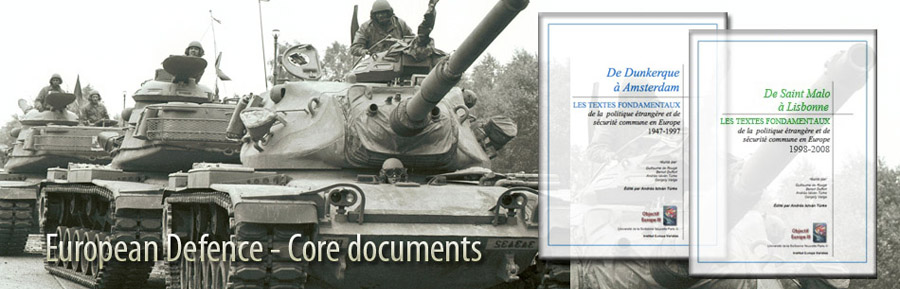
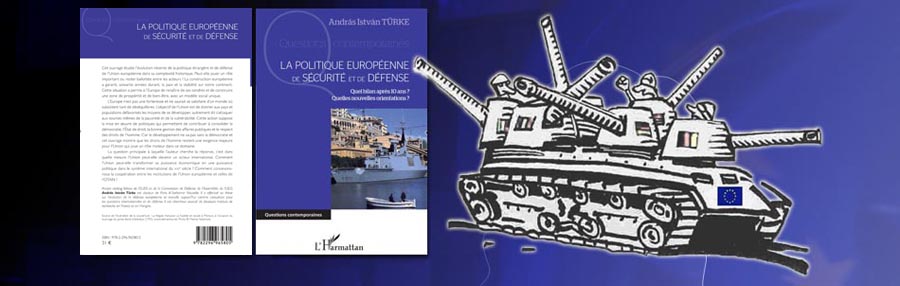
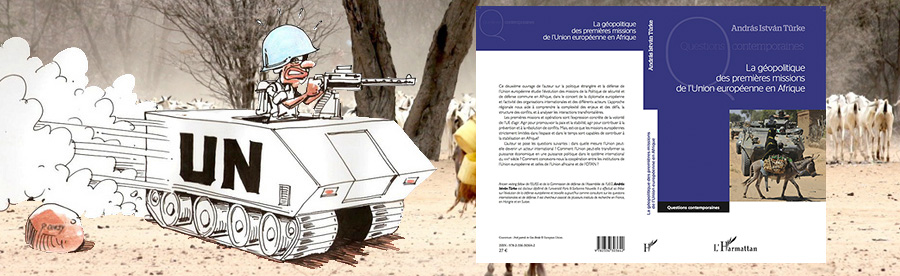
We are looking for sponsors for the English translation of these books, please contact turkeandras(at)gmail(dot)com