
You are here
Feed aggregator
Gólzáporos győzelem Győrben
Categories: Kelet-Közép-Európa
France : From Burgundy brotherhoods to grands crus… How French spymasters make the most of wine diplomacy
During President Emmanuel Macron's first term of office, two of Europe's top spymasters spent an entire weekend travelling along the [...]
Categories: Defence`s Feeds
Monaco : With FATF trip, Monaco holds hopes of financial crime 'grey list' removal
Intelligence Online understands that a delegation from the Financial Action Task Force (FATF) will visit Monaco next week. This will [...]
Categories: Defence`s Feeds
China/Netherlands/Vietnam : Beijing targets Dutch shipyard Royal IHC after Vietnam dredger sales
Collateral damage? Experts are stumped as to why some European companies were added to China's export control list on 24 [...]
Categories: Defence`s Feeds
United States : In Washington, concerns grow over intelligence on Iran's ballistic capabilities
With missile strikes resuming this week between Washington and Tehran, the assessment of the Iranian ballistic missile threat is drawing [...]
Categories: Defence`s Feeds
North Korea/Russia : Russian firms sanctioned over trade with Pyongyang
Trading with Pyongyang is proving problematic for Russian firms, including within their own country, documents reviewed by Intelligence Online have revealed.
Categories: Defence`s Feeds
Avoiding the Next Famine
What Washington can do to stop starvation.
Categories: Diplomacy & Crisis News
Kenya's chai lovers are not happy as the nation's cows run dry
Supermarket shelves are emptying, sellers are rationing supplies and prices are rising.
Categories: Africa
Pretorius century gives SA narrow win over Namibia - T20 tri-series scorecard
Latest scorecard from the Twenty20 tri-series match between Namibia and South Africa in Windhoek.
Categories: Africa
Femmes journalistes, ces pionnières des années 1930
C'est l'effroi chez les journalistes de droite quand, à partir des années 1930, de nombreuses femmes entrent dans la profession. Elles y demeurent très minoritaires, mais, hormis les éditoriaux, plus aucun registre ne leur est interdit. Loin d'être cantonnées aux rubriques mode, couture, (…)
/ Femmes, Presse, France, Histoire, Socialisme, Communisme, Guerre d'Espagne 1936-1939
Categories: Diplomacy & Crisis News
Not even a new ‘reset’: The minimalist Burnham agenda on the EU?
The arrival of the seventh Prime Minister in Number 10 since the 2016 referendum is an opportunity to try once again to get to grips with British European policy.
In practice, this is not a problem of wrestling Lots of Things, but instead more about trying to work out whether the absence of visible activity is a function of a very tight ship, or of a lack of activity.
Undoubtedly, negotiations on the May 2025 reset agenda in the Common Understanding has progressed well, to the point that several dossiers are largely wrapped up: SPS and ETS are the two big ones. Internal Energy Market talks finally got underway in the early summer too, the last big element to get going.
At the same time, once it became clear that Keir Starmer was stepping down, the EU decided to pause everything, there being little point in making deals with a departing leadership. Moreover, the arrival of a new PM might also offer new opportunities for the EU to secure more concessions, especially if Andy Burnham was really that much more pro-cooperation and wanted to get a quick win.
The evidence of the first couple of months of Burnham suggests that this has not been the case. Indeed, as the tracker below (mildly sarcastically) suggests, Burnham’s time in power has been marked by talking about pretty much anything apart from EU policy.
PDF: https://bit.ly/UshGraphic148
The ‘regular’ EU-UK summit heralded by the Common Understanding, and already rather uncertain by the time of the May anniversary of the first one, has only been pushed back since, with Burnham’s recent talk of November feeling more aspirational that definite. This is not a government in a rush to press forward on things, despite Burnham’s repeated invocations of the damage of Brexit to the economy.
From what little he has said, the impression is very much one of continuity-Starmer: use the reset process to secure some wins, plus avoid the worst effects of the continual activity of the EU to protect and promote its interests. The language about ‘Made in Europe’ reflects another common thread to Starmer, once the UK had determined the potential impacts on high-profile sectors of the economy and the possible leverage of working together in Europe in the face of – how to put it? – debatable international relations.
However, all of this has been very much off-camera, without much grandstanding by either side, neither of whom really feel any value in kicking up a fuss. Even the failure of SAFE talks was managed away without too much hand-wringing and with efforts to find other ways of building defence procurement cooperation.
But there has been one exception.
Youth mobility has become the poster-child of the reset, and the one with the most conspicuous disagreements.
As a reminder, the two sides have always had different positions with regard to the fundamentals of any scheme, grounded in its purpose, scale and operationalisation.
PDF: https://bit.ly/UshGraphic127
Since the 2025 summit, those gaps (on caps on numbers, university fees and permitted activities) have not definitively closed down. Instead, there has been a steady drip-feed of briefings by both sides to try to signal intent and (less often) offer possible landing grounds.
The following is a list of all Financial Times stories that include such briefings, the paper being a convenient shared space for negotiators:
- 7 November 2025. ‘EU officials’ flag the need for the scheme to be drawn up as a binding legal instrument, rather than the memoranda of understanding the UK has with other third countries
- 5 December. A leaked EU ‘draft text’ has no cap on numbers, and gives EU students access to UK university fees
- 15 March 2026. ‘UK officials’ offer to give way of fees, in return for a cap and other concessions
- 5 June. ‘UK officials’ reiterate their offer on fees
- 3 July. The ‘Commission’ says the proposed cap is too low, EU nationals need to be exempt from the NHS surcharge and have access to UK fees
- 13 July. ‘EU diplomats’ say the cap offered by the UK is a ‘non-starter’ and repeat points on the surcharge and fees
- 18 August. ‘EU diplomats’ again say the cap offered is too low, but might consider something in the ‘low 100ks’, and say fees is ‘vital’
- 23 August. A leaked UK negotiating brief from ‘UK officials’ says Starmer was willing to concede on fees and up to 100k on the cap, in return for access to Made in Europe or steel tariffs
This procession suggests a number of points that speak to the wider relationship.
Firstly, the UK has moved further than the EU on these points. We might reasonably assume that the EU will get domestic fees, but without any evident quid pro quo on caps or other dossiers. Indeed, when such cross-linkage has been mentioned by the UK, the reply from the EU has been very dismissive. This reflects the underlying asymmetry in the relationship: the UK needs this more than the EU, and the EU knows this.
Secondly, this is as much evidence as we have that Burnham is not going to stray very far at all from Starmer’s positions: The PM was talking again about Made in Europe in his first PMQs this week. Whether that helps or hinders progress on negotiations remains to be seen, but the sense that Brussels was ultimately underwhelmed by Starmer’s translation of rhetoric to action does not look set to be challenged by Burnham any time soon.
Finally, it points to the perils of low-stakes negotiating. None of the items on the table will be of notable macro-economic significance for either side, but instead act as markers of good intent and willingness to try to keep the wheels spinning on the minimal architecture of the Trade & Cooperation Agreement’s free trade area. Part of this might be the anxiety over who will be in power in the UK following the next general election, but more of it is that neither side see their relationship as either particularly important or in need of urgent attention. With plenty of other things to be getting on with, this is something that lacks any strong sense of pressure to wrap things up.
Of course, it’s still early days, but if the last seven PMs have taught us anything, then it’s that their revealed preferences on EU policy are pretty clear, pretty quickly.
The post Not even a new ‘reset’: The minimalist Burnham agenda on the EU? appeared first on Ideas on Europe.
Categories: European Union
Noch eine Scheinwahl in Russland
2026 ist kein gutes Jahr für das Putin-Regime. Die Front in der Ukraine bewegt sich kaum, ukrainische Drohnen und Raketen treffen Ziele weit im russischen Hinterland, die Wirtschaft schwächelt, und die Stimmung im Land verschlechtert sich. Unter diesen erschwerten Bedingungen muss die Kreml-Administration einen weiteren Sieg der Machtpartei Einiges Russland organisieren, denn im September steht die Wahl zur Staatsduma an. Dabei kann das russische Parlament seine Funktion als Legitimitätsressource in der personalistischen Putin-Diktatur kaum noch erfüllen. An der chronischen Schwäche der regimekonformen Parteien ist dies ebenso abzulesen wie an der Groteske um den Wahlausschluss der Jabloko-Partei.
Categories: Diplomacy & Defense Think Tank News
Tebogo says late mother 'always there' ahead of emotional return to Budapest
Letsile Tebogo says his late mother is always with him "in spirit" as he prepares to run in Budapest, the city where she watched him make history for Botswana and Africa.
Categories: Africa
L'armée nigérienne découvre un « arsenal impressionnant » après la mutinerie
Télé Sahel a indiqué le 2 septembre qu'un inventaire effectué à la Base 101 de Niamey avait permis de découvrir « un arsenal de guerre d'une quantité disproportionnée », comprenant notamment des centaines de fusils d'assaut, des lance-roquettes, des mitrailleuses, des explosifs et des munitions.
Categories: Afrique
Sharpeville massacre survivors start legal fight for justice in South Africa
At least 69 people were shot dead in 1960 but no-one has been prosecuted and victims want restitution.
Categories: Africa
Queiroz returns as Ghana head coach
Carlos Queiroz is reappointed as head coach of Ghana's men's national team, two months after he appeared to step down following their exit from the World Cup.
Categories: Africa
La télévision d'État du Niger diffuse des allégations faisant état d'un complot international contre la junte
Le capitaine Roger Gabriel a affirmé que des proches de l’ancien président Mohamed Bazoum et des officiers tchadiens étaient liés à la tentative de coup d’État des 28 et 29 août au Niger. Selon lui, des forces spéciales tchadiennes et françaises devaient soutenir les mutins, avec l’appui présumé du Bénin et de la Côte d’Ivoire.
Categories: Afrique
Video einer Ausschusssitzung - Donnerstag, 3. September 2026 - 08:00 - Ausschuss für Sicherheit und Verteidigung
Dauer des Videos : 135'
Haftungsausschluss : Die Verdolmetschung der Debatten soll die Kommunikation erleichtern, sie stellt jedoch keine authentische Aufzeichnung der Debatten dar. Authentisch sind nur die Originalfassungen der Reden bzw. ihre überprüften schriftlichen Übersetzungen.
Quelle : © Europäische Union, 2026 - EP
Haftungsausschluss : Die Verdolmetschung der Debatten soll die Kommunikation erleichtern, sie stellt jedoch keine authentische Aufzeichnung der Debatten dar. Authentisch sind nur die Originalfassungen der Reden bzw. ihre überprüften schriftlichen Übersetzungen.
Quelle : © Europäische Union, 2026 - EP
Categories: Europäische Union
Video of a committee meeting - Thursday, 3 September 2026 - 08:00 - Committee on Security and Defence
Length of video : 135'
Disclaimer : The interpretation of debates serves to facilitate communication and does not constitute an authentic record of proceedings. Only the original speech or the revised written translation is authentic.
Source : © European Union, 2026 - EP
Disclaimer : The interpretation of debates serves to facilitate communication and does not constitute an authentic record of proceedings. Only the original speech or the revised written translation is authentic.
Source : © European Union, 2026 - EP
Categories: Defence`s Feeds, European Union
Pages


© 2012-2018 Europa Varietas Foundation © 2015-2018 Europa Varietas Association
www.europavarietas.org | info(@)europavarietas(dot)org | Switzerland
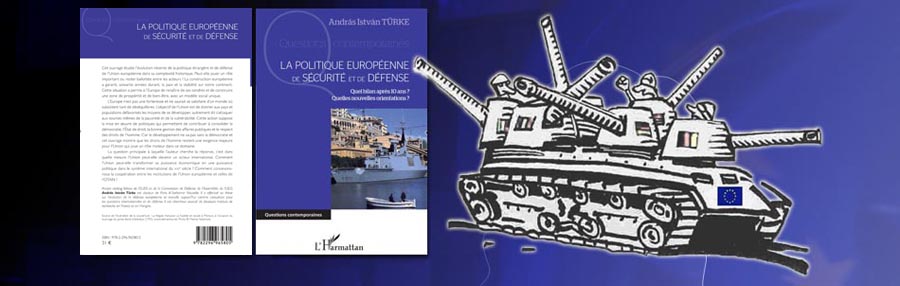
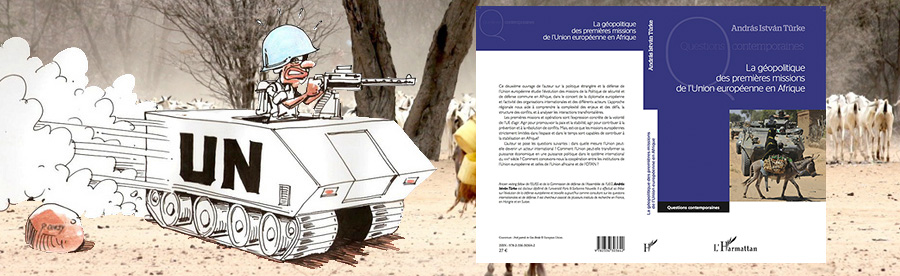
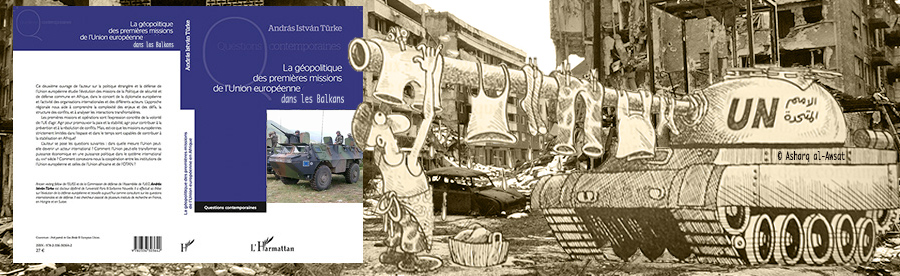
We are looking for sponsors for the English translation of these books, please contact turkeandras(at)gmail(dot)com