
Vous êtes ici
Afrique
Sprach-KI von Spitch erhält "Leitplanken"
Spitch AG: Frankfurt (ots) - Moderne Speech-to-Speech-Modelle sorgen für flüssige Dialoge, Leitplanken stellen sicher, dass die KI nicht außer Kontrolle gerät: Spitch setzt auf neuronal-symbolisches Hybridkonzept "Es gibt viele beeindruckende ...
Catégories: Afrique
Libye: les forces armées rivales de l’Est et de Tripoli réunies dans des exercices sous l'égide des États-Unis
Flintlock, le principal exercice d'opérations spéciales du Commandement américain pour l'Afrique (Africom), a officiellement débuté le 14 avril 2026 par une double cérémonie d'ouverture en Libye et en Côte d'Ivoire. Fait marquant de cette édition 2026, la présence de forces des deux camps rivaux libyens, l’Est du maréchal Haftar et celui reconnue par l’ONU basé à Tripoli.
Catégories: Afrique, European Union
"Humanitärer Skandal": ASB-Vorsitzender Knut Fleckenstein sichert SOS Humanity Solidarität zu
ASB-Bundesverband: Syrakus/Köln/Berlin (ots) - Der Arbeiter-Samariter-Bund Deutschland (ASB) steht fest an der Seite der zivilen Seenotrettung. Der ASB-Bundesvorsitzende Knut Fleckenstein sichert der deutschen Organisation SOS Humanity bei einem Besuch auf dem ...
Catégories: Afrique
Freie Ärzteschaft: Warken spart am falschen Ende - Patienten sind die Leidtragenden
Freie Ärzteschaft e.V.: Essen/Hamburg (ots) - "Der Ärztemangel und zunehmende Wartezeiten auf Arzttermine sind ein bundesweites Problem - doch ungeachtet dessen plant Gesundheitsministerin Warken harte Einschnitte in der ambulanten Medizin", kritisiert Wieland Dietrich, ...
Catégories: Afrique
Real Madrid : L’insolite statistique de Lunin qui a fait plier le Bayern !
Mali Actu - maliactu.net - Mali Actualités, Les Actus et Informations sur le Mali
Mali Actu
Real Madrid : L’insolite statistique de Lunin qui a fait plier le Bayern !
Le football moderne ne cesse de nous surprendre. En ce jeudi 16 avril 2026, l’analyse des données du choc entre le Real Madrid et le…
Real Madrid : L’insolite statistique de Lunin qui a fait plier le Bayern !
Mali Actu :
Real Madrid : L’insolite statistique de Lunin qui a fait plier le Bayern !
Catégories: Afrique, Swiss News
Undercover Material zeigt schwere Tiermisshandlung in rumänischer Tötungsstation: VETO-Tierschutz verurteilt Umgang mit Straßenhunden scharf und fordert politisches Umdenken
VETO Tierschutz: Moers (ots) - Pro7 berichtet über das korrupte Millionengeschäft mit Rumäniens Straßenhunden: https://www.joyn.de/serien/how-to-kill-a-puppy-und-get-rich-die-hunde-mafia VETO-Tierschutz liegt Videomaterial aus der privat geführten, rumänischen ...
Catégories: Afrique
Entre le FMI et Dakar, des différences d’analyses sur l'évolution de la dette et du déficit du Sénégal
Le Fonds monétaire international (FMI) va-t-il reprendre un nouveau programme de financements avec le Sénégal ? Depuis la suspension d’un prêt de 1,8 milliard de dollars en octobre 2024, suite à la mise au jour d’une dette cachée d’au moins 7 milliards de dollars, les discussions avec Dakar patinent. Le 13 avril, les ministres sénégalais des Finances et de l’Économie ont rencontré à New York les représentants du FMI en marge des assemblées de printemps de cette organisation. Mais sans aucune annonce pour le moment.
Catégories: Afrique, European Union
Beim Teutates - Für Asterix geht es im Dezember in "Das Königreich Nubien"
Egmont Ehapa Media GmbH: Berlin (ots) - Manchmal gehen Zaubertränke eben auch nach hinten los. Am 03. Dezember ist es so weit: "Asterix und das Königreich Nubien", der brandneue Animationsfilm von Alexandre Heboyan der mithilfe von LEONINE-Studios die deutschsprachigen ...
Catégories: Afrique
Blumen schenken. Hoffnung spenden. Fleurop baut Engagement für Kinderkrebsforschung aus / Aktionszeitraum 2026: 20. April bis 16. Mai - Charity-Strauß künftig ganzjährig erhältlich
Fleurop AG: Berlin (ots) - Im Rahmen der Spendenkampagne "Blumen schenken. Hoffnung spenden." macht das Hopp-Kindertumorzentrum Heidelberg (KiTZ) jährlich gemeinsam mit Floristinnen und Floristen deutschlandweit auf die Situation krebskranker Kinder und die ...
Catégories: Afrique
Rassismus und gesellschaftliche Verantwortung: RTLZWEI zeigt den mit dem Grimme-Preis ausgezeichneten Dokumentarfilm "Hass. Hetze. Hoffnung."
RTLZWEI: München (ots) - - Grimme-Preis 2026 in der Kategorie Information & Kultur - Dokumentation über antiasiatischen Rassismus und den Mord an der Studentin Li Yángjié - Ausstrahlung am 2. Mai 2026 um 22:20 Uhr bei RTLZWEI und auf RTL+ RTLZWEI zeigt ...
Catégories: Afrique
Wars Impose Lasting Economic Costs, While More Defense Spending Means Hard Choices
Credit: 279photo/iStock by Getty Images. Source: IMF
By Hippolyte Balima, Andresa Lagerborg and Evgenia Weaver
WASHINGTON DC, Apr 16 2026 (IPS)
War is again defining the global landscape. After decades of relative calm following the Cold War, the number of active conflicts has surged in recent years to levels not seen since the end of the Second World War.
Meanwhile, rising geopolitical tensions and heightened security concerns are prompting many governments to reassess their priorities and spend more on defense.
Beyond their devastating human toll, wars impose large and lasting economic costs, and pose difficult macroeconomic trade-offs, especially for those countries where the fighting is taking place.
Even without active conflicts, rising defense spending can raise economic vulnerabilities in the medium term. After the war, governments face the urgent post-conflict task of securing durable peace and sustaining recovery.
In an era of proliferating conflicts, our research in two analytical chapters of the latest World Economic Outlook highlights the deep and prolonged economic harm inflicted by war, which has particularly affected sub-Saharan Africa, Europe, and the Middle East.
We also show that rising defense spending—which can boost demand in the short term—imposes difficult budgetary trade offs that make good policy design and lasting peace more important than ever.
Economic losses
For countries where wars occur, economic activity drops sharply. On average, output in countries where fighting takes place falls by about 3 percent at the onset and continues falling for years, reaching cumulative losses of roughly 7 percent within five years.
Output losses from conflicts typically exceed those associated with financial crises or severe natural disasters. Economic scars also persist even a decade later.
Wars also tend to have significant spillover effects. Countries engaged in foreign conflicts may avoid large economic losses—partly because there is no physical destruction on their own soil.
Yet, neighboring economies or key trading partners with the country where the conflict is taking place will feel the shock. In the early years of a conflict, these countries often experience modest declines in output.
Major conflicts—those involving at least 1,000 battle-related deaths—force difficult trade-offs in economies where they occur. Government budgets deteriorate as spending shifts toward defense and debt increases, while output and tax collection collapse.
These countries may also face strains on their external balances. As imports contract sharply because of lower demand, exports decrease even more substantially, resulting in a temporary widening of the trade deficit.
Heightened uncertainty triggers capital outflows, with both foreign direct investment and portfolio flows declining. This forces wartime governments to rely more heavily on aid and, in some cases, remittances from citizens abroad to finance trade deficits.
Despite these measures, conflicts contribute to sustained exchange rate depreciation, reserve losses, and rising inflation, underscoring how widening external imbalances amplify macroeconomic stress during wartime. Prices tend to increase at a pace higher than most of central banks’ inflation targets, prompting monetary authorities to raise interest rates.
Taken together, our findings show that major conflicts impose substantial economic costs and difficult trade-offs on economies that experience conflicts within their borders, as well as hurting other countries. And these costs extend well beyond short-term disruption, with enduring consequences for both economic potential and human well-being.
Spending trade-offs
More frequent conflicts and rising geopolitical tensions have also prompted many countries to reassess their security priorities and increase defense spending. Others plan to do so. This situation presents policymakers with a crucial question about trade-offs involved with such a boost to spending.
Our analysis looks at episodes of large buildups in defense spending in 164 countries since the Second World War. We find that these booms typically last nearly three years and increase defense spending by 2.7 percentage points of gross domestic product.
That’s broadly similar to what is required by North Atlantic Treaty Organization (NATO) members to reach the 5 percent of GDP defense spending target by 2035.
Ramping up defense spending primarily acts as a positive demand shock, boosting private consumption and investment, especially in defense-related sectors. This can raise both economic output and prices in the short term, requiring close coordination with monetary policy to temper inflationary pressures.
Overall, the aggregate effects on output of scaling up defense spending are likely modest. Increases in defense spending typically translate almost one for one into higher economic output, rather than having a bigger multiplier effect on activity.
That said, the multiplier or ripple effects of such spending vary widely depending on how outlays are sustained, financed and allocated, and how much equipment is imported.
For instance, output gains are smaller and external balances deteriorate when the stimulus is partly spent to import foreign goods, which is especially the case for arms importers. By contrast, a buildup of defense spending that prioritizes public investment in equipment and infrastructure, together with less fragmented procurement and more common standards, would expand market size, support economies of scale, strengthen industrial capacity, limit import leakages, and support long-term productivity growth.
The choice of how to finance defense spending entails critical trade-offs. Defense spending booms are mostly deficit-financed in the near-term, while higher revenues play a larger role in later years of defense spending booms and when the defense spending buildup is expected to be permanent.
The reliance on deficit financing can stimulate the economy in the short term, but strain fiscal sustainability over the medium term, particularly in countries with limited room in government budgets.
Deficits worsen by about 2.6 percentage points of GDP, and public debt increases by about 7 percentage points within three years of the start of a boom (14 percentage points in wartime). The resulting increase in public debt can crowd out private investment and offset the initial expansionary effect of defense spending.
The buildup of fiscal vulnerabilities can be mitigated by durable financing arrangements, especially when the increase in defense spending is permanent. However, raising revenues come at the cost of reducing consumption and dampening the demand boost, while re-ordering budget priorities tends to come at the expense of government spending on social protection, health, and education.
Policies for recovery
Our analysis also shows that economic recoveries from war are often slow and uneven, and crucially depend on the durability of peace. When peace is sustained, output rebounds but often remains modest relative to wartime losses. By contrast, in fragile economies where conflict flares up again, recoveries frequently stall.
These modest recoveries are driven primarily by labor, as workers are reallocated from military to civilian activities and refugees gradually return, while capital stock and productivity remain subdued.
Early macroeconomic stabilization, decisive debt restructuring, and international support—including aid and capacity development—play a central role in restoring confidence and promoting recovery. Recovery efforts are most effective when complemented by domestic reforms to rebuild institutions and state capacity, promote inclusion and security, and address the lasting human costs of conflict, including lost learning, poorer health, and diminished economic opportunities.
Importantly, effective post-war recovery requires comprehensive and well-coordinated policy packages. Such an approach is far more effective than piecemeal measures. Policies that simultaneously reduce uncertainty and rebuild the capital stock can reinforce expectations, encourage capital inflows, and facilitate the return of displaced people.
Ultimately, successful post-war recovery lays the foundation for stability, renewed hope and improved livelihoods for communities affected by conflict.
This IMF blog is based on Ch. 2 of the April 2026 World Economic Outlook, “Defense Spending: Macroeconomic Consequences and Trade-Offs,” and Ch. 3, “The Macroeconomics of Conflicts and Recovery.” For more on fragile and conflict-affected states: How Fragile States Can Gain by Strengthening Institutions and Core Capacities.
IPS UN Bureau
Follow @IPSNewsUNBureau
!function(d,s,id){var js,fjs=d.getElementsByTagName(s)[0],p=/^http:/.test(d.location)?'http':'https';if(!d.getElementById(id)){js=d.createElement(s);js.id=id;js.src=p+'://platform.twitter.com/widgets.js';fjs.parentNode.insertBefore(js,fjs);}}(document, 'script', 'twitter-wjs');
Bénin: sans aucun élu et agité par une crise interne, le parti d’opposition Les Démocrates tente de se réorganiser
Au Bénin, la Cour constitutionnelle doit proclamer ce 16 avril 2026 les résultats définitifs de la présidentielle. Les résultats provisoires ont été annoncés en début de semaine par la commission électorale. Selon ses chiffres, Romuald Wadagni l’emporte avec 94% des voix et va succéder à Patrice Talon. Le principal parti de l’opposition a félicité le dauphin du chef de l’État sortant, tout en lui adressant plusieurs demandes. Les Démocrates traversent actuellement une zone de turbulences. Reportage au siège de cette formation.
Catégories: Afrique, European Union
La plateforme FUNAT mobilise les femmes autour de la candidature de Juliana Lumumba à l'OIF
Catégories: Afrique, European Union
Le militant panafricaniste Kemi Seba, recherché par le Bénin, arrêté en Afrique du Sud
Visé par un mandat d'arrêt au Bénin car accusé d'avoir soutenu la tentative de coup d'État de décembre, l'influenceur panafricaniste Kemi Seba a été arrêté en Afrique du Sud. Il fait l'objet d'une "procédure d'extradition en cours", a annoncé la police locale jeudi.
Catégories: Afrique, Diplomacy & Crisis News
Cameroun: «Léon XIV vient parmi nous comme un apôtre de la paix et un messager de la réconciliation»
Le pape Léon XIV est arrivé le mercredi 15 avril au Cameroun pour une visite apostolique de trois jours, centrée sur la paix et la réconciliation. Ce jeudi, il se rend à Bamenda, au cœur de la région anglophone du nord-ouest, en proie à un conflit qui dure depuis dix ans. Ce sera le point d’orgue de sa visite. Alors que le conflit semblait enkysté dans les régions anglophones du nord-ouest et du sud-ouest, la visite du pape pourrait relancer des discussions. C’est ce que souhaite Mgr Andrew Nkea, président de la Conférence épiscopale du Cameroun, et archevêque de Bamenda. Il répond aux questions de Véronique Gaymard, avec Nicolas Benita.
Catégories: Afrique, European Union
Alerte sur de nouvelles coalitions armées dans les hauts plateaux de Fizi au Sud-Kivu
L’administrateur du territoire de Fizi (Sud-Kivu), Samy Kalonji Badibanga, a alerté mardi 14 avril sur le renforcement des alliances entre groupes armés locaux et forces étrangères dans les hauts plateaux. Selon l’autorité territoriale, cette coalition, qui impliquerait des éléments associés aux rebelles de l’AFC/M23, pourrait entraîner une reprise des hostilités dans la région.
Catégories: Afrique, European Union
Conseil de sécurité : la RDC réitère son appel au « retrait immédiat » de l’armée rwandaise du sol congolais
Catégories: Afrique, European Union
RDC: Kinshasa et l’AFC/M23 formalisent en Suisse un mécanisme conjoint de vérification du cessez-le-feu
L’AFC/M23 et le gouvernement congolais ont signé en Suisse un nouveau dispositif de suivi du cessez-le-feu. Un mécanisme attendu depuis plusieurs semaines, qui intègre désormais les deux parties au conflit pour vérifier les violations sur le terrain. Un outil qui s’inscrit dans la continuité de l’accord signé à Doha le 14 octobre 2025, puis des termes de référence adoptés le 2 février 2026. Mais comment comprendre l’architecture de ce nouveau dispositif et la portée de ce qui vient d’être signé ?
Catégories: Afrique, European Union
France/Japan/United States : The 'ninjas' at Nintendo, Sega and Sony who hunt down traitors and leaks
On 14 July last year, a dozen police raided the east London home of Darius Khan, a collector and second-hand [...]
Catégories: Afrique, Defence`s Feeds
Notre sélection de livres cette semaine : « Issa », « Works », « Le Pain des Anges »…
Chaque jeudi, la rédaction du « Monde des livres » vous propose ses choix littéraires. Aujourd’hui, notamment, l’œuvre autobiographique posthume de l’écrivain Vitaliano Trevisan constitue un véritable choc.
Catégories: Afrique, Swiss News
Pages


© 2012-2018 Europa Varietas Foundation © 2015-2018 Europa Varietas Association
www.europavarietas.org | info(@)europavarietas(dot)org | Switzerland
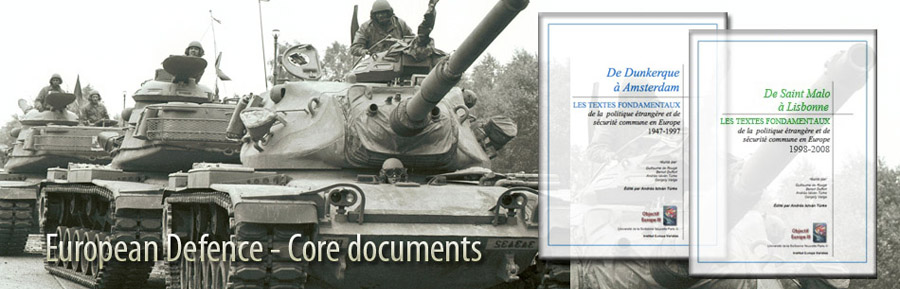
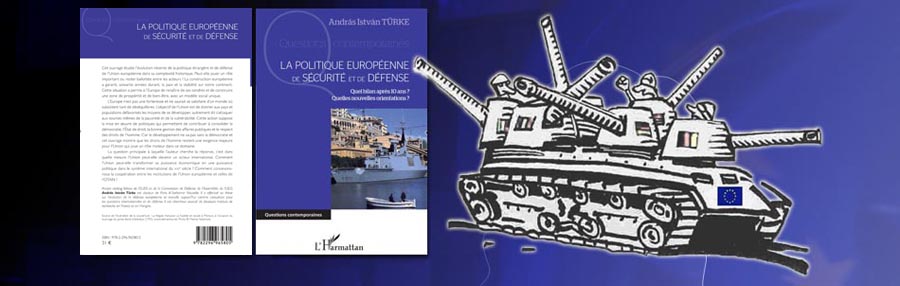
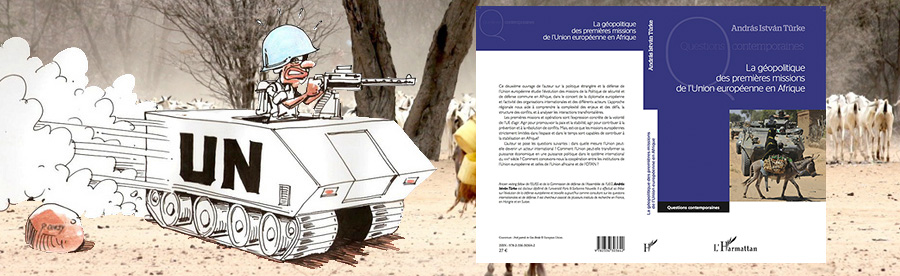
We are looking for sponsors for the English translation of these books, please contact turkeandras(at)gmail(dot)com