
Vous êtes ici
Afrique
Trafic de stupéfiants : La police saisit 5 000 plaquettes de tramadol dans le Oubri
La Police nationale a démantelé un réseau présumé de trafiquants de tramadol opérant dans le Oubri. L'opération, menée par l'antenne régionale de l'unité anti-drogue, a permis la saisie de 5 000 plaquettes de tramadol. Le montant du produit saisi est estimé à 8,5 millions de FCFA, ainsi qu'un véhicule et du numéraire. Les produits étaient destinés à être acheminés vers Ouagadougou pour y être revendus.
Les membres du groupe se sont spécialisés dans le trafic de produits prohibés, notamment le tramadol. En effet, ces derniers se ravitaillaient en tramadol dans une commune frontalière de la province du Ganzourgou qu'ils conditionnaient dans des sachets noirs.
Ils enveloppaient ensuite ces sachets conditionnés dans des effets d'habillement, les mettaient dans des sacs noirs et les déposaient sur les sièges arrière de leur véhicule. Ils empruntaient toujours les pistes rurales et roulaient à vive allure pour échapper aux contrôles des forces de sécurité. Ces produits sont transportés à Ouagadougou, revendus sur marché et approvisionnés pour la plupart par des jeunes.
Grâce à la collaboration de la population, les enquêteurs ont, au moment de l'interpellation des malfrats, réussi à saisir un véhicule de marque TOYOTA, deux sacs contenant 5000 plaquettes de tramadol d'une valeur estimée à 8.500.000 FCFA et du numéraire.
La police nationale réitère ses remerciements aux citoyens grâce à qui ce résultat a été atteint. Elle les exhorte par ailleurs à plus de vigilance et à poursuivre la dynamique de dénonciation des cas suspects aux numéros verts mis à leur disposition que sont les 17, 16 et 1010.
Lefaso.net
Catégories: Afrique
Incendie à Bobo-Dioulasso : Les sapeurs-pompiers circonscrivent un feu dans des magasins
Un incendie s'est déclaré ce mardi 25 août 2026 dans une série de magasins à Bobo-Dioulasso, au secteur 01, dans l'arrondissement n°1. Les magasins contenaient diverses marchandises.
Alertée, la deuxième Compagnie d'incendie et de secours (CIS2) de Bobo-Dioulasso s'est rapidement déployée sur les lieux pour maîtriser les flammes. L'intervention des soldats du feu, appuyés par les équipes de l'ASECNA, a permis de circonscrire le sinistre à son volume initial.
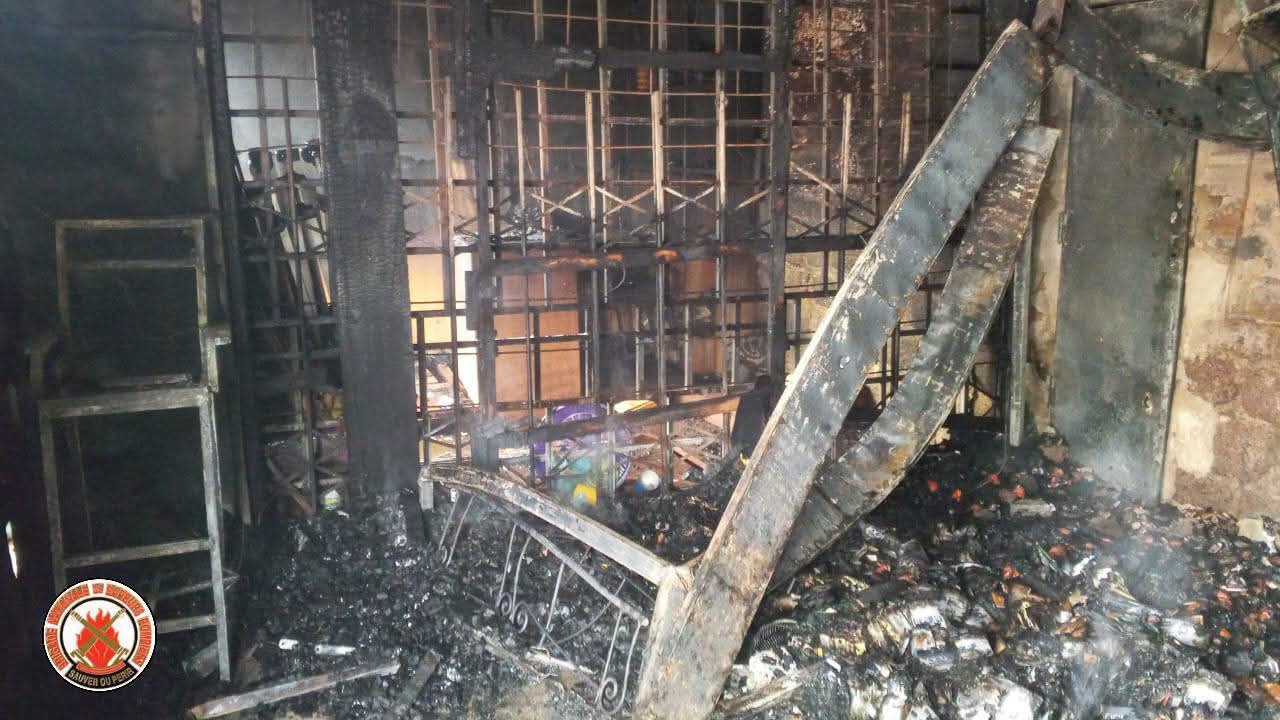
Grâce à la promptitude des secours et à l'efficacité des équipes mobilisées, l'incendie a finalement été complètement éteint. Ce qui a permis d'éviter sa propagation aux infrastructures environnantes.
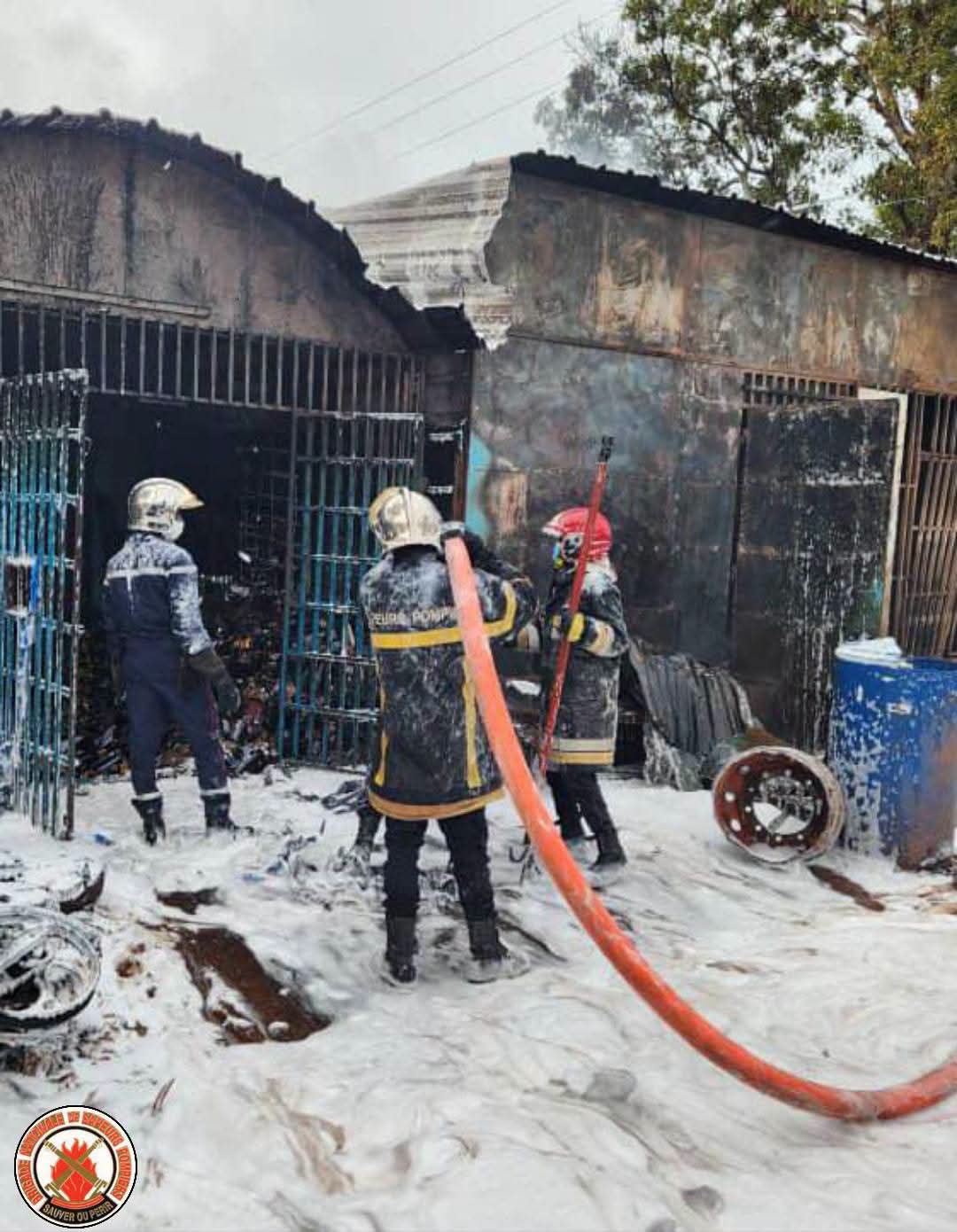
La Brigade nationale de sapeurs-pompiers rappelle l'importance du respect des règles de sécurité dans les lieux de stockage et de commerce. Elle invite notamment les populations à faire preuve de vigilance lors de l'utilisation, de la manipulation et du stockage des marchandises et articles divers.
La BNSP appelle ainsi les commerçants et les usagers à adopter les bonnes pratiques de prévention afin de réduire les risques d'incendie et de limiter les dégâts en cas de sinistre.
Lefaso.net
Catégories: Afrique
Romuald Wadagni élevé au rang de Prince de la Cour impériale de Nikki
Le président de la République, Romuald Wadagni, a été élevé ce mardi 25 août 2026 au rang de Prince de la Cour impériale de Nikki. Cette distinction exceptionnelle lui a été décernée par Sa Majesté Séro Torou, Empereur de Nikki, dans le cadre de la célébration de la Gaani 2026.
Présent à Nikki dans le cadre des manifestations officielles de la Gaani, le président Romuald Wadagni a été reçu par l'empereur de Nikki. À l'issue de leur tête-à-tête, le Chef de l'État a été élevé au rang de Prince de la Cour impériale de Nikki sous l'appellation « Sounon Torou Touko Sari », qui signifie « Le Souverain rassembleur ».
À travers cette distinction accordée au chef de l'État, la Gaani 2026 prend une dimension symbolique en mettant en avant les liens entre les institutions de la République et les autorités traditionnelles autour de la préservation et de la valorisation du patrimoine culturel béninois.
Du 25 au 27 août, Nikki accueille trois jours de cérémonies, de rites, de processions et d'animations culturelles pour célébrer la Gaani.


Catégories: Afrique
Alerte à la pêche illicite des alevins à Kalehe
La Société civile environnementale de Kalehe (Sud-Kivu) dénonce la poursuite de la pêche illicite des alevins dans le lac Kivu. Cette pratique met en péril la sécurité alimentaire des habitants, a-t-elle indiqué mardi 25 août 2026.
Le président de cette structure citoyenne, Madadju Devote, cite notamment le cas du village Tchibanda, près d’Ishovu, où certains pêcheurs capturent jusqu’à sept bassins d’alevins :
Catégories: Afrique
Ebola et conflit en RDC : l’OMS appelle à une trêve humanitaire de 6 mois
Une trêve de six mois, c’est ce que l’Organisation mondiale de la santé (OMS) demande aux belligérants, qui se battent dans le Nord-Est de la RDC, pour permettre aux équipes médicales d’atteindre les populations exposées et stopper la transmission de la maladie d’Ebola. L’épidémie continue en effet de se propager dans six provinces du pays.
Catégories: Afrique
Le non-fonctionnement de l’abattoir public fait craindre des maladies à Bandundu
L’Union des consommateurs du Congo, dans la province du Kwilu, tire la sonnette d’alarme sur le non-fonctionnement de l’abattoir de la ville de Bandundu. Elle s’inquiète des risques sanitaires auxquels la population est exposée, faute d’un contrôle vétérinaire régulier des animaux abattus et de la viande destinée à la consommation.
Catégories: Afrique
Son prix passe de 850 à 420 DA/kg : l’État recadre le marché de la banane
Il y a encore quelques semaines, la banane était devenu un luxe inaccessible, frôlant des sommets absurdes jusqu’à 850 DA/kg, voire 1 000 DA, avant […]
L’article Son prix passe de 850 à 420 DA/kg : l’État recadre le marché de la banane est apparu en premier sur .
Catégories: Afrique
Le Réseau des Caisses Populaires du Burkina vous souhaite une bonne célébration de Maouloud à toutes et à tous !
Catégories: Afrique
Romuald Wadagni à Nikki pour la Gaani
Le président de la République, Romuald Wadagni, est arrivé ce mardi 25 août 2026 à Nikki, à l'occasion de la célébration de l'édition 2026 de la Gaani.
Le Chef de l'Etat a effectué le déplacement ce mardi à Nikki. Romuald Wadagni prend part aux festivités de la Gaani. Dès son arrivée, le chef de l'Etat s'est rendu auprès de Sa Majesté Séro Torou Tuko Sari, empereur de Nikki.
La présence du président de la République à cette célébration vient donner un relief particulier à cette édition de la Gaani organisée pour la première fois par l'État béninois. Cette implication traduit l'importance accordée à la valorisation du patrimoine culturel et des traditions du Bénin.
Trois jours au cœur du patrimoine baatonu
Placée sous le thème « Un peuple, une histoire, une couronne », la Gaani 2026 se déroule du 25 au 27 août à Nikki. L'événement met à l'honneur le patrimoine vivant baatonu à travers trois jours de cérémonies, de rites, de processions et d'animations culturelles.
La première journée est consacrée au lancement des festivités, avec notamment l'entrée solennelle des têtes couronnées, les cortèges équestres, les animations traditionnelles et la sortie des tambours sacrés.
Le mercredi 26 août sera marqué par la procession du « Sinaboko » à travers la cité de Nikki. Cette journée prévoit également les cérémonies d'allégeance des dignitaires et des princesses, avant un grand concert réunissant des artistes de la scène béninoise moderne et traditionnelle.
La dernière journée sera consacrée à la Kayessi, rite de transmission organisé au palais de la reine mère, avant le spectacle de clôture.
Catégories: Afrique
L'Éthiopie soumet sa candidature officielle pour accueillir la CAN 2028
L'Éthiopie soumet sa candidature pour accueillir la Coupe d'Afrique des Nations 2028 malgré un nombre insuffisant de stades pour un tournoi à 24 équipes.
Catégories: Afrique
Burkina/Environnement : CIM METAL SA met 150 plants en terre sur la ceinture verte de Ouagadougou
CIM METAL SA a procédé, le lundi 17 août 2026, à une opération de plantation de 150 arbres sur la ceinture verte, au quartier Tanghin de Ouagadougou. À travers cette initiative, l'entreprise entend contribuer à la préservation de l'environnement, tout en apportant son soutien aux activités maraîchères développées sur le site.
C'est sous un soleil matinal, que des plants de néré, de baobab et de Kigelia africana ont pris place dans la terre. Cette opération de plantation initiée par CIM METAL SA s'inscrit dans le cadre de sa politique de Responsabilité sociétale d'entreprise (RSE), mais se veut surtout, selon les responsables de la société, une action concrète en faveur de l'environnement et des générations futures.
A entendre le directeur général de CIM METAL SA, Waël Baalbaki, l'initiative relève d'abord d'une responsabilité humaine avant d'être une responsabilité sociétale. « Cette initiative va au-delà d'une simple cérémonie. Il s'agit d'un engagement concret en faveur de la préservation de notre environnement et des générations futures », a-t-il expliqué.
Le choix des espèces plantées n'est pas fortuit. CIM METAL SA a notamment privilégié des arbres présentant des intérêts nutritifs et médicinaux. Le baobab figure parmi les espèces retenues pour ses nombreuses vertus, mais également pour son potentiel à créer, à terme, des zones d'ombrage.
« Par sa grandeur, c'est quelque chose qui pourra aider les maraîchers à obtenir plus de zones d'ombre et donc à travailler de façon plus pérenne », a souligné Waël Baalbaki.
Pour le directeur général, l'objectif est de créer un espace pouvant bénéficier directement aux producteurs qui exploitent les terres maraîchères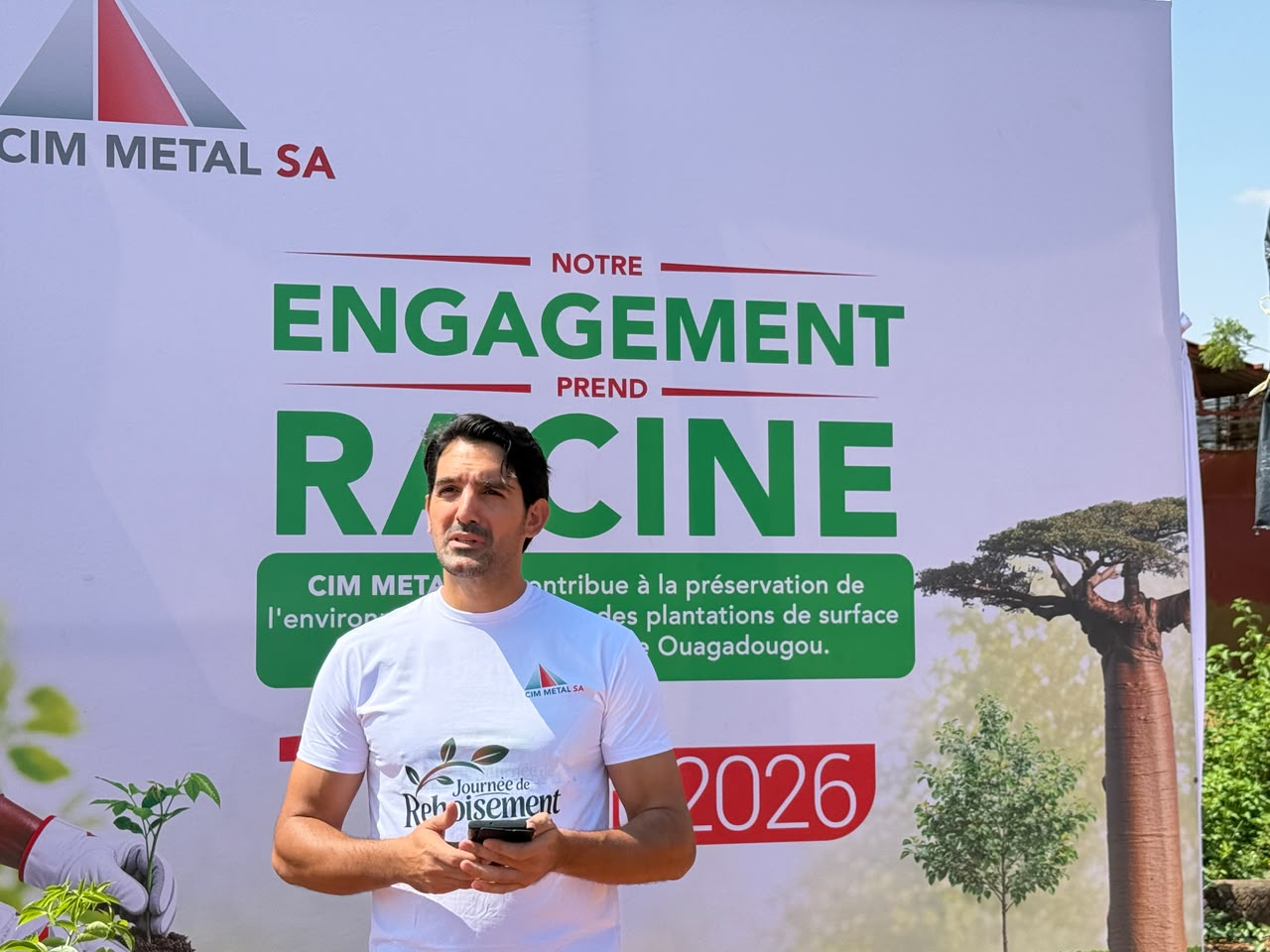
Cette dimension sociale et économique occupe une place importante dans le projet. La parcelle attribuée à l'entreprise au sein du Jardin nutritif de Toudoubweogo doit ainsi progressivement accueillir des espèces à vocation nutritive et médicinale. Au-delà de la restauration du couvert végétal, l'objectif est de créer un espace pouvant bénéficier directement aux producteurs qui exploitent les terres maraîchères.
Pour CIM METAL SA, cette action constitue donc une manière d'associer protection de l'environnement et soutien aux communautés qui tirent leurs revenus des activités agricoles en milieu urbain.
Consciente que planter ne suffit pas à garantir la survie des arbres, l'entreprise entend assurer le suivi des plants mis en terre. Des visites mensuelles sont prévues afin de veiller à leur entretien et à leur croissance.
« On veut pouvoir être en mesure chaque mois de venir prendre soin de nos arbres pour qu'au fil des années, on puisse voir les résultats de ce qu'on fait », a indiqué le directeur général.
Ce sont au total 150 plants qui ont été mis en terre par CIM METAL SA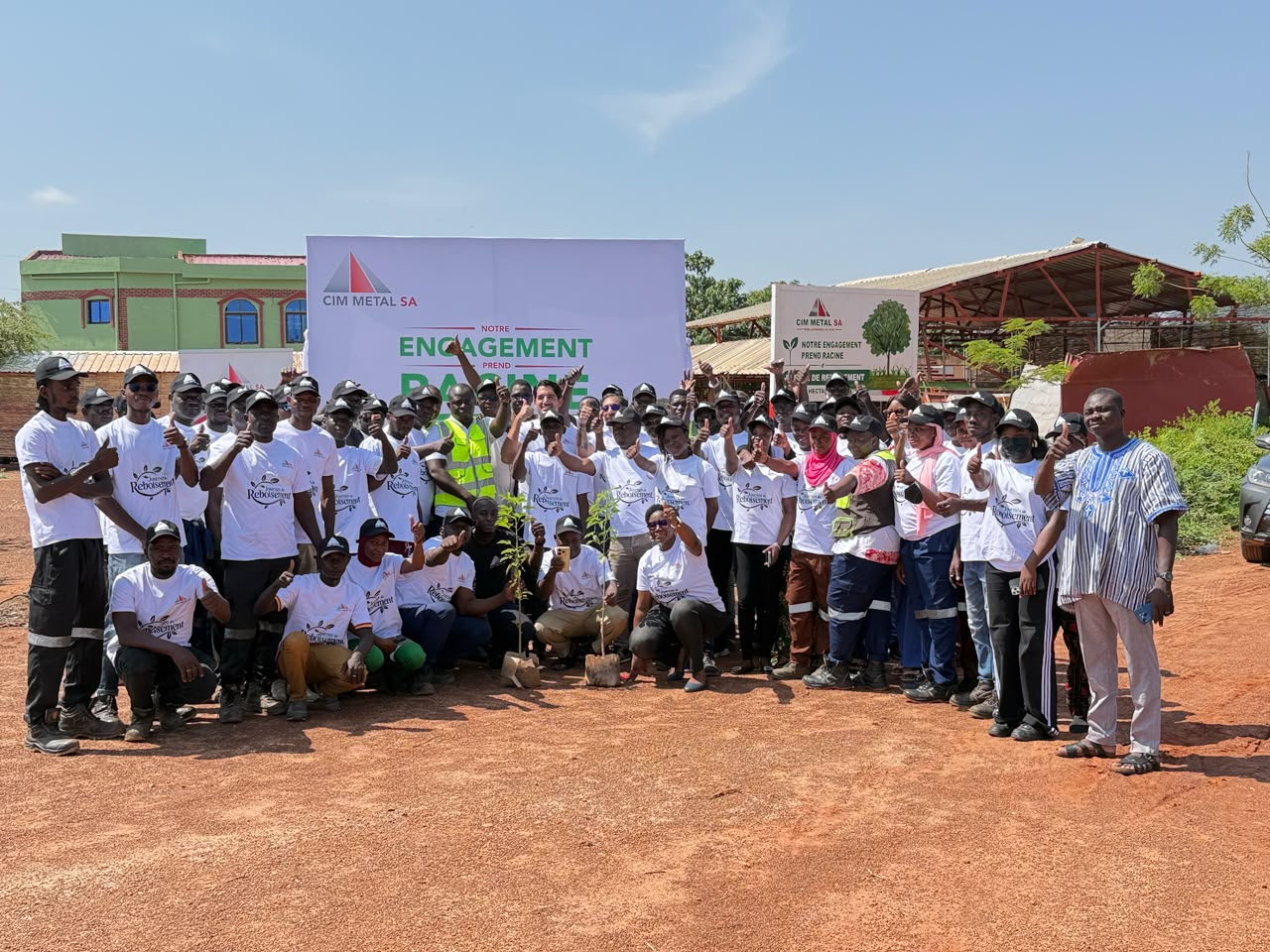
Cette volonté de suivi dans la durée est également mise en avant par le directeur des opérations, Serge Minh. Pour lui, les actions RSE constituent une composante importante de l'identité de CIM METAL SA et les 150 arbres plantés cette année devraient ainsi être suivis d'autres initiatives.
« Ce n'est pas notre première édition et cette année, on le fait sur la ceinture verte. L'année prochaine, ce sera ici ou ailleurs. C'est quelque chose de très formidable pour nous », a-t-il ajouté.
À travers cette initiative, CIM METAL SA souhaite également encourager les autres entreprises à renforcer leur engagement en faveur de l'environnement.
Pour Waël Baalbaki, les entreprises ne doivent pas se limiter à leur activité économique, mais contribuer également au développement de la société qui les entoure. « On n'est pas là juste pour prendre, on est là pour donner également. Il faut qu'on puisse faire les deux », a-t-il lancé.
Hanifa Koussoubé
Lefaso.net
Catégories: Afrique
En RDC, la colère des soignants, en première ligne face à Ebola, mais rarement payés
Depuis début juillet, les agents de santé confrontés à l’épidémie multiplient les grèves sporadiques pour réclamer le paiement de leur salaire. Le gouvernement a reconnu des détournements de fonds qui fragilisent la riposte contre la maladie à virus Ebola.
Catégories: Afrique
1,6 milliard de centimes volés sous la menace d’une arme : la Cour d’Oran alourdit les peines
La Cour d’Oran vient de durcir sensiblement le sort réservé à l’auteur d’un spectaculaire vol à main armée commis à Bir El Djir. Initialement condamné […]
L’article 1,6 milliard de centimes volés sous la menace d’une arme : la Cour d’Oran alourdit les peines est apparu en premier sur .
Catégories: Afrique
SAFRIMEX signe un contrat pour doter Lusambo de ses premières routes asphaltées
La ville de Lusambo, chef-lieu de la province du Sankuru, s'apprête à franchir une étape importante dans la modernisation de ses infrastructures. Un contrat a été signé vendredi 21 aout 2026 par le gouvernement provincial et l'entreprise SAFRIMEX pour l’asphaltage de 50 kilomètres de routes urbaines et la réhabilitation de l'aéroport de Lusambo.
Catégories: Afrique
Sur les traces d'un fantôme : comment la BBC a retrouvé la trace du chef des services secrets d'Al-Assad, en fuite, après des mois de recherches
Un carnet a permis de retrouver Hussam Luka, alias « La Araña », qui était l'un des hommes les plus redoutés de Syrie à l'époque de Bachar al-Assad.
Catégories: Afrique
49 °C à l’ombre et rafales violentes : l’Algérie face à une météo extrême ces 26 et 27 août
Les bulletins d’alerte s’accumulent et dessinent un tableau météo particulièrement éprouvant pour la fin de semaine. Les prévisionnistes de l’Office national de la météorologie viennent […]
L’article 49 °C à l’ombre et rafales violentes : l’Algérie face à une météo extrême ces 26 et 27 août est apparu en premier sur .
Catégories: Afrique
Foncier : Le ministère de la Construction de la Patrie alerte sur une fausse opération de souscription
Le ministère de la Construction de la Patrie (MCP) met en garde les populations contre une fausse opération de souscription foncière qui circule actuellement sur les réseaux sociaux. La mise en garde a été faite à travers un communiqué.
Le ministère précise qu'aucun « Programme National de Parcelles Viabilisées » n'existe au sein de son département. Il souligne également qu'aucune opération de souscription, que ce soit au titre de ce prétendu programme ou de tout autre dispositif similaire, n'a été lancée.
Il invite ainsi les populations à ne procéder à aucun paiement et à ne transmettre aucune donnée personnelle ou financière aux personnes à l'origine de ces publications.
Selon le ministère, les auteurs de cette opération frauduleuse vont jusqu'à reproduire la signature de l'autorité ou à utiliser des images officielles sur leurs supports afin de donner une apparence de crédibilité à leurs publications.
Le ministère recommande donc aux citoyens de vérifier systématiquement les informations relatives aux opérations foncières auprès de ses canaux officiels. Il les encourage également à signaler toute publication jugée suspecte aux services compétents.
Le ministère décline toute responsabilité concernant les sommes d'argent ou les informations personnelles et financières qui auraient été communiquées dans le cadre de cette fausse opération.
Une vigilance particulière est donc recommandée aux populations, alors que les réseaux sociaux constituent de plus en plus un terrain privilégié pour la diffusion de fausses annonces et les tentatives d'escroquerie.
Lefaso.net
Catégories: Afrique
Guinée : 173 militaires radiés des effectifs pour désertion
Le président guinéen, le général Mamadi Doumbouya, a ordonné la radiation de 173 militaires des effectifs des Forces armées guinéennes pour désertion.
L'annonce a été faite le lundi 24 août 2026 au journal télévisé de la Radiodiffusion télévision guinéenne (RTG) par le général Amara Camara, ministre secrétaire général de la présidence de la république. Le décret présidentiel s'appuie notamment sur les articles 24 et 25 du statut général des militaires, qui encadrent les mesures disciplinaires relatives à la désertion.
Parmi les militaires concernés figure le commandant Michel Lamah, ancien membre du Groupement des forces spéciales (GFS). Cette unité avait joué un rôle central lors du renversement du président Alpha Condé, le 5 septembre 2021.
Le nom de Michel Lamah avait particulièrement retenu l'attention au lendemain du coup d'État ayant porté au pouvoir le Comité national du rassemblement pour le développement (CNRD). Il avait notamment été présenté comme l'un des militaires impliqués dans l'arrestation et le transfert d'Alpha Condé après la prise du pouvoir.
La liste des militaires radiés comprend également des éléments affectés à plusieurs unités des forces armées, notamment le Bataillon autonome des troupes aéroportées (BATA), des bataillons d'infanterie, des compagnies territoriales et d'autres structures des forces de défense et de sécurité.
Parmi les noms cités figurent le capitaine Bakary Keïta, du bataillon d'infanterie de Siguiri, le capitaine Abdoul Karim Sissoko, de la compagnie d'infanterie de Ouendé Kènèma, le lieutenant Alseny Sylla, de la compagnie d'infanterie de Lola, ainsi que le sous-lieutenant Abdoulaye Aminata Camara, du BATA.
La radiation pour désertion entraîne le retrait des militaires concernés des effectifs des Forces armées. Cette mesure intervient alors que les autorités guinéennes mettent régulièrement en avant la discipline, le respect de la hiérarchie et l'observation des obligations statutaires au sein de l'institution militaire.
Rama Diallo
Lefaso.net
Catégories: Afrique
Tragédie à Béjaïa : Un violent coup de vent renverse un bateau de plaisance et fait 2 morts et 6 blessés
Un drame de la mer a coûté la vie à deux estivants et fait six blessés, lundi soir, sur la côte ouest de la wilaya […]
L’article Tragédie à Béjaïa : Un violent coup de vent renverse un bateau de plaisance et fait 2 morts et 6 blessés est apparu en premier sur .
Catégories: Afrique
Transport en Algérie : ces 16 wilayas reçoivent de nouveaux bus
Le renouvellement du parc national de bus se poursuit. Le ministère de l’Intérieur, des Collectivités locales et des Transports a annoncé ce mardi le lancement […]
L’article Transport en Algérie : ces 16 wilayas reçoivent de nouveaux bus est apparu en premier sur .
Catégories: Afrique
Pages



© 2012-2018 Europa Varietas Foundation © 2015-2018 Europa Varietas Association
www.europavarietas.org | info(@)europavarietas(dot)org | Switzerland




We are looking for sponsors for the English translation of these books, please contact turkeandras(at)gmail(dot)com