
You are here
Europäische Union
Entwurf der Tagesordnung - Montag, 16. März 2026 - Dienstag, 17. März 2026 - PE785.235v01-00 - Ausschuss für auswärtige Angelegenheiten
Quelle : © Europäische Union, 2026 - EP
Categories: Europäische Union, France
À l’ONU, Judith Suminwa dénonce les violences contre les femmes dans l’Est de la RDC
La Première ministre de la République démocratique du Congo, Judith Suminwa Tuluka, a pris part à New York à la célébration de la Journée internationale de la femme, organisée dans le cadre de la 70ᵉ session de la Commission de la condition de la femme des Nations Unies. Les travaux sont placés sous le thème : « Droits, Justice, Action, pour toutes les femmes et les filles ».
Beyond projects: the role of development partners in institutionalising renewable energy innovations: lessons from the Global South
Renewable energy has seen rapid uptake, particularly in the Global South. Solar energy projects have boomed in recent years, but uptake by countries is uneven. Beyond geophysical conditions, technological innovation, market dynamics and donor-driven “lighthouse projects”, political institutionalisation has played a critical role in decarbonisation. In this policy brief, which is based on extensive research from Global South case studies, we argue that political institutionalisation is key to determining whether and how innovative solar initiatives become stabilised, scaled up, and mainstreamed.
Drawing on the research project Institutionalizing Low Carbon Development in the Global South (INLOCADE) and expert contributions from a follow-up IDOS workshop, this policy brief synthesises comparative policy-relevant findings on how institutionalisation unfolds in various emerging economies of the Global South, including Brazil, Bangladesh, Cambodia, India, Indonesia and South Africa.
Key messages:
• Political institutionalisation – understood here as an enduring change of formal and informal rules and practices towards low-carbon development – is essential for making renewable energy projects sustainable by embedding them in conducive, stable governance frameworks. Isolated, donor-driven initiatives are at risk of provoking resistance and backlash, and of fading away once external support ends.
• Multiple pathways for institutionalisation exist. State leadership, subnational action, alliances between development partners and communities,
and crisis-driven coalitions can enable institutionalisation under different conditions. Policies should be tailored to the institutional realities of each context rather than using one-size-fits-all models. Similarly, development partners should assess local realities and adapt their strategies accordingly.
• Distributive justice and participation must be actively supported. Political institutionalisation can lead to inequitable outcomes and reinforce exclusionary practices. Development partners should take a proactive role by aligning their interventions with inclusive and equitable approaches to ensure support for marginalised groups leads to socially just transitions, not just box-ticking.
• Crises can be opportunities. Energy shortages and climate shocks can disrupt fossil-fuel lock-ins and open the door to innovation. Development partners need flexible instruments and strategies to help translate crisis-driven experiments into durable institutional change.
• Development partners are catalytic, not deci-sive. They can accelerate change by providing finance, technical expertise, and legitimacy, especially when working with domestic actors beyond national governments. German and EU development cooperation should place greater emphasis on strengthening domestic institutional enviro-ments, including regulatory stability, administrative capacity, and actor coalitions that embed projects in lasting policy and organisational change. This helps ensure donor interventions contribute to sustained low-carbon transitions beyond initial project cycles.
Dr Joshua Philipp Elsässer is a Postdoctoral Researcher at the Centre for Environment, Economy and Energy (C3E) of the Brussels School of Governance.
Prof em. Dr Harald Fuhr is a Professor Emeritus of International Politics at the Faculty of Economics and Social Sciences at the University of Potsdam.
Anna Fünfgeld is a Postdoctoral Researcher at the University of Hamburg; Mercator Professorship for Sociology.
Prof Dr Markus Lederer is a Professor of International Relations at the Technical University of Darmstadt.
Dr Jens Marquardt is a Research Associate in the Research Group “International Relations” at the Technical University of Darmstadt.
Dr HyunAh Yi is a Senior Researcher at the Institute of Comparative Governance, Korea University, and an Associate Researcher at the German Institute of Development and Sustainability (IDOS).
«Von den Russen will ich mich doch nicht auf den Dorfplatz treiben lassen», sagt Daniel Zimmermann und will deshalb wieder Militärdienst leisten
Nach dem Nationalrat hat auch der Ständerat einem Vorstoss zugestimmt, der Veteranen den Armeedienst wieder ermöglichen will. Hinter dem Vorschlag steckt ein Armeekritiker aus dem solothurnischen Kriegstetten.
Categories: Europäische Union, Swiss News
AMENDMENTS 1 - 163 - Draft report Recommendation to the Council, the Commission and the Vice-President of the Commission / High Representative of the Union on Foreign Affairs and Security Policy on promoting transnational governance on water in the...
AMENDMENTS 1 - 163 - Draft report Recommendation to the Council, the Commission and the Vice-President of the Commission / High Representative of the Union on Foreign Affairs and Security Policy on promoting transnational governance on water in the interests of conflict prevention and peace
Committee on Foreign Affairs
Leoluca Orlando
Source : © European Union, 2026 - EP
Committee on Foreign Affairs
Leoluca Orlando
Source : © European Union, 2026 - EP
Categories: Europäische Union, France
Latest news - AFET committee meetings - Committee on Foreign Affairs
Next AFET committee meeting will be held on:
- Monday 16 and Tuesday 17 March, room ANTALL 4Q2 Brussels
AFET - DROI calendar of meetings 2026
Meeting documents
Webstreaming
Source : © European Union, 2026 - EP
Categories: Europäische Union, France
Lomami : un culte œcuménique pour célébrer la femme et compatir avec l'Est du pays
Dans le cadre de célébration de la Journée internationale des droits des femmes, un culte œcuménique d’action de grâce a été organisé ce lundi 9 mars au terrain du gouvernorat de Lomami, à Kabinda. Autorités provinciales, responsables religieux et organisations féminines se sont rassemblés pour prier en faveur de l’autonomisation des femmes et de la paix en République démocratique du Congo.
Plus de 5 000 combattants démobilisés en deux ans et demi grâce au programme P-DDRCS en RDC
Plus de 5 000 combattants issus de groupes armés ont été démobilisés en deux ans et demi grâce au Programme de désarmement, démobilisation, relèvement communautaire et stabilisation (P-DDRCS). L’annonce a été faite lundi 9 mars à Kinshasa par le coordonnateur du programme, Jean‑Didier Tanga Tita, lors d’un briefing de presse coanimé avec le porte-parole du gouvernement et ministre de la Communication, Patrick Muyaya Katembwe.
Élèves, étudiants et agents de l’hôpital Mapon dans la rue contre le gel des comptes de leurs institutions à Kindu
Des élèves, étudiants, cadres et agents de l’hôpital Mapon ont manifesté lundi 9 mars dans les rues de Kindu pour protester contre la décision du procureur général ordonnant le gel des comptes bancaires de l’Université Mapon; une décision qui concerne aussi les écoles maternelle, primaire et secondaire et l’hôpital Mapon appartenant à l’ancien Premier ministre et opposant Matata Ponyo.
Actualite.cd : Constitution : les sénateurs du groupe politique AFDC-A se désolidarisent de Bahati Lukwebo et l’appellent à tirer les conséquences
Les journaux et médias en ligne de la capitale congolaise commentent largement les déclarations de Bahati Lukwebo, deuxième vice-président du Sénat, qui s’insurge contre toute modification de la Constitution visant à ouvrir la voie à un troisième mandat du président Félix Tshisekedi.
Press release - Migration: the Civil Liberties Committee adopts a reform of EU return rules
On Monday, the Civil Liberties Committee adopted its position on the proposed changes to the EU’s policy on the return of non-EU nationals illegally staying in the EU.
Committee on Civil Liberties, Justice and Home Affairs
Source : © European Union, 2026 - EP
Committee on Civil Liberties, Justice and Home Affairs
Source : © European Union, 2026 - EP
Categories: Diplomacy & Crisis News, Europäische Union
Press release - Opening: 9-12 March plenary session
President Metsola opened the March plenary session with statements on the situation in Iran, the rise in political violence, and today’s antisemitic attack in Liège, Belgium.
Source : © European Union, 2026 - EP
Source : © European Union, 2026 - EP
Categories: Diplomacy & Crisis News, Europäische Union
DRAFT OPINION on the Council Decision amending Decision (EU) 2021/1764 on the Association of the Overseas Countries and Territories with the European Union including relations between the European Union on the one hand, and Greenland and the Kingdom of...
DRAFT OPINION on the Council Decision amending Decision (EU) 2021/1764 on the Association of the Overseas Countries and Territories with the European Union including relations between the European Union on the one hand, and Greenland and the Kingdom of Denmark on the other
Committee on Foreign Affairs
Urmas Paet
Source : © European Union, 2026 - EP
Committee on Foreign Affairs
Urmas Paet
Source : © European Union, 2026 - EP
Categories: Europäische Union, France
Guidelines for the 2027 Budget - Section III - PE784.360v01-00
Guidelines for the 2027 Budget - Section III
Ausschuss für Sicherheit und Verteidigung
Marie-Agnes Strack-Zimmermann
Quelle : © Europäische Union, 2026 - EP
Ausschuss für Sicherheit und Verteidigung
Marie-Agnes Strack-Zimmermann
Quelle : © Europäische Union, 2026 - EP
Categories: Afrique, Europäische Union
Can reminders promote regular pro-environmental behavior? Experimental evidence from Peru
Pro-environmental behavior, such as recycling, often needs to be regular to be effective, and interventions to encourage behavioral change may therefore need to be repeated; yet, little evidence exists on the optimal time pattern and frequency of such repeated interventions. To fill this gap, we investigate the impact of mobile text reminders on households’ recycling behavior in urban Peru by randomly varying the exposure length and continuity of reminders. We find that reminders increase both the likelihood that households start to recycle and the frequency of recycling among households that already did so before the intervention. The effects are stronger when reminders are repeated over a longer period. Our findings suggest that both limited attention and habit formation matter for recycling behavior, and that low-cost mobile text reminders can effectively support regular pro-environmental behavior.
Sustainable finance, reflexive law, and the epistemic infrastructure of financial markets
In recent years, the European Union (EU) has introduced several policy measures to better align financial markets with sustainability goals. So far, these policies have mainly aimed to improve how information on the sustainability impacts of investments is collected and transmitted. Policymakers hope that adjustments to the epistemic infrastructure of financial markets will lead to a shift in investments that translates into transformational change in the real economy. The EU’s sustainable finance policies often follow a reflexive law approach and confine themselves to setting procedural and organisational norms. This article analyses the potential and limitations of this approach and argues that sustainable finance policies must be sufficiently detailed and binding to avoid the risk, associated with reflexive law policies, of granting too much discretion to agents with vested interests detrimental to the governance aims. However, detailed and binding policies do not fully realise the advantages in dealing with highly complex and dynamic situations that are often ascribed to reflexive law policies. While sustainable finance policies that address the epistemic infrastructure of financial markets are for various reasons still important, their potential and advantages compared to other governance approaches should not be exaggerated.
Bitter times for cocoa farmers as chocolate market slumps
Chocolate bars may have shot up in price but West Africa's cocoa farmers are facing economic ruin.
Weight-loss treatments boom as Kenyan attitudes to beauty change
Kenyan celebrities are driving a surge in weight‑loss and cosmetic procedures, sparking criticism and concerns.
Pages


© 2012-2018 Europa Varietas Foundation © 2015-2018 Europa Varietas Association
www.europavarietas.org | info(@)europavarietas(dot)org | Switzerland
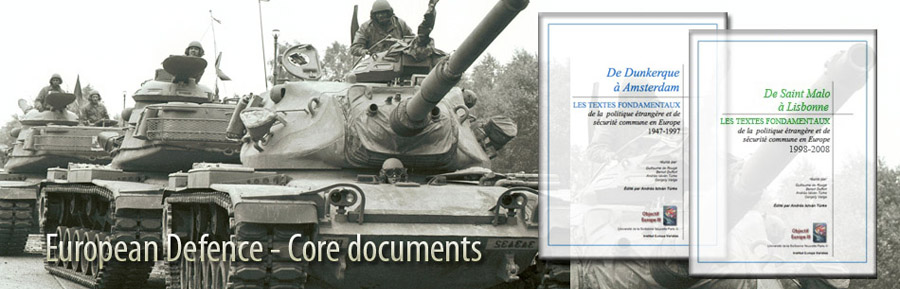
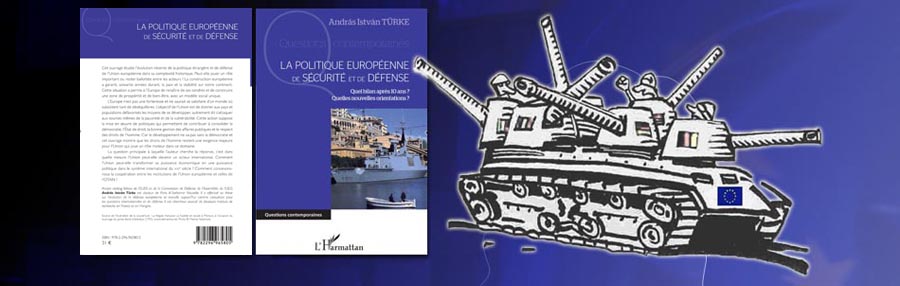

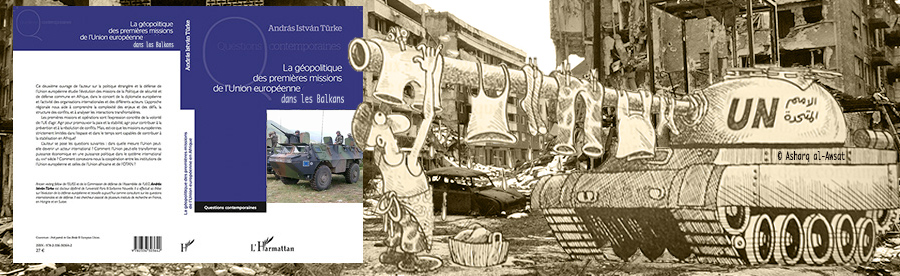
We are looking for sponsors for the English translation of these books, please contact turkeandras(at)gmail(dot)com