
Vous êtes ici
European Union
EU Inc: Council adopts position on a new EU corporate law for innovative companies
Council adopts its negotiating position on the regulation to create a 28th regime corporate legal framework, EU inc.
Catégories: European Union
EU-Western Balkans summit to take place in Brussels on 25 November
EU and Western Balkans leaders will meet in Brussels on 25 November. The Summit will highlight the strategic importance of the relations between the EU and the Western Balkans. The President of the European Council will represent the EU at the summit together with the President of the European Commission.
Catégories: European Union
Joint press release following General Secretary of the Central Committee of the Communist Party of Viet Nam and President of the Socialist Republic of Viet Nam Tô Lâm’s visit to the European Council and the European Commission
On 22 October 2026, European Council President António Costa and European Commission President Ursula von der Leyen held talks with President of Viet Nam Tô Lâm in Brussels on bilateral cooperation, regional security and global challenges.
Catégories: European Union
Presentation of letters of credence to the President of the European Council António Costa and the President of the European Commission Ursula von der Leyen
President Costa and President von der Leyen received letters of credence from nineteen new Ambassadors to the European Union.
Catégories: European Union
Savings and investments union: Council and Parliament strike deal to revitalise the EU’s securitisation market
The Council and the Parliament agreed new rules to revitalise the EU’s securitisation market - an integral part of the savings and investments union (SIU) and the ‘One Europe, One Market’ roadmap to boost economic growth.
Catégories: European Union
31 octobre à Paris : les Gilets jaunes déposent un parcours Bastille-Opéra-Concorde et menacent de porter plainte en cas de refus
Catégories: European Union, France
« Je cherche un endroit sans risque pour ma famille » : harcelé, Aniss, policier municipal à Paris, demande en vain un déménagement
Catégories: European Union, France
Prix des carburants dans Paris : où trouver les stations les moins chères ce mardi 27 octobre ?
Catégories: European Union, France
Press release - Gender equality week: women in leadership
Parliament is marking gender equality week with debates on women’s leadership experiences, and how to drive change and inspire the next generations of women leaders.
Committee on Women’s Rights and Gender Equality
Source : © European Union, 2026 - EP
Committee on Women’s Rights and Gender Equality
Source : © European Union, 2026 - EP
Catégories: European Union
Obligations and understandings: the UK and the Euro UPDATED
UPDATED 29/10/26 to properly reflect Denmark’s opt-out (hat-tip David Phinnemore)
As part of the incipient debate on the UK’s future relations with the EU, Andy Burnham has been out and about this week, trying to balance not pre-judging the outcome of a nominally collective discussion and decision with his own views.
Even though we assume his predisposition to the UK becoming a full member state of the EU once again, it’s also worth noting the likely impact of the burgeoning ‘Made in Europe’ agenda working through Brussels, which will further weaken the viability of the status quo.
Hence the somewhat convoluted formulation of his recent remarks, pushing membership back into some point before he dies and saying:
“I can’t see myself ever recommending anything that would involve joining the euro or Schengen.”
This prompted me to once again search my feelings* about the mechanics of such an outcome, feelings that have been present ever since we kicked off the swell of reports/briefings from various organisations, almost all of whom seem to take the view that not joining the Euro or Schengen might be a bit tricky, but nothing too insurmountable.
True to my nature, I’m not sure it’ll be quite that simple.
I’m going to focus here on the Euro, but it would be much the same for Schengen should the Irish government announce their desire also to participate once the UK becomes a member state. Which would be fun.
So we know that not all EU members use the Euro (and not all Euro users are member states, incidentally). There’s only one state with a treaty-level opt-out, namely Denmark, which negotiated a protocol during the negotiation of the Maastricht treaty in 1992, which gives it the right to decide whether to proceed to the final stage of Euro membership.
But there are also Sweden, Poland and Hungary. When they acceded they formally committed themselves to becoming full Eurozone members, but have all subsequently decided that they do not wish to do that. To this end, they have not made their currencies part of the Exchange Rate Mechanism (ERM), which manages and minimises forex fluctuations, and which is an essential criterion for Euro membership.
The Commission, in its periodic Convergence Reports, notes this in somewhat sniffy terms, but it’s understood that there is neither a means nor a will to force these states on their way to ERM and then Euro membership.
And this is where most people seem to have stopped. The UK doesn’t want to use the Euro; not all member states use the Euro; the EU seems to be fine with that; problem solved.
The fundamental difference between these 4 states and the UK is that when the former negotiated and became members they all were clear and sincere in their intention to become full Eurozone members.
As a reminder, part of the EU’s very long run-up to Eastern enlargement was a worry that new states in Central and Eastern Europe wouldn’t be able to cope with the demands of membership. So in 1993 the Union set up what became known as the Copenhagen criteria, which detailed the (rather vague) accession requirements set out in Art.49 TEU.
These criteria became primarily known for the hurdles they established in relation to a functional free-market economy, able to survive being thrown into the single market, and to robust liberal democratic political institutions and practices. These were – and remain – the tools with which the EU moulds applicant states to its preferences and/or allows them to be parked in an indefinite limbo (waves to the Western Balkans).
But there’s a third element to Copenhagen, namely an obligation to adhere to the aims of political, economic and monetary union. This is not simply about a volonté européenne, a demonstration of general and durable sympathy with the nominal aims of the Union, but also a practical following-through on that. This includes join the Euro once the appropriate convergence criteria have been met.
This was not an issue for any of the 4 states we’ve mentioned, all of which were enthusiastic at the point of accession. And while their politics did change afterwards, they were then member states and so out from under the cosh of Copenhagen.
The UK is not in that situation.
As some have noted, Sterling (and the British economy in general) was always a highly problematic potential member of the Eurozone, given its weak synchronisation of its economic cycles, structure of activity and exposure to international markets. Therefore it’s a moot question whether it could even meet the Art.140 TFEU convergence criteria if it wanted to: readers with time on their hands can discover A LOT more about this by looking for works on late 1990s British politics and the Blair-Brown stand-off on the matter.
But inability to meet convergence criteria is a different thing from not wanting to meet those criteria.
More pertinently, the Commission would be obliged to note in its opinion on any accession application from the UK that appears not to be a satisfying of the third Copenhagen criterion, nor an intention to satisfy it (read the opinions on Sweden and Hungary for examples of how this wasn’t an issue for them). Even if a Labour government was to change its tune on this, there would still be obvious questions about whether this was sincere and/or resilient to future changes in government.
If the ERM-loophole doesn’t work, and the UK isn’t going to have a wholesale change of heart, then this really only leaves a Danish-style opt-out.
While not legally difficult to draft, the issue comes back to the politics of the situation.
Marginally, such an opt-out would be both a precedent for other acceding states and a legal recognition that European integration has its limits (even if these are already very clear in practical and political terms).
But more important would be what an opt-out says about the British commitment to membership.
The reason we are discussing any of this is because the UK decided to withdraw, through its 2016 referendum. An obvious concern for the EU is that this might just be the start of another cycle, and if the UK can’t even get over itself to say yes to the Euro, even hypothetically, then is that cycle not going to be quite shallow and short?
Equally obviously, if you’re worried about such things, then getting Sterling into the Euro makes even more sense. Disentangling currencies is an order of magnitude more messy than disentangling EU membership, so it might encourage future Leavers to think again. Shonky politics, I’ll note, to argue that we try to make leaving so painful you never want to go, and pretty poor economics too, but that doesn’t mean someone isn’t thinking it.
In short, Euro membership isn’t really about legalities but politics and what it says about the depth of British sincerity to become members once again. The EU has been very clear that relations have to work for them, not least because they see themselves as the bigger party in those relations: starting from a position of what you want to avoid is a strategy that is likely to run into problems very quickly for any British government.
* if David Henig’s going to slip in cultural references, then who am I to argue?
The post Obligations and understandings: the UK and the Euro UPDATED appeared first on Ideas on Europe.
Catégories: European Union
Interest rates rise (about Lagarde’s future)
Also, in Thursday's edition: Ukraine wants ‘risky’ use of frozen Russian assets
Catégories: European Union
The French programme helping autistic people get a job
Companies show growing interest in hiring autistic people
Catégories: European Union
How Brussels plans to get Canadian LNG to Europe
With Canada's LNG terminals facing the Pacific, creative contracting may be the answer
Catégories: European Union
Europe’s pandemic risks are rising, EMA officials warn
Officials warn against complacency and urge greater preparedness
Catégories: European Union
EEA is here to stay, says Norway
The EEA is not an advantage for Norway compared to membership, the minister said
Catégories: European Union
Could two extra euros make Europe’s imported products safer?
Customs inspects less than 1 per cent of imports
Catégories: European Union
Europe’s energy crisis back on, ministers yet to receive the memo
Gas prices return to 2022 highs, but political will to tackle latest crisis remains low
Catégories: European Union
Commission in ‘exploration phase’ for tech equity funding pot
New instrument would aim to secure strategic innovation – if EU can mobilise billions
Catégories: European Union
Commission races to find takers for €21bn in remaining SAFE loans
Stricter procurement rules could make the second round a harder sell
Catégories: European Union
Pages


© 2012-2018 Europa Varietas Foundation © 2015-2018 Europa Varietas Association
www.europavarietas.org | info(@)europavarietas(dot)org | Switzerland
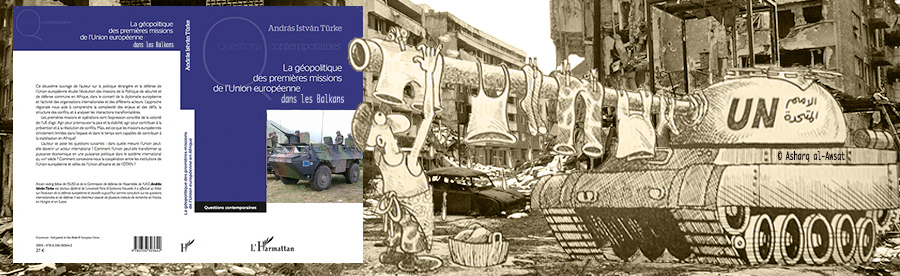
We are looking for sponsors for the English translation of these books, please contact turkeandras(at)gmail(dot)com