
You are here
Feed aggregator
Sécurité frontalière : L'État-major mauritanien dément toute incursion de l'armée malienne sur son sol et appelle au calme
La direction de la communication de l'État-major général des armées de la Mauritanie a publié un communiqué officiel rendu public par l'Agence mauritanienne d'information (AMI) le 12 avril 2026, pour rectifier les rumeurs faisant état de patrouilles maliennes en territoire mauritanien. L'institution militaire précise que les localités concernées sont situées exclusivement en territoire malien.
Pour lever toute ambiguïté, l'armée a détaillé la position des villages visités par les forces maliennes par rapport à la ligne de démarcation. Face à la propagation rapide de ces informations sur les réseaux sociaux, les autorités mauritaniennes insistent sur deux points.
Elles exhortent les organes de presse et les blogueurs à éviter le sensationnalisme et la diffusion de données inexactes pouvant créer une psychose inutile chez les populations.
L'armée assure qu'elle surveille la frontière avec une vigilance totale. Elle promet que toute violation réelle de l'intégrité territoriale serait immédiatement communiquée au public en toute transparence par les canaux officiels.
Lefaso.net
Source : Agence mauritanienne d'information
A Banlieues bleues, la « Vénus noire » d’Alice Diop et Angel Bat Dawid
La cinéaste et la musicienne ont uni leurs forces, voix et musique, autour du texte de la poétesse Robin Coste Lewis, sur l’invisibilisation des corps noirs dans l’histoire occidentale.
Categories: Afrique, Swiss News
ARGENTINA: ‘Under the New Law, Workers Have No Real Scope to Defend Their Rights’
By CIVICUS
Apr 13 2026 (IPS)
CIVICUS discusses recent regressive changes to Argentina’s labour laws with Facundo Merlán Rey, an activist with the Coordination Against Police and Institutional Repression (CORREPI), an organisation that defends workers’ rights and resists state repression.
Facundo Merlán Rey
Argentina has just passed the most significant changes to labour legislation in half a century. Driven by President Javier Milei following his victory in the October 2025 parliamentary election, the law profoundly changes the conditions for hiring and dismissing workers, extends the working day, restricts the right to strike and removes protections for workers in some occupations. The government says the measures will boost formal employment and investment, but trade unions and social organisations warn they erode decades of hard-won rights. The law has triggered four general strikes and numerous protests.What does the new law change and why did the government decide to push it through?
Capitalising on its victory in last year’s legislative election, which gave it a majority in both parliamentary chambers, the government pushed through a labour law that introduced changes on several fronts simultaneously.
It increases the daily maximum of working hours from eight to 12, with a weekly cap of 48. Hours worked beyond this limit no longer need to be paid separately, but can be accumulated and exchanged for days off at a later date.
It also introduces the concept of ‘dynamic wage’, allowing part of an employee’s pay to be determined based on merit or individual productivity. The employer can decide this unilaterally with no need for a collective agreement. This would allow two people to be paid differently for doing the same work.
The law creates the Labour Assistance Fund, an account to which the employer contributes three per cent of a worker’s salary, of which between one and 2.5 percentage points come from the worker’s pay. If dismissed, the worker receives the amount accumulated in that fund. This is deeply humiliating. It makes the worker contribute to the financing of their dismissal. Given that these contributions previously went into the pension system, the effect will also be to weaken pensions.
The law restricts the right to strike by expanding the list of occupations deemed essential, which means they are required to maintain at least 75 per cent of their operations during a strike. Previously, this category included air traffic control, electricity, gas, healthcare and water. Now it also includes customs, education at all levels except university, immigration, ports and telecommunications. In practice, this means that in these fields a strike will have a much more limited impact.
Finally, the law repeals the special regimes that regulated working conditions in some trades and professions. Over the next six months, hairdressers, private drivers, radio and telegraph operators and travelling salespeople will lose these protections. The Journalists’ Statute will be abolished from 2027 onwards.
At CORREPI, we believe all these measures are unconstitutional, as they directly contravene article 14 of the constitution, which guarantees the right to work and the right to decent living conditions. The changes put employers in a position of almost absolute dominance in an employment relationship, leaving workers with no real scope to defend their rights.
How have trade unions and social organisations reacted?
The most militant groups highlighted the problems with the new law clearly, but the response from the organised labour movement has been insufficient.
Union leaders responded with a belated and low-profile campaign plan. They have long been criticised for preferring discreet agreements to open confrontation, and this time was no different. They negotiated behind the scenes and secured concessions to protect themselves. The law maintains employers’ contributions to trade union health schemes and the union dues paid by workers for two years. The rights of workers as a whole were sidelined.
What impact are the changes having?
Although the law is already in force, its full implementation faces obstacles, partly because it has internal consistency issues that hinder its practical application. When the government attempts to apply it in employment areas that still retain rights, it will likely face legal challenges, which will increase social unrest.
Even so, some of its effects are already being felt. Unemployment is rising slowly but steadily. Factory closures, driven by the opening up of imports and the greater ease of dismissal, are pushing more workers into informal employment and multiple jobs. The result is a fall in consumption and a level of strain with outcomes that are difficult to predict.
The consequences extend beyond the economic sphere. Increasingly demanding working conditions, combined with high inflation and rising household debt, are taking a toll on workers’ mental health. Regrettably, there is already a worrying rise in the suicide rate.
There’s also a consequence that is harder to measure: this reform erodes the collective identity of workers. When work is informal, individuals tend to solve their problems on their own, making it much harder to organise to demand better conditions. In working-class neighbourhoods, drug trafficking is becoming established as an alternative source of employment, generating situations of violence that largely go unnoticed. Unfortunately, everything points to an ever-deepening social breakdown.
What lessons does this experience hold for the rest of the region?
Regional experience shows it is very difficult to reverse this kind of change. In Brazil, President Lula da Silva came to power in 2022 promising to repeal the labour law passed in 2017 under Michel Temer’s government, similarly opposed by social organisations and trade unions. However, he failed to do so, and the framework Temer left remains in force. Once passed, these laws tend to remain in place regardless of who governs next.
That’s why what’s happening in Argentina should not be viewed as an isolated phenomenon. The reform appears to be part of a broader direction that regional politics is taking under the influence of the USA, one of the main drivers of these changes and a supporter of the governments implementing them.
The weakening of labour rights and collective organising is not a side effect; it is the objective being pursued. Dismantling workers’ ability to organise collectively facilitates the advance of extractive and financial interests and guarantees access to cheap labour. In that sense, Argentina offers a warning to the rest of the region.
CIVICUS interviews a wide range of civil society activists, experts and leaders to gather diverse perspectives on civil society action and current issues for publication on its CIVICUS Lens platform. The views expressed in interviews are the interviewees’ and do not necessarily reflect those of CIVICUS. Publication does not imply endorsement of interviewees or the organisations they represent.
GET IN TOUCH
Website
Facebook
Instagram
Twitter
YouTube
SEE ALSO
‘Milei managed to capture social unrest and channel it through a disruptive political proposal’ CIVICUS Lens | Interview with Carlos Gervasoni 13.Dec.2025
‘Society must prepare to act collectively to defend rights and democracy’ CIVICUS Lens | Interview with Natalia Gherardi 27.Feb.2025
‘The state is abandoning its role as guarantor of access to rights’ CIVICUS Lens | Interview with Vanina Escales and Manuel Tufró 22.Jul.2024
Follow @IPSNewsUNBureau
!function(d,s,id){var js,fjs=d.getElementsByTagName(s)[0],p=/^http:/.test(d.location)?'http':'https';if(!d.getElementById(id)){js=d.createElement(s);js.id=id;js.src=p+'://platform.twitter.com/widgets.js';fjs.parentNode.insertBefore(js,fjs);}}(document, 'script', 'twitter-wjs');
Categories: Africa, Diplomacy & Defense Think Tank News
Why Orbán’s defeat won’t (yet) unblock EU’s €90 billion Ukraine loan
Hungarian politics, a possible Slovak veto and EU bureaucracy mean unlocking cash could take weeks
Categories: Diplomacy & Defense Think Tank News, European Union
Hériter des harpies et sorcières
Elle n'était pas exactement une inconnue quand parut, en 1985, son sixième roman, La Servante écarlate, mais c'est cette remarquable dystopie qui la rendit internationalement célèbre, avant que son adaptation en série (2017) lui confère une renommée de star. Margaret Atwood, née en 1939 à (…)
/ Femmes, Autobiographie
Categories: Diplomacy & Crisis News, Swiss News
Un chauffeur kényan tué lors d’attaques des présumés CODECO à Matete, à Djugu
Un chauffeur kényan a été tué au village Matete lors d’attaques attribuées aux miliciens CODECO survenues samedi et dimanche 12 avril, le long de la route nationale 27 sur l’axe Djudju–Ngura, dans le territoire de Djugu (Ituri).
Selon des sources sécuritaires, les assaillants ont ciblé 23 véhicules de transport en commun et des camions transportant des produits pétroliers.
Categories: Afrique
L’Estonie donne la priorité à l’artillerie et à la lutte antidrone aux dépens de l’infanterie
L’an passé, avec l’objectif de porter ses dépenses militaires à 5,4 % du PIB, l’Estonie a adopté un plan de financement sur quatre ans afin d’allouer 2,8 milliards d’euros supplémentaires à ses forces armées. Pour autant, aussi important soit-il, cet effort ne permet pas à ces dernières d’acquérir les capacités qui leur font défaut ou...
Cet article L’Estonie donne la priorité à l’artillerie et à la lutte antidrone aux dépens de l’infanterie est apparu en premier sur Zone Militaire.
Categories: Défense, European Union
Léon XIV en Algérie : « Nous ne pouvons pas ajouter du ressentiment au ressentiment, génération après génération »
Dès son arrivée en Algérie, le souverain pontife a appelé lundi 13 avril au « pardon » devant le Mémorial du martyr d’Alger, où sont honorés les morts de la guerre d’indépendance contre la France (1954-1962).
Categories: Afrique, Swiss News
Russia’s Debt Crisis Explodes: 568,000 Bankruptcies Signal Financial Collapse
Russia's economy resembles an overheated engine into which cheap lemonade has been poured instead of oil. The indicators on the dashboard are going wild: annual data released by Fedresurs carries a chill reminiscent of Arctic winds.
In 2025, the army of bankrupt citizens grew by 568,000 people. This is not just a number. It is the population of an entire regional center that has officially declared its financial insolvency.
A growth of 31.5% is not evolution — it is the fall of a climber whose safety rope has snapped.
Categories: Afrique, Russia & CIS
Des enfants exposés à la pauvreté et aux catastrophes naturelles en RDC
Outre la pauvreté, plusieurs autres facteurs affectent la vie des enfants en RDC, notamment les inégalités de genre, les catastrophes naturelles et les effets du changement climatique.
Ce constat ressort de l’atelier consacré au processus d’analyse du paysage climatique pour les enfants (CLAC), organisé samedi 11 avril à Kinshasa.
Categories: Afrique
Présidentielle au Bénin : l'opposant Paul Hounkpè reconnaît sa défaite face à Romuald Wadagni
L'opposant béninois Paul Hounkpè a reconnu, lundi, sa défaite à la présidentielle qui s'est tenue dimanche au Bénin. Il a adressé ses "félicitations républicaines" à son seul adversaire, le candidat de la majorité Romuald Wadagni, qui était le grand favori du scrutin.
Categories: Afrique, Diplomacy & Crisis News
Deux morts et deux kidnappés dans une embuscade armée sur l'axe Kitako à Kalemie
Deux personnes ont été tuées et deux autres kidnappées lors d'une embuscade armée survenue vendredi 10 avril sur l'axe Kitako, en territoire de Kalemie (Tanganyika).
Selon les sources locales, des hommes armés non autrement identifiés ont attaqué un véhicule revenant d'un site minier exploité par des Chinois.
Categories: Afrique
The Falling Regimes
The dismantling of the Iranian Regime came in like a storm, but it is really an extension of a greater strategy to limit a larger conflict at the other end of the continent. With the securing of a significant level of control over Venezuelan energy exports, the remaining source of energy infrastructure from China’s allies resided in Iran and Russia. With the political move to cut off Russia’s war funding by placing India closer to the West and putting India in its natural state of a democracy linked to other democracies, the United States pulled one of its biggest levers as Russia’s dependence on trade with India is one of the greatest sources of funding for the Russian economy. The United States is seeking to strangle the ability for its adversaries to continue the conflict in Ukraine, and displacing Russian oil revenues was always the only best way to achieve this aim.
Challenging Iran’s hegemony in the Persian Gulf region comes with a similarities in limiting Russia’s extensive trade with India, mirrored by taking control of Iran’s energy exports, most of which are in supply of China, with Venezuela and Iran being key sources of energy for China’s economy. While the intent is not to cut off China from energy to its economy, controlling the energy supply to China via Western controlled sources of oil and gas would enable energy sanctions to quickly respond to aggressive actions if China chose to intimidate the security balance with Taiwan, and the West’s new significant ally, India.
A move to secure Iran as an ally may come in several forms. The end of the Franco regime in Spain in the late 70s came after the passing of the long time Dictator, to which control was given to King Juan Carlos II. The King, who was directed by Franco to maintain the regime, decided to use his sovereign power to turn Spain into a democracy, a path Crown Prince Pahlavi of Iran could follow with great example from Spain, if Spain would consider finally supporting a free Iran.
While there are a few minority ethnic groups inside of Iran, depending on them would do best to serve their own local interests. Many of these groups, like the Kurdish community in Iran and in Iraq, suffered significant violence from Iran’s regime, and may seek independence if given the swords and rifles to free the region. With their support against ISIS as well as being the force to liberate other Iranian nationals, it would be inappropriate to ignore their own ambitions for nationhood when they were the tip of the spear against every Western adversary in the region. A hot conflict with NATO members would place Western allies between sides in the conflict involving the Kurdish community, even if Iran was able to stabilize under a free Government.
It is unclear who the Iranian free resistance is on the ground in Iran’s major cities, a crucial necessity if Iran will eventually free itself from the current regime. Without an independent and indigenous group able to take over the Government for a Free Iran on the ground, outside forces will likely not spill blood and treasure for the sake of another nation without significant gains. As Peter O’Toole states in his role as Lawrence of Arabia, “Take English engineers and you take English government”, a relationship well known by Persians and Iranians of the past generations. There is likely a limited window for local Iranians to achieve their goals of freedom, as in Western nations in full support of Iran’s freedom, there are a great number of adversaries and they are aggressively against any actions by the West to free Iran, if not openly in support of the regime and their allies. Ironically, the British who have had such a great hand in regimes in Iran for generations have openly shown little support for actual Iranians wishing to free themselves in 2026. Unfortunately, many Governments in the West have made history by ignoring every uprising for a Free Iran without fail.
The window will close soon on real change in Iran, and plans are already circling the against the alliance to Free Iranians. While peaceful protesters were being massacred in the streets, US allies were making moves to bring themselves closer to countries supporting Iran’s missile force, now violently impacting every country West of Tehran. While North American energy could be a source to stabilize China’s economy by keeping a hold on supplies in the event of a hot conflict, it seems unlikely that some Western allies are in full support of a new democracy in the Middle East. Even with experts warning US allies from moving to close to Iran’s regime allies, the insistence to resist the United States goes beyond support for their own communities, placing the reality that Iranian agents are now known to be emanating just an hour or two from the US border, if not residing inside the United States currently. With such realities, Homeland Security will not be funded soon enough. Iranians need to free themselves as soon as possible, as forces are already combining to end their opportunity for freedom. From the way Iranian protesters have been ignored for years, they are well aware of the adversaries of their allies, even in the West.
Categories: Diplomacy & Crisis News
Magyar wants ‘strong’ NATO ally role, but Ukraine stance will be key
“Trust will need to be repaired,” Eric Maurice, an analyst at the EPC, told Euractiv
Categories: Diplomacy & Defense Think Tank News, European Union
Hongrie, la fin du «règne» Orban
Des Hongrois hurlant leur joie aux cris de « Les Russes à la maison » après une participation record de 80%. Une page politique se tourne en Hongrie après 16 ans de pouvoir pour le Premier ministre Viktor Orban et son parti Fidesz. Le prochain Premier ministre Peter Magyar et son parti conservateur Tisza obtiennent 138 sièges sur les 199 du Parlement, loin très loin devant le Fidesz de Viktor Orban.
Categories: Diplomacy & Crisis News, Union européenne
Restitutions de biens culturels : "L’ampleur des pillages demeure un tabou qu’il faut lever"
Attendu de longue date mais plusieurs fois repoussé, le projet de loi destiné à faciliter les restitutions par la France de biens culturels spoliés, notamment en Afrique, a été adopté lundi soir à l'Assemblée nationale. Un texte salutaire dont l’historienne Françoise Vergès espère qu’il ouvrira la porte à un réel inventaire des objets volés durant la colonisation, et bien au-delà. Entretien.
Categories: Afrique, Diplomacy & Crisis News
Pope prioritises world's fastest-growing Catholic region in major Africa tour
Leo XIV wants the world's attention on a continent vital to the Church's future, an aide says.
The Brief – Brussels welcomes Magyar and waits for reforms
Frozen EU funds for Hungary – worth as much as €35 billion – will be withheld until the new government makes concrete reforms
Categories: Diplomacy & Defense Think Tank News, European Union
Le cimentier Lafarge reconnu coupable de financement de terrorisme en Syrie
Le cimentier français Lafarge et huit anciens responsables ont été reconnus coupables lundi par le tribunal de Paris de financement de terrorisme en 2013 et 2014, pour avoir payé des groupes jihadistes afin qu'ils laissent tourner une usine au milieu de la guerre en Syrie. L'ancien PDG de Lafarge Bruno Lafont a été condamné à six ans de prison avec incarcération immédiate. Les explications de Marie Schuster depuis le tribunal de Paris pour France 24.
Categories: France, Union européenne
Nord-Mali : Un jeune civil exécuté par le JNIM dans la région de Tombouctou
La localité de Kirchamba (cercle de Diré) est plongée dans la consternation après l'annonce, le dimanche 12 avril 2026, de l'exécution de Mahamadou Mahamane Traoré par le Groupe de soutien à l'islam et aux musulmans (JNIM). L'information est rapportée par nos confrères de Maliweb, ce lundi 13 avril. Le jeune homme avait été enlevé en décembre 2025 alors qu'il travaillait dans son champ.
Le "crime" reproché à la victime par les terroristes était d'avoir simplement manifesté, un an plus tôt, son intention de servir sa patrie en déposant sa candidature pour intégrer l'armée malienne à Bamako. Les éléments du JNIM se seraient présentés à visage découvert sur la place publique du village pour annoncer le décès du jeune homme aux notables et aux habitants.
Les ravisseurs ont précisé que la victime était décédée en captivité avant le "jugement" et l'exécution publique qu'ils avaient initialement prévue. Des sources locales pointent du doigt la présence de complices au sein même de la communauté, ayant dénoncé les velléités d'enrôlement du défunt.
Lefaso.net
Source : Maliweb
Pages


© 2012-2018 Europa Varietas Foundation © 2015-2018 Europa Varietas Association
www.europavarietas.org | info(@)europavarietas(dot)org | Switzerland

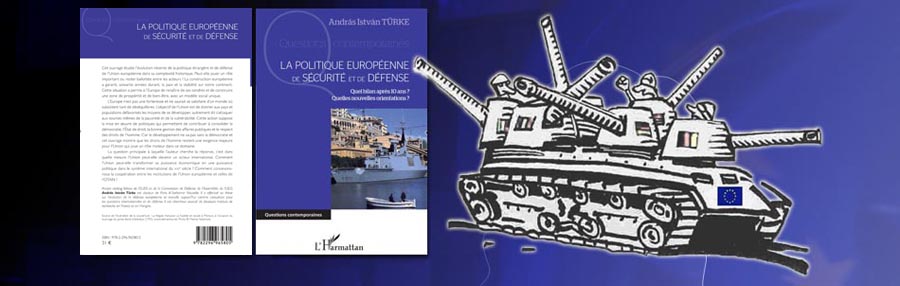
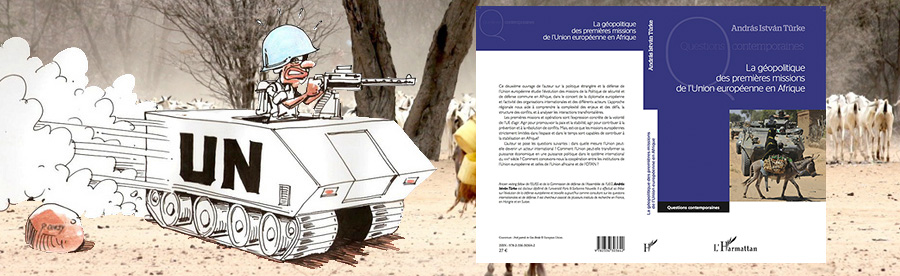
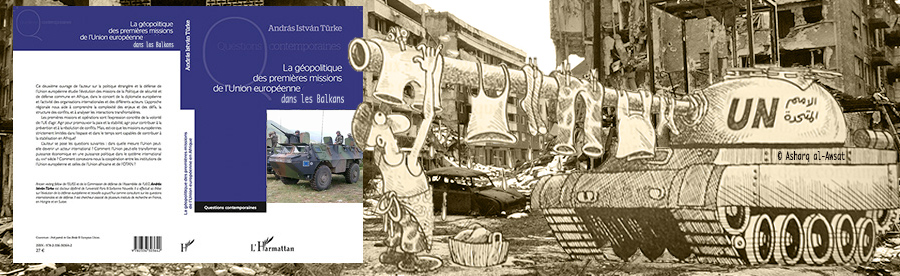
We are looking for sponsors for the English translation of these books, please contact turkeandras(at)gmail(dot)com