
You are here
Feed aggregator
HARVEST: Ministerial test for the fertiliser plan
In today's edition: agrifish, wildfires, Biotech Act
Categories: European Union
Grèce : à Athènes, les « Prosfygika », une communauté autogérée menacée d'expulsion
Les « Prosfygika », des blocs d'immeubles des années 1930 abritant une communauté autogérée sur l'avenue Alexandras d'Athènes, doivent être réhabilités par le gouvernement grec. Les 400 habitants sont menacés d'être expulsés.
- Articles / Courrier des Balkans, Migrants Balkans, Grèce, Populations, minorités et migrations
Categories: Balkans Occidentaux
La Suède devient le premier pays européen à se dire «sans tabac»
La Suède devient le premier pays européen à se dire « sans tabac ». Selon un rapport, publié lundi 25 mai par le Conseil suédois d’information sur l’alcool et les drogues, moins de 5% des Suédois fument quotidiennement. Un seuil symbolique fixé aussi par l’Organisation mondiale de la santé. Mais la réduction du tabagisme n’est pas totalement corrélée à une diminution de la consommation de nicotine.
Categories: European Union, Union européenne
MAGYAROK A BOEING 747-ESEN, 3/1 RÉSZ
A kétezres évek közepén, elsősorban a nemzeti légitársaságnál tapasztalt hangulat miatt már a fiatalabb, kisebb tapasztalattal rendelkező pilótageneráció is szétnézett a nagyvilágban, előrelépési lehetőség után kutatva. Hasonlóképpen gondolkodott Szentgyörgyi Dezső is, aki 2001 óta repült a Malév Boeing 737-es első tisztjeként. A lehetőségek között felbukkant a magyar pilóták által akkor már jól ismert Tajvan és a Boeing 747-es. Az ikonikus négyhajtóművesen repült magyarok sorát Szentgyörgyi Dezső történetével folytatom.
Az immár ötvenes évei elején járó, tapasztalt Airbus és Boeing pilótával 2022 tavaszán abból az alkalomból beszélgettem, hogy akkoriban csatlakozott a honvédség kecskeméti szállítórepülő századához, ahol A319-esen folytatta pályafutását. Akkor felidéztük a nemzeti légitársaságnál, két diszkont légitársaságnál, és egy közel-keleti cégnél eltöltött éveket illetve érintettük a Boeing 747-es első tisztként átélt élményeket is. Sorozatomba illesztve, most ez utóbbi időszakot tekintjük át részletesebben.
Categories: Biztonságpolitika, Swiss News
The spread of AI companions and the challenges they generate
Written by Mar Negreiro with Öykü Dilara Anaç
AI companions are chatbots powered by large language models (LLMs) designed for personalised, emotionally engaging interactions. The popularity of AI companion platforms, such as Character.AI and Replika, has grown rapidly in recent years. These systems interact in ways that closely resemble human relationships, allowing users to customise their companions and develop strong emotional attachments. While some of the challenges they pose overlap with those associated with generic AI chatbots, AI companions raise additional concerns.
Children are particularly vulnerable, with reports of exposure to sexualised conversations and prompts to engage in self-harm or suicide, highlighting the need for stronger safeguards. However, to date, few countries have put forward specific legislation for this.
The EU has no specific laws for AI companions, although existing legislative frameworks like the AI Act, the Digital Services Act and the General Data Protection Regulation may apply.
Read the complete briefing on ‘The spread of AI companions and the challenges they generate‘ in the Think Tank pages of the European Parliament.
Categories: Afrique, European Union
Moscou appelle à quitter Kiev avant des frappes, Washington dit rester prêt à servir de médiateur
La diplomatie russe a appelé lundi les ressortissants étrangers vivant à Kiev, dont les personnels diplomatiques, à quitter la capitale ukrainienne avant de nouveaux bombardements de l'armée russe.
Categories: European Union, Union européenne
ENTWURF EINER STELLUNGNAHME zu dem Bericht über den Vorschlag für eine Richtlinie des Rates zur Änderung der Richtlinie (EU) 2015/637 über Koordinierungs- und Kooperationsmaßnahmen zur Erleichterung des konsularischen Schutzes von nicht vertretenen...
ENTWURF EINER STELLUNGNAHME zu dem Bericht über den Vorschlag für eine Richtlinie des Rates zur Änderung der Richtlinie (EU) 2015/637 über Koordinierungs- und Kooperationsmaßnahmen zur Erleichterung des konsularischen Schutzes von nicht vertretenen Unionsbürgern in Drittländern und der Richtlinie (EU) 2019/997 zur Festlegung eines EU-Rückkehrausweises
Ausschuss für auswärtige Angelegenheiten
Nacho Sánchez Amor
Quelle : © Europäische Union, 2026 - EP
Ausschuss für auswärtige Angelegenheiten
Nacho Sánchez Amor
Quelle : © Europäische Union, 2026 - EP
Categories: Europäische Union, European Union
L'Union européenne s'inquiète des incursions de drones de plus en plus fréquentes dans les pays baltes
Selon la Commission européenne, les pays baltes sont confrontés à des attaques hybrides incessantes depuis le mois de mars. Les attaques ukrainiennes contre le territoire russe dans l’oblast de Saint-Pétersbourg, proche de la Finlande et des trois pays baltes, ont ravivé les inquiétudes des Européens quant à une extension du conflit.
Categories: European Union, Union européenne
Le Potentiel : « L’OMS serait-elle impuissante pour contenir la 17ème épidémie ? »
Revue de presse du 26 mai 2026
La progression de l'épidémie d'Ebola dans l’Est de la RDC et l'oral du ministre des Mines à l'Assemblée nationale font la Une des journaux parus ce mardi matin.
Categories: Afrique, European Union
Entre les États-Unis et l'Europe, la guerre de l'énergie passe par la Bosnie-Herzégovine
C'est à cause de pressions américains que le Haut représentant Christian Schmidt aurait démissionné. En cause, le gazoduc Southern Interconnection. Ce projet à 1,5 milliard de dollars est porté par une société appartenant à des proches de Donald Trump.
- Articles / Bosnie-Herzégovine, Economie, Questions européennes, Relations internationales, Énergie Balkans, USA Balkans, Courrier des Balkans
Categories: Balkans Occidentaux
Entre les États-Unis et l'Europe, la guerre de l'énergie passe par la Bosnie-Herzégovine
C'est à cause de pressions américains que le Haut représentant Christian Schmidt aurait démissionné. En cause, le gazoduc Southern Interconnection. Ce projet à 1,5 milliard de dollars est porté par une société appartenant à des proches de Donald Trump.
- Articles / Bosnie-Herzégovine, Economie, Questions européennes, Relations internationales, Énergie Balkans, USA Balkans, Courrier des Balkans
Categories: Afrique, Balkans Occidentaux
L'Europe de l'Ouest se prépare à une nouvelle journée de chaleur exceptionnelle pour un mois de mai
De l'Angleterre à l'Italie, une partie de l'Europe se prépare à vivre ce mardi une nouvelle journée de chaleur exceptionnelle pour un mois de mai, qui bouscule les habitudes sur un continent qui se réchauffe plus vite qu'ailleurs.
Categories: European Union, Union européenne
Merz’s Ukraine pitch looms over EU talks
Also, in Tuesday’s edition: EU budget, Iceland vote, EU staff, China tensions
Categories: European Union
Ebola : le Gouvernement débloque 20 millions USD pour la lutte contre l’épidémie
Le gouvernement congolais a débloqué la somme de 20 millions de dollars américains pour faire face à l’épidémie d’Ebola qui frappe la partie Est du pays. Le ministre de la Santé publique, Roger Kamba, a révélé cette information lundi 25 mai à Kinshasa, lors du briefing ministériel virtuel organisé par Africa Center for Disease Control and Prevention ( Africa CDC).
Categories: Afrique, European Union
How Italy’s mafia learnt to think small with EU cash
Criminals have learned a lesson from Brussels: if you want to survive, stay below the €150,000 line
Categories: European Union
Reykjavik redux: Iceland reopens EU debate
The polls, like the country, are split
Categories: European Union
Lithuania’s energy minister upbeat on EU energy infra budget
European cash for cross-border energy projects is typically whittled down in EU budget talks; this time could be different, Žygimantas Vaičiūnas says
Categories: European Union
AI standards move ahead as underlying rules delayed
Experts point to progress in much-delayed norms underpinning EU's high-risk AI rules
Categories: European Union
Etudiants étrangers : « La France gagne à ouvrir ses portes, elle perdra à les fermer »
Un collectif d’acteurs de l’enseignement supérieur et de parlementaires dénonce, dans une tribune au « Monde », les annonces gouvernementales sur les frais d’inscription appliqués aux étudiants internationaux extracommunautaires qui fragilisent, selon eux, vingt ans de politique d’accueil sans fournir d’alternative.
Categories: Afrique
The Iran war’s nuclear legacy
Two nuclear shifts were already underway. The Iran war is making both harder to reverse
Categories: European Union
Pages


© 2012-2018 Europa Varietas Foundation © 2015-2018 Europa Varietas Association
www.europavarietas.org | info(@)europavarietas(dot)org | Switzerland
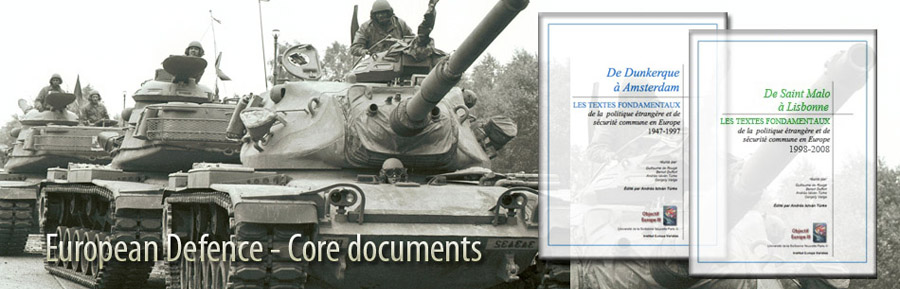
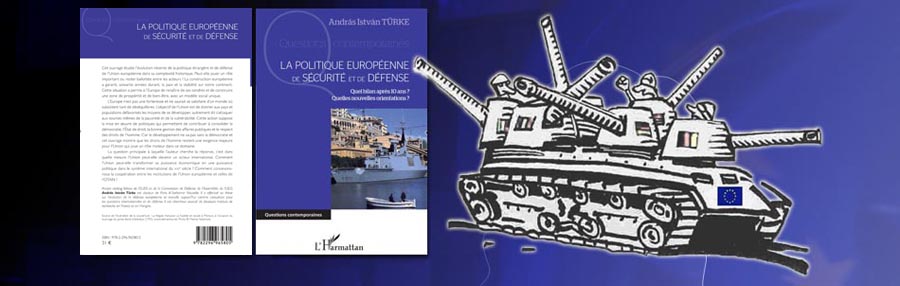
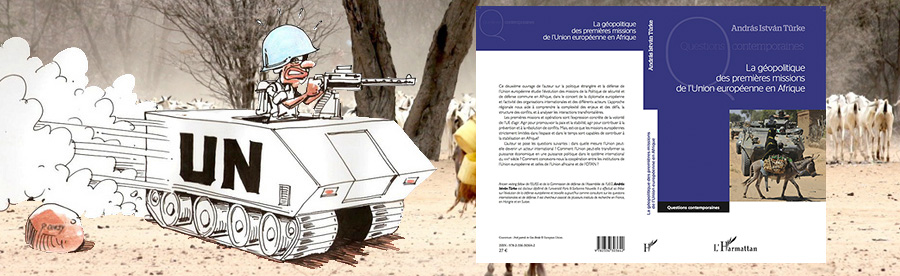
We are looking for sponsors for the English translation of these books, please contact turkeandras(at)gmail(dot)com