
You are here
Feed aggregator
La Pologne confirme son intention de commander plus de F-35 et pourrait aussi acquérir des F-15 Eagle II
En juin dernier, la Pologne a fait part de son intention de doubler sa flotte de chasseurs-bombardiers F-35A «Husarz» avec une commande de trente-deux appareils supplémentaires devant être passée auprès de Lockheed Martin au titre du programme de développement des forces armées polonaises [PRSZ] 2025-39. Ce plan a encore été confirmé par Paweł Bejda, le...
Cet article La Pologne confirme son intention de commander plus de F-35 et pourrait aussi acquérir des F-15 Eagle II est apparu en premier sur Zone Militaire.
Categories: Défense
Rentrée scolaire à Beni : les écoles renforcent la prévention contre Ebola, mais manquent de matériel
À quelques jours de la rentrée scolaire, les établissements de Beni, au Nord-Kivu, se préparent à accueillir les élèves dans un contexte marqué par la maladie à virus Ebola. Certaines écoles ont déjà installé des dispositifs de prévention, mais le matériel reste insuffisant dans plusieurs établissements.
Categories: Afrique
Claudia Kemfert: „Eine Grundgesetzänderung für Klimaanpassung ist überfällig“
Die SPD fordert, Klimaanpassung und Hitzeschutz im Grundgesetz zu verankern. Claudia Kemfert, Leiterin der Abteilung Energie, Verkehr, Umwelt im Deutschen Institut für Wirtschaftsforschung (DIW Berlin) ordnet den Vorstoß folgendermaßen ein:
Die Grundgesetzänderung für Klimaanpassung ist überfällig. Klimaanpassung ist keine freiwillige Schönwetteraufgabe, sondern elementare Daseinsvorsorge. Hitzewellen, Dürren, Starkregen und Hochwasser verursachen schon heute enorme gesundheitliche und wirtschaftliche Schäden, und die Kommunen stehen dabei an vorderster Front.
Deshalb brauchen wir endlich eine verlässliche gemeinsame Finanzierung von Bund und Ländern. Einzelne Förderprogramme und kurzfristige Hitzeschutzpakete reichen nicht. Klimaanpassung braucht Planungssicherheit: für mehr Stadtgrün und Verschattung, Entsiegelung, Wassermanagement, Hochwasserschutz und klimaresiliente Infrastruktur.
Wer heute bei der Vorsorge spart, zahlt morgen ein Vielfaches für die Schäden. Und klar ist auch: Anpassung ersetzt keinen Klimaschutz. Je stärker die Erderwärmung voranschreitet, desto schwieriger und teurer wird jede Anpassung. Wir brauchen deshalb beides: konsequenten Klimaschutz und eine dauerhaft finanzierte Klimaanpassung.
Categories: Diplomacy & Defense Think Tank News
Nagy a gond a szilágysági vízellátással
A varsolci tó telítettsége már alig éri el a 30 százalékot. Ez Szilágy megye fő ivóvízforrása, azonban a tavat tápláló vízfolyások kiszáradtak. A helyzet a Kraszna és a Berettyó medencéjében is nehéz, ott a kutak is elapadtak. A vízművek képviselői arra kérik a lakosságot, hogy a forrásokat kizárólag lakossági fogyasztásra használják. A megyeszékhely, Zilah, illetve […]
Articolul Nagy a gond a szilágysági vízellátással apare prima dată în Kolozsvári Rádió Románia.
Categories: Határon túli magyar portálok összesített hírei
Une arrière-grand-mère de 101 ans arrêtée au Nigéria pour vente de cannabis
Esther Ogunmabo est accusée d'avoir vendu des « sachets de détail » d'une variété de cannabis connue sous le nom de skunk.
Categories: Afrique
756 cas de choléra et 27 décès enregistrés depuis juin à Popokabaka (Kwango)
La zone de santé de Popokabaka, dans la province du Kwango, fait face à une recrudescence du choléra. Entre le 1er juin et le 24 août 2026, les services épidémiologiques de Médecins sans frontières (MSF) ont enregistré 756 cas et 27 décès. Ces chiffres ont été rendus publics lundi 24 août.
Categories: Afrique
La FEC salue la suppression des barrières illégales sur la RN1 dans le Grand Bandundu
Categories: Afrique
«C’est beaucoup plus beau que ce qu’on pensait»: en Pologne, le tourisme a le vent en poupe
L’an dernier, la Pologne a battu un record avec plus de 20 millions de touristes étrangers, ce qui en fait l’une des destinations de vacances montantes en Europe. Si le pays n’est pas la première destination qui vient à l’esprit quand on pense aux vacances d’été, il est pourtant devenu une destination de plus en plus prisée.
Categories: Union européenne
Everything You Always Wanted to Know About IR Grad School
Some straight talk for prospective students from a longtime professor.
Categories: Diplomacy & Crisis News
Allemagne : comment expliquer le nombre record de morts face à la canicule?
L'Allemagne a enregistré 14 000 décès liés à la vague de chaleur qui a touché le pays. Ce bilan extrêmement lourd pour l'Allemagne a été aggravé surtout durant la dernière semaine de juin, où deux tiers des décès estivaux liés à la chaleur ont été enregistrés. Pourquoi le pays a été plus touché que ses voisins européens ? Que compte mettre en place le pays pour mieux affronter les vagues de chaleur ?
Categories: Union européenne
Ukraine : pourquoi Volodymyr Zelenksy ne veut-il pas organiser d’élections?
« Je pense que dans une guerre comme celle-ci, des élections en tant que telles sont un risque énorme », a affirmé Volodymyr Zelensky, après l’appel lancé par l’ancien ministre de la Défense ukrainien d’organiser des élections présidentielles. Des élections sont-elles réellement impossibles comme l’affirme le président ukrainien ? Au contraire, les tensions récentes avec d’anciens collaborateurs, ne risquent-elles pas d’alimenter une division politique dont la Russie pourrait tirer profit ?
Categories: Union européenne
Un ancien ministre des finances décédé
Le Bénin a perdu, dans la nuit du lundi 24 août 2026, une personnalité ayant occupé plusieurs fonctions dans l'administration publique, le gouvernement, le Parlement et le secteur bancaire.
Grégoire Laourou, ancien ministre de l'Economie et des Finances et ancien député, est décédé dans la nuit du lundi 24 août 2026 à l'âge de 71 ans, après une longue maladie.
L'illustre défunt avait notamment dirigé la Direction générale du Budget avant son entrée au gouvernement. Il a été ministre des Finances et de l'Economie de 2002 à 2005 sous la présidence du feu général Mathieu Kérékou.
En janvier 2004, Grégoire Laourou devient président du Conseil des ministres de l'Union monétaire ouest-africaine (UMOA).
Elu député en 2007 puis en 2011, il s'est particulièrement illustré au Parlement dans le domaine budgétaire. Il a présidé la Commission des finances et des échanges de l'Assemblée nationale.
Après plusieurs années consacrées à la vie publique, Grégoire Laourou a poursuivi son parcours dans le secteur privé. En juillet 2019, il est nommé président du conseil d'administration de Société Générale Bénin.
Paix à l'âme de l'illustre disparu !
M. M.
Categories: Afrique
Découvrez les numéros tirés à 08 H ce mardi
DIGITAL 08H : Avez-vous tenté votre chance ?
Le tirage DIGITAL 08H N°237 a livré son verdict !
Mardi 25 août 2026
Avez-vous joué ?
Avez-vous misé sur vos numéros porte-bonheur ?
RÉSULTAT : 34 • 65 • 64 • 35 • 33
Félicitations aux heureux gagnants !
Pas encore cette fois ? Gardez le sourire.
Rendez-vous à 11H pour le prochain tirage.
Jouez dans les points de vente de la LNB ou : Tapez *590# ou rendez-vous sur lnbloto.bj
Jouez avec modération et responsabilité. Le jeu doit rester un plaisir.
Categories: Afrique
Un mort et des passagers enlevés lors d’attaques nocturnes à Rutshuru
Une personne a été tuée et plusieurs passagers ont été enlevés lors d’attaques menées dans la nuit du dimanche au lundi 24 août 2026 dans plusieurs localités des groupements Kisigari et Binza, dans le territoire de Rutshuru (Nord-Kivu), affirment les sources locales.
Les attaques, attribuées à des hommes armés non identifiés, ont provoqué une vive inquiétude au sein de la population.
Categories: Afrique
Colombia Declares State of Emergency Following Deadly Earthquake
Response in Colombia continues after the 7.4 earthquake. In Barrio Lleras, Buenaventura, more than 54 houses have been destroyed or are at risk of collapse. Credit: UNICEF
By Oritro Karim
UNITED NATIONS, Aug 25 2026 (IPS)
Over the past week, the humanitarian crisis in Colombia has deteriorated significantly following the Mw 7.4–7.5 earthquake that struck the Chocó department on August 10. With the Colombian government declaring a State of Emergency across 15 departments, the nation continues to struggle with massive civilian casualties, immense damage to critical infrastructure, and the disruption of basic services. The national government and the humanitarian community continue to coordinate lifesaving responses and monitor conditions as they evolve.
The latest figures from the International Federation of the Red Cross and Red Crescent Societies (IFRC) show that the earthquake and the following aftershocks affected the majority of Colombia’s municipalities, including both densely populated urban environments and rural areas. The Office for the Coordination of Humanitarian Affairs (OCHA) and El Equipo Humanitario País Colombia (EHP) estimate that roughly 282,700 people have been affected across 15 of the 32 departments, or roughly 153,300 households. As of August 24, there have been at least 329 fatalities.
Additionally, 4,548 people have been injured, 426 remain missing, and 356 have been rescued. IFRC has recorded over 134,342 damaged homes, while OCHA and EHP estimate that at least 31,400 homes have been completely destroyed. The earthquakes have decimated critical infrastructure in Colombia, with authorities reporting significant damage to educational facilities, health centers, water systems, and community spaces.
At least 3,443 educational facilities have been affected by the earthquake, with an additional 263 having partially or completely collapsed or projected to collapse imminently. Roughly 75,000 students have been stripped of access to safe education as a result. Furthermore, around 3,905 community centers have been impacted, significantly elevating the risks of psychosocial and developmental challenges for affected communities.
Local authorities have also underscored numerous disruptions to electricity, water supply, healthcare, and telecommunications over the several days, resulting in delays in comprehensive damage and needs assessments, while rendering numerous municipalities outside of humanitarian reach. According to IFRC, at least 413 roads have been damaged and five airports have been impacted.
“There’s communities that haven’t been accessed yet or have only been accessed once,” said Jean Philippe Antolin, the International Organization for Migration’s (IOM) Humanitarian Response and Recovery Specialist for Latin America and the Caribbean during a press briefing at the UN Headquarters on August 20.
“We must continue to provide blanket coverage of several items from shelter to food to health. Among those many most pressing urgent needs, I will say also the need for information. People need to know. People need to know whether the house is safe, structurally sound. From outside, some might not look affected, but if you go inside, you will see cracks everywhere. People are sleeping outside for fear of the roof collapsing over their heads.”
Entire communities are on the brink of collapse as delayed humanitarian responses continue to be exacerbated by pre-existing inequalities and vulnerabilities. Prior to the earthquake, roughly 7 million people in Colombia had been experiencing moderate to severe levels of food insecurity. The World Food Programme (WFP) notes that since the earthquake, approximately one-third of the population in Chocó and Valle del Cauca, two of the hardest-hit regions, are critically food insecure.
Additionally, widespread displacement and the disruption of community support networks have significantly amplified protection risks, with thousands of families across Colombia residing in overcrowded and unsanitary displacement shelters. The latest figures from the United Nations Population Fund (UNFPA) show that women and girls residing in these shelters are at a heightened risk of gender-based violence, while pregnant women have limited access to lifesaving maternal healthcare including antenatal care, emergency obstetric services, and effective referral mechanisms.
Communities in overcrowded displacement shelters are especially vulnerable to vector-borne diseases as heavy rains across Pereira, Buenaventura and Quibdó worsen living conditions. Antolin warned that the rise of dengue is of particular concern, with water contamination further increasing the risk of diarrheal and respiratory illnesses.
Furthermore, the Food and Agriculture Organization (FAO) stresses that the full impact on rural communities remains unclear, noting a “critical information gap” regarding damage to crop harvests, livestock, irrigation systems, and artisanal fishing. Because the systems are lifelines for riverine, rural, and coastal communities, the disruption risks breaking production cycles and leaving families with far fewer resources for the next season.
“Humanitarian partners say more housing options, including community shelters, temporary hotel stays, host families and rent support are needed for families whose homes were destroyed, badly damaged or no longer safe,” said Antolin. “Repair kits and household basics such as sleeping mats, bedding, cooking supplies and items for privacy will be essential to help people live safely and with dignity. Getting these supplies to the hardest-to-reach areas remains a major challenge. and most partners are working together to overcome it. There is also an urgent need to strengthen roofing, drainage and waterproofing in existing locations while continuing to register affected populations, whether in collective sites with host families or rental housing.”
In the wake of the earthquake in Colombia, the United Nations and its partners have been on the frontlines providing direct support to affected communities, including healthcare, protection services, and food and cash assistance. IOM has launched a USD 30 million USD appeal focusing on providing shelter, water and sanitation (WASH) services, and protection services, alongside investments in community recovery and risk communication.
WFP is positioned to expand its current distribution of food assistance from Pereira and Quibdó to other critically vulnerable localities, aiming to reach approximately 100,000 civilians. Meanwhile, UNFPA has been deploying humanitarian personnel in Chocó to provide support for survivors of gender-based violence and pregnant women, while also providing hygiene and maternal supplies. Concurrently, the United Nations Children’s Fund (UNICEF) is collaborating with national authorities to expand child protection systems.
IPS UN Bureau Report
Follow @IPSNewsUNBureau
!function(d,s,id){var js,fjs=d.getElementsByTagName(s)[0],p=/^http:/.test(d.location)?'http':'https';if(!d.getElementById(id)){js=d.createElement(s);js.id=id;js.src=p+'://platform.twitter.com/widgets.js';fjs.parentNode.insertBefore(js,fjs);}}(document, 'script', 'twitter-wjs');
Categories: Africa
Pakistan Passes Legislation to Formalize New Military Command Structure
It operationalizes structural changes that have been unfolding within the armed forces over the past year.
Categories: Diplomacy & Crisis News
Sept corps repêchés après la chute d’un minibus dans les eaux d’une mine abandonnée à Kakanda
Sept corps ont été repêchés dans les eaux de l’ancienne mine de Kabamba Nkola, abandonnée par l’entreprise Boss Mining, dans l’agglomération de Kakanda, au Lualaba. Six dépouilles ont été sorties de l’eau lundi 24 août, après celle du chef coutumier Kuvumbi, repêchée la veille, dimanche 23 août, indiquent des sources locales.
Categories: Afrique
Les Pays-Bas boycottent l'Eurovision sur fond de participation controversée d'Israël
Plus d'Eurovision pour les Néerlandais. Les Pays-Bas poursuivent dans la voie du boycott après une édition 2026 marquée par la participation toujours plus controversée d'Israël. Le diffuseur néerlandais met en doute « la fiabilité, et l'indépendance » de l'événement.
Categories: Union européenne
Plus de 100 hectares de cultures et des dizaines de maisons détruits par un incendie à Kasongo
Un incendie de brousse a ravagé plus de 100 hectares de plantations et détruit de nombreuses habitations dans le secteur de Basonge 1, territoire de Kasongo, au Maniema. Le sinistre, survenu il y a une semaine, a particulièrement touché le village de Mweho, situé à 35 kilomètres de Benya Samba.
L’alerte a été lancée lundi 24 août 2026 par l’administrateur du territoire de Kasongo, Nasibu Omari Mwanakasongo, qui indique que Mweho a été entièrement détruit par les flammes.
Des familles sans abri
Categories: Afrique
The future Global Development Agenda will have to be shouldered by Middle Powers
Niels Keijzer, Hyeyoung Woo & Jee Hee Yoon outline the potential ways middle powers may best organise to shoulder the global development agenda and the (quasi-) multilateral institutions could support them in this regard?
Categories: Diplomacy & Defense Think Tank News
Pages


© 2012-2018 Europa Varietas Foundation © 2015-2018 Europa Varietas Association
www.europavarietas.org | info(@)europavarietas(dot)org | Switzerland


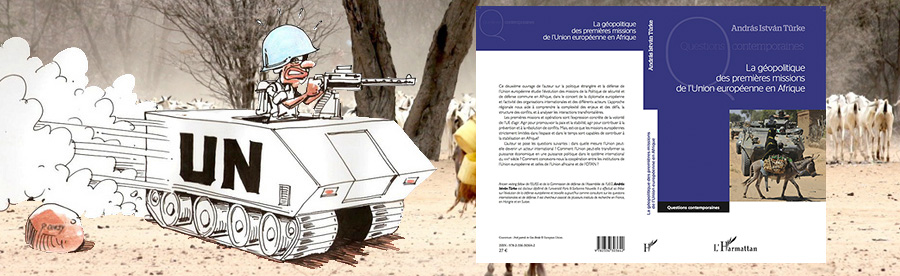
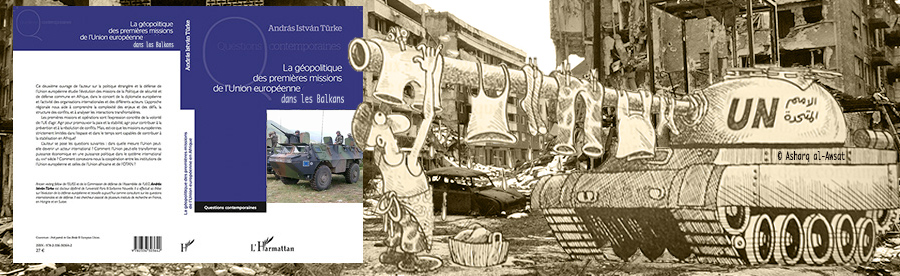
We are looking for sponsors for the English translation of these books, please contact turkeandras(at)gmail(dot)com