
You are here
Feed aggregator
USS Lassen Departs Eastport, Maine, Following Successful Port Visit
The Arleigh Burke-class guided-missile destroyer USS Lassen (DDG 82) departed Eastport, Maine, July 6, following a successful port visit to participate in the city's annual Fourth of July festivities.
Categories: Defence`s Feeds
USS Arlington arrives in Boston for Sail Boston 2026
The U.S. Navy announced the San Antonio-class amphibious transport dock USS Arlington (LPD 24) arrived in Boston Harbor to serve for the historic Sail Boston 2026 event. The ship's arrival marks the formal beginning of Sail Boston, commemorating the 250th anniversary of the United States.
Categories: Defence`s Feeds
USS Roosevelt (DDG 80) arrives in Türkiye
Arleigh Burke-class guided-missile destroyer USS Roosevelt (DDG 80) arrived in Mersin, Türkiye, for a scheduled port visit, July 10, 2026.
Categories: Defence`s Feeds
USS Jefferson City arrives at New Homeport in Pearl Harbor
Los Angeles-class fast-attack submarine USS Jefferson City (SSN 759) arrived at its new homeport of Joint Base Pearl Harbor-Hickam, July 9. Jefferson City joined Submarine Squadron 7 as its seventh fast-attack submarine.
Categories: Defence`s Feeds
Exercise Sea Breeze 26-2 Opens with Focus on Interoperability as a Combat Capability
Exercise Sea Breeze 26-2 kicked off in Portland, United Kingdom, today. Naval forces from Bulgaria, Denmark, Estonia, France, Georgia, Greece, Japan, Latvia, Poland, Spain, Sweden, Türkiye, NATO Maritime Allied Command (NATOMARCOM), Ukraine, the United Kingdom, and The United States are all participating.
Categories: Defence`s Feeds
NSPA supports redeployment of 1,400 British Troops from Exercise Rhino Storm
The NATO Support and Procurement Agency (NSPA) has successfully executed the return movement of 1,400 British troops from Germany to the UK, marking the completion of a landmark NATO logistical operation in support of Exercise Rhino Storm.
Categories: Defence`s Feeds
Indonesian Navy sends warship, elite troops to Russia for drills
The Indonesian Navy (TNI AL) has deployed a warship and elite special forces units to Vladivostok, Russia, to participate in the joint bilateral combat exercise, Orruda 2026, according to Antara.
Categories: Defence`s Feeds
State Department Launches Campaign to Dismantle International Criminal Court's Threat to American Sovereignty
"Today, Secretary of State Marco Rubio announced a sweeping campaign to dismantle the threat posed by the International Criminal Court to U.S. sovereignty. The campaign will feature a whole-of-government response to systematically disable the ICC's ability to operate, target American servicemen or officials, or otherwise threaten American sovereignty."
Categories: Defence`s Feeds
Today's top news: El Niño, Venezuela, Occupied Palestinian Territory, Ukraine
UN calls for urgent funding as El Niño threatens communities already in crisis
Categories: Defence`s Feeds
Afghans Under Pressure Again In New Pakistani Deportation Drive
Thousands of Afghan families, fearing an uncertain future, have begun pouring into Afghanistan amid a fresh push from Pakistan against what officials describe a "crackdown" on undocumented aliens.
Categories: Defence`s Feeds
Acting UN deputy relief chief tells Security Council regional tensions could deepen Yemen's crisis
Briefing to the Security Council on the humanitarian situation in Yemen by Indrika Ratwatte, Acting UN Assistant Secretary-General for Humanitarian Affairs, on behalf of Tom Fletcher, Under-Secretary-General for Humanitarian Affairs and Emergency Relief Coordinator
Categories: Defence`s Feeds
The United Kingdom condemns in the strongest terms today's Houthi attacks against Saudi Arabia: UK statement at the UN Security Council
Statement by Ambassador Kate Foster, UK Chargé d'Affaires to the UN, at the UN Security Council meeting on Yemen.
Categories: Defence`s Feeds
Meeting with Acting President of South Ossetia Marat Kambolov
Vladimir Putin received acting President of the Republic of South Ossetia Marat Kambolov at the Kremlin.
Categories: Defence`s Feeds
World News in Brief: Aid deliveries to Gaza restricted, UN prepares El Nino response, El Salvador eliminates disease
The UN World Food Programme (WFP) is calling for greater humanitarian access to Gaza, warning that restrictions on aid deliveries, ongoing violence and funding shortages are severely limiting its ability to reach people in need.
Categories: Defence`s Feeds
Determined to accelerate progress to peace: Statement of the co-chairs of the Coalition of the Willing
No description
Categories: Defence`s Feeds
Joint Declaration on the Establishment of the Integrated Anti-Ballistic Missile Coalition
No description
Categories: Defence`s Feeds
Presidents of Ukraine and France Coordinated Positions Ahead of Anti-Ballistic Program Presentation and Coalition of the Willing Meeting
No description
Categories: Defence`s Feeds
Ukraine received a new batch of mobile F-16 simulators to train more pilots
Ukraine has received a new batch of mobile F-16 simulators. Only a handful of these systems exist worldwide.
Categories: Defence`s Feeds
NATO Secretary General attends meeting of the Coalition of the Willing in Paris
On Monday (13 July 2026), NATO Secretary General Mark Rutte attended a meeting of the Coalition of the Willing in Paris. The meeting was co-chaired by the President of France Emmanuel Macron, the Prime Minister of the United Kingdom Sir Keir Starmer, together with German Chancellor Friedrich Merz. They were joined by the President of Ukraine Volodymyr Zelenskyy.
Categories: Defence`s Feeds
Coalition of the Willing Summit in Paris.
The President of the Republic co-chaired, along with the British Prime Minister and the German Chancellor, a summit of the Coalition of the Willing on Monday, July 13, 2026, at the Hôtel national des Invalides, attended notably by Ukrainian President Zelensky.
Categories: Defence`s Feeds
Pages


© 2012-2018 Europa Varietas Foundation © 2015-2018 Europa Varietas Association
www.europavarietas.org | info(@)europavarietas(dot)org | Switzerland


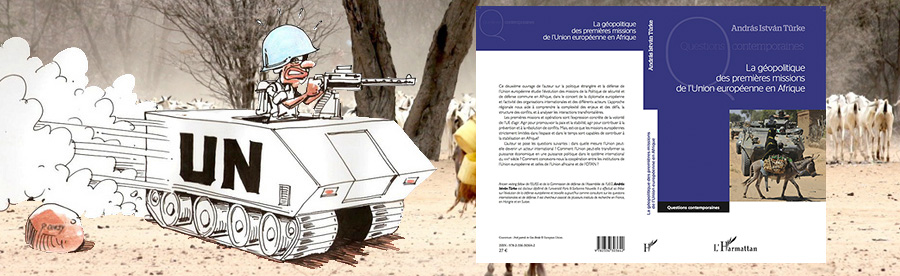

We are looking for sponsors for the English translation of these books, please contact turkeandras(at)gmail(dot)com