
You are here
Diplomacy & Crisis News
Trump Doesn’t Need to Be a Prop in Xi’s Political Show
Whether he means to or not, the U.S. president is feeding China’s active disinformation campaigns – especially on Taiwan.
Categories: Diplomacy & Crisis News
Is AUKUS Too Big to Fail?
The AUKUS partnership survived the Trump transition, and for Canberra it may be too big a deal to ever let fail.
Categories: Diplomacy & Crisis News
India’s Sheikh Hasina Dilemma
New Delhi’s difficult decision serves as a masterclass in how personal diplomacy can trap a major power.
Categories: Diplomacy & Crisis News
Options for the Royal Brunei Air Force’s Fast-jet Decision
One important mantra for the RBAirF: Don’t try to run before you can walk.
Categories: Diplomacy & Crisis News
Brazil Has No Answers for Its China Problem
The country’s troubling relationship to China is at the center of its presidential campaign.
Categories: Diplomacy & Crisis News, Nyugat-Balkán
Europe’s Read of the Trump-Xi Summit
Decisions taken in Washington and Beijing increasingly shape European trade, technology, energy, and security.
Categories: Diplomacy & Crisis News
Lee Asks Trump to Help Revive North Korea Talks During New York Trip
During a Lee-Trump meeting at the U.N. General Assembly, Seoul said the U.S. president reaffirmed his willingness to talk with North Korean leader Kim Jong Un.
Categories: Diplomacy & Crisis News
The Trump-Xi Summit Is Over, But Taiwan Is Still Bracing for the Fallout
Given what happened in May, Taiwanese may have been more nervous after the latest Trump-Xi summit ended.
Categories: Diplomacy & Crisis News
Why Pakistan Turned on the Taliban (and Vice Versa)
Why did Pakistan declare “an open war” against its one-time protégé?
Categories: Diplomacy & Crisis News
Indonesia Finally Has Its Aircraft Carrier. Now Comes the Hard Part.
Following a controversial acquisition, the most pressing question is whether and how Indonesia can convert the vessel into a viable military asset.
Categories: Diplomacy & Crisis News
China Conducts Military Exercise in South China Sea After Confrontation at Disputed Shoal
The "provisional understanding" between Beijing and Manila over the Philippine resupply of Second Thomas Shoal appears to have broken down.
Categories: Diplomacy & Crisis News
Rewiring the Arsenal of Democracy
America and its allies must scale together for a new era of war.
Categories: Diplomacy & Crisis News
Japan Is Giving the United States a Chance in Asia
But Washington risks missing out.
Categories: Diplomacy & Crisis News
The Islamabad Memorandum Returns to the Spotlight
For Pakistan, the coming days will test whether its mediation capacity can keep pace with a conflict that continues to expand in both geography and complexity.
Categories: Diplomacy & Crisis News
Another Lao Activist Vanishes in Thailand
Khieo Lapchanh is the latest Lao exile to fall victim to the growing authoritarian collaboration between the Mekong region's governments.
Categories: Diplomacy & Crisis News
Filipina Drug Trafficker Walks Free After Receiving Presidential Pardon
Mary Jane Veloso has always maintained her innocence, claiming that a relative tricked into carrying a large shipment of drugs.
Categories: Diplomacy & Crisis News
Kim Aris On the Campaign to Free Aung San Suu Kyi
As Myanmar's “parody democracy” seeks regional re-engagement, the whereabouts of the Nobel laureate remain a closely guarded secret.
Categories: Diplomacy & Crisis News
Ismat Ara on India’s Crackdown on Love
Ara explains the insidious harm of the “love jihad” myth: “A deeply personal decision, two people deciding to marry, gradually becomes something that others felt entitled to violently police.”
Categories: Diplomacy & Crisis News
Assam Government Encroaches Into a World Heritage Site in India’s Northeast
The encroached area is part of Manas National Park’s core tiger and Bengal florican habitats.
Categories: Diplomacy & Crisis News
Taïwan ou la grande bascule
Le sommet qui a réuni les présidents américain et chinois lors de la visite de M. Xi Jinping aux États-Unis, du 23 au 25 septembre, invite à mesurer un renversement géopolitique – et à s'interroger sur un autre. / Chine, Taïwan, Relations internationales, États-Unis (affaires extérieures), (…)
/ Chine, Taïwan, Relations internationales, États-Unis (affaires extérieures), États-Unis, Géopolitique
Categories: Diplomacy & Crisis News
Pages


© 2012-2018 Europa Varietas Foundation © 2015-2018 Europa Varietas Association
www.europavarietas.org | info(@)europavarietas(dot)org | Switzerland
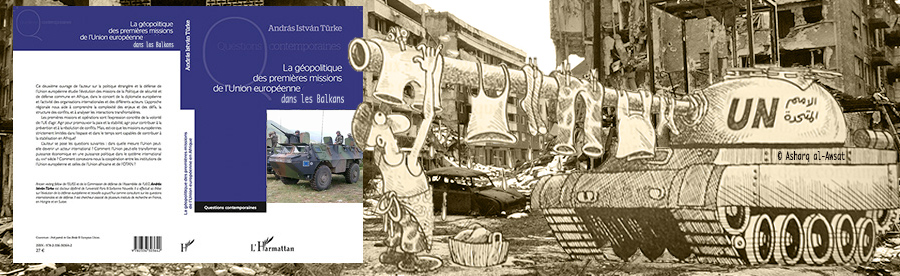
We are looking for sponsors for the English translation of these books, please contact turkeandras(at)gmail(dot)com