
You are here
Africa
From Resolution to Reality: Delivering Water and Sanitation for “The Africa We Want”
Clean drinking water runs from a tap in Senegal. Credit: UN Photo/Evan Schneider
The African Union has pronounced their theme for 2026 to be: ‘Assuring Sustainable Water Availability and Safe Sanitation Systems to Achieve the Goals of Agenda 2063’. In an opinion piece, AUC Chairperson, Mahmoud Ali Youssouf explores the continent's renewed commitment to protecting and managing its vital water resources.
By Mahmoud Ali Youssouf
ADDIS ABABA, Ethiopia, Apr 22 2026 (IPS)
When Africa’s Heads of State and Government gathered in Addis Ababa on 14 February 2026 for the African Union’s 39th Ordinary Session, they did more than adopt another resolution. They made a choice: to place at the centre of the agenda the most fundamental, life-sustaining and strategic resource our continent possesses: water.
The theme adopted by our leaders, “Assuring Sustainable Water Availability and Safe Sanitation Systems to Achieve the Goals of Agenda 2063,” is not a bureaucratic formality. It is a declaration of intent. It reflects a simple but profound truth: without water security, there can be no food security, no industrialization, no public health, and no lasting peace or prosperity.
The scale of the challenge we face remains stark. Across Africa, water scarcity and inadequate sanitation continue to undermine economic growth and human dignity. Waterborne diseases remain among the leading causes of death in many parts of the continent. Millions of Africans, disproportionately women and girls in rural communities, still walk long distances each day to collect water instead of attending school, pursuing livelihoods, or participating fully in the life of their communities.
This is not merely an inconvenience. It is an injustice. It is also a brake on the ambitions we have set for ourselves in Agenda 2063, Africa’s collective blueprint for inclusive growth, sustainable development and shared prosperity.
The year 2026 must therefore mark a turning point: the moment we move decisively from diagnosis to delivery.
The African Union Commission’s Department of Agriculture, Rural Development, Blue Economy and Sustainable Environment has been entrusted with advancing this agenda. Yet responsibility cannot rest with one department or with the Commission alone.
Achieving water security will require sustained collaboration among member states, regional organizations, civil society, the private sector and, critically, African communities themselves.
The urgency of this task is heightened by the accelerating climate crisis. Africa is already experiencing more frequent droughts and devastating floods. Changing rainfall patterns are shrinking rivers, lakes and reservoirs in some regions while unleashing destructive flooding in others.
These disruptions threaten the livelihoods of millions of Africans who depend on agriculture and pastoralism. Sustainable water management is therefore not only a development priority; it is a resilience imperative.
Water also reminds us that cooperation is not optional. Nearly 60 percent of Africa’s freshwater resources are shared across national borders. Rivers such as the Nile, the Niger, Congo, the Zambezi and the Volta link countries and communities in complex hydrological systems that transcend political boundaries.
These shared waters can become either sources of cooperation or sources of tension. The choice is ours. Strengthening collaborative frameworks for the equitable and sustainable management of transboundary water resources must be a priority for our continent. Water, after all, recognizes no borders.
Sanitation demands equal urgency. Safe sanitation is not a luxury; it is fundamental to human dignity, public health and economic productivity. Yet millions of Africans, particularly in rural communities and rapidly expanding urban settlements still lack access to even basic sanitation facilities. In the twenty-first century, this reality is unacceptable.
Addressing these challenges will require investment, innovation and political will. It will also require a shift in how we design and implement solutions. Sustainable progress cannot be imposed from above. Communities must be involved in planning, building and maintaining water and sanitation systems. Local ownership is essential if infrastructure is to endure and deliver real benefits.
The African Union is therefore developing a comprehensive implementation strategy to support the theme of the year. This strategy will promote innovative technologies for water purification and efficient resource management.
It will encourage stronger water governance and expand access to sanitation infrastructure. It will also prioritize the participation of youth, women and marginalized communities while facilitating the sharing of best practices across our continent.
Innovation, inclusion and cooperation must guide our collective efforts.
As I travel across Africa in my capacity as Chairperson of the African Union Commission, I am reminded repeatedly that water is not merely a matter of infrastructure or policy. It is about people.
It is about a mother who no longer fears losing her child to a preventable disease caused by contaminated water. It is about a girl who can remain in school because clean water flows in her village. It is about a farmer who can irrigate crops through dry seasons. It is about an entrepreneur whose business can grow because reliable water supply supports production.
These everyday transformations form the true foundation of Africa’s development.
The African Union’s theme for 2026 is therefore a clarion call for governments to prioritize water and sanitation in national development agendas. Because water touches every sector; agriculture, health, energy, industry and education — our response must be equally integrated.
African countries must strengthen cooperation, share expertise and mobilize resources to address common challenges. Regional economic communities and river basin organizations have a crucial role to play in supporting collaborative water governance. The African Union will continue to facilitate dialogue and partnerships that promote sustainable and equitable management of shared water resources.
But governments cannot act alone. Civil society organisations, the private sector, research institutions and development partners must also contribute their expertise and resources. Investments in water infrastructure, sanitation systems and climate-resilient water management are investments in Africa’s stability, prosperity and future.
The stakes could not be higher. By 2050, Africa’s population is projected to double, placing increasing pressure on water resources and infrastructure. Ensuring sustainable water access today will determine whether our growing cities thrive, whether our agriculture can feed our people, and whether our economies can realize their full potential.
This is why the African Union’s theme of the year is not simply a slogan. It is a continental commitment.
Together, we can ensure that every African has access to safe water and dignified sanitation. In doing so, we will not only protect lives and livelihoods; we will unlock the immense potential of sustainable development across our continent.
Ultimately, our success will not be measured by the eloquence of our declarations. It will be measured by the taps that flow, the sanitation systems that function and the millions of lives transformed.
Mahmoud Ali Youssouf is Chairperson of the African Union Commission.
Source: Africa Renewal, United Nations
IPS UN Bureau
Follow @IPSNewsUNBureau
!function(d,s,id){var js,fjs=d.getElementsByTagName(s)[0],p=/^http:/.test(d.location)?'http':'https';if(!d.getElementById(id)){js=d.createElement(s);js.id=id;js.src=p+'://platform.twitter.com/widgets.js';fjs.parentNode.insertBefore(js,fjs);}}(document, 'script', 'twitter-wjs');
Categories: Africa, European Union
The Stadium of the Disappeared – World Cup Should Kick Off Justice for Families
Mexico is co-hosting the 2026 World Cup even as the country has been shaken by a wave of cartel violence and revelations of mass graves. Credit: Shutterstock
By Juanita Goebertus and Delphine Starr
BOGOTÄ, Apr 22 2026 (IPS)
This week marks the six-week countdown to the opening game of the 2026 FIFA World Cup, which kicks off with a match between Mexico and South Africa on Thursday, June 11, at the Estadio Azteca in Mexico City.
Mexico is co-hosting the 2026 World Cup even as the country has been shaken by a wave of cartel violence and revelations of mass graves. In February, Jalisco New Generation Cartel, one of the country’s largest, retaliated after the government killed its longtime leader. The cartel established roadblocks, burned vehicles, and carried out other attacks across much of the country, including in Guadalajara, the capital of Jalisco state and one of three World Cup host cities in Mexico.
These scenes mark the latest escalation of ongoing violence. Four tournament games will be played at Guadalajara’s Akron Stadium. For the families of Mexico’s disappeared, the stadium holds little association with sports, fun, and cheering. Instead, the surrounding area has become synonymous with excavations, exhumations, mass graves, and the agony of not knowing where missing loved ones are.
Fans should know that in the very same state rushing to spend US$1.3 billion on highway reconstruction and hotel developments for the World Cup, mothers will continue digging in the dirt for their disappeared children
Civilian search collectives such as the Searching Warriors of Jalisco reported nearly two dozen clandestine graves last year, and recovered at least 500 bags containing human remains, all less than 20 kilometers from the stadium. In Las Agujas, a nearby plot of land, they found 270 bags.
These horrors are part of an ongoing national crisis that has devastated thousands of families in Mexico, where, according to an official registry, over 100,000 people are missing. And reported disappearances have increased more than 200 percent since 2015.
The state of Jalisco sits at the epicenter of the crisis, with a staggering 16,079 recorded disappearances as of March (this figure includes cases reported since 1952, although most are missing from 2006 onward). Experts say even this number may not reflect the true scale of the problem. The other two host cities — Mexico City and Monterrey — also have their own share of disappearances.
People are disappeared in Mexico for many reasons, often tied to organized crime. Criminal groups frequently use disappearances as a tool of control and intimidation. In Jalisco, the cartel’s forced recruitment of teenagers plays an important role. When families report disappearances, authorities often fail to investigate, Investigators and forensic technicians often lack the training and basic resources needed to do key parts of their jobs, like securing crime scenes, analyzing evidence, or identifying and storing human remains. Witnesses and victims are frequently terrified of retaliation for cooperating with investigations, and the authorities are unable or unwilling to effectively protect them.
Mexico’s government has also historically downplayed the scale of the crisis. During former president Andres Manuel López Obrador’s term, the number of people reported missing surpassed 100,000. He falsely claimed that the count had been “altered to attack the government,” prompting the top official searching for the disappeared to resign. López Obrador’s successor, President Claudia Sheinbaum, has rejected a UN inquiry over the disappearances and advanced legal changes that, relatives of some disappeared say, would weaken the search for the missing.
Many relatives of the victims feel justice will never come. Forensic work near Akron Stadium is incomplete; bags are still unprocessed and there is no comprehensive report on the total number of victims.
Most football fans visiting Guadalajara this summer will have no idea of the heavy history beneath its polished pedestrian walkways, modern stadium, and restaurants boasting artisanal tequilas. Fans should know that in the very same state rushing to spend US$1.3 billion on highway reconstruction and hotel developments for the World Cup, mothers will continue digging in the dirt for their disappeared children.
To start putting an end to their suffering, the Mexican government should use the World Cup and the world’s spotlight to strengthen its justice system so that people feel safe and at the same time the authorities can effectively search for the missing people. That would be a World Cup worth cheering for.
Juanita Goebertus is Americas director and Delphine Starr is an Editorial officer at Human Rights Watch.
Categories: Africa, European Union
'I cried so hard' - the Kenyan WNBA star who beat US visa heartbreak
Madina Okot only started playing basketball six years ago, but the Kenyan's rapid rise has seen her set a WNBA milestone at the age of 21.
Categories: Africa, Diplomacy & Crisis News
'I cried so hard' - the Kenyan WNBA star who beat US visa heartbreak
Madina Okot only started playing basketball six years ago, but the Kenyan's rapid rise has seen her set a WNBA milestone at the age of 21.
Categories: Africa, European Union
Iran’s Supreme Leader No Longer Reigns Supreme
Categories: Africa, Diplomacy & Defense Think Tank News
EU will respond to ‘stop killing games’ initiative in June
Video gamers' rights campaign had pulled in nearly 1.3 million signatures
Categories: Africa, European Union
VOLTAGE: Seven weeks in, get ready for the EU’s energy crisis plan
In today's edition: jet fuel shortage, Druzhba pipeline open, climate diplomacy
Categories: Africa, European Union
Brussels launches plan to ward off ‘world’s biggest energy crisis’
Focus on coordination as EU executive shies away from pushing teleworking or discouraging air travel
Categories: Africa, European Union
EXCLUSIVE: EU rolls back ambition in new single market plan
EU's 'sense of urgency' over single market is no longer 'unprecedented'
Categories: Africa, European Union
Ukraine to restart Russian oil pipeline to Europe ‘within a few hours’
The pipeline has created a standoff that pit Hungary and Slovakia against Ukraine and the European Union
Categories: Africa, European Union
The Ballot Box Illusion: How Authoritarians Repackaged the African Ballot
Credit: Zohra Bensemra/Reuters via Gallo Images
By Nwabueze Chibuzor and Mighulo Masaka
ABUJA, Nigeria / NAIROBI, Kenya, Apr 22 2026 (IPS)
In many countries across Africa, people have recently lined up to vote. But in country after country, there has been no real choice on offer. As CIVICUS’s 2026 State of Civil Society Report documents, what has frequently been on display is a procedural ceremony of democracy, orderly enough to satisfy observers, but hollow enough to leave those who hold the reins of power untroubled. Laws and structures that were supposed to promote democratic decisions have been manipulated into compliance checks, ticking all procedural requirements while lacking democratic substance. In too many cases, the ballot box has become a public relations exercise.
Tanzania offered a stark illustration. Once seen as one of the continent’s rising democratic hopes, it held one of the most deeply flawed recent elections. Ahead of the October 2025 vote, President Samia Suluhu Hassan disqualified and detained most opposition figures and imposed a nationwide internet blackout. When people protested, they were severely repressed. Security forces fired live ammunition, killing over 700 protesters, and arrested thousands. Around 240 people, including children, have since been charged with criminal conspiracy and treason.
Uganda’s President Yoweri Museveni, in power since 1986, followed the same script: the 2026 presidential election as marked by widespread rigging, suppression of the opposition, internet outages and a lethal crackdown on protests. These shows of force were also an admission of weakness: governments with genuine popular support do not need them to stay in office.
In Kenya, election outcomes have increasingly shifted from the ballot box to the courtroom and the streets. While legal challenges and judicial oversight can be signs of a healthy democracy, there’s been growing normalisation of post-election uncertainty about whether results will be respected, with the state framing any challenge to outcomes as a threat to national security and stability, and responding to post-election protests with violence.
Further north, Tunisia exemplifies the slow-motion dismantling of a once-promising democracy. Its 2024 presidential election saw the incumbent face only token opposition. President Kais Saied has systematically removed democratic checks and balances, jailed opponents and vilified critics as agents of foreign powers. The country that once kept the democratic promise alive in North Africa has become a cautionary example of how quickly gains can be reversed.
In West Africa, military rule is being normalised. Burkina Faso, Mali and Niger are now led by military juntas, while in Guinea a carefully stage-managed December 2025 election enabled the military leader to retain power with a varnish of legitimacy. Elections in Côte d’Ivoire in 2025 and Togo in 2024 fell far short of competitive standards.
Senegal offered a rare exception: when President Macky Sall attempted to postpone the 2024 presidential election just days before voting, widespread protests and sustained international pressure forced the polls to proceed. Opposition candidate Bassirou Diomaye Faye, released from jail only days before the vote, won a shock victory — proof that electoral integrity remains worth fighting for.
In Central Africa, military rulers have simply changed into civilian clothes. General Oligui Nguema, who ended the 56-year Bongo family dynasty in a 2023 coup, retained power in an April 2025 election marked by the absence of a credible opposition and the abuse of state resources, making the outcome a foregone conclusion. Chad’s Mahamat Déby followed the same path, transitioning from military council head to elected president through a vote held under severe civic space restrictions and minimal competition.
In October 2025, Cameroon’s Paul Biya, at 92 the world’s oldest head of state, extended his 42-year rule through a highly performative election. In both the Central African Republic and the Democratic Republic of the Congo, recent elections have been undermined by the state’s inability to control its territory amid ongoing conflicts, disenfranchising vast majorities and producing winners whose legitimacy is in permanent doubt.
Southern Africa offers a more encouraging picture. South Africa’s 2024 election ended almost three decades of unchallenged African National Congress dominance, with new political parties reshaping the landscape and forcing the formation of a coalition government. Elections in Botswana, Malawi and Namibia were competitive, with power changing hands for the first time since independence in Botswana. These results are a reminder that elections can still serve their democratic purpose.
The pattern across most of the continent is unmistakable. As civic space comes under intensifying attack, Africa’s citizens, institutions and international partners must resist the temptation to confuse orderly processes with democratic substance. Elections must offer genuine opportunities for accountability and be allowed to produce results that disrupt established power, if that is what voters want. Anything less risks normalising the appearance of democracy while hollowing out its content.
Chibuzor Nwabueze is the Programme and Network Coordinator of the Digital Democracy Initiative at CIVICUS.
Mighulo Masaka is the Project Officer, Host Liaison of the Digital Democracy Initiative, working closely with civil society in the global south for election-related activities.
Follow @IPSNewsUNBureau
!function(d,s,id){var js,fjs=d.getElementsByTagName(s)[0],p=/^http:/.test(d.location)?'http':'https';if(!d.getElementById(id)){js=d.createElement(s);js.id=id;js.src=p+'://platform.twitter.com/widgets.js';fjs.parentNode.insertBefore(js,fjs);}}(document, 'script', 'twitter-wjs');
Categories: Africa, European Union
Taiwan president cancels Eswatini trip after African countries close airspace
Taiwan has accused Beijing of putting pressure on African countries to close their airspace to Lai's plane.
Categories: Africa, European Union
UAE-backed Colombian mercenaries provided support to Sudan paramilitary, report says
The Conflict Insights Group (CIG) says its research also shows the extent of UAE involvement.
Categories: Africa, European Union
America Should Be Israel’s Partner, Not Its Patron
The pro-Israel case for ending U.S. aid
Categories: Africa, Diplomacy & Crisis News
Global Shipping Reforms Cast Shadow Over Tanzania’s Fishing Communities
At dawn, as the sun rises across the Indian Ocean, Venance Shayo perches on the edge of his boat, hauling in a net. The sea gently ripples under the breeze and the sound of revving engines. Barefoot, the 56-year-old pulls the net into the boat as flashes of silver pounce in the tightening mesh. For […]
Categories: Africa, European Union
No Bones Broken, No Crime Committed: Inside the Taliban’s New Rules on Violence Against Women
A woman sits in a public space in Kabul. Under new Taliban laws, a wife who visits her relatives without her husband's permission faces up to three months in prison. Credit: Learning Together.
By External Source
KABUL, Apr 21 2026 (IPS)
The Taliban have announced new laws that effectively legalise domestic violence against women and children. Afghanistan’s supreme leader, Mullah Hibatullah Akhundzada, signed a decree introducing a new criminal code in January. It contains three parts, ten chapters, and 119 articles that legalise violence, codify social inequality, and introduce punitive measures widely condemned as a return to slavery.
“The laws are yet another attack on women and they blatantly violate human rights,” says Mitra (name changed for privacy), a women’s rights activist based in Afghanistan.
The laws, which were leaked to the public by various organizations and media outlets, have left people, especially women, in shock. Yet they are unable to act or even raise their voices. Under the new code, opposing or speaking negatively about Taliban rule is considered a crime and can lead to criminal punishment.
According to Article 32 of the Taliban’s penal code, husbands have the right to physically discipline their wives and children. As long as no bones are broken and no visible bleeding occurs, man’s actions are not considered a crime and carry no criminal punishment.
Even if it is proved in court that violence inflicted on a woman has caused visible injuries or broken bones, the man faces a maximum sentence of only 15 days in prison.
This Taliban law has effectively legalized domestic violence and blocked women’s access to justice.
According to Article 32 of the Taliban’s penal code, husbands have the right to physically discipline their wives and children. As long as no bones are broken and no visible bleeding occurs, man’s actions are not considered a crime and carry no criminal punishment
According to Article 34 of the Taliban’s penal code, if a woman repeatedly visits her father’s home or relatives without her husband’s permission and does not return to her husband’s house, this is considered a crime for both the woman and her family members. The punishment can be up to three months in prison.
A husband has the right to violently assault his wife if she disobeys, according to the new law.
This Taliban decree forces women to remain in their homes under all circumstances, even in the face of threats and domestic violence. Women can no longer seek protection or shelter in their own family homes.
According to documents from the human rights organization Rawadari, the Taliban’s penal code, was signed into law by Mullah Hibatullah Akhundzada on January 7, 2026, and subsequently distributed to provincial judicial institutions for implementation.
The decrees issued by the Taliban are usually kept secret within their judicial institutions and communicated to the public only through mosques and community elders. The public learns of them only when the media and rights organization gain access and publish them.
Taliban rule has effectively divided Afghan society into four classes, with punishment for a crime determined not by the nature of the crime but by the offender’s social status. At the top are religious scholars, who receive advice and caution rather than criminal punishment.
Next comes the elite, which includes those in the ruling class, such as village elders and wealthy merchants. They are subject to a lighter punishment scale and usually avoid prison sentences, for example.
The middle class faces more severe punishment. At the bottom of the ladder is the lower class whose punishment can include public flogging and harsh prison terms.
The new law also employs a term referring to slaves as distinct from free people. Slavery was officially abolished in Afghanistan in 1923. Under the new code, treating people as slaves is back to normal practice. For example, a master has the legal right to discipline his subordinate and a husband his wife. It effectively dismantles the principle of equality before the law.
Mitra says these Taliban laws are a clear attack on women and violate all their human rights. By enforcing these rules, the Taliban have confined women to the four walls of their homes, forcing them to endure any kind of abuse in silence.
“What the Taliban have stated in Articles 32 and 34 makes your hair stand on end. The Taliban see women only as sexual objects. These laws legitimise all forms of violence against women, and they cannot even seek justice or take refuge in their father’s or brother’s home. In effect, this officially imprisons women under the full weight of domestic violence,” she says.
All these provisions were drafted without discussion and have come into force with little discussion and no public input. Their existence only became known when the human rights organization Rawadari obtained the laws and published them on its Pashtun language website. Soon after being signed, they were immediately sent to the provinces to be processed by Taliban-run courts.
As Maryam, a resident of Ragh District in Badakhshan, points out, once the Taliban’s laws are announced in mosques by the local mullahs, they are immediately enforced in districts and villages, and all cases are judged under those rules.
“Most people in our village are illiterate, and even those who are educated or know about women’s rights cannot say anything out of fear. If they even utter one word, the local people turn against them, and trouble follows. Women are forced to accept whatever their husbands say because they have no other choice,” she says.
Since the Taliban took control of Afghanistan, they have been issuing and enforcing decrees and laws that have consistently violated human rights, confining women to the four walls of their homes. But this time, they have gone further, granting legal legitimacy to all forms of violence against women.
Mitra is calling on all human rights organizations and the international community to stand against the Taliban’s actions and not allow them to drag women into a system of slavery from the early centuries. She warns that if the world does not stand with Afghan women, they will be pushed toward destruction and face a major humanitarian catastrophe.
Excerpt:
The author is an Afghanistan-based female journalist, trained with Finnish support before the Taliban take-over. Her identity is withheld for security reasons
Categories: Africa, European Union
Guinea Bissau's Djabi seriously injured in stabbing
Midtjylland midfielder Alamara Djabi is in a stable condition having been seriously injured in a stabbing in Denmark, his club says.
Categories: Africa, European Union
Neue Chancen ohne Vetorecht in der Außenpolitik
Nach dem Machtwechsel in Ungarn bietet sich in der EU eine neue Möglichkeit, das Einstimmigkeitsprinzip abzuschaffen. Regierungschef Viktor Orbán habe das Vetorecht missbraucht, sagt der Politologe Nicolai von Ondarza. Jetzt gebe es ein kurzes Momentum.
Categories: Africa, Diplomacy & Defense Think Tank News
Trump’s Apocalyptic Rhetoric Echoes Nuclear Annihilation
Injured civilians, having escaped the raging inferno, gathered on a pavement west of Miyuki-bashi in Hiroshima, Japan, at about 11 a.m. on 6 August 1945. Credit: UN Photo/Yoshito Matsushige
By Alon Ben-Meir
NEW YORK, Apr 21 2026 (IPS)
It is hard to exaggerate the dire implications of Trump’s April 7 post on Truth Social, stating that a civilization will die tonight, never to be brought back again,” if no deal is reached with Iran. Such a damning statement implies that he would use ‘weapons of mass destruction,’ i.e., nuclear, to execute his threat.
Obviously, he cannot destroy such a huge country and annihilate a population of 95 million with conventional weapons. Even though Trump was unlikely to carry out his threat, what he said was not taken lightly by either Iran or much of the international community.
International Outrage Over Trump’s Threat
Trump’s outrageous statement has drawn an extraordinary wave of condemnation, from Tehran to the Vatican to international rights bodies.
Amnesty International’s Secretary General denounced Trump’s screed as an “apocalyptic threat,” warning that his vow to end “a whole civilization” exposes “a staggering level of cruelty and disregard for human life” and should trigger urgent global action to prevent atrocity crimes.
Pope Leo XIV called the language “truly unacceptable,” and UK Prime Minister Starmer condemned Trump’s threat, stating that “they are not words I would use — ever use — because I come at this with our British values and principles.”
Together, these reactions, among many others, underscore that Trump’s rhetoric is not being treated as mere bombast, but a genocidal threat that shreds basic norms of international law.
Iranian Officials’ Reaction to Trump’s Statements
The Iranian Embassy in Pakistan mocked the idea that Trump could erase a culture that survived Alexander and the Mongols, insisting that civilizations “are not born over a night and will not die over a night.”
Trump’s vows to “bring [Iranians] back to the Stone Ages” and to let “a whole civilization…die” have, indeed, landed in Tehran not as an outburst. Iranian leaders are treating this language as an open admission of an intent to commit war crimes—and they are already treating it as a narrative of existential struggle with Washington.
In the hands of the Revolutionary Guard, the “Stone Age” threat becomes a propaganda gift: it is proof, they claim, that the United States does not merely oppose the regime, but dreams of erasing an entire people.
The IRGC’s response has been defiant rather than cowed, promising “stronger, wider, and more destructive” retaliation and signaling that any American escalation will be met in kind.
To be sure, many Iranian leaders see Trump’s posts as desperate brinkmanship—a schoolyard bully bluffing nuclear annihilation he cannot deliver. That interpretation may calm nerves around the country, but it might also tempt Tehran to call his bluff, raising the risk of miscalculation.
Under any circumstance, Trump has provided Iran’s rulers the opportunity to claim that any concession wrung from Washington under such apocalyptic pressure is not capitulation. Still, Iran’s millennium-old history attests that these proud people with the richest civilization will not succumb to any threat.
The Iranian Public’s Reaction
Trump’s promise to “hit Iran extremely hard” also operates as psychological warfare against an already exhausted society. They place the threat of physical destruction on top of years of sanctions, economic meltdown, and repression.
For many Iranians, especially parents and the elderly, hearing a US president casually warn that “a whole civilization will die tonight” converts abstract geopolitics into an intimate dread they can imagine and quantify: hospitals without power, children without food and water, people starving to death, and cities lying in ruins.
This deepens their anxiety, concerns, and a sense that they are being collectively punished for decisions made by a mad authoritarian whose genocidal tone hardens a defensive nationalism. Even the Iranians who despise the regime still view the threat as an assault on a 3,000-year-old culture. They would rally around the flag, as they see their own lives as expendable in a struggle where the alternative, as Trump himself spells out, is civilizational extinction.
On the Iranian street and in the diaspora, one hears echoes of Trump’s rhetoric triggering a volatile mix of fear, fury, and contempt that the regime can readily weaponize. For some Iranians, talk of a “civilization” dying reopens the psychic wounds of crippling sanctions and war, making American threats feel dreadfully real, not figurative.
For others, it’s an insufferable insult to an ancient culture that predates the United States by millennia, reinforcing national pride and engendering support even among critics of the clerics.
Trump’s Fitness to Command American Power
These Iranian reactions rebound into US politics because a president whose threats are interpreted abroad as genocidal, unhinged, or clearly insane is not projecting resolve but publicizing volatility and strategic incoherence.
This inevitably undermines deterrence and hands Iran both a recruitment tool and a pretext for escalation if they must.
On the home front, the perception of a man on the loose feeds directly into already fierce debates over Trump’s mental fitness to command American power—arming critics who argue that his apocalyptic language is not just morally repugnant but operationally unthinkable.
This led even some Republicans and national security conservatives to ask whether a commander in chief who casually talks of destroying a “civilization” and whose finger is on the nuclear button can be trusted with the judgment, discipline, and national security on which the US ultimately depends.
When a president of the United States threatens that a whole civilization will die, the world must listen—not because the threat is necessarily credible, but because it exposes the peril of letting unrestrained rhetoric shape global realities.
Trump’s words are not the tantrum of a man out of power; they echo a worldview that wields extinction as diplomacy and gambles civilization itself for theatrical dominance and projection of raw power.
Trump’s declaration that millions might perish is not merely the ravings of an unbalanced mind—it is a chilling testament to how easily words can imperil peace when uttered by one who commands the world’s most formidable military.
His invocation of civilizational death transcends political recklessness; it reveals a moral collapse that renders him ominously unfit to wield influence over American power and global order.
There seems to be no level of disgrace that Trump will not embrace. One day, he threatens to wipe out a whole civilization and exterminate 95 million Iranians; the next, he portrays himself in an AI-generated image as Jesus Christ-like savior healing the sick—a blasphemy that only Trump can commit, debasing the exalted and sublime values of Christianity only to feed his sick soul.
What was once dismissed as bluster must now be recognized for what it is—a warning that when dangerous mendacity meets bottomless ego, humanity itself becomes collateral. The world cannot allow a madman’s narrative to become the language of statecraft.
Dr. Alon Ben-Meir is a retired professor of international relations, most recently at the Center for Global Affairs at NYU. He taught courses on international negotiation and Middle Eastern studies.
IPS UN Bureau
Follow @IPSNewsUNBureau
!function(d,s,id){var js,fjs=d.getElementsByTagName(s)[0],p=/^http:/.test(d.location)?'http':'https';if(!d.getElementById(id)){js=d.createElement(s);js.id=id;js.src=p+'://platform.twitter.com/widgets.js';fjs.parentNode.insertBefore(js,fjs);}}(document, 'script', 'twitter-wjs');
Categories: Africa, European Union
Pages


© 2012-2018 Europa Varietas Foundation © 2015-2018 Europa Varietas Association
www.europavarietas.org | info(@)europavarietas(dot)org | Switzerland
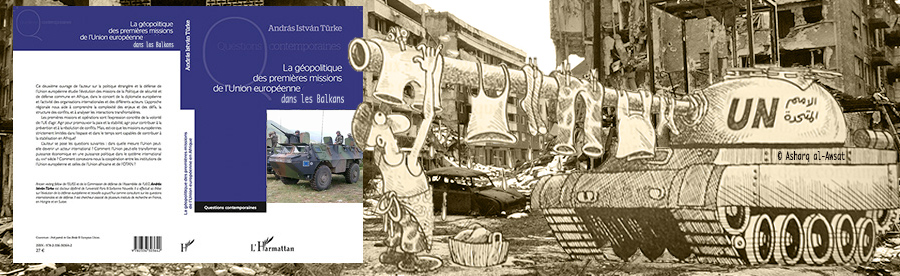
We are looking for sponsors for the English translation of these books, please contact turkeandras(at)gmail(dot)com