
You are here
European Union
EU cyber agency gets offer of Mythos AI access
Commission has spent weeks talking to US giant Anthropic about cyber model
Categories: European Union, France
EU health ministers set emergency talks on Ebola response
Italian leader Giorgia Meloni recently pressed for tighter travel restrictions
Categories: European Union, France
Plus de 40 perroquets gris remis en liberté à Dingi au Maniema
Plus de 40 perroquets gris préalablement réhabilités ont été relâchés dans leur habitat naturel dimanche 31 mai à Dingi, dans la province du Maniema. Cette opération s’inscrit dans le cadre de la lutte contre le trafic illicite de ces espèces totalement protégées, menée par la fondation Lukuru en partenariat avec l’Institut congolais pour la conservation de la nature (ICCN).
Categories: Afrique, European Union
Macron announces 93 bn euros in ‘Choose France’ investments
Money already pledged would surpass the combined 87 billion euros raised
Categories: European Union, France
EU preps industrial strategy to build AI servers for data centres
The Commission is eyeing a fully sovereign hardware stack for its AI gigafactories
Categories: European Union, France
Afghan Women Complete Medical Studies but Are Barred From Practicing
A hospital in Kabul. Afghanistan faces an already dire shortage of female doctors as women medical graduates remain barred from taking the final exam required to practice medicine. Credti: Learning Together.
By External Source
KABUL, Jun 1 2026 (IPS)
While Afghanistan faces a serious shortage of female doctors, the country’s Islamist regime has placed restrictions on female students from graduating, further exacerbating the situation. Female medical graduates are barred from writing their final exams, which provide them with the professional qualification to practice as medical doctors.
Nilab (name changed) from Afghanistan, graduated as a doctor three years ago from Al-Birun University in Parwan province. She has not been able to practice her profession because the Taliban have banned women from taking the final medical exam.
The final exam is an assessment that aims to measure the competence of medical graduates. It is conducted after seven years of study. Once the exam is passed, the graduate is granted a license to practice medicine. Those who have received the license can also apply for specialization training at teaching hospitals.
“If a doctor does not pass the required final exam, the situation is the same as if they were a student who had just finished high school. When applying for a job at any health center, the first question is: ‘Have you taken the final exam?’ Without it, you cannot work in any hospital, not even as a nurse,” says Nilab.
The final exam was last held for women in 2021. Since then, only men have been allowed to take the exam. The situation is exacerbating Afghanistan’s already dire shortage of female doctors
“I studied for 19 years. Of that time, I lived in a dormitory in another province for seven years, far from my family. It was a difficult time. In the final stage, only one exam, the final exam, has stopped all my progress. Now my future has been taken away from me.”
The final exam was last held for women in 2021. Since then, only men have been allowed to take the exam. The situation is exacerbating Afghanistan’s already dire shortage of female doctors.
Nilab lives with her mother in Kabul, and her family has seven siblings: four girls and three boys.
Two of her sisters and two brothers have also graduated from university, but their futures are uncertain.
Her younger sister scored one of the highest in the national university entrance exam and was accepted to study medicine, but she was unable to complete her studies. Another of Nilab’s brothers graduated in Russian literature but is unemployed.
The family’s only income comes from her mother and one of her siblings, a doctor named Khalida (name changed), who both work as teachers for primary school girls in a public school. With their meager salaries, they shoulder the financial burden of the entire family.
Nilab has tried to earn a living through other means. Until recently, women were allowed to study in non-university health schools.
“Despite all the challenges, I worked as a teacher in a two-year medical school. However, in January 2025, I also lost that opportunity when the Taliban closed medical schools,” Nilab says.
The years of education wasted have caused her a heavy psychological burden, stress and anxiety.
“We have seen how many young women have taken their lives in recent years. Young women’s trust in government, justice and human rights has plummeted to zero. When women’s voices are silenced and they remain imprisoned within us, it becomes unbearable pain. The pain wears us down, it becomes an unhealing wound,” she describes.
The Taliban’s decision has affected all female final-year medical students who completed their studies in 2022 and beyond. There is now a shortage of women in internal medicine, dentistry, surgery, cardiology, and even obstetrics and gynecology.
Khalida graduated from a private medical university in Kabul in 2022.
A street in Kabul, where restrictions on women’s education and employment are deepening Afghanistan’s health crisis. Credit: Learning Together.
“Our lives have been completely destroyed by not being able to take the final exam. The future we once dreamed of is gone. We worked hard for this future, which included 12 years of school, a year of preparing for the university entrance exam, and seven years at the university, but all that work has now been lost.”
After graduating, Khalida worked for a while in a few private hospitals without pay to gain experience in the field. At the same time, she specialized in ultrasound examinations. However, the final exam or the exam required for specialization was not organized, and she was eventually forced to stay home.
Sometimes, female doctors are forced to do jobs that are not in line with their training and are very poorly paid.
“I also worked for a while in a hospital distributing nutritional supplements to malnourished patients. However, this is a job that even a high school graduate can do. We are doctors who studied medicine for seven years, and we should serve women in the fields related to our profession.”
Khalida is currently studying English outside of university, hoping to pass the national English proficiency test so that she can get a scholarship and continue her studies abroad. She says that 19 years of studying in Afghanistan have not allowed her to alleviate the suffering of others or herself. She still depends on her family’s financial support. Without it, she fears that she will be forced to stay inside the four walls of her home.
As a result of the Taliban’s numerous restrictions on women, many have lost interest in their own lives. Some have lost faith in marriage, while others have been forced into marriage.
“I am single and have no desire to get married in Afghanistan under the current circumstances. I do not want to allow society to have a new generation that is even more unhappy than my own,” says Khalida.
UN experts have warned that restrictions on women’s education and employment in Afghanistan are deepening the country’s health crisis, particularly by reducing the number of female doctors and other female health professionals who could treat women.
“We female doctors are unable to serve the women of our society despite our years of education. Instead, we have become a burden on our families. There is nothing more difficult for an educated woman than this. We suffer simply because we are women living under Taliban rule,” says Khalida.
Excerpt:
The author is an Afghanistan-based female journalist, trained with Finnish support before the Taliban take-over. Her identity is withheld for security reasons
Categories: Africa, European Union
The 28th regime – How do Parliament and the Commission align?
Written by Clare Ferguson with Áine Feeney.
Parliament has been engaging in preparatory work on the 28th regime, debating and adopting a legislative-initiative report from the Committee on Legal Affairs (JURI) during the January 2026 plenary session. The JURI report recommended allowing national limited liability companies to register as ‘Societas Europaea Unificata (S.EU) to allow automatic recognition in all Member States. However, the report also recommended implementing safeguards to ensure that the regime does not undermine labour and social laws.
The Commission’s March 2026 proposal for a regulation establishing the 28th regime corporate legal framework would allow for quick, digital registration that is automatically valid across the EU. It would also provide for a single tax treatment of employee remuneration and a framework for winding up companies. While Parliament’s resolution supports the approach, it remains cautious about the proposal’s chances of success.
Overall, the objectives of the 28th regime as defined by the Commission and the Parliament are well aligned, as both institutions believe the regime should support the EU’s competitiveness, harmonise the single market and modernise the business environment. However, there are some key differences; EPRS conducted a comparative assessment of the Commission’s proposal for a 28th regime corporate legal framework and Parliament’s legislative-initiative resolution, identifying limitations in six areas of the Commission’s proposal, which include:
- Harmonised legal form;
- Registration and exit;
- Closure of companies;
- Attracting talent;
- Governance and safeguards;
- Dispute resolution.
The EPRS assessment found that the Commission proposal could have an impact on the generation of European added value, with particular reference to three of the identified shortcomings. Firstly, the scope of eligible companies is broad, without ensuring a clear and consistent definition. Secondly, the proposed ‘dual-track’ system could vary across Member States, reducing legal certainty for investors and restricting possibilities for cross-border scale-up of innovative companies. Finally, there is a lack of measures to establish a specialised dispute resolution mechanism.
Ultimately, the Commission proposal focuses on company law and operations while Parliament takes a broader view, considering the need to support the entire ecosystem around innovative companies, including labour law, investment, and cross-border scale up.
The 28th regime is a key measure in the European Commission’s 2025 competitiveness compass; an economic framework which aims to close the innovation gap, decarbonise the economy and reduce foreign dependencies. The need for such a comprehensive legal framework was highlighted by the 2024 Letta and Draghi reports. Its objective is to create a uniform set of rules for companies applicable across the EU, simplifying the legal framework to facilitate the competitiveness of businesses and start-ups operating in the single market.
The Commission envisages that it should be possible to establish a company under the 28th regime within 48 hours, which EPRS predicts could lead to an increase in venture capital invested in European companies of about €445 billion, thus supporting the potential of European start-ups to grow and scale-up in Europe.
Links to EPRS publications:
- The 28th regime
- A competitiveness compass for the EU
- Scaling up European Innovation
- The 28th regime: A new legal framework for innovative companies
- Deepening the single market in the light of the Letta and Draghi reports
- The 28th regime corporate legal framework
- Comparing EU institutions’ positions on a new legal framework for innovative companies
Categories: European Union
André Santini, le maire bâtisseur, est mort
DISPARITION - Édile d’Issy-les-Moulineaux depuis 1980, connu pour ses bons mots mais avant tout entièrement consacré à une ville qu’il a transformée, André Santini est décédé à l’âge de 85 ans.
Categories: European Union, France
Guillaume Tabard : «Violences après la victoire du PSG, faux responsables et vrais coupables»
CONTRE-POINT - Plusieurs voix ont redouté que le spectacle de la violence relayé sur les écrans ne produise du vote Rassemblement national. Comme si le vrai danger était le comportement électoral de citoyens français plus que le comportement délictueux des voyous.
Categories: European Union, France
Missions - AFET Mission to South Africa - 25-27 May 2026 - 25-05-2026 - Committee on Foreign Affairs
From 25 to 27 May, a delegation of the Committee on Foreign Affairs (AFET) of six MEPs led by the Committee Chair David McAllister (EPP, Germany) visited Cape Town, Pretoria, and Johannesburg, South Africa.
The delegation met South African political leaders and partners to discuss deepening EU-South Africa cooperation. Key topics included international relations in a changing geopolitical landscape, security, political ties, and the Global Gateway, the EU's strategy for global infrastructure investment.
Press release
Source : © European Union, 2026 - EP
The delegation met South African political leaders and partners to discuss deepening EU-South Africa cooperation. Key topics included international relations in a changing geopolitical landscape, security, political ties, and the Global Gateway, the EU's strategy for global infrastructure investment.
Press release
Source : © European Union, 2026 - EP
Categories: Afrique, European Union
Reconnaissance faciale, fan-zones ou limitation de la vente de mortiers : les propositions des politiques pour en finir avec les violences d’après match
Alors que les interpellations ont augmenté de 30% sur un an depuis la victoire du PSG en Ligue des Champions en 2025, la classe politique réfléchit aux moyens de juguler la violence qui accompagne désormais ce genre d’évènement.
Categories: European Union, France
André Santini, maire d’Issy-les-Moulineaux depuis 1980, est mort
Le plus ancien maire des Hauts-de-Seine est décédé dans la nuit de dimanche à lundi, après plus de quarante ans à la tête de sa commune.
Categories: European Union, France
Delegates Push for Greater Accountability, Community Inclusion as GEF Crosses Major Environmental Milestones
Noemi Hernandez Rodriguez Borjas at the first of the 71st GEF Council Meeting. Credit: IISD/ENB/Danny Skilton
By Kizito Makoye
SAMARKAND, Uzbekistan, Jun 1 2026 (IPS)
While the Global Environment Facility (GEF) said its eighth replenishment cycle (GEF-8) was about to exceed environmental targets for biodiversity protection, marine conservation, ecosystem restoration, and reducing greenhouse gas emissions, governments and civil society groups called for stronger safeguards to ensure that local communities, Indigenous Peoples, and smaller implementing agencies are not left behind as funding mechanisms become more complex.
The 71st GEF Council Meeting is taking place at the Congress Center in the ancient city of Samarkand, Uzbekistan.
Amid the optimism, delegates cautioned that billions of dollars flowing into efforts to restore forests, protect oceans and combat climate change must also deliver accountability and earn the trust of the communities whose livelihoods are affected.
The delegates endorsed the final work programme under GEF-8, which is expected to bring overall programming to 97 percent of available resources before the four-year cycle ends.
Officials described the programme as politically significant, marking it as the final package of projects before negotiations on the ninth replenishment cycle (GEF-9), which will guide billions of dollars in environmental financing over the coming years.
“We see good progress, and we know that programming is anticipated to be 97 percent by the end of the GEF-8 cycle,” Dr Dawda Badgie, a council member from The Gambia, said, noting that several environmental indicators had surpassed their targets.
Fred Boltz, the GEF’s Head of Programming, said resources across most funding windows would be fully committed by the end of the current four-year cycle.
“In all focal areas, integrated programmes, blended finance, the small grants programme and efforts by indigenous peoples and local communities will yield extraordinary results from GEF-8 investment, achieving or greatly surpassing six of ten GEF-8 outcome targets,” Boltz told delegates.
According to GEF officials, investments under GEF-8 are expected to place well over hundreds of millions of hectares of land and sea under improved biodiversity management, restore more than 10 million hectares of ecosystems, improve management of 59 transboundary water systems and benefit more than 32 million people worldwide.
Boltz said climate investments alone are expected to deliver more than 2.2 billion metric tonnes of greenhouse gas emissions reductions, while marine conservation efforts will contribute to the creation or improved management of more than 1.9 billion hectares of marine protected areas – equivalent to more than five percent of the world’s oceans.
He said targets related to marine protected areas, ecosystem restoration, emissions reductions, shared water ecosystems and sustainable fisheries management are expected to be significantly exceeded by the end of the cycle.
Among the highlighted initiatives was a conservation financing mechanism in Madagascar that combines blended finance resources with climate adaptation funding to support an outcome-payment bond for biodiversity conservation, including the protection of the island’s iconic lemurs.
Boltz said land degradation funding would also be fully utilised, helping restore more than 10 million hectares of land and ecosystems worldwide.
Key projects include support for the Great Green Wall initiative across the Sahel and a water-land management programme in Central Asia covering two river basins that support about 80 percent of the population in Kazakhstan, Kyrgyzstan, Tajikistan, Turkmenistan and Uzbekistan.
The chemicals and waste portfolio, expected to reach 95 percent utilisation, is projected to eliminate more than 260,000 metric tonnes of hazardous chemicals and waste through programmes reducing pollution and promoting cleaner industrial production.
One initiative seeks to eliminate mercury use in the non-ferrous metals sector, including copper and aluminium production, industries experiencing growth due to increasing demand from electric vehicles and renewable energy technologies.
The international waters portfolio is expected to be 99 percent committed by the end of GEF-8.
The fund is supporting implementation of the Biodiversity Beyond National Jurisdiction (BBNJ) agreement in more than 60 countries and has helped improve management of 59 shared water systems globally.
Blended finance resources under GEF-8 are expected to be fully deployed, supporting initiatives such as debt-for-nature swaps in Latin America and the Caribbean and renewable energy investments in small island states.
“The Latin America and Caribbean Debt for Nature Conversion Facility helps countries address debt burdens and support biodiversity conservation at the same time,” he said.
The GEF’s Small Grants Programme, which supports conservation efforts at the community level, is also expected to fully use its allocation.
Boltz said local civil society organisations would help place nearly seven million hectares of landscapes and 300,000 hectares of marine habitats under improved management practices, benefiting around 870,000 people, half of whom are women.
“He added that support for Indigenous Peoples and Local Communities (IPLCs) would expand under GEF-9.”
It is expected that the GEF will announce support for 10 Indigenous-led initiatives, including 5 Indigenous-led funds, by the end of 2026.
The fund has invested in youth leadership through the 10-million-dollar Fonseca Leadership Programme, which has supported 250 fellows from 52 countries, 42 percent of whom are young women.
Mohamed Bakarr, who oversees the GEF’s integrated programmes, said that all 11 integrated initiatives approved under GEF-8 were fully programmed.
Together, they deploy USD 1.65 billion in GEF resources and mobilise an additional USD 11.2 billion in co-financing across 98 countries.
“The integrated programmes mobilise 45 percent more co-financing per project on average,” Bakarr said, adding that governments were contributing significantly higher shares of funding than in previous replenishment cycles.
The June 2026 work programme includes 16 projects requiring USD 129.5 million in GEF financing and US$11.9 million in agency fees, for a total allocation of USD 141.3 million.
The projects are expected to leverage USD 828 million in co-financing, resulting in a co-financing ratio of 6.4 to one.
The work programme will support environmental initiatives in more than 19 countries, including seven least-developed countries and four small island developing states.
Delegates hailed a renewable energy initiative in Uzbekistan, which they expect will mobilise more than USD 1 billion in private investment.
Japan’s representative, Yoko Yamoto, described the project as an icon for GEF presence in Central Asia.
“We welcome the development of the NGI project in Uzbekistan, the host country for this session, and especially raising the GEF’s presence in Central Asia,” Yamoto said.
However, the same project attracted criticism.
Representing the GEF Civil Society Organisation Network, Sagar Aryal argued that civil society organisations and affected communities had not been consulted during the project’s design phase.
The criticism reflected broader concerns that GEF’s financial instruments may advance faster than mechanisms designed to ensure transparency, accountability, and community participation.
“The Stakeholder Engagement Plan is promised only before CEO endorsement, not before this Council takes a decision today,” Aryal said. “As GEF scales up blended finance, this question matters more, not less. We ask that community engagement and consultations be required before Council approval and not deferred after it.”
Civil society groups also praised greater support for community-led conservation.
Aryal highlighted continued support for the Critical Ecosystem Partnership Fund and a new Global Flyways Grant Mechanism focused on the East Asian-Australasian Flyway.
“Together, these two projects represent close to 20% of this work programme going to or directly through civil society,” he said. “This is the highest share we have seen… it shows what is possible.”
“As GEF-9 begins, we ask, can this be the floor and not the ceiling?” he added.
Delegates also criticised the concentration of projects among implementing agencies, noting that almost two-thirds of projects were submitted by just Conservation International and the United Nations Development Programme (UNDP).
In response to the criticism, Boltz affirmed that, despite the concerns, overall allocations stayed within limits.
“UNDP share presently is at 29.8 percent for GEF-8 overall,” he said, noting that medium-sized projects and enabling activities involving other agencies would help improve diversification.
The Secretariat also defended the programme’s performance, stating that GEF8 was on track to meet or exceed several core environmental targets.
Boltz said six of ten core indicators were on track and that terrestrial and marine conservation areas supported under GEF-8 had surpassed 2 billion hectares, up from 1.5 billion hectares in GEF-7.
As the meeting moved toward endorsing the final work programme, consensus emerged that GEF-8 is ending as one of the institution’s most successful replenishment cycles in environmental results, programming and co-financing. But delegates said success alone would not shield the institution from growing demands for greater inclusion, transparency and institutional diversity.
Note: The Eighth Global Environment Facility Assembly is underway until June 6, 2026, in Samarkand, Uzbekistan.
This feature is published with the support of the GEF. IPS is solely responsible for the editorial content, and it does not necessarily reflect the views of the GEF.
IPS UN Bureau Report
Follow @IPSNewsUNBureau
!function(d,s,id){var js,fjs=d.getElementsByTagName(s)[0],p=/^http:/.test(d.location)?'http':'https';if(!d.getElementById(id)){js=d.createElement(s);js.id=id;js.src=p+'://platform.twitter.com/widgets.js';fjs.parentNode.insertBefore(js,fjs);}}(document, 'script', 'twitter-wjs');
Related Articles
Categories: Africa, European Union
Africa’s Water is its Future. Who will Govern it?
Credit: Adobe stock. Source Africa Renewal, United Nations
By Cristina Duarte
UNITED NATIONS, Jun 1 2026 (IPS)
Africa holds 9 per cent of global renewable freshwater, over 600 gigawatts of untapped hydropower potential, and between 60 and 65 per cent of the world’s uncultivated arable land.
Its workforce is the youngest on the planet. Its consumer market will reach 2.5 billion people by 2050. Together, these constitute every production factor that global water, energy and food systems will need in the coming decades.
This is not a continent of scarcity. It is a continent of strategic abundance, and the African Union’s decision to anchor its 2026 theme in water and sanitation signals that the continent’s leadership is ready to govern it as such.
Consider what governed abundance looks like. The Grand Inga Dam alone could generate twice the output of the Three Gorges and electrify industries across Central, Southern and West Africa. The Lesotho Highlands Water Project already proves that African-engineered, transboundary water infrastructure can operate at scale and supply major urban economies.
Expanding managed irrigation from 3.7 per cent of sub-Saharan Africa’s arable land (the lowest figure in the developing world) to even 10 per cent within a decade would transform food security, generate millions of jobs across agricultural value chains, and cut the continent’s exposure to rainfall variability.
Every one of these investments is within Africa’s technical reach. The engineering is known. The water is there. The land is there. The workforce is there.
The question is governance. On this, Africa must be frank with itself: the prevailing approach does not match the scale of the opportunity. Governments and donors have treated water as a social service delivery challenge, a matter of boreholes and latrines managed project by project, rather than as productive infrastructure on the same footing as roads, ports and energy grids.
A hand pump installed without a maintenance budget is not development. A pit latrine built without connection to a sanitation system is not development. These interventions may register as progress on a results framework, but they do not transform economies. They are consumables, not assets.
The evidence of this mismatch is plain. Less than half of Africa’s population, or 41 per cent, has access to safely managed drinking water. Twenty-three million primary school-age children attend class hungry. Some 429 million Africans live in extreme poverty, a number projected to remain above 400 million in 2030.
These figures do not describe a resource-poor continent. They describe a governance model that treats water as charity rather than strategy, and a “build, neglect, rebuild” cycle that consumes scarce capital without producing lasting systems.
Africa can break this cycle, and I propose three shifts that would change the trajectory.
First, adopt Strategic Asset Management as a continental doctrine.
Dams, irrigation networks, urban treatment plants and transboundary systems are assets with 50- to 100-year lifespans. They demand sustained institutional stewardship, not five-year project horizons. Govern them across the full lifecycle, from planning through maintenance and renewal, with climate adaptation at every stage.
The build, neglect, rebuild pattern ends when African governments treat water systems as national infrastructure: as permanent assets to maintain, not temporary projects to hand over.
Credit: Adobe Stock
Second, launch a continental irrigation expansion.
South Asia irrigates 41 per cent of its arable land. Sub-Saharan Africa irrigates 3.7 per cent. Closing even a fraction of that gap within a decade would generate employment, build agricultural value chains, strengthen food sovereignty and reduce dependence on imported food. Water without irrigation grows nothing. Land without water feeds no one. Managed irrigation is the fastest route from endowment to economic value.
Third, build enforceable cooperative governance for shared basins.
Ninety per cent of Africa’s surface water crosses at least one national boundary. The Nile, the Niger, the Congo, the Zambezi: these are regional systems that demand regional governance. Africa already has models that work. The Senegal River Basin Development Organisation, has managed a four-country transboundary system for half a century. The task is to make cooperative governance the norm, not as diplomatic courtesy but as a strategic requirement for regional stability and integration.
Financing these shifts requires Africa to lead with its own resources. Closing the water security gap demands between $50 billion and $64 billion annually, according to the AU High-Level Panel and the African Development Bank respectively. The primary financing base must be domestic: reform tariffs progressively, protect maintenance budgets, stop the leakages, and treat water investment with the seriousness that roads and energy grids receive.
Africa must also mobilise international climate finance, which the continent has chronically underutilized, for integrated water investments. And African Governments should not consider the approval of foreign land deals without mandatory water-impact assessments. African Governments need to address land management and governance in an integrated fashion with water governance. Every crop grown on a foreign-leased African field and exported is a transfer of virtual water off the continent, water that was never priced, never accounted for, never governed. Land and water are inseparable. To alienate one is to alienate the other.
The world will develop Africa’s water and land in the coming decades. That process is already under way. Wealthier nations, facing their own water and food constraints, understand the arithmetic of African abundance and are positioning accordingly. The only question is whether this development happens on African terms or someone else’s.
Let me end on a somber note. The Sustainable Development Goals (SDGs) will not be achieved in Africa by 2030. Honesty demands we say so. But the generation after 2030 can inherit something different, if Africa’s leadership chooses now to govern water as what it already is: a driver of economic transformation, a foundation of peace, and the most important asset the continent holds in trust for its children.
Africa’s water is its future. The question is, will Africa govern it, or will it be governed by others?
Cristina Duarte is the Under Secretary-General for the Office of the Special Advisor on Africa.
Source: Africa Renewal, United Nations
IPS UN Bureau
Follow @IPSNewsUNBureau
!function(d,s,id){var js,fjs=d.getElementsByTagName(s)[0],p=/^http:/.test(d.location)?'http':'https';if(!d.getElementById(id)){js=d.createElement(s);js.id=id;js.src=p+'://platform.twitter.com/widgets.js';fjs.parentNode.insertBefore(js,fjs);}}(document, 'script', 'twitter-wjs');
Categories: Africa, European Union
Marche douce à Tinos
Categories: Balkans Occidentaux, European Union
Press release - Highlights of this week's international trade committee
Extraordinary meeting of the International Trade Committee and joint meeting with the Internal Market Committee and the Industry Committee. Both on Tuesday 2 June
Committee on International Trade
Source : © European Union, 2026 - EP
Committee on International Trade
Source : © European Union, 2026 - EP
Categories: European Union, France
Press release - Highlights of this week's international trade committee
Extraordinary meeting of the International Trade Committee and joint meeting with the Internal Market Committee and the Industry Committee. Both on Tuesday 2 June
Committee on International Trade
Source : © European Union, 2026 - EP
Committee on International Trade
Source : © European Union, 2026 - EP
Categories: European Union, France
Die kostenlose Europa Landkarte: Ihr Reiseziel
Entdecken Sie Europa auf eine neue Art und Weise mit unserer kostenlosen Europa Landkarte. Ob Sie eine Reise planen oder einfach nur mehr über die europäischen Länder und Hauptstädte erfahren möchten, unsere detaillierte Karte bietet Ihnen alles, was Sie benötigen. Tauchen Sie ein in die kulturelle Vielfalt und landschaftliche Schönheit des Kontinents.
Unsere interaktive Karte zeigt nicht nur Verkehrswege, Autobahnen und wichtige Routen, sondern hebt auch Sehenswürdigkeiten und touristische Highlights hervor. Finden Sie regionale Spezialitäten und kulinarische Tipps sowie Empfehlungen für Unterkünfte und lokale Events. Nutzen Sie diese Ressource als ultimativen Reiseführer und machen Sie das Beste aus Ihrem nächsten Abenteuer in Europa!
Das Wichtigste in Kürze- Kostenlose, interaktive Landkarte Europas mit detaillierten Verkehrswegen, Autobahnen und Routen.
- Übersicht der europäischen Länder, Hauptstädte und Sehenswürdigkeiten.
- Zahlreiche kostenlose Online-Ressourcen und Offline-Download-Möglichkeiten verfügbar.
- Empfehlungen für regionale Spezialitäten, Unterkünfte und lokale Events.
- Praktische Tipps für Reiseplanung und Nutzung der Kartenfunktionen.
Die Landkarte Europa kostenlos bietet Ihnen einen umfassenden Überblick über die europäischen Länder und deren Hauptstädte. Ein Blick auf diese Karte zeigt, dass jedes Land seine eigene Kultur und Geschichte hat, welche sich oft in der Architektur und den Sehenswürdigkeiten der Hauptstädte widerspiegeln.
Für Reisende sind besonders Hauptstädte wie Paris, Berlin und Rom von großem Interesse. Sie bieten nicht nur zahlreiche historische Stätten, sondern auch eine Vielzahl an Einkaufsmöglichkeiten und Gastronomiebetrieben. Eine interaktive Karte hilft Ihnen dabei, sich schnell zu orientieren und Ihre Reise besser zu planen.
Egal ob Sie die altehrwürdigen Straßen von London erkunden oder das pulsierende Nachtleben von Madrid genießen möchten: Diese übersichtliche Karte ist Ihr idealer Begleiter.
Weiterführende Informationen: Hotel Colosseo im Europa Park: Luxus pur
Verkehrswege, Autobahnen und wichtige Routen anzeigen Die kostenlose Europa Landkarte: Ihr ReisezielNutzen Sie die Landkarte Europa kostenlos, um sich einen klaren Überblick über Verkehrswege, Autobahnen und wichtige Routen zu verschaffen. Ob Sie eine Reise planen oder einfach nur neugierig sind, wie der Verkehr durch die verschiedenen europäischen Länder verläuft – diese Karten bieten Ihnen alle nötigen Informationen. So erkennen Sie auf einen Blick, welche Autobahnen am besten für Ihre Route geeignet sind und auf welchen Wegen Sie schneller an Ihr Ziel kommen.
Die Welt ist ein Buch. Wer nie reist, sieht nur eine Seite davon. – Augustinus von Hippo
Kostenlose Online-Ressourcen und Download-MöglichkeitenFür Ihre Reiseplanung bieten wir Ihnen zahlreiche kostenlose Online-Ressourcen, die Ihnen helfen, Ihr Abenteuer durch Europa optimal zu gestalten. Nutzen Sie unsere Plattform für den Download von detaillierten Landkarten Europas, um sich über Verkehrswege, Sehenswürdigkeiten und touristische Highlights zu informieren. Mit unserer benutzerfreundlichen Bedienung navigieren Sie mühelos durch alle wichtigen Informationen. Steigern Sie die Vorfreude auf Ihre Reise mit hilfreichen Tools und interaktiven Funktionen.
Sehenswürdigkeiten und touristische Highlights entdeckenErkunden Sie mit der Landkarte Europa kostenlos wunderschöne Sehenswürdigkeiten. Besuchen Sie spektakuläre Orte wie den Eiffelturm in Paris, das Kolosseum in Rom und die atemberaubenden Fjorde Norwegens. Zahlreiche historische Städte, beeindruckende Naturdenkmäler und architektonische Meisterwerke erwarten Sie auf Ihrem Weg. Lassen Sie sich inspirieren und planen Sie Ihre nächste Reise zu den schönsten Plätzen Europas.
Zusätzliche Ressourcen: Autoatlas Europa: Ihr Wegweiser
.table-responsiv {width: 100%;padding: 0px;margin-bottom: 0px;overflow-y: hidden;border: 1px solid #DDD;overflow-x: auto;min-height: 0.01%;} Land Hauptstadt Besondere Sehenswürdigkeit Frankreich Paris Eiffelturm Italien Rom Kolosseum Niederlande Amsterdam Grachten Interaktive Funktionen und benutzerfreundliche Bedienung Interaktive Funktionen und benutzerfreundliche Bedienung – Die kostenlose Europa Landkarte: Ihr ReisezielUnsere kostenlose Europa-Landkarte bietet Ihnen eine Vielzahl von interaktiven Funktionen, die Ihre Navigation durch den Kontinent erleichtern. Sie können mühelos Städte, Länder und Sehenswürdigkeiten zoomen und detaillierte Informationen anzeigen lassen. Dank der benutzerfreundlichen Bedienung finden Sie schnell und einfach die gewünschten Reiseinformationen.
Ergänzende Artikel: Rezensionen für den Europa-Park: Was Gäste sagen
Regionale Spezialitäten und kulinarische TippsEuropa bietet eine faszinierende Vielfalt an kulinarischen Erlebnissen. Jede Region hat Ihre einzigartigen Spezialitäten, die Sie unbedingt probieren sollten. Entdecken Sie in Frankreich das berühmte Baguette und den Camembert, genießen Sie in Italien frische Pasta und echte neapolitanische Pizza, oder kosten Sie in Spanien authentische Tapas und Paella.
Neben Klassikern wie diesen gibt es auch viele weniger bekannte Gerichte, die es wert sind, entdeckt zu werden. Schweden überrascht beispielsweise mit der Kombination aus Rentierfleisch und Preiselbeeren, während Sie in Griechenland unbedingt Moussaka und Souvlaki probieren sollten. Auch Deutschland hat mehr als nur Bratwurst und Sauerkraut zu bieten – regionale Delikatessen wie der Schwarzwälder Schinken oder der bayerische Obatzda erwarten Gourmets ebenso.
Reisende, die Wert auf lokale Küche legen, finden zudem zahlreiche Märkte und traditionelle Restaurants, in denen Sie diese Köstlichkeiten genießen können. Probieren Sie sich einfach durch die vielfältige europäische Gastronomie und lassen Sie sich von den unterschiedlichen Geschmackswelten verzaubern!
Empfehlungen für Unterkünfte und lokale EventsWenn Sie nach Unterkünften in Europa suchen, bieten sich zahlreiche Optionen an. Von gemütlichen Bed & Breakfasts bis hin zu luxuriösen Hotels findet jeder Reisende genau das Richtige. Eine kostenlose Landkarte Europa kann Ihnen dabei helfen, die optimale Lage Ihrer Unterkunft auszuwählen.
Zudem sollte man lokale Events nicht verpassen: Viele Städte Europas locken mit aufregenden Festivals und Märkten, die einen tiefen Einblick in die Kultur der jeweiligen Region gewähren. Diese Veranstaltungen tragen maßgeblich dazu bei, Ihre Reise unvergesslich zu machen.
Nützliche Tipps für Reisende und RoutenplanungBei der Planung Ihrer Reise durch Europa können Sie von diesen Tipps profitieren. Nutzen Sie verfügbare Ressourcen online, um aktuelle Informationen zu erhalten, und stellen Sie sicher, dass Sie immer eine aktuelle Landkarte Europa kostenlos dabei haben, sei es offline oder als heruntergeladene App. Eine detaillierte Karte hilft Ihnen nicht nur dabei, die besten Routen zu finden, sondern auch unvorhergesehene Umleitungen problemlos zu bewältigen.
Dazu gehört auch das Überprüfen der lokalen Verkehrsregeln und -bedingungen. Vergessen Sie nicht, Ihr Fahrzeug angemessen auszurüsten, vor allem, wenn Sie in unterschiedlichen Klimazonen unterwegs sind. Praktische Notiz: Es ist ratsam, im Voraus nach Verpflegungs- und Tankstellen entlang Ihrer Route Ausschau zu halten. So vermeiden Sie unnötige Zwischenstopps und mögliche Schwierigkeiten während Ihrer Reise.
Ein weiterer wertvoller Hinweis ist die Nutzung von Apps und Websites für Echtzeit-Verkehrsinfos und Bewertungen von Sehenswürdigkeiten. Schließlich könnte es hilfreich sein, eine grobe Reiseroute mit mehreren Optionen zu planen, sodass Sie auf eventuelle Änderungen flexibel reagieren können.
FAQ: Antworten auf häufig gestellte Fragen Muss ich mich registrieren, um die kostenlose Europa Landkarte nutzen zu können? Nein, eine Registrierung ist nicht erforderlich, um die kostenlose Europa Landkarte zu nutzen. Sie können die Karte direkt online ansehen und alle Funktionen ohne Anmeldung verwenden. Kann ich die Landkarte auch offline nutzen? Ja, Sie können die Landkarte herunterladen und offline nutzen. Es gibt verschiedene Formate für den Download, sodass Sie auf Reisen keinen Internetzugang benötigen. Gibt es eine mobile App für die Europa Landkarte? Ja, es gibt eine mobile App, die alle Funktionen der interaktiven Europa Landkarte enthält. Sie können die App sowohl für iOS als auch für Android-Geräte herunterladen. Wie oft werden die Karteninformationen aktualisiert? Die Karteninformationen werden regelmäßig aktualisiert, mindestens einmal pro Quartal, um sicherzustellen, dass Sie immer die neuesten Verkehrswege, Sehenswürdigkeiten und Routeninformationen nutzen können. Bietet die Landkarte auch Informationen zu öffentlichen Verkehrsmitteln? Ja, die interaktive Europa Landkarte bietet auch Informationen zu öffentlichen Verkehrsmitteln wie Busse, Züge und U-Bahnlinien in verschiedenen Städten und Ländern. Können Nutzer eigene Markierungen auf der Karte hinzufügen? Ja, registrierte Nutzer haben die Möglichkeit, eigene Markierungen und Notizen auf der Karte zu erstellen und zu speichern. Diese Funktion kann besonders hilfreich für Ihre Reiseplanung sein. Gibt es Vorschläge für Reiserouten? Die Plattform bietet verschiedene vorgeschlagene Reiserouten, die auf bestimmten Interessen wie Kultur, Natur oder Kulinarik basieren. Diese können als Inspiration für Ihre eigene Planung dienen. Kann ich die Karte in verschiedenen Sprachen anzeigen? Ja, die Europa Landkarte steht in mehreren Sprachen zur Verfügung, sodass Sie die Anzeige an Ihre bevorzugte Sprache anpassen können.Der Beitrag Die kostenlose Europa Landkarte: Ihr Reiseziel erschien zuerst auf Neurope.eu - News aus Europa.
Categories: Diplomacy & Crisis News, European Union
GEF Council Welcomes New Green Pledges, Highlights Old Access Barriers
The Eighth Assembly of the Global Environment Facility (GEF) is currently taking place at the Congress Center of Samarkand, Uzbekistan. Nearly 150 country representatives are participating in the week-long assembly and associated meetings. Credit: IISD/ENB/Danny Skilton
By Stella Paul
SAMARKAND, Uzbekistan, May 31 2026 (IPS)
The 71st Council meeting of the Global Environment Facility (GEF) opened today amid a sharp divide, with donor nations urging broader and increased funding commitments, while developing countries called for more equitable and accessible pathways to environmental finance.
In April, donor countries pledged an initial USD 3.9 billion to the GEF Trust Fund’s ninth replenishment cycle (GEF-9), which will support environmental projects worldwide from 2026 to 2030.
Today, government officials, development banks, philanthropies, and civil society groups welcomed the pledges and highlighted GEF’s “whole of the societies” approach, which aims to involve governments, communities, businesses, and civil society. However, discussions at the meeting preceding the Assembly also reflected a growing challenge: environmental problems are becoming more urgent just as international aid budgets are shrinking.
Developing countries repeatedly raised concerns about whether funding is reaching those who need it most and whether access to it is fair.
Aziz Abdukhakimov, Advisor to the President of Uzbekistan on Environment and Chairman of the National Committee on Ecology and Climate Change, addresses the opening day of the 71st GEF Council meeting. Credit: IISD/ENB/Danny Skilton
Opening the Assembly, GEF Interim Chief Executive Officer Claude Gascon said GEF-9 is designed to “unlock great investments” through stronger cooperation across government agencies while continuing support for least developed countries (LDCs) and small island developing states (SIDS).
“The resources must reach countries more efficiently, where the impacts are greatest,” Gascon said. He pointed to reforms agreed during replenishment talks that aim to simplify procedures and improve accountability.
According to the GEF Secretariat, its current projects are already delivering large-scale environmental benefits. GEF’s blended finance operations have achieved an average co-financing ratio of 18 to 1, meaning every dollar invested by GEF has helped attract many more dollars from public and private sources for biodiversity, climate, land restoration, and pollution projects.
Aziz Abdukhakimov, Advisor to the President of the Republic of Uzbekistan on the Environment and Chairman of the National Committee on Ecology and Climate Change, highlighted the importance of this forum.
“We meet in Samarkand at a moment when the triple planetary crisis is becoming increasingly visible across all regions of the world. At the same time, the window for achieving our global environmental commitments is rapidly decreasing. This is why the role of the GEF is important more than ever,” Abdukhakimov said.
The Opening Council of the Eighth Assembly of the Global Environment Facility (GEF) is in Progress at the Congress Center of Samarkand, Uzbekistan. Credit: Stella Paul/IPS
A More Inclusive GEF
A key feature of GEF-9 will be integrated programming, based on the idea that environmental problems such as climate change, biodiversity loss, and land degradation are interconnected and should be tackled together.
Ninety-eight countries, including 31 least developed countries and 26 small island states, are expected to participate in these programs from 2026 to 2030.
More than 100 country-level workshops and consultations have already been held to help countries strengthen their capacity, align GEF funding with national priorities, and increase participation by women, Indigenous Peoples, local communities, and the private sector.
Donor countries highlighted what they see as progress. Norway welcomed larger allocations for LDCs and SIDS, as well as funding targets aimed at directing more resources to countries with the greatest needs. Norwegian representatives said they have high expectations for the results GEF-9 will achieve.
Representatives of Indigenous Peoples also described the replenishment process as a major step forward.
Speaking on behalf of the GEF Indigenous Peoples Advisory Group (IPAG), Giovanni B. Reyes said Indigenous communities had a stronger voice in shaping the new funding cycle.
“For the first time, we were at the table of the replenishment. For the first time, our work will be visible in the way it deserves,” Reyes told the Assembly.
“The inclusion of Indigenous Peoples and our territories in the corporate scorecard means our contributions will be counted, our lands recognised, and our results disaggregated alongside women and youth. We have always been there — this is our way of life. Now the data will tell our story and amplify our voices.”
The representative said that commitments to create a dedicated GEF Indigenous Peoples policy, establish procedures for Indigenous-led projects, and allow Indigenous organisations to become accredited implementing agencies represent lasting institutional changes – rather than one-time promises. The representative also warned that failing to protect Indigenous and traditional territories would lead to biodiversity loss and ecosystem collapse.
New Partnerships Announced
Several new partnerships were announced during the opening ceremony.
Gascon revealed a partnership with a U.S.-based philanthropy to support biodiversity conservation in Africa through the Africa Protected Areas Initiative.
A video presentation highlighted protected areas such as Kafue National Park and North Luangwa in Zambia, showing how relatively small protected areas can help secure water supplies, support local livelihoods, and conserve globally important wildlife.
Rob Walton of the Blue Nature Alliance described GEF as a key institution in global environmental finance. He highlighted its support for international environmental agreements, including preparations for the Biodiversity Beyond National Jurisdiction (BBNJ) treaty, which he called an important milestone for ocean protection.
The World Bank, which serves as trustee of the GEF Trust Fund, announced that USD 3.3 billion has already been confirmed for GEF-9.
Speaking at the Assembly, Maitreyi Das, World Bank Vice Director of Trust Funds and Partner Relations, said additional contributions are expected as donor approval processes continue. For the first time, countries can make pledges throughout the replenishment period rather than only at the beginning.
“This replenishment reflects a shared resolve to advance an ambitious environmental agenda at a very difficult moment for overseas development assistance,” she said. She credited cooperation among donors, recipient countries, civil society, businesses, and international environmental conventions.
Developing Countries Seek Fairer Access
Despite the positive announcements, delegates from developing countries said access to finance remains a major problem.
African representatives described GEF-9 as an important opportunity to address drought, food insecurity, land degradation, and biodiversity loss. However, they warned that available funding remains far below what Africa needs to meet global climate and biodiversity goals by 2030.
While they welcomed increased attention to least developed countries, drylands, and integrated programmes, several African countries cautioned that blended finance and private-sector investment require financial systems and risk-sharing mechanisms that many countries still lack.
“The region therefore calls for stronger grant-based financing, simplified access procedures, and capacity support to ensure equitable participation,” said Baixo Eduardo of Mozambique, who is representing southern African countries at the assembly.
Small island states voiced similar concerns.
Speaking for Caribbean countries, one representative said predictable, adequate, and accessible funding remains essential if SIDS are to achieve environmental and sustainable development goals.
“The ambition of GEF 9 is encouraging,” she said, particularly in biodiversity conservation, climate resilience, and pollution reduction. “But implementation mechanisms must reflect the unique vulnerabilities and capacities of small island developing states.”
Brazilian delegate Simone Carolina Bauch, speaking on behalf of its constituency, welcomed commitments to dedicate 35 percent of GEF-9 funding to biodiversity and 20 percent to Indigenous Peoples and local communities. However, she said that countries should remain in control of how projects are designed and implemented.
Bauch also called for greater clarity on the rules for participating in integrated programmes and warned that co-financing requirements should not become barriers to accessing funds.
Yicheng Yao, representative of China and Hrisheekesh Arvind Modak, representative of India, strongly supported these concerns raised by Bauch and called for simpler and fairer access to green finance.
Responding to these issues, Gascon said resources have been set aside for a country engagement strategy that will help national focal points better understand funding opportunities and make informed decisions.
He added that further guidance on participation in integrated programmes will be presented to the GEF Council later this year, with formal expressions of interest expected in early 2027.
As discussions continue in Samarkand, the GEF said the window for new contributions to the GEF-9 replenishment will remain open throughout the Assembly, allowing countries to make additional pledges for the 2026–2030 funding cycle. Delegates also thanked the government of Uzbekistan for hosting the assembly.
Notes: The Eighth Global Environment Facility Assembly is underway in Samarkand, Uzbekistan.
This feature is published with the support of the GEF. IPS is solely responsible for the editorial content, and it does not necessarily reflect the views of the GEF.
IPS UN Bureau Report
Follow @IPSNewsUNBureau
!function(d,s,id){var js,fjs=d.getElementsByTagName(s)[0],p=/^http:/.test(d.location)?'http':'https';if(!d.getElementById(id)){js=d.createElement(s);js.id=id;js.src=p+'://platform.twitter.com/widgets.js';fjs.parentNode.insertBefore(js,fjs);}}(document, 'script', 'twitter-wjs');
Related Articles
Categories: Africa, European Union
Pages


© 2012-2018 Europa Varietas Foundation © 2015-2018 Europa Varietas Association
www.europavarietas.org | info(@)europavarietas(dot)org | Switzerland
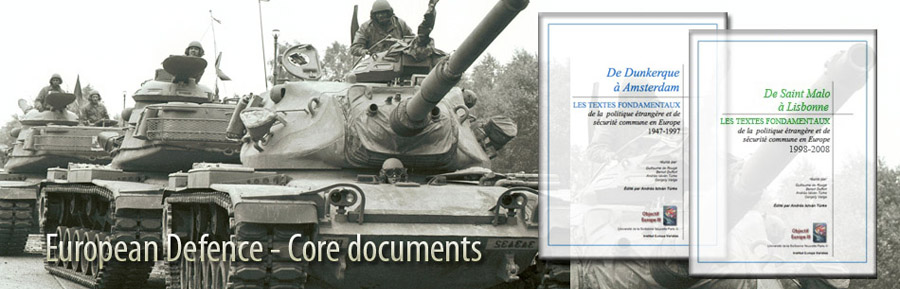
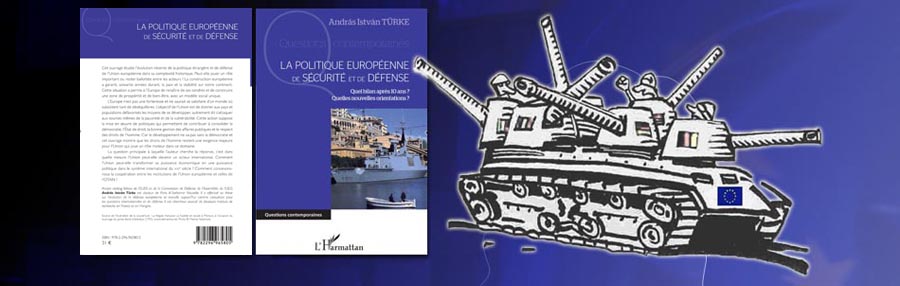
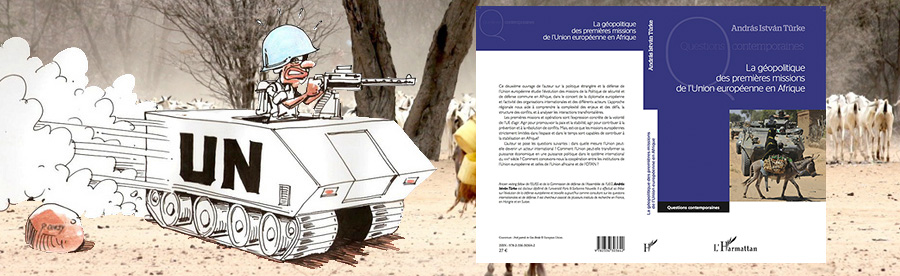
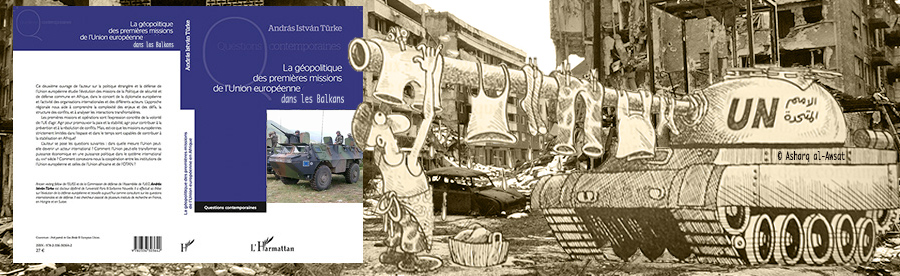
We are looking for sponsors for the English translation of these books, please contact turkeandras(at)gmail(dot)com